
地缘风险溢价

Search documents
资金流出,超2000亿!
Zhong Guo Zheng Quan Bao· 2026-01-19 12:01
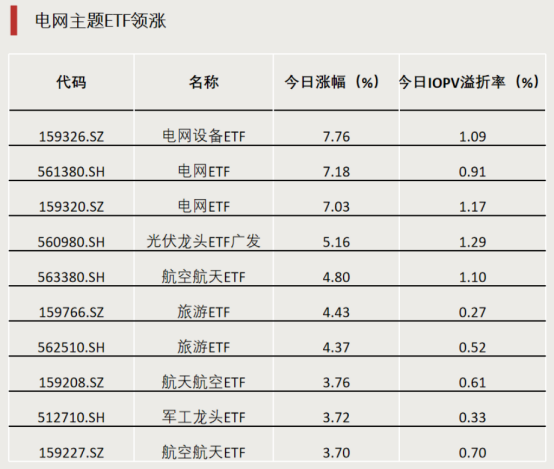
Group 1: ETF Market Overview - The overall ETF market has experienced a net outflow of over 200 billion since January, with a total net outflow of 2,141 billion [9][11] - Last week, various thematic ETFs such as software, non-ferrous metals, media, and satellites attracted significant inflows, while multiple broad-based ETFs faced net outflows totaling 1,572 billion [9][10] Group 2: Electric Grid ETFs Performance - On January 19, the electric grid sector in A-shares saw strong performance, with the electric grid ETF (159320) rising by 7.03% [2][4] - The electric grid ETF has seen continuous accumulation of funds for two weeks since the beginning of the year, with a management fee rate of 0.5%, making it one of the lowest in its category [4] Group 3: Satellite ETFs Insights - The satellite ETF (512630) has gained 17% since the beginning of the year, with an average daily trading volume exceeding 5 billion, indicating strong liquidity [5] - Analysts highlight three main investment values in the satellite sector: strong policy support, expanding demand scenarios, and cost-reducing technological advancements [5] Group 4: Broad-based ETFs Activity - On January 19, several broad-based ETFs, including A500 ETF and CSI 300 ETF, were actively traded, each exceeding a trading volume of 10 billion [7][8] - The trading activity reflects a robust interest in broad-based ETFs despite the overall market's net outflow trend [7] Group 5: Thematic ETFs Inflows - The software ETF (159852) led the inflows with a net inflow of 75.43 billion last week, followed by the non-ferrous metals ETF (512400) with 63.66 billion [10] - The electric grid equipment ETF (159326) also saw significant inflows, indicating strong investor interest in these sectors [10] Group 6: ETF Connectivity Expansion - As of January 19, 54 ETFs listed on the Shanghai Stock Exchange and 44 on the Shenzhen Stock Exchange have been included in the northbound trading scheme, increasing the total number of products from 273 to 364 [11] - The expansion reflects a growing interest in ETF connectivity and investment opportunities across different markets [11]

邓正红能源软实力:地缘风险资本化旨在重估石油价值 对冲供需层面过剩压力
Sou Hu Cai Jing· 2026-01-15 15:02
Group 1: Oil Price Movements - International oil prices reached their highest level in over three months on January 14, with WTI crude oil closing at $62.02 per barrel, up 1.42%, and Brent crude at $66.52 per barrel, up 1.60% [1] - The market experienced volatility due to signs of easing tensions between the U.S. and Iran, although potential military intervention threats continue to affect market sentiment [1] Group 2: OPEC's Demand Forecast - OPEC maintained its forecast for global oil demand growth in 2026, predicting an increase of 1.38 million barrels per day compared to 2025, and introduced a new forecast for 2027, expecting an additional increase of 1.34 million barrels per day [2] - The U.S. Energy Information Administration reported an increase in crude oil inventories by 3.391 million barrels and gasoline inventories by 897.7 thousand barrels, primarily due to a significant rise in imports [2] Group 3: Geopolitical Risk Premium - The theory of oil soft power indicates that energy competition is fundamentally a struggle for rule-making authority, with geopolitical tensions in the Middle East driving oil price premiums [3] - Events such as the escalation of anti-government protests in Iran and threats of U.S. military intervention have been capitalized by the market as oil price premiums, reflecting a systemic re-evaluation of oil's strategic resource value [3] Group 4: Supply and Demand Dynamics - Despite OPEC's positive demand forecasts, there remains significant oversupply pressure in the market, as evidenced by the increase in U.S. crude oil inventories [4] - OPEC's strategy of maintaining production levels aims to fill potential supply gaps while avoiding excessive stimulation of U.S. shale oil recovery, indicating a controlled approach to managing market expectations [4] Group 5: Challenges and Support for Oil Soft Power - The U.S. shale oil industry faces challenges due to diminishing technological advantages, contrasting with OPEC's ability to maintain rule-making authority through technical alliances [5] - The geopolitical dynamics between the U.S. and Iran create market uncertainties, reinforcing oil's value as a geopolitical tool [5] - Market recognition of "controllable oversupply" and geopolitical risk premiums has contributed to oil prices reaching three-month highs, indicating a psychological influence on market behavior [5] Group 6: Future Outlook - The theory predicts an increasingly multipolar and uncertain energy system, with deepening geopolitical tensions in the Middle East likely to elevate oil prices and expose the fragmentation of global energy governance [6] - The safety of oil transport routes from Iran directly impacts global supply, highlighting the geopolitical premium that markets are willing to pay for potential conflict risks [6]
化工日报:聚酯减产拖累需求,关注伊朗局势-20260115
Hua Tai Qi Huo· 2026-01-15 05:07
Report Industry Investment Rating No relevant content provided. Core Viewpoints - The overnight crude oil price increase has widened, and it has been in a strong and volatile stalemate during the Asian session. The escalation of geopolitical risks in Iran continues to support the upward movement of oil prices. The US will impose a 25% tariff on goods from countries doing business with Iran, and Trump may authorize new military strikes against Iran [2]. - The PXN was at $338/ton (a month-on-month change of -$1.25/ton). After the recent significant improvement in PX profitability, domestic and foreign PX plants have increased their operations. The PXN has retreated due to weakening fundamentals, but the medium - term outlook remains positive, and the short - term decline in polyester operation rate is limited [2]. - The spot basis of the TA main contract was -70 yuan/ton (a month - on - month change of -1 yuan/ton), the PTA spot processing fee was 350 yuan/ton (a month - on - month change of +23 yuan/ton), and the processing fee on the main contract's futures price was 331 yuan/ton (a month - on - month change of -7 yuan/ton). The short - term decline in polyester is limited, and the inventory accumulation pressure in January is not significant. In the long - term, PTA processing fees are expected to improve further [2]. - The polyester operation rate was 90.8% (a month - on - month increase of 0.9%). The weaving load continued to decline, domestic orders weakened after the end of November, and坯布 inventory began to accumulate. The polyester load will decline to around 88% in January [3]. - The spot production profit of PF was -25 yuan/ton (a month - on - month change of -35 yuan/ton). The demand is weak, and the processing difference is maintained in the range of 900 - 1000 yuan/ton. The Spring Festival maintenance plan has been announced, but the maintenance intensity is limited [3]. - The spot processing fee of PR was 563 yuan/ton (a month - on - month change of +26 yuan/ton). The processing fee is expected to maintain range - bound fluctuations [3]. Summary by Directory Price and Basis - Figures include the TA main contract, basis, and inter - period spread trends; PX main contract trends, basis, and inter - period spread; PTA East China spot basis; and short - fiber 1.56D*38mm semi - bright natural white basis [9][12][14] Upstream Profits and Spreads - Figures cover PX processing fee PXN, PTA spot processing fee, South Korean xylene isomerization profit, and South Korean STDP selective disproportionation profit [17][21] International Spreads and Import - Export Profits - Figures include the toluene US - Asia spread, toluene South Korean FOB - Japanese naphtha CFR, and PTA export profit [23][25] Upstream PX and PTA Operation - Figures show the operation rates of Chinese, South Korean, and Taiwanese PTA plants, as well as Chinese and Asian PX plants [26][29][31] Social Inventory and Warehouse Receipts - Figures include PTA weekly social inventory, PX monthly social inventory, PTA total warehouse receipts + forecast volume, PTA warehouse receipt inventory, PX warehouse receipt inventory, and PF warehouse receipt inventory [36][39][40] Downstream Polyester Load - Figures cover filament sales, short - fiber sales, polyester load, direct - spun filament load, polyester staple fiber load, polyester bottle - chip load, filament factory inventory days, Jiangsu and Zhejiang loom operation rate, Jiangsu and Zhejiang texturing machine operation rate, Jiangsu and Zhejiang dyeing operation rate, and filament profit [48][50][58] PF Detailed Data - Figures include polyester staple fiber load, polyester staple fiber factory equity inventory days, recycled cotton - type staple fiber load, difference between original and recycled fibers, pure polyester yarn operation rate, pure polyester yarn production profit, polyester - cotton yarn operation rate, polyester - cotton yarn processing fee, pure polyester yarn factory inventory available days, and polyester - cotton yarn factory inventory available days [72][78][80] PR Fundamental Detailed Data - Figures cover polyester bottle - chip load, bottle - chip factory inventory days, bottle - chip spot processing fee, bottle - chip export processing fee, bottle - chip export profit, difference between East China water bottle chips and recycled 3A - grade white bottle chips, bottle - chip next - month spread, and bottle - chip next - next - month spread [87][91][93] Strategy - Unilateral: Cautiously go long on PX/PTA/PF/PR for hedging, and pay attention to the impact of the Iran situation on crude oil prices. Although there are expectations of increased supply and demand - side maintenance plans, the decline in polyester load is limited, and the medium - term outlook for PX remains positive [4]. - Cross - variety: No relevant strategy provided. - Cross - period: No relevant strategy provided.
刚刚 白宫宣布加征关税!特朗普签令 “管控关键矿产进口”!白银价格突破93美元/盎司
Qi Huo Ri Bao· 2026-01-15 00:22
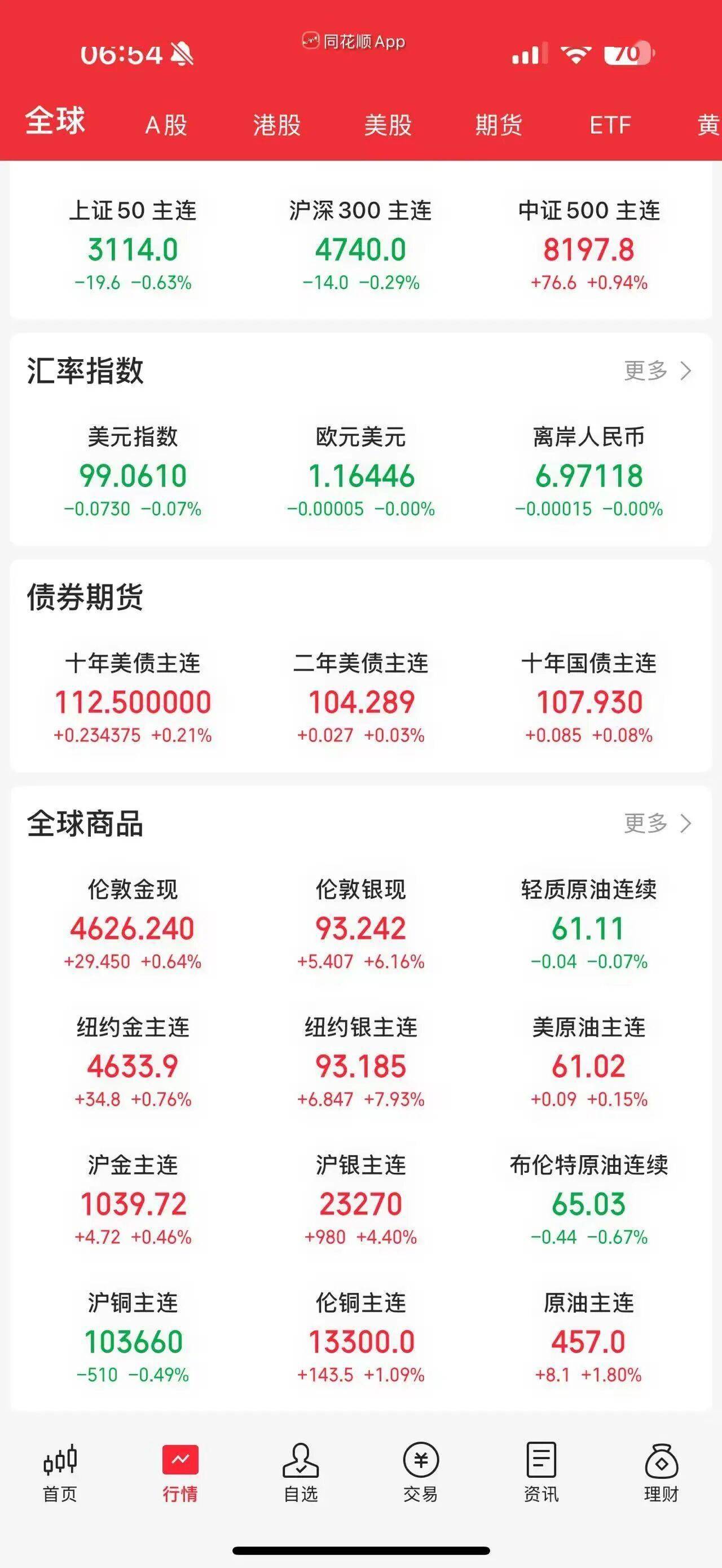
Group 1: Silver and Tin Market - Silver prices surged, with London spot silver reaching a new high of $93.24 per ounce, up 6.16% [1] - Tin futures in Shanghai saw a significant increase, with the main contract rising by 9.18% [2] Group 2: Oil Market Dynamics - Crude oil futures in the domestic market rose by 1.78%, reaching a peak of 454 yuan per barrel, the highest since December 9 of the previous year [7] - The rise in oil prices is attributed to increased geopolitical risk premiums due to tensions in the Middle East, rather than improvements in the fundamental market [8] - Analysts indicate that while short-term sentiment is driving oil prices up, long-term supply-demand imbalances remain a concern, with expectations of oversupply in 2026 [8] Group 3: Fuel Oil Market - Fuel oil futures also experienced significant price increases, supported by concerns over heavy oil supply disruptions due to escalating geopolitical tensions [9] - Despite the recent price surge, analysts caution that the availability of fuel oil futures may limit extreme market movements in the future [9] Group 4: Citic Securities Performance - Citic Securities reported an expected net profit of 30.051 billion yuan for 2025, reflecting a year-on-year growth of 38.46% [5] - The company anticipates a total revenue of 74.83 billion yuan for 2025, marking a 28.75% increase compared to the previous year [5]
白宫宣布加征关税!特朗普签令,“管控关键矿产进口”!白银价格突破93美元/盎司
Sou Hu Cai Jing· 2026-01-15 00:07
Group 1: Silver and Precious Metals Market - Silver prices surged, with London spot silver reaching a new high of $93.24 per ounce, up 6.16% [1] - New York silver futures increased nearly 8%, while Shanghai silver futures rose by 4.40% [1] - Other precious metals also saw gains, with London gold up 0.64% and New York gold up 0.76% [3] Group 2: Commodity Market Trends - The main contract for tin futures rose by 9.189% [4] - The overall commodity market is experiencing fluctuations, with copper futures down by 0.49% [3] Group 3: Oil Market Dynamics - Crude oil futures rose by 1.78%, reaching a peak of 454 yuan per barrel, driven by geopolitical tensions in the Middle East [10] - Analysts noted that the rise in oil prices is primarily due to increased geopolitical risk rather than fundamental improvements [10] - Concerns over potential disruptions in Iranian oil exports have heightened market anxiety, contributing to the rise in oil prices [10] Group 4: Future Projections - Analysts predict that while there may be short-term support for oil prices due to geopolitical tensions, long-term downward pressure remains a concern, with expectations of prices potentially dropping to $50 per barrel in the first half of 2026 [11] - The market is currently characterized by a mix of short-term sentiment-driven movements and long-term supply-demand imbalances [10][11]
巨震!油价盘后突然跳水5%,特朗普取消对伊朗军事行动?
Xin Lang Cai Jing· 2026-01-14 23:33
Core Viewpoint - The oil market is experiencing significant volatility due to geopolitical tensions, particularly regarding Iran, which has led to fluctuations in oil prices and inventory levels [5][6][22]. Group 1: Oil Price Movements - WTI crude oil futures closed at $61.88 per barrel, up by $0.95, a 1.56% increase; Brent crude oil futures closed at $66.52 per barrel, up by $1.05, a 1.6% increase; INE crude oil futures rose by 1.8% to 457 yuan [7][23]. - Oil prices experienced a sharp drop of nearly 5% after President Trump indicated a temporary pause on military action against Iran, causing market confusion [5][21]. Group 2: Inventory and Supply Data - The EIA reported a 3.39 million barrel increase in U.S. crude oil inventories, reaching 422 million barrels, a 0.81% increase, contrary to expectations of a decrease [8][24]. - Gasoline inventories rose significantly, with a reported increase of 897.7 million barrels, marking the largest increase since December 29, 2023 [8][24]. - U.S. crude oil production decreased by 58,000 barrels per day to 13.753 million barrels per day, while crude oil imports rose to 7.092 million barrels per day, the highest since November 29, 2024 [9][25]. Group 3: Geopolitical Tensions - Iran has entered a state of heightened alert, preparing for potential military actions, with warnings issued to U.S. allies in the region regarding possible attacks on military bases [10][26]. - The geopolitical situation remains tense, with various countries evacuating personnel and closing embassies in response to the potential for military conflict [5][10]. Group 4: Market Reactions and Strategies - The market is currently focused on geopolitical risks, maintaining a high level of emotional response despite underlying supply and demand pressures indicating an oversupply [6][22]. - Investors are advised to monitor for short-selling opportunities during price spikes while maintaining risk control measures [6][22].

化工日报-20260114
Guo Tou Qi Huo· 2026-01-14 11:11
Report Industry Investment Ratings - Propylene: ☆☆☆ [1] - Plastic: ☆☆☆ [1] - Polypropylene: ☆☆☆ [1] - Pure Benzene: ☆☆☆ [1] - PX: ☆☆☆ [1] - PTA: ☆☆☆ [1] - Ethylene Glycol: ☆☆☆ [1] - Short Fiber: ☆☆☆ [1] - Bottle Chip: ☆☆☆ [1] - Methanol: ☆☆☆ [1] - Urea: ☆☆☆ [1] - PVC: ☆☆☆ [1] - Caustic Soda: ★☆★ [1] - Soda Ash: ★☆☆ [1] - Glass: ☆☆☆ [1] Core Viewpoints - The overall market is influenced by factors such as international oil prices, supply - demand relationships, and geopolitical factors. Different chemical products show different price trends and investment opportunities based on their own fundamentals [2][3][5] Summary by Directory Olefins - Polyolefins - Propylene futures: The main contract opened high and went low, touching the 5 - day moving average. International oil prices are rising, and there is an expected reduction in olefin supply, with good downstream demand [2] - Plastic futures: The main contract closed up in a volatile manner. Cost - end support is strengthening, some spot is tight, and downstream factories replenish stocks as needed [2] - Polypropylene futures: The main contract closed up in a volatile manner. The number of maintenance devices has increased, supply has shrunk, and downstream demand is stable due to pre - holiday order - making [2] Pure Benzene - Styrene - Pure benzene: Spot and futures prices are rising. Cost - end support is obvious due to geopolitical factors, but there is a large inventory and high resistance to destocking in the long - term [3] - Styrene: The main futures contract was sorted out narrowly. Cost - end support is strong, supply and demand are in a tight balance, and exports are improving [3] Polyester - PX and PTA: They continued to fluctuate. The short - term upward drive of PX is weak, but the medium - term outlook is positive. PTA's processing margin has moderately recovered [5] - Ethylene glycol: New domestic devices are about to be put into operation, and overseas devices are shutting down. Supply is expected to increase domestically and decrease overseas. There is pressure in the short - term, but there may be a phased improvement in the second quarter [5] - Short fiber: Enterprise inventory is low, but downstream orders are weak. Demand will continue to decline, and the price will fluctuate with raw materials [5] - Bottle chip: The operating rate has decreased, inventory has declined, and prices are firm. However, over - capacity is a long - term pressure [5] Coal Chemical Industry - Methanol: The futures market is strong. Overseas device operating rates are low, and port inventory is decreasing. But there are concerns about weakening demand [6] - Urea: The futures market rose strongly. Demand from compound fertilizer enterprises is increasing, and the market sentiment is positive. The market is expected to be strong in the spring [6] Chlor - Alkali - PVC: It showed a strong and volatile trend. The operating rate has increased, but demand is weak. There may be arbitrage opportunities in the short - term, and the price is expected to rise in 2026 [7] - Caustic soda: It is operating weakly. The chlorine market is good, but the industry is generally in the red. There is pressure from inventory accumulation [7] Soda Ash - Glass - Soda ash: It showed a strong and volatile trend. Supply pressure is increasing, and downstream demand is weak. It is recommended to short on rebounds [8] - Glass: It is operating weakly. Production capacity is being compressed, demand is insufficient, but there may be long - term low - buying opportunities after the decline [8]
有色板块整体走高,镍不锈钢跟随上涨
Hua Tai Qi Huo· 2026-01-13 05:15
Report Summary 1. Report Industry Investment Rating No investment rating information is provided in the report. 2. Report's Core View - The nickel and stainless - steel sectors in the non - ferrous metals industry are affected by multiple factors, with prices showing different trends. The nickel price is expected to oscillate sharply between 135,000 - 150,000 yuan/ton, and the stainless - steel price is expected to fluctuate in the range of 13,400 - 14,500 yuan/ton [1][3][4]. 3. Summary by Related Catalogs Nickel Variety - **Market Analysis** - **Futures**: On January 12, 2026, the main contract of Shanghai nickel opened at 140,000 yuan/ton and closed at 144,200 yuan/ton, up 5.65% from the previous trading day. The trading volume was 1,083,202 (-38,224) lots, and the open interest was 124,148 (+3,553) lots. The price increase was driven by supply contraction expectations, macro - easing, and geopolitical risk premiums, along with the overall rise of non - ferrous and precious metals sectors [1]. - **Nickel Ore**: The nickel ore market was calm with limited resources. Affected by macro factors, the price was strong. Philippine mines were eager to sell at higher prices. In Indonesia, the February 2026 domestic trade base price was expected to rise by 2.8 - 4.9 dollars/wet ton, and the current mainstream premium was +25, with a range of +25 - 26. Factories might push down the premium due to cost pressure [1]. - **Spot**: Jinchuan Group's Shanghai market sales price was 150,600 yuan/ton, up 5,300 yuan/ton from the previous day. Spot trading was average, with strong reluctance to sell low - priced resources. The spot premiums of refined nickel were stable or rising. The previous trading day's Shanghai nickel warehouse receipts were 39,670 (+814) tons, and LME nickel inventory was 284,562 (-228) tons [2]. - **Strategy** - Due to the game between supply contraction expectations and the reality of the off - peak demand season, combined with short - term disturbances from macro sentiment and capital behavior, the price is expected to oscillate sharply between 135,000 - 150,000 yuan/ton. It is recommended to focus on range operations and be cautious when chasing high prices. The strategy for single - side trading is range - based, while there are no strategies for inter - period, inter - variety, spot - futures, or options trading [3]. Stainless - steel Variety - **Market Analysis** - **Futures**: On January 12, 2026, the main contract of stainless steel opened at 13,870 yuan/ton and closed at 13,855 yuan/ton. The trading volume was 256,679 (-44,151) lots, and the open interest was 128,736 (-4,171) lots. Affected by the rise of LME nickel, the night trading session opened high and moved high, and the daily trading session was suppressed by weak demand, with the price gradually falling and oscillating between 13,800 - 13,880 yuan/ton in the afternoon [3]. - **Spot**: The futures price increase drove the spot price up, but downstream buyers were reluctant to buy at high prices, resulting in poor inquiry and trading. The stainless - steel price in Wuxi market was 13,900 (+100) yuan/ton, and in Foshan market was 13,775 (+50) yuan/ton. The 304/2B premium was 115 - 315 yuan/ton. The ex - factory tax - included average price of high - nickel pig iron increased by 10.00 yuan/nickel point to 972.0 yuan/nickel point [3][4]. - **Strategy** - The uncertainty of Indonesian policies has a significant impact on the cost of stainless steel, which will be the main short - term price trend logic. The price is expected to fluctuate in the range of 13,400 - 14,500 yuan/ton. However, the dismal spot trading may suppress price rebounds. The single - side trading strategy is neutral, and there are no strategies for inter - period, inter - variety, spot - futures, or options trading [4].
铸造铝合金期货主力大跌505元/吨,现货市场维持刚需采购节奏
Xin Lang Cai Jing· 2026-01-08 08:42
Group 1 - The core viewpoint of the articles indicates that the casting aluminum market is experiencing downward pressure due to geopolitical risks and seasonal demand decline, despite some support from raw material costs [1][2]. Group 2 - The main contract for casting aluminum closed at 22,585 yuan, down 505 yuan or 2.19%, with a trading volume of 19,770 lots, an increase of 211 lots, and an open interest of 21,008 lots, up 390 lots [1]. - The average price for casting aluminum alloy ingots (A356.2) was reported at 25,600 yuan per ton, down 100 yuan, while other alloys like A380 and ZL102 also saw similar declines [1]. - The macroeconomic environment shows that geopolitical tensions, particularly actions by the Trump administration, have led to increased market risk aversion, contributing to the decline in aluminum prices [1]. Group 3 - On the supply side, both imported and domestic scrap aluminum supplies are tight, which limits the price decline of casting aluminum and provides cost support [2]. - Demand remains weak as the industry enters a seasonal consumption lull, with alloy plant operating rates declining and automotive sector demand decreasing [2]. - The overall market activity is subdued, with cautious buying from downstream enterprises and limited actual transactions, indicating a general lack of market dynamism [2].
长江有色:7日镍价大涨 “妖镍”再起但现货“有价无市”
Xin Lang Cai Jing· 2026-01-07 08:58
Core Viewpoint - Nickel prices have surged significantly due to supply constraints from Indonesia, global macroeconomic easing, and geopolitical risk premiums, despite high visible inventories and seasonal demand weakness [2][3]. Supply Side - Indonesia's policy changes are the largest variable affecting the market, with rumors of a significant reduction in nickel ore production targets for 2026, potentially leading to a substantial supply gap [3]. - Adjustments in pricing mechanisms and tax policies in Indonesia may systematically increase global nickel mining and smelting costs [3]. - Geopolitical tensions in resource-rich countries like the Democratic Republic of Congo are raising concerns about the stability of the nickel-cobalt supply chain, adding extra risk premiums to prices [3]. - Despite high visible inventories, which are at multi-year highs, the supply is showing differentiation, with expectations of a rebound in refined nickel production in the medium to long term [3]. Demand Side - Demand remains weak in downstream sectors such as stainless steel and new energy batteries, which are currently in a traditional production lull, leading to low acceptance of high-priced raw materials [3]. - The market is experiencing a "price without market" situation, indicating a disconnect between price increases and actual consumption [3]. - The industrial chain is characterized by a "hot upper and cold lower" pattern, where upstream miners are reluctant to sell, while midstream smelters are encouraged to increase production due to rising prices, but downstream consumption remains flat [3]. Market Outlook - Nickel price trends will heavily depend on the specifics and implementation of Indonesian policies, with market sentiment likely to dominate prices in the short term [4]. - High volatility is expected to become the norm, and investors are advised to remain cautious and avoid chasing prices [4]. - Key data to monitor includes official documents from Indonesia, global inventory depletion rates, and downstream enterprise operating rates for clearer signals in the fundamentals [4].