内循环

Search documents
ETF日报:有色金属行业正处于供需错配、盈利修复与流动性宽松预期共振的阶段,可关注有色60ETF
Xin Lang Ji Jin· 2025-06-30 14:21
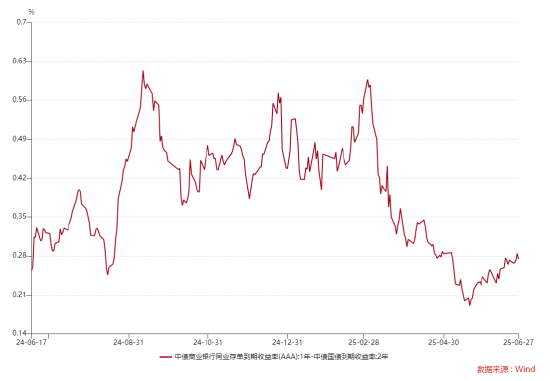
Market Overview - A-shares experienced a rebound today, with the Shanghai Composite Index closing at 3444.43 points, up 0.59%, and a trading volume of 567.1 billion yuan. The Shenzhen Component Index closed at 10465.12 points, up 0.83%, with a trading volume of 919.7 billion yuan [1] - The official manufacturing PMI for June rose to 49.7, indicating a recovery in new orders, although it has remained below the expansion threshold for three consecutive months, highlighting ongoing structural risks in the economy [1] Monetary Policy - The central bank's second-quarter monetary policy committee meeting emphasized the need for new monetary policies to stimulate domestic demand due to ongoing economic pressures. The language shifted from potential rate cuts to a more flexible approach in policy implementation [2] - Following the meeting, bond yields across various maturities increased, indicating market reactions to the changed monetary policy stance [2] Bond Market - The bond market is currently experiencing high demand, with a potential for short-term fluctuations due to profit-taking pressures. However, the overall trend remains bullish due to a combination of weak domestic and external demand and a loose monetary environment [3] - The current low policy interest rates and high market funding rates favor a continuation of the bullish bond market trend, with expectations of further declines in short-term rates potentially leading to breakthroughs in long-term rates [3][4] Defense Industry - The military industry ETF saw a significant increase of 4.37%, driven by heightened global security concerns and the necessity for national defense. The international conflicts have bolstered demand for China's military exports, particularly following the recent performance of domestic military equipment [5] - The upcoming 80th anniversary of the victory in the Anti-Japanese War is expected to serve as a catalyst for the military sector, potentially enhancing both supply and demand dynamics [6] Commodity Market - The non-ferrous metals sector, particularly copper, is experiencing upward pressure due to tight supply conditions and rising prices. The overall low inventory levels and expectations of a loosening monetary policy are likely to support copper prices in the medium to long term [7] - The current phase of the non-ferrous metals industry is characterized by a mismatch in supply and demand, alongside expectations of profitability recovery and liquidity easing [7]

达沃斯热议经济驱动力,中国的关键词依然是消费与科技
Di Yi Cai Jing· 2025-06-26 13:39
Core Insights - Emerging markets are seen as key engines for global economic growth, with a focus on how they can maintain stability amid geopolitical tensions and changing trade relationships [1][3] - The shift from export-driven to consumption-driven economic models in China is a significant topic of discussion, emphasizing the need for domestic consumption and investment [3][4] Group 1: Economic Trends and Predictions - China's GDP growth is expected to exceed 5% in the second half of the year, driven by improving macroeconomic indicators, particularly in consumption [4] - The transition to a consumption-driven economy will require time and effort, with a growing emphasis on boosting consumer confidence [4][6] - Structural issues such as real estate, financial risks, and local fiscal pressures need to be addressed for sustainable economic recovery [5] Group 2: Consumption and Investment Focus - Domestic consumption is identified as a primary challenge for China's economy, with a significant gap of about 20 percentage points compared to the international average [6][7] - The focus should be on enhancing the consumption capacity of low-income groups and promoting service-oriented consumption, particularly in education, healthcare, and social security [7][8] - Recent data shows a notable increase in retail sales, with a 6.4% year-on-year growth in May, indicating positive effects from government stimulus measures [8]


中泰金融国际有限公司首席经济学家李迅雷:预计降息将会持续 关注黄金避险价值
Sou Hu Cai Jing· 2025-06-25 06:43
"新"向未来——平安基金2025年中期投资策略会于6月25日-26日举行,多位行业专家对当前经济形势、 热门行业发展前景、资产配置等话题展开探讨。中泰金融国际有限公司首席经济学家李迅雷在本次会议 上作题为《外部环境不利影响加大下,中国经济走势与政策选择》的主旨演讲,深刻剖析了在特朗普 2.0时代"反秩序性"冲击下,中国经济面临的内外挑战与破局路径。李迅雷指出,随着全球步入高震 荡、低增长的新常态,中国亟需通过政策创新激活内循环潜力,并在资产配置中把握历史性机遇。 外部系统性冲击正在形成 在震荡中布局确定性 全球经济正步入高震荡、低增长时代,这一趋势对中国经济产生了深远影响。李迅雷指出,全球收入与 财富分化加剧,主要经济体前1%和10%的居民财富占比持续攀升,这种分化导致社会矛盾加剧,经济 政策的不确定性上升。 在外部环境变差的背景下,中国经济内循环面临诸多挑战。李迅雷指出,美国对华关税政策的不确定 性,可能导致中国出口下滑,进而影响经济增长、就业和企业盈利。此外,出口下降可能加剧产能过剩 问题,进一步抑制制造业投资,而消费市场的疲软也难以在短期内有效弥补外需的不足。 在当前局势下,资产如何配置成为市场关注的焦 ...
平稳运行!重要经济数据公布
21世纪经济报道· 2025-06-16 08:05
Economic Overview - In May, the overall economy maintained stable operation, with the macro policy effects such as the "old-for-new" consumption policy continuing to be released, and the export sector showing resilience [1][3] - The total retail sales of consumer goods in May increased by 6.4% year-on-year, accelerating by 1.3 percentage points from the previous month, marking the highest monthly growth rate this year [1][2] Consumption and Retail - The service retail sales from January to May grew by 5.2%, which is a slight acceleration compared to the previous four months, indicating a strong impact from holiday consumption [1][2] - The "618" e-commerce promotion and the "old-for-new" policy contributed to a further acceleration in consumer goods consumption in June [6] Investment and Export - Fixed asset investment (excluding rural households) from January to May grew by 3.7%, a decline of 0.3 percentage points from the previous period, with real estate investment dragging down the overall figure [2][4] - Real estate investment fell by 10.7% year-on-year from January to May, with the decline expanding by 0.4 percentage points compared to the previous period [2] - Manufacturing investment increased by 8.5% and infrastructure investment grew by 5.6% during the same period [2] Trade Performance - In May, exports grew by 4.8% year-on-year, while imports decreased by 3.4%, reflecting the resilience of exports despite a challenging external trade environment [2][3] - Cumulatively, from January to May, exports increased by 6%, while imports fell by 4.9%, indicating a strong export performance driven by "export rush" behaviors [2] Industrial Production - The industrial added value for large-scale enterprises in May increased by 5.8% year-on-year, maintaining a growth rate above 5.5% [4][5] - The service production index grew by 6.2% year-on-year in May, boosted by holiday consumption and a recovery in exports to the U.S. [4] Future Outlook - The chief economist at CITIC Securities highlighted that the "old-for-new" policy has supported the demand for major consumer goods, and further support for rural and lower-tier markets could enhance domestic consumption [6] - The government aims to implement more proactive macro policies to strengthen domestic circulation and promote high-quality economic development [5][6]

国常会发布!地产要涨了?下周,A股要修复跌幅了
Sou Hu Cai Jing· 2025-06-14 04:10
Group 1 - The A-share market is showing a clear upward trend, with a significant portion of stocks likely to provide profits for retail investors, despite their current pessimism [1][3] - The recovery of the real estate market is seen as a core element of domestic economic circulation, which will positively impact both the real estate and stock markets [3][5] - The expectation is that the Shanghai Composite Index will soon recover to 3400 points, but this does not guarantee that individual stocks will also rebound [5][7] Group 2 - The market sentiment is currently negative, particularly towards sectors like liquor and real estate, but historical patterns suggest that these sectors may lead the market recovery [3][5] - The upcoming policy measures are expected to focus on boosting consumption, particularly in real estate, which is viewed as a major commodity [5][7] - The overall market index is anticipated to rise, driven by a few key stocks, although individual stock performance may vary [7]

年中展望 | 星火燎原(申万宏观·赵伟团队)
申万宏源宏观· 2025-06-09 05:29
沉星月启:产业" 蜕变"vs政策 "革新"。 转型进入"新阶段",面临的"新问题"。 2022年以来,转型进入"新阶段",以地产为代表的传统链条对经济的贡献 出现趋势性下行,经济指标表现分化的同时,产业"冰火两重天"的情况常见。转型"新阶段",压力更集中在终端 需求,导致PPI承压的同时CPI表现更弱,产能过剩领域转至中下游;更多供给转向海外的过程中,外贸板块内卷 更甚。 文 | 赵伟、屠强、贾东旭、侯倩楠 联系人 | 屠强 摘要 转型新阶段,传统政策框架有效性下降,政策"革新"全面启动。 居、企业和地方政府在经历报表冲击的同时,不 同主体间互相影响、修复过程慢于过往周期。传统宏观调控手段的传导机制异化,政策"革新"必要性上升。2024 年9月底以来,政策框架全面优化启动;总量政策空间打开、结构性政策的针对性增强,新阶段的"供给侧改革"呼 之欲出。 产业"蜕变"已成"星火燎原"之势,居民信心筑底现象已现。 历经十余年,新动能占比已"初具规模",高技术产业 在工业中占比达16.3%,渐成星火燎原之势;近两年悦己消费、体验消费等新消费形式不断涌出。2025年以来,节 假日居民出行意愿等指标,则显示居民短周期信心的 ...

投资策略周报:一季报并非真正盈利底的原因及未来盈利底的探讨-20250608
KAIYUAN SECURITIES· 2025-06-08 09:29
Group 1 - The core point of the report indicates that the profit growth rate for Q1 2025 turned positive primarily due to a low base effect rather than an inherent improvement in the profit cycle [2][13][21] - The report highlights that the A-share market is currently in the longest historical negative growth period, which has resulted in a very low base for comparison [2][15] - The analysis of Q1 2025 shows that overall demand has not yet shown signs of recovery, with revenue growth remaining weak [2][13] Group 2 - The report identifies that the profit growth rate in Q1 2025 exhibited structural differentiation, with significant contributions from the non-bank financial sector, non-ferrous metals, and agriculture, forestry, animal husbandry, and fishery sectors [3][33] - Non-bank financials contributed 51.4% to the profit growth, followed by non-ferrous metals at 33.4%, and agriculture, forestry, animal husbandry, and fishery at 30.4% [3][34] - Excluding these three sectors, the remaining industries continued to experience negative growth, with a decline of -0.61% [3][33] Group 3 - The report predicts that the inherent profit bottom for A-shares is not expected to occur before Q3 2025, considering the repair of corporate balance sheets and the impact of medium to long-term loans on industrial profits [4][36] - The analysis suggests that the difference in year-on-year growth rates between non-financial enterprises and household deposits serves as a leading indicator for A-share earnings performance [4][36][40] - The report also notes that the growth of new medium to long-term loans typically leads to an increase in corporate capital expenditures and profit expansion, although the current trend shows a decline [4][37][39] Group 4 - The report outlines that several industries are expected to maintain a growth rate of over 20% in Q1 2025, excluding base effects, including optical electronics, feed, aquaculture, marine equipment, and others [41][42] - The report emphasizes that the overall confidence of enterprises has not yet recovered, with both capacity and inventory cycles remaining at low levels [26][31] Group 5 - The investment strategy suggests focusing on domestic consumption sectors such as clothing, automobiles, and food, as well as technology and military sectors [5][47] - The report recommends attention to cost improvement-driven sectors like aquaculture and precious metals, and structural opportunities in overseas markets due to improved trade relations [5][47]
我想全世界现在都在赌,中美到底谁先扛不住?
Sou Hu Cai Jing· 2025-06-06 14:33
Group 1 - China's exports to the US have declined for three consecutive months, while US imports from China have not significantly increased, indicating a shift in trade dynamics [2] - The US is facing persistent inflation, with the Federal Reserve maintaining high interest rates, while the Biden administration struggles to balance trade policies and domestic pressures [2][6] - The agricultural sector in the US is feeling the impact of trade tensions, as evidenced by the cancellation of a significant pork order from China, highlighting the political ramifications of trade policies [2] Group 2 - The ongoing US-China competition has evolved from trade to technology and geopolitical strategies, with both countries attempting to leverage their respective strengths [4] - China's GDP growth in the first quarter was 5.2%, driven largely by domestic consumption, indicating resilience despite export challenges [4] - The export of new energy vehicles from China surged by 60%, reflecting strong global demand and market confidence [4] Group 3 - The solar panel and lithium battery sectors in China are facing overcapacity issues, leading to longer inventory turnover periods and operational challenges for manufacturers [6] - In the US, the imposition of reciprocal tariffs has backfired, contributing to rising inflation and increased costs for consumers [6][8] - Walmart is struggling to maintain its low-price model due to supply chain disruptions and rising costs, which could impact its sales performance [8] Group 4 - China's technology sector continues to face challenges from US restrictions, but there are signs of resilience, such as advancements in Huawei's chip capabilities and increased domestic production [9] - The geopolitical landscape is shifting, with US allies navigating their own interests, leading to a complex web of trade relationships [9][11] - The competition between the US and China is characterized by a struggle for strategic endurance and institutional resilience, rather than a clear winner [11][13]

中信证券消费2025年下半年策略:结构景气强化 仍待全面回暖
Zhi Tong Cai Jing· 2025-05-30 00:47
Core Viewpoint - The report from CITIC Securities indicates a clear direction for Chinese policies aimed at boosting domestic demand, with expectations of improved consumer preferences for investment in the context of increased market volatility and uncertainty [1][4] Group 1: Consumer Trends - Current consumer trends are characterized by three main lines: rational consumption, quality upgrades alongside affordable alternatives; spending on emotional satisfaction and quality of life; and new consumption directions driven by technological advancements [1] - The traditional consumption sector is showing signs of recovery, particularly in essential goods, with Q2 2025 expected to be a bottoming window for many consumer industries [1][2] Group 2: Consumption Data and Performance - In the first half of 2025, consumer demand and price pressures are easing, with a notable rise in "quality-price ratio" consumption and strong demand for leisure and entertainment [2] - The recovery in consumer data, combined with strong performance in certain sectors, has led to increased marginal interest from investors in the consumer industry, although many sub-sectors remain at reasonable valuation levels [2] Group 3: Structural Changes and New Consumption - Four slow-moving variables are shaping the macroeconomic landscape in China: aging population, smaller households, AI-driven production changes, and complex external environments, leading to structural growth opportunities for new consumption companies [3] - New consumption characteristics are emerging from companies that meet consumer demands for emotion, health, and value, supported by innovations in AI and biotechnology [3] Group 4: Policy Impact and Short-term Outlook - The short-term recovery of consumer-related industry valuations is heavily reliant on overall expectations for the domestic macroeconomic environment, with 2025 potentially being a turning point [4] - Strengthening internal circulation and expanding domestic consumption markets are becoming necessary choices, with policy effects contributing to the ongoing recovery in both goods and service consumption [4]

中金基金石健行:消费类REITs有望成为产权类REITs中市值最大、市场化程度最高的板块
Bei Jing Shang Bao· 2025-05-28 09:29
Core Viewpoint - The forum highlighted the unique advantages and future development prospects of consumption REITs, emphasizing their role in expanding domestic demand and promoting consumption in the context of economic recovery [1][3]. Group 1: Advantages of REITs - REITs provide a mandatory annual distribution of at least 90% of the distributable amount to investors, ensuring long-term and stable cash flow [3]. - Listed REITs offer liquidity and can be traded in the secondary market like stocks, making them accessible for investors [3]. - The investment threshold for REITs is low, typically starting from a few hundred yuan, allowing ordinary individuals to participate [3]. Group 2: Consumption REITs Potential - Consumption REITs are seen as investment tools with stable returns and asset appreciation potential, particularly relevant in the context of domestic consumption and policy support [3]. - These REITs primarily invest in shopping centers, department stores, outlet malls, farmers' markets, and community commercial infrastructures, directly linked to consumer demand [3]. - The potential market size for consumption REITs is significant, with expectations that they will become the largest and most market-oriented segment among property REITs in the future [3]. Group 3: Investment Considerations - Consumption REITs offer ordinary investors the opportunity to engage in core commercial real estate with small amounts of capital, emphasizing the importance of underlying asset quality and management capabilities over short-term trading [4]. - Investors are encouraged to adopt a rational investment approach, thoroughly understanding product risks and characteristics through disclosure documents like fund contracts and prospectuses [4].