
本土化

Search documents
美国卡内基国际和平基金会:《保障美国关键矿产供应研究报告》
欧米伽未来研究所2025· 2025-10-15 00:22
Core Argument - The article emphasizes that the U.S. cannot achieve mineral independence solely through domestic mining efforts, highlighting the structural challenges in the supply chain for critical minerals essential for modern economy and national security [3][4][13]. Domestic Supply Challenges - Even in the most optimistic growth scenarios, by 2035, U.S. domestic production will only meet the projected demand for zinc and molybdenum, while significant reliance on imports will remain for copper, graphite, lithium, silver, nickel, and manganese [3][4]. - The U.S. is projected to have a 62% dependency on copper imports and a staggering 282% shortfall in lithium supply by 2035, indicating fundamental flaws in a purely domestic mining strategy [3][4]. - Geological limitations and high production costs hinder the U.S. from becoming self-sufficient in critical minerals, with existing copper production costs exceeding the global average by 8% [3][4][6]. Processing and Refining Bottlenecks - The U.S. faces significant capacity gaps in the midstream processing of minerals, particularly in copper smelting, where competition from China has severely impacted Western firms' profitability [4][6]. - Current U.S. smelting capacity is insufficient to process all domestically mined ores, necessitating reliance on foreign processing, particularly in China [6][7]. Policy and Strategic Recommendations - The article advocates for a mixed strategy combining "onshoring" and "friendshoring" to build a resilient and diversified global supply chain for critical minerals [8][9]. - A coherent national strategy is essential, moving beyond tariffs and fragmented subsidies to establish a public-private partnership that fosters innovation and competitiveness in the mining sector [11][12]. - The report suggests implementing a price guarantee mechanism, such as "Contract for Difference," to provide price certainty for high-cost domestic mining projects, thereby attracting private investment [12]. Priority Minerals and International Cooperation - Nickel and cobalt are identified as critical for high-performance batteries, with Australia and Canada being reliable partners for supply [10]. - Lithium, graphite, and manganese are highlighted as essential materials for battery manufacturing, necessitating strategic partnerships with countries like Australia, Canada, and those in South America [14]. - The U.S. must establish stable supply relationships with traditional silver-producing countries in Latin America to meet the increasing demand from the solar industry [14].


百事第三季度营收超1700亿元,CEO大赞“全球韧性”,中国市场却成了“隐痛”?
3 6 Ke· 2025-10-10 09:56
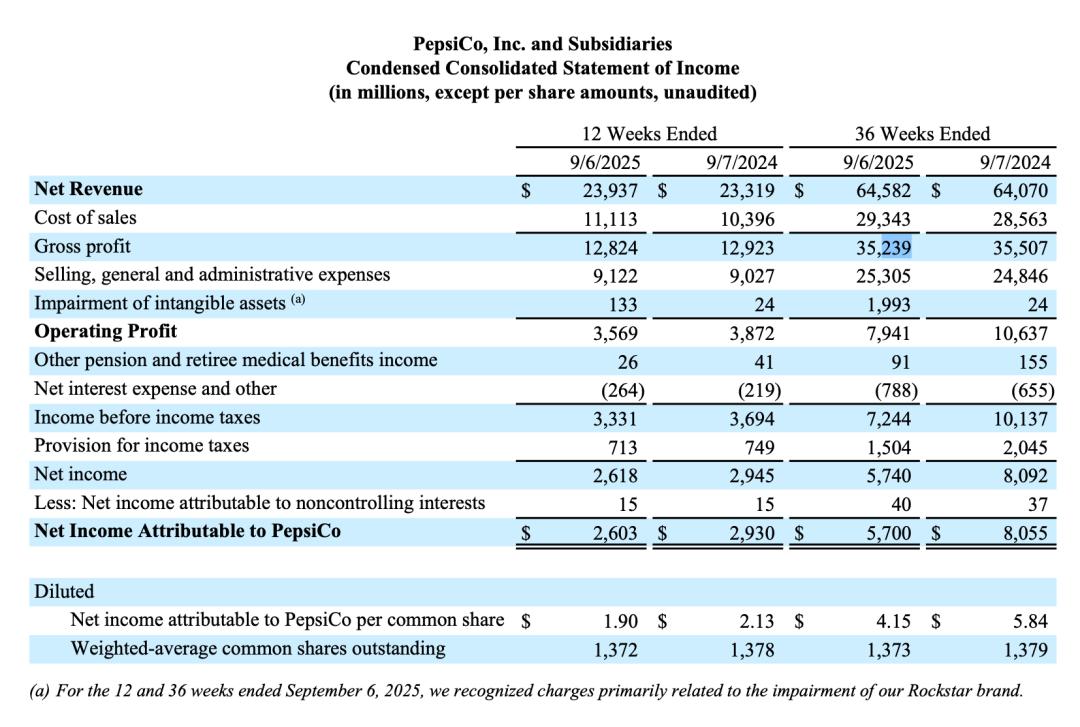
Core Viewpoint - PepsiCo's Q3 performance exceeded expectations, with strong global market results, particularly in international markets, but the performance in China raises concerns [1][2] Financial Performance - For Q3 2025, PepsiCo reported a revenue increase of 2.6% year-over-year to $23.94 billion (approximately ¥1746.42 billion), surpassing Wall Street expectations [2] - North American snack and beverage sales declined, while sales in Latin America and Asia increased [2] - Net income attributable to PepsiCo was $2.60 billion, down from $2.93 billion in the previous year [4] Market Performance - The Chinese market was not highlighted in the earnings report, indicating a lack of growth, with beverage sales showing a low single-digit decline [5][7] - In contrast, Coca-Cola has regained market share in China, with its flagship products performing well [5] Strategic Challenges - PepsiCo's cautious language regarding its beverage business in China suggests underlying issues, with a focus on snack performance instead [7] - Despite efforts to localize products and marketing, such as launching region-specific flavors and partnering with local brands, these initiatives have not yielded significant sales improvements [8][10] Competitive Landscape - PepsiCo's slower innovation pace in the beverage sector has allowed competitors like Coca-Cola to capture market share, particularly with health-oriented products [10][12] - The company's distribution strategy has faced challenges, with a fragmented channel network limiting its market penetration compared to Coca-Cola's established system [12][14] - Increased competition from local brands and new beverage categories has further complicated PepsiCo's position in the Chinese market [14]

新茶饮们,提速出海
2 1 Shi Ji Jing Ji Bao Dao· 2025-10-04 05:39
Core Insights - The new tea beverage brands are rapidly expanding their presence globally, with significant growth in Southeast Asia and North America [2][3] - Despite the challenges faced in overseas markets, brands like Bawang Chaji are showing impressive performance, with overseas GMV reaching 235 million yuan, a year-on-year increase of 77.4% [2] Expansion and Revenue Growth - In the first half of 2025, five major listed tea brands achieved a total revenue of 31.581 billion yuan, a year-on-year increase of 30.12% [5] - Heytea opened its first overseas LAB store in Times Square, New York, achieving over 3,500 cups sold on the first day and maintaining an average daily sales of over 2,000 cups [5][6] - Tea Baidao is also expanding, with its first North American store opening in New York and plans for further expansion in Southeast Asia [5][6] Market Challenges and Strategies - Brands are facing challenges in overseas markets, with some, like Mixue Ice City, optimizing existing stores in Indonesia and Vietnam due to operational difficulties [6] - The focus is on quality and long-term brand value rather than just the number of stores, as emphasized by Tea Baidao's strategy [6] Localization Efforts - New tea brands are adapting their products to local tastes, moving away from simply replicating domestic menus [8] - For instance, Heytea has introduced localized products like "California Sunset" and "Matcha Coconut Blue" in the U.S. market, achieving significant social media engagement [8][9] Supply Chain and Operational Efficiency - A robust and flexible supply chain is crucial for success in overseas markets, with brands like Heytea establishing systematic supply chains in Europe and North America [9] - Bawang Chaji has adopted a deep partnership model in Thailand to enhance supply chain efficiency and local market integration [9] Market Selection and Consumer Insights - The choice of market location is critical, with brands like Ningji focusing on areas with favorable climates and logistics, such as Los Angeles [12] - Understanding local consumer behavior and preferences is essential for successful market penetration [14] Future Directions - The new tea beverage industry is transitioning from rapid expansion to a focus on sustainable growth and quality [14] - The ultimate success will depend on how well brands can integrate into local cultures and consumer lifestyles [14]


新茶饮们,提速出海
21世纪经济报道· 2025-10-04 05:33
Core Insights - The new tea beverage brands are rapidly expanding their presence globally, with significant growth in Southeast Asia and North America, as evidenced by the opening of numerous stores and partnerships with local giants [1][4][11] - Despite the impressive growth, these brands face substantial challenges in adapting to local markets, including supply chain stability and local talent acquisition [1][5][12] Group 1: Market Expansion - Bawang Chaji has opened its 200th store in Malaysia and formed a joint venture to deepen its presence in Southeast Asia [1] - Heytea has surpassed 100 overseas stores, increasing sixfold within a year, and has established a LAB store in New York with impressive sales [4][12] - Cha Bai Dao has opened its first North American store in New York and is actively expanding in Southeast Asia [4][5] Group 2: Financial Performance - In the first half of 2025, five major listed tea brands achieved a total revenue of 31.581 billion yuan, marking a year-on-year increase of 30.12% [2] Group 3: Localization Strategies - New tea brands are adapting their product offerings to local tastes, emphasizing the importance of local consumer preferences [7][8] - For instance, Heytea has launched products that blend local flavors with traditional tea elements, achieving significant social media engagement [7][8] Group 4: Supply Chain and Operational Challenges - The brands are focusing on building flexible supply chains to ensure product availability and compliance with local regulations [8][10] - Bawang Chaji has adopted a deep partnership model in Thailand to enhance operational efficiency and resource access [8][10] Group 5: Market Selection and Consumer Engagement - The choice of market locations is critical, with brands prioritizing areas with strong consumer demand and favorable logistics [10][11] - The brands are also rethinking their marketing strategies to align with local consumer behaviors, such as the preference for larger store formats in North America [10] Group 6: Future Outlook - The new tea beverage industry is transitioning from rapid expansion to a focus on sustainable growth and quality [12] - The success of these brands will depend on their ability to integrate into local cultures and consumer lifestyles [12]

一个“意料之外”的俄罗斯
吴晓波频道· 2025-10-04 00:29
Core Viewpoint - The article discusses the evolving economic landscape in Russia, highlighting the increasing opportunities for Chinese businesses and the changing consumer behavior in the wake of geopolitical shifts and sanctions [9][11][41]. Industry Perspective: Asianization and Localization - The Russian economy has shown unexpected resilience, achieving a GDP growth of 3.6% in 2023 and projected to grow by 4.1% in 2024, driven by sectors such as information and communication (+9.8%), finance and insurance (+8.7%), and hospitality (+10%) [11][15]. - The departure of Western companies has opened new avenues for growth in various industries, including electrical equipment manufacturing, light industry, and food production, leading to a significant shift towards Asian and local partnerships [16][18]. - Chinese companies are becoming key partners in Russia, with collaborations expanding from equipment procurement to joint technology development, particularly in energy, agriculture, and digital economy sectors [16][18]. City Perspective: Diverse Opportunities - Russia's cities present unique consumer habits and market opportunities, with Moscow being a high-stakes arena for brands targeting affluent consumers, while St. Petersburg offers a cultural and creative market for tech and high-end tourism [19][24]. - Emerging cities like Kazan and Vladivostok are becoming hotspots for young consumers and small businesses, with Vladivostok particularly benefiting from cross-border trade and logistics opportunities [24]. Market Perspective: Middle Class and Youth - Russia ranks as the fourth largest economy by purchasing power, with a significant portion of its e-commerce market comprised of high-income consumers (34.3%) and middle-income consumers (31.9%) [27][30]. - Despite economic pressures, consumer spending trends indicate a willingness to spend beyond income, particularly in fast-moving consumer goods and e-commerce [30][33]. - The e-commerce user base in Russia is projected to grow, with an expected penetration rate of 52.9% by 2027, driven by a high urbanization rate and a young population [33]. Export Perspective: From "Easy Money" to "Professional Mining" - The Russian e-commerce landscape is increasingly dominated by small and medium enterprises, with 78% having developed online stores and 59% present on market platforms [36][39]. - Chinese brands have gained a significant foothold in the Russian market, with their presence increasing 2.4 times post-sanctions, particularly in home appliances and clothing [36][39]. - The competitive landscape is evolving, with a shift from easy market entry to a need for tailored marketing strategies that resonate with local consumer preferences [39][40].

2025东南亚美妆市场机遇白皮书
Sou Hu Cai Jing· 2025-10-03 14:46
Core Insights - The Southeast Asian beauty market is emerging as a "blue ocean" for Chinese brands, driven by a population of 670 million and over 40% e-commerce penetration, as domestic markets face saturation [1][24] - The market is expected to grow from $22 billion in 2024 to between $31 billion and $36 billion by 2030, with Indonesia, Vietnam, and Thailand contributing nearly 70% of the market share [1][2] Market Size and Growth - The Southeast Asian beauty industry is in a rapid expansion phase, with Indonesia holding the largest market share at 35.7%, followed by Vietnam and Thailand [1][2] - Indonesia is recognized as the largest halal beauty center globally, while Vietnam is becoming a hub for live commerce, and Thailand dominates the efficacy skincare segment [1][2] Online and Offline Channels - The online beauty market in Southeast Asia reached approximately 141.79 billion yuan in the past 11 months, with Shopee capturing 63.9% of the market share [2][3] - TikTok is emerging as a unique platform where content drives sales, with brands achieving significant conversion rates through creative marketing strategies [2][3] Localization Strategies - Successful market entry requires a deep understanding of local cultures, preferences, and needs, moving beyond a one-size-fits-all approach [4][5] - Brands like Fan Beauty Diary and Veenona have successfully established themselves in local markets by leveraging trusted retail channels and adapting products to meet local demands [3][4] Future Outlook - The integration of online and offline strategies is essential for sustained growth, with brands encouraged to test markets through platforms like TikTok and Shopee before scaling [4][5] - Long-term success will depend on creating culturally resonant content and building emotional connections with consumers, rather than relying solely on traffic acquisition [4][5]
2025年中国沙拉酱行业政策、产业链全景、运行现状及未来发展趋势研判:健康化迭代与功能化升级并行,沙拉酱市场规模有望达到152亿元[图]
Chan Ye Xin Xi Wang· 2025-10-01 02:09
Core Insights - The salad dressing industry in China is evolving towards healthier consumption, driven by national health policies promoting low-calorie, functional, and clean-label products [5][6][9] - The market size for salad dressing is projected to reach 13 billion yuan in 2024 and grow to 15.2 billion yuan by 2025, fueled by the expansion of the Western fast-food market and increasing demand for light meals [7][9] - The industry is characterized by a competitive landscape of foreign brands leading the market alongside the rise of domestic brands focusing on health, localization, and innovative flavors [11][12] Industry Overview - Salad dressing, known as "Salad Dressing," is a condiment made primarily from oil, vinegar, and various seasonings, used to enhance the flavor of salads and other foods [2][3] - The main categories of salad dressing include oil-vinegar types and thicker varieties like mayonnaise, which are used in various culinary applications [3][4] Policy Analysis - The Chinese government has implemented several health policies, including the "Healthy China 2030" initiative and the "Three Reductions" policy (reducing salt, oil, and sugar), which guide the salad dressing industry towards healthier formulations [5][6] Industry Chain - The salad dressing industry chain includes upstream suppliers of raw materials like oils and eggs, midstream manufacturers such as major food companies, and downstream retail channels including supermarkets and restaurants [6][9] Market Consumption Trends - The primary consumption of salad dressing is concentrated in Western fast-food restaurants, accounting for 43.28% of the market, with increasing household consumption as cooking diversity rises [6][9] - The light meal salad market is expected to reach 14.18 billion yuan in 2024, growing by 18.7% year-on-year, indicating a shift towards healthier eating habits [7][9] Competitive Landscape - The salad dressing market is dominated by foreign brands like Kewpie and Kraft Heinz, while domestic brands like Baoli Foods are gaining market share by aligning with health trends [11][12] - New entrants are focusing on niche markets with innovative, health-oriented products, enhancing competition in the industry [11][12] Future Development Trends - The salad dressing industry is expected to focus on three main areas: health and nutrition, flavor innovation, and environmental sustainability [13][15] - There will be a significant push towards low-calorie, low-fat, and functional products, alongside the introduction of diverse flavors that cater to local tastes [13][14] - Companies will increasingly adopt green practices in production and packaging, utilizing renewable energy and biodegradable materials to meet consumer demand for sustainability [15]

从拼产品到拼生态,新茶饮出海走向深水区
2 1 Shi Ji Jing Ji Bao Dao· 2025-09-30 03:53
Core Insights - The new tea beverage brands are rapidly expanding their presence globally, with significant growth in Southeast Asia and North America [1][2][3] - Despite the challenges of entering foreign markets, these brands are achieving impressive sales figures and establishing a foothold in various regions [1][2][3] Group 1: Market Expansion - New tea beverage brands are opening stores at an unprecedented rate, with Bawang Chaji set to open its 200th store in Malaysia and Heytea surpassing 100 overseas locations [1][2] - The combined revenue of five major listed tea brands reached 31.581 billion yuan in the first half of 2025, marking a year-on-year increase of 30.12% [2] - Heytea's first LAB store in New York sold over 3,500 cups on its opening day, with daily sales stabilizing above 2,000 cups [2] Group 2: Challenges in Overseas Markets - Founders emphasize the complexities of scaling operations in foreign markets, including supply chain stability and local talent acquisition [1][3] - Even leading brands like Mixue Ice City have had to optimize existing stores in Indonesia and Vietnam due to operational challenges [3] Group 3: Localization Strategies - Brands are adapting their menus to local tastes, with products like Heytea's "California Sunset" and Tea Baidao's customized offerings in Malaysia [5][6] - The importance of a flexible supply chain is highlighted, with companies establishing local sourcing to reduce reliance on cross-border logistics [6] Group 4: Market Selection and Positioning - The choice of market location is critical, with brands focusing on areas with high consumer potential, such as Los Angeles for its favorable climate and logistics [7][8] - The fragmented nature of the Southeast Asian market presents both opportunities and challenges for brands looking to expand [8] Group 5: Future Directions - The industry is moving towards a phase of deepening market penetration rather than rapid expansion, with a focus on quality and brand integration into local lifestyles [9][10] - The success of these brands will depend on their ability to innovate while maintaining their core identity, as well as understanding local consumer preferences [10]
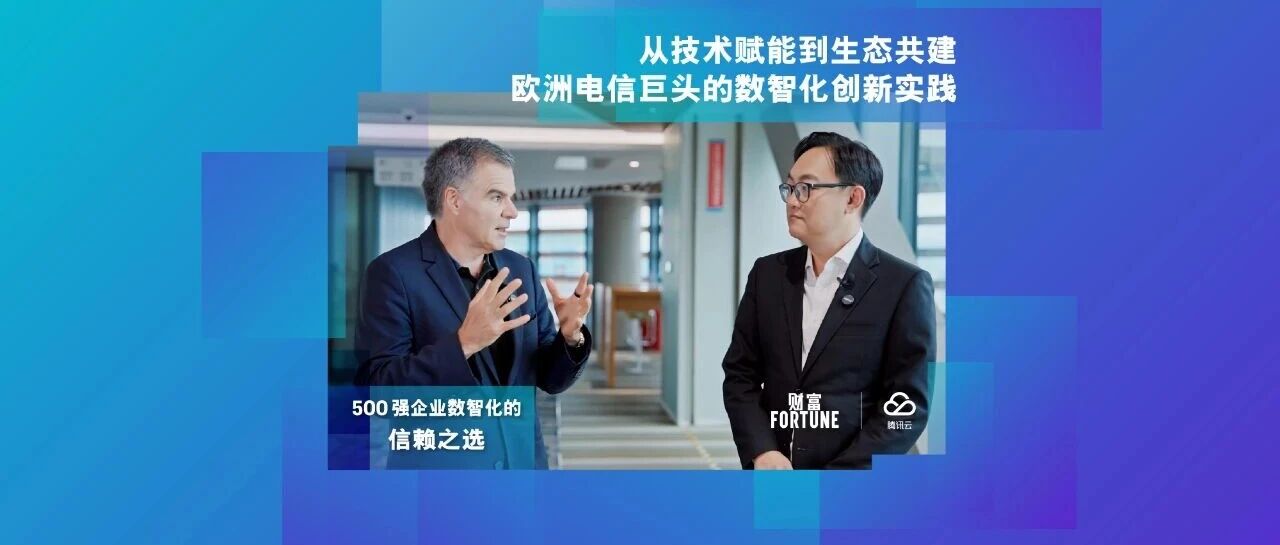
中国的最大公约数,世界的最小公倍数——《财富》专访Orange创新设备与合作伙伴关系执行副总裁菲利普·卢卡斯
财富FORTUNE· 2025-09-29 13:05
Core Viewpoint - The article discusses Orange's ambition to develop a "super app" called Max it for the African and Middle Eastern markets, inspired by China's WeChat model, aiming to provide comprehensive communication and subscription management services [7][9][10]. Group 1: Orange's Market Strategy - Orange is a leading telecommunications operator in Europe, the Middle East, and Africa, serving 300 million users across 26 countries [3]. - The company aims to replicate the success of Chinese mobile internet by launching Max it, which will cater to the unique needs of the African market [9][10]. - The average price of mobile devices in sub-Saharan Africa is around 60 euros, necessitating a low-cost, feature-rich application to meet user demands [9]. Group 2: Collaboration with Tencent Cloud - Orange partnered with Tencent Cloud to develop Max it, enhancing its capabilities significantly within a year [12][17]. - The collaboration focuses on localizing technology and adapting it to meet the specific needs of African users, rather than simply copying existing models [18][21]. - Tencent Cloud's expertise has allowed Orange to accelerate the development of new features for Max it, including messaging, video, and music functionalities [12][14]. Group 3: Local Adaptation and Innovation - The partnership emphasizes the importance of local adaptation, with Orange employing local talent to build a sustainable ecosystem [14][15]. - A phased approach is being taken to customize solutions for different countries, ensuring that the app meets diverse market expectations [15][18]. - The goal is to create a long-term, successful digital economy in Africa, similar to the sustained growth of WeChat in China [19][21]. Group 4: Historical Context and Future Outlook - The article draws parallels between historical advancements in telecommunications and the current efforts to leverage Chinese technology in Africa [20][22]. - The aim is to transform the lessons learned from China's market into a framework that can be applied globally, particularly in emerging markets [20][21].


从车机到资本市场,博泰车联打入保时捷供应链
Jing Ji Guan Cha Bao· 2025-09-28 10:11
Core Insights - The global electrification trend is prompting multinational automotive companies to enhance their localization efforts in the Chinese market [1] - Porsche has debuted at the World New Energy Vehicle Conference, showcasing a China-exclusive in-car infotainment system developed by a local team [1] - The collaboration with local partner PATEO is aimed at leveraging local innovation to improve user experience and adapt to market demands [1] Group 1 - Porsche's new infotainment system is set to enter testing by the end of 2024 and is expected to be mass-produced by 2026, marking a rapid development cycle uncommon among luxury brands [1] - The partnership with PATEO, a supplier experienced in the automotive sector, is crucial for shortening iteration cycles and aligning with Chinese consumer preferences [1][2] - The new system incorporates advanced features such as AI voice assistants, 3D vehicle displays, and smart navigation, specifically designed to address the needs of Chinese users [2] Group 2 - The introduction of the China-exclusive Macan 4 electric version highlights Porsche's commitment to customization in its product offerings for the Chinese market [2] - The collaboration signifies a deep integration between a multinational luxury brand and a local supplier, showcasing Porsche's strategy to remain competitive in the intelligent automotive sector [3] - For PATEO, being selected by Porsche could open doors to the global luxury brand supply chain, enhancing its market position and business opportunities [3]