供给侧改革

Search documents
“反内卷“行情活跃,煤炭ETF(515220)持续吸金,份额较年初翻倍
Mei Ri Jing Ji Xin Wen· 2025-07-14 01:58
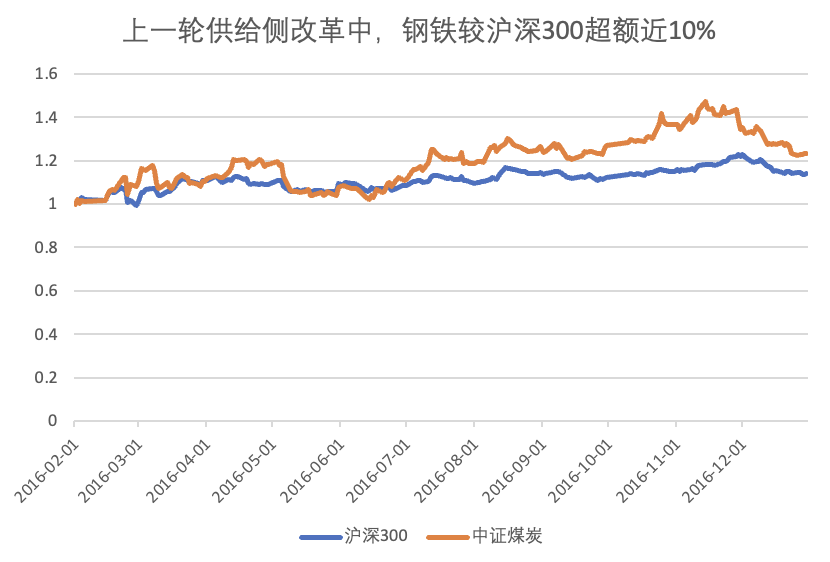
每经编辑|彭水萍 近期一系列行业内"反内卷"的政策文件陆续出台,周期性板块资金持续净流入。煤炭板块还具备高股息、高分红特征,低利率背景下,配置 价值凸显。截至7月11日,煤炭ETF(515220)连续5日净流入额超12亿元,当前规模超57亿元,较年初增长超120%。"反内卷"行情活跃背景 下,煤炭板块或持续受益。 1、看热点:"反内卷"政策预期升温 当前受内外部需求不足、前期产能扩张过快等因素影响,工业企业利润再度承压,时隔十年,政策再次强调加速淘汰落后产能,供给侧改革 2.0预期升温。 供给侧改革对煤炭的核心措施是"去产能",直接减少了市场供给总量,从而提振煤炭价格,煤炭企业利润有望修复。 2、看过往:历史供给侧改革期,煤炭行业占优 (1)2016年"供给侧改革":钢铁较沪深300超额近10% "碳中和"背景下,煤炭板块面临变相供给侧改革,叠加新增产能批复受严格限制,未来新建矿资本开支有限,高现金流背景下,煤企高股 息、高分红确定性增强。截至2025年二季度末,煤炭行业股息率约5.5%,相较其他指数优势明显。 | 指数代码 | 指数名称 | 股息率(近12个月,%) | | --- | --- | --- ...

黑色系商品集体走强,原油回归基本面主导
2 1 Shi Ji Jing Ji Bao Dao· 2025-07-14 01:51
Group 1: Commodity Market Overview - Domestic commodity futures showed mixed performance from July 7 to July 11, with the black series and European shipping lines leading gains, while basic metals and agricultural products experienced slight fluctuations [1] - In the energy and chemical sector, fuel oil fell by 1.85%, while crude oil rose by 2.07% and lithium carbonate increased by 1.58% [1] - The black series saw significant increases, with coking coal up by 8.76%, coke up by 6.04%, and iron ore up by 4.30% [1] Group 2: Coking Coal Market Dynamics - Coking coal prices continued to rise, with a weekly increase of 8.76%, reaching 913.0 yuan/ton, driven by expectations of supply-side reforms and policies aimed at reducing "disorderly competition" [1][2] - Despite the price rebound, the supply-side remains loose, with domestic production recovering and import capabilities from Mongolia and Russia remaining strong [1][2] - The market is expected to experience a tug-of-war between weak realities and strong expectations in July, with potential pressures on coking coal prices due to reduced production incentives and seasonal demand declines [2][3] Group 3: Oil Market Trends - The geopolitical premium in oil prices has dissipated, with Brent crude oil rising by 3.09% to $70.63 per barrel, while WTI crude oil increased by 1.28% to $67.35 per barrel [4] - The oil market is returning to fundamentals, with OPEC+ discussing production increases, which may exceed market expectations [4][5] - The International Energy Agency (IEA) revised global oil demand growth down to 720,000 barrels per day from previous estimates, indicating a tightening supply-demand balance [5][6] Group 4: Economic Indicators - The National Bureau of Statistics reported a 0.1% decrease in June CPI and a 3.6% year-on-year decline in PPI, indicating mixed economic signals [6] - Core CPI showed a slight recovery, supported by policies promoting durable goods, while PPI's decline reflects seasonal demand downturns in energy sectors [6][7] - The "anti-involution" policy aims to address low-price competition and overcapacity, leading to price rebounds in industrial products like coking coal and rebar [6][7] Group 5: Sector-Specific Insights - In the lithium carbonate market, supply is expected to remain high due to ongoing production ramp-ups, while demand from traditional automotive sales may face challenges [7] - The iron ore market is supported by resilient demand, although global shipments are expected to increase in the second half of the year [7] - The agricultural sector, particularly in live pig prices, is experiencing a decline, but future supply increases from new piglets may stabilize prices in the coming quarters [8]
花旗:中国钢铁_供给侧改革推进_山西省钢厂需减产
花旗· 2025-07-14 00:36
Investment Rating - The report indicates a pecking order for investment ratings: aluminum > lithium > steel > copper > gold > battery > thermal coal > cement [1] Core Insights - Major steel mills in Shanxi Province are mandated to reduce production by 10-30% year-on-year in 2025, resulting in an approximate 6 million tons reduction, which is about 10% year-on-year for the entire province [1] - Shanxi Province accounted for approximately 6% of China's steel market share in 2024 [1] - The supply reform in the steel industry is progressing in a tailored manner rather than a one-size-fits-all approach [1] - The production cuts are expected to support steel prices in the second half of 2025 [1] Summary by Sections - **Production Cuts**: Steel mills in Shanxi Province are required to cut production by 10-30% YoY, leading to a total reduction of around 6 million tons [1] - **Market Share**: Shanxi Province held about 6% of the steel market share in China during 2024 [1] - **Supply Reform**: The ongoing supply reform is being implemented progressively and is not uniform across all mills [1] - **Price Support**: Anticipated production cuts are expected to bolster steel prices in the latter half of 2025 [1]

光伏反内卷解读
2025-07-14 00:36
Summary of the Solar Industry Conference Call Industry Overview - The solar industry is currently facing two major issues: overcapacity and intense price competition, necessitating non-market measures to combat internal competition [2][3] - The government is increasingly focused on the solar industry, with policies aimed at promoting high-quality development and addressing low-price competition [10][11] Key Insights and Arguments - Global solar installation capacity is projected to reach 530 GW in 2024, with component demand around 650 GW, and is expected to grow by 10% to 580 GW in 2025 [2][6] - Despite the growth in demand, the total capacity across four key segments exceeds 1,200 GW, leading to significant cash losses across the industry [6] - The government has initiated supply-side reforms, including a minimum bidding price and the formation of an industry self-discipline alliance to regulate production rates [7][12] - The price of silicon materials and wafers has begun to rise, indicating a positive response from the downstream market [4][11] Supply-Side Reform Progress - Supply-side reforms are focused on the silicon material segment, with leading companies acquiring smaller producers to balance supply and demand [12] - A consensus among major glass manufacturers to reduce production by 30% aims to alleviate losses and increase prices from approximately 10 yuan to 12 yuan per unit [14][18] Investment Opportunities - Three main investment directions are identified: 1. High-energy consumption segments benefiting from supply-side selection, such as silicon materials and glass, with recommended companies including Tongwei Co., GCL-Poly Energy, and Flat Glass Group [4][13] 2. Leading companies across various segments expected to see profit improvements, including LONGi Green Energy, JA Solar, and Trina Solar [4][16] 3. New technology sectors, particularly BC cell technology and copper paste technology, with key players like LONGi Green Energy and Aiko Solar [15][16] Domestic and International Demand Outlook - Domestic demand is expected to recover in September after a period of adjustment following the "531 rush" [9] - Internationally, demand remains weak due to seasonal factors in Europe and uncertainties in the U.S. market, but improvements are anticipated in September [9] Policy and Market Changes - Recent policies emphasize the need to eliminate low-price competition and promote high-quality development within the solar industry [10][11] - The government is committed to addressing overcapacity and ensuring fair competition through regulatory measures [10][11] Conclusion - The solar industry is undergoing significant changes driven by government policies and market dynamics, with a focus on supply-side reforms and price recovery strategies. Investors are encouraged to monitor developments closely for potential opportunities in this evolving landscape [21]
硅料价格上涨,看多供给侧改革之后的新能源产业
2025-07-14 00:36
Summary of Conference Call Records Industry Overview - The conference call primarily discusses the **photovoltaic (PV) industry** and its supply-side reforms aimed at improving market order and eliminating excessive competition [1][2][3]. Key Points and Arguments 1. **Supply-Side Reform Impact**: The supply-side reform in the PV industry is expected to significantly improve market conditions by eliminating backward production capacity and enhancing product quality. Recent policies, including revisions to the Anti-Unfair Competition Law, aim to optimize supply-side structures with a focus on polysilicon [2][3]. 2. **Polysilicon Price Surge**: Polysilicon prices have risen sharply, reaching a range of **CNY 45,000 to 50,000 per ton**. This price increase reflects the effectiveness of the anti-competitive measures and is expected to lead to a new growth cycle in the PV industry [1][5]. 3. **Market Dynamics**: Different segments of the PV supply chain are experiencing price fluctuations at different times. While polysilicon and glass prices are rising, other segments like silicon wafers and battery components may experience a lag in price adjustments [1][6]. 4. **Technological Advancements**: Breakthroughs in battery component technology, particularly in perovskite tandem cells, are driving competition and innovation within the industry. These advancements are expected to spread the positive effects of supply-side reforms across other segments [1][8]. 5. **Solid-State Battery Potential**: The solid-state battery sector is gaining traction, with new product launches and trials for electric vehicles equipped with solid-state batteries. This area presents ongoing speculative investment opportunities [1][9]. 6. **Investment Opportunities in AIDC**: The AIDC (Automated Identification and Data Capture) construction is currently in a narrative phase, with potential investment opportunities emerging as bidding processes commence, particularly in the electrical equipment sector [1][10]. 7. **Data Center Storage Demand**: The demand for energy storage in data centers is increasing due to the rise in green electricity applications and power growth. This trend highlights the importance of energy storage solutions in stabilizing power fluctuations [1][11]. 8. **Humanoid Robot Industry Growth**: The humanoid robot sector is rapidly developing, with significant events such as potential shell listings for support robots. This sector's growth is marked by financing activities among key players [1][12]. 9. **Investment Directions**: From an investment perspective, there are two main directions to focus on: horizontal expansion of existing businesses and identifying investment targets around major enterprises [1][13]. 10. **Wind Power Industry Outlook**: The wind power industry is showing a solid fundamental situation, although the bidding environment has been less favorable. The PV sector is expected to see some upward movement, particularly in June and July [1][14]. 11. **Traditional Power Grid Performance**: The traditional power grid sector has shown average performance, but specific companies like Siyi Electric are expected to drive the sector's growth. There is potential for investment in AI-related areas within the grid sector [1][15]. 12. **Overall Investment Recommendations**: The PV market outlook remains positive in the short term, with solid-state batteries, AIDC, electrical equipment, humanoid robots, wind power, and traditional power grid sectors identified as key investment areas [1][16]. Additional Important Insights - The conference highlights the importance of ongoing policy support and technological advancements in shaping the future of the PV industry and related sectors. The anticipated market adjustments and investment opportunities present a favorable environment for stakeholders [2][3][4][5][6][7][8][9][10][11][12][13][14][15][16].
反内卷下的钢铁板块投资机会
2025-07-14 00:36
Summary of Steel Industry Conference Call Industry Overview - The steel industry is undergoing supply-side reforms driven by anti-involution policies, aiming to improve competition and reduce excess capacity, which presents long-term investment opportunities [1][4][29] - The profitability of steel companies is significantly influenced by supply-demand dynamics, with a strong production incentive when rebar profits exceed 100 yuan, but this can lead to price declines [1][7] Key Points Supply and Demand Dynamics - The real estate market downturn has negatively impacted demand for construction steel, with new housing starts and construction area both declining [1][12] - Infrastructure investment has increased but is insufficient to offset the decline in residential construction, leading to an expected 5%-6% decrease in construction steel demand by 2025 [1][13] - Global iron ore supply is expected to increase, with new low-cost projects disrupting oligopolistic structures and optimizing cost structures [1][18] - The steel industry is currently experiencing a low inventory cycle, which reflects pessimistic market expectations and could lead to a supply-demand tightening if restocking occurs [1][17] Policy and Regulatory Environment - The government has emphasized anti-involution policies, with measures aimed at controlling production and promoting industry consolidation [4][5] - The central government has set a production reduction target of 50 million tons for 2025, although local implementation has been slow [8][10] Company Performance and Outlook - Leading companies like CITIC Special Steel and Baosteel are expected to benefit from product upgrades and high-value income, with their PB valuations currently low [2][30] - Hualing Steel and Shougang have strong profit elasticity, with Hualing expected to recover profits to 1.4-1.5 billion yuan [2][31] - Fangda Special Steel is maintaining profitability due to its efficient business model, even in a downturn [2][33] Market Sentiment and Investment Opportunities - The steel sector is at the bottom of the profit cycle, with low valuations and low public fund allocations, indicating high potential returns [2][26] - The market anticipates that strict capacity reductions could lead to a rebound in steel prices and profitability in the second half of the year [2][26][34] Future Trends - The demand for construction steel is expected to decline by 6% in 2025, but a gradual recovery is anticipated from 2026 to 2028 [21] - The global steel production landscape is shifting, with non-China regions expected to see slight growth while developed countries face declines [22] - The steel industry is expected to see significant changes in the next three years, with a clear direction towards supply-side reforms [29] Additional Insights - The anti-involution policy is expected to significantly impact profit distribution within the steel industry, potentially improving domestic steel companies' profit margins [28] - Historical data suggests that strict enforcement of production cuts can have profound effects on market dynamics, emphasizing the importance of supply-demand relationships [27] This summary encapsulates the key insights from the conference call regarding the steel industry, highlighting the current challenges, regulatory environment, company performances, and future trends.


“反内卷”下可否带来16年供给侧改革行情?
2025-07-14 00:36
Summary of Conference Call Records Industry or Company Involved - The discussion primarily revolves around the **Chinese market**, focusing on **manufacturing upgrades**, **new energy**, and **financial sectors**. Core Points and Arguments 1. **Policy Stability and Manufacturing Focus** The domestic policy remains stable, emphasizing manufacturing upgrades and new energy. There may be a relaxation of purchase and loan restrictions in first-tier cities, but the overall policy tone will not change due to market discussions [1][2] 2. **Comparison with 2016 Supply-Side Reform** The intensity of the anti-involution policy is expected to be less than that of the 2016 supply-side reform, focusing more on legal compliance rather than large-scale structural adjustments [1][4] 3. **Financial Sector Performance** The financial sector faces challenges in continuing to drive index growth. Historical patterns indicate that major events, such as the September 3 military parade, will lead to market stability rather than volatility [1][5] 4. **Global Risk Appetite** An increase in global risk appetite positively impacts the Chinese market, leading to a stable phase after a recent rally, which aligns with macroeconomic needs [1][6] 5. **Impact of Consumption Policies** The "old-for-new" consumption policy significantly improved the performance of home appliance and automotive companies, with a financial injection of 300 billion leading to stock price increases [1][9] 6. **Focus on Photovoltaic and New Energy Sectors** The anti-involution policy prioritizes the photovoltaic and new energy sectors, where stock price elasticity is expected to exceed corporate profit elasticity. Investors are advised to focus on leading companies in these sectors [1][3][10] 7. **Debt Market and Asset Allocation** Strong total policies suggest that debt market dividend assets remain a key allocation direction, with technology and military sectors also worth attention due to potential overseas orders and performance boosts [1][15] 8. **Challenges in the Photovoltaic Industry** The photovoltaic sector faces significant overcapacity and relies heavily on capital, leading to higher volatility compared to the more stable home appliance sector [1][13] 9. **Future Market Expectations** The photovoltaic sector may experience two market cycles, with potential price corrections expected before a new wave of activity following the implementation of anti-competitive laws [1][14] 10. **Investment Strategy Recommendations** Investors are encouraged to focus on specific sectors like photovoltaic and new energy rather than spreading investments across all industries, as traditional cyclical industries may not align with current strategies [1][12] Other Important but Possibly Overlooked Content 1. **Policy Execution Differences** The current anti-involution policy lacks the same level of media coverage and execution intensity as the 2016 supply-side reform, indicating a different approach to policy enforcement [1][7][8] 2. **AI Sector Performance** The domestic AI sector is underperforming due to high valuations and technological gaps compared to international counterparts, which may affect future investment strategies [1][16] 3. **Military Industry Opportunities** The military sector is expected to see growth opportunities, particularly with upcoming events like the military parade, which may drive demand [1][21] 4. **Financial Sector Investment Caution** Current conditions suggest that investing in financial stocks is not advisable, with better opportunities in energy-related assets and technology sectors [1][22]
对等关税 2.0 来袭,沪指站上 3500 点,A股后续如何演绎
2025-07-14 00:36
Summary of Key Points from Conference Call Records Industry or Company Involved - The discussion primarily revolves around the A-share market in China, U.S. tariffs, and macroeconomic indicators affecting various sectors including technology, real estate, and commodities like gold and copper. Core Points and Arguments 1. **Impact of U.S. Tariffs**: The potential implementation of unexpected tariffs by the U.S. poses risks to market sentiment, particularly affecting U.S. stocks and leading to increased volatility as negotiations reach critical stages [2][2][2] 2. **Market Performance**: The A-share index has recently surpassed 3,500 points, indicating cautious optimism among investors, although the market remains in a state of consolidation [5][9][38] 3. **Economic Indicators**: June's CPI has turned positive but remains low, while PPI has seen negative growth for 33 consecutive months, necessitating a reevaluation of anti-involution policies [5][6][6] 4. **Debt and Currency Trends**: U.S. Treasury yields have returned above 4.4%, with expectations of a weak dollar in the second half of the year due to tariff impacts and economic data weakness [3][4][4] 5. **Gold Market Outlook**: After adjustments, gold is expected to enter a bullish phase, supported by ongoing purchases from the Chinese central bank [3][26][26] 6. **Sector Focus**: Investment opportunities are identified in technology growth sectors, pre-increase mid-year reports, and areas affected by anti-involution policies [10][21][38] 7. **Real Estate Policy Misinterpretations**: There are misconceptions regarding new housing policies, with a clear distinction made between new urbanization initiatives and traditional housing reform [8][8][8] 8. **Liquidity Conditions**: Financial sector liquidity has increased, benefiting markets, but signs of marginal contraction have emerged, indicating potential future challenges [11][11][11] 9. **Copper Market Dynamics**: The copper market faces short-term pressure due to tariffs, but supply-demand balance remains tight, limiting significant price drops [27][27][27] 10. **Silver Market Performance**: Silver has shown better performance recently, with potential for further price increases, making it a recommended investment over gold and copper [28][28][28] Other Important but Possibly Overlooked Content 1. **Government Debt Initiatives**: The "two heavy, two new" funding plan aims to support new urbanization through long-term special bonds, differing from previous policies [8][8][8] 2. **Market Sentiment and Future Expectations**: The overall market sentiment remains cautious, with expectations of potential resistance to further index gains due to external tariff disturbances and domestic policy outcomes [9][9][9] 3. **Sector Rotation and Investment Strategy**: Emphasis on sector rotation strategies, particularly in renewable energy, steel, and real estate, with a focus on companies that can adapt to changing policies [20][20][20] 4. **AI and Media Sector Opportunities**: The AI application sector is highlighted for its growth potential, particularly in gaming and publishing, with specific companies recommended for investment [23][24][24] This summary encapsulates the critical insights and forecasts discussed in the conference call, providing a comprehensive overview of the current market landscape and future expectations.
投资前瞻:多项经济数据将公布
Wind万得· 2025-07-13 22:42
Market News - The Shanghai Stock Exchange officially released the "Self-Regulatory Supervision Guidelines for Sci-Tech Innovation Board Listed Companies No. 5 - Sci-Tech Growth Tier" on July 13, emphasizing the enhancement of investor suitability management. The reform does not introduce new trading thresholds for individual investors, maintaining the requirement of "500,000 yuan in assets + 2 years of experience" [2] - The State Council Information Office will hold a press conference on July 14 to introduce the import and export situation for the first half of 2025, and another press conference in the afternoon to discuss financial statistics for the same period [2] - On July 15, the National Bureau of Statistics will release economic data including June's industrial added value, fixed asset investment, and retail sales of consumer goods, along with national economic operation data for the first half of the year [2] Sector Matters - China National Offshore Oil Corporation announced on July 13 that 24 sets of 2000-meter ultra-deepwater suction anchors, built independently by China, have been shipped to Brazil, marking a significant recognition of "Chinese manufacturing" in the international mainstream market [5] - The white feather meat duck industry has begun a capacity reduction battle, with approximately 9 million breeding ducks eliminated since December last year due to continuous losses. The daily output of ducklings has decreased by about 2 million, but remains significantly higher than market demand [6] - The price of polysilicon has surged over 16% in a single week, rising from 30,400 yuan/ton to a peak of 42,265 yuan/ton, marking a 39% increase over 14 trading days [7] Individual Stock Events - Degute announced on July 13 plans to issue shares and pay cash to acquire 100% of Haowei Technology, along with raising matching funds [9] - Yuanli Co. is planning to acquire control of Fujian Tongsheng New Materials Technology Co., as announced on July 13 [10] - Kanghua Bio announced on July 13 that its controlling shareholder is planning a change in control, which may lead to a change in the company's controlling shareholder [11] - Zijin Mining expects a net profit of approximately 23.2 billion yuan for the first half of the year, a year-on-year increase of about 54% [13] - Lanke Technology forecasts a net profit growth of 85.5% to 102.36% for the first half of 2025, estimating between 1.1 billion to 1.2 billion yuan [14] Lock-up Stock Release - According to Wind data, 42 companies will have lock-up stocks released from July 14 to July 18, with a total release volume of 1.604 billion shares, valued at approximately 27.74 billion yuan [16] - The highest release value on July 14 is approximately 16.855 billion yuan, accounting for about 60.76% of the total release scale for the week [16] - The top three companies by release value are Tianyue Advanced (7.487 billion yuan), Maiwei Bio-U (5.420 billion yuan), and Baoli Food (3.010 billion yuan) [16] New Stock Calendar - From July 14 to July 18, there are two new stocks available for subscription, both starting on July 14: Shanda Electric Power listed on the Shenzhen Stock Exchange and Jiyuan Group listed on the Shanghai Stock Exchange [19] Institutional Outlook - Shenwan Hongyuan indicates that the market has developed a "bull market atmosphere," with the Shanghai Composite Index breaking through previous highs, enhancing risk appetite and trading activity [21] - CITIC Securities expects the market's central tendency to continue to rise, with the Shanghai Composite Index reaching new highs in 2025 due to favorable macroeconomic conditions and market sentiment [22] - Guotai Junan predicts that the Hong Kong stock market will see a bull market in the second half of the year, driven by the revaluation of Chinese technology assets and the attractiveness of scarce assets in AI applications, innovative drugs, and new consumption [24]

光伏大爆发,分歧又来了
格隆汇APP· 2025-07-13 08:54
Core Viewpoint - The photovoltaic industry is undergoing significant changes due to supply-side reforms, with a notable increase in polysilicon prices and market dynamics shifting towards a more concentrated structure among leading companies [1][17][29]. Group 1: Market Reactions - The polysilicon futures market reacted rapidly after the Central Financial Committee meeting on July 1, with main contract prices rising from 32,000 yuan to over 41,000 yuan, a nearly 30% increase in just eight trading days [1]. - In the stock market, leading polysilicon companies like Tongwei Co., Xiexin Technology, and Daqo New Energy saw stock prices increase by over 23% during the same period, although the stock market's reaction was slower compared to the futures market [3]. Group 2: Supply-Side Reform and Capacity Clearance - There is a consensus in the market regarding the need for supply-side reforms in the photovoltaic sector, but skepticism remains about the pace of capacity clearance and price increases [4]. - The last supply-side reform was initiated in November 2015, with coal and steel capacity clearance policies taking effect in February 2016, indicating that similar timelines may apply to the current photovoltaic reforms [5]. - Some analysts believe that the pace of policy implementation for photovoltaic capacity clearance may be faster than expected due to prior engagements with enterprises and directives from higher authorities [6][9]. Group 3: Pricing Dynamics - The average cost line for leading polysilicon manufacturers is above 40,000 yuan, establishing a price floor for polysilicon [12]. - Reports suggest that the target price for polysilicon should be at least 60,000 yuan to ensure that leading companies can cover costs and service debts, with some estimates suggesting prices may need to exceed 80,000 yuan [13][14]. - If polysilicon prices rise significantly, the ability of downstream manufacturers to pass on costs remains a contentious issue, with the current price increase primarily driven by supply-side reforms rather than demand from downstream sectors [15]. Group 4: Industry Outlook - The photovoltaic industry is experiencing a fundamental shift, indicating a reversal of previous difficulties, although the stock prices of leading companies have not yet fully reflected this change [17][18]. - The current situation in the photovoltaic sector is reminiscent of the coal industry's supply-side reforms initiated in 2016, which led to significant capacity reductions and price increases over time [19][22]. - The photovoltaic sector is expected to see a recovery in valuations, although the demand landscape may face uncertainties due to trade barriers and other external factors [29].