
美元流动性

Search documents
金融期权周报-20251110
Guo Tou Qi Huo· 2025-11-10 12:56
1. Report Industry Investment Rating - No information provided in the given content 2. Core Viewpoints of the Report - Last week, the overall market showed a trend of falling first and then rising. Except for the CSI 500 Index, most major indices closed higher, with the SSE 50 Index leading the gains with a weekly increase of 0.89%. The power equipment and coal sectors performed well, with weekly increases of 4.98% and 4.52% respectively, while the computer sector was weak with a weekly decline of about 2.54%. The market focus was on the US dollar liquidity issue. After the Fed's interest - rate meeting, there were signs of marginal tightening of US dollar liquidity, putting pressure on US stocks. On Friday, news of the end of the US government shutdown improved market risk appetite, driving a rebound in US stocks and a decline in the US dollar. The impact of US dollar liquidity shocks on the domestic market was limited, and Chinese asset prices showed resilience. The short - term external disturbances had limited impact on the domestic market, and it is expected that the domestic market will mainly fluctuate at a high level in the medium term. Continue to monitor subsequent changes in US dollar liquidity and domestic policy signals [1]. - In the options market last week, the implied volatility (IV) of various financial options generally declined. The IV of the Sci - Tech Innovation 50 Index options (IV = 32%) and ChiNext Index options (IV = 28%) has been falling since September but remains at a relatively high level above the median of the past year. The IV of 50 and 300 options is currently in the range of 12% - 14%, and the IV of CSI 500 and CSI 1000 options is about 18%. The position PCR of most financial options is in the range of 75% - 110%, slightly higher than the previous week [2]. - The market may continue to show a relatively strong oscillating pattern, and the IV of most options varieties continues to decline. The impact of factors such as US dollar liquidity on domestic asset prices is limited. It is expected that the market may continue to oscillate strongly, and sectors such as power equipment will perform relatively strongly. The current domestic liquidity environment remains positive, and inflation data has stabilized and rebounded. One can continue to hold indices with relatively reasonable valuations, such as the SSE 300 and CSI A500. Since the current option IV has declined, one can also buy out - of - the - money call options with a long - term maturity on the corresponding indices. For the Sci - Tech Innovation 50 Index, which has experienced large fluctuations recently and still has a relatively high static valuation, if one holds the underlying asset, one can consider buying out - of - the - money put options or selling out - of - the - money call options to reduce exposure risk. If one has accumulated a large amount of spot gains, one can also consider taking profits on the spot and keeping a small amount of long - term call options to cope with the irrational rise of the market, such as the ChiNext Index. The CSI 1000 - 2603 stock index futures still have a high discount, and one can consider continuing to hold the covered call strategy of buying the index futures and selling out - of - the - money call options [3]. 3. Summaries According to Relevant Catalogs 3.1 Overview - The overall market last week showed a trend of falling first and then rising. Most major indices closed higher, with the SSE 50 Index leading the gains. The power equipment and coal sectors performed well, while the computer sector was weak. The market focused on US dollar liquidity. After the Fed's meeting, US dollar liquidity tightened marginally, affecting US stocks. The end of the US government shutdown improved market sentiment. The impact on the domestic market was limited, and the domestic market is expected to oscillate at a high level in the medium term [1]. 3.2 Options Market - The IV of various financial options generally declined last week. The IV of the Sci - Tech Innovation 50 Index and ChiNext Index options has been falling but remains high. The IV of 50 and 300 options is in the 12% - 14% range, and that of CSI 500 and CSI 1000 options is about 18%. The position PCR of most financial options is in the 75% - 110% range and slightly increased [2]. 3.3 Strategy Outlook - The market may continue to oscillate strongly, and the IV of most options varieties continues to decline. Hold indices with reasonable valuations and consider buying long - term out - of - the - money call options. For high - volatility indices, manage risk through option strategies. Consider the covered call strategy for CSI 1000 - 2603 stock index futures [3]. 3.4 Market Data of Each Index - Detailed data on the closing prices, price changes, IV, IV changes, historical quantiles, option trading volumes, and position PCR of various indices such as the SSE 50, SSE 300, CSI 500, CSI 1000, ChiNext Index, Sci - Tech Innovation 50 Index, and Shenzhen 100 Index are provided [5]. - Data on the price, IV, and related quantiles of each index over different time periods (recently, in the past year, and in the past three years) are presented, along with the IV term structure, intraday IV trends, and option smile curves of each index [8][19][27][34][43][48][52][64][70][77][86][93].
东海研究 | 石油石化:原油供给宽松,叠加需求淡季,油价测试底部
Xin Lang Cai Jing· 2025-11-10 08:31
Core Viewpoint - The report discusses the factors influencing oil prices, including geopolitical tensions, OPEC production decisions, and global economic conditions, predicting fluctuations in oil prices between $50 and $70 per barrel in Q4 2025, with a potential drop to $40 in 2026 [16][11][8]. Oil Price Influencing Factors - Geopolitical conflicts and OPEC+ production cuts have supported oil prices, while U.S. shale production and global demand fluctuations have created volatility [8][11]. - OPEC+ is expected to increase production by 137,000 barrels per day in November, with further increases planned for December [28][16]. - The U.S. commercial crude oil inventory as of October 24, 2025, was 416 million barrels, down 9.54 million barrels year-on-year, and 5.91% lower than the five-year average [17][24]. Global Oil Supply and Demand - Global oil demand is projected to grow, with the EIA forecasting an increase of 300,000 barrels per day in 2025 and 240,000 barrels per day in 2026 [7][16]. - The IEA predicts a similar growth trajectory for global oil and liquid production, with increases of 270,000 and 130,000 barrels per day respectively [7][16]. - China's industrial crude oil processing volume increased by 6.8% year-on-year in September 2025, indicating a recovery in demand [24]. Economic Indicators - The U.S. 10-year Treasury yield was approximately 4.11% as of October 31, 2025, with expectations of a potential interest rate cut by the Federal Reserve in December [16][34]. - The manufacturing PMI in China for October 2025 was reported at 49.0%, indicating a contraction in the manufacturing sector [47]. Inventory and Production Insights - As of October 31, 2025, the number of active oil rigs in the U.S. was 546, a decrease of 39 rigs year-on-year, with production remaining stable at 13.64 million barrels per day [24][17]. - Global oil inventories are expected to increase, with a projected average growth of 2.6 million barrels per day in Q4 2025 [16]. Price Predictions and Market Outlook - The Brent crude oil price is expected to average $69 per barrel in 2025, with a decline to $52 per barrel in 2026 [16][7]. - The report highlights the potential for oil prices to test lower levels due to increasing supply and geopolitical uncertainties [16][11].


金属周报 | 流动性紧缩,金银的韧性与铜的疲态
对冲研投· 2025-11-10 07:08
Group 1 - The article discusses the impact of the prolonged U.S. government shutdown on market liquidity, particularly the tightening of dollar liquidity, with expectations for the government to potentially reopen by November 17 [2][7]. - Gold and silver prices experienced slight declines, with COMEX gold down 0.14% and silver down 0.05%, while copper prices saw a more significant drop of -3.05% on COMEX [5][8]. - The copper market is under pressure due to reduced domestic consumption and increased inventory levels, with SHFE copper prices returning to around 85,000 yuan per ton [9][10]. Group 2 - The article notes that the gold price is expected to have limited downside potential in the medium to long term, supported by factors such as U.S. sovereign credit risk and geopolitical tensions [8][56]. - The copper concentrate TC weekly index increased slightly to -42.1 USD/dry ton, indicating ongoing negotiations and price fluctuations in the copper concentrate market [14]. - COMEX copper inventory has increased significantly, surpassing 360,000 tons, reflecting a continued accumulation since mid-March [10][11]. Group 3 - The article highlights that the financial liquidity risks are brewing due to the government shutdown, leading to a significant pullback in U.S. stocks and Bitcoin, which are sensitive to liquidity changes [7][8]. - The article mentions that the domestic market for electrolytic copper has seen an increase in inventory, with a total of 202,600 tons, indicating a slight rise in supply amid weak demand [21]. - The SPDR gold ETF holdings increased by 2.9 tons to 1,042 tons, while SLV silver ETF holdings decreased by 1.01 tons to 15,089 tons, reflecting shifts in investor sentiment [48].

芦哲:美国联邦政府停摆时长创历史新高
Sou Hu Cai Jing· 2025-11-10 03:18
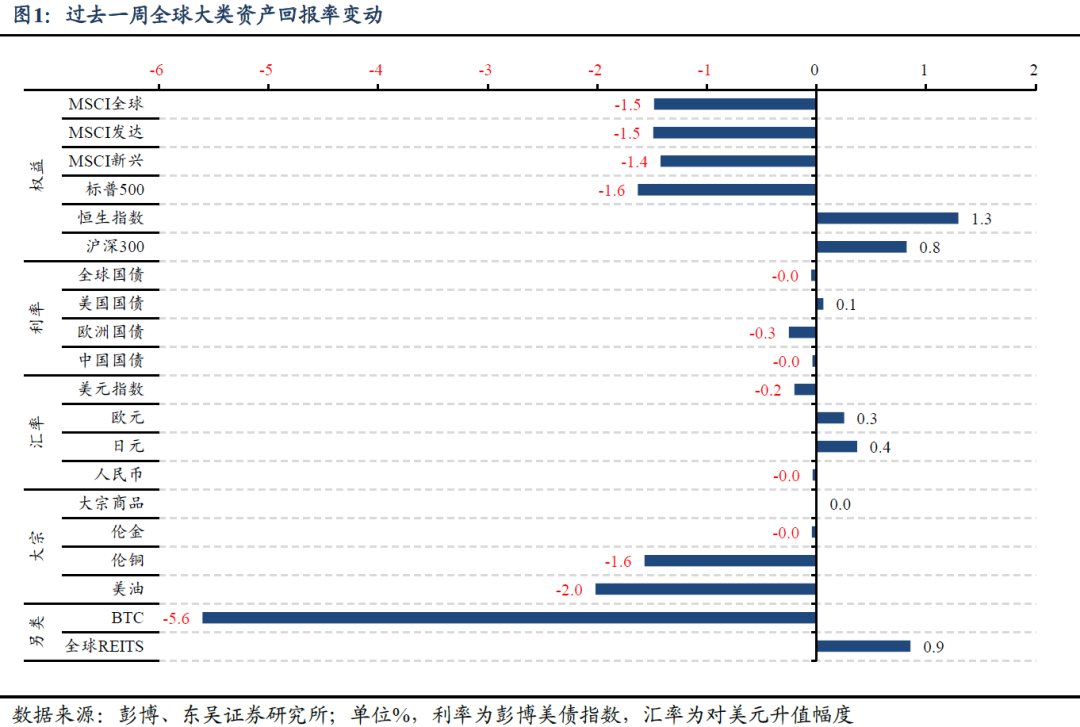
芦哲、张佳炜(芦哲系东吴证券首席经济学家、中国首席经济学家论坛成员) 核心观点 核心观点:本周市场对AI泡沫化的担忧,叠加联邦政府关门时间破历史纪录、最高法院对IEEPA关税判决带来的不确定性,市场避险情绪大幅走高,美股 大跌,美债利率走势震荡。截至最新美国联邦政府停摆时间已达40天,超越2018年底至2019年初停摆35天的历史纪录。持续的政府停摆除了导致非农、 GDP等关键数据缺失外,也开始对经济产生更大负面影响。一方面,由于公务员薪资等政府发放收入无法按期支付,居民消费面临一定的下行压力;另 一方面,政府停摆导致财政持续融资但无法支出,TGA余额持续增加,叠加缩表持续、RRP接近耗尽,货币市场流动性有所收紧,但其与近期风险资产大 幅回调更多为平行而非交叉的事件。向前看,随着预期的11月政府结束停摆,TGA泄洪,12月开始的经济数据与美元流动性料所改善。同时,由于12月 FOMC参考的11月经济数据(如能够发布)仍处于恶化阶段,叠加近期的美元流动性问题,美联储12月再度降息仍是大概率事件。 大类资产:AI泡沫、政府关门与关税裁决担忧推动市场避险情绪,带动美股大跌。本周市场对AI泡沫化的担忧,叠加联邦政府关 ...
2025美元流动性专题:美元流动性的三维度观测报告
Sou Hu Cai Jing· 2025-11-10 02:43
Core Insights - The report provides a comprehensive analysis of the current state of US dollar liquidity, highlighting the coexistence of overall abundance and structural pressures in the market. Group 1: Federal Funds Market - The federal funds market remains a cornerstone of dollar liquidity, with bank reserves stable at approximately $3.2 trillion despite the Federal Reserve's balance sheet reduction since June 2022 [1][10][12] - The overnight reverse repurchase (ON RRP) tool has acted as a buffer, absorbing excess funds from non-bank institutions, but its capacity is diminishing, indicating a weakening protective mechanism [1][10][12] Group 2: Repo Market - The repo market is tightening, as evidenced by the widening spread between the secured overnight financing rate (SOFR) and the ON RRP rate, reaching a year-to-date high [2][19] - The ratio of primary dealers' reverse repos to reserve balances is increasing, signaling pressure on liquidity provision capabilities [2][19] - The usage of the standing repo facility (SRF) reached a record $11 billion at the end of June 2025, reflecting rising vulnerabilities in the repo market [2][22] Group 3: Offshore Dollar Market - The offshore dollar market has shifted from traditional bank credit to bonds, with foreign exchange derivatives becoming a key liquidity source, posing significant maturity mismatch risks [3][26] - The cross-currency swap basis serves as a critical indicator of offshore dollar scarcity, with recent trends suggesting a potential weakening of the dollar's traditional safe-haven status [3][26] - The Federal Reserve's tools, including central bank currency swaps and FIMA repo facilities, are crucial for maintaining global dollar liquidity stability [3][26] Group 4: Outlook - While overall dollar liquidity remains ample, structural pressures are accumulating, particularly due to the Fed's balance sheet reduction and rising Treasury General Account (TGA) balances [4][10] - The combination of the Fed's balance sheet contraction and Treasury issuance distorts the dollar's monetary pyramid structure, increasing financial system fragility [4][10] - Despite these pressures, the likelihood of a systemic dollar liquidity crisis remains low, thanks to the Fed's established multi-layered liquidity support tools [4][10]

【申万宏源策略】美元流动性持续紧张,海外调整A股相对坚挺——全球资产配置每周聚焦 (20251031-20251107)
申万宏源证券上海北京西路营业部· 2025-11-10 02:07
Core Viewpoint - The article discusses the ongoing tightness in US dollar liquidity and its impact on global markets, particularly highlighting the relative resilience of A-shares amidst overseas adjustments [2] Group 1: Market Conditions - US dollar liquidity remains tight, influencing global asset allocation strategies [2] - A-shares have shown relative strength compared to other markets during recent adjustments [2] Group 2: Investment Implications - The current market environment suggests potential investment opportunities in A-shares due to their resilience [2] - Investors may need to reassess their strategies in light of the tightening liquidity and its effects on various asset classes [2]

美联储降息路径趋向
Hua Tai Qi Huo· 2025-11-09 14:14
1. Report Industry Investment Rating No relevant content provided. 2. Core Views - Recent liquidity crisis in the US led to a "bond market blood - sucking → risk asset blood - loss" chain. The market is in a capital re - pricing cycle, and the current decline is due to capital cost rather than fundamental deterioration [9]. - The wave of US Treasury issuance and fiscal deficit expansion will strengthen the mid - term pattern of liquidity tightening and asset re - pricing. Dollar liquidity will remain tight from November to December, and rising bond yields will push up global capital pricing and suppress high - valuation assets [9]. - The market is in a phased switch from liquidity flooding to pricing callback. Once fiscal spending resumes and the Fed stops liquidity withdrawal or shifts policy, asset prices will rise again. This is a valuation adjustment, not a structural breakdown [10]. 3. Summary by Related Catalogs 3.1 US Treasury Yield Review - As of November 7, the 10 - year US Treasury yield rose 9bp in two weeks, reaching 4.11%. The 2 - year yield rose 7bp and the 30 - year yield rose 11bp compared to two weeks ago [5]. 3.2 US Treasury Market Changes - In late October, the duration of US Treasury issuance slightly rebounded. The issuance amounts were $68.47 billion for 2 - year, $69.902 billion for 5 - year, and $43.95 billion for 7 - year bonds. The US fiscal deficit in September was $197.9 billion, and the 12 - month cumulative deficit slightly declined to $1.78 trillion [5]. 3.3 Derivatives Market Structure - The net short position in US Treasury futures slightly declined. As of September 23, the net short positions of speculators, leveraged funds, asset management companies, and primary dealers dropped to 5.738 million contracts. The federal funds rate futures market remained net short, rising to 395,400 contracts [5]. 3.4 US Dollar Liquidity and US Economy 3.4.1 Monetary Policy - On October 30, 2025, the Fed cut interest rates by 25bp to 3.75% - 4.00%, and announced to stop balance - sheet reduction in December and reinvest all MBS principal repayments in short - term bonds. Powell emphasized that the decision on further rate cuts in December depends on data [6]. 3.4.2 Fiscal Policy - As of November 5, the US Treasury's TGA deposit balance expanded by $37.63 billion in two weeks, and the Fed's reverse repurchase tool expanded by $18.06 billion, increasing short - term uncertainty in the liquidity buffer [6]. 3.4.3 Economic Situation - As of November 1, the Fed's weekly economic indicator was 2.22 (2.13 two weeks ago), indicating short - term economic improvement after stability [6].
数据中心“抢电”引发供给担忧,利好铝价偏强震荡
GOLDEN SUN SECURITIES· 2025-11-09 12:04
Investment Rating - The report maintains a "Buy" rating for the non-ferrous metals sector, indicating a positive outlook for investment opportunities in this industry [3]. Core Insights - Concerns over supply due to data centers "grabbing electricity" are expected to support aluminum prices in the short term [1]. - Liquidity concerns and tariff rulings are gradually exhausting bearish factors for precious metals, with a focus on the developments regarding U.S. government operations and tariff decisions [1]. - The copper market remains tight due to supply disruptions and internal competition among smelters, which is expected to support copper prices [1]. - The lithium market is experiencing fluctuations, with production expectations from the Jiangxia Mine impacting prices, while strong demand from downstream sectors is providing upward pressure [2]. - Nickel prices are under pressure due to reduced purchasing sentiment from downstream buyers, leading to a weaker market outlook [2]. Summary by Sections Precious Metals - The liquidity concerns stemming from the U.S. government shutdown have led to a significant increase in cash balances, impacting market liquidity [1]. - The U.S. Supreme Court's hearings on tariff rulings have not yet provided a resolution, with expectations that tariffs will remain in place regardless of the court's decision [1]. Industrial Metals - **Copper**: The market is facing a tight supply situation due to disruptions in mining and smelting operations, with a notable increase in global copper inventories [1]. - **Aluminum**: The industry is stable with no significant production changes, but concerns over electricity supply are expected to keep prices strong [1]. - **Nickel**: The market is experiencing a downturn due to oversupply and reduced demand from traditional sectors [1]. Energy Metals - **Lithium**: Prices are fluctuating with production increases and strong demand from the battery sector, indicating a balanced market [2]. - **Cobalt**: The supply gap remains rigid, with prices expected to stabilize at high levels due to ongoing demand [2]. Key Companies to Watch - Companies such as Xinyi Silver, Shengda Resources, and Zijin Mining are highlighted as potential investment opportunities within the sector [1].
美元流动性的三维度观测
Sou Hu Cai Jing· 2025-11-09 08:35
Core Insights - The report by Industrial and Commercial Bank of China (Asia) establishes a "3×3 USD Liquidity Analysis Matrix" to systematically monitor changes in USD liquidity through three core markets: the federal funds market, the repo market, and the offshore USD market, using indicators of scale, price, and policy [1][2][3]. Federal Funds Market - The federal funds market is the cornerstone of USD liquidity, with total reserves reflecting the banking system's foundational liquidity. As of September 2025, total reserves are projected to be $3.2 trillion, accounting for 12.9% of total bank assets, indicating a still ample liquidity environment [1][3][13]. - The Federal Reserve's balance sheet reduction (QT) continues, but the Reverse Repo Program (RRP) serves as a buffer, keeping the federal funds rate stable within the policy range [1][3][13]. - The discount window is used cautiously due to the "stigma effect," typically only utilized during crises [1][17]. Repo Market - The repo market is a crucial liquidity hub, with attention on the Secured Overnight Financing Rate (SOFR) and the capacity of primary dealers. As of September 2025, the SOFR-ON RRP spread has widened to 16 basis points, indicating tightening liquidity conditions [2][20]. - The ratio of primary dealer reverse repos to reserves has risen to 0.88, reflecting accumulated pressure, though it remains below crisis levels [2][20]. - The Standing Repo Facility (SRF) usage reached a historical high in June 2025, highlighting the market's vulnerability to liquidity pressures [2][21]. Offshore USD Market - The offshore USD market is characterized by "bondification" and "derivatization," with cross-currency swap (CCS) basis as a key indicator. A narrowing CCS basis trend in 2025 suggests ample offshore liquidity [2][26][27]. - The use of central bank currency swaps and the FIMA repo facility are critical tools for maintaining global USD liquidity stability, with significant usage during systemic liquidity crises [2][35][38]. - The offshore market's liquidity is difficult to monitor through quantity indicators alone, as it relies heavily on cross-border borrowing and derivatives [2][29][31].


外盘震荡是好事
Sou Hu Cai Jing· 2025-11-07 23:21
Group 1 - The recent fluctuations in the US stock market, particularly the Nasdaq, are attributed to high valuations encountering tightening liquidity, indicating a healthy correction phase [1] - The rise in the US dollar is primarily due to the government shutdown and the upcoming end of the Federal Reserve's balance sheet reduction, which is expected to release liquidity once normal spending resumes [1] - The current market turbulence provides an opportunity for investors who have been waiting to enter the market, suggesting that the fluctuations are not indicative of a major downturn [1] Group 2 - Investment opportunities are identified in the renewable energy sector, particularly in sub-industries such as wind, solar, nuclear, batteries, and power grids, which have shown no signs of reaching a peak since August 27 [2] - Recent capital inflows have been observed in agricultural chemicals and upstream battery sectors, indicating a focus on price increase trends [2] - The high tolerance for risk in a bull market allows investors to practice and refine their strategies, even if they face short-term losses [2]