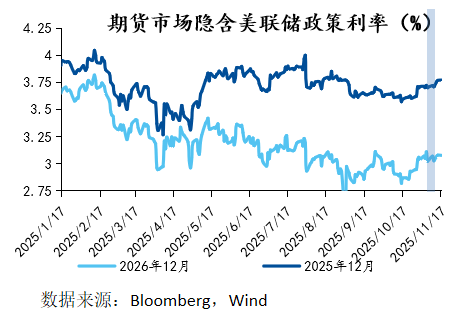
降息预期

Search documents
金荣中国:白银亚盘小幅震荡上涨,继续回落支撑位多单布局
Sou Hu Cai Jing· 2025-11-18 05:56
基本面: 周一(11月18日)亚市早盘,白银价格震荡微涨,本周数据风暴来袭:补报两个月"非农"数据,或成金价"生死判官"展望本周,黄金市场的命运将系于新一 轮经济数据的"风暴"之上。尽管政府重启,但缺失数据的"后遗症"将让这些指标更具戏剧性。周一的纽约联储制造业指数将率先拉开帷幕,提供区域经济脉 搏的初步读数。周三的美联储公开市场委员会(FOMC)会议纪要,则是市场解码10月决策的关键窗口,投资者将从中搜寻对通胀和就业的蛛丝马迹。周四 的美国9月份非农就业报告、费城联储制造业指数、周度初请失业金人数,以及现有房屋销售数据,将进一步检验房地产和劳动力市场的韧性。周五欧美国 家制造业PMI初值PMI和密歇根大学消费者信心指数修正版,则可能放大市场波动,尤其若显示出通胀顽固或消费疲软。此外,周五还将公布2025年10月美 国各州就业与失业情况(月度数据),投资者也需要重点关注。 白银图表: ---趋势判断---- 目前白银行情为价格上涨趋势。可以布局支撑多单和压力位空单思路。 1. 白银技术图表显示目前K线支撑位49.98附近 2. 大周期MACD图形呈现均线相交箭头向上大趋势看涨,目前盘整为主要MACD亚盘方向。 ...


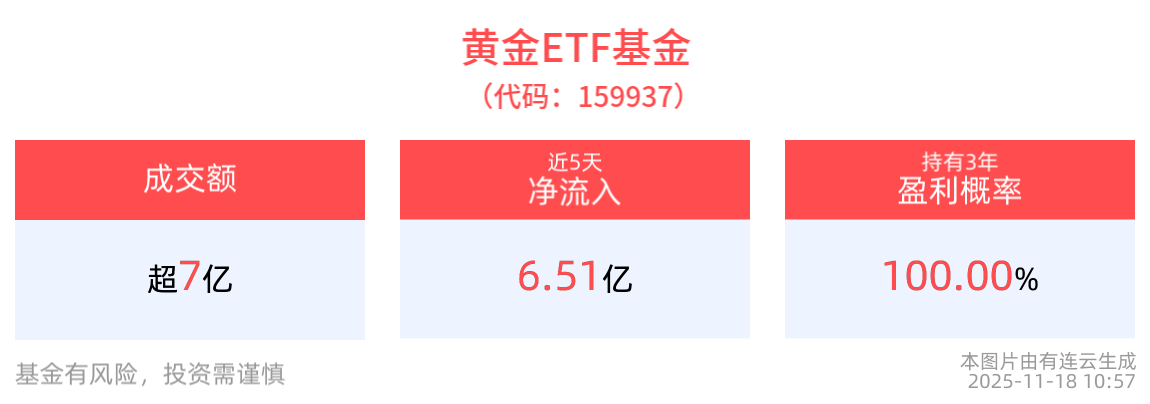
降息预期显著下行,金价震荡回调,黄金ETF基金(159937)昨日净流入超3.2亿元,大量资金提前布局逢低买入
Sou Hu Cai Jing· 2025-11-18 03:22
Core Insights - The recent performance of gold ETFs shows a decline of 1.00% as of November 18, 2025, with a latest price of 8.78 yuan, while over the past two weeks, there has been a cumulative increase of 0.97% [2] - Morgan Stanley forecasts that gold prices will reach $4,500 per ounce by 2026, driven by weak supply-demand balance and expectations of economic downturns [3] Market Performance - As of November 17, 2025, gold ETF trading volume was 1.95%, with a transaction value of 7.42 billion yuan, and the average daily transaction over the past week was 16.32 billion yuan [2] - On November 17, gold prices fluctuated, hitting a low of $4,006.8 per ounce before closing at $4,045.1 per ounce, reflecting a 1.2% decline in COMEX gold futures [2] Economic Indicators - Federal Reserve official Jefferson expressed cautious views on interest rate cuts, indicating rising risks in employment and a slight decrease in inflation risks, with a 42.9% probability of a 25 basis point cut in December [2] - Morgan Stanley highlights that the recent pullback in gold prices is influenced by signals of a weak U.S. economy and expectations of Federal Reserve easing, with a need to monitor U.S. economic data and Fed policy [3] Fund Flows - The latest net inflow into gold ETFs was 321 million yuan, with a total of 651 million yuan net inflow over the past five trading days, averaging 130 million yuan per day [3]
如何理解10月经济数据的下滑:周度经济观察-20251118
Guotou Securities· 2025-11-18 03:02
Economic Data Overview - October economic data shows a comprehensive slowdown, with industrial added value year-on-year at 4.9%, down 1.6 percentage points from September[4] - Fixed asset investment in October decreased by 12.2% year-on-year, marking a significant drop of 5.1 percentage points, the lowest in nearly five years[7] - Real estate investment in October fell by 23% year-on-year, a decline of 1.7 percentage points from September, with new construction area down 29.5%[10] Demand and Consumption Trends - Social retail sales in October grew by only 2.9% year-on-year, a slight decrease of 0.1 percentage points, reaching a new low for the year[12] - Private investment saw a year-on-year decline of 16.8%, down 7.9 percentage points from the previous month, indicating a widening gap between private and manufacturing investments[8] Market and Policy Implications - The current economic slowdown is attributed to insufficient total demand, with a reliance on policy interventions for recovery[14] - The end of the U.S. government shutdown has not alleviated concerns, as October CPI and employment data face permanent loss risks, impacting market expectations for a December rate cut[21] - Market expectations for a December rate cut by the Federal Reserve have dropped to 44.4%, below 50%, following a shift towards a more hawkish stance among Fed officials[22]
降息预期再度降温,港股承压,回调后的恒生科技性价比凸显
Mei Ri Jing Ji Xin Wen· 2025-11-18 02:29
Group 1 - The Hong Kong stock market indices collectively declined, with the Hang Seng Tech Index dropping over 1.5%, influenced by a downturn in tech stocks, gold stocks, and automotive stocks [1] - The largest ETF tracking the A-share market, the Hang Seng Tech Index ETF (513180), followed the index's decline, with significant drops in holdings such as XPeng Motors, Lenovo Group, NIO, Li Auto, BYD, and Xiaomi, particularly XPeng Motors which fell over 8% post-earnings [1] - The recent U.S. CPI and employment data for October were not released due to a government shutdown, leading to a significant decrease in interest rate cut expectations, with the probability for a December rate cut dropping to 42.9%, nearly a 50 percentage point decline since mid-October [1] Group 2 - The prolonged government shutdown may impact the economic fundamentals, with estimates suggesting a 1.5 percentage point reduction in the annualized GDP growth rate for Q4, indicating potential economic resilience issues [2] - Non-official data suggests ongoing pressure in the U.S. job market, implying a continued necessity for interest rate cuts despite recent hawkish statements from Federal Reserve officials [2] - As of November 17, the valuation of the Hang Seng Tech Index ETF (513180) was at 22.26 times P/E, lower than other major global tech indices, and positioned in the historical low valuation range, suggesting a favorable investment opportunity in Chinese AI core assets [2]
金融期货早评-20251118
Nan Hua Qi Huo· 2025-11-18 02:22
Report Industry Investment Ratings No relevant content provided. Core Views of the Report Financial Futures - Overseas, focus on US economic data and the impact of the government shutdown; in China, pay attention to policy support due to a marginal slowdown in the economy [1]. - The RMB exchange rate is expected to strengthen with the weakening of the US dollar index and seasonal effects, but caution is needed before new data is released [2]. - The stock index is expected to continue to fluctuate, with a focus on overseas variables such as US economic data, NVIDIA's Q3 earnings, and Sino - Japanese relations [5]. - Hold medium - term long positions in Treasury bonds, as they may benefit from weakening risk sentiment in the capital market, but short - term fluctuations are expected [5]. Commodities - Precious metals are expected to continue to adjust in the short term due to divergent expectations of a December interest rate cut, but may rise in the long term [13]. - Copper prices lack drivers and are expected to have a technical adjustment; aluminum may experience high - level oscillations; zinc, lead, and tin are expected to oscillate; nickel and stainless steel are at the bottom with limited further decline space; lithium carbonate may be over - inflated and risky for chasing highs; industrial silicon may have wide - range oscillations, and polysilicon may be weaker [17][18][24]. Black Metals - Rebar and hot - rolled coils are expected to oscillate within a range, with support from raw material costs and suppression from inventory [29]. - Iron ore has a supply - strong and demand - weak pattern, and opportunities for shorting at high levels can be considered after the basis is repaired [31]. - Coking coal and coke may face short - term adjustment pressure but have limited downside space in the long term, and can be considered for long positions when the price approaches the lower end of the range [34]. - Ferrosilicon and ferromanganese are expected to oscillate weakly due to high inventory and weak demand [36]. Energy and Chemicals - Crude oil is in an oscillating and pressured state, with short - term attention on the support at $63 and long - term focus on geopolitical risks and macro - funds' hedging trends [38]. - LPG is expected to oscillate strongly; PX - PTA is expected to oscillate strongly with cost; MEG can be considered for selling call options to express a bearish view; methanol 01 may continue to decline; PP's short - term supply - demand situation has improved, and a 1 - 5 positive spread is supported; PE's short - term supply - demand has slightly improved, but the medium - long - term pattern is weak; pure benzene and styrene may have limited rebound height; fuel oil's high - sulfur cracking is bearish, and low - sulfur fuel oil's cracking has upward momentum; asphalt's short - term bottom space is limited, and winter - storage willingness should be noted; glass, soda ash, and caustic soda have their own characteristics in terms of supply, demand, and price trends [39][41][49]. Pulp, Wood, and Related Products - Pulp and offset paper are expected to oscillate with a slightly downward - shifted price center; logs can be considered for a 01 - 03 reverse spread strategy; propylene is expected to oscillate [70][72][75]. Summary by Related Catalogs Financial Futures Macro - Overseas: The US government shutdown has ended, and attention should be paid to economic data and the impact on the economy. Fed personnel changes have attracted market attention, and if Hassett is elected as the Fed chair, it may further open up the space for interest rate cuts. - Domestic: The economy shows a marginal slowdown, and the intensity and effectiveness of policy support are the focus [1]. RMB Exchange Rate - The RMB has strengthened against the US dollar due to the weakening of the US dollar index, the guidance of the central parity rate, and market settlement support. Attention should be paid to US employment data and domestic corporate settlement willingness [2]. Stock Index - The stock index oscillated, with a decline in trading volume. The overall market sentiment was relatively stable, and short - term oscillations are expected, with a focus on overseas variables [5]. Treasury Bonds - Treasury bonds rose slightly, and in the short term, they may continue to oscillate, while in the medium term, they may rise with fundamental support [5]. Commodities Precious Metals - Gold and silver prices continued to adjust due to divergent expectations of a December interest rate cut. Long - term funds' gold ETF holdings decreased, and silver ETF holdings remained stable. Attention should be paid to US economic data and Fed officials' speeches [13]. Copper - Copper prices declined slightly, with an increase in warehouse receipts and a decrease in basis. The supply was relatively stable, and the demand showed some improvement, but the price lacked a clear driver [17]. Aluminum Industry Chain - Aluminum prices declined due to profit - taking by some funds. The supply was expected to be tight overseas, but domestic demand was weak. Alumina was in an oversupply situation, and cast aluminum alloy had certain support [18]. Zinc - Zinc prices oscillated narrowly. The smelting end had a strong demand for ore, and the TC decreased in November. The inventory situation needed to be observed, and the market had large differences between bulls and bears [21]. Nickel and Stainless Steel - Nickel and stainless steel prices were weak, with cost support weakening. The 12 - month interest rate cut expectation was uncertain, and the demand for nickel and stainless steel was weak [22]. Tin - Tin prices oscillated narrowly. The supply was weaker than the demand due to limited resumption of production in Wabang. It was recommended to enter the market on dips [23]. Lithium Carbonate - Lithium carbonate prices rose significantly, but the downstream had no intention to replenish inventory. There was an over - inflation risk, and caution was needed when chasing highs [24]. Industrial Silicon and Polysilicon - Industrial silicon had a weak supply - demand pattern and was expected to oscillate widely. Polysilicon had a weak fundamental situation and was expected to oscillate weakly [25]. Lead - Lead prices were under pressure due to inventory accumulation. The supply was gradually returning to balance, and it was expected to oscillate [27]. Black Metals Rebar and Hot - Rolled Coils - Rebar and hot - rolled coils rebounded slightly, with a marginal improvement in the supply - demand balance of rebar and high inventory pressure on hot - rolled coils. The cost of iron ore was under pressure, and the profit of steel enterprises was declining [29]. Iron Ore - Iron ore prices rebounded significantly, with an increase in shipping volume and a decrease in arrival volume. The supply was strong, the demand was weak, and the inventory was accumulating. It was recommended to short at high levels after the basis was repaired [31]. Coking Coal and Coke - Coking coal and coke prices fell below the key support level. The supply of coking coal was marginally relaxed, and the demand was seasonally weak. However, the price had limited downside space in the long term [34]. Ferrosilicon and Ferromanganese - Ferrosilicon and ferromanganese prices rebounded slightly due to environmental inspections, but the high - inventory situation remained unchanged. The demand was expected to decline, and they were expected to oscillate weakly [36]. Energy and Chemicals Crude Oil - Crude oil prices declined slightly, with a supply - demand imbalance and geopolitical risks. The price was expected to oscillate within a range, and attention should be paid to the support at $63 [38]. LPG - LPG prices rose, with a decrease in supply and an increase in demand. The inventory was decreasing, and it was expected to oscillate strongly [40]. PX - PTA - PX - PTA prices rose, with a strengthening of the aromatics blending logic and an improvement in the supply - demand of PTA. The processing fee was repaired, but the oversupply expectation remained [45]. MEG - Bottle Chips - MEG prices rebounded due to supply - side accidents. The demand was relatively stable, and it was recommended to sell call options to express a bearish view [49]. Methanol - Methanol prices continued to decline, with pressure on the 01 contract due to high supply and limited cost support. It was recommended to hold short positions and consider reverse spreads [51]. PP - PP prices oscillated at the bottom, with an increase in supply and a slight increase in demand. The cost support was strengthening, and a 1 - 5 positive spread was supported [54]. PE - PE prices rebounded slightly, with high supply pressure and limited demand growth. The short - term supply - demand improved slightly, but the medium - long - term pattern was weak [57]. Pure Benzene and Styrene - Pure benzene and styrene prices rebounded at a low level, but the fundamentals did not change significantly, and the rebound height was limited [59]. Fuel Oil - High - sulfur fuel oil cracking was bearish due to weak demand, and low - sulfur fuel oil cracking had upward momentum due to supply reduction expectations [60][63]. Asphalt - Asphalt prices fell, with an increase in supply and a decrease in demand. The inventory structure improved, and the short - term bottom space was limited. Attention should be paid to winter - storage willingness [64]. Glass, Soda Ash, and Caustic Soda - Soda ash prices were limited by high supply and cost support; glass prices were under pressure due to high inventory and weak production and sales; caustic soda prices were affected by high supply and weak downstream replenishment [66][68][69]. Pulp, Wood, and Related Products Pulp and Offset Paper - Pulp prices were slightly affected by macro - sentiment and inventory, with some support from supply - side factors. Offset paper prices continued to decline due to lack of fundamental support [70]. Logs - Log prices were low - volatility, and attention should be paid to the 01 - 03 reverse spread opportunity [72]. Propylene - Propylene prices oscillated, with a supply - demand balance of supply reduction and demand increase. The demand side was affected by PP and other downstream industries, and it was expected to oscillate [75].
百利好早盘分析:未来降息生变 金价再受压制
Sou Hu Cai Jing· 2025-11-18 01:34
Group 1: Gold Market - The Federal Reserve officials have expressed cautious attitudes towards interest rate cuts in December, putting downward pressure on gold prices [2] - Fed officials, including Collins and Bostic, indicate a high threshold for further rate cuts due to ongoing inflation concerns, with Bostic preferring to maintain rates until clear evidence shows inflation returning to the 2% target [2] - Market liquidity has stabilized following the end of the U.S. government shutdown, supporting precious metals, but the cautious stance on rate cuts has significantly reduced expectations, further pressuring gold prices [2] Group 2: Oil Market - Ukraine has claimed to have struck the Russian oil company Novokubyshevsk refinery, marking the latest in a series of attacks on Russian oil production facilities [4] - The Ukrainian military reported explosions and fires in the targeted area but did not specify the extent of the damage; they also updated the results of a previous attack on the Ryazan refinery, indicating damage to two major processing units and a storage tank [4] - The focus in the oil market remains on the escalating tensions in the Russia-Ukraine conflict, raising concerns over Russian oil supply [5] Group 3: Copper Market - The copper market has shown a downward trend, with prices closing lower and trading below the 60/120-day moving averages [7] - There is a divergence in price movement, and attention is on whether a market correction will occur, with support at $4.90 and resistance at $5.01 [7] Group 4: Nasdaq Index - The Nasdaq index is fluctuating between 24,500 and 25,700, forming a descending triangle pattern [8] - The index is trading below the 60/120-day moving averages, continuing its downward trend, with a key level to watch at 24,600 for potential breakdown [8]

黄金:降息预期回升,白银:震荡调整
Guo Tai Jun An Qi Huo· 2025-11-18 01:21
商 品 研 究 2025 年 11 月 18 日 黄金:降息预期回升 白银:震荡调整 刘雨萱 投资咨询从业资格号:Z0020476 liuyuxuan023982@gtjas.com 【基本面跟踪】 贵金属基本面数据 | | | 昨日收盘价 | 日涨幅 | 昨日夜盘收盘价 | 夜盘涨幅 | | --- | --- | --- | --- | --- | --- | | | 沪金2512 | 953.20 | -0.83% | 934.86 | -2.53% | | | 黄金T+D | 947.98 | -1.12% | 933.00 | -2.27% | | | Comex黄金2512 | 4084.40 | -2.16% | - | | | | 伦敦金现货 | 4080.47 | -2.52% | - | - | | | 沪银2512 | 12351 | -1.96% | 11994.00 | -3.59% | | 价 格 | 白银T+D | 12326 | -1.96% | 11989 | -3.42% | | | Comex白银2512 | 50.400 | -3.50% | - | - | | | 伦 ...
广发早知道:汇总版-20251118
Guang Fa Qi Huo· 2025-11-18 00:51
Report Industry Investment Rating The document does not provide the industry investment rating. Core Viewpoints of the Report The report comprehensively analyzes various sectors including financial derivatives, precious metals, shipping, non - ferrous metals, ferrous metals, agricultural products, and energy chemicals. It assesses the market conditions, supply - demand relationships, and price trends of each sector, and provides corresponding investment suggestions. Summary by Directory Financial Derivatives Financial Futures - **Stock Index Futures**: A - share market showed narrow - range fluctuations. TMT sectors rose, while pro - cyclical sectors pulled back slightly. The four major index futures contracts declined with the index, and the basis discount fluctuated narrowly. It is recommended to wait for stabilization and mainly adopt a wait - and - see strategy, and consider deploying a bull spread of put options in case of a sharp decline [2][3][4]. - **Treasury Bond Futures**: The equity market declined, and treasury bond futures oscillated strongly. The bond market was in a state of narrow - range oscillation due to the unclear expectation of loose money. It is recommended to operate within the range for the TL2512 contract [5][6]. Precious Metals - **Gold and Silver**: Fed officials' attitudes towards the December interest - rate cut were still divided. Precious metals maintained a weak oscillation. In the long - term, precious metals are expected to enter a bull market, but in the short - term, market fluctuations may intensify. It is recommended to buy on dips for gold and try to go long in small positions for silver [7][8][9]. Shipping - **Container Shipping Index (European Line)**: The SCFIS European Line Index and the SCFI Composite Index declined. The futures market rose on the previous day, but the significant decline in the SCFIS European Line after the market may lead to a short - term correction followed by an upward movement. It is expected to oscillate upward in the short - term [10][11]. Non - Ferrous Metals - **Copper**: The market was cautious, and copper prices oscillated. The supply of copper concentrate was tight, and the downstream demand was resilient. The copper price is expected to oscillate within the range of 85000 - 87500 [11][13][14]. - **Alumina**: The market was in a state of loose supply and demand, and the price oscillated at a low level. It is expected to continue to oscillate weakly, with the main contract ranging from 2750 - 2900 yuan/ton [16][17][18]. - **Aluminum**: After breaking through the 22000 mark, it adjusted downward. It is expected to oscillate widely, with the main contract ranging from 21400 - 22000 yuan/ton. It is recommended to go short on rallies [18][19][20]. - **Aluminum Alloy**: It adjusted following the aluminum price, and the spot trading was cold at high prices. It is expected to oscillate widely, with the main contract ranging from 20600 - 21200 yuan/ton [21][22][23]. - **Zinc**: The LME delivery expectation increased, and zinc prices oscillated and adjusted. It is expected to oscillate weakly, with the main contract ranging from 22000 - 22800 [23][24][26]. - **Tin**: The supply side remained tight, and tin prices oscillated at a high level. It is recommended to adopt a strategy of buying on dips after the market sentiment stabilizes [26][27][29]. - **Nickel**: The market was weak, and the fundamental improvement was insufficient. It is expected to oscillate weakly, with the main contract ranging from 116000 - 122000 [30][31][32]. - **Stainless Steel**: The macro - drive weakened, and the raw materials were under pressure. It is expected to oscillate weakly, with the main contract ranging from 12300 - 12700 [33][34][36]. - **Lithium Carbonate**: The market was strong, and multiple contracts hit the daily limit. It is recommended to wait and see, and the market is expected to oscillate widely [37][38][40]. - **Polysilicon**: The demand was weak, and the futures price oscillated and declined. It is expected to oscillate at a high level [41][42][43]. - **Industrial Silicon**: It oscillated, and attention should be paid to the organic silicon production cuts. It is expected to oscillate within the range of 8500 - 9500 yuan/ton [43][44][45]. Ferrous Metals - **Steel**: The apparent demand declined, the hot - rolled coil supply was not cleared, and the spread between hot - rolled and rebar converged. It is recommended to try short - selling [46][47][49]. - **Iron Ore**: The shipment increased, the arrival decreased, the port inventory rose, and the molten iron increased. It is expected to oscillate at a high level, and it is recommended to wait and see [50][52][53]. - **Coking Coal**: The spot price fluctuated, and the demand for replenishment was bearish. It is expected to oscillate weakly, with the range of 1100 - 1250, and it is recommended to wait and see [54][55][59]. - **Coke**: The fourth round of price increase was fully implemented, and the port trading price declined. It is expected to oscillate weakly, with the range of 1600 - 1750, and it is recommended to wait and see [60][61][64]. Agricultural Products - **Meal**: The monthly report lacked positive factors, and both domestic and foreign markets adjusted. The soybean meal market is expected to oscillate widely [65][66][68]. - **Live Pigs**: The supply and demand were loose, and the pig price oscillated weakly. It is recommended to hold the 3 - 7 reverse spread [69][70]. - **Corn**: There was a short - term supply shortage, and the price rebounded and oscillated. Attention should be paid to the selling rhythm and procurement progress [71][72]. - **Sugar**: The raw sugar price was bearish, and the domestic market oscillated at the bottom. It is expected to maintain the bottom - oscillation trend [73][74][75]. - **Cotton**: The US cotton oscillated at the bottom, and the domestic new - cotton harvest was coming to an end. The cotton price is expected to be under pressure and run weakly in the short - term [75][76]. - **Eggs**: The egg price was stable with a slight decline, and the overall pressure was still high. It is recommended to gradually close short positions below 3000 for the 2512 contract [77]. - **Oils and Fats**: The Malaysian palm oil oscillated and adjusted, and the Dalian palm oil maintained range - bound trading. The soybean oil market was supported. The palm oil is expected to oscillate at a low level, and the soybean oil is expected to maintain a stable supply - demand situation [78][79][80]. - **Jujubes**: The spot price was weak, and the market oscillated weakly. It is expected to continue to oscillate weakly, and attention should be paid to the acquisition progress and terminal demand [81]. - **Apples**: There was a small amount of trading of stored apples, and the demand for high - quality apples was good. The price of high - quality apples in the western region was stable, and the inventory of small apples in Shandong began to be traded [83]. Energy Chemicals - **PX**: The overseas blending - oil demand boosted the short - term trend, but the driving force was limited. It is expected to oscillate at a high level, and attention should be paid to the pressure above 6800 [84][85]. - **PTA**: The blending - oil demand and the cancellation of the Indian BIS certification supported the short - term trend, but the upward driving force was limited. It is expected to oscillate within the range of 4500 - 4800, and the TA1 - 5 spread should be treated with a rolling reverse - spread strategy [86][87]. - **Short - Fiber**: The supply - demand expectation was weak, and the processing fee was gradually compressed. It is recommended to do the same as PTA for the unilateral strategy and shrink the processing fee on rallies [88]. - **Bottle - Chip**: The supply - demand situation in November remained loose, and the price and processing fee followed the cost. It is recommended to do the same as PTA for the unilateral strategy, and the processing fee is expected to oscillate within the range of 300 - 450 yuan/ton [89][90]. - **Ethylene Glycol**: The short - term rigid demand was supported, but the supply was high, and the port inventory increased. It is recommended to hold out - of - the - money call options with a strike price not lower than 4100 for the EG2601 contract and conduct a reverse - spread operation on rallies for the EG1 - 5 spread [92]. - **Pure Benzene**: The blending - oil demand provided support, but the supply - demand was loose, and the rebound space was limited. It is recommended to wait and see for the BZ2603 contract [93]. - **Styrene**: The blending - oil demand provided support, but the maintenance might be postponed, and the rebound space was limited. The EB12 price may be strong, and attention should be paid to the pressure around 6600 - 6700 [94][95]. - **LLDPE**: The price changed little, and the trading was weak. It is recommended to reduce short positions around 6800 [96]. - **PP**: There were many unexpected maintenance events, and the downward space was limited. It is recommended to wait and see [97]. - **Methanol**: The port market continued to weaken, and the trading was average. Attention should be paid to the 05MTO spread contraction [98][99]. - **Caustic Soda**: The supply - demand pressure still existed, and it is expected to run weakly [99][100]. - **PVC**: The supply - demand surplus situation remained unchanged, and the market oscillated weakly. It is expected to continue the bottom - weakening trend [101]. - **Soda Ash**: After the spot price dropped, the alkali factory's pending - delivery days increased, and the market rebounded. It is recommended to wait and see and wait for the opportunity to short on rallies [102][103]. - **Glass**: The spot sales weakened significantly, and the market was under pressure to correct. It is recommended to treat it weakly in the short - term [102][104]. - **Natural Rubber**: The overseas raw materials were firm, and the rubber price rose slightly. It is expected to oscillate within the range, and attention should be paid to the raw - material output in the peak - production season [104][105][106]. - **Synthetic Rubber**: The supply - demand boost was limited, and the cost side was weak. It is recommended to adopt a strategy of shorting on rallies for the BR2601 contract and pay attention to the pressure around 10800 [107][108][109].
美股全线下跌,谷歌大涨
Zhong Guo Zheng Quan Bao· 2025-11-17 23:58
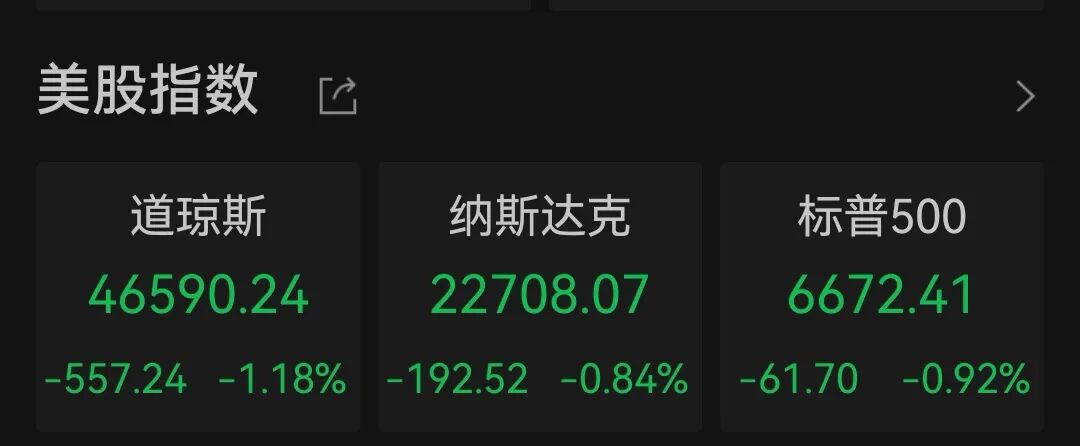
数据显示,当地时间11月17日,美股三大股指全线收跌,道指跌1.18%,标普500指数跌0.92%,纳指跌0.84%。美国科技七巨头指数跌0.47%,英伟达、苹 果跌近2%,谷歌涨超3%。中概股多数下跌。 美股三大股指全线收跌 当地时间11月17日,美股三大股指全线收跌。数据显示,截至收盘,道指跌1.18%报46590.24点,标普500指数跌0.92%报6672.41点,纳指跌0.84%报 22708.07点。 美股大型科技股多数下跌,美国科技七巨头指数下跌0.47%。个股方面,谷歌涨超3%,特斯拉涨逾1%,苹果、英伟达跌近2%,亚马逊、微软小幅下跌。 消息层面,此前巴菲特旗下伯克希尔·哈撒韦公司披露2025年第三季度持股报告(13F)显示,伯克希尔三季度新建仓1784万股谷歌母公司Alphabet的股 票,使之一跃成为其第十大持仓股票。 中概股多数下跌,纳斯达克中国金龙指数跌1.21%。个股方面,阿特斯太阳能跌超15%,小鹏汽车跌超10%,禾赛科技跌逾6%,晶科能源涨超13%,金山 云涨近9%,大全新能源涨超3%,阿里巴巴、华住集团涨超2%。 | S | 纳斯达克中国金龙指数(HXC) 11-17 16: ...
金金乐道·把握市场脉搏∣美债利率中期下行确定性强,港股黄金短期扰动不改长期乐观
Sou Hu Cai Jing· 2025-11-17 23:24
Group 1 - The core viewpoint indicates that while short-term disturbances may affect market sentiment, the long-term outlook remains optimistic, particularly for gold and Hong Kong stocks, as the U.S. Treasury yields are expected to decline in the medium term [1][30][19] - The U.S. stock market is experiencing increased volatility due to mixed narratives surrounding AI valuations and uncertain interest rate cuts, with the S&P 500 remaining relatively flat while the Nasdaq has faced declines [2][3][4] - India's stock market has rebounded strongly, driven by a significant drop in CPI to 0.25%, which has heightened expectations for future interest rate cuts, alongside political stability following recent elections [6][7] Group 2 - Japan's stock market is maintaining a volatile stance, influenced by weak domestic demand and strong external demand, with the Bank of Japan's policies remaining accommodative despite market uncertainties [10][12] - The A-share market is experiencing narrow fluctuations, with a focus on the performance of financial and consumer sectors, while the tech sector is under pressure from overseas market volatility [13][26] - The gold market has shown a pattern of rising and then falling prices, reflecting fluctuating expectations regarding interest rate cuts, with a long-term optimistic outlook due to geopolitical risks and central bank purchasing [30][31] Group 3 - The U.S. Treasury market is facing a mixed outlook, with yields fluctuating amid government shutdown concerns and economic data uncertainty, while the medium-term trend suggests a downward trajectory for yields [20][21] - The domestic bond market is experiencing stability despite mixed economic data, with inflation figures exceeding expectations, indicating a supportive environment for bonds [26][27] - The oil market is characterized by a tug-of-war between oversupply and geopolitical risks, leading to a narrow trading range, with demand weakness becoming a dominant factor [34][35]