新消费

Search documents
逆袭!创十年新高 可转债基金表现亮眼
Zhong Guo Jing Ji Wang· 2025-08-08 07:04
来源:中国基金报 随着A股市场的震荡攀升,可转债市场也接连刷新十年新高。受益于此,可转债基金表现亮眼,十多只 主题基金年内净值增长率超15%,业绩最高近25%。 对于年内转债市场整体不错的赚钱效应,中欧可转债基金经理李波表示,一方面,当前利率环境的影 响,转债需求端始终比较强;另一方面,市场向下的托底力量较强,有较高的安全边际。而对于转债这 类正常环境下容错率较高,但害怕尾部风险的资产来说,这一点是非常重要的,这也是去年和今年转债 表现截然相反的原因。因此从中期来看,转债向下的底可能会比较坚实,高容错率的环境或会提升转债 的持有体验。 转债弹性表现值得期待 对于后市,南方昌元可转债基金经理刘文良认为,可转债估值不容易再次跌入2024年三季度的谷底,更 有可能在近3~4年的估值区间内运行,当前估值处于区间中偏高水平,如果后续转债估值跟随权益市场 波动回落到区间下沿,则是年内较好的加仓窗口。当前时点主要关注科技自主可控的布局机会,耐心等 待新消费、创新药情绪降温后的配置机会。 广发基金基金经理吴敌认为,可转债蕴含三个阶段的机会。刚开始是低价转债的折价修复,紧接着将进 入平衡型转债估值扩张的阶段,最后随着转债估值过 ...
逆袭!创十年新高
中国基金报· 2025-08-08 06:30
Core Viewpoint - The convertible bond market in China has reached a ten-year high, leading to impressive performance from convertible bond funds, with over ten thematic funds achieving a net value growth rate exceeding 15% this year, and the top performer reaching nearly 25% [2][6]. Market Performance - As of August 7, the China Convertible Bond Index peaked at 469.56 points, marking a 12.74% increase year-to-date [4]. - The top-performing convertible bond funds include: - Southern Changyuan Convertible Bond A with a performance of 24.78% this year [6]. - Other notable funds such as Bosera Convertible Bond Enhanced A, Oriental Convertible Bond A, and others have growth rates around 20% [6][7]. Fund Manager Insights - Fund managers attribute the strong performance of convertible bonds to a combination of a favorable interest rate environment and strong market support, which provides a high margin of safety [8]. - The market is expected to maintain a solid bottom, enhancing the holding experience for convertible bonds [8]. Future Outlook - Managers suggest that convertible bond valuations are unlikely to drop to the lows seen in Q3 2024, with expectations of trading within a higher valuation range over the next 3-4 years [10]. - Opportunities are identified in low-priced convertible bonds, with a focus on sectors like technology and new consumption as market conditions evolve [10][11]. - The convertible bond market is anticipated to experience three phases: price recovery of low-priced bonds, balanced valuation expansion, and eventual high volatility and high returns [10].


部分顶流基金经理光环褪去
2 1 Shi Ji Jing Ji Bao Dao· 2025-08-08 05:11
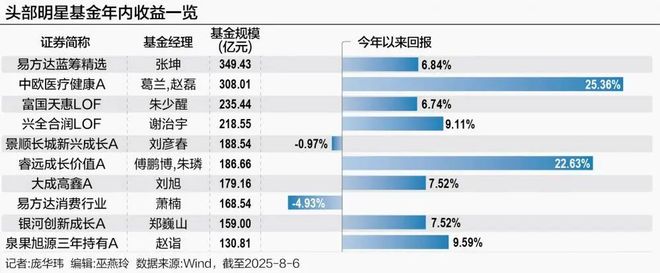
Core Viewpoint - After three years of underperforming the market, actively managed equity funds have experienced a significant rebound this year [1][5]. Group 1: Performance of Active Equity Funds - The "Wande Equity Mixed Fund Index," representing actively managed equity funds, showed a performance of -21.03% in 2022, -13.52% in 2023, and 3.45% in 2024, all underperforming the Shanghai Composite Index [5]. - As of August 6, 2024, the Wande Equity Mixed Fund Index has increased by 16.67%, outperforming the Shanghai Composite Index, which rose by 8.42% [5][6]. - Year-to-date, actively managed funds have outperformed the Shanghai Composite Index by over 8 percentage points and the CSI 300 Index by over 12 percentage points [6]. Group 2: Performance of Star Fund Managers - A significant number of star fund managers have shown varied performance this year, with some excelling, particularly in the healthcare sector, while others have struggled [2][3]. - Among the top-performing funds, the "China Europe Medical Innovation" fund managed by Ge Lan has achieved a return of 68.97%, while the "China Europe Medical Health" fund has returned 25.36% [10][11]. - Conversely, some star fund managers, such as Zheng Chengran and Liu Yanchun, have seen their funds underperform, primarily due to heavy investments in sectors like liquor and new energy [16]. Group 3: Sector Performance and Investment Strategies - The healthcare sector has seen a resurgence, with funds heavily invested in innovative drugs, especially those with significant exposure to Hong Kong stocks, outperforming others [12][15]. - Funds managed by star managers focusing on growth sectors, such as technology and new energy, have also performed well, with notable returns from funds like "Xingquan Social Value" and "Xingquan Harmony" [13][14]. - The performance disparity among star fund managers is attributed to their investment strategies not adapting to the rapidly changing market conditions, particularly in sectors like AI and innovative drugs [16].
港股开盘:恒指跌0.45%、科指跌0.83%,黄金股走高、科技股下挫,中芯国际绩后跌超4%
Jin Rong Jie· 2025-08-08 01:42
金融界8月8日消息,周五,港股集体低开,恒生指数跌0.45%报24968.31点,恒生科技指数跌0.83%报 5500.85点,国企指数跌0.55%报8932.42点,红筹指数跌0.06%报4262.42点。 盘面上,大型科技股中多数下跌,阿里巴巴跌0.5%,小米集团跌0.87%,网易跌1.45%,美团跌0.82%, 快手跌0.69%,哔哩哔哩跌1.36%;港股黄金股高开,赤峰黄金涨4.9%,潼关黄金涨3.6%,山东黄金、 灵宝黄金纷纷高开;中芯国际净利润同比下降19%绩后跌超4%。中资券商股普遍高开,申万宏源涨近 1%;脑机接口概念活跃,脑洞科技涨超8%。 企业新闻 中国移动(00941.HK):上半年收入5438亿元,通信服务收入为4670亿元,同比增长0.7%;净利润842亿 元,同比增5%。 中芯国际(00981.HK):上半年销售收入为44.6亿美元,同比增长22%;二季度销售收入22.09亿美元,环 比下降1.7%。 华虹半导体(01347.HK):二季度销售收入5.66亿美元,同比增加18.3%;净利润800万美元,同比增加 19.2%。 美高梅中国(02282.HK):上半年收入约166.61 ...

基金早班车丨九成主动权益基金年内收益为正,逾千只净值刷新高
Sou Hu Cai Jing· 2025-08-08 00:49
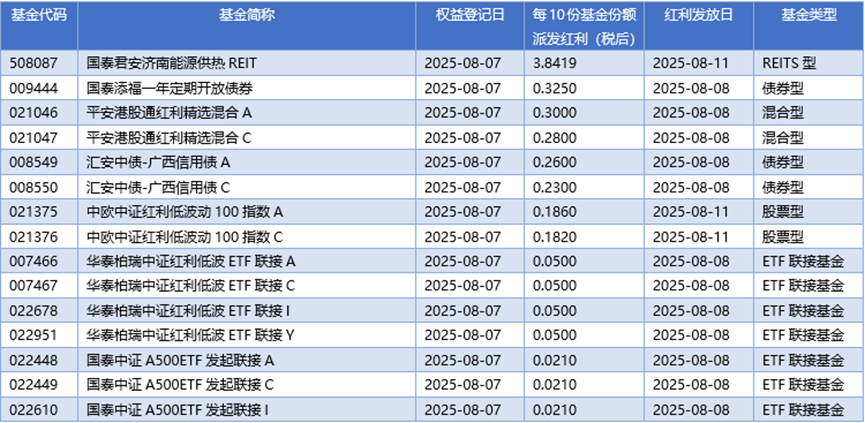
Market Overview - The A-share market has shown signs of recovery, leading to a strong rebound in actively managed equity funds, with over 90% of products seeing net value increases this year, and 1,126 funds reaching new highs since their inception [1][2] - As of August 7, the Shanghai Composite Index rose by 0.16% to 3,639.67 points, marking a new annual high, while the Shenzhen Component Index and the ChiNext Index experienced slight declines [1] Fund Performance - The year has seen significant performance divergence among actively managed equity funds, with top performers achieving returns close to 130%, while the worst performers faced declines exceeding 18% [2] - The leading sectors contributing to fund performance include innovative pharmaceuticals, hard technology, and new consumption, prompting many high-performing funds to limit purchases and new products to attract capital [2] Fund Issuance and Dividends - On August 7, 10 new funds were launched, primarily focusing on bond and equity types, with a notable fundraising target of 6 billion yuan for the CITIC Prudential Stable and Interest Rate Bond Fund [2] - A total of 15 funds declared dividends, with the highest payout being 3.8419 yuan per 10 shares from the Guotai Junan Jinan Energy Heating Closed Infrastructure Securities Investment Fund [2] Fund Registration Trends - The recovery in the A-share market has led to a surge in private securities product registrations, with 1,298 products registered in July alone, a month-on-month increase of 18%, marking a 27-month record [2] - Year-to-date, a total of 6,759 products have been registered, reflecting a year-on-year increase of 61.39%, with index-enhanced strategies seeing a 52% increase in registrations [2] Top Performing Funds - The best-performing fund on August 7 was the Qianhai Kaiyuan Hong Kong-Shenzhen Core Resource Mixed Fund C, with a daily growth rate of 5.2471%, followed closely by its counterpart A [4] - In the stock fund category, the top performer was the Huabao CSI Rare Metals Index Enhanced Fund A, with a daily growth rate of 2.3076% [5]
老糖罐里跳新舞:福建零食老字号借拼多多焕发新生
2 1 Shi Ji Jing Ji Bao Dao· 2025-08-08 00:08
Core Insights - A group of traditional snack brands from Fujian is experiencing a revival through the e-commerce platform Pinduoduo, leveraging direct consumer engagement and innovative product development to adapt to new consumption trends [1][2][17]. Company Overview - Jin Guan, established in 1982, has achieved annual sales of 1.5 billion yuan through its signature black sugar plums [2]. - Crayon Shin-chan, founded in 2000, has built a strong national recognition over 25 years, primarily through its jelly products [2]. - Yake, starting in 1993, has expanded from vitamin candies to multiple categories, maintaining a leading position in the industry for 33 years [2]. - Youchen, known for its meat floss cakes since 2011, has over 30 years of history [2]. Transformation Strategies - Direct consumer engagement is central to the revival of these brands, allowing them to respond quickly to consumer preferences and innovate products [4][5]. - Jin Guan has shifted from traditional candy to healthier options, reducing the size of its black sugar plums from 6.5 grams to 4 grams to cater to younger consumers [4][5]. - The feedback cycle for product development has been significantly shortened from months to weeks on Pinduoduo, enabling rapid response to market demands [5][13]. Product Innovation - Yake has developed V9 vitamin soft candies, combining vitamins with a pleasant taste to appeal to health-conscious consumers [15][16]. - Crayon Shin-chan has focused on creating jelly products with high fruit juice content and no additives, targeting both children and office workers with tailored offerings [8][15]. - Youchen has introduced new flavors and products, such as meat floss twists, to cater to various consumption scenarios [8][15]. Market Dynamics - The brands are leveraging Pinduoduo's policies, such as subsidies and promotional resources, to enhance their market presence and drive sales [9][12]. - The competitive landscape is evolving, with brands investing in unique product features and packaging to differentiate themselves in the online market [11][12]. Future Outlook - The Fujian snack industry is poised for continued growth, with plans for new product lines including probiotic candies and herbal candies, supported by Pinduoduo's ongoing initiatives [17][18].


中金2025下半年展望 | 纺织服装珠宝:新消费赛道景气延续,关注龙头品牌底部反转
中金点睛· 2025-08-07 23:39
Core Viewpoint - The company is optimistic about investment opportunities in the outdoor sports and gold jewelry sectors, expecting industry leaders to continue achieving high growth [2][4]. Group 1: Outdoor Sports Industry - The outdoor sports sector benefits from a shift in lifestyle, with increasing consumer demand for outdoor apparel driven by a love for outdoor activities and innovations from leading manufacturers [4][19]. - The demand for functional outdoor clothing is rising, with consumers favoring comfort and performance, leading to a preference for high-tech materials [19][21]. - The market is seeing a trend towards product innovation and category segmentation, with brands focusing on specific outdoor activities to enhance consumer appeal [21][23]. - Companies like Bosideng are expanding their outdoor product lines, with outdoor revenue now accounting for over 30% of their total income [27]. Group 2: Gold Jewelry Industry - The gold jewelry sector is witnessing a rise in brands focusing on product and channel innovation, particularly in the fast-growing fixed-price gold category [27][28]. - Many brands are enhancing their competitiveness through high-end product offerings and innovative designs, integrating traditional cultural elements into their jewelry [27][28]. - The market is seeing a shift towards experiential retail, with brands investing in new store formats to attract consumers and enhance brand perception [33][35]. Group 3: Consumer Confidence and Market Trends - Consumer confidence is expected to continue its steady recovery, supported by government policies aimed at boosting consumption, with retail sales projected to grow by 5.0% in the first half of 2025 [7][10]. - The apparel sector is showing stable performance, with gold and silver jewelry sales growing at 11.3%, outperforming the overall retail market [7][10]. - The demand for functional and emotional value in consumer products is increasing, indicating a shift towards more diverse and higher-level consumer needs [12][44]. Group 4: Manufacturing and Trade Environment - The manufacturing sector is expected to benefit from a global production layout and efficiency, allowing leading companies to gain market share despite trade uncertainties [4][39]. - Recent tariff adjustments in the U.S. are alleviating some concerns for textile manufacturers, with a more favorable environment for companies with diversified production bases [40][41]. - The integration of supply chains is anticipated to accelerate, with leading suppliers expected to capture a larger market share due to their ability to manage cost fluctuations and production efficiency [41][45].

结构性行情持续演绎 基金年内业绩首尾相差近150个百分点
Shang Hai Zheng Quan Bao· 2025-08-07 18:28
Core Insights - The average return of actively managed equity funds has significantly improved, reaching 15.1% year-to-date as of August 6, with over 500 funds hitting historical net asset value highs [1][2] - There is a stark performance disparity among funds, with top performers achieving returns close to 130% while laggards have seen declines exceeding 18% [1][3] - The strong performance of leading funds is attributed to successful investments in sectors such as innovative pharmaceuticals, technology, and new consumer trends [2][3] Performance Summary - As of August 6, 127 actively managed equity funds have returns exceeding 50%, with 23 funds surpassing 80%, and 6 funds doubling their net asset value this year [2] - Specific funds like Changcheng Pharmaceutical Industry Select Mixed Fund and Bank of China Hong Kong Stock Connect Pharmaceutical Mixed Fund have returns of 129.97% and 117.54% respectively [2] - Funds focusing on innovative pharmaceuticals have been particularly successful, with several funds achieving returns over 90% in related sectors [2] Fund Management Trends - A significant number of high-performing funds are now implementing purchase limits due to increased investor interest and inflows, with nearly 30 funds announcing restrictions on large subscriptions [4] - Recent fund issuance has also seen a resurgence, with several funds raising over 1 billion yuan, indicating a growing market interest [4] - The trend of increasing fund management activity suggests that equity funds are becoming a key avenue for reallocating household savings [4] Market Outlook - The ongoing supportive policies for the capital market are expected to enhance investor risk appetite, with potential catalysts in technology, high-end manufacturing, and consumer sectors [5] - The release of semi-annual earnings from listed companies is anticipated to improve the effectiveness of investment strategies, particularly in sectors with concentrated catalysts [5]
国泰海通 · 晨报0808|化妆品
国泰海通证券研究· 2025-08-07 14:15
Core Viewpoint - The article emphasizes the transformation in the new consumption era, particularly in the beauty and personal care sectors, driven by product innovation and emotional value consumption, contrasting with the previous era dominated by traffic dividends [2][3]. Group 1: New Consumption Trends - The new consumption wave is characterized by structural product innovation rather than traffic-driven growth, with a focus on emotional value and unique product offerings to meet evolving consumer demands [2][4]. - The beauty sector is experiencing continuous iteration of collagen components, while daily chemical products are upgrading in functionality and emotional appeal, exemplified by products like Zhenjia fragrance laundry detergent and Cold Acid Spirit toothpaste [2][4]. Group 2: Channel and Media Evolution - New channels and media are accelerating product innovation and market penetration, with platforms like Douyin facilitating product testing and brand exposure [3][4]. - Retail formats such as membership stores and warehouse supermarkets are playing a crucial role in product development and consumer engagement, helping brands refine their offerings before broader market launches [3]. Group 3: Opportunities in Traditional Industries - There is a notable trend of product innovation within traditional industries such as daily chemicals, personal care, health products, beauty, snacks, and more, as companies adapt to new consumer needs and market dynamics [4]. - Established brands are facing challenges in responding to rapid market changes, providing opportunities for new brands to leverage insights for product differentiation and market share growth [4].

2025电商消费新生态研讨会召开 专家“把脉开方”,千亿扶持引领行业高质量发展
Bei Jing Shang Bao· 2025-08-07 12:35
站在2025年下半年的起点回看国内电商行业,"6·18"大促早已结束,但留给行业的追问却依然亟待解 答。在用户流量红利减少、竞争日趋激烈等诸多挑战下,电商行业已进入关键转型期,平台高质量发展 之路走向何方?如何更好地推动行业转型? 近日,"2025电商消费新生态:高质量发展路径探索"研讨会在上海举办。与多位电商、消费领域专家探 讨新形势下消费的最新趋势,以及如何促进电商行业的高质量发展。 与会专家认为,电商平台的角色已经进化为生态赋能者,通过千亿扶持等措施,以新技术和新服务为商 家和产业带转型赋能,重构商家与消费者的连接方式,助力商家和产业捕捉新需求、新市场,实现多层 次需求与供给的匹配。当行业回归初心,通过给商家确定性、提升经营信心、放大生态价值,最终就能 实现"用户为先",构建起商家、消费者、平台共赢的生态。 相信伴随全行业回归价值竞争,在新的一年,或许更多品牌、更多商家有望通过平台惠商举措撬动下一 阶段的发展机会。 新消费、新技术、新服务 蕴含电商发展新机遇 对于电商平台目前发展进入的新阶段,行业内普遍存在一种观点,即随着市场渗透率趋近饱和,竞争愈 发激烈,目前电商行业已进入存量市场竞争阶段。但与会专家 ...