房地产

Search documents
房地产总量预测框架及趋势展望:周期调整的下半场
Changjiang Securities· 2026-01-30 09:04
行业研究丨深度报告丨房地产 [Table_Title] 周期调整的下半场 ——房地产总量预测框架及趋势展望 %% %% %% %% research.95579.com 1 丨证券研究报告丨 报告要点 [Table_Summary] 历经 4 年多的快速调整,中国房地产行业主要总量指标较高点均有明显下降,参考国际经验和 需求中枢,当前大概率已进入调整周期的下半场。预计 2026 年仍有挑战,但下半场特征愈发 明显,销售、开工等前端指标同比降幅有望收窄,而竣工等后端指标压力相对更大;若政策力 度超预期,则会有相对更好表现。当前股票位置较底部的溢价并不大,重视具备轻库存、好区 域和产品力的优质房企,以及拥有稳定现金流的经纪龙头、商业地产和央国企物管。 分析师及联系人 [Table_Author] 刘义 宋子逸 SAC:S0490520040001 SAC:S0490522080002 SFC:BUV416 请阅读最后评级说明和重要声明 2 / 23 %% %% %% %% research.95579.com 2 [Table_Title 周期调整的下半场 2] ——房地产总量预测框架及趋势展望 [Table_S ...
如何解读近期部分城市二手房市场回暖的现象?重阳投资:背后原因是春节前供需两端同时催化结果
Xin Lang Cai Jing· 2026-01-30 08:52
Core Insights - The second-hand housing market in certain cities has shown signs of recovery since the beginning of the year, with significant declines in the number of listings, particularly in Shanghai, where listings have dropped by over 20% from peak levels. Additionally, transaction volumes and prices have improved, with a more than 20% year-on-year increase in real-time transaction volumes across 26 cities compared to December of the previous year [1][5]. Group 1: Supply and Demand Dynamics - The improvement in the second-hand housing market is attributed to simultaneous catalysts on both the supply and demand sides before the Spring Festival. On the supply side, the decline in listings is partly seasonal, as sellers typically withdraw listings before the holiday, and also due to a rapid decline in prices in the latter half of the previous year, prompting some homeowners to withdraw listings to protect prices or switch to rental [2][6]. - On the demand side, the acceleration in demand for school district properties has been observed, as requirements for school enrollment need to be confirmed by March or April. Additionally, since November of the previous year, there has been a notable increase in the transaction speed of lower-priced properties, with properties priced at 3 million in Shanghai making up over 50% of transactions, indicating a quicker entry of first-time buyers into the market [2][6]. Group 2: Price Stability and Market Sentiment - The ability of second-hand housing prices to stabilize will depend on the sustainability of the decline in listings. Experts from major cities believe that listings will rebound after the Spring Festival, making the extent and duration of this rebound a critical factor in determining whether prices can stabilize [3][7]. - Optimistically, the period of rapid price declines may be coming to an end. The current market recovery is characterized by a lack of explicit policy intervention, with the market self-adjusting, particularly through the rapid turnover of lower-priced properties. This suggests that genuine demand is gradually being stimulated, with first-time buyers and those looking to upgrade their homes actively participating in the market, leading to a rebalancing of supply and demand [3][7].


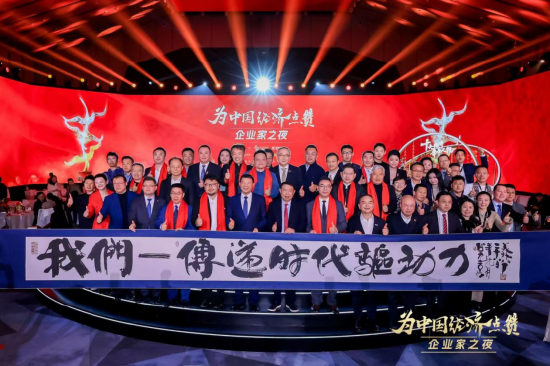
为什么是他们?40年激流,10座高峰,10个造舟者
Xin Lang Cai Jing· 2026-01-30 08:46
Core Insights - The article highlights the achievements of ten distinguished entrepreneurs who have significantly contributed to China's economic landscape, showcasing their courage, vision, and resilience in various industries [2][33]. Group 1: Industrial Leadership - Chen Jinghe, founder of Zijin Mining, transformed the company from a small local enterprise into a global mining giant by overcoming technical challenges and establishing an international strategy [5][37]. - Ma Changhai, chairman of Weichai Power, led the company through a comprehensive reform process, focusing on mastering core technologies and achieving breakthroughs in heavy-duty engines and hydraulic systems [7][40]. - Both Chen and Ma's stories symbolize China's industrial evolution from scale chasing to technological and value chain leadership [8][40]. Group 2: Manufacturing Excellence - Cold Friend, chairman of Feihe Dairy, adopted a long-term strategy to ensure the safety and quality of infant formula, establishing a complete supply chain from pasture to product [9][43]. - Wu Xiangdong, chairman of Guizhou Zhenjiu, transitioned from brand management to controlling core production capacities through strategic acquisitions, enhancing the cultural value of Chinese liquor [11][45]. - Ma Yin, founder of Anaya, created a unique cultural and tourism destination that emphasizes the integration of business and humanity, setting a new value benchmark in the real estate sector [14][47]. Group 3: Technological Innovation - Peng Jun, chairman of Pony.ai, is pioneering the field of autonomous driving, addressing complex challenges in algorithms and hardware to redefine future transportation [19][53]. - Zhao Deli, founder of XPeng, is working on flying cars, tackling significant technical and regulatory challenges to establish a new industry in low-altitude economy [22][56]. - Liu Debing, chairman of Zhipu AI, is focused on developing AI infrastructure with independent intellectual property rights, marking a significant step in China's AI industry [23][60]. - Han Bicheng, founder of Strong Brain Technology, is innovating in brain-computer interfaces, contributing to advancements in life sciences and assistive technologies [25][58]. Group 4: Social Responsibility and Vision - Lu Mai, former vice chairman of the China Development Research Foundation, emphasizes the importance of early childhood development in rural areas, advocating for immediate action to support children's growth [16][50]. - The article underscores the entrepreneurial spirit as a driving force behind China's transition from manufacturing to value creation, highlighting the importance of social responsibility and cultural heritage in business [18][52].



碧桂园(02007)因转换可转换债券而发行合共1.87亿股
智通财经网· 2026-01-30 08:38
智通财经APP讯,碧桂园(02007)发布公告,于2026年1月30日因转换可转换债券而发行合共1.87亿股。 ...

地产上涨,上证50反弹
Hua Tai Qi Huo· 2026-01-30 07:38
1. Report Industry Investment Rating - No relevant content provided 2. Core Views of the Report - The recent significant shrinkage of ETF scale due to market fund selling is nearing its end, and the rise of the real - estate sector drove the rebound of the Shanghai 50 Index on the day. The adjustments of the CSI 500 and CSI 1000 indexes show a benign "cooling" feature, mainly short - term emotional release rather than a trend of weakening. Investors should focus on the entry opportunity [3] 3. Summary by Directory 3.1 Market Analysis - In terms of macro - economy, Chinese President Xi Jinping met with British Prime Minister Starmer, and Premier Li Qiang held talks with him. The two sides reached a series of positive results, including developing a long - term and stable comprehensive strategic partnership, establishing a China - UK financial working group, China considering unilateral visa - free policies for British citizens, and reducing the import tariff rate of whisky from 10% to 5%. The 2026 National Spring Festival Cultural and Tourism Consumption Month was launched, with about 30,000 cultural and tourism consumption activities, over 360 million yuan in consumption vouchers and other subsidies, and various preferential measures. Overseas, the U.S. Senate failed to advance the government appropriation bill passed by the House, and the U.S. federal government faces a partial "shutdown" crisis as the operating funds of several federal departments will be exhausted on January 30 [1] - In the spot market, the three major A - share indexes fluctuated. The Shanghai Composite Index rose 0.16% to close at 4157.98 points, while the ChiNext Index fell 0.57%. Most sector indexes rose, with food and beverage, media, real estate, and non - bank finance leading the gains, and electronics, national defense and military industry, power equipment, and machinery leading the losses. The trading volume of the Shanghai and Shenzhen stock markets rose to about 3.2 trillion yuan. Overseas, the three major U.S. stock indexes closed mixed, with the Dow Jones Industrial Average rising 0.11% to close at 49071.56 points [2] - In the futures market, the basis of IF, IH, and IM continued to rise, and the current - month contracts were in contango. The trading volume and open interest of stock index futures increased simultaneously [2] 3.2 Strategy - The recent significant shrinkage of ETF scale due to market fund selling is nearing its end, and the rise of the real - estate sector drove the rebound of the Shanghai 50 Index on the day. The adjustments of the CSI 500 and CSI 1000 indexes show a benign "cooling" feature, mainly short - term emotional release rather than a trend of weakening. Investors should focus on the entry opportunity [3] 3.3 Macro - economic Charts - The report includes charts showing the relationship between the U.S. dollar index and A - share trends, U.S. Treasury yields and A - share trends, RMB exchange rate and A - share trends, and U.S. Treasury yields and A - share style trends [6][11][9] 3.4 Spot Market Tracking Charts - The daily performance of major domestic stock indexes on January 29, 2026: the Shanghai Composite Index rose 0.16% to 4157.98, the Shenzhen Component Index fell 0.30% to 14300.08, the ChiNext Index fell 0.57% to 3304.51, the CSI 300 Index rose 0.76% to 4753.87, the Shanghai 50 Index rose 1.65% to 3110.91, the CSI 500 Index fell 0.97% to 8517.84, and the CSI 1000 Index fell 0.80% to 8332.21 [13] - Charts show the trading volume of the Shanghai and Shenzhen stock markets and the margin trading balance [6][14] 3.5 Futures Market Tracking Charts - The trading volume and open interest of stock index futures: IF trading volume was 159,804 (+16,902), open interest was 323,557 (-2,391); IH trading volume was 85,872 (+22,491), open interest was 128,229 (+9,827); IC trading volume was 204,278 (+33,619), open interest was 353,832 (+11,434); IM trading volume was 247,981 (+53,901), open interest was 411,595 (+28,829) [15] - Charts show the open interest, latest open - interest ratio, and foreign - capital net open interest of IH, IF, IC, and IM contracts [6][16][18] - The basis of stock index futures: for IF, the current - month contract basis was 20.73 (+10.92), the next - month contract basis was 30.13 (+15.32), the current - quarter contract basis was 17.73 (+18.92), and the next - quarter contract basis was - 26.87 (+20.92); for IH, the current - month contract basis was 13.29 (+8.25), the next - month contract basis was 19.49 (+10.25), the current - quarter contract basis was 21.69 (+12.25), and the next - quarter contract basis was - 2.31 (+12.25); for IC, the current - month contract basis was 13.36 (-8.68), the next - month contract basis was - 0.24 (-21.08), the current - quarter contract basis was - 54.84 (-28.48), and the next - quarter contract basis was - 143.84 (-11.68); for IM, the current - month contract basis was 19.19 (+11.58), the next - month contract basis was - 3.21 (+18.78), the current - quarter contract basis was - 132.61 (+24.58), and the next - quarter contract basis was - 284.21 (+40.58) [39] - The inter - delivery spread of stock index futures: for the next - month minus current - month spread, IF was 9.40 (+4.40), IH was 6.20 (+2.00), IC was - 13.60 (-12.40), IM was - 22.40 (+7.20); for the next - quarter minus current - month spread, IF was - 3.00 (+8.00), IH was 8.40 (+4.00), IC was - 68.20 (-19.80), IM was - 151.80 (+13.00); and other inter - delivery spreads are also provided [43][44]
ETF午评 | 贵金属深度回调,黄金股票ETF、黄金股ETF跌停
Ge Long Hui· 2026-01-30 07:37
Market Overview - The Shanghai Composite Index fell by 1.19% while the ChiNext Index rose by 0.8% [1] - The total trading volume in the Shanghai, Shenzhen, and Beijing markets reached 19.514 billion yuan, a decrease of 83.6 billion yuan compared to the previous day [1] - Over 3,800 stocks in the market experienced declines [1] Sector Performance - Precious metals and base metals sectors saw significant pullbacks, with individual stocks hitting the limit down [1] - The steel, real estate, liquor, and chemical industries reported the largest declines [1] - Commercial aerospace, photovoltaic, and AI application sectors weakened [1] Notable Stocks and ETFs - CPO concept stocks experienced a mid-session surge, while agricultural stocks performed well against the market trend [1] - In the ETF market, the Huatai-PB Fund's China-Korea Semiconductor ETF rose by 3% [1] - AI hardware showed strength, with communication ETFs from Guangfa and Jiashi increasing by 2.9% and 2.57% respectively [1] - Agricultural sector ETFs, including Guangfa and Penghua Fund's grain ETFs, rose by 2.32% and 2.19% respectively [1] Metal Sector - The metal sector faced deep corrections, with gold stock ETFs and rare metal ETFs hitting the limit down, and rare metal ETFs falling by 8% [1]
大摩:预计绿城中国(03900)未来60天股价下跌 公司或发盈警
智通财经网· 2026-01-30 07:25
Group 1 - Morgan Stanley predicts that Greentown China (03900) stock price will decline in the next 60 days, with a probability exceeding 80% [1] - The recent increase in stock price has significantly reduced short-term valuation attractiveness [1] - Morgan Stanley has assigned a "Reduce" rating to Greentown China, with a target price of HKD 7.86 [1] Group 2 - The company is expected to issue a profit warning, as core earnings for 2025 may drop by over 90% year-on-year [1] - Due to a decrease in saleable resources and a high base effect, the first quarter contract sales are likely to decline [1] - The company's valuation is currently at a historical high [1]
镇江市召开 2026 年住房和城乡建设工作会议 ,部署 5 方面 22 项重点任务
Yang Zi Wan Bao Wang· 2026-01-30 05:54
会议安排部署了2026年5个方面22项重点工作。一是坚持改革转型,激活经济社会发展的"强劲引擎"。 全力推动房地产市场止跌回稳,着力促进建筑业高质量发展。二是坚持系统谋划,答好城市更新行动 的"时代考卷"。加强科学规划引领,推进重点任务实施,保护传承历史文化,强化要素支撑保障。三是 坚持精工细作,打造城乡融合发展的"典范样板"。编好"十五五"发展规划,增强城市承载能力,提高公 共服务能力,加强城市水环境治理,提升村镇建设水平,强化城市风貌管控。四是坚持以人为本,擦亮 宜居宜业生活的"幸福底色"。持续加强住房保障,提升物业服务水平,推进"公园城市"建设,持续优化 营商环境。五是坚持守牢底线,营造安全稳定发展的"钢铁长城"。加强应急能力建设这个"根本",推进 生命线工程建设这个"抓手",做好既有建筑安全管理这个"重点",强化建筑施工安全监管这个"基础", 深化城镇燃气安全监管这个"关键",提升防震减灾综合能力这个"载体"。 会议要求,全市住建系统各级党员干部要把抓好党建作为最大的政绩,牢固树立围绕中心抓党建、抓好 党建促业务的理念,在党建和业务双向赋能中,推动党建"乘数效应"充分释放,让党建的"软实力"成为 住建 ...
恒隆集团(00010)将于6月15日派发末期股息每股0.65港元
Zhi Tong Cai Jing· 2026-01-30 04:53
Core Viewpoint - Hang Lung Group (00010) announced that it will distribute a final dividend of HKD 0.65 per share on June 15, 2026 [1] Group 1 - The final dividend amount is set at HKD 0.65 per share [1] - The distribution date for the dividend is scheduled for June 15, 2026 [1]

恒隆地产将于6月15日派发末期股息每股0.4港元
Zhi Tong Cai Jing· 2026-01-30 04:51
恒隆地产(00101)发布公告,该公司将于2026年6月15日派发末期股息每股0.4港元。 ...