
钢铁冶炼

Search documents
利率修复信用债大致平稳,二永债收益率小幅回落
Xinda Securities· 2025-11-15 15:23
Report Industry Investment Rating No relevant content provided. Core Viewpoints of the Report - Interest rates are recovering, credit bond yields are generally stable, and credit spreads of high - grade bonds over 3Y are widening. The yields of credit bonds are generally stable, while the yields of government - developed bonds of 3Y, 5Y, 7Y, and 10Y are declining. Credit spreads of high - grade bonds over 3Y are mostly widening [2][5]. - Most urban investment bond spreads have slightly increased. The credit spreads of external rating AAA and AA+ platforms have generally increased by 2BP and 1BP respectively compared to last week, while the AA platform has generally remained flat [2][9]. - The spreads of industrial bonds have increased overall, and the increase in the spreads of mixed - ownership real - estate bonds is significant. The spreads of central and state - owned enterprise real - estate bonds, mixed - ownership real - estate bonds, and private real - estate bonds have all increased, with the mixed - ownership real - estate bonds having the largest increase [2][20]. - The yields of Tier 2 and perpetual bonds have slightly declined, and high - grade varieties are relatively advantageous. The yields of Tier 2 and perpetual bonds of all maturities have slightly decreased, with 3Y perpetual bonds performing strongly and high - grade varieties being more favorable [2][27]. - The excess spreads of 3Y industrial perpetual bonds have declined, and the excess spreads of urban investment perpetual bonds continue to diverge. The excess spreads of industrial AAA 3Y perpetual bonds have decreased, while the excess spreads of urban investment AAA 3Y and 5Y perpetual bonds show different trends [2][31]. Summary by Relevant Catalogs 1. Interest rates are recovering, credit bond yields are generally stable, and credit spreads of high - grade bonds over 3Y are widening - Yield changes: 1Y government - developed bond yields are flat compared to last week, while 3Y, 5Y, 7Y, and 10Y yields have decreased by 3BP, 2BP, 2BP, and 1BP respectively. For credit bonds, 1Y yields are flat, 3Y AAA - grade yields increase by 1BP, others decrease by 1BP; 5Y AAA - grade yields are flat, AA+ decreases by 1BP, AA decreases by 3BP, AA - decreases by 8BP; 7Y AAA - grade yields increase by 1BP, others decrease by 1BP; 10Y AAA - grade yields increase by 2BP, others are flat [2][5]. - Credit spread changes: 1Y credit spreads are flat; 3Y AAA - grade credit spreads increase by 4BP, others increase by 2BP; 5Y AA+ and above grade spreads increase by 1 - 2BP, AA grade decreases by 1BP, AA - grade decreases by 6BP; 7 - 10Y credit spreads increase by 1 - 3BP [2][5]. - Rating spread changes: 1Y spreads are flat; 3Y AAA/AA+ spreads decrease by 2BP, others are flat; 5Y AA/AA - grade spreads decrease by 5BP, others decrease by 1 - 2BP; 7Y and 10Y AAA/AA+ rating spreads decrease by 2BP, others are flat [5]. - Maturity spread changes: For AAA grade, 5Y/3Y decreases by 1BP, others increase by 1BP; for AA+ grade, 3Y/1Y decreases by 1BP, 10Y/7Y increases by 1BP, others are flat; for AA grade, 5Y/3Y and 3Y/1Y decrease by 1 - 2BP, others increase by 1 - 2BP [5]. 2. Most urban investment bond spreads have slightly increased - By external rating: The credit spreads of external rating AAA and AA+ platforms have generally increased by 2BP and 1BP respectively compared to last week, while the AA platform has generally remained flat. Among them, most AAA - grade platform spreads increase by 1 - 2BP, with Henan and Yunnan remaining flat; most AA+ - grade platforms are flat or increase by 1BP, with Guizhou, Yunnan, and Tianjin decreasing by 1 - 3BP, Gansu and Inner Mongolia increasing by 2BP; most AA - grade platforms are flat or increase by 1BP, with Shaanxi, Tianjin, Jilin, and Shandong decreasing by 1 - 3BP, Guizhou increasing by 4BP [2][9]. - By administrative level: The credit spreads of provincial and municipal platforms have generally increased by 2BP and 1BP respectively compared to last week, while the county - level platform spreads have remained flat. Most provincial platform spreads increase by 1 - 2BP, with Xinjiang, Anhui, and Zhejiang increasing by 3 - 4BP, Jiangsu increasing by 7BP, Yunnan and Shaanxi remaining flat; most municipal platforms increase by 1BP, with Yunnan decreasing by 1BP, Qinghai remaining flat, Zhejiang increasing by 2BP; most county - level platforms are flat or increase by 1BP, with Shaanxi, Jilin, and Jiangxi decreasing by 1 - 2BP, Guizhou increasing by 3BP [2][17]. 3. The spreads of industrial bonds have increased overall, and the increase in the spreads of mixed - ownership real - estate bonds is significant - Real - estate bonds: The spreads of central and state - owned enterprise real - estate bonds have increased by 1BP, the spreads of mixed - ownership real - estate bonds have increased by 123BP, and the spreads of private real - estate bonds have increased by 14BP. The spreads of Longfor have increased by 20BP, CIFI by 40BP, Midea Real Estate remained flat, and Vanke by 438BP [2][20]. - Other industrial bonds: The spreads of coal bonds of all grades have increased by 0 - 2BP; the spreads of AAA - grade steel bonds have increased by 1BP, AA+ by 5BP; the spreads of AAA - grade chemical bonds have increased by 2BP, AA+ remained flat. The spreads of Shaanxi Coal Industry have increased by 1BP, while the spreads of HBIS and Jinkong Coal Industry have decreased by 1BP [2][20]. 4. The yields of Tier 2 and perpetual bonds have slightly declined, and high - grade varieties are relatively advantageous - 1Y: The yields of all grades of Tier 2 and perpetual bonds have decreased by 0 - 1BP, and the spreads have compressed similarly [2][27]. - 3Y: The yields of all grades of Tier 2 capital bonds have decreased by 2 - 3BP, and the spreads have increased by 0 - 1BP; the yields of all grades of perpetual bonds have decreased by 3 - 4BP, and the spreads have compressed by 0 - 1BP [2][27]. - 5Y: The yield of AAA - grade Tier 2 capital bonds has decreased by 3BP, and the spread is flat; the yields of other grades of Tier 2 and perpetual bonds have decreased by 2BP, and the spreads have increased by 1BP [2][27]. 5. The excess spreads of 3Y industrial perpetual bonds have declined, and the excess spreads of urban investment perpetual bonds continue to diverge - Industrial perpetual bonds: The excess spreads of industrial AAA 3Y perpetual bonds have decreased by 1.38BP to 14.79BP compared to last week, at the 38.88% percentile since 2015; the excess spreads of industrial 5Y perpetual bonds are flat at 12.39BP compared to last week, at the 27.07% percentile since 2015 [2][31]. - Urban investment perpetual bonds: The excess spreads of urban investment AAA 3Y perpetual bonds have decreased by 2.04BP to 5.35BP, at the 5.14% percentile; the excess spreads of urban investment AAA 5Y perpetual bonds have increased by 1.83BP to 10.97BP, at the 17.02% percentile [2][31]. 6. Credit Spread Database Compilation Instructions - Calculation basis: The overall market credit spreads, commercial bank Tier 2 and perpetual bond spreads, and urban investment/industrial perpetual bond credit spreads are calculated based on ChinaBond Medium - and Short - Term Notes and ChinaBond Perpetual Bonds data, with historical percentiles since the beginning of 2015; the urban investment and industrial bond - related credit spreads are compiled and统计 by the R & D Center of Cinda Securities, with historical percentiles since the beginning of 2015 [36]. - Calculation methods: Industrial and urban investment individual bond credit spreads = individual bond ChinaBond valuation (exercise) - same - maturity government - developed bond yield to maturity (calculated by linear interpolation method), and then the credit spreads of industries or regional urban investments are obtained by arithmetic averaging; bank Tier 2 capital bond/perpetual bond excess spreads = bank Tier 2 capital bond/perpetual bond credit spreads - same - grade and same - maturity bank ordinary bond credit spreads; industrial/urban investment - type perpetual bond excess spreads = industrial/urban investment - type perpetual bond credit spreads - same - grade and same - maturity medium - term note credit spreads [38]. - Sample selection: Both industrial and urban investment bonds select medium - term notes and public corporate bonds as samples, and exclude guaranteed bonds and perpetual bonds. If the remaining maturity of an individual bond is less than 0.5 years or more than 5 years, it is excluded from the statistical sample. Industrial and urban investment bonds use external entity ratings, while commercial banks use ChinaBond implicit debt ratings [38].
A股平均股价13.92元 20股股价不足2元
Zheng Quan Shi Bao Wang· 2025-11-14 09:25
Core Viewpoint - The average stock price of A-shares is 13.92 yuan, with 20 stocks priced below 2 yuan, the lowest being *ST Yuan Cheng at 0.58 yuan [1] Stock Price Distribution - As of November 14, the Shanghai Composite Index closed at 3990.49 points, with a relatively small proportion of high-priced and low-priced stocks in the A-share market [1] - Among the low-priced stocks, 8 are ST stocks, accounting for 40% of those priced below 2 yuan [1] Market Performance - Out of the low-priced stocks, 18 saw an increase today, with notable gains from Rongsheng Development (10.17%), Yongtai Energy (9.82%), and *ST Jinke (4.76%) [1] Low-Priced Stock Rankings - The table lists various low-priced stocks, including their latest closing prices, daily price changes, turnover rates, price-to-book ratios, and industries [1] - For example, *ST Yuan Cheng has a closing price of 0.58 yuan, while *ST Suwu and *ST Jinke are at 0.97 yuan and 1.54 yuan respectively [1]




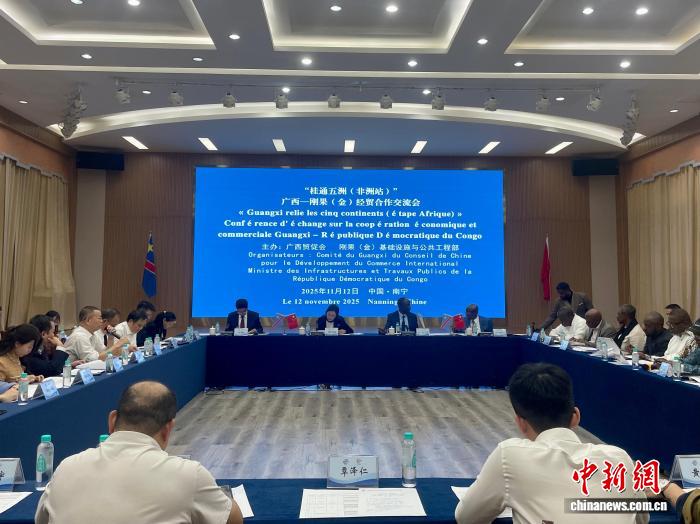
广西—刚果(金)经贸合作交流会在南宁举办
Zhong Guo Xin Wen Wang· 2025-11-12 17:23
Core Points - The "Guizhou Connects the World (Africa Station)" economic and trade cooperation exchange meeting between Guangxi and the Democratic Republic of the Congo (DRC) was held in Nanning on November 12 [1] - The meeting facilitated in-depth exchanges between the DRC's Ministry of Infrastructure and Public Works and Guangxi enterprises across various sectors, including transportation, construction, machinery manufacturing, steelmaking, mining, agriculture, and trade [2] - Guangxi and the DRC have been deepening their interactions in recent years, establishing a favorable environment for multi-sectoral cooperation, particularly in economic investment, infrastructure, agriculture, mining, AI applications, and education and training [2] Industry Insights - The "Guizhou Connects the World" initiative is a brand promoted by the Guangxi Council for the Promotion of International Trade to expand Guangxi enterprises' international cooperation under the Belt and Road Initiative, having previously hosted events in various countries [2]

宋应星“穿越”400年再成文化使者
Xin Hua She· 2025-11-11 07:29
Group 1: Cultural Impact of "Tian Gong Kai Wu" - The dance drama "Tian Gong Kai Wu" has successfully debuted at the Sydney Opera House, marking a significant cultural exchange and showcasing Chinese aesthetics on an international stage [1][4] - The performance has resonated with audiences, emphasizing the universal language of music and dance to convey cultural power without the need for words [1][3] - The production is based on the life of Song Yingxing, a Ming Dynasty scientist, and has been performed over a hundred times across more than 30 cities in China [2][3] Group 2: Historical Significance of "Tian Gong Kai Wu" - "Tian Gong Kai Wu," first published in 1637, is recognized as the world's first comprehensive work on agricultural and industrial production, influencing global technological development [2][11] - The book has been translated into multiple languages and has had a profound impact on various fields, including textile machinery and metallurgy [2][11] - The establishment of the Jiangxi Province "Tian Gong Kai Wu" Cultural Research Association aims to promote the study and dissemination of this significant cultural heritage [6] Group 3: Modern Applications and Economic Development - The principles outlined in "Tian Gong Kai Wu" are being integrated into modern industries in Xinyu, with significant growth in sectors such as lithium battery new energy and electronic information [9] - Xinyu's steel industry, rooted in the historical practices documented in "Tian Gong Kai Wu," continues to innovate, achieving breakthroughs in technology and expanding its global market reach [8][9] - The local government is actively promoting the cultural and technological legacy of "Tian Gong Kai Wu" to enhance tourism and educational initiatives [7][8] Group 4: Future Prospects and Global Engagement - The dance drama is set to perform at the "China-Greece International Drama Festival," furthering its mission of cultural dialogue and exchange [5] - The integration of ancient technology with modern performance art offers new avenues for cultural heritage revitalization [5][6] - The ongoing international performances of "Tian Gong Kai Wu" are expected to foster greater understanding and appreciation of Chinese culture globally [12]
中信建投:反内卷仍是钢铁行业明年重要任务 特钢迎来发展机遇
Zhi Tong Cai Jing· 2025-11-11 02:25
Core Viewpoint - The steel industry is facing challenges with profitability due to ineffective policies on crude steel volume control, and preventing internal competition while improving prices remains a key task for the upcoming year [1][3]. Pricing - Steel prices have been on a downward trend, with future movements dependent on production cuts. The core issues include supply-demand mismatches, weakened cost support, and delayed policy effects. The market is currently in a weak balance state characterized by low inventory, low prices, low demand, and high supply elasticity. The future price trajectory will hinge on the effectiveness of production cut policies [2][3]. Supply - The government is continuing to implement crude steel production controls and promote "dual control of carbon emissions." Policies are focused on preventing new steel production capacity under various guises and promoting high-performance special steel and recycling. The effectiveness of these policies has diminished compared to 2021, leading to increased internal competition and deteriorating profitability [3][4]. Demand - The proportion of steel used in manufacturing has been increasing, surpassing 50%. Traditional manufacturing is stable, while high-end manufacturing and emerging industries are growing rapidly. However, real estate sales have not shown significant recovery, and it is expected that steel consumption in the real estate sector will decline. Overall, domestic steel consumption is projected to decrease by 1.9% in 2026 [4][5]. Costs - The supply of iron ore is expected to increase, which may improve profitability per ton of steel. The global iron ore market is anticipated to be oversupplied in 2026, with a forecasted equilibrium price of $90 per ton (CFR China), down approximately 12% from 2025, leading to an estimated profit improvement of about 130 yuan per ton of steel [5][6]. Profitability - Profit recovery in the steel industry is contingent upon strict enforcement of production cuts. If production is reduced by 4 million tons, the annual crude steel output would be 945 million tons, potentially restoring gross profit margins to around 300 yuan. Conversely, if production is cut by only 2.5 million tons, the output would be 960 million tons, with profit margins likely remaining at this year's average of 0-100 yuan [6][7].

河钢股份:近期承德钒钛为某高端客户定制生产的99.6%高纯粉钒顺利通过检验成功发货
Mei Ri Jing Ji Xin Wen· 2025-11-10 07:07
Core Viewpoint - The news highlights that Chengde Vanadium Titanium has successfully produced and delivered high-purity vanadium powder (99.6%) for the energy storage sector, specifically for high-end clients in the new energy field [1] Company Summary - Chengde Vanadium Titanium has recently passed quality inspections for a batch of high-purity vanadium powder, which is a high-end product with significant competitive advantages in various applications [1] - The company is actively pursuing collaboration with a high-end client for the customized production of this high-purity vanadium powder, indicating a strategic focus on expanding its market presence in the energy storage sector [1] Industry Summary - The production of high-purity vanadium powder is crucial for manufacturing all-vanadium flow batteries, which are essential for energy storage solutions in the new energy sector [1] - The successful delivery of this product to high-end clients reflects the growing demand for advanced materials in the renewable energy industry, particularly in energy storage applications [1]

最高法将对“开门杀”等问题作出规定;东航复航“中印航线”;菲律宾全国超百万人撤离;美政府“停摆”有望结束?丨每经早参
Mei Ri Jing Ji Xin Wen· 2025-11-09 23:11
标题点睛: 最高人民法院11月9日公布关于审理交通事故责任纠纷案件适用法律若干问题的解释(二)(征求意见稿),向社会公开征求意见。该司法解释拟就"开门 杀"、电动自行车与机动车发生交通事故造成机动车一方人身损害等问题作出规定,征求意见截止日期为11月15日。 据中国东方航空官方微博,11月9日13:02,东航MU563航班搭载248名旅客从上海浦东国际机场飞赴印度德里,标志着时隔5年,东航正式复航"中印航 线",成为2025年首家复航中印客运航班的国内航司。 菲律宾民防局表示,截至9日16时16分,为应对"凤凰"可能带来的强风、暴雨和风暴潮,菲律宾全国已转移大约110万人。 美国参议院多数党领袖约翰·图恩当地时间11月9日表示,一项关于结束政府"停摆"的潜在协议"正在逐步达成"。 每经记者|王帆 每经编辑|陈柯名 张喜威 胡玲 潘海福 1 供应链混乱的源头和责任在荷方!商务部回应安世半导体问题 据商务部网站11月9日消息,商务部新闻发言人就欧方关于安世半导体问题的声明答记者问表示:造成当前全球半导体供应链混乱的源头和责任在荷方, 中方注意到欧方已表示会做荷方工作,希欧方进一步加大工作力度,促荷方尽快撤销相关措 ...

安阳钢铁(600569.SH):拟向控股股东出售持有的全部永通公司和豫河公司股权
Ge Long Hui A P P· 2025-11-07 13:06
Core Viewpoint - Anyang Steel (600569.SH) plans to sell its entire equity stake in Yongtong Company and Yuhe Company to its controlling shareholder, Angang Group, for a total consideration based on the final valuation from an audit report and an asset evaluation report [1] Group 1: Transaction Details - The total assessed value of the shareholders' equity is RMB 954.6858 million [1] - The equity transfer price calculated based on the company's shareholding ratio is RMB 836.6504 million [1] - After the transaction, the company will no longer hold any equity in Yongtong Company and Yuhe Company [1] Group 2: Purpose of the Transaction - This related party transaction aims to further optimize the company's asset structure [1] - The transaction will also supplement the company's operating funds [1]

预计螺纹走势震荡
Ge Lin Qi Huo· 2025-11-07 11:29
Report Industry Investment Rating - Not provided Core Viewpoints - This week, steel and ore prices fluctuated weakly. Electric arc furnace steel continued to incur overall losses, blast furnace profits shrank, and the blast furnace profitability rate continued to decline. Steel mills had low production enthusiasm, with some mills undergoing maintenance and halting production, and environmental protection restrictions were imposed in areas such as Shanxi and Tangshan, Hebei. The daily hot metal output was 234,220 tons, a weekly decrease of 2,140 tons, basically the same as the same period last year, and it is likely to further decline to below 230,000 tons in the later stage. The demand for finished products has entered the off - season, and the pressure for recovery has increased. The price of upstream coking coal is firm, and there has been a fourth round of price increases for coke, providing strong cost support. For iron ore, the continuous decline in hot metal output is negative for iron ore. The weakening of cost prices benefits steel mills, and a weak balance of supply and demand is maintained in the off - season. Overall, the supply and demand of steel and ore are both weak, and it is expected to continue to maintain the oscillation range. The resistance level of the main rebar contract is 3,230, and the support level is 3,000. The resistance level of hot - rolled coils is 3,450, and the support level is 3,200. The resistance level of the main iron ore 2601 contract is 833, and the support level is 750 [4]. - The steel price generally has a cycle of about 7 years: it declined from 2008 - 2015, rose from 2016 - 2021, and declined from 2021 - 2025. Currently, it is still in the decline cycle [7]. - This week, steel and ore prices fluctuated lower, and the rebar price at 3,000 and the iron ore price at 750 showed strong resilience [10]. Summary by Relevant Catalogs Supply - This week, the total inventory of the five major steel products was 1.50357 billion tons, a weekly decrease of 10,190 tons, a decline of 0.67% [15]. - The daily hot metal output was 234,220 tons, a weekly decrease of 2,140 tons, in line with expectations, and it is likely to further decline to 220,000 - 230,000 tons in the later stage. The profitability rate of steel mills was 39.83%, a decrease of 5.19%. From October 27 to November 2, the total arrival volume at 47 ports in China was 3.3141 billion tons, a week - on - week increase of 1.2298 billion tons; the total arrival volume at 45 ports in China was 3.2184 billion tons, a week - on - week increase of 1.1893 billion tons; the total arrival volume at the six northern ports was 1.5859 billion tons, a week - on - week increase of 490 million tons. From October 27 to November 2, the total global iron ore shipment volume monitored by Mysteel was 3.2138 billion tons, a week - on - week decrease of 174.5 million tons. The total shipment volume of iron ore from Australia and Brazil was 2.7592 billion tons, a week - on - week decrease of 166.7 million tons. The Australian shipment volume was 1.8951 billion tons, a week - on - week decrease of 89.2 million tons, among which the volume shipped from Australia to China was 1.6058 billion tons, a week - on - week decrease of 60.6 million tons. The Brazilian shipment volume was 864.1 million tons, a week - on - week decrease of 77.5 million tons [22]. Inventory - This week, the total inventory of the five major varieties decreased week - on - week: the factory inventory decreased week - on - week, and the decline was mainly contributed by rebar. The social inventory also decreased week - on - week, and the decline was also mainly contributed by rebar [17]. Consumption - This week, the weekly consumption volume of the five major varieties was 866,930 tons, a decrease of 5.4%; among them, the consumption of building materials decreased by 7.2% week - on - week, and the consumption of plates decreased by 0.2% week - on - week. In the later stage, the supply side of steel is expected to shrink, the demand for finished products has entered the off - season, and the pressure for recovery has increased [17]. Trading Strategy - In the short term, the rebar price at 3,000 still has strong resilience. When it approaches 3,000, it is recommended to try to go long. If it effectively breaks below, it is recommended to stop the loss and exit. For iron ore, short - term operations are recommended, and stop - loss should be set [5]. Important Information - From January to September, among the newly - issued local special bonds nationwide, about 640 billion yuan of special bonds related to real estate such as affordable housing projects, affordable rental housing, and urban old community renovation were issued, a year - on - year increase of 89% [6]. - The Dalian Commodity Exchange publicly solicited opinions on adjusting the coking coal delivery quality standard [6]. - The Tariff Policy Commission of the State Council announced that starting from 13:01 on November 10, 2025, it will adjust the measures for imposing additional tariffs on imported goods originating from the United States. The 24% additional tariff rate on US - made goods will continue to be suspended for one year, and the 10% additional tariff rate on US - made goods will be retained [6]. - According to data from the China Iron and Steel Association, in late October 2025, key steel enterprises produced a total of 19.99 million tons of crude steel, with an average daily output of 1.817 million tons, a daily output decrease of 9.8% month - on - month; the steel inventory was 14.63 million tons, a decrease of 1.95 million tons from the previous ten - day period, a decline of 11.8% [6]. - President Xi Jinping emphasized when listening to the report on the construction of the Hainan Free Trade Port that the goals of building the Hainan Free Trade Port should be fully achieved. It is necessary to steadily expand institutional opening - up and further improve the level of trade and investment liberalization and facilitation. It is necessary to further promote the opening - up of the flow of goods and factors and better promote the cross - border flow of production factors [6]. - According to the latest data from the General Administration of Customs, in October 2025, China exported 828,000 vehicles; from January to October, the cumulative export volume was 6.513 million vehicles, a year - on - year increase of 23.3% [6]. - According to data from the General Administration of Customs on November 7, 2025, in October 2025, China exported 9.782 million tons of steel, a decrease of 683,000 tons from the previous month, a month - on - month decline of 6.5%; from January to October, the cumulative export volume of steel was 97.737 million tons, a year - on - year increase of 6.6% [6]. - According to data from the General Administration of Customs on November 7, 2025, in October 2025, China exported 351.907 million household appliances; from January to October, the cumulative export volume was 3.711632 billion units, a year - on - year decrease of 0.3% [6].
焦煤焦炭周度报告-20251107
Zhong Hang Qi Huo· 2025-11-07 11:22
Group 1: Report Summary - This week, coking coal and coke showed relative resilience in the black steel industry chain, maintaining a sideways oscillation. The macro - level disturbances eased, and the market gradually returned to trading based on its own fundamentals. The strong performance of coking coal was mainly driven by the rising price of thermal coal, reduced inventory pressure on mining enterprises, limited supply increase, and the expectation of winter storage, which released price elasticity. However, the decline in steel mill profitability and hot metal production restricted the upward space of coking coal prices. The short - term futures market is expected to maintain a slightly bullish oscillating trend, and attention should be paid to the rhythm and intensity of downstream winter storage. As hot metal production gradually declined, coke consumption decreased, but production also dropped, resulting in a relatively balanced supply - demand pattern. The third round of coke price hikes has been implemented, slightly improving the loss of coke enterprises, but they are still in the loss range, and the fourth round of price hikes has been initiated. High furnace material prices have continuously reduced steel mill profitability, intensifying the game between steel and coke enterprises. Steel mills will resist price hikes more strongly, limiting the profit space of coke enterprises. The subsequent price hike space of coke depends on the upward range of coking coal, and the futures market fluctuates with coking coal [6]. - As of November 4, the capital availability rate of sample construction sites was 59.82%, a week - on - week increase of 0.12 percentage points. The capital availability rate of non - housing construction projects was 61.22%, a week - on - week increase of 0.07 percentage points, and that of housing construction projects was 53.19%, a week - on - week increase of 0.38 percentage points. Since November 10, 2025, China has suspended the 15% additional tariff on imported coking coal from the United States, and the import tariff has dropped to 13%. Thailand has launched an anti - circumvention investigation into hot - rolled steel plates from China [7]. - Domestic coking coal supply has slightly shrunk. Upstream coking coal inventory has slightly increased, but the pressure is not significant. Independent coke enterprises have slightly replenished coking coal, while steel mills have maintained just - in - time procurement. Coke production has slightly decreased. Hot metal production has declined, leading to lower coke consumption. The third round of price hikes has been implemented, slightly improving the loss situation [7]. Group 2: Bull - Bear Focus - Bullish factors include low inventory pressure of coking coal, strong performance of thermal coal prices, and the expectation of industry winter storage. Bearish factors are the weakening profitability of steel mills, low willingness to replenish raw material inventory, and the decline in hot metal production due to environmental protection factors [10]. Group 3: Data Analysis - As of the week of November 7, the operating rate of 523 sample mines was 83.76%, a month - on - month decrease of 1.02%, and the daily average output was 73.83 tons, a decrease of 2.01 tons. The operating rate of 314 sample coal washing plants was 37.61%, a month - on - month increase of 1.15%, and the daily average output was 27.53 tons, an increase of 1.01 tons. As of the week of November 1, the customs clearance volume of Mongolian coal at the Ganqimaodu Port rebounded but was slightly lower than the same period last year. Overall, the supply of coking coal has limited room for increase [13]. - As of the week of November 7, the clean coal inventory of 523 sample mines was 165.59 tons, an increase of 1.06 tons; the clean coal inventory of 314 sample coal washing plants was 294.97 tons, an increase of 10.55 tons; and the port coking coal inventory was 304.27 tons, an increase of 14.12 tons. The downstream replenishment rhythm of coking coal has slowed down, and the inventory depletion rate has decreased, resulting in a slight increase in weekly inventory, but the mine inventory pressure has been significantly reduced [15]. - As of November 7, the coking coal inventory of all - sample independent coke enterprises was 1070.02 tons, an increase of 17.54 tons. The available inventory days were 12.65 days, an increase of 0.4 days compared with the previous period. The coke inventory of independent coke enterprises was 58.3 tons, a decrease of 1.57 tons. This week, the production and sales of independent coke enterprises were relatively balanced, inventory decreased, and the willingness to replenish coking coal remained, but the replenishment amplitude was narrower than before [18]. - As of November 7, the coking coal inventory of 247 steel enterprises was 787.3 tons, a decrease of 9.02 tons. The available inventory days were 12.84 days, a decrease of 0.12 days compared with the previous period. The coke inventory was 626.64 tons, a decrease of 2.41 tons compared with the previous period, and the available days were 11.07 days, a decrease of 0.5 days. Recently, the profitability of steel mills has continuously declined, and the willingness to replenish raw materials is weak, mainly for just - in - time procurement [22]. - As of November 7, the capacity utilization rate of all - sample independent coke enterprises was 72.31%, a decrease of 1.13% compared with the previous period, and the daily average output of metallurgical coke was 63.59 tons, a decrease of 1 ton compared with the previous period. The capacity utilization rate of 247 steel enterprises was 84.99%, a decrease of 0.22% compared with the previous period, and the daily average coke output was 46.09 tons, a decrease of 0.12 tons compared with the previous period. As downstream consumption weakened, coke production also decreased, resulting in a relatively balanced supply - demand pattern [24]. - As of the week of November 7, China's coke consumption was 105.4 tons, a decrease of 0.96 tons. From the data of 247 steel enterprises, the daily average hot metal output was 234.22 tons, a decrease of 2.14 tons. Recently, hot metal production has gradually declined, and coke consumption has also decreased, but it is still in a relatively high range [26]. - As of November 7, the average profit per ton of coke for independent coke enterprises was a loss of 22 yuan/ton. The third round of price hikes has been implemented, slightly improving the loss. However, high raw material prices have continuously reduced steel mill profitability. As of November 7, the profitability of 247 steel enterprises was 39.83%, a further decrease of 5.19% compared with the previous period. The decline in steel mill profitability will intensify the game between steel and coke enterprises, and steel mills will resist price hikes more strongly, delaying the implementation of the next price hike or reducing the possibility of implementation, thus limiting the profit space of coke enterprises [28]. - The spot and futures prices of coking coal and coke maintained a slightly bullish oscillating trend [30]. Group 4: Market Outlook - The strong performance of coking coal is mainly driven by the rising price of thermal coal, reduced inventory pressure on mining enterprises, limited supply increase, and the expectation of winter storage, which releases price elasticity. However, the decline in steel mill profitability and hot metal production restricts the upward space of coking coal prices. The short - term futures market is expected to maintain a slightly bullish oscillating trend, and attention should be paid to the rhythm and intensity of downstream winter storage [33]. - As hot metal production gradually declines, coke consumption decreases, but production also drops, resulting in a relatively balanced supply - demand pattern. The third round of coke price hikes has been implemented, slightly improving the loss of coke enterprises, but they are still in the loss range, and the fourth round of price hikes has been initiated. High furnace material prices have continuously reduced steel mill profitability, intensifying the game between steel and coke enterprises. Steel mills will resist price hikes more strongly, limiting the profit space of coke enterprises. The subsequent price hike space of coke depends on the upward range of coking coal, and the futures market fluctuates with coking coal [36].