
金融

Search documents
以“立园满园”司法新范式 擦亮法治“锦”色
Xin Lang Cai Jing· 2025-12-29 19:18
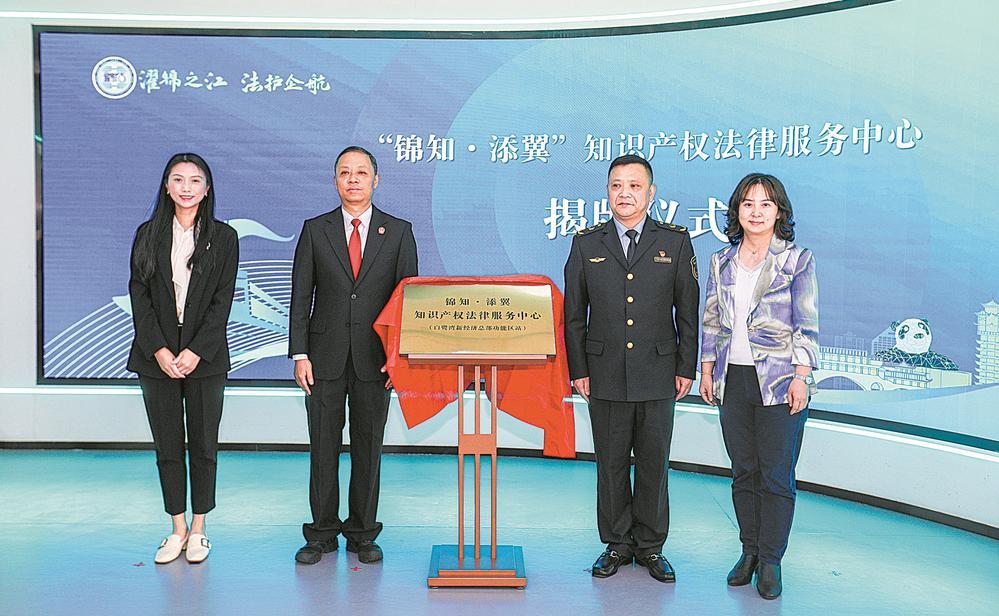
登录新浪财经APP 搜索【信披】查看更多考评等级 转自:成都日报锦观 锦江法院 行动并未止步。法院持续深化"濯锦·企航"品牌内涵,构建起"一链两端N翼"的立体化护企体系。以《促进企业发展十一条举措》为核心政策主 线,精准切入劳动雇佣、金融创新等企业关切领域;通过联合发布《政法机关与工商联沟通联系工作意见》,创新"法院+工商联+工会"多元 协同解纷模式;出台《信用修复实施办法(试行)》及配套指南,全程激励企业守信履约;更推出"一园一方"策略,为不同产业园区提供定制 化法律服务。 由此,一条以专项行动为起点、以核心政策为主线,辐射多领域的"一点一线全周期"司法护企链条清晰形成,实现了司法供给与产业需求的精 准匹配。 以"立园满园"司法新范式 擦亮法治"锦"色 锦江法院"锦知·添翼"知识产权法律服务中心揭牌。 在"十四五"收官与"十五五"谋篇布局的历史交汇点,如何以高质量司法服务赋能区域经济高质量发展,是摆在基层法院面前的时代命题。五年 来,锦江法院以"扎根园区、服务企业"为实践主轴,积极探索司法助力"立园满园"的新路径、新机制,将法治保障深度融入产业肌理。从宏观 的战略引领到微观的诉求响应、从机制的协同创新到服务 ...

固收-1月债市展望
2025-12-29 15:50
Summary of Key Points from the Conference Call Industry Overview - The conference call primarily discusses the bond market outlook for early 2026, focusing on government bonds and credit bonds, with specific attention to the impact of monetary policy and market dynamics on these instruments [1][3][9]. Core Insights and Arguments - **Monetary Policy and Market Sentiment**: The expectation for monetary policy easing is limited, with concerns about increased government bond supply, particularly from Shandong province, which is set to issue nearly 100 billion in a single day [1][2]. - **Interest Rate Projections**: The forecast for the 10-year government bond yield is between 1.75% and 1.85%, while the 30-year yield is expected to be around 2.3% [1][3][9]. - **Social Financing Growth**: A slight increase in social financing growth is anticipated, projected to rise by 0.1%, but overall, significant upward movement is not expected [1][4]. - **Inflation Expectations**: The impact of rising prices of small and precious metals on the Producer Price Index (PPI) is expected to be limited due to their low weight in the PPI calculation. The CPI is projected to reach 1.5% year-on-year in February 2026, influenced by seasonal factors and technical issues [1][5]. - **Market Stability**: The central bank is expected to maintain market stability through liquidity easing and purchasing operations, with large banks and insurance companies actively participating in the market [1][7][8]. Investment Strategy - **Focus on Space Selection**: The current investment strategy should prioritize space selection over timing, given the stability of interest rate ceilings [1][8]. - **Credit Bond Recommendations**: The most secure investments are expected to be in three-year perpetual bonds, followed by AA- to AA+ rated city investment bonds, and then five-year perpetual bonds and two-year general credit bonds [1][10]. - **Convertible Bonds**: There is a notable demand for convertible bonds at the beginning of the year, although the current low holding levels of insurance and pension funds may affect this trend [1][11]. Additional Insights - **Market Dynamics**: The bond market is expected to experience fluctuations, but significant declines are not anticipated. The market consensus suggests that the peak for the 10-year government bond yield will be around 2.0% [1][9]. - **Sector Performance**: In the convertible bond market, sectors such as AI and robotics are performing well, while previous strong sectors like non-ferrous metals are adjusting [1][14]. - **New Issuances**: There has been an increase in the issuance of new bonds, particularly in the technology sector, with promising opportunities expected in January 2026 [1][15]. Conclusion - The bond market outlook for early 2026 suggests a stable yet cautious environment, with specific strategies recommended for navigating the anticipated fluctuations and opportunities in various sectors. The focus remains on maintaining a balanced approach to investment, considering both the macroeconomic indicators and sector-specific trends.
港股收盘丨恒生指数跌0.71%,优必选涨超9%
Di Yi Cai Jing· 2025-12-29 14:02
Group 1 - The Hang Seng Index closed at 25,635.23 points, down 0.71% [1] - The Hang Seng Tech Index closed at 5,483.01 points, down 0.3% [1] - Gold stocks experienced a decline, with WanGuo Gold Group falling over 6%, and both ChiFeng Gold and Shandong Gold dropping over 5% [1] Group 2 - Robotics concept stocks saw an increase, with UBTECH rising over 9% [1]
如何将制度优势变为“现金流”?专家解读海南封关运作红利
Nan Fang Du Shi Bao· 2025-12-29 13:56
Core Viewpoint - The official launch of Hainan's full island closure operation on December 18, 2025, symbolizes a significant step in China's reform and opening-up strategy, aligning with historical milestones in the country's economic transformation [1][12]. Group 1: Understanding "Closure" as Higher-Level Openness - "Closure" is a customs regulatory term, not a literal island lockdown, allowing for smooth international trade while maintaining some controls on domestic markets [4][5]. - The policy framework includes "one line open, two lines controlled, and free movement within the island," facilitating easier international connections and zero tariffs on most imports [4][6]. - Hainan aims to create a "borderless" open environment, enhancing institutional openness rather than imposing physical restrictions on people [5][12]. Group 2: Economic Opportunities and Trade Benefits - The first week of the closure operation saw a 54.9% year-on-year increase in duty-free shopping, amounting to 1.1 billion yuan [8]. - The closure operation allows businesses to defer taxes on goods until they are sold in the mainland, significantly reducing operational risks and capital requirements [8][9]. - Hainan's service trade has been growing at an annual rate of 21% from 2018 to 2024, indicating a strong potential for further development in sectors like finance and professional services [9]. Group 3: Strategic Positioning and Future Challenges - Hainan is positioned as a pilot zone for national strategies, with the first negative list for service trade implemented there, enhancing its role in the RCEP market [6][12]. - The region faces challenges in market equality and capital market issues, which need to be addressed to fully realize its potential as a reform and opening-up experiment [13][14]. - Hainan's strategic location within the RCEP provides opportunities for enhanced trade and investment, particularly in the context of rising regional economic cooperation [14].
9连阳后突发跳水?最终收涨是转机还是陷阱?抓住主线才能笑到最后
Sou Hu Cai Jing· 2025-12-29 13:14
Market Overview - The market experienced a nine-day rally, primarily driven by the financial sector, while the ChiNext index did not show similar strength, leading to a decline [1] - Since last Friday, the market has not been in a state of broad-based gains, indicating a more selective upward trend [1] - The current index performance does not reflect individual stock movements, suggesting that focusing solely on the index may not provide meaningful insights [1] Trading Volume and Sentiment - The buying power today was recorded at over 1400, indicating a stable average volume over the past five days, but the buying momentum is weaker compared to last Friday [3] - Selling pressure was noted at over 600, which is significantly higher than previous days, indicating that both retail and institutional investors are exiting positions [3] - The lack of strong buying from major players, despite increased trading volume, suggests a lack of confidence in the market [3] Sector Performance - The strongest sectors currently are commercial aerospace and robotics, with both showing distinct trends and not interfering with each other [1] - The market is characterized by a "stockholder's club" phenomenon, particularly in the aerospace and robotics sectors, where major players are consolidating positions [5] Stock Trends and Patterns - There is a notable disparity in the number of stocks hitting the daily limit up, with significant clustering around aerospace and robotics, indicating strong speculative interest [5] - The data shows that stocks with consecutive declines have a high probability of further weakness, while chasing stocks that have recently risen also carries risks [9] Conclusion - The market's current state reflects a cautious sentiment, with investors advised to focus on strong sectors and avoid low-performing stocks [5][9] - The overall market dynamics suggest that while the index may show positive trends, individual stock performance may vary significantly, necessitating a more nuanced investment approach [1][3]

谨慎布局
第一财经· 2025-12-29 11:45
Core Viewpoint - The A-share market shows increasing divergence among the three major indices, with the Shanghai Composite Index achieving a nine-day consecutive rise, marking the longest streak in 2025, and nearing the 4000-point threshold. However, technical indicators suggest accumulated pressure for a correction [3][4]. Market Performance - The Shanghai Composite Index reached a peak of 3983.98 points during the session, with a closing value of 3965.28 points [3][9]. - A total of 1993 stocks rose, while the rise and fall ratio was 90-26, indicating a mixed performance among individual stocks [3]. - The trading volume in both markets decreased by 0.97%, reflecting a growing cautious sentiment among investors, with a notable decline in new capital inflow [4]. Fund Flow and Investor Sentiment - There was a net outflow of funds from institutional investors, while retail investors showed a net inflow, indicating differing strategies between the two groups [5][6]. - Retail investor sentiment was reported at 75.85%, suggesting a relatively optimistic outlook among this group [7]. - The average position of investors was noted at 69.35%, reflecting a slight increase of 4.8 percentage points [18]. Investment Strategies - Institutions are adopting a defensive approach, focusing on low-valuation and high-dividend sectors as a defensive base and stabilizer for indices, while also considering long-term investments in sectors like commercial aerospace and humanoid robotics, which have clear industrial trends and policy support [6]. - Retail investors are becoming more cautious, primarily adopting a wait-and-see approach, with short-term capital focusing on sectors like commercial aerospace and carbon fiber, while mid-term capital is reducing exposure to growth stocks and increasing allocation to defensive sectors like finance and pharmaceuticals to mitigate high-position risks [6].

2026年宏观经济展望:开局之年,周期向何处去
Chengtong Securities· 2025-12-29 11:42
External Environment - The US economy is expected to remain in an expansion phase in 2026, with a growth rate around 2.5%, exceeding its potential growth rate[2] - Inflation is a key concern for US voters, and trade relations with China are expected to stabilize temporarily before mid-term elections[2] - The Federal Reserve may lower interest rates once but could also raise rates depending on economic conditions[12] China Policy - China's macro policy will focus on quality and efficiency, avoiding large-scale stimulus while leaving room for future risks[3] - The broad fiscal deficit is projected to expand slightly to around 12.5 trillion yuan, with a deficit rate of 8.5%-9%[3] - Interest rates are expected to decrease by approximately 20 basis points, with reserve requirement ratios lowered by 25-50 basis points[3] China Economic Scenarios - **Optimistic Scenario**: Stable US-China trade relations lead to a GDP growth of over 5% and nominal growth above 4%[4] - **Neutral Scenario**: GDP growth is projected at 4.5%-5% with nominal growth around 4%, driven by a net export contribution of 1% to GDP[4] - **Cautious Scenario**: GDP growth may drop to around 4% with nominal growth at 3%, as net export contribution declines to 0.5%[4] Risks - Potential risks include lower-than-expected fiscal and monetary policy effectiveness, challenges in stabilizing the real estate market, and increased geopolitical tensions[4]
尚福林:“AI+金融”对金融治理能力提出了更高要求
Bei Ke Cai Jing· 2025-12-29 11:32
Core Viewpoint - The integration of artificial intelligence (AI) into the financial sector is advancing towards a systematic and sustainable development phase, but it faces significant challenges that need to be addressed [1][2]. Group 1: AI Integration in Finance - AI is becoming an essential part of financial infrastructure as its application scenarios continue to expand [1]. - The relationship between technological innovation and prudent management must be accurately understood, emphasizing that innovation should not compromise risk control and compliance [1]. Group 2: Challenges and Governance - Issues related to data governance, model interpretability, and responsibility boundaries are becoming increasingly urgent [1]. - The rapid development and frequent iteration of AI technology require traditional regulatory and governance methods to adapt to new technological environments [1]. Group 3: Promoting Healthy Development - Financial institutions are encouraged to explore AI applications within legal and compliance frameworks to enhance the functionality of the financial system [2]. - There is a need to strengthen safety measures by improving data governance, internal control processes, and risk prevention mechanisms to ensure AI operates in a controllable, trustworthy, and sustainable manner [2].
迟福林支招大湾区:“十五五”推进粤港澳服务贸易一体化
Sou Hu Cai Jing· 2025-12-29 11:16
Core Insights - The core argument presented is that if China's consumption share in the global market approaches that of its manufacturing sector, it could create an additional consumption market of no less than $10 trillion [1][3]. Group 1: Economic Development Strategy - The focus on "domestic demand-led growth and consumption-driven development" is deemed crucial for enhancing economic resilience amid rising global uncertainties and adjustments in international trade [3][4]. - The current structural issue in China's economy is characterized by insufficient domestic demand, particularly weak consumption, leading to an imbalance of "strong supply and weak demand" [3][4]. - The "14th Five-Year Plan" period is identified as a critical time to stimulate consumption and unlock the potential of China's vast market [3][4]. Group 2: Consumption Trends - In 2023, China's manufacturing value added accounted for 28% of the global total, while final consumption expenditure represented only 13.2% of global consumption [3][4]. - There is a significant gap in the consumption rate between China and developed economies, with China's consumption rate projected at 39.9% in 2024, compared to around 54% in major developed economies, indicating a potential increase of at least 14 percentage points [4][5]. - A 1 percentage point increase in the consumption rate could release approximately 800 billion yuan in consumption growth, suggesting that a 14 percentage point increase by 2035 could generate over 11 trillion yuan in new consumption [5]. Group 3: Service Consumption - The shift from material consumption to service-oriented consumption is highlighted as a key trend, with sectors such as education, healthcare, culture, and tourism showing the fastest growth [6][7]. - From 2013 to 2024, the annual growth rate of service consumption in China is projected at 7.2%, with its share of total consumption rising from 39.7% to 46.1%, and further to 46.8% in the first three quarters of 2025 [6][7]. Group 4: Regional Development and Trade Integration - The integration of service trade in the Guangdong-Hong Kong-Macau Greater Bay Area is emphasized as a strategic move to enhance service-oriented consumption and high-level openness [9][10]. - The service trade's share in Guangdong's foreign trade is only 12.5% in 2024, which is significantly lower than the global average, indicating room for improvement [9][10]. Group 5: Investment in Human Capital - The strategy of "investing in people" is proposed as essential for driving domestic demand and consumption, with an estimated investment requirement of 80 trillion to 100 trillion yuan to improve public services and enhance consumer expectations [12][13]. - The suggestion includes reallocating 10% to 15% of state-owned assets for "investing in people," which could amount to 30 trillion to 50 trillion yuan based on the total assets of state-owned enterprises [13].
中央经济工作会议精神解读:以“投资于人”和“苦练内功”稳预期、强动能
Capital Securities· 2025-12-29 10:51
Group 1: Economic Policy Adjustments - The 2025 Central Economic Work Conference has shifted its focus from "nine tasks" in 2024 to "eight tasks," emphasizing the importance of domestic demand as the primary driver of economic growth[9] - The task of expanding domestic demand has been elevated to the top priority, with a focus on "building a strong domestic market" and implementing specific actions to boost consumption and income[10] - The urgency of risk prevention has decreased, with the task of "preventing and resolving key area risks" moving from fifth to eighth place, indicating progress in areas like debt replacement and real estate[9] Group 2: Investment and Consumption Strategies - The conference emphasizes the integration of investment in both physical assets and human capital, with a focus on enhancing income for all urban and rural residents through specific plans[10] - Service consumption is highlighted as a key area for expanding domestic demand, with the service sector showing higher multiplier effects and lower risks compared to traditional goods consumption[25] - The government aims to stabilize the real estate market by encouraging the purchase of existing homes for affordable housing, which is expected to alleviate liquidity pressures on real estate companies[38] Group 3: Financial and Monetary Policies - The fiscal policy will maintain necessary levels of fiscal deficit, total debt, and expenditure, focusing on optimizing the expenditure structure for greater policy effectiveness[15] - Monetary policy will continue to be moderately accommodative, with an emphasis on promoting stable economic growth and reasonable price recovery, while ensuring liquidity remains ample[21] - The total social financing (TSF) increased by 33.4 trillion yuan in the first eleven months of the year, reflecting a 13.6% year-on-year increase, indicating strong financial support for the real economy[27] Group 4: Long-term Economic Outlook and Risks - The macroeconomic outlook remains positive, with structural reforms expected to deepen, focusing on quality improvement and effective growth[60] - Risks include potential delays in policy implementation and effectiveness, external economic pressures, and market and credit risks that could impact domestic asset prices[61]