农产品

Search documents
高频数据跟踪:生产热度下行,大宗商品价格回落
China Post Securities· 2025-12-15 03:49
Report Overview - Report Type: Fixed Income Report - Release Date: December 15, 2025 - Analysts: Liang Weichao (SAC No.: S1340523070001), Cui Chao (SAC No.: S1340523120001) [2] Core Views - High - frequency economic data shows overall decline in production heat, marginal drop in property transactions, general downward trend in prices, and significant fall of the Baltic Dry Index. Short - term focus is on the implementation of aggregate incremental policies and the recovery of the real estate market [2][34] Industry Investment Rating No industry investment rating information is provided in the report. Content Summary by Section Production - Steel: Coke oven capacity utilization decreased by 0.72 pct, blast furnace operating rate dropped by 1.53 pct, and rebar output decreased by 10.53 tons. Inventory decreased by 1.88 tons [10] - Petroleum Asphalt: Operating rate decreased by 0.1 pct and remained at a low level [10] - Chemicals: PX and PTA operating rates remained flat [10] - Automobile Tires: All - steel tire operating rate increased by 0.57 pct, and semi - steel tire operating rate increased by 0.65 pct [11] Demand - Real Estate: Property transaction area declined, inventory - to - sales ratio increased, land supply area continued to fall from a high level, and residential land transaction premium rate decreased [16] - Movie Box Office: Decreased by 720 million yuan compared to the previous week [16] - Automobile: Daily average retail sales of manufacturers decreased by 83,000 units, and daily average wholesale sales decreased by 143,000 units [20] - Shipping Freight Rates: SCFI index increased by 7.79%, CCFI index increased by 0.29%, and BDI index dropped significantly by 19.14% [22] Prices - Energy: Brent crude oil price dropped by 4.13% to $61.12 per barrel, and coking coal futures price fell by 11.72% to 1,028.5 yuan per ton [24] - Metals: LME copper, aluminum, and zinc futures prices changed by - 0.96%, - 0.88%, and + 1.31% respectively, and domestic rebar futures price fell by 2.97% [25] - Agricultural Products: Overall prices continued to rise, with the wholesale price index of agricultural products rising by 0.96%. Pork, eggs, vegetables, and fruits prices changed by - 1.02%, + 0.67%, + 0.34%, and + 2.02% respectively compared to the previous week [27] Logistics - Subway Passenger Volume: Increased in Beijing and decreased in Shanghai [30] - Flight Volume: Both domestic and international flight volumes decreased [32] - Urban Traffic: The peak congestion index in first - tier cities continued to decline [32] Summary - Overall production heat declined, and commodity prices fell. Short - term focus is on the implementation of aggregate incremental policies and the recovery of the real estate market [34]
【豆粕年报】南美丰产定调供应宽松,价格重心承压下行
Xin Lang Cai Jing· 2025-12-15 03:19
Summary of Key Points Core Viewpoint - The global soybean supply is expected to remain ample due to increased production in South America, despite a decrease in U.S. acreage. This situation, combined with a slowdown in global protein consumption growth, is likely to exert downward pressure on prices, particularly for U.S. soybeans, which will face export competition. The focus will be on the support levels between 1050-1080 [2][43]. Group 1: International Soybean Supply and Demand Outlook - The global oilseed supply is projected to increase in the 2025/26 year, with ending stocks expected to rise by approximately 2 million tons year-on-year [12]. - The increase in oilseed production will primarily come from canola, while soybean production is expected to decline slightly, although soybean crushing demand remains strong [12][13]. - The U.S. soybean export outlook for 2025/26 is pessimistic, with potential downward adjustments anticipated for export estimates and ending stocks [14]. Group 2: Domestic Soybean Meal Supply and Demand Outlook - China's soybean imports are expected to stabilize at around 10.5 million tons for the 2025/26 year, with a significant portion coming from Brazil [29]. - The domestic soybean meal consumption outlook is concerning due to the livestock industry's losses entering a capacity reduction phase, which may lead to a downward shift in price levels [2][43]. - The domestic market is expected to experience a weak basis and lower price levels as the industry adjusts to changing supply dynamics [2][43]. Group 3: Market Dynamics and Price Trends - The soybean meal market is anticipated to operate within a wide range of 2600-3200, influenced by near-term supply and long-term tightening expectations [4][45]. - Price fluctuations are expected in the first half of the year due to temporary supply-demand mismatches, followed by a stabilization period as supply pressures increase [4][45]. - The Brazilian soybean market is under pressure from high export volumes, which could lead to significant downward pressure on prices if weather conditions remain favorable [24].


国富豆系研究周报:美豆出口需求预期仍偏弱,CBOT大豆价格下跌-20251215
Guo Fu Qi Huo· 2025-12-15 02:32
Report Title - The report is titled "Guofu Bean Series Research Weekly Report: Weak Expectations for US Soybean Export Demand, Decline in CBOT Soybean Prices" [1] Report Industry Investment Rating - No industry investment rating is provided in the report. Core Viewpoints - The CBOT soybean price declined due to weak US soybean export demand, improved rainfall in South American soybean - growing areas, and a drop in US soybean oil prices. The US soybean export demand is expected to remain weak, while the US soybean crushing outlook is positive. The USDA December report maintained the forecast for the 25/26 US soybean ending stocks at 290 million bushels [9]. Summary by Directory I. Market Review 1. Soybeans - As of December 12, the CBOT soybean 01 contract closed at 1076.25 cents per bushel, down 2.62% from the previous week. The decline was due to weak export demand, improved rainfall in South American soybean - growing areas, and a drop in US soybean oil prices. The USDA December report did not adjust the 25/26 US soybean production forecast, and the export demand forecast remained unchanged. The US soybean crushing expectation is still at a high level [9]. 2. Soybean Meal - **External Market**: As of December 12, the CBOT soybean meal 01 contract closed at $302.0 per short - ton, down 1.76% from the previous week, affected by the weakening of CBOT soybean prices and sufficient supply expectations [13]. - **Domestic Market**: As of December 12, the DCE soybean meal 2605 contract closed at 2770 yuan per ton, down 1.81% from the previous week, driven by a decline in soybean import costs and potential increases in soybean supply from state - reserve auctions. However, the slow pace of domestic US soybean purchases may support the price. The soybean crushing volume and operating rate of oil mills decreased slightly but remained at a high level. The downstream soybean meal trading increased, and the spot basis strengthened [17]. 3. Soybean Oil - **External Market**: As of December 12, the CBOT soybean oil 01 contract closed at 50.07 cents per pound, down 3.15% from the previous week, affected by the decline in international crude oil prices and related competing vegetable oil prices [21]. - **Domestic Market**: The DCE soybean oil main contract switched to 2605. As of December 12, the DCE soybean oil 2601 contract closed at 8240 yuan per ton, down 0.31% from the previous week, and the 2605 contract closed at 7994 yuan per ton, down 1.06%. The decline was due to a drop in soybean import costs and high domestic oil mill soybean oil inventories. The soybean crushing volume and operating rate of oil mills were at a high level, downstream trading demand was average, and the soybean oil spot basis remained volatile [24]. II. Growing Area Weather 1. Brazilian Soybean Growing Area Weather - **Past Week (12.5 - 12.12)**: Rainfall in Goiás and Rio Grande do Sul was above normal, and the rest of the areas had normal rainfall. Temperatures in the central - western part of the main soybean - growing area and parts of Paraná were below normal, and the rest of the areas had normal temperatures [26]. - **Next Week (12.14 - 12.21)**: Rainfall in the central - western part of the main soybean - growing area is expected to be above normal, and the rest of the areas will have normal rainfall. Temperatures in Mato Grosso, Goiás, and Paraná are expected to be below normal, and the rest of the areas will have normal temperatures [27]. 2. Argentine Soybean Growing Area Weather - **Past Week (12.5 - 12.12)**: Rainfall in parts of Córdoba and Santa Fe was above normal, parts of Buenos Aires had less rainfall, and the rest of the areas had normal rainfall. The overall temperature in the main soybean - growing area was normal [33]. - **Next Week (12.14 - 12.21)**: Rainfall and temperature in the main soybean - growing area are expected to be normal [35]. III. International Supply and Demand 1. US Soybeans - **USDA Monthly Report - US Soybean Supply - Demand Balance Sheet**: The USDA December report made minor adjustments to the 24/25 US soybean supply - demand balance sheet, keeping the 24/25 ending stocks forecast at 316 million bushels. The 25/26 balance sheet was unchanged, with the ending stocks forecast at 290 million bushels, in line with the November report and lower than the market expectation of 309 million bushels [43]. - **Crushing**: As of the week of December 5, 2025, the soybean crushing profit in Illinois, the prices of downstream soybean oil and soybean meal all declined. The US soybean crushing volume in October was 7.11 million short - tons, up 9.86% year - on - year. As of October 2025, the cumulative crushing volume in the 25/26 season was 13.26 million short - tons, with a cumulative year - on - year increase of 9.87%. The US crude soybean oil inventory was 1.353 billion pounds, up 20.25% year - on - year, and the soybean meal inventory was 346,300 short - tons, up 14.14% year - on - year [44][48]. - **Export Inspection & Export Sales**: The US soybean export inspection volume increased week - on - week and met expectations, with the cumulative year - on - year decline slightly narrowing. As of the week of December 4, 2025, the export inspection volume was 1,018,127 tons. The cumulative export inspection volume so far in this crop year was 12,899,667 tons, a 45.24% year - on - year decrease. The cumulative year - on - year decline in 25/26 US soybean export sales continued to widen. As of the week of November 13, 25/26 cumulative export sales (including unshipped) were 18.4025 million tons, a 41.09% year - on - year decrease [52][53]. - **US Soybean Crushing Profit**: As of December 12, 2025, the US soybean crushing profit was $64.29 per ton, down from $66.54 on December 5 [57]. - **D4 RINs Price**: As of December 12, 2025, the US D4 RINs price was 104 cents, down 3.5 cents from December 5 [58]. 2. Brazilian Soybeans - **USDA Monthly Report - Brazilian Soybean Supply - Demand Balance Sheet**: The USDA December report maintained the 25/26 Brazilian soybean production forecast at 175 million tons, in line with market expectations. It also raised the 25/26 Brazilian soybean import forecast by 150,000 tons to 500,000 tons, and the ending stocks forecast was raised to 3.651 million tons [61]. - **Soybean Production Forecast**: Different institutions have different forecasts for the 25/26 Brazilian soybean production, with the USDA forecasting 175 million tons [64]. - **Soybean Sowing**: As of December 5, the Brazilian soybean sowing rate was 90.3% according to CONAB, 94% according to AgRural. The sowing progress in Rio Grande do Sul was 76% as of December 11, and the sowing in Paraná was 100% complete as of December 9, with a good - rate of 89% [65]. - **Export Sales**: Anec raised the forecast for Brazilian soybean exports in December to 3.33 million tons. As of the first week of December 2025, Brazil had exported 970,900 tons of soybeans that week, and the cumulative export volume was 105.78 million tons, an 8.53% year - on - year increase. As of the 49th week of 2025, the 2025 sales progress was 95.17%, and the 2026 pre - sale progress was 28.56% [74]. - **Soybean Premium**: As of the week of December 12, 2025, the Brazilian soybean premium quote increased [77]. - **Brazilian Soybean Crushing Profit**: As of December 12, 2025, the Brazilian soybean crushing profit was $70.99 per ton, down from $77.68 on December 5 [79]. 3. Argentine Soybeans - **USDA Monthly Report - Argentine Soybean Supply - Demand Balance Sheet**: The USDA December report raised the 24/25 Argentine soybean crushing forecast by 100,000 tons to 4.322 million tons, and the 24/25 ending stocks forecast was lowered to 2.309 million tons. For 25/26, the production forecast was maintained at 4.85 million tons, and the ending stocks forecast was lowered by 100,000 tons to 2.284 million tons [83]. - **Soybean Sowing**: As of the week of December 11, 2025, the Argentine soybean sowing progress was 58% according to SAGyP and 58.6% according to the Buenos Aires Grain Exchange. The good - rate of sown soybeans was 58%, and the proportion of soil in good moisture condition in the main growing areas was 91% [84]. - **Farmer Sales**: As of the week of December 3, 2025, Argentine farmers' 24/25 soybean export sales increased week - on - week. As of the 49th week of 2025, the 2025 sales progress was 84.7%, and the 2026 pre - sale progress was 6.4% [88][90]. - **Argentine Soybean Crushing Profit**: As of December 12, 2025, the Argentine soybean crushing profit was $2.18 per ton, up from $1.57 on December 5 [93]. IV. Domestic Supply and Demand 1. Soybean Oil Supply and Demand - **Chinese Imported Soybean Procurement Progress**: The weekly procurement progress of Chinese imported soybeans as of December 9, 2025, was provided by McDonald Pelz [95]. - **Port and Oil - Mill Soybean Inventory**: As of December 5, 2025, the national port soybean inventory was 9.37 million tons, a week - on - week decrease of 206,000 tons, and the oil - mill soybean inventory in the 49th week was 7.1552 million tons, a 2.51% week - on - week decrease [97]. - **Imported Soybean Arrival and Crushing**: In the 49th week, the domestic full - sample oil - mill soybean arrival was about 1.898 million tons. In the 50th week, the actual soybean crushing volume was 2.0375 million tons, and the operating rate was 56.05% [100]. - **Soybean Oil Trading Volume**: As of the week of December 12, 2025, the weekly trading volume of soybean oil was 82,600 tons, down from 136,900 tons in the previous week [102]. - **Soybean Oil Production and Apparent Consumption**: In the 50th week, the soybean oil production of 125 major domestic oil mills was 376,900 tons, and the apparent consumption in the 49th week was 396,100 tons, both showing a decline [105]. - **Soybean Oil Inventory**: As of December 5, 2025, the commercial inventory of soybean oil in key national regions was 1.163 million tons, a 1.34% week - on - week decrease and an 18.40% year - on - year increase [108]. 2. Soybean Meal Supply and Demand - **Soybean Meal Production and Apparent Consumption**: As of the week of December 12, 2025, the soybean meal production was 1.6096 million tons, a 0.89% week - on - week decrease, and the apparent consumption as of the week of December 5 was 1.6654 million tons, a 1.42% week - on - week decrease [110]. - **Oil - Mill Soybean Meal Inventory and Feed - Mill Physical Inventory Days**: As of December 5, 2025, the oil - mill soybean meal inventory was 1.1619 million tons, a 3.43% week - on - week decrease. As of December 12, the feed - mill physical inventory days were 9.13 days, a 0.64 - day week - on - week increase [113]. - **Soybean Meal Trading and Pick - up**: As of the week of December 12, 2025, the soybean meal trading volume was 912,100 tons, a 30.04% week - on - week increase, and the pick - up volume was 972,640 tons, a 5.55% week - on - week increase [116]. - **Downstream Demand**: The losses in self - breeding and self - raising pig farming and purchased - piglet farming slightly improved. As of December 3, the national pig ex - factory price and the pig - grain ratio both declined [118][120]. - **Soybean Meal Warehouse Receipt Quantity**: As of December 12, the registered quantity of DCE soybean meal warehouse receipts was 23,830 lots [122]. V. Domestic and International Oil Futures and Spot Prices, Spread Situations 1. Basis, Calendar Spread, and Cross - Commodity Spread - **Soybean Oil Basis and Calendar Spread**: Relevant data on the basis of Jiangsu, Guangzhou, Fujian, Shandong, Henan, and Tianjin first - grade soybean oil against the 05 contract and the 5 - 9 spread of soybean oil are presented [126][138]. - **Soybean Meal Basis and Calendar Spread**: Data on the basis of 43% soybean meal in Guangdong, Jiangsu, Shandong, and Tianjin against the 05 contract and the 5 - 9 spread of soybean meal are provided [136][141]. - **Cross - Commodity Spread**: Information on the 05 spread between soybean oil and palm oil, rapeseed oil and soybean oil, and the 05 ratio of soybean oil/soybean meal, corn/soybean meal is given [143][145]. 2. FOB Quotes - Quotes for soybean oil, US soybean meal, Argentine soybean meal, and Brazilian soybean meal FOB are presented [147][148][154]. 3. CFTC Positioning - Data on the net long positions of CBOT soybean, soybean meal, and soybean oil managed funds are provided [152][155].
研究报告:拍卖消息扰动市场,短期震荡格局难改
Hua Long Qi Huo· 2025-12-15 02:06
Report Investment Rating - Not provided Core View - Last week, affected by the corn auction news, the market's bearish sentiment quickly rose, and both futures and spot prices weakened. Currently, the grain sales progress in the producing areas is faster than the same period last year, increasing the supply in the spot market. The expectation of overdue wheat auctions has further dampened the purchasing sentiment of downstream enterprises. However, recent snow and rain in the north have reduced the arrival of corn trucks in the North China producing areas, tightening the spot market supply and supporting prices. In the short term, corn prices are likely to fluctuate within a range [9][80]. Summary by Directory 1.走势回顾 (一)期货价格 - Last week, the corn futures prices fluctuated weakly. As of the night session on Friday, the main contract C2601 closed at 2,242 yuan/ton, down 0.04%, and C2603 closed at 2,234 yuan/ton, up 0.09%. The CBOT corn futures main contract fluctuated, closing at 440.50 cents per bushel [6][13][17]. (二)现货价格 - Last week, the national average weekly price of corn was 2,321 yuan/ton, up 26 yuan/ton from the previous week. Corn prices in Northeast China declined slightly, those in North China first rose then fell, prices in the selling areas decreased slightly, and prices at the northern ports adjusted narrowly [8][22][24]. (三)基差 - As of last Friday, the basis of Dalian Port corn - the main contract was 58 yuan/ton, 23 yuan/ton stronger than the previous week [28]. 2.上周相关信息回顾 - The total sown area of 8 major field crops in the US in 2026 is expected to decrease slightly. Market expectations for the ending stocks of US wheat, corn, and soybeans in 2025/26 will be moderately adjusted. Analysts expect Brazil's total corn production to be 1.3196 billion tons, slightly higher than the November estimate. Brazil's corn exports in November increased compared to last year. Ukraine's grain exports from July to December 5 decreased compared to last year. Argentina's corn planting progress has accelerated. The US Department of Agriculture will release export sales reports, and analysts expect US corn export net sales to be between 1 - 2 million tons for the week ending November 6, 2025 [29][30][33]. - Many regions and institutions have released a series of information on corn production, exports, and policies, including the US, Brazil, Ukraine, Argentina, and others. For example, Brazil's corn export forecast for December has been raised, and the US government will provide a $12 billion agricultural assistance plan [34][35][40]. 3.玉米供需格局分析 1.饲料企业库存情况 - As of December 11, the average inventory of national sample feed enterprises was 29.53 days, an increase of 0.86 days from the previous week, up 3% month - on - month and down 2.51% year - on - year. Feed enterprise inventories continued to increase this period but remained at a low level in recent years [47]. 2.深加工企业玉米库存情况 - As of December 11, the total corn inventory of national sample deep - processing enterprises was 2.94 million tons, up 6.75% month - on - month and down 28.8% year - on - year [51]. 3.深加工企业玉米消耗情况 - Last week, national major corn deep - processing enterprises consumed 1.4167 million tons of corn, a decrease of 0.09 million tons from the previous week. Different types of deep - processing enterprises had different consumption changes [56]. 4.深加工企业开机情况 - Last week, the corn processing volume, starch output, and operating rate of corn starch enterprises all increased slightly. The total corn processing volume of major corn starch processing enterprises was 635,700 tons, an increase of 89,000 tons from the previous week [61]. 5.深加工企业利润情况 - Recently, high corn prices have shrunk the profits of deep - processing enterprises. However, the profits of processing enterprises in Shandong have improved. As of last Friday, the hedging by - product profits of corn starch in Jilin, Shandong, and Heilongjiang showed different trends [66]. 6.进出口情况 - In October 2025, China imported 360,000 tons of corn, an increase of 300,000 tons from the previous month and 110,000 tons from the same period last year. From January to October 2025, China imported 1.29 million tons of corn, a decrease of 11.84 million tons from the same period last year [70]. 4.关联品情况 1.玉米淀粉 - Last week, the national average price of corn starch was 2,720 yuan/ton, an increase of 11 yuan/ton from the previous week. The prices in different regions showed different trends [75]. 2.生猪 - Last week, the hog price continued to fluctuate at a low level. The national average hog slaughter price was 11.19 yuan/kg, a decrease of 0.03 yuan/kg from the previous week, down 0.27% month - on - month and 28.59% year - on - year [79]. 5.后市展望 and 操作策略 - Short - term corn prices are expected to fluctuate within a range. For trading strategies, treat it as a fluctuating market for single - sided trading, and stay on the sidelines for arbitrage and options trading [9][80][81].
豆粕周报:近强远弱格局,主力震荡运行-20251215
Tong Guan Jin Yuan Qi Huo· 2025-12-15 02:05
Report Industry Investment Rating - Not provided in the report Core Viewpoints - Last week, the CBOT soybean January contract fell 29 to close at 1076.25 cents per bushel, a decline of 2.62%; the soybean meal 01 contract rose 47 to close at 3083 yuan per ton, an increase of 1.55%; the South China soybean meal spot price rose 60 to close at 3060 yuan per ton, an increase of 1.32%; the rapeseed meal 01 contract rose 14 to close at 2411 yuan per ton, an increase of 0.58%; the Guangxi rapeseed meal spot price rose 20 to close at 2500 yuan per ton, an increase of 0.81% [4][7] - The December USDA report had a neutral impact on the US soybean balance sheet. Argentina slightly lowered its soybean export tariff, which had a bearish impact on sentiment. The market still had concerns about US soybean export demand. The South American crop outlook was positive, leading to a decline in US soybeans. The state reserve released 512,500 tons of imported soybeans, with a transaction rate of 77.5%, indicating good trading. Market news suggested that the clearance time for imported soybeans was extended. There was an expected increase in stocking demand before the New Year's Day and Spring Festival, resulting in a short - term strong supply and a stronger near - month contract. Meanwhile, the good weather in the South American production areas strengthened the expectation of a bumper harvest, and the far - month contract performed weakly, showing a differentiation of the near - strong and far - weak structure [4][7] - In the next two weeks, the precipitation conditions in the South American production areas will be good, strengthening the expectation of a bumper harvest. The concerns about US soybean exports still exist, and the sales progress is slow, so US soybeans will fluctuate weakly. In China, the soybean auction had good results, the clearance time for imported soybeans may be extended, and the stocking demand before the New Year's Day and Spring Festival is expected to gradually increase. Some oil mills may run out of soybeans and shut down in January, leading to a short - term tight supply. However, the expectation of a bumper harvest in South America remains unchanged, and the near - strong and far - weak pattern will continue. It is expected that the short - term Dalian soybean meal 05 contract will fluctuate [4][12] Summary by Directory Market Data - The CBOT soybean price on December 12 was 1076.25 cents per bushel, down 29 from December 5, a decline of 2.62%. The CNF import price of Brazilian soybeans was 490 dollars per ton, up 9 from December 5, an increase of 1.87%. The CNF import price of US Gulf soybeans was 491 dollars per ton, down 7 from December 5, a decline of 1.41%. The Brazilian soybean crushing profit on the futures market was 186.30 yuan per ton, up 115.55 from December 5. The DCE soybean meal price was 3083 yuan per ton, up 47 from December 5, an increase of 1.55%. The CZCE rapeseed meal price was 2411 yuan per ton, up 14 from December 5, an increase of 0.58%. The soybean - rapeseed meal price difference was 672 yuan per ton, up 33 from December 5. The spot price in East China was 3080 yuan per ton, up 40 from December 5, an increase of 1.32%. The spot price in South China was 3060 yuan per ton, up 60 from December 5, an increase of 2.00%. The spot - futures price difference in South China was - 23 yuan per ton, up 13 from December 5 [5] Market Analysis and Outlook - The December USDA report had a neutral impact. In the 2025/2026 US soybean season, the planting area and yield per unit were not adjusted. The export demand remained at 1.635 billion bushels, and the ending inventory was 290 million bushels, the same as last month. The estimated soybean production in Brazil was 175 million tons, and that in Argentina was 48.5 million tons [8] - As of the week of November 13, the net increase in US soybean export sales in the 2025/2026 season was 696,000 tons, compared with 511,000 tons in the previous week. The cumulative sales volume of US soybeans in the current season was 18.4 million tons, with a sales progress of 41.4%, compared with 61.9% in the same period last year. China's net purchase of US soybeans in that week was - 100,000 tons, and the cumulative purchase volume was 364,000 tons [8] - As of the week of December 5, 2025, the gross profit of US soybean crushing was 2.45 dollars per bushel, down from 2.5 dollars per bushel in the previous week. The spot price of 48% protein soybean meal at soybean processing plants in Illinois was 320.87 dollars per short ton, down from 324 dollars per short ton in the previous week. The truck - quoted price of crude soybean oil in Illinois was 50.37 cents per pound, down from 51.99 cents per pound in the previous week. The average price of No. 1 yellow soybeans was 10.95 dollars per bushel, down from 11.16 dollars per bushel in the previous week [9] - Conab reported that as of the week of December 5, 2025, the planting rate of Brazilian soybeans in the 2025/26 season was 90.3%, up from 86% in the previous week, compared with 94.1% in the same period last year and a five - year average of 89.8%. It is expected that the Brazilian soybean production in the 2025/26 season will reach 177.1236 million tons, a year - on - year increase of 5.6431 million tons, or 3.3%. AgRural reported that as of the week of December 4, the sowing rate of Brazilian soybeans in the 2025/26 season had reached 94%, up from 89% in the previous week, compared with 95% in the same period last year. AgRural maintained its estimate of Brazilian soybean production at 178.5 million tons. The Brazilian National Association of Grain Exporters announced that the estimated export volume of Brazilian soybeans in December would reach 3.33 million tons, higher than the previous week's forecast of 2.81 million tons [10] - Argentina's economic minister said that the soybean export tax would be reduced from 26% to 24%, and the export tax on soybean by - products would be reduced from 24.5% to 22.5%. At the same time, the export taxes on wheat and barley would be reduced from 9.5% to 7.5%, and the export taxes on corn and sorghum would be reduced from 9.5% to 8.5%. The Buenos Aires Grain Exchange reported that as of the week of November 26, 2025, the sowing progress of Argentine soybeans was 58.6%, up from 44.7% in the previous week, compared with 64.7% in the same period last year [11] - The weather forecast for South American production areas shows that in the next 15 days, there will be abundant precipitation in the Brazilian soybean production areas, which is conducive to crop growth and development. In Argentina, the precipitation in the next two weeks will be higher than the average, and the precipitation will increase compared with the previous period. The South American crops maintain the expectation of a bumper harvest [11] - As of the week of December 5, 2025, the soybean inventory of major oil mills was 7.1552 million tons, a decrease of 184,400 tons from the previous week and an increase of 1.6849 million tons compared with the same period last year. The soybean meal inventory was 1.1619 million tons, a decrease of 41,300 tons from the previous week and an increase of 481,400 tons compared with the same period last year. The unfulfilled contracts were 6.3205 million tons, an increase of 2.4395 million tons from the previous week and an increase of 1.3887 million tons compared with the same period last year. The soybean inventory at national ports was 9.37 million tons, a decrease of 206,000 tons from the previous week and an increase of 2.2749 million tons compared with the same period last year [11] - As of the week of December 12, 2025, the average daily trading volume of soybean meal in the country was 182,400 tons, including 61,100 tons of spot trading and 121,300 tons of forward trading. The average daily total trading volume in the previous week was 140,300 tons. The average daily pick - up volume of soybean meal was 194,500 tons, compared with 184,300 tons in the previous week. The crushing volume of major oil mills was 2.0375 million tons, compared with 2.0558 million tons in the previous week. The inventory days of soybean meal in feed enterprises were 9.13 days, compared with 8.49 days in the previous week [12] Industry News - Patria Agronegocios reported that Brazilian soybean growers had basically completed the sowing of the 2025/26 season's crops, with about 91% of the farmland sown. Patria estimated that the Brazilian soybean production in the 2025/26 season would reach 171.89 million tons, lower than the estimates of other consulting companies and the government crop agency Conab, which were between 177 - 178 million tons [13] - The US Department of Agriculture (USDA) reported that farmers participating in the US crop subsidy program reported the areas of crops that could not be planted before December 1. The area of unplanted corn was 1.839 million acres, higher than the 1.837 million acres reported in September; the area of unplanted soybeans was 1.268 million acres, compared with 1.262 million acres in September; the area of unplanted wheat was 284,000 acres, basically the same as in September [13] - According to the latest data from the Australian Bureau of Statistics, the export volume of Australian rapeseed in October was 62,708 tons, lower than 158,849 tons in September. In October, Japan was the largest export market, with an export volume of 57,293 tons, followed by Malaysia (1,951 tons) and Nepal (1,485 tons). The total export volume in that month was far lower than the 180,073 tons in October 2024. The EU Grain Chamber Coceral predicted that the rapeseed production in the EU and the UK in 2026 would be 21.8 million tons, the same as in 2025 [14] - The USDA's monthly crushing data showed that the US soybean crushing volume in October 2025 was 7.11 million short tons (237 million bushels), compared with 6.15 million short tons (205 million bushels) in September 2025 and 6.47 million short tons (216 million bushels) in October 2024. The US soybean oil production in October was 2.83 billion pounds, an 18% increase from September 2025 and an 11% increase from October 2024. The US rapeseed crushing volume in October 2025 was 192,578 short tons, compared with 230,362 short tons in September 2025 and 218,185 short tons in October 2024 [14] - According to data from the Argentine Secretariat of Agriculture, Livestock, Fisheries and Food, as of the week of December 3, Argentine farmers sold 415,600 tons of soybeans in the 2024/25 season, bringing the cumulative sales volume to 40.6516 million tons. As of December 3, the cumulative registered export sales volume of soybeans in the 2024/25 season was 12.163 million tons, and that in the 2025/26 season was 1.867 million tons [15] - According to Canada's Statistics Canada, the rapeseed production in Canada in the 2025/26 season is expected to increase to 21.8 million tons. According to ABARES, the rapeseed production in Australia in the 2025/26 season is expected to reach 7.2 million tons, a 10% increase from analysts' previous estimates [15] - The IBGE agency estimated that the soybean planting area in Brazil in 2025 would be 47.691363 million hectares, the same as the previous month's estimate and a 3.6% increase from the previous year. The estimated soybean production was 165.957783 million tons, the same as the previous month's estimate and a 14.5% increase from the previous year. The estimated agricultural product production in Brazil in 2026 was 218.017021 million tons, a 0.8% increase from the 2025 estimate of 216.346394 million tons. The estimated soybean production in Brazil in 2026 was 167.554994 million tons, a 1.0% increase from the 2025 estimate of 165.957783 million tons [16] Relevant Charts - The report provides multiple charts, including the trend of the US soybean continuous contract, the CNF arrival price of Brazilian soybeans, the RMB spot exchange rate trend, the regional crushing profit, the trend of the soybean meal main contract, the spot - futures price difference of soybean meal, the spot price of soybean meal in different regions, the M 1 - 5 month - spread of soybean meal, the net position of managed funds in the CBOT, the precipitation and temperature in Brazilian and Argentine soybean production areas, the sowing progress of Brazilian and Argentine soybeans, the cumulative sales volume, weekly net sales volume, and weekly export volume of US soybeans, the US oil mill crushing profit, the weekly average daily trading volume and pick - up volume of soybean meal, the soybean inventory at ports and oil mills, the weekly crushing volume of oil mills, the unfulfilled contracts of oil mills, the soybean meal inventory of oil mills, and the inventory days of soybean meal in feed enterprises [17][22][24]
农产品期权策略早报-20251215
Wu Kuang Qi Huo· 2025-12-15 01:29
Report Summary - The report is an early morning report on agricultural product options dated December 15, 2025 [1] - The overall market shows that oilseeds and oils are weakly volatile, while agricultural by - products and soft commodities have mixed trends. The strategy suggests constructing an option portfolio mainly composed of sellers, along with spot hedging or covered strategies to enhance returns [2] 1. Report Industry Investment Rating - Not provided in the report 2. Report's Core View - **Market Trends**: Oilseeds and oils are in a weakly volatile state, agricultural by - products and soft commodities maintain a volatile market, and grains show a slightly bullish and narrow - range consolidation [2] - **Strategies**: Construct an option portfolio mainly with sellers, and use spot hedging or covered strategies to increase returns [2] 3. Summary by Relevant Catalogs 3.1 Futures Market Overview - The report shows the latest prices, price changes, trading volumes, and open interest changes of various agricultural product options, including soybeans, soybean meal, palm oil, etc. For example, the latest price of soybean No. 1 (A2603) is 4,126, down 20 with a decline rate of 0.48%, and the trading volume is 1.25 million lots [3] 3.2 Option Factors 3.2.1 Volume - to - Open Interest PCR - It provides information on the volume - to - open interest PCR (Put - to - Call Ratio) of different option varieties, which helps to analyze the strength and potential turning points of the option underlying markets. For instance, the volume PCR of soybean No. 1 is 0.74 with a change of 0.06, and the open interest PCR is 1.08 with a change of - 0.01 [4] 3.2.2 Pressure and Support Levels - The pressure and support levels of each option variety are presented. For example, the pressure level of soybean No. 1 is 4,250, and the support level is 4,100 [5] 3.2.3 Implied Volatility - The implied volatility data of various option varieties are given, including at - the - money implied volatility, weighted implied volatility, and their changes compared to the annual average. For example, the at - the - money implied volatility of soybean No. 1 is 11.62%, and the weighted implied volatility is 13.72% with a change of 0.21% [6] 3.3 Strategies and Recommendations for Different Option Varieties 3.3.1 Oilseeds and Oils Options - **Soybean No. 1**: Based on fundamental and market analysis, it suggests constructing a short neutral call + put option combination strategy for volatility, and a long collar strategy for spot hedging [7] - **Soybean Meal**: With the analysis of fundamentals and market trends, it recommends constructing a short neutral call + put option combination strategy for volatility and a long collar strategy for spot hedging [9] - **Palm Oil**: Considering the market situation, it proposes a bearish call spread strategy for direction, a short bearish call + put option combination strategy for volatility, and a long collar strategy for spot hedging [9] - **Peanut**: Given the current situation, it suggests a long collar strategy for spot hedging [10] 3.3.2 Agricultural By - products Options - **Live Hogs**: Based on the analysis, it recommends a short bearish call + put option combination strategy for volatility and a covered call strategy for spot [10] - **Eggs**: It suggests a short bearish call + put option combination strategy for volatility [11] - **Apples**: It recommends a short bullish call + put option combination strategy for volatility and a long collar strategy for spot hedging [11] - **Jujubes**: It suggests a short bearish wide - straddle option combination strategy for volatility and a covered call strategy for spot hedging [12] 3.3.3 Soft Commodities Options - **Sugar**: It recommends a short bearish call + put option combination strategy for volatility and a long collar strategy for spot hedging [12] - **Cotton**: It suggests a short neutral call + put option combination strategy for volatility and a long collar strategy for spot [13] 3.3.4 Grains Options - **Corn**: It recommends a short neutral call + put option combination strategy for volatility [13] - **Starch**: Although not detailed in the summary part, relevant data and analysis are provided for it in the report [300 - 316] 3.3.5 Other Options - **Log**: The report provides relevant data and analysis, but specific strategy recommendations are not emphasized [317 - 336]
招商期货-期货研究报告:商品期货早班车-20251215
Zhao Shang Qi Huo· 2025-12-15 01:20
2025年12月15日 星期一 商品期货早班车 招商期货-期货研究报告 黄金市场 招商评论 单暂时止盈。 风险提示:中美贸易摩擦反复,美联储货币政策意外转向 基本金属 | 招商评论 | | | | | --- | --- | --- | --- | | 铜 | 市场表现:周五夜盘铜价震荡偏弱运行。 | | | | | 基本面:周五美股大幅走弱,市场讨论甲骨文和博通财报不及预期,风险偏好整体下行。供应端,铜矿紧张 | | | | | 格局延续,周度 TC 继续小幅下滑。精铜依然担忧伦敦挤仓,伦敦注销占比维持在 40%。国内精废价差 | 4400 | | | | 元附近,废铜票点上行 1.5%。 | | | | | 交易策略:观望等待买点。 | | | | | 风险提示:全球需求不及预期。仅供参考。 市场表现:周五电解铝主力合约收盘价较前一交易日+0.91%,收于 22170 元/吨,国内 0-3 月差-155 | 元/吨, | | | | LME 价格 2875 美元/吨。 | | | | | 基本面:供应方面,电解铝厂维持高负荷生产,运行产能小幅增加。需求方面,周度铝材开工率小幅下降。 | | | | 铝 | ...
光大期货农产品类日报12.15
Xin Lang Cai Jing· 2025-12-15 01:16
Group 1: Oilseeds and Oils - Domestic oilseeds and oils are experiencing strong performance driven by domestic supply disruptions, with soybean customs inspection times extended to over 20 days, facilitating faster domestic inventory reduction [2][11] - The state reserve soybean auction had a transaction rate of over 70%, indicating good sales performance, which has strengthened soybean meal basis and market prices [2][11] - Concerns over future supply arose due to issues with canola oil customs clearance, although the overall trend for canola oil supply remains unaffected [2][11] Group 2: International Market Dynamics - China continues to purchase U.S. soybeans, with the USDA reporting large sales, although there is still a significant gap in scale and targets [3][12] - Brazil's soybean planting is complete, with favorable weather conditions supporting crop growth, leading to maintained expectations of high yields [3][12] - The palm oil market is under pressure with Malaysian palm oil inventories rising to over 2.8 million tons, and export data indicating a decrease in exports and an increase in production [3][12] Group 3: Egg Market - Short-term bullish factors for eggs are limited, with futures prices experiencing a pullback due to insufficient supply-side improvements [5][14] - The average price of brown-shelled eggs in China is 3.09 yuan per jin, reflecting a slight increase, but overall price increases are limited due to ample supply [5][14] - The market is expected to see a slow decline in production capacity, with ongoing monitoring of breeding and culling intentions impacting future supply [5][15] Group 4: Corn Market - The corn market is showing a near-term strong and long-term weak price trend, with U.S. corn export forecasts being adjusted positively by the USDA [6][16] - Domestic corn prices have increased to an average of 2,321 yuan per ton, up 26 yuan from the previous week, although some regional prices have seen slight declines [6][17] - The market is experiencing a dynamic balance between supply and demand, with feed enterprises maintaining a cautious purchasing stance due to high inventory levels [6][17] Group 5: Pork Market - The pork market is under pressure with near-month contracts hitting new lows, while long-term contracts show a potential for upward movement due to disease and policy factors [8][18] - The average price of live pigs in China is 11.19 yuan per kilogram, reflecting a decrease from the previous week and a significant year-on-year decline [8][18] - The market is characterized by a supply-demand tug-of-war, with expectations of weak price trends in the near term [8][18]


甘肃陇南:“冬至大集” 助农增收
Xin Hua She· 2025-12-15 01:12
Core Viewpoint - The event "Winter Solstice Market" in Longnan City, Gansu Province, showcases local specialty agricultural products, attracting residents to purchase and taste these offerings [2]. Group 1: Event Overview - The "Winter Solstice Market" took place from December 13 to 14 in the Wudu District of Longnan City, involving collaboration with six surrounding towns [2]. - The market featured a variety of high-quality local products, including pepper, olive oil, tea, and citrus fruits, which are characteristic of the region [2]. Group 2: Agricultural Highlights - Longnan City is located at the intersection of the Qinling and Minshan mountain ranges, providing a unique environment for the cultivation of diverse specialty agricultural products [2]. - The market attracted numerous residents, indicating a strong interest in local agricultural goods and community engagement [2].
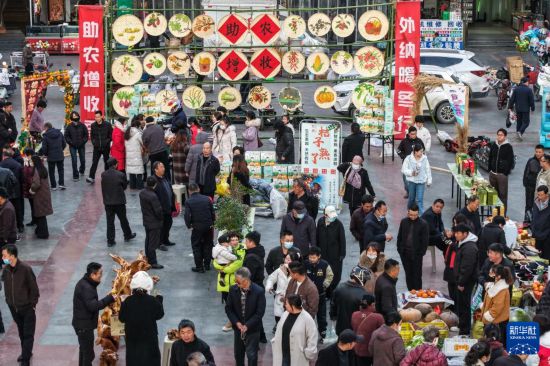
农产品促消费,就是这么“潮”
Sou Hu Cai Jing· 2025-12-14 15:51
Core Insights - The article discusses the launch of a consumption promotion activity for the New Year and Spring Festival, themed "Taste Local Products, Seek New Year Flavor," aimed at boosting agricultural product sales and enhancing consumer engagement [1][3][16] Group 1: Event Overview - The event was initiated by the Ministry of Agriculture and Rural Affairs in collaboration with multiple provinces and key cities, focusing on promoting local agricultural products as trendy "New Year goods" [1][3] - Various innovative formats such as performances and interactive activities were employed to attract consumers and highlight products like Fengjie navel oranges and Changping strawberries [1][3] Group 2: Policy and Market Synchronization - The Ministry outlined five key tasks to enhance consumption during the holiday season, including the release of a directory for local specialty products and the organization of themed consumption activities [3][5] - This initiative aligns with national economic policies aimed at boosting consumer spending and enhancing the supply of quality goods and services [3][5] Group 3: Challenges in Agricultural Product Sales - The article identifies several bottlenecks in the agricultural supply chain, including information gaps, branding issues, logistics challenges, and consumer trust concerns [6][7][8] - These challenges lead to a situation where high-quality agricultural products struggle to reach consumers effectively, impacting both sales and pricing [6][7][8] Group 4: Modern Agricultural Practices - The promotion of agricultural products is evolving beyond simple sales efforts to include branding, technology integration, and quality assurance, reflecting a shift towards modernized agricultural practices [10][11][13] - The use of cultural narratives and technological innovations is being emphasized to enhance product appeal and consumer trust [11][13] Group 5: Collaborative Efforts and Policy Implementation - The event showcased a coordinated approach involving various stakeholders, including local governments, industry associations, and financial institutions, to create a comprehensive support system for agricultural product sales [14][16] - Specific measures include forming national purchasing alliances and providing financial products to support small and medium-sized enterprises within the agricultural sector [14][16]