
水泥

Search documents
大佬羞答答叛变
Sou Hu Cai Jing· 2025-09-28 17:37
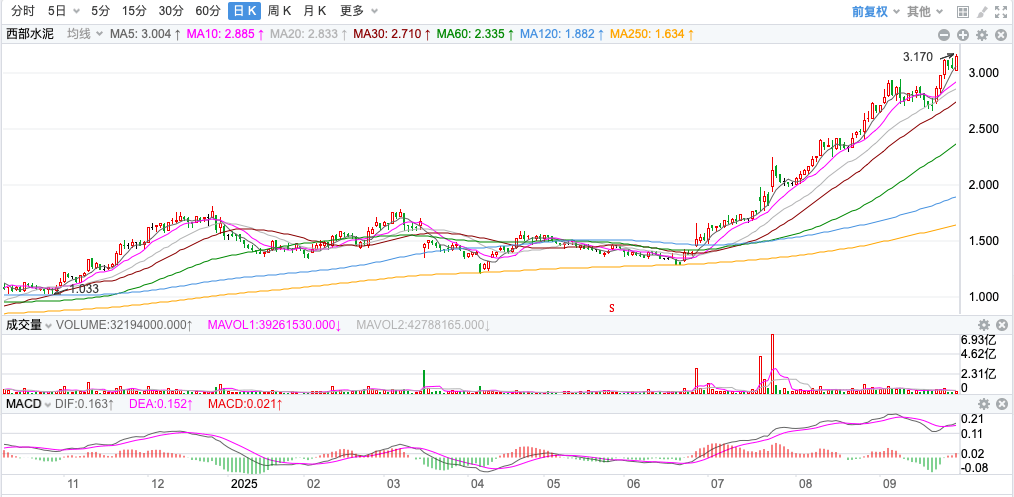
Core Viewpoint - The divergence between "old economy" assets and "new economy" assets has sparked widespread discussion, with notable shifts in investment strategies among prominent investors [1][2]. Group 1: Investment Trends - Some prominent investors, previously resistant to technology stocks, have begun to allocate funds to this sector, albeit reluctantly, due to market requirements [3]. - Investors maintaining a focus on "old economy" assets are facing challenges, with significant declines in fund values and missed opportunities in emerging sectors [3][4]. - The white wine sector, a traditional "old economy" asset, has seen a 7.56% decline in the China Securities White Wine Index this year, indicating ongoing struggles in this market [3]. Group 2: Market Dynamics - The tourism sector is also underperforming, with hotel prices dropping due to low demand, reflecting broader trends in consumer spending [4]. - Certain "old economy" stocks, like West Cement, are experiencing downturns due to declines in infrastructure and real estate markets [4]. - A company has reported a significant increase in net profit, exceeding last year's total within just six months, attributed to expansion in African markets [6]. Group 3: Seasonal Trends and Predictions - Historical data suggests that sectors with strong performance in the first three quarters often underperform in the fourth quarter, indicating a potential shift in market focus [6][7]. - The likelihood of "old economy" assets appreciating in the fourth quarter may depend on policy stimulus or significant economic narratives [7]. - The upcoming holiday period may lead to a preference for cash holdings among investors, although market conditions are expected to remain stable with potential for stock market gains post-holiday [8].

“反内卷”政策加码 分析人士:预计水泥行业年内将减少10%熟料产能|行业观察
Xin Lang Cai Jing· 2025-09-28 15:48
Core Viewpoint - The introduction of the "Building Materials Industry Stabilization and Growth Work Plan (2025-2026)" aims to accelerate the elimination of inefficient cement production capacity, leading to a potential rebound in cement prices beyond expectations [1][4]. Industry Overview - The cement industry is currently facing a low capacity utilization rate of around 50%, attributed to declining demand in the real estate market and increased staggered production halts [1][2]. - The new policy prohibits the addition of new cement clinker capacity and requires companies to develop capacity replacement plans by the end of 2025 for any excess production [1][4]. Capacity Management - The implementation of the capacity replacement plan is expected to reduce clinker capacity by approximately 10%, which may accelerate price recovery in the industry [4][5]. - Major companies are expected to accelerate market consolidation, improving industry concentration, which currently stands at 56.5% for the top ten clinker producers [5][6]. Demand and Production Adjustments - Various regional cement associations are mandating staggered production halts, with the Sichuan Cement Association requiring each clinker production line to halt for at least 15 days per month in Q4 [2]. - The overall sentiment in the industry indicates a pessimistic outlook for Q4 demand, prompting increased production halts [2][3]. Financial Performance - In the first half of the year, 73 listed building materials companies reported revenues of 305.5 billion yuan, with net profits of only 11.8 billion yuan, indicating a challenging financial environment [3]. - Some leading cement companies have shifted from profit to loss, highlighting the impact of declining demand [3]. Strategic Responses - Companies are exploring cross-industry transformations to mitigate cyclical downturns, with some investing in sectors like semiconductors and renewable energy [6]. - The policy encourages leading companies to collaborate with social capital to establish green low-carbon transition funds, facilitating the exit of inefficient production capacity [5][6].


建筑材料行业跟踪周报:建材稳增长政策落地,反内卷力度有望强化-20250928
Soochow Securities· 2025-09-28 14:46
Investment Rating - The report maintains an "Accumulate" rating for the building materials industry [1] Core Views - The implementation of stable growth policies in the building materials sector is expected to strengthen anti-involution efforts, leading to potential growth opportunities [1][4] - The report highlights a rebound in industrial profits and improvements in the Producer Price Index (PPI), driven by anti-involution measures [4] - The report recommends several companies, including Huaxin Cement, Conch Cement, and Qibin Group, as well as consumer building materials firms like Oppein Home and Arrow Bathroom, indicating a positive outlook for these stocks [4][6] Summary by Sections 1. Industry Trends - The building materials sector experienced a decline of 2.11% this week, underperforming the CSI 300 and Wind All A indices, which gained 1.07% and 0.25% respectively [4] - The average price of high-standard cement nationwide is reported at 351.0 CNY/ton, with a week-on-week increase of 5.3 CNY/ton but a year-on-year decrease of 35.0 CNY/ton [4][18] - The average cement inventory ratio is 65.7%, up 0.9 percentage points from last week [25] 2. Cement Market - The report notes a slight decrease in cement demand due to weather conditions, with an average shipment rate of 46.5%, down 1.9 percentage points from last week [25] - The report anticipates that cement companies will continue to push for price increases as the fourth quarter approaches, with expectations for a rebound in prices [4][11] - Recommendations include leading companies such as Huaxin Cement and Conch Cement, which are expected to benefit from industry consolidation and improved profitability [11] 3. Glass Market - The average price of float glass is reported at 1224.7 CNY/ton, reflecting a week-on-week increase of 16.8 CNY/ton and a year-on-year increase of 47.6% [4] - The report suggests that the glass industry is currently facing a supply-demand stalemate, but mid-term supply-side adjustments are expected to improve pricing dynamics [13] - Flagship companies like Qibin Group are recommended due to their competitive advantages in resource access and potential profit growth from diversified business lines [13] 4. Fiberglass Market - The report indicates that the profitability of fiberglass is expected to improve in the medium term, with a focus on high-end products [12] - The report highlights that the industry is experiencing a gradual reduction in supply pressure, which is likely to stabilize prices [12][13] - Companies such as China Jushi are recommended for their strong market position and growth potential in emerging applications [12][13] 5. Consumer Building Materials - The report emphasizes the positive impact of government policies on consumer demand for building materials, with expectations for continued growth in the sector [14] - Companies like Oppein Home and Arrow Bathroom are highlighted for their strong market positions and potential for recovery in consumer spending [14] - The report suggests that the competitive landscape is improving, with many companies showing signs of profit recovery and growth strategies [14]
建材稳增长方案出台,继续推荐反内卷+出海+高端电子布投资机会
Tianfeng Securities· 2025-09-28 12:44
Investment Rating - Industry Rating: Outperforming the market (maintained rating) [4] Core Viewpoints - The construction materials sector (CITIC) declined by 1.73% this week, underperforming the CSI 300 index, which rose by 1.07%, resulting in a 2.8 percentage point lag [2][10] - On September 24, the Ministry of Industry and Information Technology and five other departments jointly released the "Construction Materials Industry Stabilization Growth Work Plan (2025-2026)", addressing weak market demand and structural issues in the industry. The plan emphasizes strict capacity control for cement and glass, promotes technological innovation, and encourages digital transformation and green low-carbon upgrades [2][17] - The new plan focuses more on resolving structural issues rather than emphasizing growth targets, with clear measures for capacity control in overcapacity sectors like cement and glass. It also highlights the need for continuous improvement in transformation and upgrading, particularly in high-end materials [2][17] Summary by Sections Market Review - The CSI 300 index increased by 1.07% while the construction materials sector (CITIC) fell by 1.73%, with glass fiber and glass sub-sectors experiencing smaller declines. Notable stock performances included Xidamen (+9.8%), Shangfeng Cement (+8.1%), and China Jushi (+7.5%) [1][10] Key Recommendations - Recommended stocks include: 1. Cement: Huaxin Cement, Conch Cement, Shangfeng Cement 2. Glass: Qibin Group, Fuyao Glass, Yamaton 3. Consumer Building Materials: Dongfang Yuhong, Sankeshu, Beixin Building Materials 4. Glass Fiber: China Jushi, Shandong Fiberglass, Changhai Co. [2][19] Focused Investment Opportunities - The report suggests focusing on high-demand sectors such as high-end electronic fabrics and overseas markets, recommending companies like China National Materials, Honghe Technology, and West Cement [2][19]



提示重视玻纤龙头、玻璃龙头的回购公告
SINOLINK SECURITIES· 2025-09-28 12:38
Investment Rating - The report highlights a positive investment outlook for the fiberglass industry, emphasizing the confidence shown by leading companies through share buybacks and employee incentive plans [2][12]. Core Insights - The fiberglass industry has been identified as a key focus area, benefiting from global pricing attributes and high external demand, with many small enterprises operating near breakeven [2][12]. - The glass industry, particularly in the photovoltaic and float glass segments, is currently at a low point in terms of market conditions, with prices moving in tandem but lacking clear signs of recovery [2][12]. - Companies like Qibin Group have diversified their business structure, which may provide them with additional performance catalysts compared to other glass companies [2][12]. Summary by Sections Weekly Discussion - Recent share buyback announcements from China Jushi and Qibin Group are seen as positive signals of confidence in the industry [2][12]. - The fiberglass sector has been highlighted as a focus area since before the interest rate cut in September, with its characteristics aligning well with external demand and price elasticity [2][12]. Cyclical Linkage - The average price of float glass increased to 1224.74 RMB/ton, reflecting a 1.39% rise week-on-week, while the average utilization rate for concrete mixing stations was reported at 7.67% [14][27]. - The fiberglass price remained stable at 3524.75 RMB/ton, with electronic cloth prices also holding steady [14][56]. Market Performance - The construction materials index saw a decline of 1.08% overall, with specific segments like glass manufacturing showing a slight increase of 1.06% [17][21]. - The report indicates that the cement market is experiencing a price increase, with a notable rise in certain regions [27]. Price Changes in Construction Materials - The report notes a significant increase in cement prices, with a rise of 1.5% observed, particularly in regions like Jiangsu and Zhejiang [27][28]. - The float glass market is experiencing a price increase, with a reported average price of 1224.74 RMB/ton, indicating a positive trend in market sentiment [27][38]. Fiberglass Market - The domestic price for 2400tex fiberglass remained stable, with a current average of 3524.75 RMB/ton, reflecting a year-on-year decrease of 3.97% [56][59]. - The electronic cloth market also maintained stable pricing, with current rates between 4.1-4.2 RMB/m [56][57].

稳增长方案发布,重点关注行业供给优化
HUAXI Securities· 2025-09-28 09:13
Investment Rating - The industry rating is "Recommended" [5] Core Insights - The report highlights the benefits of the "steady growth plan" released by six departments, focusing on supply optimization in the construction materials industry, with specific recommendations for companies like Huaxin Cement and Conch Cement [1][7] - The report indicates a significant increase in cement prices, with a week-on-week rise of 1.5%, and a positive trend in the glass market, particularly for float glass and photovoltaic glass [2][24][61] - The report notes improvements in housing transactions, with new and second-hand housing sales showing a positive trend in major cities [3][20] Summary by Sections Cement Market - The national cement market price has increased significantly, with a rise of 1.5% week-on-week, driven by demand recovery and price adjustments in various regions [24] - Major regions like Jiangsu, Zhejiang, and Anhui have seen price increases ranging from 10 to 70 yuan/ton, while some areas like Fujian and Guizhou experienced price declines [24][41] - The report anticipates continued price increases as companies aim to meet annual growth targets [24] Glass Market - The average price of float glass has risen to 1224.74 yuan/ton, marking a week-on-week increase of 1.39% [61] - The report notes that the production capacity utilization in the float glass industry is at 82.20%, indicating stable supply conditions [61] Housing Transactions - In the 39th week, new housing transaction area in 30 major cities reached 191.15 million square meters, showing a 27.08% increase week-on-week [3][20] - Second-hand housing transactions in 15 monitored cities also improved, with a 6% increase week-on-week [3][20] Recommended Companies - The report recommends companies with strong pricing power and operational resilience, including Huaxin Cement, Conch Cement, and others in the waterproofing and photovoltaic glass sectors [1][7]


“反内卷”行情持续,如何捕捉长线机会?
Zhong Guo Zheng Quan Bao· 2025-09-28 08:37
Core Viewpoint - The "anti-involution" policy is a comprehensive strategy aimed at eliminating inefficiencies and promoting technological upgrades across various industries, particularly in the renewable energy sector, to create a more competitive and high-quality market environment [4][10]. Group 1: Policy Overview - The current "anti-involution" initiative is characterized by a higher strategic positioning, broader coverage, stronger collaboration, and a long-term orientation, moving beyond simple capacity reduction to a nationwide unified market construction [5][10]. - The policy emphasizes breaking local protectionism and unifying institutional rules while expanding both domestic and international openness as prerequisites for industry reform [5][6]. Group 2: Industry Impact - The initiative extends its focus from traditional upstream sectors to emerging midstream and downstream industries, including solar energy, lithium batteries, and electric vehicles, indicating a significant expansion in the scope of governance [8][10]. - The governance philosophy has shifted from "total capacity reduction" to "high-quality development and technological upgrades," aiming to eliminate outdated capacities while empowering industries for future growth [9][10]. Group 3: Sector-Specific Insights - In the renewable energy manufacturing chain, companies with technological iteration capabilities, such as those in solar, silicon materials, glass, and lithium batteries, are expected to emerge as leaders [11]. - Traditional cyclical industries like steel and cement are anticipated to enhance market share and increase the proportion of high-end products through mergers and restructuring [11]. - The resource and materials sectors are encouraged to focus on high-precision development, with industries like chemicals optimizing capacity layouts and shifting towards R&D innovation and quality upgrades [11]. - Emerging service and consumer sectors, such as small appliances and smart home products, are transitioning from price competition to quality enhancement due to regulated competition and increased demand [11].

欧盟征收碳关税对中国高耗能产品出口的影响及对策分析
Sou Hu Cai Jing· 2025-09-28 03:26
Core Insights - The EU's carbon tariff policy (CBAM) was proposed in 2021 and will officially be implemented in 2026, significantly impacting China's exports of high-energy-consuming products, particularly in the steel, aluminum, cement, and fertilizer industries [1][5][7]. Impact on Export Costs - The implementation of the carbon tariff is projected to increase the export costs of China's high-energy-consuming products by 6%-19%, with the steel industry facing the most significant impact, potentially seeing costs rise by approximately 19% by 2034 [1][2][25]. - In the absence of China's carbon market inclusion, the steel industry may incur carbon tariffs amounting to nearly 20 billion yuan [1][25]. Industry-Specific Analysis - The steel industry is expected to experience a price increase of 14%-16% in the international market, while the US and Turkey, utilizing low-carbon steel production methods, will gain a competitive advantage [2][3]. - The fertilizer industry will see a cost increase of over 9%, while the aluminum and cement industries will experience increases of over 6% [1][25]. Recommendations for Mitigation - The report suggests prioritizing carbon reduction in the steel industry, aiming for a 24% reduction by 2030, and increasing the share of low-carbon steel production [2][3]. - It also recommends improving the carbon market framework in China and expanding exports of high-value-added products to mitigate the impact of the carbon tariff [2][3]. Trade Structure and Competitiveness - China's exports to the EU accounted for 16% of its total exports in 2022, with over 50% being high-energy-consuming products, indicating a significant reliance on these sectors [1][5][15]. - The report highlights the need for China to optimize its trade structure and deepen industrial cooperation with countries like Turkey and Japan to counteract the effects of the carbon tariff [2][3].

10月十大金股推荐
Ping An Securities· 2025-09-28 02:42
Group 1: Market Outlook - The mid-term upward momentum in the market is expected to continue, with the upcoming 20th Central Committee's Fourth Plenary Session discussing the "14th Five-Year Plan" serving as an important policy window[3] - Investment recommendations focus on sectors benefiting from policy dynamics and industrial prosperity, particularly technology growth (AI, semiconductors, consumer electronics, innovative pharmaceuticals), advanced manufacturing (new energy), and cyclical sectors (non-ferrous metals, building materials)[3] Group 2: Recommended Stocks - Gannee Pharmaceutical (603087.SH): Steady growth in core business with innovative products expanding overseas, total market value of ¥476 billion, PE of 51.7, PB of 4.4[4] - Kailai Pharmaceutical (002821.SZ): Industry recovery with new business driving growth, total market value of ¥397 billion, PE of 37.7, PB of 2.4[13] - Zhuhai Guanyu (688772.SH): Major supplier of consumer batteries, benefiting from partnerships with brands like Apple and Huawei, total market value of ¥274 billion, PE of 61.4, PB of 4.0[20] - Tuojing Technology (688072.SH): Leading in film deposition equipment with significant growth potential, total market value of ¥697 billion, PE of 106.6, PB of 12.9[24] - Haiguang Information (688041.SH): Leading domestic computing power enterprise with substantial growth in H1 2025, total market value of ¥6,227 billion, PE of 273.2, PB of 29.5[32] - Shenxinfeng (300454.SZ): Cloud computing driving revenue growth, achieved profitability in Q2, total market value of ¥521 billion, PE of 92.8, PB of 5.8[37] - Penghui Energy (300438.SZ): Leading position in small-scale energy storage cells, total market value of ¥184 billion, PE of -48.1, PB of 3.7[44] - Mingyang Smart Energy (601615.SH): High demand in offshore wind power, total market value of ¥321 billion, PE of 108.6, PB of 1.2[52] - Xingye Silver Tin (000426.SZ): Strong resource positioning with expected silver price recovery, total market value of ¥482 billion, PE of 33.4, PB of 5.7[55] - Huaxin Cement (600801.SH): Rapid overseas business development with expected domestic price recovery, total market value of ¥332 billion, PE of 13.0, PB of 1.2[62]



基建景气或正修复:每周高频跟踪20250927-20250927
Huachuang Securities· 2025-09-27 14:43
Group 1: Report Industry Investment Rating - No relevant content provided Group 2: Core Views of the Report - In the fourth week of September, the peak-season effect on the demand side was gradually released, especially the investment-related indicators showed a month-on-month recovery. Inflation-wise, food prices stopped falling and rebounded. In terms of exports, both the CCFI and SCFI indices continued to decline month-on-month, while port freight volume remained high and volatile. Industrially, industrial electricity consumption decreased before the holiday, coal consumption entered the off-season, and the increase in the operating rate slowed down. In investment, the price increases of cement and rebar expanded, and the operating rate of asphalt accelerated, indicating that the infrastructure investment climate may be improving. In the real estate sector, the sales of new homes further soared while second-hand homes remained stable month-on-month. Overall, the "Golden September" was mediocre, and the year-on-year growth of new homes remained negative [2][32]. - For the bond market, production weakened marginally before the holiday, but the signs of investment stabilization became more prominent this week. The release of peak-season investment demand, the expectation of supply contraction, and the increase in costs may boost the prices of midstream investment products. Attention should be paid to the month-on-month improvement of PPI. Although the "Golden September" was mediocre in terms of real estate sales and investment indicators, demand began to improve in the last week of September. After the holiday, attention should be paid to its sustainability. Especially in October, the weather is conducive to construction, and policy-based financial tools are expected to be implemented, so the fourth quarter may be the period when the "broad credit" effect is realized. Short-term macro expectations may still disturb the bond market sentiment [2][32]. Group 3: Summary by Relevant Catalogs Inflation-related - Food prices stopped falling and rebounded. This week (September 22 - 26), the average wholesale price of pork in the country decreased by 0.94% month-on-month and continued to fall. Vegetable and fruit prices rose. The 200-index of agricultural product wholesale prices and the wholesale price index of basket products increased by 0.41% and 0.48% month-on-month, respectively, ending the decline [7]. Import and Export-related - The CCFI and SCFI indices continued to decline. This week, the CCFI index decreased by 2.93% month-on-month, and the SCFI decreased by 6.98% month-on-month, continuing the downward trend. The demand for China's export container transportation weakened, and the freight rates in the ocean shipping market continued to adjust. Among them, the demand on the North American route had not improved, and the spot booking prices continued to fall. The freight rates on the West and East Coast routes of the United States decreased by 10.8% and 6.7% month-on-month, respectively. In terms of port freight volume, from September 15 to September 21, the container throughput and cargo throughput of ports increased by 0.18% and 0.14% month-on-month, respectively, and the year-on-year increases were 12.95% and 18.76%, respectively, with a significant expansion of the increase, indicating that the export boom remained high [9]. - The BDI index continued to rise, but the increase narrowed. This week, the BDI and CDFI indices increased by 2.2% and 1.7% month-on-month, respectively, continuing the upward trend. Before the holiday, the coal cargo volume increased, and the typhoon affected the ship turnover, driving up the bulk shipping rental prices [9]. Industry-related - The price of thermal coal continued to rise. This week, the price of thermal coal (Q5500) at Qinhuangdao Port increased by 1.6% month-on-month (2.6% the previous week). In terms of demand, this week, the typhoon brought heavy rainfall to the South China coast, effectively alleviating the high temperature in the south. Coupled with the maintenance of power plant units, the civilian electricity load significantly decreased, and coal consumption entered the off-season. As the National Day holiday approached, downstream industrial enterprises would enter a centralized shutdown period, and industrial electricity demand would also weaken accordingly [13][15]. - The price of rebar increased slightly, and the inventory reduction accelerated. The spot price of rebar (HRB400 20mm) increased by 0.2% month-on-month (0.6% the previous week). The rebar inventory decreased by 2.8% month-on-month, with an accelerated reduction. This week, both the factory and social inventories of rebar decreased, and the apparent demand rebounded. According to Jinlian Chuang statistics, the rebar production has been continuously decreasing since September. In some regions, the profit decreased, and steel mills actively reduced production. The supply side shrank significantly, and the dual-energy control policy fermented in some regions, restricting the release of production capacity. The survey showed that as of the end of September, the terminal procurement volume in East China had only recovered to 92% of the same period last year, and it was still less than 90% in North and Northeast China. The "Golden September" was mediocre. Looking forward to October, as engineering projects enter the year-end sprint stage, attention should be paid to the demand performance of rebar [15]. - The increase in copper prices slightly expanded. This week, the average prices of Yangtze River Nonferrous Copper and LME Copper increased by 0.66% and 0.57% month-on-month, respectively, maintaining an upward trend. This week, the suspension of copper mines in Indonesia led to an expectation of supply contraction, the social inventory of Shanghai copper decreased, and the expectation of interest rate cuts by the Federal Reserve in October and December increased, all of which boosted copper prices [17]. - The increase in glass futures narrowed. At the beginning of the week, the glass trading was mediocre. During the week, boosted by macro expectations, manufacturers generally raised their price expectations significantly, and the downstream procurement rhythm accelerated accordingly, resulting in a significant increase in the market price. However, the actual improvement in the glass demand side was limited [17]. Investment-related - The price increase of cement significantly expanded, supported by both cost and demand. This week, the weekly average of the cement price index increased by 2.0% month-on-month (0.01% the previous week). Recently, the cost of cement raw materials has increased, the demand in the traditional peak season has been gradually released, and environmental protection policies require some regions to implement staggered kiln shutdowns, jointly driving up the general increase in cement prices [21]. - In the fourth week of September, the sales volume of new homes increased at an accelerated pace month-on-month but was lower year-on-year. From last Friday to this Thursday (September 19 - 25), the transaction area of new homes in 30 cities was 1.793 million square meters, a month-on-month increase of 52.4% and a year-on-year decrease of 4.6%. New homes entered the end-of-month sprint stage and improved at an accelerated pace compared with the previous week, but the year-on-year performance was still low, and the overall performance was mediocre. The sales of second-hand homes decreased slightly. This week, the transaction area of second-hand homes in 17 cities was 1.973 million square meters, a month-on-month decrease of 0.5% and a year-on-year increase of 8.3% (61.6% last week), with the upward momentum weakening marginally [23]. Consumption-related - The retail sales of passenger cars turned positive year-on-year in the first three weeks of September. According to the Passenger Car Association, from September 1 to 21, the retail sales of passenger cars increased by 1% year-on-year and 8% month-on-month. The retail growth rate of passenger cars improved in the third week, but to some extent, it was supported by the low base caused by the Mid-Autumn Festival holiday in mid-September last year, and the market trend was generally stable [25]. - The increase in crude oil prices expanded. As of Friday, the prices of Brent crude oil and WTI crude oil increased by 5.2% and 4.9% month-on-month, respectively, turning from a decline to an increase. During the week, the uncertainty of Iraq's crude oil export supply and the month-on-month decrease in US commercial crude oil inventories supported the oil prices [25].