债券

Search documents
超长信用债探微跟踪:2.4%的超长信用债有机会吗?
SINOLINK SECURITIES· 2025-09-17 14:23
Report Industry Investment Rating No relevant information provided. Core Viewpoints The report analyzes the market conditions of ultra - long credit bonds from multiple aspects, including the adjustment of yields in the stock market, the increase in new bond supply in the primary market, and the decline in index prices and weak trading sentiment in the secondary market. It also points out that institutions should pay attention to market sentiment changes around the listing of the second batch of Sci - tech Innovation Bond ETFs when participating in the ultra - long credit bond market [2][3][4]. Summary by Directory 1. Stock Market Characteristics - Ultra - long credit bond yields continued to adjust. Due to the impact of new public fund regulations on the bond market this week, assets with insufficient safety margins, such as medium - and long - duration secondary bonds and general credit bonds over 7 years, faced significant adjustment pressure. The number of stock ultra - long credit bonds with a yield of 2.4% - 2.5% increased to 353 compared with last week [2][12]. 2. Primary Issuance Situation - The supply of new ultra - long credit bonds increased significantly. The total issuance scale of new ultra - long credit bonds this week was 40.19 billion, reaching the highest point this year, mainly affected by the large - scale issuance of ultra - long individual bonds by Everbright Group. Due to the overall pressure on the bond market, the market's sentiment towards primary - market allocation was cautious, and the coupon rates of new ultra - long credit bonds generally continued to rise. However, investors had a certain degree of recognition for the high - quality ultra - long new bonds of Everbright Group, as shown by the rebound in the subscription enthusiasm for new ultra - long industrial bonds in the latest week [3][21]. 3. Secondary Trading Performance - The price of the ultra - long credit bond index continued to fall. This week, the price index trends of various bonds continued to diverge. Medium - and short - duration credit bonds were more resilient, while long - duration varieties faced price pressure. The index of AA + credit bonds over 10 years decreased by 1.02% month - on - month [29]. - The trading sentiment of ultra - long credit bonds remained sluggish. This week, due to redemption pressure, the selling pressure of trading desks on ultra - long credit bonds intensified. Although the number of transactions of credit bonds over 7 years increased slightly, the average transaction yield increased significantly compared with last week. In terms of spreads, the spread between industrial bonds over 10 years and 20 - 30 - year treasury bonds widened to over 35bp [32]. - Correspondingly, the proportion of TKN of ultra - long credit bonds over 10 years was less than 50% this week, and the average discount of 20 - 30 - year urban investment individual bonds reached over 5BP, highlighting the heavy selling pressure from sellers [37]. - In terms of investor structure, due to concerns about the stability of the liability side, funds have been reducing their holdings of ultra - long credit bonds for five consecutive weeks. The net selling scale of ultra - long credit bond varieties in the latest week exceeded 3 billion, intensifying the market selling pressure. Institutions such as insurance and wealth management participated slightly during the adjustment, reflecting the allocation demand for high - coupon long - term bonds [43]. - From a more microscopic perspective, the spreads between active ultra - long credit bonds of each maturity and treasury bonds of similar maturities continued to widen this week. The spreads of varieties around 10 years have risen to over the 60th percentile since 2024. In the future, there are still liquidity flaws in ultra - long credit bonds. If institutions intend to participate, they need to avoid excessive selling and pay attention to the market sentiment changes around the listing of the second batch of Sci - tech Innovation Bond ETFs [46].
香港2025施政报告:锚定国家战略,擘画发展蓝图
Guotai Junan Securities· 2025-09-17 12:51
Economic Development - The 2025 Policy Address emphasizes "improving people's livelihoods" and "economic development" as its main themes, proposing several breakthrough policies to consolidate Hong Kong's status as an international financial center[6] - The government aims to foster emerging industries such as advanced manufacturing, life sciences, new energy, artificial intelligence, and data science to create high-quality jobs and enhance overall economic efficiency[5][7] Capital Market Initiatives - The government plans to assist mainland tech companies in financing through the "Tech Enterprise Channel" and improve the main board listing system and issuance mechanisms for structured products[8] - Initiatives include optimizing regulations for "same share, different rights" listings and exploring a T+1 settlement cycle to attract more overseas companies to list in Hong Kong[8] Currency and Bond Market Development - The Hong Kong Monetary Authority (HKMA) will introduce a new "Renminbi Business Funding Arrangement" to enhance liquidity in the offshore RMB market, supported by a currency swap agreement with the People's Bank of China[11] - Plans to upgrade financial infrastructure and promote offshore Chinese government bonds as collateral to expand the application of RMB assets in the bond market[9] Financial Technology Advancements - The HKMA will continue to advance the Ensemble project, promoting tokenized deposit products and facilitating the issuance of tokenized bonds[13] - The report highlights the importance of regulatory sandboxes to encourage banks to strengthen risk management capabilities and the establishment of a risk prevention system in the digital asset sector[13]
国泰海通 · 晨报0918|策略、固收
国泰海通证券研究· 2025-09-17 12:48
Group 1: Core Insights - The article emphasizes the strategic importance of commercial aerospace as a key industry for development, with policies continuously enhancing its growth potential since it was highlighted in the 2023 Central Economic Work Conference [3][4] - The commercial aerospace market is projected to reach a scale of 2.5 trillion yuan by 2025, driven by significant investments and the emergence of private players in the industry [4][6] Group 2: Industry Developments - The commercial aerospace industry chain is rapidly improving, with a complete supply chain from satellite manufacturing to rocket launching and terminal operations, contributing to large-scale development [4][5] - The global commercial aerospace market has reached a size of 480 billion USD, with China expected to account for 24% of global investment in the sector by 2024 [4][5] Group 3: Technological Advancements - The demand for satellite constellations is surging, with multiple large-scale networks being deployed, creating new opportunities for industry growth [5] - New technologies such as reusable rockets and large liquid rockets are enhancing launch frequency and capacity, with several private companies entering the market [5][6] Group 4: Investment Recommendations - The article suggests focusing on sectors benefiting from increased launch capacity, such as rocket manufacturing and satellite payloads, as well as new infrastructure for launch sites [6] - It also highlights the potential of satellite communication, navigation, remote sensing, and space tourism as emerging applications that will benefit from industry scale-up [6]


机构再平衡下中短端普信债占优
HTSC· 2025-09-17 12:28
Report Industry Investment Rating No information provided in the content. Core Viewpoints - Agency behavior has become the core concern recently. The regulations on redemption fees in the new public - offering fund sales rules have raised concerns about bond fund redemptions, leading to declines in policy - financial bonds, Tier 2 and perpetual bonds, and ultra - long - term government bonds. If the new rules are implemented, funds may flow back from bond funds to the balance sheets of banks and insurance companies. Wealth management products and bond ETFs are relatively more advantageous. Under the re - balancing of funds, the spreads of Tier 2 and perpetual bonds preferred by bond funds may widen, while general credit bonds and ETF component bonds are relatively more advantageous, especially those with medium - short durations [1]. - In the short term, institutions are cautious, approaching the quarter - end, and the stock market remains strong. The odds of bonds have improved, but the probability of success is still not high. It is recommended to explore medium - short - duration coupon opportunities and use moderate leverage while defending. Institutions with stable liability ends should gradually increase their allocations during adjustments, with general credit bonds and ABS being better than Tier 2 and perpetual bonds [1]. Summary According to Relevant Catalogs 1. Overall Market Situation - The bond market continues to be under pressure due to the shock - strengthening of the stock market and the disturbance of the new bond fund redemption fee rules, with the curve continuing to steepen. The recent strengthening of the stock market restricts bond - buying, and the new rules on bond fund redemption fees have led to large - scale bond market adjustments from September 8 - 12, with significant declines in policy - financial bonds and Tier 2 and perpetual bonds [12]. - The odds of bonds have increased, but sentiment is weak, and the probability of success is still not high. The real inflection point requires the coordination of fundamentals, the stock market, and the implementation of the new rules [15]. 2. Impact of Agency Behavior Bond Funds - Bond funds are greatly affected by the new rules. If redemption fees increase, their flexibility and cost - effectiveness will weaken significantly, leading to a decline in demand. Funds may flow back to the balance sheets of banks and insurance companies. Wealth management products will have relatively more advantages, and the outsourcing of bond funds may decrease. ETFs are exempt from redemption fees (excluding over - the - counter index funds and ETF link funds), with expanded product advantages, and the "Matthew effect" in the industry may intensify. Certificate of deposit funds and money market funds that are also exempt will also benefit relatively. There is also uncertainty about the adjustment of the tax - exemption policy for public - offering funds [16]. - This shift in behavior significantly affects the demand structure of the bond market. Banks and insurance companies' self - operations prefer government bonds and local government bonds, increasing their allocation demand, while the demand for policy - financial bonds, Tier 2 and perpetual bonds, and even 30 - year government bonds preferred by funds will shrink, and the spreads of relevant varieties will widen significantly. The proportion of trading positions in the bond market will decrease, affecting market trading activity and pricing efficiency [16]. Bond ETFs - The new rules are relatively beneficial to bond ETFs, which have developed rapidly this year and still have room for expansion in the future, bringing about the allocation demand for relevant underlying bonds. The second batch of 14 science and technology innovation bond ETFs was approved on September 8, and after their establishment, they are expected to bring more allocation demand. However, in the short term, the yield of relevant underlying bonds of science and technology innovation bonds has limited room for further decline, and medium - short - duration bonds can be considered for allocation during adjustments [16]. Wealth Management Products - Wealth management products are relatively more advantageous. Without the constraint of redemption fees, with a wider investment scope and better net - value drawdown control, they are more in line with individual investment preferences. If the redemption fees of bond funds increase, wealth management products may further seize market share. The outsourcing of wealth management products may also decrease. Compared with bond funds, wealth management products prefer general credit bonds with shorter durations [20]. Insurance Companies - Insurance companies may return more to their own investments. If redemption fees increase and with the implementation of I9, insurance companies may be more inclined to invest on their own. Compared with funds, insurance companies prefer to allocate ultra - long - term local government bonds and increase their allocation of medium - and high - grade credit bonds during market adjustments [20]. 3. Investment Strategies Coupon Strategy - Institutions with unstable liability ends are recommended to focus on medium - short - duration sinking allocation. Institutions with stable liability ends can gradually increase their allocation of credit bonds during adjustments, initially focusing on bonds with a duration of less than 5 years, and then increasing the allocation of long - duration bonds as the uncertainties in the stock market and agency behavior become clearer. Key attention should be paid to high - quality urban investment bonds in regions with controllable credit risks and central and state - owned enterprises in stable industries such as power, transportation, and non - ferrous metals [23]. Variety Selection - Tier 2 and perpetual bonds are greatly affected by the new bond market redemption fee rules. If the policy is implemented, their variety premiums may be re - evaluated. It is recommended to shorten the duration recently. Trading institutions can focus on trading opportunities brought about by over - adjustments but should also enter and exit quickly within 5 years. Institutions with stable liability ends such as insurance companies can build positions in an inverted - pyramid manner during adjustments. The return of bond - allocation funds to the balance sheets of banks and insurance companies is beneficial to the investment in high - grade ABS, which still has a certain variety spread and can continue to be allocated in medium - and high - grade bonds. Private perpetual bonds need to guard against liquidity and valuation disturbances caused by increased redemption pressure, especially those with medium - long durations [26]. Leverage - The interest - rate spread has widened with market adjustments. The liquidity situation may continue to be neutral and loose, and with the expectation of the central bank's purchase of government bonds rising, moderate leverage can be used to increase returns. However, attention should be paid to liquidity disturbances near the quarter - end [26]. Duration - Continue to focus on medium - short - duration defense. Wait for the uncertainties in the stock market and agency behavior to become clear before looking for opportunities for the bond market to rebound and extend the duration. Currently, the market sentiment is still cautious, and there may still be adjustment risks in the medium - and long - ends due to factors such as bond fund redemptions and wealth management product redemptions at the quarter - end [26]. 4. Specific Bond Types Tier 2 and Perpetual Bonds - If the new bond fund redemption fee rules are implemented, it may lead to a re - pricing of the spreads of Tier 2 and perpetual bonds. As of mid - 2025, bond funds held a total of 2.53 trillion yuan of Tier 2 and perpetual bonds, accounting for 35% of the outstanding scale. If banks, insurance companies, and wealth management products redeem half of their bond funds, Tier 2 and perpetual bonds will bear the brunt due to their good liquidity. Theoretically, it may drive the yields of Tier 2 and perpetual bonds up by 9 - 10BP [2][47]. - After over - adjustments, positive factors include the allocation demand from insurance companies, wealth management products, and annuities. However, compared with bond funds, insurance companies prefer medium - long - duration, medium - high - grade Tier 2 and perpetual bonds, with a higher preference for Tier 2 capital bonds than bank perpetual bonds. Wealth management products may have more demand for general credit bonds. Annuities may prefer new bonds after the new VAT rules [52]. - Recently, caution is recommended for Tier 2 and perpetual bonds. The duration should be appropriately shortened. Trading institutions can focus on trading opportunities brought about by over - adjustments but should also enter and exit quickly within 5 years. Institutions with stable liability ends such as insurance companies can build positions in an inverted - pyramid manner during adjustments [52]. Urban Investment Bonds - In August 2025, urban investment bonds continued the net - repayment trend, but the net - repayment amount decreased compared with the same period last year and the previous month. The registration and review situation showed that the amount of urban investment bonds registered by the association increased year - on - year but decreased month - on - month, and the amount of urban investment bonds whose review was terminated by the exchange decreased year - on - year and month - on - month [81]. - Since this year, debt - resolution resources have become more abundant. As of September 5, 2025, the planned issuance scale of "special bonds for replacing hidden debts" was 1.95 trillion yuan, and 109.85 billion yuan of "special new - issue special bonds" had been issued. Eight provinces had allocated 171.5 billion yuan of special bonds to repay local arrears [86][87][89]. - The yield of urban investment bonds has been rising, with short - end varieties performing better than long - end ones. Since mid - August 2025, affected by the strong stock market and the new bond fund redemption fee rules, the yield of urban investment bonds has generally increased, with the spreads of AAA and AA + rated bonds with a duration of less than 2 years slightly decreasing by about 1BP, while the yields of long - end bonds mostly increasing by more than 10BP [99]. - In the short term, it is recommended to look for opportunities while defending, and the short - duration sinking strategy may be relatively better. Institutions with stable liability ends can gradually participate in the allocation opportunities of medium - long - duration bonds of high - grade issuers. Sinking can focus on regions with controllable credit risks and high coupons, and control the duration within 3 years [103]. Industrial Bonds - In the first half of 2025, the revenue and profits of industrial bond - issuing entities decreased year - on - year, but the operating cash flow improved year - on - year. There was significant profit differentiation among industries. Industries such as home appliances, non - ferrous metals, agriculture, forestry, animal husbandry, and fishery, machinery, and power had profit growth and high ROE. Industries such as steel and cement benefited from anti - involution policies, with product prices rising and profits slightly recovering from a low base. The real estate, light manufacturing, and construction industries remained sluggish, and the profits of the coal industry further declined [4]. - The fundamentals of industrial bonds are weakly recovering, and with increased market disturbances, it is recommended to mainly allocate state - owned enterprise bonds with medium - short durations and moderately sink to explore local state - owned enterprises and leading private enterprises in stable industries such as non - ferrous metals, transportation, power, and new energy. For real estate bonds, the incremental policies are yet to be observed, and the valuation risks may still rise. It is recommended to mainly allocate state - owned enterprise bonds with a duration of about 1 year and medium - high grades, and pay attention to the sales trends in September - October and the statements of real estate - stabilizing policies [4].
李家超:把握重置资产机遇 巩固国际金融中心地位
Xin Hua Cai Jing· 2025-09-17 08:06
Group 1: Hong Kong's Financial Market Developments - The Hong Kong government aims to seize opportunities from global investors reallocating assets to strengthen its position as an international financial center [1] - The Hang Seng Index has risen over 20% since the beginning of the year, with an average daily trading volume close to HKD 250 billion, nearly doubling from last year [1] - New stock fundraising has reached over HKD 130 billion by the end of August, marking a nearly sixfold year-on-year increase, making Hong Kong the top global market for new stock offerings [1] Group 2: Support for Technology and Innovation - The government plans to assist mainland technology companies in raising funds in Hong Kong through a "Tech Enterprise Line" and enhance financial support for national technological development [1] - Initiatives include optimizing the main board listing and structured product issuance mechanisms, and exploring the shortening of the stock settlement cycle to T+1 [1] Group 3: Bond and Currency Market Enhancements - The government will work to solidify Hong Kong's status as a bond center and enhance financial infrastructure, including discussions on launching offshore national bond futures [1] - The Hong Kong Monetary Authority (HKMA) will establish a new "Renminbi Business Fund Arrangement" to provide long-term RMB financing to support the real economy [2] - More RMB bonds will be issued, and the government will explore using RMB for government expenditures in suitable scenarios [2] Group 4: Gold Market Development - The government aims to develop a regional gold reserve hub, targeting over 2,000 tons of gold storage within three years [2] - Initiatives include establishing a central clearing system for gold in Hong Kong and promoting the development of gold investment tools and funds [2] Group 5: Wealth Management and Insurance Sector Growth - Hong Kong is expected to become the largest cross-border wealth management center globally, with plans to optimize tax incentives for funds and family offices [3] - The government will revise regulations to lower capital requirements for infrastructure investments and promote the development of the local self-insurance and reinsurance industry [3]
债市日报:9月17日
Xin Hua Cai Jing· 2025-09-17 07:59
Market Overview - The bond market continued to recover on September 17, with all major government bond futures closing higher, and interbank bond yields declining in the afternoon [1][2] - The People's Bank of China (PBOC) conducted a net injection of 114.5 billion yuan in the open market, while short-term funding rates rose across the board due to tax payment impacts [1][5] Government Bonds - The closing prices for government bond futures were as follows: 30-year main contract up 0.31% at 115.880, 10-year main contract up 0.13% at 108.155, 5-year main contract up 0.10% at 105.890, and 2-year main contract up 0.04% at 102.456 [2] - The yields on major interbank bonds decreased, with the 10-year China Development Bank bond yield down 1 basis point to 1.911%, and the 10-year government bond yield down 1.5 basis points to 1.765% [2] International Bond Markets - In North America, U.S. Treasury yields fell across the board, with the 2-year yield down 3.15 basis points to 3.495% and the 10-year yield down 0.58 basis points to 4.028% [3] - In Asia, Japanese bond yields mostly declined, with the 10-year yield down 1.1 basis points to 1.594% [3] - In the Eurozone, yields on 10-year bonds increased slightly, with French bonds up 1 basis point to 3.486% and German bonds up 0.2 basis points to 2.691% [3] Primary Market - The Ministry of Finance reported weighted average yields for newly issued government bonds: 28-day at 1.1295%, 91-day at 1.2514%, and 20-year at 2.1616%, with bid-to-cover ratios of 3.49, 3.27, and 5.71 respectively [4] Funding Conditions - The PBOC conducted a 7-day reverse repo operation with a total of 418.5 billion yuan at a rate of 1.40%, resulting in a net injection of 114.5 billion yuan after accounting for maturing repos [5] - Short-term Shibor rates rose, with the overnight rate up 4.6 basis points to 1.483% and the 7-day rate up 4.4 basis points to 1.519% [5] Institutional Perspectives - Huatai Securities noted that economic data from August showed continued convergence, with external demand stronger than internal demand, suggesting a potential stabilization in the bond market [7] - CITIC Securities indicated that while August economic data was stable, pressures remain, and the bond market's response to fundamental factors is currently muted [7] - Guosheng Securities highlighted that economic data indicates a further slowdown in supply and demand, suggesting that the bond market may experience fluctuations but is gradually returning to fundamentals [7]
李家超:协助内地科技企业来港融资 加速建立国际黄金交易市场
Xin Hua Cai Jing· 2025-09-17 07:05
Economic Growth and Financial System - Hong Kong's economy is expected to grow by 2% to 3% this year, marking a positive turnaround since the current administration took office [1] - The government aims to strengthen Hong Kong's financial system, regaining its position as the third global financial center according to the Global Financial Centers Index [1] Stock Market Enhancement - The Hang Seng Index has risen over 20% since the beginning of the year, with average daily trading volume nearing 250 billion HKD, almost doubling from last year [2] - New stock fundraising has reached over 130 billion HKD by the end of August, representing a nearly sixfold year-on-year increase, making Hong Kong the top global market for new listings [2] - Initiatives include assisting mainland tech companies in financing through a "Tech Enterprise Line," optimizing the main board listing mechanism, and exploring a T+1 settlement cycle [2] Bond Market Development - The government plans to solidify Hong Kong's status as a bond center by enhancing financial infrastructure and creating a centralized platform for managing various assets [3] - Collaboration with international markets, including Switzerland and the UAE, is being pursued to expand the bond market [3] - The Securities and Futures Commission is exploring the feasibility of an electronic bond trading platform and promoting a commercial repo market [3] Currency Market Growth - Hong Kong is the largest offshore RMB business hub, with plans to enhance liquidity and global reach through new RMB financing arrangements [5] - The government will issue more RMB bonds and explore using RMB for government expenditures [5] Gold Market Expansion - The government has accepted recommendations to develop Hong Kong into a regional gold storage hub, aiming to exceed 2,000 tons in three years [6] - Initiatives include establishing a central clearing system for gold transactions and promoting the issuance of gold investment products [7] Insurance and Asset Management - The government will revise regulations to lower capital requirements for infrastructure investments, promoting insurance participation in financing [8] - Hong Kong is expected to become the largest cross-border wealth management center, with significant growth in investment accounts from mainland investors [9] Financial Technology Advancement - The Monetary Authority is advancing the Ensemble project to support the development of tokenized markets and improve risk management [10] - Legislative proposals are being developed for digital asset trading and custody services [10] Sustainable Finance Initiatives - The Hong Kong Stock Exchange launched an international carbon trading platform, aiming to enhance cooperation with the Greater Bay Area on carbon market development [11] International Trade and Infrastructure - The government is focused on enhancing international trade networks and infrastructure connectivity, including cross-border railway projects to improve regional integration [12]
李家超:探索缩短股票结算周期至T+1,落实稳定币发行人制度,建造区域黄金储备枢纽
Hua Er Jie Jian Wen· 2025-09-17 06:41
Core Points - The Chief Executive of Hong Kong, John Lee, presented the 2025 Policy Address, focusing on economic development and enhancing the quality of life for residents [1] - The address outlines specific measures to accelerate the development of the Northern Metropolis, industrial innovation, and reinforce Hong Kong's status as an international financial center [1] Financial Sector Initiatives - Hong Kong will assist mainland tech companies in financing and explore shortening the stock settlement cycle to T+1 [2][3] - The government aims to enhance the bond market by improving financial infrastructure and establishing connections with markets in Switzerland and the UAE [2][3] - Plans to establish an international gold trading market include expanding gold storage capabilities to exceed 2000 tons within three years [3][4] Commodity and Family Office Development - Collaboration with Greater Bay Area exchanges to develop commodity and carbon trading [4] - The government will optimize tax incentives for family offices to attract more funds to Hong Kong [4][5] Digital Asset and Stablecoin Regulation - The Hong Kong Monetary Authority (HKMA) will promote tokenized deposits and establish a regulatory framework for stablecoin issuers [6] - The Securities and Futures Commission (SFC) is working on expanding the types of digital asset products available to professional investors [6] Innovation and Technology - A HK$3 billion "Frontier Technology Research Support Scheme" will be launched to attract international research talent in AI [7] - The government plans to accelerate the development of autonomous vehicles and establish a regulatory framework for ride-hailing services [8] Clinical Trials and Pharmaceutical Development - The government aims to attract more pharmaceutical companies to conduct clinical trials in Hong Kong, particularly for rare diseases and advanced therapies [12] - A new "International Clinical Trial Academy" will be established to train clinical trial professionals in the Greater Bay Area [12] Investment and Economic Policies - The "New Capital Investor Entry Scheme" will be optimized to encourage investments in Hong Kong, with increased limits for non-residential property investments [13][14] - The government will enhance cross-border payment systems and improve cash assistance distribution for elderly residents in mainland China [13][14] Governance and Management - A "Department Head Responsibility System" will be established to strengthen governance and accountability within the government [15] Innovation Fund Launch - The "Innovation and Technology Industry Guidance Fund" is set to launch in the 2026-2027 fiscal year to promote strategic investments in emerging industries [16]
ESG投资周报:本月新发4只ESG基金,流动性环比收窄-20250917
GUOTAI HAITONG SECURITIES· 2025-09-17 06:32
Market Performance - The A-share market showed signs of recovery with the CSI 300 index rising by 1.38% and the ESG 300 index increasing by 1.37% during the week of September 8-12, 2025[5] - The average daily trading volume for the entire A-share market was approximately 2.34 trillion yuan, indicating a contraction in liquidity compared to previous periods[5] ESG Fund Issuance - Four new ESG funds were launched in September 2025, with a total issuance of 3.468 billion units, primarily focused on social responsibility and environmental protection[8] - Over the past year, a total of 247 ESG public funds were issued, amounting to a total of 175.072 billion units[8] - As of September 14, 2025, there are 923 existing ESG funds, with the largest share being ESG strategy funds at 50.48% of the total net asset value of 1,028.855 billion yuan[10] Fund Performance - The top-performing fund for the week was the Zhongjia Low-Carbon Economy Six-Month Holding A, achieving a weekly return of 13.47% and a year-to-date return of 72.57%[11] - Other notable funds included Manulife Growth A and Manulife Revitalization A, with returns of 12.70% and 12.20% respectively for the week[12] Green Bond Market - A total of 84 ESG bonds were issued in September 2025, with an issuance amount of 36.3 billion yuan[15] - The total issuance of ESG bonds over the past year reached 1,059 bonds, totaling 1,172 billion yuan[15] - The existing ESG bond market consists of 3,672 bonds, with green bonds making up the largest share at 61.71% of the total outstanding amount of 5.57 trillion yuan[15] Bank Wealth Management Products - In September 2025, 37 new ESG bank wealth management products were launched, with a total of 1,091 products issued over the past year[21] - The existing ESG bank wealth management products total 1,087, with pure ESG products comprising 56.03% of the total[21] Risk Factors - Potential risks include insufficient policy support for ESG initiatives, lack of standardized data reporting, and lower-than-expected product issuance volumes[24]
李家超,重大发布!
Zheng Quan Shi Bao· 2025-09-17 05:38
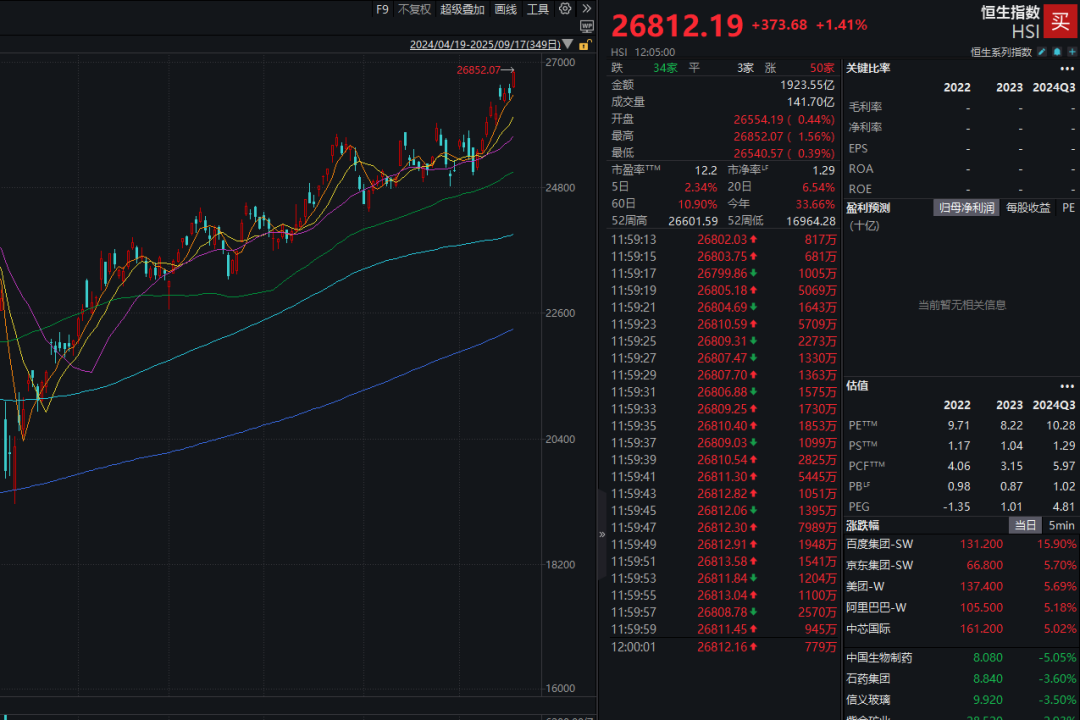
Core Points - The 2025 Policy Address by Hong Kong Chief Executive John Lee emphasizes economic development and aligning with national strategies [1] - Specific measures include accelerating the development of the Northern Metropolis, industrial innovation, and reinforcing Hong Kong's status as an international financial center [1] Development of Northern Metropolis - The Northern Metropolis is identified as a new economic engine for Hong Kong, with plans to establish a "Northern Development Committee" led by John Lee [2] - The government will create dedicated legislation to facilitate the development of the Northern Metropolis, including funding channels for park companies and streamlined cross-border logistics [2] - The first phase of the Hong Kong Science and Technology Innovation Cooperation Zone is complete, with major industries like life sciences and AI tenants moving in [2] Industrial Development and Innovation - Emphasis on artificial intelligence (AI) development, including a HKD 3 billion funding plan to attract international research talent [4] - Plans to establish the "Hong Kong AI Research Institute" by 2026 with a budget of HKD 1 billion to promote AI research and application [4] - The life sciences sector is set to grow, with initiatives to attract pharmaceutical companies for clinical trials and the establishment of an "International Clinical Trial Academy" [5] Reinforcing Hong Kong's Financial Center Status - The government aims to support tech companies in raising funds through the stock market and improve listing mechanisms [6] - Initiatives to enhance the bond market include creating a centralized platform for managing various assets and promoting offshore Chinese government bonds [6][7] - Plans to establish an international gold trading market and enhance commodity trading, including carbon trading [7][8] Stock Market Performance - Following the Policy Address, the Hang Seng Index rose by 1.41%, reaching a new high [9] - The Hong Kong stock market has seen significant recovery in 2025, with the Hang Seng Index up over 33% year-to-date and new stock issuance increasing dramatically [10][11] - The average daily trading volume in the Hong Kong stock market has surged by 118% year-on-year [11]