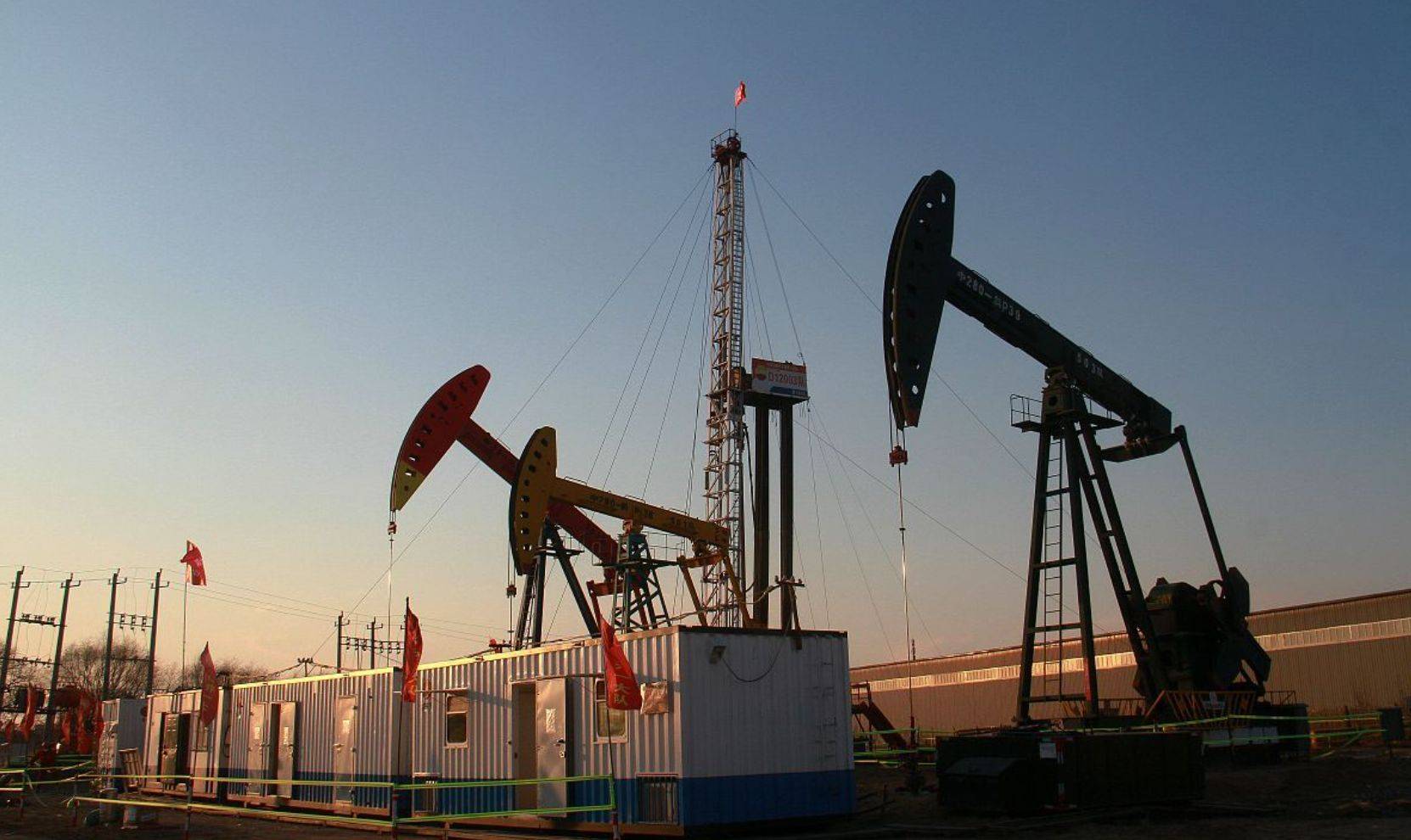
原油

Search documents
中美刚挂断电话,白宫就收到坏消息,1800万桶原油,被中国拒之门外
Sou Hu Cai Jing· 2025-06-11 06:38
Group 1 - China has not purchased US crude oil for two consecutive months, resulting in an estimated rejection of approximately 18 million barrels based on last year's procurement volume [1] - The US has significantly increased its crude oil production and export capacity due to the shale oil boom, making it a key player in the global energy market [1] - The trade conflict between the US and China has led to high tariffs on US crude oil exports to China, altering the economic dynamics of the market [3] Group 2 - The reduction in US crude oil purchases by China has severely impacted the US energy sector, leading to a sharp decline in energy export revenues [5] - Many US energy companies are facing financial difficulties, resulting in cost-cutting measures such as layoffs and reduced exploration and development investments [5] - The job losses in the energy sector and reduced production capacity could adversely affect the long-term development of the US energy industry [5] Group 3 - Some US politicians are attempting to regain leverage by threatening high tariffs on China if it continues to purchase Russian oil, but such threats are seen as ineffective and impractical [7] - High tariffs would harm US companies that rely on the Chinese market, leading to increased prices for American goods and higher living costs for US consumers [7] - The stability of US-China relations is crucial for global economic development, and cooperation in energy trade is in the best interest of both nations [8]


研究所晨会观点精萃-20250611
Dong Hai Qi Huo· 2025-06-11 02:19
1. Report Industry Investment Rating No relevant content provided. 2. Core Views of the Report - Global risk preference is on the rise due to the positive progress of US trade negotiations, with the US showing good progress in tariff negotiations, such as the potential for an interim trade agreement between India and the US by the end of the month and the near - agreement on steel import tariffs between the US and Mexico. In China, May's export was slightly lower than expected, but the trade surplus was higher than expected, which boosts domestic risk preference in the short term [3]. - Different asset classes have different short - term trends: stocks are expected to be volatile in the short term, with a cautious long - position strategy; bonds are at a high level and volatile, suggesting cautious observation; commodities show different trends in sub - sectors [3]. 3. Summary by Relevant Catalogs Macro - finance - **Global and Domestic Market Conditions**: Overseas, US tariff negotiations are going well, which boosts global risk preference. In China, May's export was slightly lower than expected, but the trade surplus was higher than expected, strengthening the short - term economic pull of net exports and boosting domestic risk preference. The ongoing Sino - US economic and trade consultations may affect the market in the short term, increasing market volatility [3]. - **Asset Performance and Strategies**: Stocks are expected to be volatile in the short term, with a cautious long - position strategy; bonds are at a high level and volatile, suggesting cautious observation; in the commodity sector, black commodities are rebounding from a low level, suggesting cautious observation; non - ferrous metals are oscillating and rebounding, suggesting cautious long - positions; energy and chemical products are oscillating and rebounding, suggesting long - positions; precious metals are at a high level and volatile, suggesting long - positions [3]. Stock Index - **Market Performance**: Domestic stocks continued to decline slightly, dragged down by sectors such as semiconductors, artificial intelligence, and military industry. - **Fundamentals and Influencing Factors**: China's May export was slightly lower than expected, but the trade surplus was higher than expected, which helps boost domestic risk preference in the short term. The ongoing Sino - US economic and trade consultations may affect the market in the short term, increasing market volatility. The market's trading logic focuses on US trade policy changes and trade negotiation progress. - **Operation Strategy**: Short - term cautious long - positions [4]. Precious Metals - **Market Performance**: Gold prices fell slightly, with Shanghai gold dropping to 774 yuan/gram and Shanghai silver remaining at a high level of 8889 yuan. - **Influencing Factors**: Trade improvement boosts risk preference. Investors are waiting for more information on Sino - US consultations and focusing on the upcoming consumer price index data to judge the Fed's policy path. There are stagflation risks, and the Sino - US economic and trade consultation eases the trade situation, but negotiations between the US and other countries are ongoing. - **Operation Strategy**: Silver has a demand for technical breakthrough and catch - up growth, and the gold - silver ratio may be repaired. Gold is expected to remain at a high level and volatile. A callback - buying strategy is recommended, and attention should be paid to long - term layout opportunities after a phased callback [5]. Energy and Chemicals Crude Oil - **Market Performance**: Oil prices fell slightly as the market awaited the results of Sino - US trade talks. - **Influencing Factors**: The US Commerce Secretary said the talks were fruitful, but no agreement was announced. Some Canadian oil sands production affected by wildfires is resuming, and API data shows concerns about recent demand due to large increases in refined oil inventories despite a slight decrease in crude oil inventories. - **Trend Outlook**: Oil prices will continue to fluctuate in the near future [6][7]. Asphalt - **Market Performance**: Oil prices fell slightly, and asphalt prices remained at a high level and volatile. - **Influencing Factors**: Demand has recovered to some extent, but the recovery is limited. The basis in major consumption areas has declined significantly, and the market structure has weakened following the spot market. After profit recovery, production has increased, and inventory depletion has stagnated. - **Trend Outlook**: In the short term, it will continue to fluctuate at a high level following crude oil [7]. PX - **Market Performance**: PX prices are in a weak and volatile short - term pattern, with the external market price dropping to 817 US dollars and the PXN spread dropping to 257 US dollars. - **Influencing Factors**: PTA's recent increase in production has led to higher future demand for PX, and there are still many domestic maintenance plans from June to July, so the supply is expected to be tight. However, the recent decline in PTA prices has led to a decline in the external PX market. - **Trend Outlook**: It will maintain a weak and volatile pattern in the short term [7]. PTA - **Market Performance**: PTA's basis remains high, and the monthly spread has declined slightly. There is a high probability of a slight inventory accumulation pattern starting in June, and after the June contract delivery, the tight supply in the circulation link may ease, and both the structure and price may decline. - **Influencing Factors**: In recent days, the polyester market's logic is mainly related to the cost side, with a high degree of resonance with crude oil and limited self - driving factors. - **Trend Outlook**: It will mainly maintain a weak and volatile pattern [7]. Ethylene Glycol - **Market Performance**: The visible inventory of ethylene glycol remains above 650,000 tons, and inventory depletion is limited. - **Influencing Factors**: There are still many expectations for the return of syngas plants, and the supply side is putting pressure on the market. Downstream production has decreased due to production cuts, and the inventory depletion rate may decrease marginally. - **Trend Outlook**: It may maintain a volatile pattern in the near future [8]. Short - fiber - **Market Performance**: Short - fiber prices are in a weak and volatile pattern. - **Influencing Factors**: The recovery of terminal orders is significantly slower than expected, and short - fiber prices have weakened. Downstream production is expected to decrease in the short term, and short - term orders are still weak, leading to an increase in inventory. - **Trend Outlook**: It will continue to be weak and volatile in the short term [8]. Methanol - **Market Performance**: The port methanol market price is oscillating and rising, and the basis has increased. The inland and port inventories are rising simultaneously. - **Influencing Factors**: Due to the "ship age limit" event, the expected import volume is decreasing, and the port inventory accumulation process is expected to slow down. Inland plant production is gradually increasing, and the supply is abundant, while the downstream demand is generally good. - **Trend Outlook**: It is expected to oscillate and repair in the short term, but the price may decline in the long term [9]. PP - **Market Performance**: The domestic PP market is oscillating narrowly, and the futures price has slightly recovered with other energy - chemical products, but the space is limited. - **Influencing Factors**: PP production is increasing both year - on - year and month - on - month, with new production capacity being put into operation. Downstream production has slightly decreased, and inventory has increased significantly after the holiday, with high finished - product inventory, and the fundamentals are deteriorating. - **Trend Outlook**: The price will be under pressure and move downward in the long term [10]. LLDPE - **Market Performance**: The polyethylene market price has been adjusted, with prices rising in different regions. - **Influencing Factors**: The import windows for some LD and HD varieties are open, but there are not many import offers. The proportion of linear film production is the highest, and plant production is gradually resuming, while downstream production has slightly decreased, and inventory has increased to a neutral level. The expected new production capacity is suppressing prices. - **Trend Outlook**: The rebound space is limited, and attention should be paid to medium - and long - term short - selling opportunities [11][12]. Non - ferrous Metals Copper - **Market Performance**: The market is waiting for the results of Sino - US negotiations in London, and copper prices are expected to be volatile in the short term. - **Influencing Factors**: The copper ore supply is relatively tight, the copper concentrate TC has slightly increased, and the port inventory of copper concentrate is at a high level. Electrolytic copper production is at a high level, and there is no strong motivation for production cuts. The peak demand season is approaching its end, and there are risks of a marginal decline in demand. - **Trend Outlook**: It will be volatile in the short term [13]. Aluminum - **Market Performance**: Aluminum ingot inventories have continued to decline significantly, but the market's expectations are weak. - **Influencing Factors**: The subsidy funds for home appliances in Zhengzhou have been used up, and the demand side may weaken marginally under the high - supply background, and inventory depletion may slow down or even turn into inventory accumulation. - **Trend Outlook**: No clear short - term trend is mentioned, but there are concerns about future inventory changes [13]. Tin - **Market Performance**: Tin prices have rebounded, and there is potential for further short - term price repair. - **Influencing Factors**: The domestic tin ore supply is tight, processing fees have decreased, and the combined operating rate in Yunnan and Jiangxi has declined. The resumption of production in Myanmar's Wa State may be delayed, and Thailand has suspended tin ore transportation from Myanmar. The demand side has mixed trends, with some products maintaining high growth and others weakening, and it is entering the seasonal off - season. - **Trend Outlook**: The price may continue to repair in the short term, but the upside space is limited due to high - tariff risks, resumption of production expectations, and marginal demand decline [14]. Agricultural Products US Soybeans - **Market Performance**: The overnight CBOT 11 - month soybean contract closed at 1031.25, up 0.50 or 0.05%. - **Influencing Factors**: The weather conditions in US soybean - producing areas are good, the sowing progress is fast, and the production situation is stable for now. In South America, Brazil's soybean premium is still strong, and Argentina's soybean harvest is 91%, with the production volume adjusted down to 48.5 million tons. The USDA's June supply - demand report may have a neutral impact on the market, and the focus is on the end - of - month US soybean planting area forecast report. - **Trend Outlook**: The market expects an increase in US soybean planting area compared to previous expectations [15]. Soybean and Rapeseed Meal - **Market Performance**: The national dynamic full - sample oil mill operating rate increased by 1.49% to 65.03% compared to the previous day. - **Influencing Factors**: The soybean meal basis is low, and inventory repair is ongoing. The lack of upward momentum in US soybeans also means that soybean meal lacks stable upward support. For rapeseed meal, the inventory depletion in ports is slow, the Sino - Canadian trade relationship is expected to improve, and downstream demand is cautious due to the higher cost - performance of soybean meal. - **Trend Outlook**: No clear short - term trend is mentioned [16]. Corn - **Market Performance**: The short - term port inventory pressure is not large, and the price is stable. - **Influencing Factors**: The price difference between Shandong and North Ports/South Ports and North Ports is high, and the North Port's shipping volume is large, with rapid inventory depletion. The inventory of North China's deep - processing enterprises is at the end - of - year level, and the replenishment demand is strong. The proportion of wheat used for feed is increasing in most regions except for wheat - producing and consuming areas. - **Trend Outlook**: In the medium term, if the price difference between Brazilian and domestic corn narrows as expected, the price of old - crop corn is likely to rise [17]. Palm Oil - **Market Performance**: In May, Malaysia's palm oil production, import, export, and ending inventory all increased. In June, Malaysia's palm oil exports continued to improve, and the price remained stable within a certain range. - **Influencing Factors**: The improvement in exports and the strength of external crude oil and oils support palm oil prices. - **Trend Outlook**: It will remain stable within a certain range [18]. Pork - **Market Performance**: After the Dragon Boat Festival, the slaughter volume decreased, but the order volume has increased recently. The spot price has stabilized after a decline. - **Influencing Factors**: Consumption is weak in summer, and the supply is increasing as large - scale farms plan to increase the slaughter volume in June, and the average slaughter weight is decreasing. The "reserve purchase" information has boosted the farmers' reluctance to sell, and the second - fattening enthusiasm has increased, which has helped stabilize the spot price. - **Trend Outlook**: The futures and spot markets are under pressure in the short term, but the spot price has shown signs of stabilization [18].
广发早知道:汇总版-20250611
Guang Fa Qi Huo· 2025-06-11 02:11
广发早知道-汇总版 广发期货研究所 电 话:020-88830760 E-Mail:zhaoliang@gf.com.cn 目录: 金融衍生品: 金融期货: 股指期货、国债期货 贵金属: 黄金、白银 集运指数 商品期货: 有色金属: 铜、锌、镍、不锈钢、锡、碳酸锂 黑色金属: 钢材、铁矿石、焦煤、焦炭、铁合金 农产品: 油脂、粕类、玉米、生猪、白糖、棉花、鸡蛋、花生、红枣、苹果 能源化工: 原油、PTA、乙二醇、苯乙烯、短纤、尿素、瓶片、烧碱、PVC、LLDPE、 PP 特殊商品: 橡胶、玻璃纯碱、工业硅、多晶硅 2025 年 6 月 11 日星期三 投资咨询业务资格: 证监许可【2011】1292 号 组长联系信息: 张晓珍(投资咨询资格:Z0003135) 电话:020- 88818009 邮箱:zhangxiaozhen@gf.com.cn 刘珂(投资咨询资格:Z0016336) 电话:020-88818026 邮箱:qhliuke@gf.com.cn 叶倩宁(投资咨询资格:Z0016628) 电话:020- 88818017 邮箱:yeqianning@gf.com.cn 周敏波(投资咨询资格:Z00 ...
安粮期货股指
An Liang Qi Huo· 2025-06-11 02:02
宏观 股指 市场分析:当日沪深两市成交额 1.45 万亿元,较前日放量 10.57%。银行、创新药等防御性 板块领涨,而半导体、航天航空等高波动板块承压。上证 50 主力合约 IH2506 持仓量环比下 降 2.82%,短期多空分歧加剧。中证 1000 收盘价接近压力位 6226 左右,若突破需成交量配 合;沪深 300 收盘价接近支撑位 3514 左右,短期反弹动能不足。 参考观点:中证 1000 波动率较高,建议关注 6227 附近压力位突破情况;上证 50 建议结合 持仓量变化判断趋势持续性;沪深 300 波动率处于低位,但成交额占比稳定,可作为中长期 配置参考;中证 1000 与沪深 300 的波动率比值(1.56)接近 2024 年均值(1.62),可关注 均值回归机会。 原油 宏观与地缘:上周五美国非农数据超预期,削弱美联储降息紧迫性,同时中美第二轮谈判, 市场对经贸缓和有一定预期,原油价格或偏强震荡,关注 WTI 主力 65 美元/桶关键位置。 市场分析:基本面看,OPEC 大幅调降未来两年全球需求增速,美国贸易战升级,特朗普政 府政策多变,引发市场对全球需求担忧。库存方面,美原油库存虽然下滑, ...
美中贸易谈判牵动市场,能化延续震荡
Zhong Xin Qi Huo· 2025-06-11 01:57
1. Report Industry Investment Rating Not provided in the given content. 2. Core View of the Report - The overall energy and chemical products should be treated with an oscillatory mindset as macro - data starts to reflect the weakening economic situation. The chemical sector shows a weaker trend than crude oil, and the market is still dominated by the pessimistic expectation of future demand [2]. 3. Summary by Variety Crude Oil - **View**: There is still an expectation of supply surplus, and attention should be paid to macro and geopolitical disturbances. The price of crude oil will continue to oscillate under the balance of OPEC+ production - increasing pressure and macro - geopolitical benefits [5]. - **Main Logic**: The EIA short - term energy outlook continues to lower the expected production of the US next year, and the API data shows that the US destocked crude oil and restocked refined oil last week, with relatively weak terminal demand. Although the recent macro - environment has eased and Saudi Arabia's production increase in May was limited, the supply surplus expectation still exists in the second half of the year due to the cumulative effect of production increase [5]. LPG - **View**: The domestic combustion and chemical demand remain weak, with limited upward rebound space and may oscillate at the bottom in the short term [9]. - **Main Logic**: Domestic refineries are gradually resuming from maintenance, increasing the supply of liquefied gas and civil gas, and the refinery inventory is rising. High temperatures reduce the civil combustion demand, and the downstream restocking willingness is limited. The PDH device operating rate has declined slightly, and the port inventory is rising, with limited incremental demand for propane [9]. Asphalt - **View**: The absolute price of asphalt is over - estimated, and the asphalt monthly spread is expected to decline with the increase of warehouse receipts [5]. - **Main Logic**: The increase in heavy - oil supply due to OPEC+ production increase and the improvement of domestic raw material supply will put pressure on asphalt prices. The current asphalt is over - estimated, and it needs both strong crude oil and rebar for a bull market, but the current situation does not support it [5][6]. High - Sulfur Fuel Oil - **View**: It will oscillate weakly as the supply increases and demand decreases, and the geopolitical impact on prices is short - term [6][7]. - **Main Logic**: The increase in heavy - oil supply, the rise in import tariffs, and the substitution of natural gas for oil power generation will put pressure on high - sulfur fuel oil prices. The current strong cracking spread and weak discount are due to different factors, and the three driving forces supporting high - sulfur fuel oil are weakening [6][7]. Low - Sulfur Fuel Oil - **View**: It will follow the crude oil price to oscillate, with increasing supply, falling demand, and may maintain a low - valuation operation [8][9]. - **Main Logic**: Currently, the supply and demand of low - sulfur fuel oil are both weak. The reduction of domestic refined - oil export tax rebates and the cancellation of UCO export tax rebates will increase the supply pressure, which is likely to be transmitted to low - sulfur fuel oil [8][9]. Methanol - **View**: It will oscillate in the short term [17]. - **Main Logic**: The methanol price oscillated on June 10. The port inventory is entering a restocking cycle, and the coal price has a short - term rebound, which has a slight impact on methanol. The olefin market is still weak, providing limited support for methanol [17]. Urea - **View**: The domestic supply is strong and demand is weak, and the futures price will oscillate weakly [17]. - **Main Logic**: The high supply continues, and the agricultural demand has not seen concentrated replenishment yet, while the industrial demand is weakening. Exports are expected to be reflected in late June, and the enterprise inventory is rising [17]. Ethylene Glycol - **View**: It has support at the 4200 - 4300 level, and short - selling is not recommended [13]. - **Main Logic**: The industrial pattern of ethylene glycol is still healthy from June to July. The possible stagnation of US ethane exports may limit future production, and the downward space is limited [13]. PX - **View**: It will oscillate weakly as the supply restarts quickly, and attention should be paid to PTA production and polyester start - up [11]. - **Main Logic**: The cost - end guidance of PX is slowing down due to the uncertain future OPEC+ production policy and concerns about global demand. The Asian PX operating load will increase, and the domestic PX is in a destocking cycle, but the supply - demand game is intensifying [11]. PTA - **View**: The supply increases and demand decreases, and the situation is gradually weakening [11]. - **Main Logic**: The weaving load is declining due to limited orders and high inventory. The PTA supply is restarting, and the supply - demand weak expectation restricts the market sentiment, and the destocking is narrowing in June [11]. Short - Fiber - **View**: The processing fee is supported by production cuts, and the absolute value follows the raw material price [13][14]. - **Main Logic**: The PF fundamentals are improving marginally. The supply pressure is relieved due to production cuts, and the spot basis is strengthening. The short - term decline is driven by the macro - environment, and the industrial pattern is still healthy [13][14]. Bottle Chip - **View**: It will oscillate and follow the raw material price [15]. - **Main Logic**: After the price decline, the trading volume of bottle chips has increased, and the basis has strengthened. Exports have diverted some of the excess supply, but it is not enough to change the weak situation. The scope of production cuts and maintenance may expand [15][16]. PP - **View**: It will oscillate in the short term [20]. - **Main Logic**: The cost - end support is marginally increasing, but the supply is still increasing, and the downstream demand is weak. The high - speed growth of supply continues, and the upstream refinery profit may need to be further compressed to balance the supply [20]. Plastic - **View**: It will oscillate as the improvement of maintenance is limited [19]. - **Main Logic**: The cost - end valuation support is marginally increasing, but the plastic's own fundamentals are still under pressure. The supply pressure is high, the downstream demand is weak, and the export window has not widened significantly [19]. Styrene - **View**: It rebounded due to macro - expectations, but the subsequent driving force is insufficient and will oscillate weakly [11][12]. - **Main Logic**: The macro - meeting and device rumors drove the rebound. However, the real - world benefits are limited, the supply may increase due to the restart of long - stopped devices, and the demand and inventory situation of styrene and its downstream products are not optimistic [11][12]. PVC - **View**: It will have a weak rebound in the short term due to improved sentiment, but may face pressure in the long term [22]. - **Main Logic**: The market sentiment has improved due to Sino - US talks. However, in the long term, new production capacity will be put into operation, the domestic demand is in the off - season, and exports are expected to weaken. Although there are many maintenance plans in June, the production will increase after the new capacity is put into operation in mid - July [22]. Caustic Soda - **View**: The spot price has peaked, and it is advisable to short on rallies [22]. - **Main Logic**: The non - aluminum demand is entering the off - season, and the receiving price of Weiqiao has started to decline. Although there are many maintenance plans in June, the supply is expected to increase in the third quarter. The current supply and demand are both weak, and the 09 - contract fundamentals are pessimistic [22]. 4. Variety Data Monitoring Energy and Chemical Daily Indicator Monitoring - **Inter - period Spread**: Data on the inter - period spreads of various varieties such as SC, WTI, Brent, etc. are provided, showing the latest values and changes [23]. - **Basis and Warehouse Receipts**: Information on the basis and warehouse receipts of multiple varieties including asphalt, high - sulfur fuel oil, etc. is presented [24]. - **Inter - variety Spread**: The latest values and changes of inter - variety spreads such as 1 - month PP - 3MA, 1 - month TA - EG, etc. are given [25]. Chemical Basis and Spread Monitoring - Although sub - headings for multiple varieties such as methanol, urea, etc. are provided, no specific content is given in the provided documents.
建信期货原油日报-20250611
Jian Xin Qi Huo· 2025-06-11 01:41
Report Information - Report Type: Crude Oil Daily Report [1] - Date: June 11, 2025 [2] Investment Rating - No investment rating information provided in the report Core Viewpoints - OPEC+ actual production increase is lower than market expectations, and the peak travel season in Europe and the United States is gradually starting, so there is some upward momentum for oil prices in the short term [7] - In the later stage, as tariff negotiations continue to advance, demand expectations are expected to be further raised, but still lower than the level before the tariff war [7] - The balance sheet adjustment is limited, and inventory accumulation is still expected in the 2nd - 4th quarters [7] Summary by Directory 1. Market Review and Operation Suggestions - WTI's opening price was $64.8, closing price was $65.38, with a high of $65.43, low of $64.20, a rise of 1.24%, and trading volume of 21.11 million lots; Brent's opening price was $65.85, closing price was $66.34, with a high of $66.39, low of $65.38, a rise of 0.93%, and trading volume of 21.62 million lots; SC's opening price was 478.2 yuan/barrel, closing price was 479.8 yuan/barrel, with a high of 482.4 yuan/barrel, low of 474.8 yuan/barrel, a rise of 1.27%, and trading volume of 9.24 million lots [6] - OPEC+ 5 member countries' crude oil production increase in May was still lower than the commitment, basically in line with expectations, which promoted the recent rise in oil prices [6] - Saudi Arabia has stated to increase production, but the actual production increase of 8 member countries has not reached the declared level. If the production increase falls short of expectations, it will provide additional support to the supply side [7] - In the 5 - month report, due to the suspension of the Sino - US tariff conflict, the three major institutions adjusted the demand expectations, with the overall improvement. The IEA significantly raised the demand expectation, while the adjustment range of EIA and OPEC was relatively limited. Due to the supply growth expectations of OPEC+ and countries like Brazil and Guyana, the balance sheet adjustment was limited, and inventory accumulation was still expected in the 2nd - 4th quarters [7] 2. Industry News - Iraq's State Oil Marketing Organization SOMO will set the official selling price of Basra Medium crude oil sold to Asia in July at a premium of $0.30 per barrel over the Oman/Dubai crude oil average price [8] - The oil production of five OPEC+ member countries participating in the production increase increased by 180,000 barrels per day in May, lower than the promised increase of 310,000 barrels per day [8] - Due to refinery shutdowns, fuel imports in California, USA reached the highest level in 4 years [8] 3. Data Overview - The report presents multiple data charts, including global high - frequency crude oil inventory, WTI and Brent fund positions, spot prices of various crude oils, US crude oil production growth rate, and EIA crude oil inventory [10][12][18]
迸发前的平静:申万期货早间评论-20250611
申银万国期货研究· 2025-06-11 00:51
首席点 评 : 迸发前的平静 中办、国办:关于深入推进深圳综合改革试点深化改革创新扩大开放的意见。《意见》提到,推进金 融、技术、数据等赋能实体经济高质量发展。人民日报头版任正非访谈:国家越开放,会促使我们更加 进步。美商务部长称中美谈判 " 进展顺利 " 。美总统特朗普:洛杉矶骚乱事件是 " 外国入侵 " 。美国财 长贝森特被视作下一任美联储主席的人选之一。此后,美国白宫驳斥媒体关于贝森特可能会是下一任美 联储主席潜在人选的报道。美国 " 稳定币法案 " 本周三程序性投票,为快速立法铺路。 " 稳定币法案 " 若通过,将为美元挂钩代币的监管框架奠定基石。 重点品种: 贵金属、股指、原油 贵金属 :金银走势分化,黄金延续震荡,白银连续走强。中美高级官员在伦敦展开新一轮贸易谈判, 市场期待相关进展。美国 5 月非农就业新增 13.9 万,超市场预期 13 万,失业率稳定在 4.2% ,工资增 长超出预期,短期降息预期降温,黄金一度回落,而白银在金银比价高位、行情突破走高、经济数据好 于预期的带动下继续走强,金银比价呈现修复。此前美国总统特朗普将进口钢铁和铝及其衍生制品的关 税从 25% 提高至 50% ,市场担 ...

综合晨报:洛杉矶骚乱事件持续发酵-20250611
Dong Zheng Qi Huo· 2025-06-11 00:42
Report Industry Investment Rating There is no information provided regarding the report industry investment rating. Core Views of the Report The report analyzes various financial and commodity markets, including macro - strategies, and commodity sectors. It takes into account factors such as geopolitical events, economic data, and supply - demand dynamics. The overall sentiment varies across different markets, with some expected to be bullish, some bearish, and others in a state of oscillation. For example, the bond market is expected to go bullish, while the iron ore market is expected to remain weak [3][6]. Summary by Directory 1. Financial News and Reviews 1.1 Macro Strategy (Gold) - The US May NFIB small business confidence index was 98.8, higher than expected. Gold prices oscillated and closed down. If the tariff issue eases, gold may continue to fall; if it worsens, the upside is limited. Short - term gold is expected to be weak with a risk of correction [14][15]. 1.2 Macro Strategy (Treasury Futures) - The central bank conducted 198.6 billion yuan of 7 - day reverse repurchase operations, with a net withdrawal of 255.9 billion yuan. The market believes the probability of a successful Sino - US trade negotiation is low. The bond market is expected to go bullish in July. There are two possible paths for the bullish trend, and the first path is more likely. It is recommended to take a bullish approach [16][17][18]. 1.3 Macro Strategy (Stock Index Futures) - The leaders of China and South Korea had a phone call, emphasizing strengthening cooperation. The A - share market tumbled on June 10th, and the market's expectation for the Sino - US talks has deteriorated. Due to high valuation levels, the market will be more volatile. It is recommended to have a balanced allocation [20][22][23]. 1.4 Macro Strategy (Foreign Exchange Futures - US Dollar Index) - Japan and the US are arranging a meeting between their leaders. Trump defined the Los Angeles riots as a "foreign invasion", which may intensify the situation in the short - term. The World Bank lowered the global economic growth forecast for 2025. The US dollar index is expected to oscillate in the short - term [24][26][27]. 1.5 Macro Strategy (US Stock Index Futures) - The US and Mexico are close to an agreement on steel tariffs. The Sino - US trade negotiation is reported to be going well. TSMC's May revenue increased year - on - year. The market is optimistic about the negotiation results, but there is still a risk of disappointment. It is not recommended to chase the high [29][30][32]. 2. Commodity News and Reviews 2.1 Agricultural Products (Soybean Meal) - Abiove maintained Brazil's soybean production and export forecasts but lowered the price forecast. The market is optimistic about the Sino - US talks. Domestic demand is weak. It is recommended to focus on the Sino - US talks and the USDA monthly report, and expect the futures price to oscillate [33][34][35]. 2.2 Black Metals (Steam Coal) - The steam coal market in the northern ports was stable on June 10th. The coal price is temporarily stable due to downstream replenishment and upstream supply control, but it may decline again in summer. The growth rate of thermal power consumption has not increased significantly in June, and the risk of new energy substitution should be watched [36]. 2.3 Black Metals (Iron Ore) - Zhengzhou will suspend the subsidy application for consumer goods trade - in of home appliances. The iron ore price is expected to remain weak due to weak sentiment in the industrial products market and seasonal pressure, but the decline may be gentle [37][39][41]. 2.4 Agricultural Products (Sugar) - Indian officials called for an increase in the minimum sugar price. India is expected to have sugar production surpluses for at least two consecutive years. Brazil's sugar exports in the first week of June decreased year - on - year. The international sugar market supply is increasing, and the domestic market may be affected by imports. It is expected that the Zhengzhou sugar futures will oscillate weakly [42][43][44]. 2.5 Black Metals (Rebar/Hot - Rolled Coil) - Heavy rain in East China may suppress the demand for building materials. The Sino - US trade negotiation is unclear, and the steel price is oscillating. The demand is expected to weaken, and it is recommended to hedge on rallies in the spot market [45][46][47]. 2.6 Agricultural Products (Hogs) - Aonong Biological's hog sales in May increased year - on - year, while New Hope's executives plan to reduce their shareholdings. The hog market is in a long - term oversupply situation, and the short - term futures price may be weak. It is recommended to wait and watch and look for short - selling opportunities on significant rallies [48][49][50]. 2.7 Black Metals (Coking Coal/Coke) - The coking coal market in East China is weak. Although the futures price rebounded, the spot price is still weak. The supply is shrinking, but the fundamentals have not changed significantly. It is recommended to treat the current situation as a rebound and wait and watch [51]. 2.8 Non - Ferrous Metals (Polysilicon) - Longi Green Energy's 3GW BC photovoltaic module project was announced. There are some market rumors about polysilicon production, but the actual situation is different. The supply in June is expected to increase, and the market is currently in a stalemate. It is recommended to take a short - term short and long - term long approach [52][53][54]. 2.9 Non - Ferrous Metals (Industrial Silicon) - Hesheng Silicon Industry refuted the rumor of equity transfer. Some silicon plants in Sichuan are resuming production, while those in Yunnan are still waiting. The demand is weak, and the price is close to the cash cost line. It is recommended to short on rallies and pay attention to supply changes [55][56]. 2.10 Non - Ferrous Metals (Copper) - Zambia invites automobile manufacturers to set up factories in copper - mining areas. Rio Tinto reaffirmed its copper production guidance for 2025. The LME copper inventory is changing. The short - term macro - factors have a neutral impact on copper prices, and the fundamentals have limited contradictions. It is recommended to wait and watch [57][59][60]. 2.11 Non - Ferrous Metals (Lead) - The LME lead was at a discount on June 9th. The supply of lead has decreased marginally, while the demand is at a low level. The price is expected to oscillate widely in June, and it is recommended to wait and watch in the short - term and look for long - term low - buying opportunities [62][63]. 2.12 Non - Ferrous Metals (Zinc) - The LME zinc was at a discount on June 9th. The zinc market is expected to show a pattern of strong supply and weak demand in June. It is recommended to short on rallies and pay attention to the accumulation of put options. The mid - term strategy is to do an internal - external positive arbitrage [64][65]. 2.13 Non - Ferrous Metals (Lithium Carbonate) - CATL announced the mass production of 587Ah cells. Chile's exports of lithium carbonate to China in May were lower than expected. The market may be in a tight balance or slight de - stocking in June. It is recommended to short on rallies [66][67]. 2.14 Energy Chemicals (Crude Oil) - The EIA lowered the forecast for US crude oil production in 2026. The US API crude oil inventory decreased slightly. The oil price is expected to oscillate weakly in the short - term [68][69][70]. 2.15 Energy Chemicals (Carbon Emissions) - The CEA price closed at 67.67 yuan/ton on June 10th, slightly down. The CEA price is in a narrow - range oscillation, and the market is expected to be oversupplied in 2025. It is recommended to expect a weak oscillation [71][72]. 2.16 Energy Chemicals (PTA) - The PTA spot basis is strong, and the market negotiation is okay. The demand is in a seasonal off - season, while the supply is increasing. The short - term price is expected to oscillate, and it is recommended to go long on dips in the medium - term [73][74]. 2.17 Energy Chemicals (Styrene) - Sinopec raised the pure benzene listing price. The styrene price rebounded, mainly driven by cost and capital. The pure benzene supply may decrease marginally in July. It is recommended to consider the potential of pure benzene as a chemical allocation [75][76][77]. 2.18 Energy Chemicals (Caustic Soda) - The caustic soda market in Shandong was stable on June 10th. The supply increased, and the demand was stable. The price is expected to be weak. The 09 contract of caustic soda may be limited in its downward space due to the large discount [78][79]. 2.19 Energy Chemicals (Pulp) - The price of imported wood pulp in the spot market increased slightly. The fundamentals of pulp have limited changes, and the market is expected to oscillate [80][81]. 2.20 Energy Chemicals (Bottle Chips) - The bottle chip factory's export and domestic prices are mostly stable. The industry has high supply pressure, but the processing fee is close to the historical low. Some large factories plan to reduce production. It is recommended to go long on the bottle chip processing fee on dips [84]. 2.21 Energy Chemicals (PVC) - The PVC powder market in China was slightly stronger. The futures price oscillated, and the downstream demand was weak. The market is expected to oscillate weakly [85]. 2.22 Energy Chemicals (Soda Ash) - Inner Mongolia Boyuan Yingen Chemical's soda ash production is normal. The soda ash market is weak and stable, with high supply and low demand. It is recommended to short on rallies in the medium - term [86][87][88]. 2.23 Energy Chemicals (Float Glass) - The price of float glass in Hubei was stable on June 10th. The futures price decreased slightly, and the spot market was weak. With the coming of summer and the rainy season, the demand will decline seasonally, and the price may continue to fall. The short - term futures price may be affected by market sentiment [89].






乐观氛围主导,能化偏强运行
Bao Cheng Qi Huo· 2025-06-10 10:44
Report Summary 1. Investment Rating The report does not provide an overall industry investment rating. 2. Core Views - **Rubber**: The domestic Shanghai rubber futures 2509 contract on Tuesday showed a trend of increasing volume, increasing positions, stabilizing in shock, and slightly rising. With the full opening of rubber tapping in Southeast Asia and domestic natural rubber producing areas, and the improvement of macro - expectations, it is expected to maintain a stable shock trend [4]. - **Methanol**: The domestic methanol futures 2509 contract on Tuesday showed a trend of increasing volume, increasing positions, stabilizing in shock, and slightly rising. Driven by the improvement of the macro - atmosphere and the short - term stabilization of coal futures prices, it is expected to maintain a slightly stronger shock trend [4]. - **Crude Oil**: The domestic crude oil futures 2507 contract on Tuesday showed a trend of decreasing volume, increasing positions, stabilizing in shock, and slightly rising. Due to the intensification of the Russia - Ukraine war and the improvement of Sino - US relations, it is expected that domestic and foreign crude oil futures prices will maintain a slightly stronger shock trend [5]. 3. Summary by Directory 3.1 Industry Dynamics - **Rubber**: As of June 8, 2025, the total inventory of natural rubber in Qingdao was 605,500 tons, a decrease of 0.67%. The capacity utilization rates of semi - steel and full - steel tire sample enterprises decreased. The inventory warning index of automobile dealers in May 2025 decreased, and the industry's prosperity improved. The logistics and warehousing indexes in May 2025 slightly declined, and the sales of heavy - duty trucks in May decreased slightly month - on - month but increased year - on - year [8][9]. - **Methanol**: As of the week of June 6, 2025, the average domestic methanol operating rate was 83.33%, with weekly and annual increases. The weekly output increased year - on - year. The operating rates of downstream products such as formaldehyde, acetic acid, etc., changed to different degrees. The port and inland inventories increased [10][11][12]. - **Crude Oil**: As of the week of May 30, 2025, the number of active oil drilling platforms in the US decreased, and the daily output increased. The US commercial crude oil inventory decreased, while the Cushing and strategic reserve inventories increased. The net long positions in the WTI and Brent crude oil futures markets changed differently [12][13][14]. 3.2 Spot Price Table | Variety | Spot Price | Change from Previous Day | Futures Main Contract | Change from Previous Day | Basis | Change | | ---- | ---- | ---- | ---- | ---- | ---- | ---- | | Rubber | 13,850 yuan/ton | +200 yuan/ton | 13,805 yuan/ton | +80 yuan/ton | +45 yuan/ton | +120 yuan/ton | | Methanol | 2,400 yuan/ton | +33 yuan/ton | 2,276 yuan/ton | - 2 yuan/ton | +124 yuan/ton | +35 yuan/ton | | Crude Oil | 459.2 yuan/barrel | - 0.1 yuan/barrel | 479.8 yuan/barrel | +5.5 yuan/barrel | - 20.6 yuan/barrel | - 5.6 yuan/barrel | [16] 3.3 Related Charts The report lists relevant charts for rubber, methanol, and crude oil, including rubber basis, rubber futures inventory, methanol basis, methanol port inventory, crude oil basis, and crude oil commercial inventory, etc., but does not provide specific analysis content in the text [17][19][32]
中国已连续两个月未购入美国原油,1800万桶原油被拒之门外
Sou Hu Cai Jing· 2025-06-10 09:28
Core Insights - China has not purchased U.S. crude oil for two consecutive months, leading to a significant drop in U.S. crude oil exports, which have reached a five-year low [1][3] - The refusal to buy 18 million barrels of U.S. crude oil signals a strategic shift in China's energy policy, aiming to reduce dependence on U.S. oil amidst escalating tensions [3][6] - The halt in imports has resulted in an estimated loss of $10 billion in revenue for U.S. shale oil producers, indicating a substantial impact on the U.S. energy sector [3][5] Industry Impact - The reduction in U.S. energy revenue is expected to lead to downsizing in related industries, potentially increasing unemployment rates [5] - The U.S. shale oil industry, which has relied heavily on Chinese imports, faces significant challenges that could weaken its international competitiveness [5][6] - The situation may alter the global energy landscape, affecting the U.S.'s position in international energy markets [6]