
农产品

Search documents
大宗商品中观轮动系列(一):从板块到品种簇:贝叶斯动态框架
Guo Tai Jun An Qi Huo· 2025-11-27 10:32
Report Overview - The report focuses on the meso - level rotation of commodities, aiming to combine "subjective + quantitative" concepts. It provides a theoretical foundation for subsequent model building [1][63]. Industry Investment Rating - No industry investment rating is provided in the report. Core Views - The report emphasizes the construction of a dynamic cognitive system for investment. It analyzes the rotation phenomena and mechanisms in the equity and commodity futures markets, and constructs a research framework for macro - and fundamental - valuation rotation in the inventory cycle. It also quantifies the meso - level rotation targets as commodity "variety clusters" [1][63][64]. Summary by Directory 1. Significance of Meso - level Research - In the financial market, a dynamic cognitive system is needed for investment. Since 2022, the Chinese commodity futures market has changed, with lower volatility and reduced effectiveness of factors. Research on meso - level "commodity collections" can avoid co - decline risks, capture structural opportunities, and identify potential trends [3]. 2. Meso - level Rotation in the Equity Market 2.1 Rotation Phenomenon in the Equity Market - The size premium and value premium in the Fama - French three - factor model are core factors for explaining stock return differences, providing a theoretical basis for style rotation [4]. 2.2 Formation Mechanism: Cycle Alternation and Capital Game - **Cycle Alternation (Top - down)**: Style rotation in the equity market stems from the cycle of the economic cycle. Different stages of the economic cycle lead to different dominant styles, such as small - cap and growth styles in the early recovery stage, and large - cap and value styles in other stages [10][12]. - **Capital Game (Bottom - up)**: Style rotation is driven by the game between existing and marginal funds. Existing funds lead to style differentiation, marginal funds strengthen the style, and style conversion occurs when the valuation deviates from the fundamentals [15][16]. 3. Meso - level Rotation in the Commodity Futures Market 3.1 Rotation Phenomenon in the Commodity Futures Market - By analyzing the rotation speed, intensity, long - short suitability of the first and last positions, and the distribution of the first and last positions of commodity futures market indices, it is verified that there is a rotation phenomenon in the commodity futures market. The first - place average return is 5.79%, the last - place is - 4.43%, and the average difference is 10.22% [22][26][29]. 3.2 Formation Mechanism: Game between Reality and Expectation in the Inventory Cycle - The meso - level rotation in the commodity futures market is driven by the transfer of the main contradiction in the inventory cycle. Different stages of the inventory cycle have different logics, such as "reality - driven, expectation - following" in the passive de - stocking stage and "expectation - driven, reality - pressured" in the passive re - stocking stage [30][33][34]. 3.3 Dynamic Framework: Rotation of Macro - financial and Fundamental Valuations - A preliminary research framework for macro - and fundamental - valuation rotation in the inventory cycle is constructed based on Bayesian thinking. The reality side is represented by fundamental valuation, and the expectation side is represented by macro - valuation [40][44]. 4. From Sector to Variety Cluster Rotation - Sector indices have limitations, so variety clusters are introduced. By considering the industrial chain and return clustering, 16 variety clusters are divided, including those in the black, non - ferrous, energy - chemical, agricultural, and precious metal sectors. The variety clusters have lower correlation and better risk - dispersion properties [49][57][60]. 5. Summary - The report combines "subjective + quantitative" concepts. It analyzes the rotation phenomena and mechanisms in the equity and commodity markets, constructs a research framework, and divides variety clusters, providing a theoretical basis for subsequent model building [63][64][65].
商品日报(11月27日):铂上市首日大涨超6% 白银延续强势锡价突破30万元大关
Xin Hua Cai Jing· 2025-11-27 09:43
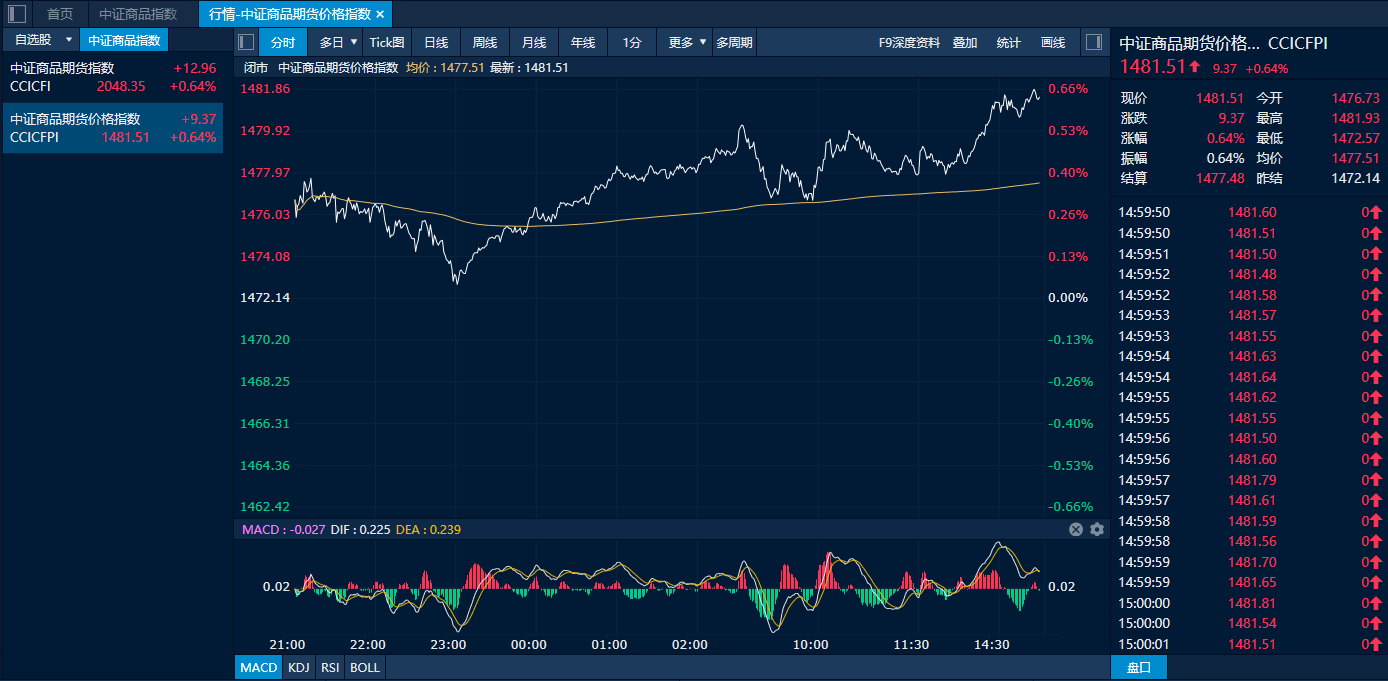
Group 1 - The domestic commodity futures market showed a mixed performance on November 27, with platinum leading the gains, rising over 6%, followed by silver and tin with increases of over 3% and 2% respectively [1][2] - The China Securities Commodity Futures Price Index closed at 1481.51 points, up 9.37 points or 0.64% from the previous trading day, while the China Securities Commodity Index closed at 2048.35 points, up 12.96 points or 0.64% [1] Group 2 - The precious metals sector remained strong, driven by expectations of a Federal Reserve rate cut in December, which supported gold prices and consequently boosted silver and platinum prices due to supply shortages [2][3] - Tin prices surged over 2% due to concerns over supply disruptions from the eastern Democratic Republic of Congo, with prices breaking the 300,000 yuan per ton mark [3] Group 3 - Agricultural products mostly rose, with eggs experiencing a significant rebound of over 2%, and various oilseed products increasing by over 1% [4] - Lithium carbonate futures fell by 1.68%, with market sentiment weakening despite strong demand expectations and decreasing inventory [5] - Asphalt futures continued to trend weak, dropping by 1.41% due to declining demand as temperatures fell, leading to a subdued market [5]

中俄经贸合作成果丰硕 前景广阔——访俄罗斯中国总商会会长周立群
Xin Hua Cai Jing· 2025-11-27 09:00
Core Insights - The economic cooperation between China and Russia has yielded substantial results and has a promising outlook, benefiting the people of both countries [1] - The trade and investment structures between China and Russia are evolving from resource-based to more diversified sectors such as digital economy, agriculture, and manufacturing [1][2] Group 1: Trade and Investment - China's imports of crude oil from Russia reached 108.47 million tons in 2024, accounting for 19.6% of China's total crude oil imports, making Russia the largest supplier [2] - The automotive sector has seen significant growth in cooperation, with Chinese companies establishing local production in Russia to meet local demand for parts and services [2] - Agricultural trade between the two countries is rapidly increasing, with innovative cooperation across the entire supply chain, particularly in the Far East region of Russia [2] Group 2: Emerging Sectors - The digital economy and artificial intelligence are areas of potential growth, leveraging China's rapid application development and Russia's strengths in foundational sciences [3] - The green energy sector, particularly in hydrogen, solar, and wind energy, presents significant opportunities for collaboration between the two nations [3] - Mechanisms for regional cooperation are becoming more established, with initiatives linking Russian regions with Chinese counterparts to enhance trade and investment [3] Group 3: Future Prospects - The political trust, complementary trade structures, and geographical advantages between China and Russia are key factors driving successful economic cooperation [3] - With the easing of visa policies and increased flight routes, the prospects for collaboration in trade, tourism, finance, and industrial integration are expected to grow [3] - The economic partnership is not only beneficial for the two countries but also contributes positively to global economic stability and development [3]
光大期货软商品日报-20251127
Guang Da Qi Huo· 2025-11-27 05:18
请务必阅读正文之后的免责条款部分 EVERBRIGHT FUTURES 1 软商品日报 光大期货软商品日报(2025 年 11 月 27 日) 一、研究观点 | 品种 | 点评 | 观点 | | --- | --- | --- | | 棉花 | 周三,ICE 美棉上涨 0.59%,报收 64.61 美分/磅,CF601 环比持平,报收 13625 元 | 震荡 | | | /吨,主力合约持仓环比下降 11839 手至 54.06 万手,棉花 3128B 现货价格指数 14475 | | | | 元/吨,较前一日基本持平。国际市场方面,宏观层面是近期市场关注重点,随着 | | | | 美国经济数据、报告陆续恢复发布,美联储 12 月降息 25bp 概率逐渐升温,目前 | | | | 已至八成以上。昨日美元指数震荡走弱,美棉期价重心小幅上移。基本面方面, | | | | USDA11 月报公布后,市场仍缺乏新的锚点,美棉出口周报缺口时间较长,整体 | | | | 驱动因素有限,震荡为主。国内市场方面,昨日郑棉主力合约减仓 1 万余手,仍 | | | | 在当前压力位震荡。我们认为,当前郑棉上下方驱动均相对有限。当 ...
2025浙江农博会圆满落幕 总交易额超3.22亿元创多项新高
Sou Hu Cai Jing· 2025-11-27 04:14
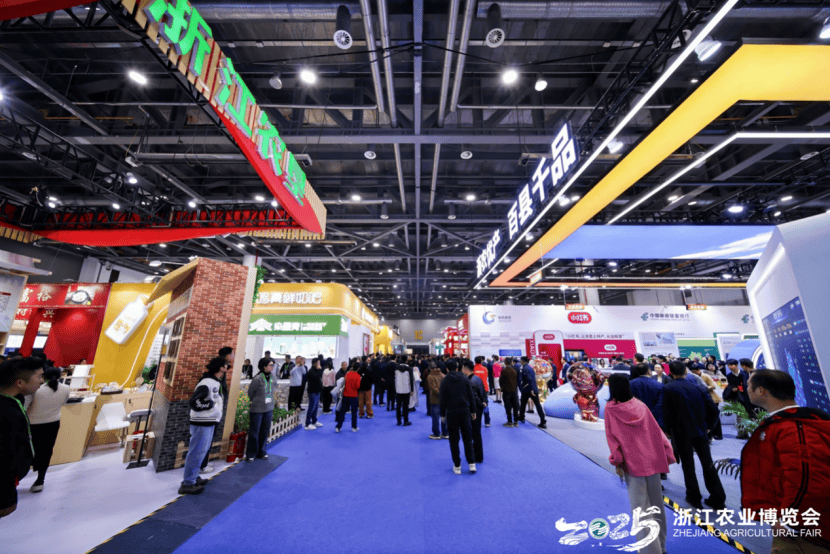
Group 1 - The 2025 Zhejiang Agricultural Expo concluded successfully with the theme "Vigorously Develop Local Specialties, Enjoy a New Life of Common Prosperity," attracting 272,500 visitors and achieving a total transaction amount exceeding 322 million yuan, a year-on-year increase of 9.52% [1][3] - The expo featured over 3,500 agricultural entities and more than 40,000 agricultural products across six distinct exhibition areas, with significant growth in regional collaboration [3] - On-site retail sales reached 276 million yuan, with an average spending of 1,012.84 yuan per person, marking a year-on-year increase of 29.13% [3] Group 2 - A total of 1,645 purchase contracts were signed during the event, with a total contract value of 3.156 billion yuan, representing a year-on-year increase of 93.86% [3] - Online promotion and live streaming sales were notably effective, with 459 live broadcasts generating over 21.804 million yuan in sales, showcasing the potential of "digital + agriculture" integration [3] - The expo not only displayed Zhejiang's agricultural resources and innovations but also served as an important platform for promoting brand strength in agriculture and supporting common prosperity [5]
供需紧平衡玉米价格重心上移
Qi Huo Ri Bao· 2025-11-27 03:11
Core Insights - The corn market has shown a strong linkage between futures and spot prices, with new corn prices rising by 6% to 8% year-on-year due to structural supply tightness, boosting market confidence [1] - The planting area for corn in China is expected to increase steadily, reaching 44.87 million hectares by 2025, with total production estimated at approximately 29.616 million tons, a year-on-year increase of 1.24 million tons [1] - The consumption of corn for feed accounts for 65% to 70% of total demand, with a 2% year-on-year increase in the national pig stock and a 6% increase in compound feed production over the past 10 months [3][4] - The deep processing capacity for corn has exceeded 125 million tons, supporting industrial consumption, with a 6.3% year-on-year increase in deep processing corn consumption from January to October [4] Group 1: Market Dynamics - The new corn harvest has seen smooth inventory digestion, with major processing enterprises' corn stocks down about 20% year-on-year, and stocks at northern ports down 78% year-on-year, leading to rising prices [1] - The winter season is expected to bring increased snowfall, which may hinder corn transportation from Northeast China, leading to higher transportation costs and potentially higher corn prices [4] - Domestic corn imports are expected to be significantly lower than the 7.2 million tons tariff quota, maintaining a tight supply-demand balance in the corn market [5] Group 2: Demand Factors - The substitution advantage of wheat over corn has weakened, further boosting corn feed demand, with projected feed consumption for the 2025/2026 season expected to remain high at 193 to 195 million tons [4] - The proactive purchasing by state-owned enterprises like China Grain Reserves Corporation has reduced supply pressure during the new corn harvest season, effectively stabilizing market prices [4]

农产品日报:下游供应宽松,豆粕延续震荡-20251127
Hua Tai Qi Huo· 2025-11-27 02:45
农产品日报 | 2025-11-27 下游供应宽松,豆粕延续震荡 粕类观点 市场要闻与重要数据 期货方面,昨日收盘豆粕2601合约3015元/吨,较前日变动+2元/吨,幅度+0.07%;菜粕2601合约2439元/吨,较前 日变动+8元/吨,幅度+0.33%。现货方面,天津地区豆粕现货价格3060元/吨,较前日变动+10元/吨,现货基差M01+45, 较前日变动+8;江苏地区豆粕现货2980元/吨,较前日变动+0元/吨,现货基差M01-35,较前日变动-2;广东地区豆 粕现货价格2970元/吨,较前日变动跌+0元/吨,现货基差M01-45,较前日变动-2。福建地区菜粕现货价格2620元/ 吨,较前日变动+10元/吨,现货基差RM01+181,较前日变动+2。 近期市场资讯,美国农业部周二公布的出口销售报告显示,10月9日止当周,美国当前市场年度大豆出口销售净增 78.50万吨,较之前一周减少15%,较前四周均值减少9%,市场此前预估为净增50.0万吨至净增140.0万吨。11月25 日,巴西全国谷物出口商协会表示,巴西11月大豆出口量料触及440万吨,上周预测为471万吨。 市场分析 当前国内供应依旧较为宽松 ...
油脂油料早报-20251127
Yong An Qi Huo· 2025-11-27 02:25
Report Summary 1) Report Industry Investment Rating No information provided. 2) Core Viewpoints - The report presents overnight market information on the expected net increase in US soybean, soybean meal, and soybean oil export sales for the 2025/26 and 2026/27 seasons, as well as production data for palm oil in Malaysia, rapeseed in Canada, and Australia, and the forecasted rapeseed production in the EU and UK [1]. - It also includes spot price data for various agricultural products from November 20 - 26, 2025 [2]. 3) Summary by Related Catalogs Overnight Market Information - As of the week ending October 16, US 2025/26 soybean export sales are expected to net increase by 60 - 200 million tons, with 2026/27 expected to net increase by 0 tons; US soybean meal export sales are expected to net increase by 15 - 45 million tons, with 2026/27 expected to net increase by 0 tons; US soybean oil export sales are expected to net increase by 0.5 - 2.5 million tons, with 2026/27 expected to net increase by 0 tons [1]. - SPPOMA data shows that Malaysia's palm oil production from November 1 - 25, 2025, increased by 5.49% month - on - month, with fresh fruit bunch yield increasing by 3.34% and oil extraction rate increasing by 0.41% [1]. - MPOA data shows that Malaysia's crude palm oil production from November 1 - 20, 2025, increased by 3.24% compared to the same period last month, with different regions having varying growth rates [1]. - Canada's rapeseed crushing volume in October 2025 was 1,026,547 tons, a 1.9% increase from the previous month and a 6.8% decrease from the same period last year; rapeseed oil production was 428,837 tons, a 0.82% increase month - on - month and a 6.62% decrease year - on - year; rapeseed meal production was 603,035 tons, a 2.26% increase month - on - month and a 6.98% decrease year - on - year [1]. - Australia's 2025/26 rapeseed production is estimated to be 6.5 million tons, a 4.1% increase from the previous estimate, with an estimated range of 6.3 - 6.7 million tons, and the average yield per hectare is adjusted to 1.90 tons [1]. - The 2026/27 rapeseed production in EU 27 + UK is estimated to be 20.3 million tons, the same as the previous estimate, with an estimated range of 19.3 - 21.3 million tons [1]. Spot Prices - Spot prices for soybean meal in Jiangsu, rapeseed meal in Guangdong, soybean oil in Jiangsu, palm oil in Guangzhou, and rapeseed oil in Jiangsu are provided from November 20 - 26, 2025, showing price fluctuations during this period [2].
农产品早报-20251127
Yong An Qi Huo· 2025-11-27 02:08
淀粉:短期看,淀粉报价跟随原料价格波动。新季玉米上市后,深加工采购积极性增加,开机率也逐步上调,不过由于下游补货依旧平缓,造 成产业去库缓慢,在高库存的压制下,淀粉价格依旧承压。中长期需重点关注下游消费节奏变化,这将成为价格走势的关键支撑因素,若淀粉 报价出现大幅回落,届时会刺激下游补货积极性提升,带动价格走强。 | 农产品早报 | | --- | | 白糖 | | 现货价格 | | 基差 | | 进口利润 | 仓单 | | --- | --- | --- | --- | --- | --- | --- | --- | | 日期 | 柳州 | 南宁 | 昆明 | 柳州基差 | 泰国 | 巴西 | 郑盘 | | 2025/11/20 | - | 5760 | 5555 | - | - | - | 8165 | | 2025/11/21 | 5675 | 5760 | 5560 | 322 | 410 | 591 | 8154 | | 2025/11/24 | 5615 | 5450 | 5500 | 245 | 340 | 521 | 7876 | | 2025/11/25 | 5615 | 5480 | 55 ...
中信期货晨报:国内商品期货涨跌参半,油脂油料涨幅居前-20251127
Zhong Xin Qi Huo· 2025-11-27 01:41
1. Report Industry Investment Rating No information about the industry investment rating is provided in the report. 2. Core Viewpoints of the Report - Overseas Macro: On November 21st, the New York Fed President's speech hinted at a possible near - term interest rate cut, boosting the expectation of a December rate cut. The Fed's expectation management is shifting, and it is recommended to follow the key voting members' speeches and potential new chair nominations around Thanksgiving [8]. - Domestic Macro: China's internal economic momentum remains weak and stable. The issuance of 500 billion yuan in policy - based financial instruments in October, the accelerated issuance of special bonds in November, and the release of debt - resolution surplus quotas may benefit Q4 infrastructure investment. The loan prime rate has remained stable since May, suggesting the central bank may not rush to further relax policies. New and second - hand housing sales and land supply have increased, but land transactions remain low, and real - estate work demand and production capacity have declined [8]. - Asset Views: Due to differences among Fed policymakers on a December rate cut, a hawkish October meeting minutes, and strong September non - farm payrolls, the December rate - cut expectation was initially lowered, and the US dollar index rose. However, the New York Fed President's speech lifted the rate - cut expectation. It is recommended to balance asset allocation in Q4, and pay attention to opportunities in stock indices, non - ferrous metals (copper, aluminum, tin), and precious metals during market dips [8]. 3. Summary by Relevant Catalogs 3.1 Macro Essentials - Overseas: The Fed's expectation management is shifting, with a possible dovish turn in key figures' speeches in the next two weeks [8]. - Domestic: Policy measures may support Q4 infrastructure investment. The central bank may not rush to relax policies. Real - estate sales have improved, but land transactions and work demand are weak [8]. - Asset Allocation: Balance asset allocation in Q4. Look for buying opportunities in stock indices, non - ferrous metals, and precious metals during market dips [8]. 3.2 Viewpoint Highlights - **Financial Sector**: With reduced overseas shocks, the risk appetite may rise. Stock index futures may rise in a volatile manner, stock index options may remain stable, and treasury bond futures may also rise in a volatile way [9]. - **Precious Metals**: In a short - term adjustment phase, gold and silver prices are expected to fluctuate [9]. - **Shipping**: Attention should be paid to the freight rate decline rate of the European container shipping line, which is expected to be volatile [9]. - **Black Building Materials**: The rebound momentum is weakening. Steel, iron ore, coke, and other products are expected to fluctuate [9]. - **Non - ferrous Metals and New Materials**: Optimism is rising, and base metals may stop falling and rebound, with most products expected to fluctuate [9]. - **Energy and Chemicals**: The trade situation has slightly eased, but the supply - demand imbalance persists. Most energy and chemical products are expected to fluctuate, while some may decline [11]. - **Agriculture**: Market sentiment has improved, but trends are divergent. Some agricultural products are expected to rise, while others may decline or remain stable [11].