家电

Search documents
2026海南安居房新政炸场!六折+五年可售,引爆四大万亿风口
Sou Hu Cai Jing· 2026-01-05 02:13
Core Insights - The new housing policy in Hainan, effective from January 1, 2026, allows for affordable housing at 60% of the market price, with the ability to sell after five years and full ownership after fifteen years, significantly benefiting homebuyers and attracting capital investment [1][3] Group 1: Policy Highlights - The affordable housing price is set at no more than 60% of the previous year's average market price in the respective city or county, with prices in Sanya as low as 12,800 yuan per square meter, over 50% cheaper than market rates [3] - Homebuyers can apply to sell their property after five years or purchase government equity, providing flexibility and preventing asset lock-in [3] - The policy covers a wide range of applicants, including local residents, introduced talent, and non-residents with two years of residence and social security contributions [3] - The focus is on practical housing types, primarily under 100 square meters, with larger units available for families with multiple children, and increased public housing loan limits [3] - By the end of 2025, Hainan has initiated over 110,000 affordable housing units, with more than 50,000 allocated and an additional 60,000 in inventory or under construction, meeting the demand for first-time buyers [3] Group 2: Infrastructure Development - The policy mandates that infrastructure development must accompany affordable housing projects, with plans to build 250,000 units during the 14th Five-Year Plan, ensuring that transportation and public services are developed in tandem [4] - Transportation upgrades include enhancing rural roads and urban networks, with 100 kilometers of new village roads and improvements to irrigation facilities [4] - Each affordable housing area will include essential services such as schools, clinics, and community centers, aiming for a 90% compliance rate for township health clinics [4] - Urban renewal efforts will also be implemented, improving old neighborhoods and revitalizing existing land, as seen in Haikou's integration of affordable housing with urban renewal [4] Group 3: Consumer Market Expansion - The affordable housing initiative is expected to stimulate a significant increase in consumer spending, with estimates suggesting that furnishing a 100 square meter home could cost between 100,000 to 150,000 yuan, contributing to a multi-trillion yuan market [4] - Major consumer goods such as home renovations, appliances, and furniture are anticipated to see increased demand, with Hainan's public housing loans reaching 8.688 billion yuan in 2025, driving home improvement projects [4] - The influx of residents in affordable housing areas will create demand for community businesses, including supermarkets and restaurants, accelerating the development of local commercial ecosystems [4] - Service sectors such as education, healthcare, and tourism are expected to experience growth due to increased population, enhancing Hainan's wellness and tourism industries [5] Group 4: Agricultural Opportunities - The population growth from affordable housing is projected to open new avenues for Hainan's agriculture, enhancing both local supply and external sales [5] - To support the increased population, Hainan plans to maintain 4.07 million acres of grain planting and establish 150,000 acres of vegetable bases, promoting local food security [5] - The initiative includes branding efforts for Hainan's agricultural products, with plans to develop 35 new agricultural brands and improve logistics for nationwide distribution [5] - Technological advancements in agriculture will be supported through platforms like "Southern Breeding Silicon Valley," focusing on high-quality crop breeding and efficiency improvements [5] Group 5: Technological Integration - The construction of affordable housing will emphasize smart building practices, with a target of 80% of new constructions being prefabricated by 2025, promoting green building technologies [6] - Digital services will be enhanced, including zero-material approvals for public housing loans and rapid processing for rental withdrawals, increasing the demand for digital governance and smart community solutions [6] - Collaboration with technology firms will drive the integration of smart security, green energy, and intelligent property management into affordable housing projects, fostering growth in AI and IoT sectors [6]


空调涨价“铝代铜”计划?格力电器紧急回应:格力积极响应2026年家电国家补贴政策,切实让利消费者,并承诺格力家用空调不涨价
Ge Long Hui· 2026-01-05 02:05
格隆汇1月5日|近期,格力电器(000651)陆续收到投资者及媒体就部分企业推出空调涨价和"铝代铜"计 划等相关问题的咨询,询问公司的态度和计划。格力电器表示,格力积极响应2026年家电国家补贴政 策,切实让利消费者,并承诺格力家用空调不涨价。同时,为满足格力家用空调十年免费包修服务标 准,格力暂无"铝代铜"相关计划。未来若相关研究能完全满足格力质量和技术标准要求并正式应用,格 力将予以明确标注,充分保障消费者的知情权与选择权。 ...

格力承诺家用空调不涨价
第一财经· 2026-01-05 01:53
1月5日,格力发布《关于近期市场关切问题的说明》称,近期,公司陆续收到投资者及媒体就部分企 业推出空调涨价和"铝代铜"计划等相关问题的咨询,询问公司的态度和计划。 格力 表示,公司 承诺,格力家用空调不涨价。同时,为满足格力家用空调十年免费包修服务标准,公 司暂无"铝代铜"相关计划。未来若相关研究能完全满足格力质量和技术标准要求并正式应用,将予以 明确标注。 编辑丨瑜见 ...

空调涨价?格力紧急回应
中国基金报· 2026-01-05 01:39
【导读】格力最新回应:家用空调不涨价,且暂无 " 铝代铜 " 相关计划 中国基金报记者 忆山 2026 年 1 月 5 日上午,格力电器发布声明回应市场关切问题时表示,家用空调不涨价,且 暂无 " 铝代铜 " 相关计划。 编辑:格林 校对:纪元 编辑:舰长 审核:木鱼 近年来,随着铜价大幅上涨,用成本较低的铝替代铜被认为是降低生产成本的有效方式之 一。 作为行业龙头,格力与美的、海尔、奥克斯、小米等共同参与了《房间空气调节器用热交换 器》国家标准的修订,不过未参与《空调铝强化应用研究工作组自律公约》的联合发声。 早在 2023 年度股东大会上,董明珠就表示,已经有部分空调企业开始用铝代替铜作为原材 料。目前来看,铝作为替代,其耐久性和稳定性无法得到保证。所以,在没有百分之百的把 握之前,格力就绝对不会使用铝代铜。 2025 年 12 月,董明珠再次表示, " 铝代铜 " 能不能代?可以代,因为铝的技术格力也研 究了很年,但是格力依然坚持不用 " 铝代铜 " 的原因是,它还没有达到与铜同等的技术条件 和保障。 董明珠指出: " 我们一定研究,直到铝能够完全替代铜,我一定上铝。 " 近期,格力电器陆续收到投资者及 ...

中金公司李求索:2026年国际秩序重构与中国产业创新两大因素共振将支持A股表现
Zheng Quan Shi Bao Wang· 2026-01-05 01:37
Group 1 - The core viewpoint is that the restructuring of the international order and China's industrial innovation will resonate in 2026, supporting the performance of A-shares [1] - The market is expected to show a pattern of rising initially and then stabilizing, with increased volatility and valuation uplift in the context of active capital [1] - Three main lines of focus are suggested: 1) Growth sectors such as AI, which is expected to enter the application realization phase, with opportunities in computing power, optical modules, and cloud computing infrastructure, leaning towards domestic directions; application areas include robotics, consumer electronics, intelligent driving, and software applications [1] 2) External demand breakout, focusing on sectors like home appliances, construction machinery, commercial buses, power grid equipment, gaming, and globally priced resources like non-ferrous metals, in line with the trend of going abroad and exposure to the US [1] 3) Cyclical reversal, with attention to sectors nearing improvement inflection points or supported by policies, such as chemicals, aquaculture, and new energy [1] Group 2 - There is an expectation for capital market policies to further promote a "long-term" and "steady" market [2] - The restructuring of the international monetary system and global capital reallocation could further drive the opening of capital markets, such as expanding the range of foreign investment and encouraging the internationalization of Chinese securities firms [2] - The focus is on supporting financing for innovative enterprises and enhancing market inclusivity while optimizing mechanisms for medium- and long-term capital entry, thereby increasing market stability and resilience [2]

九部门:推广绿色家电家装
Zheng Quan Shi Bao Wang· 2026-01-05 01:23
Core Viewpoint - The Ministry of Commerce and nine other departments have issued a notice to promote green consumption, focusing on the encouragement of purchasing green home appliances and home decoration products [1] Group 1: Green Home Appliances - Promotion of green home appliances and home decoration is emphasized, encouraging the purchase of products certified as green, such as green smart appliances and fluorine-free air conditioners [1] - The establishment of a certification system for green smart home appliances is part of the initiative [1] Group 2: Standards and Quality - Improvement of energy efficiency and water efficiency standards for home appliances is highlighted [1] - Support for high-quality green home appliance and decoration brands that meet certain criteria to be included in the list of Chinese consumer products [1] Group 3: Sustainable Development - Continuous promotion of green high-quality development in bulk cement is mentioned as part of the broader initiative [1]
湘财证券晨会纪要-20260105
Xiangcai Securities· 2026-01-05 01:04
Macro Insights - The manufacturing PMI for December rose to 50.10%, marking the first expansion since April, driven by synchronized recovery in production and demand [2] - New export orders index increased from 45.90% in October to 49% in December, while the new orders index rose to 50.80%, indicating expansion [2] - The production index for December reached 51.70%, with large enterprises leading at 50.80%, while medium and small enterprises showed improvements but remained below the expansion threshold [2] Stock Market Overview - A-shares experienced narrow fluctuations from December 29 to December 30, 2025, with the Shanghai Composite Index rising 18.41% and the Shenzhen Component Index increasing by 29.87% over the year [3] - The technology sector benefited from the development of domestic models, while the "anti-involution" policy boosted cyclical stocks, particularly in the non-ferrous metals sector [3][4] - The overall performance of A-share indices in 2025 was positive, with significant gains in the ChiNext Index (49.57%) and the STAR Market Index (46.30%) [3] Industry Performance - In 2025, the non-ferrous metals and communication sectors saw substantial annual gains of 94.73% and 84.75%, respectively, while the food and beverage sector faced declines [4] - The aerospace equipment II and communication equipment sectors led the secondary industry gains with increases of 146.03% and 130.60% [4] - The communication network equipment and aerospace equipment III sectors recorded the highest gains among tertiary industries, with increases of 176.57% and 146.03% [4] Investment Recommendations - For 2026, the report suggests a favorable policy environment for industrial upgrades, supporting a "slow bull" market [5] - The report highlights potential in insurance, securities, and agriculture-related sectors, as well as opportunities in aerospace aligned with the "14th Five-Year Plan" [5] - The report emphasizes the importance of efficiency optimization and product innovation in the home appliance industry, recommending focus on leading companies in white goods and emerging technologies [11] Home Appliance Industry Insights - The home appliance sector saw a 0.7% increase, with components leading the gains, while the overall market remains competitive [7] - The current PE ratio for the home appliance industry is 15.33, indicating a relatively low valuation compared to the broader market, suggesting investment potential [8] - January 2026 production for air conditioners, refrigerators, and washing machines showed mixed results, with total production increasing by 6% year-on-year [9][10]
创维集团(00751)1月5日停牌 以待发布内幕消息
智通财经网· 2026-01-05 00:55
智通财经APP讯,创维集团(00751)公布,公司的股份已于2026年1月5日上午9时正起在香港联合交易所 有限公司短暂停止买卖,以待根据公司收购、合并及股份回购守则发出载有公司内幕消息的公告。 ...
银河证券:元旦客流引领复苏 关注消费各细分赛道中有阿尔法的公司
Zhi Tong Cai Jing· 2026-01-05 00:45
Group 1 - The core viewpoint of the report emphasizes the recovery of service consumption driven by the resurgence of travel during the New Year holiday, which has become the main force for domestic demand recovery [1] - The report highlights the optimistic outlook for the development of overseas business in the consumer sector by 2026, alongside a focus on high-dividend quality companies during market style shifts [1] - The report notes that the 2026 policy direction will significantly boost consumption, with a particular emphasis on experiential service consumption as a key growth area [1] Group 2 - During the New Year holiday, transportation data indicates a total of 590 million people traveled across regions, with an average of 198 million daily, marking a 19.5% year-on-year increase [1] - Railway passenger volume is expected to reach 48.22 million, a 53.1% increase year-on-year, while road travel is projected at 540 million, up 15.5% [1] - The report mentions that inbound tourism is continuing to grow, with ticket bookings for inbound travel during the New Year holiday increasing by 110% year-on-year [2] Group 3 - The first batch of national subsidies for 2026 has been issued, with 62.5 billion yuan allocated to support the replacement of consumer goods, benefiting categories such as air conditioners and refrigerators [3] - Midea has initiated a price increase for air conditioners, implementing a tiered pricing strategy with a 2% increase on January 3 and an additional 4% on January 5 [3] - The report indicates that Midea's price increase is a response to rising copper costs and aims to improve the competitive landscape in the air conditioning industry [3] Group 4 - CES 2026 is set to take place from January 6 to 9, 2026, in Las Vegas, showcasing Chinese technology consumer products transitioning from innovative to mainstream [4] - The focus will be on smart home devices, electric vehicles, and various consumer electronics, with particular attention to stair-climbing vacuum cleaners for the European and American markets [4]


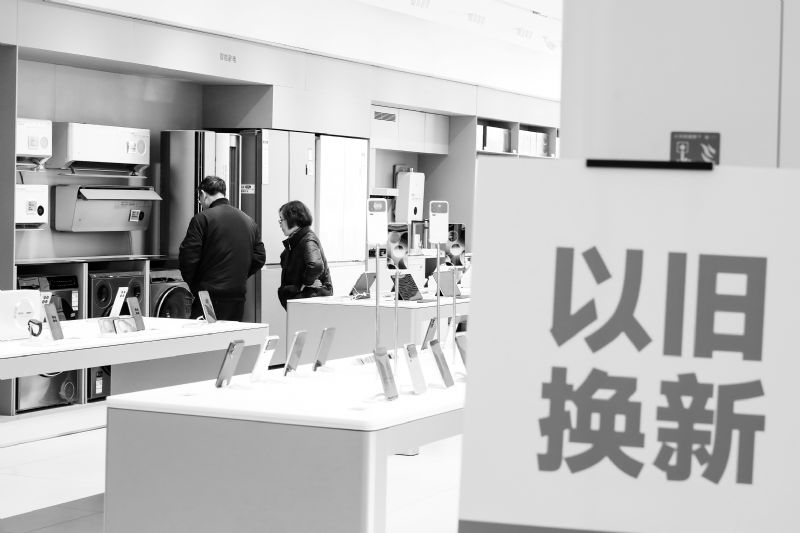
中国2025年以旧换新政策取得显著成效 带动相关商品销售额超2.6万亿
Chang Jiang Shang Bao· 2026-01-05 00:04
Core Insights - The consumption upgrade policy in China has significantly boosted sales, with over 2.6 trillion yuan in sales related to the old-for-new program in 2025, benefiting more than 360 million people [2][3] Group 1: Policy Implementation and Impact - The old-for-new policy has been effective since its full implementation in September 2024, with over 480 million direct subsidies issued to consumers [5][6] - The policy has led to substantial sales in various categories: over 11.5 million cars, 129 million home appliances, 91 million digital products, and 12 million home renovation items were sold under this initiative [2][3] - The retail sales of consumer goods increased by 4.0% year-on-year in the first 11 months of 2025, with the old-for-new program contributing over 1 percentage point to this growth [4] Group 2: Product Categories and Consumer Behavior - In the automotive sector, nearly 60% of the old-for-new vehicles were new energy vehicles, with their market share exceeding 50% for nine consecutive months [4] - In home appliances, over 90% of the products sold under the old-for-new program were of first-level energy efficiency [4] - The program has encouraged consumers to experience shopping in stores, leading to a 30% increase in sales for nearby businesses in areas with concentrated old-for-new appliance stores [6] Group 3: Future Developments - In 2026, the subsidy structure will be optimized, transitioning from fixed subsidies to a percentage of the vehicle price, with maximum subsidies of 20,000 yuan for scrapping and 15,000 yuan for replacement [7] - The scope of supported appliances will expand to include six major categories, enhancing the effectiveness of the subsidies [7] - New categories such as smart glasses will be added to the subsidy program, targeting fast-growing consumer technology sectors [7]