
农业

Search documents
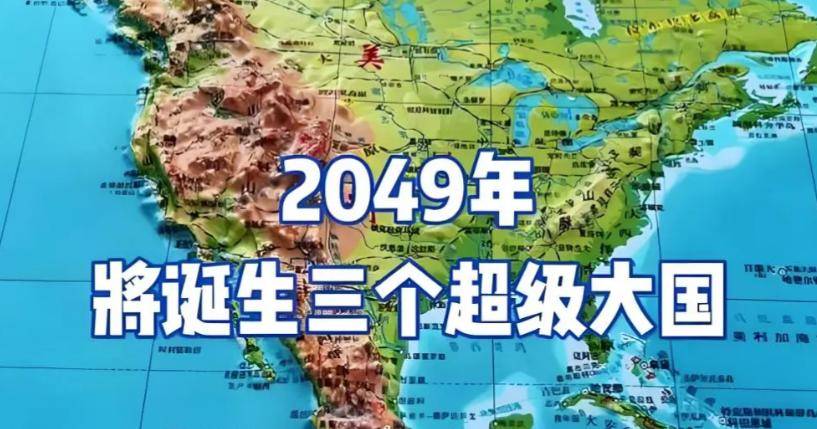
到2049年全球将出现3个超级大国?美国预测名单上,日俄竟落榜
Sou Hu Cai Jing· 2025-10-17 05:11
Group 1: United States - The United States maintains its core hegemony primarily through its financial system, with the dollar being a robust protective barrier [3] - Despite discussions around "de-dollarization," the dollar's dominance in international payments, foreign exchange reserves, and global commodity pricing is expected to remain unchallenged in the foreseeable future [3] - The U.S. possesses a unique "exceptional" power, allowing it to transfer crises globally through monetary policy and utilize financial sanctions as a form of "financial weapon" against adversaries [3] - New York and Wall Street continue to be the ultimate destinations for global capital, supported by unparalleled market depth, liquidity, and complexity [3] Group 2: China - China's economic transformation is fundamental to its status as a superpower, characterized by both scale and quality improvements [5] - Predictions suggest that China may become the world's largest economy by around 2030, with its economic lead expected to widen thereafter [6] - China is advancing up the industrial and value chains, transitioning from basic manufacturing to leading in sectors like new energy vehicles, photovoltaic products, and lithium batteries [6] - The country aims to dominate core supply nodes in the global economy through sustained investments in cutting-edge fields such as artificial intelligence, biotechnology, and quantum computing [8] - With a unified market of 1.4 billion people and over 400 million in the middle-income group, China has a vast internal consumption market that provides significant opportunities for businesses [8] Group 3: Brazil - Brazil's inclusion alongside the U.S. and China as a superpower is surprising but supported by several advantages [10] - The country is experiencing a demographic dividend with a population of 215 million and a median age of only 32, with over 68% of the population being of working age [10] - Brazil holds a dominant position in strategic resources, ranking fifth globally in iron ore reserves, with 8% of the world's uranium and 12% of freshwater reserves [10] - The nation has successfully transitioned from being a "coffee kingdom" to the world's leading exporter of soybeans and the second-largest exporter of chicken, with modern agricultural technology doubling production in a decade [10] - Brazil is also a leader in clean energy, with hydropower meeting two-thirds of its electricity needs and top-tier biofuel technology [10] Group 4: Changing Definition of Superpowers - The definition of superpowers is evolving from military dominance and ideological influence to a focus on comprehensive national strength, sustainable development, and resilience [12] - Brazil's rise highlights that countries with young populations, abundant resources, and a foundation in clean energy may emerge as future winners in the context of climate change and energy transition [12]

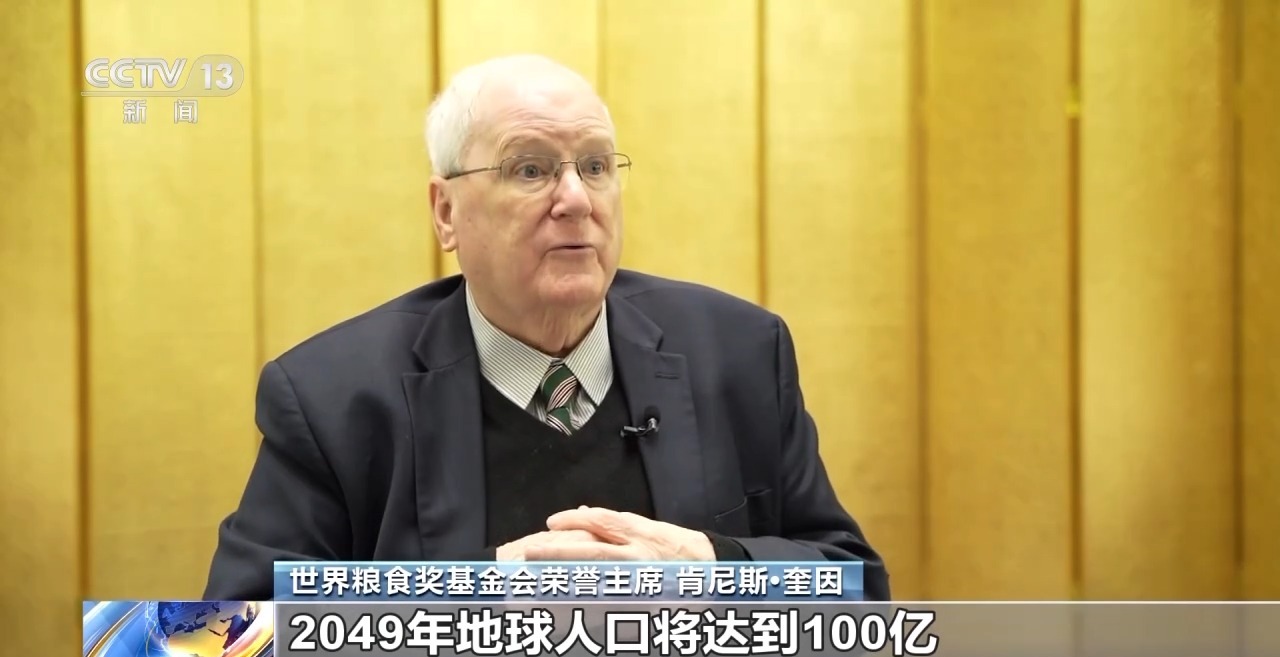
世界粮食奖基金会荣誉主席:中国经验为全球提供可复制范例
Yang Shi Xin Wen Ke Hu Duan· 2025-10-17 04:42
Core Viewpoint - The global food security situation remains severe, with hundreds of millions facing hunger threats, highlighting the importance of agricultural innovation and cooperation, particularly from China [1][3][10]. Group 1: Global Food Security Challenges - By 2049, the global population is projected to reach 10 billion, posing a significant challenge for sustainable food production [3]. - The current global food security landscape is dire, with a need for innovative solutions to address hunger [1][10]. Group 2: China's Role in Global Food Security - China, with less than 9% of the world's arable land, successfully feeds nearly one-fifth of the global population, achieving a historic transition from "having enough to eat" to "eating well" [3][10]. - During the "14th Five-Year Plan" period, China's grain production has remained stable at over 1.3 trillion jin for nine consecutive years, with projections to exceed 1.4 trillion jin in 2024 [7][9]. Group 3: Historical Context and Achievements - In 1979, 70% of China's population lived below the poverty line, and the subsequent poverty alleviation is regarded as a remarkable transformation [5]. - The World Food Prize was awarded to Professor Yuan Longping in 2004, recognizing his extraordinary contributions to global food security [7]. Group 4: Collaborative Efforts and Governance - China actively participates in global food governance while addressing its own food security challenges, providing a governance model that can be replicated by other countries [10][12]. - Kenneth Quinn emphasizes that cooperation is essential for achieving peace through agriculture and addressing hunger globally [12].
农产品每日早盘观察-20251017
Yin He Qi Huo· 2025-10-17 03:15
Report Industry Investment Rating No relevant information provided. Core Viewpoints of the Report The report provides a daily morning observation of various commodity futures, including agricultural products, ferrous metals, non - ferrous metals, and energy and chemical products. It analyzes the market conditions, relevant information, logical reasoning, and trading strategies for each commodity or commodity group. Summary by Commodity Categories Agricultural Products - **Soybean Meal**: The market is generally stable with a fluctuating trend. International soybean pressure is high, and domestic soybean meal may decline under supply pressure. Suggestions include shorting at high points for the 05 contract, conducting M11 - 1 positive spreads, and selling call options at high points [15][16][17]. - **Sugar**: The international sugar price is weak, and the domestic market is expected to follow the external trend. It is recommended to short at high points, and keep an eye on arbitrage and options [18][23][24]. - **Oils and Fats**: Affected by Indonesia's tax adjustment, the short - term trend is volatile. It is advisable to go long on dips, consider OI 1 - 5 positive spreads without chasing high, and keep an eye on options [25][26][27]. - **Corn/Corn Starch**: The pressure of new grain has weakened, and the price trend is strong. Suggestions are to go long on dips for the 12 - month corn externally, hold long positions for the 01 contract, and gradually build long - term long positions for the 05 and 07 contracts [27][29][30]. - **Hogs**: The supply pressure is still high, and the price is expected to decline. A short - side approach is recommended, along with LH15 reverse spreads, and keep an eye on options [30][31]. - **Peanuts**: Affected by the weather in the producing areas, the short - term trend is strongly volatile. It is advisable to go long on dips for the 01 and 05 contracts without chasing high, and sell pk601 - P - 7600 options [31][33][35]. - **Eggs**: The demand is good, and the price has stabilized. It is recommended to close out previous short positions, and keep an eye on arbitrage and options [35][36][37]. - **Apples**: The quality of new fruits is average, and the price is supported. The short - term price is expected to be strongly volatile. It is advisable to go long on dips, and keep an eye on arbitrage and options [38][40][41]. - **Cotton - Cotton Yarn**: The fundamentals have not changed much, and the price is mainly fluctuating. It is expected that the US cotton will fluctuate, and Zhengzhou cotton will remain stable. Keep an eye on arbitrage and options [42][43][44]. Ferrous Metals - **Steel**: The supply - demand situation has improved, and the price has rebounded slightly. It is expected to fluctuate at the bottom, and it is advisable to go long on the spread between hot - rolled coils and rebar at low points, and keep an eye on options [45][46][47]. - **Coking Coal and Coke**: The spot trading is good, and there is support at the bottom. It is not advisable to chase high at present, and it is safer to go long on dips. Keep an eye on arbitrage and options [47][48][49]. - **Iron Ore**: A bearish view is taken in the medium - term. It is advisable to short in the medium - term, conduct cash - and - carry arbitrage, and keep an eye on options [50][51][53]. - **Ferroalloys**: After falling to a low level, they rebounded, but the upward drive is not strong. They are expected to fluctuate at the bottom. It is advisable to go long on short - term rebounds, and sell out - of - the - money put options [54][55]. Non - Ferrous Metals - **Precious Metals**: Due to the credit explosion of US regional banks, gold and silver prices have risen strongly. It is advisable to hold previous long positions cautiously based on the 5 - day moving average, and keep an eye on arbitrage and options [56][57][59]. - **Copper**: In the short - term, there is a need for consolidation, and the long - term trend remains unchanged. It is advisable to go long on dips, hold long positions in cross - market positive spreads, and keep an eye on options [62][63][66]. - **Alumina**: The supply - demand surplus leads to a weak trend. It is expected to fluctuate weakly, and keep an eye on arbitrage and options [66][67][68]. - **Electrolytic Aluminum**: The downstream demand shows resilience, and the medium - term trend is strong. It is advisable to go long on dips, and keep an eye on arbitrage and options [71][72][73]. - **Cast Aluminum Alloy**: The macro panic has subsided, and the price can be bought on dips. It is advisable to go long on dips, and keep an eye on arbitrage and options [73][76][77]. - **Zinc**: There are both bullish and bearish factors. It is advisable to short at high points, and keep an eye on arbitrage and options [77][78][80]. - **Lead**: The supply and demand are both weak. Be vigilant about the price falling from a high level. It is advisable to hold short positions, and sell out - of - the - money call options [81][82][84]. - **Nickel**: The inventory increase reflects an oversupply, and the price is under pressure. It is advisable to short at the upper edge of the fluctuation range, and sell a 2512 contract straddle [85][86][89]. - **Stainless Steel**: The demand is weak, testing the cost support. It is advisable to short on rebounds, and keep an eye on arbitrage [89][90][91]. Energy and Chemical Products - **Industrial Silicon**: It fluctuates within a range. It is advisable to short at high points and go long at low points. Wait for a full correction in the short - term, and keep an eye on arbitrage and options [91][92][95]. - **Polysilicon**: After an intraday correction and stabilization, continue to go long. It is advisable to go long after a correction, hold 2511 and 2512 contract reverse spreads, and adjust the previous double - buying strategy [95][96]. - **Lithium Carbonate**: Supported by demand and with uncertain supply, the price is rising in a volatile manner. It is advisable to go long in a volatile market, and sell out - of - the - money put options [97][100][101]. - **Tin**: The supply and demand are both weak. Pay attention to the resumption of production in Myanmar. The short - term price is expected to fluctuate, and keep an eye on the market [101][102].
广发早知道:汇总版-20251017
Guang Fa Qi Huo· 2025-10-17 02:23
Report Summary 1. Investment Rating The report does not provide an overall industry investment rating. 2. Core Views - **Stock Index Futures**: A-shares showed a narrow - range oscillation with core assets performing well. The four major stock index futures contracts had mixed performances. The market is affected by domestic and overseas news, and in the short - term, the index is expected to decline first and then rebound, with the medium - to - long - term upward trend remaining unchanged [2][3][4]. - **Treasury Bond Futures**: Treasury bond futures showed differentiated performances, with long - term bonds recovering. The money market is expected to remain loose, but the bond market may still be volatile in the short term [5][6]. - **Precious Metals**: The credit crisis of US regional banks led to market panic, driving up precious metals prices. In the future, precious metals are expected to continue to rise, with a potential bull market similar to that in the 1970s [7][8][9]. - **Container Shipping Index (European Route)**: The futures market is expected to show a strong - side oscillation in the short term, with the current price relatively conservative [11][12]. - **Non - ferrous Metals**: - **Copper**: The copper price is oscillating at a high level. The supply is tight, and the demand has strong resilience. The price is affected by Sino - US tariffs and other factors [12][13][15]. - **Alumina**: The alumina market is in an oversupply situation, with the price expected to continue to be under pressure [17][18][19]. - **Aluminum**: The aluminum price is supported by macro - level factors and a tight - balance fundamental situation, but high prices are suppressing downstream demand [20][21][22]. - **Aluminum Alloy**: The price of aluminum alloy is expected to oscillate at a high level, with cost support and a slowdown in the inventory accumulation trend [23][25]. - **Zinc**: The zinc price is oscillating, with limited fundamental support for price increases [26][27][28]. - **Tin**: The tin price is oscillating at a high level, with strong supply - side factors. The demand situation is not optimistic, and the price trend depends on the supply recovery in Myanmar [31][32][34]. - **Nickel**: The nickel price is expected to oscillate within a range, affected by macro - level factors and supply - demand relationships [34][35][36]. - **Stainless Steel**: The stainless steel price is expected to oscillate weakly, with raw material cost support but insufficient demand [37][38][39]. - **Lithium Carbonate**: The lithium carbonate price is expected to be strong in the short term, with strong demand during the peak season and inventory reduction [40][41][43]. - **Black Metals**: - **Steel**: The apparent demand for steel has recovered, and the inventory has started seasonal destocking. The price is expected to stabilize and oscillate [44][45][46]. - **Iron Ore**: The iron ore price is oscillating weakly, with supply - side disturbances weakening and demand weakening [47][49][50]. - **Coking Coal**: The coking coal price is expected to enter a rebound trend, with downstream demand for replenishment increasing [51][52][53]. - **Coke**: The coke price is expected to oscillate, with supply - side cost pressure and weak downstream demand [54][55][56]. - **Agricultural Products**: - **Meal**: The US soybean price is under pressure. The domestic soybean supply is sufficient in the fourth quarter, and the spot price is difficult to improve [57][58]. - **Live Pigs**: The live pig price has rebounded in the short term, but the supply pressure will continue in the fourth quarter, and the price is not optimistic in the medium - to - long - term [59][60]. - **Corn**: The corn price is oscillating at a low level, with a pattern of strong supply and weak demand [61][62]. - **Sugar**: The raw sugar price is oscillating weakly, and the domestic sugar price has fallen below a key level, with a bearish outlook [63][64]. - **Cotton**: The cotton price is expected to be under pressure when it rises, with weak downstream demand [65][66]. - **Eggs**: The egg price is expected to decline in October, with sufficient supply and weak demand [67][68]. - **Oils and Fats**: The oils and fats price is oscillating in a narrow range, affected by international market factors [69][70][71]. - **Red Dates**: The red date price is expected to be bearish in the medium - to - long - term, and it is recommended to short after the harvest [72][73]. - **Apples**: The apple price shows a clear difference between high - quality and ordinary goods, with large - scale trading yet to start [74]. - **Energy and Chemicals**: - **Crude Oil**: The crude oil price is in a weak state, with an imbalance between supply and demand and macro - level negative expectations. It is recommended to short on rallies [75][78]. - **Urea**: The reduction in daily production has limited impact on the supply - demand balance, and the future depends on downstream demand [79][80][81]. - **PX**: The PX price is oscillating at a low level, with weak supply - demand expectations and limited oil price support [82][83]. - **PTA**: The PTA price is oscillating at a low level, with weak supply - demand expectations and limited driving factors [84][85]. - **Short Fibre**: The short - fibre price is relatively firm due to low inventory, but it is still under pressure in the short term [86]. - **Bottle Chips**: The bottle - chip price is expected to follow the cost side, with the cost side being weak and the processing fee improving in the short term [87][88]. - **Ethylene Glycol**: The ethylene glycol price is weak, with port inventory accumulation and a weak far - month supply - demand structure [89]. - **Caustic Soda**: The caustic soda price has stabilized and risen in some areas, with short - term weakness and medium - to - long - term demand support [90][91]. - **PVC**: The PVC price is under pressure in the short term, with supply pressure alleviated but demand not showing a peak - season performance [92][93]. - **Pure Benzene**: The pure benzene price has limited price - driving factors, with a relatively loose supply - demand situation [94]. - **Styrene**: The styrene price is under pressure, with a relatively loose supply - demand situation [95][97]. - **Synthetic Rubber**: The synthetic rubber price is expected to rebound in the short term, with stable cost support but a relatively loose supply - demand situation [98][99]. - **LLDPE**: The LLDPE market has weak sentiment and poor trading, with supply increasing and demand lacking highlights [100][101]. - **PP**: The PP price is oscillating weakly, with supply increasing and a relatively high overall valuation [101]. - **Methanol**: The methanol price is expected to oscillate, with attention paid to overseas device operation and customs clearance of sanctioned ships [102]. - **Special Commodities**: - **Natural Rubber**: The natural rubber price is expected to oscillate, with attention paid to raw material output during the peak season in the main production areas [103][105]. - **Polysilicon**: The polysilicon price is oscillating and rising, with supply pressure increasing and demand not improving significantly [105][106][107]. - **Industrial Silicon**: The industrial silicon price is expected to oscillate at a low level, with supply pressure but cost support [107][108][109]. - **Soda Ash and Glass**: The soda ash price is expected to be weak, and the glass price is recommended to stop loss on short positions [109][110][111]. 3. Summary by Category Financial Derivatives - **Stock Index Futures**: A - shares showed a narrow - range oscillation. The four major stock index futures contracts had mixed performances. The market is affected by domestic and overseas news, with financial and consumer sectors performing well and chemical - related sectors performing poorly [2][3]. - **Treasury Bond Futures**: Treasury bond futures showed differentiated performances, with long - term bonds recovering. The money market is expected to remain loose, but the bond market may still be volatile in the short term [5][6]. Precious Metals - The credit crisis of US regional banks led to market panic, driving up precious metals prices. In the future, precious metals are expected to continue to rise, with a potential bull market similar to that in the 1970s [7][8][9]. Container Shipping Index (European Route) - The futures market is expected to show a strong - side oscillation in the short term, with the current price relatively conservative [11][12]. Non - ferrous Metals - **Copper**: The copper price is oscillating at a high level. The supply is tight, and the demand has strong resilience. The price is affected by Sino - US tariffs and other factors [12][13][15]. - **Alumina**: The alumina market is in an oversupply situation, with the price expected to continue to be under pressure [17][18][19]. - **Aluminum**: The aluminum price is supported by macro - level factors and a tight - balance fundamental situation, but high prices are suppressing downstream demand [20][21][22]. - **Aluminum Alloy**: The price of aluminum alloy is expected to oscillate at a high level, with cost support and a slowdown in the inventory accumulation trend [23][25]. - **Zinc**: The zinc price is oscillating, with limited fundamental support for price increases [26][27][28]. - **Tin**: The tin price is oscillating at a high level, with strong supply - side factors. The demand situation is not optimistic, and the price trend depends on the supply recovery in Myanmar [31][32][34]. - **Nickel**: The nickel price is expected to oscillate within a range, affected by macro - level factors and supply - demand relationships [34][35][36]. - **Stainless Steel**: The stainless steel price is expected to oscillate weakly, with raw material cost support but insufficient demand [37][38][39]. - **Lithium Carbonate**: The lithium carbonate price is expected to be strong in the short term, with strong demand during the peak season and inventory reduction [40][41][43]. Black Metals - **Steel**: The apparent demand for steel has recovered, and the inventory has started seasonal destocking. The price is expected to stabilize and oscillate [44][45][46]. - **Iron Ore**: The iron ore price is oscillating weakly, with supply - side disturbances weakening and demand weakening [47][49][50]. - **Coking Coal**: The coking coal price is expected to enter a rebound trend, with downstream demand for replenishment increasing [51][52][53]. - **Coke**: The coke price is expected to oscillate, with supply - side cost pressure and weak downstream demand [54][55][56]. Agricultural Products - **Meal**: The US soybean price is under pressure. The domestic soybean supply is sufficient in the fourth quarter, and the spot price is difficult to improve [57][58]. - **Live Pigs**: The live pig price has rebounded in the short term, but the supply pressure will continue in the fourth quarter, and the price is not optimistic in the medium - to - long - term [59][60]. - **Corn**: The corn price is oscillating at a low level, with a pattern of strong supply and weak demand [61][62]. - **Sugar**: The raw sugar price is oscillating weakly, and the domestic sugar price has fallen below a key level, with a bearish outlook [63][64]. - **Cotton**: The cotton price is expected to be under pressure when it rises, with weak downstream demand [65][66]. - **Eggs**: The egg price is expected to decline in October, with sufficient supply and weak demand [67][68]. - **Oils and Fats**: The oils and fats price is oscillating in a narrow range, affected by international market factors [69][70][71]. - **Red Dates**: The red date price is expected to be bearish in the medium - to - long - term, and it is recommended to short after the harvest [72][73]. - **Apples**: The apple price shows a clear difference between high - quality and ordinary goods, with large - scale trading yet to start [74]. Energy and Chemicals - **Crude Oil**: The crude oil price is in a weak state, with an imbalance between supply and demand and macro - level negative expectations. It is recommended to short on rallies [75][78]. - **Urea**: The reduction in daily production has limited impact on the supply - demand balance, and the future depends on downstream demand [79][80][81]. - **PX**: The PX price is oscillating at a low level, with weak supply - demand expectations and limited oil price support [82][83]. - **PTA**: The PTA price is oscillating at a low level, with weak supply - demand expectations and limited driving factors [84][85]. - **Short Fibre**: The short - fibre price is relatively firm due to low inventory, but it is still under pressure in the short term [86]. - **Bottle Chips**: The bottle - chip price is expected to follow the cost side, with the cost side being weak and the processing fee improving in the short term [87][88]. - **Ethylene Glycol**: The ethylene glycol price is weak, with port inventory accumulation and a weak far - month supply - demand structure [89]. - **Caustic Soda**: The caustic soda price has stabilized and risen in some areas, with short - term weakness and medium - to - long - term demand support [90][91]. - **PVC**: The PVC price is under pressure in the short term, with supply pressure alleviated but demand not showing a peak - season performance [92][93]. - **Pure Benzene**: The pure benzene price has limited price - driving factors, with a relatively loose supply - demand situation [94]. - **Styrene**: The styrene price is under pressure, with a relatively loose supply - demand situation [95][97]. - **Synthetic Rubber**: The synthetic rubber price is expected to rebound in the short term, with stable cost support but a relatively loose supply - demand situation [98][99]. - **LLDPE**: The LLDPE market has weak sentiment and poor trading, with supply increasing and demand lacking highlights [100][101]. - **PP**: The PP price is oscillating weakly, with supply increasing and a relatively high overall valuation [101]. - **Methanol**: The methanol price is expected to oscillate, with attention paid to overseas device operation and customs clearance of sanctioned ships [102]. Special Commodities - **Natural Rubber**: The natural rubber price is expected to oscillate, with attention paid to raw material output during the peak season in the main production areas [103][105]. - **Polysilicon**: The polysilicon price is oscillating and rising, with supply pressure increasing and demand not improving significantly [105][106][107]. - **Industrial Silicon**: The industrial silicon price is expected to oscillate at a low level, with supply pressure but cost support [107][108][109]. - **Soda Ash and Glass**: The soda ash price is expected to be weak, and the glass price is recommended to stop loss on short positions [109][110][111].
临安发展轴空间专项规划获批实施
Hang Zhou Ri Bao· 2025-10-17 02:22
Core Viewpoint - The recently approved "Spatial Special Plan for the Development Axis of Lin'an District, Hangzhou (2025-2035)" aims to address regional development imbalances and promote urban-rural integration through a comprehensive framework focusing on "strengthening cities, revitalizing villages, and integration" [2][5]. Group 1: Spatial Layout - The plan establishes a spatial development layout characterized by "one main, two sub-centers, and N clusters," facilitating urban-rural coordination [3]. - The main urban area will serve as the "main engine" for regional development, focusing on high-end industry aggregation and cultural enhancement [3]. - Two sub-centers, Yuchan and Changhua, will act as bridges, enhancing connectivity and supporting regional development through improved public services and infrastructure [3][4]. Group 2: Key Projects and Initiatives - The plan includes 137 key projects with a total investment exceeding 600 billion yuan, aimed at driving high-quality development in Lin'an [2][7]. - Key projects in the "strengthening cities" category include the Qing Shan Lake International Innovation Center, which will attract high-end talent and innovation [6]. - In the "revitalizing villages" category, projects like the Tianmu Future Valley aim to stimulate local economies through tourism and employment opportunities [6]. Group 3: Addressing Disparities - The plan targets the reduction of income disparities between urban and rural areas, with the urban-rural income ratio decreasing from 1.75 to 1.55 over the past decade [5]. - It aims to tackle the challenges of underdeveloped rural areas, which contribute significantly to the economic output of the urban center [5]. - The plan emphasizes the importance of enhancing local industries and improving the living environment in rural areas to achieve balanced development [5][6]. Group 4: Future Directions - The approval of the plan marks the beginning of efforts to address urban-rural development imbalances and implement effective planning strategies [8]. - Future initiatives will focus on optimizing idle natural resources and enhancing ecological protection while promoting economic growth [8]. - The plan aims to transform ecological advantages into developmental benefits, contributing to the overall goal of building a common prosperity demonstration zone in Hangzhou [8].

中泰期货趋势多头
Zhong Tai Qi Huo· 2025-10-17 02:17
Report Industry Investment Rating There is no information provided in the content regarding the report's industry investment rating. Core Viewpoints of the Report - The A-share market showed a shrinking volume and oscillating trend on Thursday, with inflation data basically in line with expectations. Fiscal policy may enter a bottleneck period, and there is a strong necessity for an increase in monetary policy in the fourth quarter [6]. - The steel market is expected to oscillate or experience a "golden nine, silver ten" season without a peak. The supply and demand of steel are imbalanced, with weak downstream demand and high inventory in some varieties [10]. - The prices of various commodities are affected by multiple factors such as supply and demand, cost, and macro - policies. Different commodities have different trends and investment strategies [3][6][10]. Summary by Relevant Catalogs Macro - Finance - **Stock Index Futures**: Adopt a strategy of buying on dips and pay attention to index rotation. The A - share market was in a shrinking volume and oscillating state on Thursday. Inflation data was basically in line with expectations, and fiscal policy may face a bottleneck, while the necessity of increasing monetary policy in the fourth quarter is strong [6]. - **Treasury Bond Futures**: Adopt an oscillating strategy and pay attention to the odds of short - term bonds [7]. Black Metals - **Steel**: The steel market may oscillate or experience a "golden nine, silver ten" season without a peak. The downstream demand for steel is weak, and the inventory of some varieties is high. Iron ore can hold short positions or reduce positions on dips [10][11]. - **Coal and Coke**: The prices of coal and coke are expected to oscillate in the short term. Pay attention to the demand of finished products during the "golden nine, silver ten" period [12]. - **Ferroalloys**: From the perspective of supply and demand, silicon alloys are in a medium - long - term short - biased logic, but from the cost - profit perspective, they are in a low - valuation range. Consider buying on dips [13]. - **Soda Ash and Glass**: For soda ash, maintain a short - biased view and wait for the actual progress of new production capacity. For glass, adopt a wait - and - see strategy and pay attention to the improvement of peak - season demand and other factors [16]. Non - ferrous Metals and New Materials - **Aluminum and Alumina**: Aluminum prices are expected to oscillate at a high level, and it is recommended to sell on rallies. Alumina prices are expected to continue to decline, and it is advisable to sell on rallies [18]. - **Zinc**: Hold short positions. The domestic zinc market has weak spot trading, and the price may follow the external market [18]. - **Lithium Carbonate**: It is expected to oscillate in the short term, with the supply increasing and the demand supporting the price [20]. - **Industrial Silicon**: It is expected to oscillate weakly in the range. Consider selling call options [21]. - **Polysilicon**: It will continue to oscillate within a narrow range. Pay attention to the progress of the industry meeting [22]. Agricultural Products - **Cotton**: Adopt a short - selling strategy on rallies due to increasing supply pressure and weak demand [24]. - **Sugar**: The end - of - season inventory data is bearish, and the supply is expected to increase. Adopt a short - selling strategy with rolling operations [26]. - **Eggs**: The supply and demand of eggs are in a loose state. Adopt a short - biased strategy for near - term contracts and pay attention to spot price changes [27]. - **Apples**: The price is expected to oscillate. Pay attention to the impact of rainfall on the quality of new - season apples [29]. - **Corn**: Consider buying the 07 contract on dips or selling out - of - the - money call options on the 01 contract. Pay attention to the supply pressure and the purchase of state - owned grain depots [29]. - **Jujubes**: Adopt a wait - and - see strategy. Pay attention to the price game between buyers and sellers and the procurement progress [31]. - **Hogs**: Hold short positions in near - term contracts and consider the 1 - 3 positive spread strategy [31]. Energy and Chemicals - **Crude Oil**: The supply exceeds demand, and the price center is moving down. Hold existing short positions and expect price recovery in the future [34]. - **Fuel Oil**: The price will follow the oil price, with a loose supply - demand structure [35]. - **Plastic**: It is expected to oscillate weakly. Wait for a rebound to go short [36]. - **Methanol**: The market is volatile. Wait for a rebound to go long in small quantities [38]. - **Caustic Soda**: The futures price is expected to oscillate due to the short - term strength of the fundamentals and the weakness of alumina [39]. - **Asphalt**: The price follows the oil price, and the actual demand is weak during the peak season [40]. - **Liquefied Petroleum Gas**: The supply is abundant, and a long - term short - biased view is maintained [44]. - **Paper Pulp**: Observe the de - stocking of ports and spot transactions. Consider buying the 01 contract on dips [45]. - **Urea**: Adopt an oscillating strategy and pay attention to changes in cost and supply [46]. - **Polyester Industry Chain**: The fundamentals are not substantially strengthened, and it is expected to oscillate weakly following the cost [42].
文字早评2025/10/17星期五:宏观金融类-20251017
Wu Kuang Qi Huo· 2025-10-17 02:01
Report Industry Investment Ratings No relevant content provided. Core Views of the Report - After a continuous rise, high - level hot sectors such as AI have shown divergence recently. The market risk preference has decreased, and the short - term index faces uncertainties. However, in the long - term, the policy support for the capital market remains unchanged, and the idea is mainly to go long on dips [4]. - The recent intensification of Sino - US trade disputes is conducive to the repair of the bond market in the short term, but the uncertainty of tariff progress is high in the later period. In the fourth quarter, the bond market still needs to focus on the fundamentals and institutional allocation power. The bond market may maintain a volatile trend overall [7]. - The prices of precious metals are in a stage of trending upward, and it is recommended to go long on dips [9]. - For most metals, Sino - US trade tensions bring uncertainties, but different metals have different price trends based on their own fundamentals, such as copper, aluminum, zinc, etc. [12][14][16]. - For steel products, Trump's new tariff remarks have a short - term impact on prices, but in the long - term, the steel price trend remains unchanged under the loose macro - environment. The short - term real demand for steel is weak, and attention should be paid to policy changes [31]. - For the black building materials sector, although the current fundamentals are weak, considering the macro - factors, the sector may gradually have the cost - performance of long - term allocation, and the key time point may be around the Fourth Plenary Session [41]. - For energy and chemical products, different products have different price trends and trading strategies based on their own supply - demand relationships and market environments, such as rubber, crude oil, methanol, etc. [52][54][55]. - For agricultural products, different products also have different price trends and trading strategies. For example, the price of live pigs may have different trends in the near - term and far - term, and the price of eggs is expected to be weak in the short - term and may rebound in the medium - term [77][79]. Summaries According to Relevant Catalogs Macro - financial Category Stock Index - **Market Information**: The Ministry of Commerce will introduce new policies to stabilize foreign trade; the Ministry of Industry and Information Technology will promote the construction of millisecond computing networks; TSMC is in the early stage of AI application with strong demand; US Treasury Secretary said Trump will visit Japan and attend the APEC meeting [2]. - **Basis Ratio of Stock Index Futures**: The basis ratios of IF, IC, IM, and IH for different periods are provided [3]. - **Strategy View**: After the previous rise, high - level sectors have diverged, and the short - term index is uncertain, but the long - term strategy is to go long on dips [4]. Treasury Bond - **Market Information**: On October 16, the Ministry of Commerce said it would take measures to stabilize foreign trade. The prices of TL, T, TF, and TS main contracts changed on Thursday [5]. - **Liquidity**: The central bank conducted 2360 billion yuan of 7 - day reverse repurchase operations on Thursday, with a net withdrawal of 3760 billion yuan [6]. - **Strategy View**: The short - term rise in Sino - US trade disputes is beneficial to the bond market, but the long - term depends on fundamentals and institutional allocation. The bond market may maintain a volatile trend in the fourth quarter [7]. Precious Metals - **Market Information**: The prices of Shanghai gold and silver, COMEX gold and silver rose. The overseas silver spot shortage has eased, and the Fed's policy expectations support the prices of gold and silver [8]. - **Strategy View**: The prices of precious metals are rising, and it is recommended to go long on dips [9]. Non - ferrous Metals Category Copper - **Market Information**: The trade situation is volatile, the dollar index is weak, and copper prices are rising. LME copper inventory has decreased, and domestic social and bonded area inventories have changed [11]. - **Strategy View**: Trump's tariff threat is uncertain. The supply - demand relationship supports copper prices, and the short - term decline may be limited [12]. Aluminum - **Market Information**: Domestic inventory has decreased, and aluminum prices are strong. LME aluminum inventory has decreased, and domestic social and bonded area inventories have changed [13]. - **Strategy View**: Sino - US trade is uncertain. The pressure on aluminum ingot inventory is small, and aluminum prices may continue to be strong [14]. Zinc - **Market Information**: The price of Shanghai zinc index fell, and the price of LME zinc rose. The inventory and basis of zinc have changed [15]. - **Strategy View**: During the holiday, domestic zinc production was normal, and the short - term support for Shanghai zinc comes from the opening of the export window. It is expected to fluctuate at a low level [16]. Lead - **Market Information**: The price of Shanghai lead index fell, and the price of LME lead fell. The inventory and basis of lead have changed [17]. - **Strategy View**: The lead ore inventory has increased slightly, and the structural risk of LME lead has increased. It is expected that Shanghai lead will be strong in the short - term [17]. Nickel - **Market Information**: Nickel prices fluctuated. The spot market trading was average, and the prices of nickel ore and nickel iron changed [18]. - **Strategy View**: Sino - US trade friction may have a small impact on nickel prices. In the short - term, it is recommended to wait and see, and consider going long on dips if the price drops [18]. Tin - **Market Information**: The price of Shanghai tin main contract fell. The supply of tin ore is tight, and the demand is mixed. The consumption in the traditional peak season has improved [20]. - **Strategy View**: Sino - US trade friction may affect market sentiment, but tin prices may remain high and volatile in the short - term. It is recommended to wait and see [20]. Lithium Carbonate - **Market Information**: The price of lithium carbonate spot index rose, and the price of the LC2601 contract rose [21]. - **Strategy View**: Social and exchange inventories are decreasing. The spot is tight, and lithium prices may be strong in the short - term [21]. Alumina - **Market Information**: The price of the alumina index fell. The spot price in Shandong and the overseas price remained stable. The futures inventory decreased [22]. - **Strategy View**: The ore price has short - term support, but the alumina production capacity is over - supplied. It is recommended to wait and see [24]. Stainless Steel - **Market Information**: The price of the stainless steel main contract rose. The spot price and inventory have changed [25]. - **Strategy View**: After the holiday, the inventory has increased, and the terminal consumption is weak. The market is expected to be weak [26]. Cast Aluminum Alloy - **Market Information**: The price of the AD2511 contract rose. The trading volume and inventory have changed [27]. - **Strategy View**: The cost supports the price, but the price upside is limited due to market sentiment and delivery pressure [28]. Black Building Materials Category Steel - **Market Information**: The prices of rebar and hot - rolled coil main contracts rose. The registered warehouse receipts and inventory have changed [30]. - **Strategy View**: The overall commodity market was strong, but the real demand for steel is weak. The long - term trend is unchanged, and attention should be paid to policy changes [31]. Iron Ore - **Market Information**: The price of the iron ore main contract fell. The spot price and basis have changed [32]. - **Strategy View**: The overseas iron ore shipment has decreased, and the demand is weak. The iron ore price is expected to be weak and volatile [33]. Glass and Soda Ash - **Market Information**: The price of the glass main contract rose, and the inventory increased. The price of the soda ash main contract rose, and the inventory increased [34][36]. - **Strategy View**: The glass supply is expected to increase, and the demand is weak. The soda ash supply is stable, and the demand is weak. Both are expected to be weak [35][37]. Manganese Silicon and Ferrosilicon - **Market Information**: The price of the manganese silicon main contract rose slightly, and the price of the ferrosilicon main contract rose. The spot price and basis have changed [38]. - **Strategy View**: The black building materials sector may rebound after a short - term decline. Manganese silicon and ferrosilicon are expected to follow the sector's trend [39][42]. Industrial Silicon and Polysilicon - **Market Information**: The price of the industrial silicon main contract rose, and the price of the polysilicon main contract rose. The spot price and inventory have changed [43][45]. - **Strategy View**: The supply - demand of industrial silicon is stable, and the price may rise in the long - term. The polysilicon price is affected by policy and supply - demand, and it is recommended to wait and see [44][47]. Energy and Chemical Category Rubber - **Market Information**: The rubber price is stabilizing. The tire enterprise's operating rate has changed, and the inventory has decreased [49][51]. - **Strategy View**: The rubber price is stable in the short - term. It is recommended to set a stop - loss and go long on dips [52]. Crude Oil - **Market Information**: The price of the INE main crude oil futures rose, and the inventory of refined oil products in the port has changed [53]. - **Strategy View**: The oil price should not be overly bearish in the short - term. It is recommended to wait and see and test OPEC's export support willingness [54]. Methanol - **Market Information**: The price of methanol in different regions has changed, and the basis has changed [55]. - **Strategy View**: The import is delayed, and the supply is slightly lower. The demand is weak. The price is expected to be weak, and it is recommended to wait and see [55]. Urea - **Market Information**: The price of urea in different regions has changed, and the basis has changed [56]. - **Strategy View**: The urea production has decreased, and the demand is weak. The price is expected to fluctuate in a narrow range, and it is recommended to wait and see [57]. Pure Benzene and Styrene - **Market Information**: The price of pure benzene is stable, and the price of styrene has risen. The supply and demand have changed [58]. - **Strategy View**: The styrene price may stop falling due to the decrease in inventory and the increase in demand [59]. PVC - **Market Information**: The price of the PVC01 contract has risen, and the supply and demand have changed [60]. - **Strategy View**: The PVC supply is strong, and the demand is weak. It is recommended to short on rallies in the medium - term [61]. Ethylene Glycol - **Market Information**: The price of the EG01 contract has risen, and the supply and demand have changed [62][64]. - **Strategy View**: The ethylene glycol supply is high, and the inventory is increasing. It is recommended to short on rallies [65]. PTA - **Market Information**: The price of the PTA01 contract has risen, and the supply and demand have changed [66]. - **Strategy View**: The PTA supply is in a de - stocking pattern, but the demand is weak. It is recommended to wait and see [67]. p - Xylene - **Market Information**: The price of the PX01 contract has risen, and the supply and demand have changed [68]. - **Strategy View**: The PX load is high, and the inventory is increasing. It is recommended to wait and see [69][70]. Polyethylene (PE) - **Market Information**: The price of the PE main contract has risen, and the supply and demand have changed [71]. - **Strategy View**: The PE price is expected to fluctuate at a low level due to cost and inventory factors [72]. Polypropylene (PP) - **Market Information**: The price of the PP main contract has risen, and the supply and demand have changed [73]. - **Strategy View**: The PP supply is under pressure, and the demand is weak. The price is expected to be affected by cost and inventory [74]. Agricultural Products Category Live Pigs - **Market Information**: The domestic pig price has risen. The demand in the south is increasing, and the secondary fattening in the north is weakening [76]. - **Strategy View**: The supply pressure in the fourth quarter is large, but the risk has been partially released. It is recommended to reduce short positions and consider positive spreads [77]. Eggs - **Market Information**: The national egg price has risen. The supply is stable, and the market is running well [78]. - **Strategy View**: After the holiday, the egg price is weak due to supply and demand factors. It is recommended to be bearish in the short - term and wait for a rebound to short [79]. Soybean and Rapeseed Meal - **Market Information**: The CBOT soybean price has risen, and the domestic soybean and meal inventory have changed. The Brazilian soybean planting area is expected to increase [80]. - **Strategy View**: The domestic soybean supply pressure is large, and the global supply is expected to be loose. It is recommended to short on rallies in the medium - term and trade in a range in the short - term [81]. Oils and Fats - **Market Information**: The Malaysian palm oil export and production have increased. India's vegetable oil import has decreased. Indonesia plans to raise the palm oil export tax [82]. - **Strategy View**: The oils and fats are supported by supply - demand expectations. It is recommended to wait and see in the short - term and consider long positions in the medium - term [83]. Sugar - **Market Information**: The Zhengzhou sugar futures price is fluctuating. The Brazilian sugar export is increasing, and the domestic spot price has decreased [84]. - **Strategy View**: The sugar production in Brazil and the northern hemisphere is expected to increase. It is recommended to short on rallies in the fourth quarter [85][86]. Cotton - **Market Information**: The Zhengzhou cotton futures price has risen. The domestic cotton production is expected to increase [87]. - **Strategy View**: The cotton price is affected by Sino - US trade and supply - demand. It is expected to be weak and volatile in the short - term [88].
金融期货早评-20251017
Nan Hua Qi Huo· 2025-10-17 01:58
Report Industry Investment Ratings No relevant content provided. Core Views Financial Futures - The domestic economy is in the process of repair, with potential for incremental policies to promote price stability. The recent intensification of Sino-US trade friction is likely a game between the two sides, and short - term expectations for trade talks should not be too high [1]. - The RMB exchange rate is expected to remain stable, with the TACO trade having short - term stability but long - term concerns [1]. - The stock index is expected to experience wide - range fluctuations, with the short - term trend difficult to capture. It is advisable to try cross - variety arbitrage in index futures. The relative advantage of large - cap indexes may continue [2]. - Treasury bonds are expected to maintain a volatile trend, with limited upward and downward space. It is recommended to hold long positions in small amounts and wait for price drops to build positions [3]. - The shipping index (European line) futures are likely to continue to fluctuate, with a strategy of waiting and short - term operations. There are still low - buying opportunities for the 12 - contract [6]. Commodities Non - ferrous Metals - Gold and silver prices are rising strongly, with medium - to - long - term bullish trends but increased short - term volatility. It is advisable to wait and see or conduct short - term operations [9][10]. - The copper price is suppressed by demand but may rebound due to increased expectations of interest rate cuts. A "sell put + buy futures" combination strategy can be tried [11]. - Aluminum is expected to be volatile and bullish, alumina to be weak, and cast aluminum alloy to be volatile and bullish [12]. - Zinc is expected to be in a state of uncertainty, mainly in a volatile state [13]. - Nickel and stainless steel have a weakening downward drive, with short - term volatility. Nickel ore quotas in 2026 are expected to decline, and stainless steel exports have positive factors [15]. - Tin is still bullish in the long - term, with a stable mid - to - short - term wave - like upward trend. High - selling and low - buying strategies can be adopted [16]. - Carbonate lithium has strong demand, and the inventory of warehouse receipts is decreasing. It is expected to form a phased support for futures prices [17]. - Industrial silicon and polysilicon have weak fundamentals. Industrial silicon prices may rise slightly in the future, while polysilicon is affected by news disturbances [18][19]. - Lead is expected to maintain a volatile trend with limited upside [20]. Black Metals - For steel products such as rebar and hot - rolled coils, the market sentiment has slightly improved, but the downward trend may not be over. The rebound power of the futures market is limited [22]. - Iron ore has been under pressure recently, affected by the decline in market risk appetite and the rise in coking coal prices. Short - term short positions can consider taking profits at the right time [23]. - Coking coal and coke are in a state of upward rebound but face negative feedback risks. Unilateral trading should adopt a volatile strategy [24]. - Silicon iron and silicon manganese are affected by coking coal. They are in a state of high supply and weak demand, and are expected to oscillate at the bottom [25]. Energy and Chemicals - Crude oil prices are falling due to increased避险 sentiment. The market is affected by the game between macro - sentiment and supply - demand, and is likely to continue to adjust in the short term [27]. - PTA - PX prices follow the cost side. The supply of PX is expected to remain high in the fourth quarter, and PTA is in a state of relative surplus. It is advisable to wait and see on the unilateral side and try to expand the processing margin [29][31]. - MEG - bottle chips are mainly affected by macro - impacts. The long - term inventory build - up expectation makes it difficult to change its short - position status. It is advisable to wait and see on the unilateral side and consider selling put options [33]. - Methanol is affected by macro - trading. After the holiday, it is still in a weak state, and it is advisable to buy a small amount of bottom positions at low prices [34]. - PP is facing a situation of strong supply and weak demand, following the decline of the cost side. It is recommended to wait and see on the unilateral side [36]. - PE is in a weak pattern, with supply increasing and demand growing slowly. It is advisable to wait and see on the unilateral side [39]. - Pure benzene and styrene are in a phase of post - decline consolidation. Pure benzene has a difficult - to - rise and easy - to - fall situation, and styrene supply is tightening. Unilateral trading should wait and see [41]. - Fuel oil is recommended to focus on shorting the cracking spread, considering the supply and demand situation [42]. - Low - sulfur fuel oil has a weak rebound, with limited upward drive [42]. - Asphalt has no super - expected performance in the peak season. Short - term external disturbances are increasing, and it is advisable to wait and see [43]. - Rubber and 20 - day rubber have differentiated trends. In the short term, they are under pressure from supply and inventory. It is advisable to wait and see on the unilateral side [44][45]. - Glass, soda ash, and caustic soda have upstream inventory build - up. Soda ash has long - term supply pressure, glass has high inventory and weak demand, and caustic soda has uncertain short - term trends and long - term production pressure [46][47][48]. Agricultural Products - For live pigs, with high supply, it is advisable to short at high prices. Short - term attention should be paid to the game between farmers' sentiment and prices, and long - term attention to capacity - reduction policies [50]. - In the oilseed market, the domestic market is weakening, and the external market is in a narrow - range bottom oscillation. It is necessary to pay attention to Sino - US negotiations and supply - demand changes [51]. - For edible oils, palm oil may have limited downside, and it is advisable to buy on dips after a pullback. Soybean oil has high inventory pressure, and rapeseed oil's inventory may slowly decline [53]. - For soybeans, the 11 - contract should adjust short - positions according to spot sales, and new low - cost inventory can consider hedging in the 01 - contract [53]. - Corn and starch are in a weak state, with the corn starch market oscillating [53]. - Cotton has new cotton picking over half - way. The market is affected by the US government shutdown and consumption concerns [54]. Summaries by Relevant Catalogs Financial Futures Macro - Market information includes Sino - US trade talks, US bank credit issues, Fed interest - rate cut disagreements, and the US government shutdown [1]. - The core logic is that the domestic economy needs to focus on consumer demand, with potential for incremental policies. Sino - US trade friction is a new market focus, and the short - term outlook for trade talks is uncertain [1]. RMB Exchange Rate - The previous trading day saw a slight decline in the on - shore RMB against the US dollar. The main influencing factors are Sino - US trade talks and US government policies [1]. - The core logic is that the impact of this trade friction on the exchange rate is limited, and the RMB is expected to remain stable [1]. Stock Index - The previous trading day saw mixed performance of the stock index, with large - cap indexes rising and small - cap indexes falling. Trading volume decreased, indicating strong wait - and - see sentiment [2]. - The core view is that short - term trends are difficult to capture, and cross - variety arbitrage in index futures can be tried. The relative advantage of large - cap indexes may continue [2]. Treasury Bonds - The previous trading day saw a volatile bond market, with some varieties rising and some falling. Trading volume decreased significantly [3]. - The core view is that the bond market lacks momentum, with limited upward and downward space. It is advisable to hold long positions in small amounts and wait for price drops to build positions [3]. Shipping Index (European Line) - The previous trading day saw the shipping index futures price first decline and then oscillate at a low level [4]. - The core view is that the futures price is likely to continue to fluctuate, with a strategy of waiting and short - term operations. There are still low - buying opportunities for the 12 - contract [6]. Commodities Non - ferrous Metals Gold & Silver - The previous trading day saw a strong rise in precious metals prices, with a decline in the US dollar index, US Treasury yields, and other related assets. This reflects increased financial market risks in the US [7]. - The core view is that gold and silver prices are expected to be bullish in the medium - to - long - term but volatile in the short - term. It is advisable to wait and see or conduct short - term operations [9]. Copper - The previous trading day saw mixed performance of copper prices in different markets. The supply side has some maintenance situations, and the demand side suppresses price increases [10][11]. - The core view is that the expectation of interest rate cuts may drive copper prices to rebound. It is advisable to try a "sell put + buy futures" combination strategy [11]. Aluminum Industry Chain - The previous trading day saw different trends in aluminum, alumina, and cast aluminum alloy prices. The macro - environment is favorable for aluminum prices, while alumina is in a state of oversupply [11][12]. - The core view is that aluminum is expected to be volatile and bullish, alumina to be weak, and cast aluminum alloy to be volatile and bullish [12]. Zinc - The previous trading day saw zinc prices oscillating in a narrow range. The supply side is relatively stable domestically and has some production cuts overseas. Low inventory provides support [12][13]. - The core view is that the direction of zinc prices is unclear, and it is mainly in a volatile state [13]. Nickel and Stainless Steel - The previous trading day saw a slight rise in nickel and stainless - steel prices. The macro - environment has expectations of interest rate cuts and some easing of Sino - US tariffs. The supply and demand of nickel ore and stainless steel have different trends [14][15]. - The core view is that the downward drive of nickel and stainless steel is weakening, with short - term volatility. It is necessary to pay attention to Sino - US tariffs and interest rate cut expectations [15]. Tin - The previous trading day saw tin prices opening low and then rising. The fundamentals remain unchanged, and it is still bullish [16]. - The core view is that it is advisable to hold long positions for those already in the market and continue to observe for those not yet in [16]. Carbonate Lithium - The previous trading day saw an increase in carbonate lithium futures prices. The market demand is strong, and the inventory of warehouse receipts is decreasing [16]. - The core view is that it is expected to form a phased support for futures prices [17]. Industrial Silicon and Polysilicon - The previous trading day saw different trends in industrial silicon and polysilicon futures prices. The supply and demand of the industrial silicon industry chain are general, and the polysilicon market is affected by news [17][18]. - The core view is that industrial silicon prices may rise slightly in the future, while polysilicon is affected by news disturbances [18][19]. Lead - The previous trading day saw lead prices oscillating in a narrow range. The supply side is affected by silver prices and raw - material restrictions, and the demand side has some export potential. Inventory may increase in the short term [19][20]. - The core view is that the upside of lead prices is limited [20]. Black Metals Rebar and Hot - Rolled Coils - The previous trading day saw a rebound in rebar with reduced positions, and hot - rolled coils performed weaker. The inventory of five major steel products decreased, but the de - stocking speed is slower than in previous years [22]. - The core view is that the market sentiment has slightly improved, but the downward trend may not be over. The rebound power of the futures market is limited [22]. Iron Ore - The previous trading day saw a continuous decline in iron ore prices. The increase in coking coal prices has squeezed iron ore prices, and the inventory has increased [23]. - The core view is that iron ore is under short - term pressure, and it is advisable to take profits on short positions at the right time [23]. Coking Coal and Coke - The previous trading day saw coking coal and coke prices oscillating strongly. The coking coal market is facing a situation of tight supply and potential negative feedback risks [23][24]. - The core view is that the rebound height and sustainability of coking coal and coke prices depend on the supply - demand balance of downstream steel products. It is advisable to adopt a volatile strategy on the unilateral side [24]. Silicon Iron and Silicon Manganese - The previous trading day saw an increase in ferroalloy prices affected by coking coal. The industry is facing a contradiction between high supply and weak demand [25]. - The core view is that there is no obvious upward drive in the short term, and it is expected to oscillate at the bottom [25]. Energy and Chemicals Crude Oil - The previous trading day saw a decline in crude oil prices. The market is affected by the game between macro - sentiment and supply - demand, with increased避险 sentiment [27]. - The core view is that the market is likely to continue to adjust in the short term, and the downward risk is the focus [27]. PTA - PX - The supply of PX is expected to increase in October, with a tight - balance or slight inventory - build - up situation. PTA supply has some changes, and demand is seasonally strong but not as good as in previous years [29][30]. - The core view is that PTA - PX prices follow the cost side. It is advisable to wait and see on the unilateral side and try to expand the processing margin [31]. MEG - Bottle Chips - The inventory of MEG in East China ports has increased. The supply side has changes in various devices, and demand is in a state of seasonal improvement but not strong [31][32]. - The core view is that it is mainly affected by macro - impacts. The long - term inventory build - up expectation makes it difficult to change its short - position status. It is advisable to wait and see on the unilateral side and consider selling put options [33]. Methanol - The previous trading day saw methanol prices at a certain level. The inventory of methanol ports has increased after the holiday, and it is affected by Iranian shipments and Sino - US trade [33]. - The core view is that after the holiday, it is still in a weak state, and it is advisable to buy a small amount of bottom positions at low prices [34]. PP - The previous trading day saw a slight increase in PP prices. The supply side is expected to increase due to improved profits, while the demand side is "off - peak" [35][36]. - The core view is that PP is facing a situation of strong supply and weak demand, following the decline of the cost side. It is recommended to wait and see on the unilateral side [36]. PE - The previous trading day saw a slight increase in PE prices. The supply side is expected to increase due to device restarts and potential imports, while the demand side is slow to recover [38][39]. - The core view is that PE is in a weak pattern, with supply increasing and demand growing slowly. It is advisable to wait and see on the unilateral side [39]. Pure Benzene and Styrene - The previous trading day saw an increase in pure benzene and styrene prices. The supply of pure benzene is expected to be high in the fourth quarter, and styrene supply is tightening [40][41]. - The core view is that they are in a phase of post - decline consolidation. It is advisable to wait and see on the unilateral side [41]. Fuel Oil - The previous trading day saw fuel oil prices at a certain level. The supply of fuel oil is tightening, and the demand is in a state of change. Inventory in some areas has decreased [42]. - The core view is that it is recommended to focus on shorting the cracking spread [42]. Low - Sulfur Fuel Oil - The previous trading day saw low - sulfur fuel oil prices at a certain level. The supply is expected to decrease, and the demand is weak. Inventory in some areas has decreased [42]. - The core view is that it has a weak rebound, with limited upward drive [42]. Asphalt - The previous trading day saw asphalt prices at a certain level. The supply of asphalt is relatively stable, and the demand is affected by the holiday and weather. Inventory has changed in structure [43]. - The core view is that the peak season has no super - expected performance. Short - term external disturbances are increasing, and it is advisable to wait and see [43]. Rubber and 20 - Day Rubber - The previous trading day saw a differentiation in rubber prices, with 20 - day rubber rebounding. The macro - environment and supply - demand have certain pressures, but the price of 20 - day rubber delivery products is firm [43]. - The core view is that in the short term, there is pressure from supply and inventory. It is advisable to wait and see on the unilateral side [44][45]. Glass, Soda Ash, and Caustic Soda - Soda ash inventory has increased, with long - term supply pressure. Glass inventory is high, and demand is weak. Caustic soda has uncertain short - term trends and long - term production pressure [46][47][48]. - The core view is that soda ash is affected by supply pressure, glass is restricted by inventory and demand, and caustic soda needs to wait for the market to bottom out [46][47][48]. Agricultural Products
优秀项目变成投资机构眼中的“香饽饽”
He Nan Ri Bao· 2025-10-16 23:43
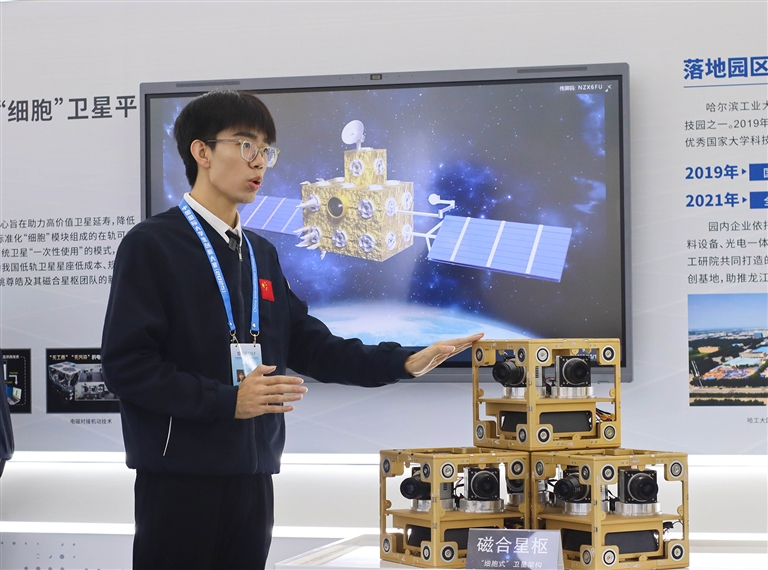
Core Insights - The China International College Students Innovation Competition (2025) resource docking event was held at Zhengzhou University, aiming to facilitate efficient connections between innovative projects and industry needs for successful commercialization [2][5] - The event showcased various innovative projects, including "Yuhong," which addresses leakage monitoring in hydraulic engineering, and "Zero Wing Takeoff," which focuses on improving efficiency in general aviation [3][4] Group 1: Project Highlights - "Yuhong" project has developed leak detection membrane materials and new polyurethane injection materials, successfully applied in the Yangtze River dam and other locations, preventing property losses in the tens of millions [3] - "Zero Wing Takeoff" project has created a three-dimensional flight control system to tackle long-standing issues in general aviation, such as low flight efficiency and complex certification processes [4] - Other notable projects include "Micro Differential Intelligent Flight," which aims to develop a leading autonomous AI flight platform, and "Bone Lock," which introduces a biodegradable adhesive for bone fractures [4] Group 2: Investment and Support - The event featured the launch of specialized investment funds to encourage early-stage investments in hard technology, promoting a "small, early, and hard tech" investment strategy [5] - A digital platform for precise resource matching was established, with multiple nationwide online and offline docking activities planned before and during the competition [5] - The competition aims to support young students in engaging with technological innovation, highlighting the importance of youth creativity and social responsibility in the projects presented [5]
相得益彰,下好区域协调发展一盘棋
Xin Hua Ri Bao· 2025-10-16 23:31
Core Viewpoint - Jiangsu province is experiencing significant regional coordination and development, with a notable reduction in economic disparities between southern and northern regions, enhancing overall resident satisfaction and economic integration [1][2][3]. Group 1: Economic Development - The GDP per capita ratio between southern and northern Jiangsu has decreased to 1.86, and the disposable income ratio has reduced to 1.80, making Jiangsu one of the provinces with the smallest regional disparities in China [1][3]. - The "14th Five-Year Plan" period has seen a shift from simple industrial transfer to deep innovation collaboration between southern and northern Jiangsu [2][3]. - The Suzhou Street in the Suzhou-Suqian Industrial Park contributes 6% of the city's general public budget revenue and 8.7% of industrial added value, despite occupying only 0.16% of the land [2]. Group 2: Innovation and Collaboration - The establishment of 15 innovation hubs between southern and northern Jiangsu has facilitated a collaborative industrial model where R&D occurs in the south and production in the north [3]. - Since 2022, southern Jiangsu has allocated 3.84 billion yuan annually for support projects in northern Jiangsu, focusing on capacity enhancement rather than basic construction [3]. Group 3: Urban-Rural Integration - Jiangsu has implemented systematic reforms to break the urban-rural dual structure, promoting a model of co-prosperity between urban and rural areas [4][5]. - The province has built 283 "unmanned" farms and developed five national-level characteristic industrial clusters, enhancing rural economic vitality [5]. - Infrastructure improvements have led to a total rural road mileage of 140,000 kilometers, achieving full coverage of dual-lane four-level roads in administrative villages [5][6]. Group 4: Cultural Integration - Cultural exchanges are being promoted in rural areas through various initiatives, enhancing community engagement and cultural resources [6]. - The per capita disposable income of urban and rural residents in Jiangsu has increased by 5.2% year-on-year, with a gradual reduction in the income gap [6]. Group 5: Strategic Development - Jiangsu has integrated its development into national strategies, contributing significantly to the Yangtze River Delta and the Yangtze River Economic Belt [7][8]. - The GDP of the Yangtze River Delta region accounted for 24.4% of the national total in 2023, with Jiangsu contributing 41.3% of the total regional GDP in 2024 [8]. Group 6: Environmental and Trade Development - Jiangsu has focused on ecological protection and coordinated industrial development along the Yangtze River, becoming a key player in high-quality development [9]. - In 2024, Jiangsu's foreign trade volume reached 5.62 trillion yuan, representing a 7% year-on-year increase and accounting for 28.3% of the total foreign trade in the Yangtze River Economic Belt [9]. Group 7: Support and Cooperation - Jiangsu has allocated over 34 billion yuan for targeted support and cooperation projects, enhancing collaboration with various regions [10]. - The province aims to continue fostering growth and opportunities through regional integration and collaboration, focusing on economic development and public welfare [10].