
储能

Search documents
南财早新闻|广湛高铁今日正式通车;首块L3级自动驾驶牌照诞生
2 1 Shi Ji Jing Ji Bao Dao· 2025-12-21 23:15
Industry Updates - The Guangzhan High-Speed Railway officially opened on December 22, connecting multiple cities including Guangzhou and Zhanjiang, with travel time from Guangzhou Baiyun Station to Zhanjiang North Station taking as little as 1 hour and 32 minutes [1] - The "Sanya-Prague" flight route was launched on December 21, marking the first operational seventh freedom route of Hainan Free Trade Port [2] - China National Offshore Oil Corporation announced that the Bohai Oilfield, the largest offshore oil field in China, is expected to produce over 40 million tons of oil equivalent by 2025, setting a historical record [2] - The domestic first L3-level autonomous driving dedicated license plate was issued in Chongqing, indicating that China is the second country after Germany to officially allow L3 autonomous driving vehicles [2] - The total cargo transported by national railways from January to November reached 3.727 billion tons, a year-on-year increase of 2.7%, highlighting the logistics advantages of China's railways [3] Investment News - The A-share market is maintaining a high-level fluctuation, with the Shanghai Composite Index turning positive last week, while the Shenzhen Component Index and ChiNext Index experienced adjustments. Analysts suggest that the market is entering a critical window for year-end positioning, with structural opportunities expected to align with policy guidance and industry prosperity [4] - The CSI A500 ETF has seen significant inflows, surpassing the CSI 300, with net inflows exceeding 46 billion yuan, and the total scale of the CSI A500 ETF exceeding 240 billion yuan [4] - The public fund issuance market has shifted focus from bond funds to equity funds, with 1,468 new funds established this year, marking the highest number in nearly four years [4] - As of December 18, over 454 listed companies have received institutional research in December, with electronics, machinery, and biomedicine being the top three sectors of interest [4] Company Developments - Samsung launched the industry's first 2nm process smartphone application processor, Exynos 2600, which boasts a performance increase of up to 39% and is expected to be used in certain versions of the Galaxy S26 series [6] - McDonald's opened its first store in Qinghai Province, achieving full coverage in all provincial-level administrative regions in China, with plans to exceed 7,500 restaurants by November 2025 [6] - MiniMax, an AI company, published its post-hearing information package for its IPO, reporting over 212 million individual users across more than 200 countries and regions, along with 130,000 enterprise clients in over 100 countries [6] - On December 21, Sungrow delivered 576MW of energy storage inverters to the Khavda energy base in India, which will become the largest energy storage station in India and one of the largest single energy storage stations globally [7]
【电新环保】持续看好储能、氢氨醇板块投资机会——电新环保行业周报20251221(殷中枢/郝骞/陈无忌/何霖/邓怡亮)
光大证券研究· 2025-12-21 23:03
Group 1 - The domestic energy storage sector is experiencing sustained demand, with significant GWh-level tenders such as CGN's 7.2GWh energy storage system and Xinjiang Production and Construction Corps' 1200MWh independent energy storage project [4] - The independent energy storage market is expected to maintain a good level in 2026, supported by the development of the energy market, capacity market, and ancillary services market [4] - The overseas energy storage demand remains strong, particularly in the U.S. and non-U.S. countries, with potential growth in regions like the Middle East and Ukraine [4] Group 2 - The world's largest integrated green hydrogen and ammonia project, the China Energy Construction Corporation's Songyuan Hydrogen Energy Industrial Park, has officially commenced production, indicating a positive trend for the hydrogen sector [5] - Poland has successfully awarded its first offshore wind power tenders, distributing 3.4GW of installed capacity, which is expected to enhance the European offshore wind market [5] - The hydrogen and ammonia sector is anticipated to receive more investment due to favorable policies and the emphasis on large-scale construction [5] Group 3 - Recent environmental assessments for the Qianxiawo lithium mine indicate a potential continuation of the lithium carbonate destocking trend, with expectations for demand in the lithium battery sector to remain strong [5] - The supply side of the lithium battery industry is expected to improve, with a focus on investment opportunities in lithium mines and segments like aluminum foil and anodes that are not yet supporting expansion [5]

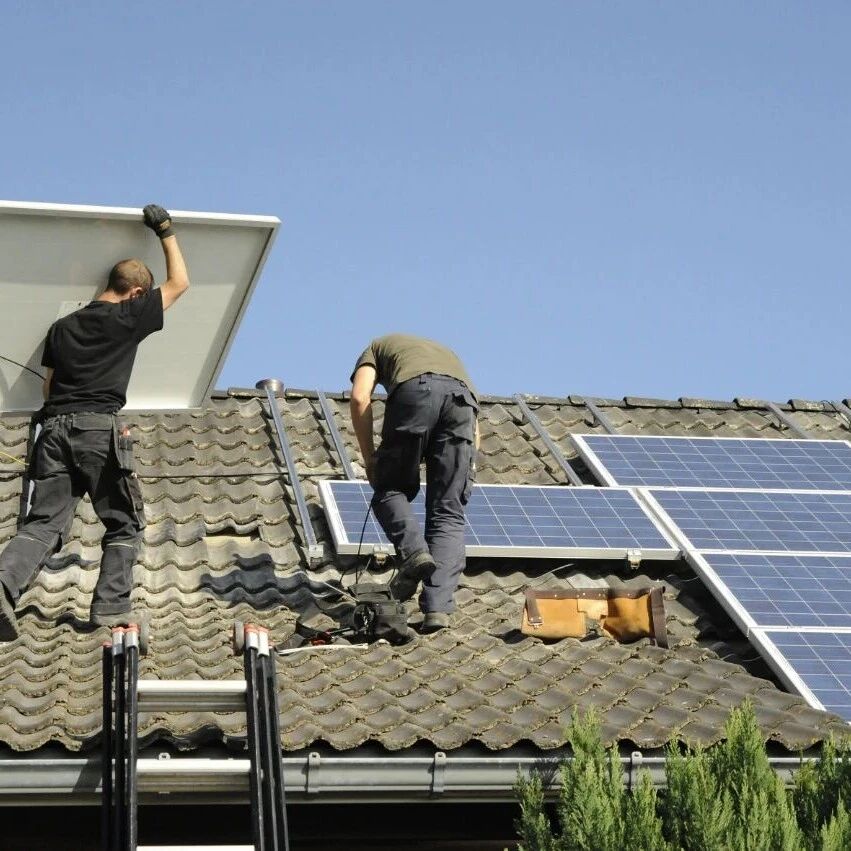
在储能、风电、光伏、智慧电网等领域施展拳脚 上市公司勇挑“能源强国建设”大梁
Shang Hai Zheng Quan Bao· 2025-12-21 18:13
Group 1 - The central economic work conference emphasizes the importance of "dual carbon" goals, promoting a comprehensive green transition and advancing energy security through the construction of a strong energy nation [1][2] - The construction of a strong energy nation is expected to create significant development opportunities for China's new energy industry, with listed companies in sectors such as energy storage, wind power, solar energy, hydrogen energy, and advanced nuclear technologies poised to benefit [1][4] - The integration of the "dual carbon" goals with the energy strong nation initiative is seen as a core driver for the leap in green and low-carbon industries, with specific quantitative targets set for non-fossil energy consumption and renewable energy capacity by 2035 [2][3] Group 2 - The energy strong nation initiative is expected to shift China's role from a follower to a leader in energy rules, necessitating a transition in the energy storage industry from scale development to high-quality growth [3][4] - Companies like Trina Solar and GCL Group are focusing on technological innovation and integrated solutions across the energy supply chain, aiming to capitalize on the opportunities presented by the energy strong nation initiative [4][5] - The energy storage sector is identified as a crucial growth area, with advancements in various storage technologies expected to enhance the capacity for renewable energy consumption and support the transition to a new energy system [5][6]
储能大厂南都电源易主终止
Xin Lang Cai Jing· 2025-12-21 16:36
Core Viewpoint - The company Nandu Power has terminated its control change plan after a brief one-week period, primarily due to failure to reach consensus among involved parties regarding key terms [2][4]. Group 1: Control Change Announcement - Nandu Power announced the control change plan on December 12, 2023, but terminated it on December 19, 2023, citing multiple unresolved issues during negotiations [2]. - The announcement did not provide details on the future arrangements for the recycled lead segment [3]. Group 2: Financial Performance - Nandu Power's financial performance has been under pressure, with a projected net loss of 1.497 billion yuan for 2024, and a loss of 220 million yuan reported in the first three quarters of the current year [1][6]. - The company reported revenues of approximately 11.749 billion yuan, 14.666 billion yuan, and 7.984 billion yuan for the years 2022, 2023, and 2024 respectively, with corresponding net profits of 333 million yuan, 35.976 million yuan, and a loss of 1.497 billion yuan [6]. - In the first three quarters of 2023, Nandu Power's revenue decreased by 24.8% year-on-year to about 5.911 billion yuan, with a net loss of approximately 220 million yuan [6]. Group 3: Business Segments - The company primarily focuses on energy storage applications, providing lithium-ion and lead-acid battery products, solutions, and operational services [6]. - In the first half of 2023, revenue from lithium-ion battery products was approximately 1.994 billion yuan (up 9.54%), while revenue from lead-acid battery products was about 843 million yuan (up 12.29%). However, revenue from recycled lead products fell by 72.33% to approximately 759 million yuan [8].

【十大券商一周策略】告别单一叙事!A股跨年行情+春季躁动或将拉开帷幕
Zheng Quan Shi Bao Wang· 2025-12-21 15:11
Group 1 - The core viewpoint is that a classic "cross-year-spring" market trend is brewing, with significant signals indicating its commencement [3] - Factors driving the appreciation of the RMB are increasing, and investors should adapt their asset allocation accordingly, focusing on industries that may benefit from this trend [1] - The market is expected to see a structural shift with a focus on cyclical sectors, particularly industrial metals, non-bank financials, and sectors related to domestic consumption [3][4] Group 2 - The investment strategy should consider three key clues: dividend value, layout of prosperous industries, and thematic hotspots [4] - The anticipated spring market in 2026 is expected to be driven by a combination of fundamental cyclical improvements and new technological trends [2] - The current market is characterized by a narrow range of fluctuations, influenced by external factors such as U.S. monetary policy and investor sentiment [4][6] Group 3 - The focus on AI and advanced manufacturing is expected to dominate the market, with a potential shift towards value and cyclical styles in the first half of 2026 [2] - The market is likely to experience a "value on stage, growth in action" dynamic, particularly as the Lunar New Year approaches [9] - There is a notable expectation for structural opportunities in sectors like AI, new energy, and controlled nuclear fusion, which are aligned with the "14th Five-Year Plan" [6][10]

A股分析师前瞻:备战躁动行情的共识正在凝聚,只待一个有效信号?
Xuan Gu Bao· 2025-12-21 13:39
Core Viewpoint - The brokerage strategy analysts remain optimistic about the spring market rally, awaiting an effective signal to initiate the movement [1] Group 1: Market Signals and Economic Indicators - Analysts from Xingzheng Strategy highlight that the liquidity expectations are shifting positively due to recent overseas events and a supportive domestic policy environment, indicating a transition from cautious behavior to actively seeking opportunities [1] - Key signals to watch for the potential market rally include the possibility of interest rate cuts and reserve requirement ratio reductions at the end of the year and early next year, with observation windows in early next week and January [1][2] - Important economic indicators such as PPI, PMI, M1, social financing, and annual reports from listed companies are expected to uplift the basic economic outlook [1][2] Group 2: Investment Trends and Sector Focus - The Guangfa Strategy team anticipates that 2026 will resemble an enhanced version of 2025, with continued support from insurance capital and regulation, alongside an acceleration in the migration of deposits from residents, particularly among high-net-worth individuals [1][2] - The trend of high-net-worth residents moving their deposits has already begun to accelerate, with new private equity fund registrations reaching 386 billion yuan from January to October 2025, with monthly registration sizes nearing levels seen in 2021 [1][2] - The Xinda Strategy team emphasizes the increasing elasticity of non-bank financial sectors, suggesting a potential rotation of market focus from banks to non-bank financials, with insurance valuations appearing more attractive [1][3] Group 3: Sectoral Opportunities and Predictions - Analysts suggest that sectors benefiting from policy support, such as AI, advanced manufacturing, and consumer services, are likely to see significant growth, with a projected net profit growth rate exceeding 30% in 2026 [2] - The market is expected to experience structural opportunities driven by policy guidance and industrial momentum, particularly in the context of the upcoming "14th Five-Year Plan" [3] - The spring market rally is anticipated to be influenced by the performance of cyclical sectors, with a focus on commodities and consumer sectors benefiting from increased consumption and fiscal stimulus [3]

电新环保行业周报 20251221:持续看好储能、氢氨醇板块投资机会-20251221
EBSCN· 2025-12-21 13:31
Investment Ratings - The report maintains a "Buy" rating for both the power equipment and environmental sectors [1]. Core Views - The report expresses a positive outlook on investment opportunities in the energy storage and hydrogen-ammonia sectors, highlighting ongoing domestic and international developments that support growth in these areas [3][4][5]. Summary by Relevant Sections Energy Storage - Domestic energy storage continues to show strong demand, with significant GWh-level tenders such as CGN's 7.2GWh and Xinjiang Corps' 1200MWh projects. The expectation is that independent energy storage tenders will maintain good levels through 2026, supported by a complete revenue model from energy, capacity, and ancillary service markets [3][7]. - Internationally, the U.S. continues to face electricity shortages, driving demand for energy storage solutions. The latest capacity auction in the U.S. saw prices reach $333.44 per MW-day, indicating a strong need for reliable power sources [7]. - In November 2025, domestic new energy storage installations totaled 4.51GW/13.03GWh, reflecting a month-on-month increase of 57.14% in power and 74.66% in capacity [8]. Hydrogen-Ammonia and Wind Power - The report notes the launch of China's largest integrated green hydrogen-ammonia project in Jilin, which is expected to drive further development in this sector. Additionally, Poland's successful offshore wind auction for 3.4GW of capacity is anticipated to enhance the European offshore wind market [4]. - The report emphasizes the importance of hydrogen-ammonia as a key direction for renewable energy consumption and non-electric applications, supported by favorable policies and market conditions [4]. Lithium Battery Sector - The lithium market is experiencing a shift, with expectations of continued demand despite a potential slowdown in new energy vehicle sales. The report highlights the importance of monitoring supply chain dynamics, particularly in lithium mining and production [5][20]. - The report suggests that the ongoing negotiations for long-term contracts in the lithium battery supply chain may face challenges, but the overall supply-demand balance is expected to improve [23]. Wind Power - The report indicates that China's onshore wind power installations reached 75.8GW in 2024, a year-on-year increase of 9.68%, while offshore wind installations saw a decrease of 40.85% [9]. - The bidding capacity for wind turbines in 2024 is projected at 164.1GW, a 90% increase year-on-year, indicating a robust market outlook for wind power [14][19].
投资策略周报:“春季躁动”行情的启动,需具备哪些必要条件?-20251221
HUAXI Securities· 2025-12-21 13:28
Market Review - Global stock indices mostly declined this week, with the Korean Composite Index, Hang Seng Tech, and Nikkei 225 leading the losses. A-shares saw a decrease in trading volume, with the average daily turnover of the Wind All A Index falling to approximately 1.76 trillion yuan. Market sentiment has turned cautious, with the ChiNext 50 and ChiNext Index leading the declines, while funds rotated into dividend sectors. In terms of styles, the financial and consumer sectors rose, while growth styles fell, with the electronics and power equipment indices dropping over 3%. In the commodity market, COMEX silver surged by 8.7%, and copper and aluminum prices fluctuated upward, while coking coal rebounded from the bottom. In the foreign exchange market, after the Bank of Japan's interest rate hike, the yen depreciated against the dollar, while the renminbi continued to appreciate against the dollar [1][2]. Market Outlook - The "Spring Rally" is accumulating positive factors, with a focus on buying on dips. Historically, the initiation of the A-share "Spring Rally" typically requires reasonable valuation levels, a loose liquidity environment, and effective catalysts to boost risk appetite, such as domestic policies, industrial events, or external risk alleviation. Currently, the Federal Reserve's interest rate cuts and the Bank of Japan's interest rate hike have been implemented, easing concerns about the reversal of arbitrage trades. The subsequent appreciation of the renminbi is expected to attract foreign capital, and the "good start" of insurance premium income at the beginning of the year is also anticipated to bring incremental insurance funds into the market. Recently, stock ETFs have seen large-scale net subscriptions, with multiple broad-based ETFs experiencing increased trading volume, indicating that incremental funds are inclined to buy on dips [2][5]. Historical Review - A review of history shows that, except for 2021 and 2022, the A-share market has often exhibited a "Spring Rally" calendar effect over the past decade. At the end of the year and the beginning of the year, the A-share market is in a "vacuum period" for economic data and corporate earnings reports, making it easier for the market to engage in thematic investments based on policy expectations and industrial trends. Since 2016, there have been 8 instances of "Spring Rally" in the A-share market. The timing of these rallies typically starts between December and January and lasts for 20 to 60 trading days [3][4]. Necessary Conditions for "Spring Rally" - The initiation of the "Spring Rally" requires several necessary conditions: 1) A reasonable market valuation range, as the elasticity of the rally is highly correlated with market valuation levels. In the years with the largest index gains during the past decade's Spring Rallies, the market had generally undergone sufficient adjustments beforehand. For instance, at the beginning of 2016, the "circuit breaker" triggered a liquidity feedback shock, leading to a sharp decline in major A-share indices; at the beginning of 2019, after previous declines, the price-to-earnings ratio of the CSI 300 Index was only 10 times; and in early February 2024, liquidity shocks from products like Xueqiu and quantitative funds brought the CSI 300 Index's price-to-earnings ratio back to around 10 times [4]. 2) A sustained loose liquidity environment with inflows of incremental funds. For example, in early 2018, the central bank implemented targeted reserve requirement ratio cuts, and in early 2019 and 2020, the central bank conducted comprehensive reserve requirement ratio cuts to maintain macro liquidity. In early 2023, there was a significant inflow of foreign capital, and in early 2025, regulatory authorities are expected to promote the entry of medium- and long-term funds into the market [4]. 3) Domestic policies, industrial event catalysts, or external risk alleviation that drive risk appetite upward. For example, in early 2016, supply-side reforms; in early 2019, progress in China-U.S. trade negotiations; in January 2020, the signing of the first-phase trade agreement between China and the U.S.; at the end of 2022, the optimization of epidemic prevention policies and the "three arrows" for real estate; in February 2024, an unexpected reduction in the Loan Prime Rate (LPR); and in early 2025, catalysts from trends in industries like DeepSeek and robotics [4][5]. Accumulating Positive Conditions - Positive conditions for the "Spring Rally" are accumulating, with a focus on buying on dips: 1) In terms of overseas liquidity, the dovish interest rate hike by the Bank of Japan has been implemented, leading to a weaker yen against the dollar and easing pressures from arbitrage trades. The Federal Reserve's expected dovish rate cuts in December are closely tied to the leadership transition, with the overall market expectation for the Fed's policy direction remaining loose [5]. 2) Domestically, the Central Economic Work Conference has set the tone for "continuing to implement an appropriately loose monetary policy," indicating that there is still room for reserve requirement ratio cuts and interest rate reductions [5]. 3) On the micro liquidity front, this week saw large-scale net subscriptions for stock ETFs, with multiple broad-based ETFs experiencing increased trading volume, boosting market sentiment. The anticipated inflow of foreign capital driven by the appreciation of the renminbi and the incremental insurance funds from the "good start" of premium income at the beginning of the year can also be expected [5]. 4) In terms of valuation, the current price-to-earnings ratio of the CSI 300 Index is 14 times, which is at the 76th percentile since 2010, below the historical median plus one standard deviation [5]. 5) From a policy perspective, the Central Economic Work Conference has laid a positive foundation, with 2026 marking the start of the "14th Five-Year Plan," and incremental policies in areas such as technological innovation, anti-involution, and expanding domestic demand are expected to continue to be introduced [5]. Industry Allocation Recommendations - It is recommended to focus on: 1) Growth directions benefiting from industrial policy support, such as domestic substitution, robotics, aerospace, innovative pharmaceuticals, and energy storage [5]. 2) Cyclical directions benefiting from "anti-involution" policies, such as chemicals, energy metals, and resource products [5]. 3) The deepening of consumption-promoting policies may bring short-term catalytic opportunities for the consumer sector [5].
电力设备行业跟踪周报:储能全球开花需求旺盛、AIDC和人形加速-20251221
Soochow Securities· 2025-12-21 13:16
Investment Rating - The report maintains an "Accumulate" rating for the power equipment industry [1] Core Viewpoints - The energy storage sector is experiencing robust global demand, with significant growth expected in the coming years, particularly in large-scale storage [3][8] - The report highlights advancements in humanoid robotics and artificial intelligence-driven automation, indicating a strong growth trajectory for these sectors [7][8] - The electric vehicle market is projected to continue its upward trend, with a notable increase in sales and production anticipated for 2026 [8] Industry Trends - Energy Storage: The report notes that the demand for energy storage is exceeding expectations, with a projected growth rate of over 60% next year. The U.S. is expected to see significant installations, with a cumulative capacity of 52.5 GWh anticipated for the year [3][8] - Robotics: The humanoid robotics market is expected to reach a scale of over 100 million units, with a market potential exceeding 15 trillion yuan. The report emphasizes that the industry is in its early stages, akin to the electric vehicle market a decade ago [7][8] - Electric Vehicles: In November, domestic electric vehicle sales reached 1.82 million units, reflecting a year-on-year growth of 21%. The report forecasts a 31% increase in sales for the year, with exports contributing significantly to this growth [8][28] Company-Specific Insights - Ningde Times (CATL) is highlighted as a global leader in power and energy storage batteries, with a low valuation relative to its growth potential [6] - Other companies such as Sunpower and BYD are also noted for their strong positions in the inverter and electric vehicle markets, respectively, with positive growth forecasts [6][8] - The report mentions several companies with promising growth prospects, including Keda Li, which is expected to benefit from the increasing demand for energy storage solutions [6][8]





量化择时周报:市场格局仍在反复,谨慎应对-20251221
ZHONGTAI SECURITIES· 2025-12-21 13:08
- The report discusses the "Industry Trend Allocation Model" which indicates that the communication, industrial metals, and energy storage sectors continue to show an upward trend[2][5][7] - The "Two Beta Model" is recommended for the technology sector, focusing on domestic computing power and commercial space[2][5][7] - The "Mid-term Distress Reversal Expectation Model" signals attention to retail and tourism service consumption[2][5][7] Model Construction and Evaluation - **Industry Trend Allocation Model**: This model identifies sectors with upward trends based on historical data and current market conditions. It uses various indicators to determine the sectors that are likely to perform well in the near future[2][5][7] - **Two Beta Model**: This model focuses on sectors with high growth potential, particularly in technology. It evaluates the beta coefficients of different sectors to identify those with higher expected returns relative to the market[2][5][7] - **Mid-term Distress Reversal Expectation Model**: This model identifies sectors that are expected to recover from a period of underperformance. It uses historical performance data and current market signals to predict which sectors will experience a turnaround[2][5][7] Model Backtesting Results - **Industry Trend Allocation Model**: The model continues to show an upward trend in the communication, industrial metals, and energy storage sectors[2][5][7] - **Two Beta Model**: The model recommends the technology sector, focusing on domestic computing power and commercial space, indicating strong growth potential[2][5][7] - **Mid-term Distress Reversal Expectation Model**: The model signals attention to retail and tourism service consumption, suggesting these sectors are poised for recovery[2][5][7]