
新能源

Search documents
未获中国技术支持,印度新能源产业受重挫
Xin Lang Cai Jing· 2026-01-12 10:44
Core Viewpoint - Even the most powerful companies in India face challenges in building a self-sufficient clean energy supply chain, as evidenced by Reliance Industries Ltd. pausing its plans to manufacture lithium-ion battery cells due to the inability to secure technology support from Chinese firms [1][3]. Group 1: Company Challenges - Reliance Industries Ltd. has suspended its plans to manufacture lithium-ion battery cells in India after failing to obtain technology support from Chinese battery companies [1][3]. - The company evaluated alternative technology solutions from Japan, Europe, and South Korea, but found them to be cost-prohibitive and lacking competitiveness for large-scale deployment in the Indian market [3][4]. - Reliance Industries had initially aimed to collaborate with Xiamen Hicharge Energy Technology Co., Ltd. for battery cell technology licensing, but negotiations stalled due to China's restrictions on technology transfer [3][4]. Group 2: Government Initiatives - The Indian government introduced the Production-Linked Incentive (PLI) scheme in 2022 to reduce dependence on imported battery cells, offering up to ₹181 billion (approximately ¥14.12 billion) in subsidies for achieving project milestones [4]. - Reliance's renewable energy subsidiary, Reliance New Energy, faced penalties last year for failing to meet phase targets under the PLI scheme [4]. Group 3: Strategic Shift - Following setbacks in lithium battery cell production, Reliance Industries is shifting its focus towards the assembly of Battery Energy Storage Systems (BESS) to support its renewable energy projects [5].


湖南湘江新区:一条产业“金腰带”
Zhong Guo Xin Wen Wang· 2026-01-12 09:49
Core Viewpoint - The article emphasizes the transformation of Hunan Xiangjiang New Area from a competitive landscape of individual enterprises to a collaborative ecosystem where companies thrive together, forming a robust industrial chain and enhancing regional economic strength [1][3][24]. Economic Growth - During the "14th Five-Year Plan" period, the GDP of Xiangjiang New Area is projected to cross three trillion yuan milestones, entering the "500 billion club" [1]. - The area is expected to develop three trillion-yuan industrial clusters in engineering machinery, electronic information, and new materials, accelerating the formation of a modern industrial system [1][4]. Industrial Ecosystem - The industrial development in Xiangjiang New Area follows a clear path from attracting single enterprises to forming collaborative industrial clusters, enhancing resource efficiency and innovation [3][4]. - The ecosystem is characterized by a "chain ecology" that supports innovation and value circulation, with significant contributions from major enterprises like Hunan Dongying Carbon Materials and others [5][7]. Collaborative Advantage - The engineering machinery cluster is projected to achieve a total output value exceeding 150 billion yuan by 2024, with the new generation information technology cluster generating over 130 billion yuan, accounting for 72.2% of the provincial output [10]. - The establishment of an "hourly industrial ecosystem" around leading companies like Zoomlion enhances production efficiency and resilience against market fluctuations [7][10]. Policy Support - A three-tier policy collaboration system has been established to support industrial upgrades, focusing on innovation-driven development and providing continuous subsidies to key industry players [19][21]. - The implementation of targeted policies has effectively addressed common challenges in industrial upgrades, fostering a unique path for collaborative industrial development [19][21]. Future Prospects - The Xiangjiang New Area is positioned to capitalize on future industrial opportunities in fields such as artificial intelligence, quantum technology, and life sciences, supported by a solid industrial foundation and a mature innovation ecosystem [23][24]. - The evolution of the industrial landscape from isolated enterprises to interconnected clusters signifies a shift towards a collaborative and symbiotic growth model, enhancing the region's competitive edge [24].


中山召开2026年首批重点项目建设现场推进会 83个项目集中动工
Nan Fang Ri Bao Wang Luo Ban· 2026-01-12 09:45
Core Insights - The city of Zhongshan held a construction promotion meeting for key projects in 2026, with 83 projects starting simultaneously and a total investment exceeding 30 billion yuan [1] Group 1: Project Overview - Among the projects, 61 are industrial projects, accounting for over 70% of the total, with an investment of 23.2 billion yuan [1] - The remaining 22 projects are focused on infrastructure and public welfare, with a total investment of 7 billion yuan [1] - The projects are characterized by large investment amounts and strong driving force, particularly in sectors such as semiconductors, new energy, optoelectronics, and aerospace equipment [1] Group 2: Key Project Highlight - The main venue for the promotion meeting was the expansion project of Zhongshan Taiguang Optoelectronic Materials Co., focusing on AI high-performance and advanced semiconductor packaging materials [1] - This project aims to integrate into the artificial intelligence industry supply chain and is expected to establish an internationally leading electronic materials R&D and manufacturing base, with an annual output value exceeding 10 billion yuan upon completion [1] Group 3: Policy and Mechanism - Zhongshan has been emphasizing manufacturing, using key projects as a lever to accelerate the construction of a modern industrial system [1] - In 2025, Zhongshan will implement a "monthly signing and monthly commencement" mechanism and streamline project approval processes, reducing approval times by 65% to facilitate rapid project initiation and construction [1] Group 4: Performance Metrics - In 2025, both provincial and municipal key project constructions in Zhongshan exceeded their annual targets [1] - 57 provincial key projects completed investments of 33.4 billion yuan, achieving 120.2% of the annual target, while 377 municipal key projects completed investments of 58.3 billion yuan, reaching 106% of the annual target [1]
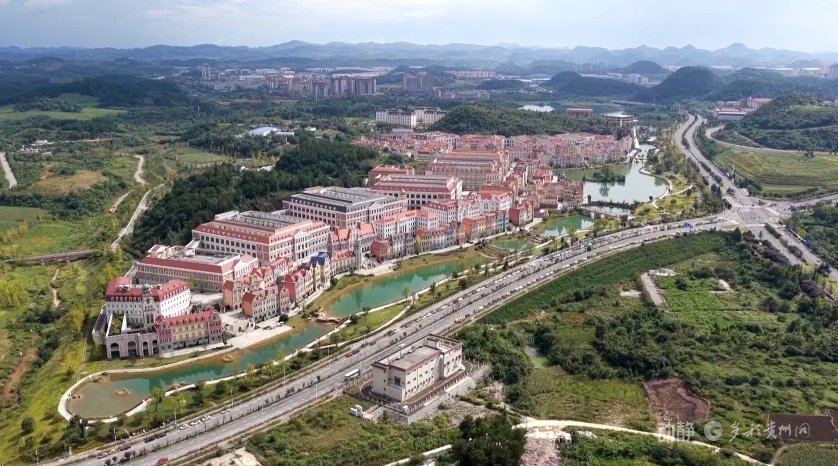
贵安新区2025年全社会用电量突破50亿千瓦时
Xin Lang Cai Jing· 2026-01-12 08:44
Core Insights - The total electricity consumption in Gui'an New Area is projected to reach 5.26 billion kilowatt-hours in 2025, reflecting a significant year-on-year increase of 39.89%, which outpaces the regional GDP growth [1][10] Group 1: Electricity Consumption Growth - The rapid growth in electricity consumption indicates the quality and effectiveness of regional economic development [3] - In 2025, the first industry’s electricity consumption increased by 59.43% year-on-year [4] - The second industry’s electricity consumption rose by 29.73%, with the new energy industry cluster consuming 958 million kilowatt-hours, marking a 38.47% increase [3][4] - The high-end equipment manufacturing sector consumed 157 million kilowatt-hours, showing a year-on-year growth of 25.97% [3][4] Group 2: Third Industry Growth - The third industry experienced a year-on-year growth of 48.43%, primarily driven by the East Data West Computing cluster, which accounted for 84.34% of the third industry's electricity consumption [3][4] - This growth has significantly boosted the information transmission, software, and IT service sectors [3][4] Group 3: Infrastructure Development - To support the construction of the "three major industrial bases" in Gui'an New Area and the national "East Data West Computing" strategy, the Gui'an Power Supply Bureau is actively advancing power grid planning and construction [8][10] - The strong electricity growth data and proactive grid planning illustrate the ongoing optimization of the economic structure and continuous improvement in development quality and efficiency in Gui'an New Area [10]
同样是牛市,为什么2025年赚钱比2020年难?
雪球· 2026-01-12 08:39
Group 1 - The core viewpoint of the article emphasizes that the A-share market is more sensitive to liquidity than to macro fundamentals, indicating a structural bull market driven by capital influx rather than corporate performance [3][4][5] - The overall revenue and net profit growth of non-financial listed companies in the first three quarters was only 0.7% and 1.92% respectively, contrasting with the over 20% growth expected for the entire year, highlighting a disconnect between market performance and corporate earnings [4] - The article identifies two types of capital influencing the market: one based on fundamental performance expectations and the other driven by momentum effects, leading to a "stronger gets stronger" dynamic in stock performance [5][6] Group 2 - True momentum sectors are characterized by sustainable growth logic and broad industry trends, supported by measurable performance variables, while pseudo-momentum sectors rely on speculative assumptions and are often driven by market sentiment [10][11] - The article discusses the distinction between true and pseudo momentum, noting that true momentum sectors have strong institutional participation and consistent earnings growth, while pseudo momentum sectors often lack fundamental backing and are more volatile [12][13] - The performance of momentum strategies in the A-share market has been inconsistent, with cross-sectional momentum strategies underperforming due to rapid sector rotations and frequent policy changes [17][18] Group 3 - The article suggests that the market dynamics in 2025 will be more challenging for investors compared to the 2019-2021 period, where both cross-sectional and time-series momentum strategies were effective due to strong macro fundamentals and diverse sector performance [20][21] - It highlights that the lack of counterbalancing sectors in the A-share market has led to extreme price movements, where strong sectors experience rapid increases followed by sharp declines [24] - The article provides four recommendations for investors to navigate the current momentum-driven market, emphasizing the importance of recognizing sector differentiation, maintaining confidence in fundamentally strong stocks, and being sensitive to trend reversal signals [27][30]

博时基金董事长张东:2026年市场波动可能加大,资产配置需更注重均衡与灵活
Zhong Guo Jing Ying Bao· 2026-01-12 07:53
Group 1 - The core viewpoint of the article emphasizes that the capital market is characterized by "stable overall volume and active structure," driven by policy support and industrial upgrades, serving as an important platform for the real economy and wealth management [1] - The stock market is expected to continue showing structural opportunities, particularly in sectors like technology, energy transition, and consumer recovery, with a focus on companies that possess real competitiveness and growth potential [2] - The bond market retains configuration value, with opportunities arising from the exploration of term and credit spreads, as well as the flexible application of "fixed income plus" strategies [3] Group 2 - The 2026 equity market is anticipated to focus on fundamental analysis, embracing "new demand" and "new supply," with real demand in technology innovation, green transition, and national security driving the growth of competitive enterprises [2] - Asset allocation strategies should shift towards a balanced and flexible approach, moving from "single Beta" to "multiple Alpha," to mitigate risks associated with increased market volatility in 2026 [3] - There is a strategic emphasis on alternative assets, such as gold and certain commodities, to diversify investment portfolios and enhance risk management through tools like ETFs [3]
沪指站上4100点,两市成交超3万亿
British Securities· 2026-01-12 07:38
Core Views - The A-share market experienced a strong upward trend, with the Shanghai Composite Index breaking through the 4100-point mark, reaching a recent high [3][17] - The trading volume exceeded 3 trillion yuan, indicating a significant increase in market activity and a strong willingness for new capital to enter [3][17] - A positive feedback loop has formed, where increased trading volume supports further index gains, attracting more investors [3][17] Market Overview - On the last trading day, the Shanghai Composite Index closed at 4120.43 points, up 37.45 points, with a gain of 0.92% [6] - The Shenzhen Component Index rose by 160.67 points, or 1.15%, closing at 14120.15 points [6] - The ChiNext Index increased by 25.50 points, or 0.77%, ending at 3327.81 points [6] - The market saw a collective rise in major indices, with the Shanghai Composite Index gaining 3.82% for the week, and the ChiNext Index up 3.89% [7] Sector Performance - AI-related stocks surged, with significant activity in companies like Kimi and Sora, reflecting the ongoing investment opportunities in the AI sector [8][10] - The cultural media sector also saw substantial gains, driven by advancements in AI applications in gaming and content production [10] - Precious metals, including gold and silver, experienced price increases due to factors such as geopolitical tensions and increased demand from central banks [11] - The insurance sector reported a 7.6% year-on-year increase in premium income, indicating a stable growth trajectory [12] - Aerospace and military stocks rose sharply, supported by government spending proposals and ongoing geopolitical tensions [13][14] - The semiconductor sector is witnessing a trend of domestic substitution, with opportunities for investment in companies that can adapt to industry changes [15] - New energy stocks, particularly in lithium batteries and solar energy, are expected to continue their upward momentum due to ongoing demand and supportive government policies [16] Future Market Outlook - The current market sentiment is positive, but caution is advised due to potential volatility associated with high trading volumes [4][18] - Investors are encouraged to hold onto positions that have already been established while waiting for potential buying opportunities during market pullbacks [4][18] - Focus should be on selecting stocks with strong earnings support across various sectors, including technology and cyclical industries [4][18]
ETF收评 | A股豪取十七连阳,成交额达3.64万亿创历史纪录,双创ETF普遍溢价,科创创业人工智能ETF摩根涨16%
Ge Long Hui· 2026-01-12 07:37
Group 1 - The Shanghai Composite Index opened high and rose for the seventeenth consecutive day, increasing by 1.09% to 4165.29 points, while the Shenzhen Component Index rose by 1.75% to 14366.91 points, and the ChiNext Index increased by 1.82% to 3388.34 points. The North Star 50 index surged by 5.35% to 1605.77 points [1] - The total market turnover reached 36,445 billion yuan, an increase of 4,922 billion yuan compared to the previous day, setting a historical record [1] - In the ETF sector, the "20CM" dual innovation ETFs generally saw premium increases, with the Sci-Tech Innovation and AI ETFs from Morgan, China Merchants, and Huaxia rising by 16.59%, 13.19%, 12.71%, and 11.29% respectively, with the latest premium/discount rates at 10.18%, 5.75%, 2.96%, and 2.37% [1] - AI application themes experienced a widespread surge, with various software and media ETFs reaching their daily limit [1] - The commercial aerospace sector also saw a wave of limit-up stocks, with aviation and satellite industry ETFs hitting their daily limits [1] Group 2 - The Nasdaq Biotechnology ETF fell by 1%, while Hong Kong's dividend strategy ETFs, including the E Fund and Ping An, decreased by 1% and 0.99% respectively [2] - The Hong Kong innovative drug sector showed weakness, with the innovative drug ETF declining by 0.95% [2] - The chemical sector also faced declines, with the chemical ETF and E Fund's chemical industry ETF dropping by 0.9% [2] - The renewable energy sector saw a downturn, with both the energy storage battery ETF and lithium battery ETF from E Fund falling by 0.8% [2]

杨德龙:2026年牛市行情愈演愈烈 赚钱效应明显提高
Xin Lang Cai Jing· 2026-01-12 07:31
Group 1 - The A-share market has started 2026 with a strong bullish trend, marked by a historic 17 consecutive days of gains in the Shanghai Composite Index [1][7] - The trading volume has significantly increased, surpassing 30 trillion yuan for two consecutive days, indicating a phase of rising prices and volumes, officially launching the spring offensive [1][7] - The current bull market is seen as a once-in-a-decade investment opportunity, with a substantial shift of household savings towards the capital market due to low bank deposit rates [1][7] Group 2 - The real estate market is still in an adjustment phase, with a fundamental change in expectations for housing price increases, particularly in second and third-tier cities [2][8] - The market has broken through the 4150-point mark, moving away from key integer levels and forming an upward trend, with a slow bull market expected to last 3 to 5 years or longer [2][8] - Investment opportunities are anticipated to expand beyond technology and banking sectors to include consumer staples, new energy leaders, non-ferrous metals, and military industries, enhancing the market's profitability [2][8] Group 3 - The current bull market is tasked with three historical missions: enhancing household wealth, stabilizing the real estate market through stock market wealth effects, and supporting the development of new productive forces, particularly in technology innovation [3][9] - Emerging industries such as commercial aerospace and brain-computer interfaces are showing active performance, with expectations for continued strength in technology sectors like robotics and semiconductors in 2026 [3][9] Group 4 - Investment in technology stocks, especially leading companies, should be viewed within the context of the AI revolution, representing a long-term trend opportunity [4][10] - The Hong Kong stock market has also seen a significant rebound, indicating a similar slow bull market trend as in the A-share market, with expanding investment opportunities [4][11]
韧性筑基,提质绘新:银河基金2026年度策略会精华观点来了
Sou Hu Cai Jing· 2026-01-12 07:20
Macro Economy - In 2025, China's consumer market showed a moderate recovery, with a retail sales growth of 4.0% year-on-year from January to November, although there was a decline in consumption in categories like home appliances and automobiles in the second half due to subsidy reductions and real estate adjustments [1] - The "14th Five-Year Plan" emphasizes economic development and aims for per capita GDP to reach the level of moderately developed countries by 2035, while also focusing on local development and the integration of technological and industrial innovation [1] Real Estate and Trade - Since mid-2025, there has been downward pressure on real estate transaction volumes, with a 26.6% year-on-year decline in transaction area and a 24.65% drop in transaction units in 30 major cities as of October [2] - Despite challenges in the real estate sector, foreign trade has shown resilience, with a 5.4% year-on-year increase in goods exports from January to November, and net exports exceeding 1 trillion USD [2] Technology Sector - In 2025, AI applications achieved significant scale, with a reduction in the "hallucination rate" of a popular AI model from 14% to 2% by the end of the year, leading to a surge in consumer applications [3] - By the end of 2025, global investment in Chinese assets through ETFs reached 831 billion USD, with 95 billion USD flowing into the technology sector, highlighting its importance for foreign investment [3] Semiconductor and AI - The semiconductor, communication, and robotics sectors performed well in 2025, with respective index increases of 127.57%, 45.93%, and 26.33%, driven by rising AI capital expenditures in North America and breakthroughs in domestic supply chains [4] - The AI sector is expected to transition into a monetization phase in 2026, with advancements in semiconductor technology and a focus on cost-effectiveness in the AI industry chain [4] New Energy Sector - The new energy sector in 2025 focused on energy storage and AIDC electrical equipment, with solid-state battery pilot lines and structural optimization in the photovoltaic industry driving temporary price increases [4] - Expectations for 2026 include the solid-state battery reaching a production inflection point [4] Commodities Sector - The non-ferrous metals sector saw an overall increase of 88.50% in 2025, supported by factors such as the Federal Reserve's interest rate cuts and supply chain disruptions [5] - The relationship between AI, new energy, and commodities is highlighted, with predictions of significant shortages in copper and lithium by 2035 [5] Consumer Sector - The consumer sector showed notable improvement in 2025, with a focus on "emotional consumption" and "brand overseas expansion," particularly in domestic appliances and electric vehicles [6] - The consumption sector is characterized by a "hot first half and a quiet second half," with a focus on channel transformation and community-oriented products [6] Pharmaceutical Sector - The pharmaceutical industry is expected to experience structural differentiation and value reassessment in 2026, focusing on innovation, international expansion, and policy reforms [7] - Significant breakthroughs in AI applications in healthcare are anticipated, including AI-assisted diagnostics and clinical transformations [7]