
人形机器人

Search documents
速读2026年北京市政府工作报告| 2025年北京市数字经济增加值增长8.7%
Bei Jing Shang Bao· 2026-01-25 01:33
Group 1 - Beijing aims to accelerate the construction of a global benchmark city for the digital economy, with significant progress in the key ecosystem of artificial intelligence [1] - The number of large models registered and launched in Beijing ranks first in the country, and the Beijing Data Group has been established [1] - The added value of the digital economy has grown by 8.7% [1] Group 2 - The city is promoting the development of future industries, highlighted by the world's first humanoid robot marathon and the World Humanoid Robot Games [1] - A small-scale experimental network for 6G has been established, and the Zhuque-3 reusable rocket has successfully completed its first flight [1] - Several leading achievements in brain-computer interfaces have been showcased [1] Group 3 - The modern service industry is being vigorously developed, with software information, technology services, and business services contributing over 50% to economic growth [1] - The efficiency of financial services to the real economy continues to improve, with 288 companies listed on the Beijing Stock Exchange and a total market value exceeding 860 billion yuan [1]
2月北京站:头部智驾企业“盲盒”、天工机器人——芯之所驱 形之所塑
泽平宏观· 2026-01-24 16:06
以下文章来源于泽平宏观商学 ,作者泽平宏观商学 泽平宏观商学 . 前沿科技企业实战研学 读万卷书行万里路 014> 盲盒:头部智能驾驶企业 当前正处于从 L2 到 L4 自动驾驶迭代、从汽车向 通用机器人跨越的历史拐点。智驾芯片及解决方案市 场正以接近 50% 的年复合增长率奔向万亿规模。公司 凭借国产替代与技术普惠的双重红利,占据了中国智 驾市场的"半壁江山"。 在物理AI加速落地浪潮与国产替代加速的双重β 下,公司作为国产中大型算力芯片头部企业及具备软 硬一体能力的供应商,推动汽车从"功能"迈向"智 能",让机器更懂人类,让出行更安全、更自由。 天工机器人:北京人形机器人创新中心 国家战略级平台,定义全栈自主新高度 北京人形机器人创新中心于2023年11月成立,是 国内首个省级人形机器人创新中心,也是国内首家具 身智能软硬件全栈科技公司,全面覆盖人形机器人大 脑、小脑、本体与数据的研发攻关并且构建了良好的 开源生态。 目前已推出自主研发的全国产化"具身天工"系 列人形机器人和"天轶"系列轮式人形机器人,可覆 盖工业制作、特种作业、物流分拣、商业导览等多元 场景,在人形机器人半马、运动会等多项行业竞赛中 以 ...


人形机器人行业出现“数据罗生门”
Shang Hai Zheng Quan Bao· 2026-01-24 15:46
就在上述报告发布后不久,1月23日下午,另一家市场调研机构IDC的《全球人形机器人市场分析》也 在网上流传。该报告称,2025年人形机器人市场迎来爆发式增长,中国厂商正引领规模化商用进程,智 元在其中五个场景的出货量均列第一。 记者从IDC方面了解到,该报告尚未正式对外发布,正式版本预计后续公布。此外,有人形机器人厂商 向记者表示,上述榜单并未涵盖所有主要厂商,例如银河通用、加速进化、松延动力等企业,从公开数 据看,这些企业的出货数据也应"榜上有名"。 近期,围绕人形机器人"出货量第一"的讨论在行业内发酵,宇树科技的一则官方披露,更是将这一话题 推向舆论中心。 1月22日,宇树科技宣布,公司2025年全年人形机器人实际出货量超过5500台(指实际出售发货给终端 客户的数量,非订单数量),同期本体量产下线数量超过6500台。宇树强调,上述数据均为纯人形机器 人,不包含双臂轮式等其他形态产品。 这场"官方回应"的起点,源自1月中旬两家市场研究机构发布的统计报告。 1月8日,第三方调研机构Omdia发布报告称,智元机器人2025年人形机器人年度出货量超过5100台,占 据全球39%的市场份额,在出货量和市场份额两项 ...

西贝突曝大消息!
Sou Hu Cai Jing· 2026-01-24 13:03
Financing Activities - Haier New Energy completed over 1 billion RMB in Series B financing, with funds primarily allocated for R&D and market expansion in photovoltaic and energy storage systems [2] - Supermagnetic New Energy announced several hundred million RMB in angel round financing, focusing on the development of high-temperature superconducting magnetic systems for controllable nuclear fusion [2] - Ailios Biotech secured over 100 million RMB in pre-B round financing to enhance its self-developed filtration membranes for biopharmaceutical applications [3] - Anhui Anpin Intelligent Technology completed angel round financing to accelerate the promotion of intelligent tavern operation solutions [3] - Dongyi Technology raised over 100 million RMB in angel++ round financing to advance its "Robot for AI" strategy [4] - Dvision Medical completed several tens of millions RMB in A2 round financing to promote the development of super-microsurgery robots [5] - AI startup Anthropic is pursuing a new financing round aiming to raise 25 billion USD, with significant investments from major tech firms [5] - Xingsai Biotech completed nearly 100 million RMB in A++ round financing, focusing on single-cell analysis instruments [6] - Today Sleep, a startup, announced several tens of millions RMB in seed round financing to develop sleep-related smart products [7] - Zhejiang Dejin Biotech completed several tens of millions RMB in A round financing to advance its recombinant botulinum toxin products [7] - Yupan Intelligent completed 513 million RMB in Pre-IPO+ financing to enhance its capabilities in embodied intelligence and global expansion [8] - Nanjing Hairong Pharmaceutical raised 140 million RMB in a new round of financing to accelerate the development of innovative drugs [9] - Xibei Restaurant Group completed A round financing, with investments from various parties including the founder of a well-known restaurant brand [10] - New Yue Biotech completed several tens of millions RMB in A+ round financing to enhance its AI drug development capabilities [10] - AtomForm announced a new round of financing exceeding 100 million RMB to accelerate its commercialization process [11] - Liangxuan Technology completed several hundred million RMB in C round financing to promote quantum computing applications [12] - Lianbo Precision completed over 100 million RMB in C round financing to support high-end manufacturing initiatives [13] - Juwei Technology completed nearly 100 million RMB in A round financing to enhance its industrial IoT capabilities [14] - Lanjing Technology secured several tens of millions RMB in A+ round financing to focus on agricultural robotics [14] - Zhejiang Humanoid Robot Innovation Center completed 450 million RMB in Pre-A round financing, reflecting strong market confidence [15] - Epuji completed nearly 100 million USD in B round financing to strengthen its data center delivery capabilities [16] Investment Funds - The establishment of various investment funds, including a 20 billion RMB seed fund in Shanghai focusing on AI and intelligent models [19] - The launch of a 50 billion RMB investment fund in Zhengzhou aimed at supporting innovative industries [20] - The creation of a 10 billion RMB fusion energy venture capital fund in Hefei to support key technologies in nuclear fusion [20]
2月北京站:头部智驾企业“盲盒”、天工机器人——芯之所驱 形之所塑
泽平宏观· 2026-01-23 16:41
泽平宏观商学 . 前沿科技企业实战研学 读万卷书行万里路 以下文章来源于泽平宏观商学 ,作者泽平宏观商学 目前已推出自主研发的全国产化"具身天工"系 列人形机器人和"天轶"系列轮式人形机器人,可覆 盖工业制作、特种作业、物流分拣、商业导览等多元 场景,在人形机器人半马、运动会等多项行业竞赛中 以自主方式夺得多个冠军,实力硬核、领跑人机共生 时代。 科增行 日程安排 ● ● 2月27日 (星期五) 上午 头部智能驾驶企业 014> 盲盒:头部智能驾驶企业 当前正处于从 L2 到 L4 自动驾驶迭代、从汽车向 通用机器人跨越的历史拐点。智驾芯片及解决方案市 场正以接近 50% 的年复合增长率奔向万亿规模。公司 凭借国产替代与技术普惠的双重红利,占据了中国智 驾市场的"半壁江山"。 在物理AI加速落地浪潮与国产替代加速的双重β 下,公司作为国产中大型算力芯片头部企业及具备软 硬一体能力的供应商,推动汽车从"功能"迈向"智 能",让机器更懂人类,让出行更安全、更自由。 天工机器人:北京人形机器人创新中心 国家战略级平台,定义全栈自主新高度 北京人形机器人创新中心于2023年11月成立,是 国内首个省级人形机器人创新中 ...

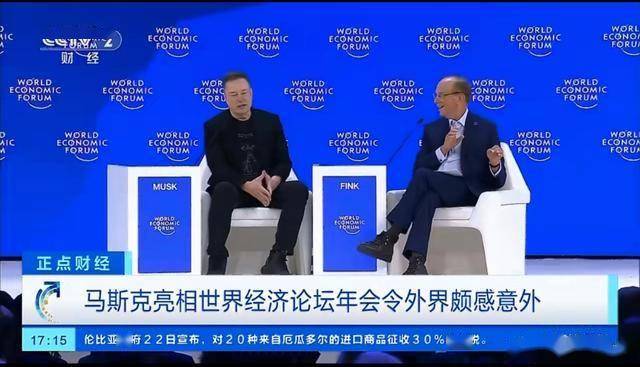
7800亿身家押注!马斯克官宣明年卖人形机器人,要改写人类未来?
Sou Hu Cai Jing· 2026-01-23 13:57
Group 1 - Elon Musk announced that Tesla's humanoid robot "Optimus" will be available for public sale by the end of 2027, with his personal net worth reaching $780 billion, significantly ahead of the second richest individual by approximately $530 billion, equivalent to the combined wealth of three Jeff Bezos [1][3] - The Optimus robot has already been performing simple tasks at Tesla's factories, with plans to handle more complex industrial operations by the end of the year. The latest version features an 11-degree-of-freedom dexterous hand and a 30% increase in walking speed compared to the first generation [3] - Musk expressed that the market potential for humanoid robots could surpass that of automobiles, aiming to deploy 1 million units of Optimus to support Tesla's valuation target of $25 trillion [3] Group 2 - Musk's wealth is supported by three major technology ventures: SpaceX, valued at $800 billion, contributing $336 billion; Tesla, contributing $307 billion with a 22% annual stock price increase; and xAI, which doubled its valuation after raising $20 billion, adding $62 billion to Musk's wealth [5][6] - The "aerospace + automotive + AI" triangle formed by these three sectors allows Musk to earn an average of $9.8 billion per day, marking one of the fastest wealth accumulations in history [6] - However, the mass production of humanoid robots faces five critical challenges, including reliance on imported core components, high BOM costs, limited application scenarios, and the need for unified safety and ethical standards [8] Group 3 - The commercialization of Optimus is directly tied to Musk's high compensation, with a $1 trillion options plan requiring the deployment of 1 million humanoid robots by 2030 to unlock the incentives [9] - This situation indicates that the success of the robot not only represents Tesla's second growth curve but also determines whether Musk can become the first trillionaire [9] - The ultimate test for this ambitious vision will be whether Optimus can be launched on schedule and overcome production challenges, as the capital market may support dreams, but consumers will only invest in mature products [9]

汽车行业2026年投资策略:汽车出海迈入深水区,智能化&机器人大展宏图
Southwest Securities· 2026-01-23 12:34
Investment Rating - The report provides a positive investment outlook for the automotive industry, particularly focusing on smart vehicles, new energy vehicles, commercial vehicles, and humanoid robots, indicating significant growth potential in these sectors [1][2]. Core Insights - The automotive industry is entering a transformative phase driven by policies that support the development of smart vehicles and the expansion of new energy vehicles. The report highlights the acceleration of intelligent driving technology and the increasing market penetration of new energy vehicles [3][4]. Summary by Relevant Sections Smart Vehicles - The report emphasizes that the intelligent vehicle sector is experiencing rapid advancements due to policy support, with L3 vehicle standards expected to be implemented by 2026. The adoption of advanced driving assistance systems (ADAS) is increasing, with new vehicle models showing significant growth in features like highway and urban NOA (Navigation on Autopilot) [4][68]. - The financing landscape for autonomous driving is booming, with 35 companies in the sector raising over 582 billion yuan in 2025, nearly three times the amount raised in 2023 [4][80]. New Energy Vehicles - The continuation of vehicle replacement policies is expected to bolster sales, with wholesale volumes of new energy passenger vehicles projected to reach 18.16 million units in 2026, a year-on-year increase of 18% [4][34]. - Exports of new energy vehicles have shown remarkable growth, with a 102.5% year-on-year increase in 2025, indicating strong demand in international markets [4][34]. Commercial Vehicles - The heavy truck sector is supported by ongoing vehicle replacement policies, with sales expected to reach 1.196 million units in 2026, reflecting a year-on-year growth of 4.6% [4][34]. - The report notes that the heavy truck market is benefiting from both domestic and international demand, with significant growth anticipated due to the continued penetration of new energy heavy trucks [4][34]. Humanoid Robots - The humanoid robot sector is poised for rapid growth, with applications in automotive manufacturing expected to enhance production efficiency. The report forecasts a compound annual growth rate of approximately 85% in humanoid robot shipments from 2024 to 2035 [4][34]. - The cost of humanoid robots is expected to decrease significantly, with projections indicating that the price of a standard humanoid robot could drop from $80,000-$90,000 to $15,000-$20,000 by 2030 [4][34]. Policy Environment - The report highlights a favorable policy environment that is increasingly supportive of the automotive industry's transition towards smart and electric vehicles. Key policies include the approval of L3 autonomous vehicle models and the establishment of unified standards for vehicle replacement subsidies [4][53]. Market Trends - The automotive market is witnessing a shift towards intelligent and electric vehicles, with consumer preferences evolving towards higher levels of automation and connectivity in vehicles. The report indicates that the penetration rate of intelligent driving features is expected to increase significantly in the coming years [4][68]. Capital Market Activity - The report notes a surge in investment activity within the autonomous driving sector, indicating a strong belief in the future growth of this industry. The capital market's enthusiasm is reflected in the substantial funding raised by various companies, signaling a robust outlook for the sector [4][80].



报告称中国厂商正引领人形机器人行业规模化商用进程
Zhong Guo Xin Wen Wang· 2026-01-23 10:27
报告称中国厂商正引领人形机器人行业规模化商用进程 中新社上海1月23日电 (记者 李姝徵)全球信息技术与消费科技咨询公司——国际数据公司(IDC)23日发 布《全球人形机器人市场分析》报告。该报告指出,2025年人形机器人市场迎来爆发式增长,中国厂商 整体在引领行业的规模化商用进程。 根据IDC数据,2025年全球人形机器人出货量约1.8万台,同比增长约508%。在人形机器人行业规模化 生产领域,中国厂商占据主导地位。 这其中,上海首家人形机器人量产企业——智元创新(上海)科技股份有限公司(简称智元机器人)以5200 台的出货量稳居全球榜首,市场份额显著领先。与此同时,在IDC的统计中,智元机器人斩获了"五大 主流场景出货量第一""全球整体出货量第一"与"全尺寸细分领域出货量第一"三项第一。 报告进一步指出,在众多人形机器人形态中,全尺寸人形机器人应用场景广单价高,领跑2025年整体市 场收入份额,占比高达41.6%。 IDC预测,从全球市场来看,人形机器人产业正经历由"广泛参与"向"头部集中、梯队分化"的加速演 进。随着技术成熟度提升及应用场景快速落地,全球人形机器人市场正进入多场景商业化的加速阶段, 头部 ...
金融界财经早餐:潘功胜发声,今年降准降息还有空间!多家银行落实消费贷贴息优化;中际旭创成公募基金第一重仓股;商业航天领域动态频出;阿里旗下平头哥筹划IPO(1月23日)
Jin Rong Jie· 2026-01-23 01:47
Economic Policy - The People's Bank of China will continue to implement a moderately loose monetary policy in 2026, utilizing various tools such as reserve requirement ratio cuts and interest rate reductions to maintain ample liquidity [1] - The Ministry of Commerce and nine other departments have issued opinions to promote high-quality development in the pharmaceutical retail industry, supporting mergers and acquisitions among retail pharmacies [1] Capital Market Developments - The People's Bank of China announced a 900 billion yuan MLF operation to maintain liquidity in the banking system, with a one-year term [3] - Public funds have focused on core sectors such as electronics and power equipment, with Zhongji Xuchuang becoming the largest holding stock, valued at 78.421 billion yuan [3] - The National Development and Reform Commission has allocated 93.6 billion yuan in special bonds to support over 4,500 projects across various sectors, driving total investment exceeding 460 billion yuan [3] Industry Highlights - The commercial aerospace sector is gaining attention, with Blue Arrow Aerospace's IPO status changing to "inquiry" as it aims to become the first commercial aerospace stock [7] - Domestic AI chip company Suiyuan Technology has received approval for its IPO, aiming to raise 6 billion yuan for AI chip development [7] - The human-shaped robot sector remains active, with Zhejiang's innovation center completing a 450 million yuan Pre-A round of financing [7] Company Updates - Zhaoyi Innovation expects a net profit of 1.61 billion yuan for 2025, a year-on-year increase of approximately 46%, benefiting from AI computing demand [8] - ST Biology announced the termination of its major asset restructuring plan to acquire a 51% stake in Hunan Huize Biomedical Technology [9] - Xiaomi Group plans to repurchase up to 2.5 billion Hong Kong dollars of its Class B shares starting January 23 [10] - Alibaba has decided to support its chip subsidiary "Pingtouge" for future independent listing, initiating a restructuring process [11] - Intel reported a fourth-quarter revenue of 13.674 billion dollars, with a net loss of 591 million dollars, while its annual revenue was 52.853 billion dollars [11]






中原证券晨会聚焦-20260123
Zhongyuan Securities· 2026-01-23 01:10
Core Insights - The report highlights the ongoing recovery in the A-share market, with various sectors showing resilience and potential for growth, particularly in aerospace, telecommunications, and semiconductor industries [9][10][11][12][13][14] - The government is actively supporting sectors such as elderly care, pharmaceuticals, and renewable energy through financial initiatives and policy frameworks, which are expected to drive investment and growth [8][5][24][27] - The electric equipment industry is poised for significant growth due to the National Grid's planned investment of 4 trillion yuan during the 14th Five-Year Plan, focusing on green energy transition and technological innovation [24][25][26][27] Domestic Market Performance - The Shanghai Composite Index closed at 4,122.58 with a slight increase of 0.14%, while the Shenzhen Component Index rose by 0.50% to 14,327.05 [3] - The average price-to-earnings ratios for the Shanghai Composite and ChiNext indices are 16.88 and 52.98, respectively, indicating a favorable environment for medium to long-term investments [9][10][11] Industry Analysis - The new energy vehicle market is expected to see record production and sales in 2025, driven by policies encouraging vehicle upgrades and a strong demand for electric vehicles [21][22][23] - The semiconductor industry is experiencing robust growth, with a 45.07% increase in the sector's performance in 2025, driven by strong demand for AI-related hardware [31][32][33] - The storage battery sector is projected to maintain its dominance, with lithium-ion batteries expected to account for 97.5% of new energy storage technologies by 2024 [15][16] Investment Recommendations - The report suggests a "stronger than the market" rating for sectors such as AI, electric equipment, and new energy vehicles, emphasizing the importance of technological advancements and policy support in driving growth [19][23][27] - Investors are encouraged to focus on companies with strong positions in the semiconductor and electric equipment sectors, as well as those involved in the new energy vehicle supply chain [19][27][33]
