
股票

Search documents
不再盲目自信!抄主流机构和投资大师的作业,赚钱反而更简单!
雪球· 2025-10-30 13:01
Core Viewpoint - The article emphasizes the importance of asset allocation over attempting to achieve quick wealth through market timing, advocating for a disciplined investment approach that focuses on high-probability strategies rather than low-probability ones [4][6]. Group 1: Asset Allocation Strategy - The author implemented a three-part asset allocation strategy (6:3:1 for stocks, bonds, and commodities) starting with an initial investment of 50,000 yuan and a weekly investment of 1,000 yuan, achieving a cumulative return of over 16% and an annualized return exceeding 22% with a maximum drawdown of approximately 8% [4][15]. - The article argues that there is no bad time to start asset allocation, as it can yield positive results regardless of market conditions, highlighting that even during periods of high uncertainty, good returns can be achieved [6][15]. Group 2: Market Conditions and Timing - The author notes that at the time of investment, there was significant uncertainty in both domestic and international markets, with high levels of caution among investors due to macroeconomic factors and asset valuations [6][9][10]. - Despite the challenging environment, the author emphasizes that asset allocation does not require precise market timing, as there are always undervalued assets available for investment [14][15]. Group 3: Dollar-Cost Averaging - The article discusses the benefits of dollar-cost averaging, stating that consistent investments can accumulate more shares during market downturns, allowing for better positioning when the market rebounds [19]. - The author experienced significant market volatility over the past year, but through disciplined investing, was able to capture gains without needing to predict market movements [16][18]. Group 4: Adding to Positions - The author identifies specific instances where adding to positions during market downturns proved beneficial, citing three occasions where additional investments were made during significant market declines [20][23]. - The strategy of adding to positions during dips is framed as a way to smooth out costs and enhance overall returns [24][25].


中加基金配置周报|二十届四中全会召开,美国核心通胀走弱
Xin Lang Ji Jin· 2025-10-30 08:44
Economic Data Summary - China's GDP grew by 5.2% year-on-year in the first three quarters, with quarterly growth rates of 5.4%, 5.2%, and 4.8% respectively [1] - In September, industrial output increased by 6.5% year-on-year, while retail sales rose by 3% [1] - Fixed asset investment decreased by 0.5% year-on-year, but grew by 3% when excluding real estate development [1] - The average disposable income per capita for residents was 32,509 yuan, reflecting a real growth of 5.2% after adjusting for price factors [1] U.S. Economic Indicators - The U.S. CPI rose by 3% year-on-year in September, the highest since January, but below market expectations of 3.1% [1] - Core CPI showed a month-on-month increase of 0.2%, also lower than anticipated [1] - Service sector inflation reached its weakest level since November 2021 [1] - The market has largely priced in two 25 basis point rate cuts by the Federal Reserve for the remainder of the year [1] Market Performance - The S&P Global reported that the U.S. manufacturing PMI for October was 52.2, and the services PMI was 55.2, both showing improvement from September [1] - The composite PMI for October was 54.8, indicating a recovery in economic activity [1] - New orders composite index reached its highest level of the year, with manufacturing orders showing the strongest growth since February of the previous year [1] APEC Meeting and U.S.-China Relations - Chinese President Xi Jinping will attend the APEC informal leaders' meeting in South Korea from October 30 to November 1 [2] - There is ongoing communication regarding a potential meeting between the Chinese and U.S. presidents during the APEC conference [2] - Recent U.S.-China trade talks focused on key issues such as maritime logistics, tariffs, and agricultural trade, resulting in a basic consensus on addressing mutual concerns [3] Stock Market Overview - The A-share market showed a rebound, with the ChiNext Index rising by 8.05%, the largest increase among major indices [7] - The overall market sentiment improved due to expectations of easing trade tensions between the U.S. and China [7] - The S&P 500 index increased by 1.92%, while the Nasdaq index rose by 2.31%, reflecting a positive response to weaker inflation data [8] Bond Market Insights - The bond market experienced fluctuations, with credit bonds generally declining and government bonds showing slight increases [10][12] - The U.S. Treasury yields saw minor movements, influenced by mixed economic signals and trade tensions [12] - The domestic bond market is expected to remain volatile due to ongoing economic uncertainties and policy adjustments [10]
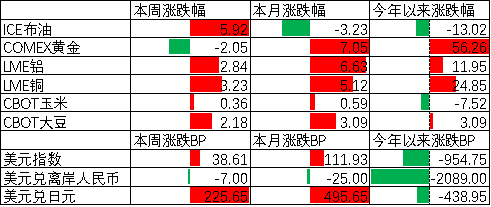
中信期货晨报:股债商小幅波动,贵金属延续调整-20251029
Zhong Xin Qi Huo· 2025-10-29 05:15
1. Report Industry Investment Rating - The report does not provide a specific industry investment rating [1][2][3][4][6][7][9] 2. Core Viewpoints of the Report - Short - term asset allocation should be balanced. After the Fed's interest rate cut decision in the October meeting, the progress of China - US tariff talks, and the release of details from the 20th Fourth Plenary Session, it is expected to benefit overseas and domestic equity sectors (especially the science and technology innovation sector) and non - ferrous metals. Black commodities may also have a rebound opportunity due to domestic policy improvement, while precious metals may continue to adjust in the short term [6] 3. Summary According to Relevant Catalogs 3.1 Macro Highlights - **Overseas Macro**: The US government shutdown continued this week. China - US tariff expectations eased, and the CPI in September was lower than expected, strengthening the expectation of monetary easing. Reasons include the lower - than - expected September CPI, the 12th rejection of the temporary budget bill by the Senate, the increased economic downward pressure after the government shutdown, and the easing of China - US tariff expectations [6] - **Domestic Macro**: On October 28, the "Proposal of the Central Committee of the Communist Party of China for Formulating the 15th Five - Year Plan for National Economic and Social Development" and its explanatory notes were released, emphasizing the strategic position of science and technology and emerging industries, and also covering areas such as boosting consumption, expanding effective investment, and "anti - involution" [6] - **Asset Views**: Short - term balanced allocation is recommended. After the Fed's interest rate cut decision, China - US tariff talks, and the release of details from the plenary session, equity sectors and non - ferrous metals may benefit, black commodities may rebound, and precious metals may continue to adjust [6] 3.2 Market Performance of Various Assets - **Financial Market**: Stock index futures showed a shrinking - volume rebound, with the growth style being active due to technology events. Stock index options had a slightly lower trading volume. Treasury bond futures remained weak [2][7] - **Precious Metals**: Gold and silver entered a short - term adjustment phase due to the easing of geopolitical and economic and trade tensions [7] - **Shipping**: The freight rate of the European container shipping line was under pressure as the peak season in the third quarter ended [7] - **Black Building Materials**: The steel industry faced policy disturbances and inventory pressure. Iron ore was mainly affected by sentiment. Coke's price increase was about to be implemented, and coking coal prices were strong. Other related products also had their own market characteristics [7] - **Non - ferrous Metals and New Materials**: Copper prices fell in the short term due to trade frictions. Aluminum prices rose, while zinc prices were weak. Other non - ferrous metals also showed different trends [7] - **Energy and Chemicals**: The energy and chemical industry still faced a weak supply - demand situation. Most products were expected to fluctuate, with some showing a downward trend [9] - **Agriculture**: The agricultural market showed a mixed trend. Some products were affected by factors such as weather, trade relations, and supply - demand [9]
全线跳水!全球股市,突然“降温”!发生了什么?
Zheng Quan Shi Bao Wang· 2025-10-28 12:21
Market Overview - Global risk assets experienced a pause in their upward momentum, with major stock indices in the Asia-Pacific region collectively declining, followed by a lower opening for European indices [1][2][3] - The decline in stock markets is attributed to short-term profit-taking after significant gains that led to historical highs on October 27 [1][3] Precious Metals Market - Gold and silver prices saw a substantial drop, with spot gold falling over 2% and briefly dipping below $3900 per ounce, while silver dropped nearly 2% [1][3] - Analysts from Heraeus indicated that the adjustment in precious metal prices could last for several months, although they expect a potential continuation of the upward trend if investor interest remains strong [4][5] Investment Demand for Gold - Despite recent price declines, global retail demand for gold remains robust, and the growth rate of gold holdings in ETFs has not shown significant decline, indicating sustained investor interest [5][6] - Analysts predict that the average gold price could rise to around $4560 per ounce next year, reflecting a 33% increase from the average price since the beginning of the year [6] Future Price Projections - Metals Focus analysts believe that ongoing economic uncertainty will continue to support gold prices, with trade policy and its global economic impact being key drivers [5][6] - Morgan Stanley's commodity strategy head anticipates that gold prices could exceed $5000 per ounce by the fourth quarter of 2026, driven by sustained demand from investors and central banks [6]
10月27日下午两点半,股债齐涨把握配置机会,加减仓提醒
Sou Hu Cai Jing· 2025-10-27 16:46
Core Viewpoint - The capital market experienced a rare phenomenon where both the stock market and bond market rose simultaneously, with the Shanghai Composite Index approaching the 4000-point mark while the 10-year government bond yield fell to 1.833% [1][35] Market Performance - The A-share indices all opened higher, with the ChiNext Index rising over 2% at one point [1] - The Shanghai Composite Index reached a high of 3998 points, just shy of the 4000-point threshold [9][35] - The trading volume in the stock market increased, with a total turnover exceeding 800 billion yuan, up 10% from the previous day [19] Bond Market Dynamics - The central bank conducted a 900 billion yuan MLF operation, resulting in a net injection of 200 billion yuan, marking the third consecutive week of large-scale liquidity provision [3] - The 10-year government bond yield fell by 1 basis point, while the futures market showed strong performance with the main contract rising by 0.08% [35] - The bond market displayed a mixed performance, with high-grade credit spreads narrowing while low-grade credit spreads remained elevated, indicating a cautious risk appetite [11][22] Investor Behavior - Insurance funds increased their allocation to government bonds, with one large insurance asset management company purchasing 10-year government bonds around 2.85% [7] - There was a notable divergence in institutional behavior, with broker proprietary accounts being net buyers while bank wealth management accounts were net sellers [5][20] - Foreign capital continued to flow into the A-share market, with net inflows exceeding 5 billion yuan for the fifth consecutive trading day, totaling over 20 billion yuan [13] Credit Market Insights - The primary market for credit bonds remained active, with three credit bonds issued today totaling 5 billion yuan, and one AAA-rated central enterprise bond issued at a rate 10 basis points lower than the secondary market [15] - The credit bond market showed significant differentiation, with high-grade credit bonds seeing increased demand while low-grade bonds faced selling pressure [31][26] Economic Outlook - Market analysts suggest that the current bond yield levels reflect many favorable factors, and further declines in yields may require new catalysts [13] - The upcoming economic data, including a potential rise in the manufacturing PMI to 49.5, may exert some pressure on the bond market, although current market performance appears to have absorbed this factor [29]

【UNforex财经事件】贸易缓和与降息预期共振 市场风险情绪显著升温
Sou Hu Cai Jing· 2025-10-27 10:00
Group 1 - The U.S. and China have reached a preliminary consensus on a trade framework, including a temporary pause on rare earth export controls, providing a more stable negotiation basis for upcoming leader meetings [1] - Market expectations suggest that some tariffs and restrictions may ease, leading to a rise in risk assets such as stocks and crude oil [1] - The U.S. September CPI data shows a year-on-year increase of 3.0% and a month-on-month rise of 0.3%, indicating a continued trend of slowing inflation, which enhances expectations for a more accommodative stance from the Federal Reserve in its October meeting [1] Group 2 - The market is shifting focus towards central bank actions, with upcoming meetings from the Federal Reserve and other central banks expected to influence the direction of the dollar and global assets [1] - If Fed Chair Powell hints at a faster easing path, the dollar may continue to decline, while a contrary signal could trigger adjustments in risk assets [1] - Gold prices have retreated from recent highs due to reduced safe-haven demand and profit-taking by some bulls, with spot gold dropping to around $4,072, nearly 1.2% lower than last week's peak [1] Group 3 - The dollar index remains volatile, with the USD/JPY breaking the 153 mark, indicating a recovery in risk appetite that pressures the yen [2] - The Canadian central bank's upcoming meeting is highly anticipated, with expectations of a 25 basis point rate cut to 2.25%, limiting the rebound potential of the Canadian dollar [2] - U.S. stock futures have risen by approximately 0.6%-1.1% in early European trading, driven by optimism from trade developments and rate cut expectations, suggesting further upside potential for the stock market [2] Group 4 - The market has transitioned from being driven by trade news to a phase of policy and capital dynamics, where the outcomes of the Federal Reserve's decisions and subsequent macro data will determine the sustainability of market trends [3] - Investors are advised to remain flexible in a high-volatility environment, closely monitoring capital flows and volatility changes to seize trading opportunities arising from shifts in market sentiment [3]
居民存款终于离开了银行,但没去消费、没有购房,甚至没流入实体
Sou Hu Cai Jing· 2025-10-26 06:15
Core Insights - The article discusses the paradox of rising household savings in China alongside declining demand for loans and housing, creating significant pressure on banks [1][3][4] Group 1: Deposit Trends - Household deposits increased by 11.28 trillion yuan in the first ten months of the year, but there was a sharp decline of 570 billion yuan in October alone, indicating a puzzling outflow of funds [3][4] - Despite the drop in deposit rates to historical lows, the outflow of funds has not significantly boosted consumer spending or real estate transactions [3][4][6] Group 2: Consumer Market and Real Estate - The consumer market remains sluggish, with no explosive growth in demand for sectors like automobiles and luxury goods, suggesting that the outflow of deposits has not translated into increased consumer spending [4][6] - The real estate market continues to see falling prices with no clear signs of recovery, leading to a lack of investment from household savings into property [6][12] Group 3: Investment Shifts - Many savers are turning to higher-yield financial products, with bank wealth management products offering expected returns of 2.92% compared to a mere 1.65% for one-year fixed deposits, indicating a shift towards more rational investment strategies [9][12] - The A-share market has seen a significant rise, with indices climbing from 2,700 to 3,400 points, attracting substantial capital inflows from households seeking better returns [11][13] Group 4: Mortgage Prepayment Trends - A trend of early mortgage repayment is emerging, as borrowers seek to refinance at lower rates, contributing to the outflow of household deposits from banks [12]

【UNforex本周总结】美联储宽松信号主导市场 多资产共振上涨
Sou Hu Cai Jing· 2025-10-25 07:47
Group 1 - The core CPI data for September showed a month-on-month increase of 0.2% and a year-on-year increase of 3%, both below market expectations, indicating a significant reduction in inflation pressure [1] - Following the CPI release, the market raised its bets on a Federal Reserve rate cut, with nearly 100% probability for a 25 basis point cut in October and 98.5% for another cut in December [1] - Despite inflation remaining above the 2% target, recent signals from officials suggest a cooling job market, leading to widespread belief that the Fed has sufficient reasons to initiate a rate cut cycle [1] Group 2 - The decline in inflation has boosted market optimism regarding a "rate cut + soft landing," with major U.S. stock indices rising strongly, and the Nasdaq reaching a historic high with an increase of over 1% [2] - Gold prices strengthened, with spot gold rising to $4,320 per ounce, reflecting both liquidity support from rate cut expectations and strong demand for safe-haven assets amid geopolitical risks [2] - The Japanese stock market surged under the new prime minister's expectations, with the Nikkei 225 index rising over 1,600 points, surpassing the 49,000 mark [2] Group 3 - Upcoming interest rate decisions from the Federal Reserve, European Central Bank, and Bank of Japan are anticipated to be significant market events, with Powell's post-meeting statements being key indicators for future policy direction [3] - The progress of U.S.-China trade negotiations is also under scrutiny; positive outcomes could enhance risk appetite, while friction could lead to renewed interest in safe-haven assets [3] - Overall, the cooling inflation and rate cut expectations create an optimistic market tone, but uncertainties from Japan's political changes, Middle East tensions, and trade talks may induce short-term volatility [3]
最近出圈的这类管理人,我们请来了
Sou Hu Cai Jing· 2025-10-23 11:13
Group 1: Macro Strategy Insights - The macro strategy management firms are focusing on global asset classes, particularly gold, in response to the current macroeconomic environment [1][2] - The classic risk parity model is employed by firms like 思达星汇, which allocates higher weights to low-volatility assets and utilizes a 70% allocation to a risk parity strategy for beta returns [1][8] - 远澜私募 uses a risk budget model to dynamically adjust asset allocations based on predefined thresholds, allowing for more flexibility compared to traditional risk parity approaches [8] Group 2: Gold Market Analysis - Gold is currently in a bullish trend due to expectations of a weaker US dollar and ongoing monetary easing, making it a preferred safe-haven asset [2][9] - The long-term outlook for gold remains positive, driven by its role as a substitute for US Treasuries, with central banks increasing their gold reserves [9] - The geopolitical instability and supportive monetary conditions are expected to sustain gold's upward trajectory over the next few years [2] Group 3: Stock Market Outlook - The global stock market is expected to perform well in a liquidity-friendly environment, with AI-driven industrial revolution still in its early stages [3][4] - The current fiscal expansion is likely to stimulate economic growth, supporting asset prices until a potential bubble phase is reached [3] - The focus for Q4 is on US and Hong Kong stocks, as fiscal and monetary stimuli are anticipated to be more pronounced [3] Group 4: Bond Market Dynamics - China's government bonds are expected to experience long-term fluctuations, with a low long-term yield relative to financing needs [5][11] - Short-term bonds are likely to benefit from the Fed's rate cuts, while long-term bonds may face upward price constraints due to inflation expectations [11][12] - The overall bond market strategy suggests holding short-term bonds while using long-term bonds for hedging [12] Group 5: Commodity Insights - Copper is identified as a commodity with strong support due to limited supply and increasing demand driven by technological advancements [10] - The overall macroeconomic cycle is viewed as transitioning from a period of recession to recovery, which will benefit commodities and equities [6] Group 6: Market Adjustments and Risk Management - Recent adjustments in gold allocations were made to mitigate volatility, with a reduction in gold exposure following significant price movements [7][14] - The use of risk alert models has facilitated quicker adjustments in asset positions, enhancing overall portfolio resilience [14]
博时基金2025年第四季度宏观策略报告:A股震荡上行,结构上建议均衡配置
Xin Lang Ji Jin· 2025-10-23 06:17
Market Overview - In Q3 2025, both domestic and international equity markets experienced overall growth, with notable increases in the ChiNext and STAR Market indices in China, and the Nasdaq and S&P 500 indices overseas [2] - The A-share market saw significant leadership from the technology TMT and advanced manufacturing sectors, with respective increases of 37.2% and 27.1% [2] - The trading logic for the market is influenced by reduced policy disturbances from the US government, alleviated growth and inflation concerns, and a favorable liquidity environment [2] Macro Analysis - The US economy is expected to grow by 1.8% in 2025, a decline from the previous three-year average of nearly 3%, but still away from recession [3] - The Federal Reserve's recent interest rate cuts are anticipated to improve financial conditions, supporting a narrative of economic resilience [4] - Domestic demand in China has weakened, with industrial output growth slowing and retail sales growth declining to 3.4% year-on-year by August [5] Asset Analysis - Bond yields have risen significantly in Q3, driven by pressures on the liability side, with long-term rates increasing more than short-term rates [8] - The bond market is expected to return to being driven by economic fundamentals after the release of liability pressures [8] - The current environment suggests a focus on mid-to-short-term high-yield bonds, while long-term opportunities remain uncertain [10] A-share Market - The A-share market has shown a strong upward trend, with the core focus on technology TMT and advanced manufacturing sectors [12] - By the end of Q3, the valuation metrics for the A-share market indicated a high level, with the PE ratio exceeding the three-year average by two standard deviations [12] - Profit expectations for Q4 are under pressure due to high base effects from the previous year [12] Currency and Policy Environment - The RMB has maintained a strong position in Q3, with expectations for continued strength influenced by domestic monetary policy adjustments [13] - The external liquidity environment is favorable for domestic equity markets, although potential volatility remains due to changes in high-risk preference funding [14] Investment Strategy - The investment strategy suggests an overweight in equities and a standard allocation to bonds, focusing on sectors with high growth potential such as AI and semiconductors [16] - The strategy emphasizes a balanced approach in asset allocation, particularly in light of the upcoming "15th Five-Year Plan" and the implications of recent quarterly reports [18] - The focus should remain on high-growth sectors while being cautious of potential volatility in previously high-performing areas [18]