
中游制造

Search documents
科技行情未完待续?双创板块2026年展望
Sou Hu Cai Jing· 2025-12-31 07:25
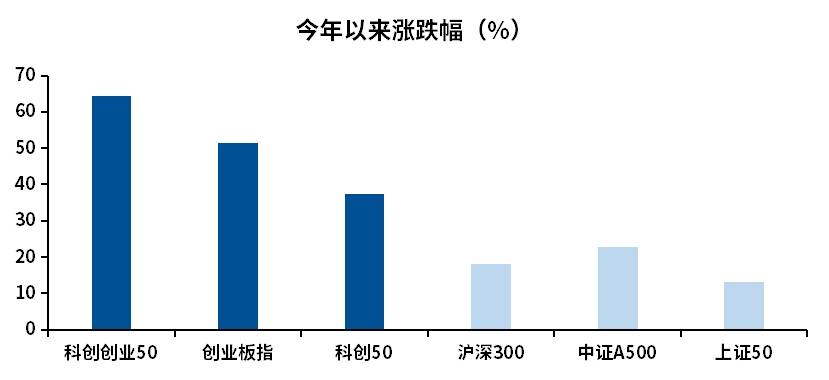
Group 1 - The core viewpoint of the article is that the dual innovation sector (Science and Technology Innovation Board + Growth Enterprise Market) has become a shining main line in the domestic market, with the Science and Technology Innovation 50 Index showing remarkable performance in 2025, and there are expectations for new opportunities in 2026 [1][8] Group 2 - In 2025, the dual innovation sector emerged as a core force driving the growth style of A-shares, with the Science and Technology Innovation 50 Index achieving an annual increase of 64.32%, significantly outperforming major indices like CSI 300 (18.21%) and CSI 500 (22.78%) [2][5] - The trading volume of the Science and Technology Innovation 50 Index increased by 120.68% compared to 2024, indicating strong market recognition of hard technology core assets [2][5] Group 3 - The excellent performance of the dual innovation sector in 2025 can be attributed to several factors: 1. An upward industrial cycle and improved profitability, with technology breakthroughs and performance landing in hard technology sectors creating a virtuous cycle [5] 2. A relatively loose funding environment, enhanced by the Federal Reserve's interest rate cuts, which increased risk appetite for growth-style investments [5] 3. Policy dividends supporting the deepening of the technology-driven national strategy, with the "14th Five-Year Plan" promoting self-reliance in technology benefiting key industries like semiconductors and AI [5][8] Group 4 - For 2026, the dual innovation sector is expected to benefit from a dual drive of policy and industrial upgrades, with key focus areas including: 1. The domestic substitution and profitability realization of the AI industry chain, driven by the continuous expansion of AI applications and increasing semiconductor demand [9] 2. Supply-demand optimization and profitability improvement in industries like photovoltaics and power batteries, as "anti-involution" policies aim to correct vicious competition and promote structural reforms [12] Group 5 - The Science and Technology Innovation 50 Index, which includes 50 major strategic emerging companies from the Science and Technology Innovation Board and Growth Enterprise Market, covers nearly 90% of the electronic, power equipment, pharmaceutical, and communication sectors, providing a balanced exposure to core growth sectors [13] - The E Fund Science and Technology Innovation ETF (159781) is highlighted as a convenient tool for investors to track the index performance and capture the benefits of new productive forces and technological advancements, with a current scale of 11.99 billion [13]

基金经理投资笔记 | 2026年资产配置的基准线
Jin Rong Jie· 2025-12-24 22:37
Core Viewpoint - The article discusses the macroeconomic strategies for asset allocation in 2026, emphasizing the importance of understanding economic cycles and the need for wealth management upgrades. The proposed strategy focuses on "risk premium decline, profit increase, and structural differentiation" as a framework for investment decisions [1][2]. Growth Factors - The expected GDP growth rate for China in 2026 is projected at 4.9% for real GDP and 5.2% for nominal GDP, indicating a moderate recovery characterized by a "stable real and rising nominal" trend. This recovery is supported by proactive fiscal policies and monetary easing, which bolster infrastructure and foster new productive capacities [3]. - Corporate profitability is anticipated to improve, with industrial profit margins expected to rise to 5.8%-6.0% and return on equity (ROE) for listed companies increasing to 9.5%-10%. This improvement is driven by supply-side reforms and a recovery in pricing power [4][5]. Inflation Factors - The Consumer Price Index (CPI) is expected to rise moderately to a central value of 0.5% in 2026, while the Producer Price Index (PPI) is projected to turn positive in the third quarter, with an annual average of -0.4%. This reflects a weak recovery in consumption and a gradual alleviation of production pressures [6]. Liquidity Factors - The 10-year government bond yield is expected to remain low, with a "low first, high later" trend. The Loan Prime Rate (LPR) is likely to be reduced by 10 basis points, aligning with growth stabilization policies while avoiding excessive pressure on bank profitability [7]. - The expected range for the USD/CNY exchange rate in 2026 is between 6.80 and 7.15, indicating a "first rise, then stabilize" pattern influenced by U.S. Federal Reserve rate cuts and improved foreign exchange supply-demand dynamics [7]. Asset Allocation Recommendations - Equity assets are likely to enter a "profit-driven" golden period, with a focus on new productive capacities and cyclical goods benefiting from PPI recovery expectations. This shift represents a significant change in risk asset pricing [10]. - The bond market is expected to exhibit "low volatility and narrow fluctuations," with a balanced approach to liquidity and yield. The reduction in LPR is favorable for high-rated credit bonds [10]. - Indirect investment tools such as wealth management products and funds are expected to benefit from the "residential savings migration," serving as a transitional option for conservative investors [10]. - The attractiveness of RMB-denominated assets is expected to increase, suggesting a moderate allocation to RMB-denominated equities and bonds to mitigate single currency risks [11].

华创张瑜:2026年将是中国股市配置价值觉醒元年,中游制造是最确定方向 | Alpha峰会
Hua Er Jie Jian Wen· 2025-12-24 07:16
Core Viewpoint - The year 2026 is anticipated to be a pivotal year for the awakening of value in China's capital market, moving towards a low-volatility and high-Sharpe ratio investment phase [1][6][26]. Economic Outlook - China's economy is expected to emerge from its low point and enter a recovery phase, with exports remaining a key support for macroeconomic performance in 2026 [1][30]. - Despite overall external demand pressure, China's manufacturing competitiveness remains intact, particularly in the midstream sector, which is expected to show resilience in exports [1][30]. - CPI is likely to trend positively, with a high certainty of turning positive, reflecting the ongoing recovery in domestic demand [1][30][33]. - PPI is expected to show an upward trend, but its year-on-year positive growth needs to be verified in the second quarter [1][30][37]. Policy Perspective - Macro policies are shifting away from "extraordinary" measures, focusing instead on stabilizing expectations and supporting economic operations [2][26]. - The emphasis will be on sustainable policy adjustments rather than large-scale stimulus, with a focus on balancing short-term and long-term goals [2][27]. Asset Allocation Insights - In 2026, a "dual bull market" in stocks and bonds is unlikely; the focus will be on asymmetric volatility between the two asset classes [2][5]. - Investors are encouraged to consider undervalued, high-dividend sectors for allocation, while speculative funds should target industries with high capacity utilization and limited capital expenditure [2][5]. Sector-Specific Analysis - The midstream manufacturing sector is identified as the most certain area of prosperity for 2026, supported by enhanced export competitiveness and the implementation of anti-involution policies [5][30]. - The return on equity (ROE) in midstream manufacturing is expected to stabilize and improve, with PPI year-on-year growth anticipated to stop declining in the first half of the year [5][30]. Market Dynamics - The trend of residents moving their savings into financial assets is expected to continue, although risk appetite may not rise rapidly [2][5]. - The stock market's trading volume is projected to remain high but may not see significant increases compared to previous years [2][5]. Price Trends - The housing market's recovery is contingent on mortgage rates being lower than rental yields, which is a critical condition for stabilizing property prices [5][40]. - The relationship between mortgage rates and rental yields is highlighted as a key indicator for predicting housing price stabilization [5][40].

A股盈利的四个宏观线索
Huachuang Securities· 2025-12-18 07:31
Group 1: Profitability Insights - The ROE of the entire A-share market (excluding finance and oil) increased from 6.32% in mid-2025 to 6.37% by Q3 2025, primarily driven by improved sales net profit margins due to effective cost control[3] - Sales net profit margin rose from 4.65% to 4.69%, indicating effective cost management despite a decline in gross profit margin from 17.73% to 17.48%[13] - Asset turnover improved slightly from 56.21% to 56.37%, reflecting enhanced operational efficiency[28] Group 2: Supply and Demand Dynamics - Among 17 industries, 10 are experiencing low capacity utilization and low capital expenditure/depreciation, indicating a poor current supply-demand balance but potential for future improvement[4] - Over two-thirds of industries have capacity utilization below historical medians, highlighting persistent demand weakness in the economy[41] Group 3: Valuation and Dividend Trends - In the past year, 24 out of 33 industries exhibited a trend of rising valuations and declining dividends, suggesting a marginal increase in market risk appetite[5] - The report identifies industries with high valuations and low dividends as needing caution, while those with low valuations and high dividends are seen as having better risk-reward profiles[53] Group 4: Dynamic Transmission of Profitability - Historical data shows that improvements in ROE and asset turnover typically lead capital expenditure by six months to a year, indicating a lag in investment response to profitability improvements[6] - Midstream manufacturing and upstream construction materials show a one-year lead of ROE over capital expenditure, while downstream goods show a six-month lead[64]
张瑜:摆脱“超常规”——六句话学习中央经济工作会议
Xin Lang Cai Jing· 2025-12-12 00:35
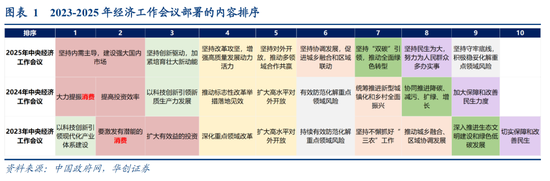
Group 1 - The external environment is assessed positively, with exports growing by 5.4% from January to November, indicating resilience against external shocks [1][13] - The upcoming year is expected to maintain high export growth due to dual resilience in market share and external demand [1][13] Group 2 - The policy approach is shifting from extraordinary measures to more conventional methods, emphasizing the effectiveness of existing policies rather than relying on new incremental policies [2][14] - The overall economic cycle has improved, with indicators like M1 and corporate deposits showing recovery, suggesting a gradual move away from extraordinary policy dependence [2][14] Group 3 - Risk management pressure has decreased, with significant risks in real estate and hidden debts being largely controlled, allowing the government to focus on other areas like reform and opening up [3][15] Group 4 - Fiscal support is expected to decrease, with budget growth rates for 2023-2025 set at 3.3%, 5.1%, and 5.1%, respectively, aligning closely with economic targets [4][5][16] - The fiscal deficit is projected to remain around 4% in 2026, indicating a stabilization rather than an increase in fiscal deficit rates [5][17] Group 5 - The economy is facing a supply-demand imbalance, with strong supply but weak demand, leading to challenges in domestic consumption and employment [6][18] - The nominal GDP growth is anticipated to rise from 4.0% in 2025 to approximately 4.5% in 2026, with CPI expected at around 0.7% and PPI at -1.4% [6][18] Group 6 - The midstream manufacturing sector is expected to be the most stable and promising area, benefiting from external demand resilience and domestic supply constraints [7][19]
张瑜:摆脱“超常规”——六句话学习中央经济工作会议
一瑜中的· 2025-12-11 16:03
Group 1 - The external environment is showing signs of improvement, with exports maintaining a growth rate of 5.4% from January to November, indicating resilience in external demand [2] - The government is shifting from extraordinary to more conventional counter-cyclical policies, emphasizing the effectiveness of existing policies rather than relying on new stimulus measures [3] - Risk management pressures have eased, with significant risks in real estate and hidden debts being largely controlled, allowing the government to focus on other areas such as reform and opening up [4] Group 2 - Fiscal support may see a reduction, with projected budget growth rates for 2023-2025 at 3.3%, 5.1%, and 5.1%, aligning closely with economic targets [6] - The fiscal deficit is expected to remain around 4% in 2026, indicating a stabilization rather than an increase in deficit levels [7] - The economy is transitioning from a state of insufficient demand to a situation characterized by strong supply but weak demand, with a focus on resolving these issues through supply-side measures [8] Group 3 - The midstream manufacturing sector is expected to remain the most stable and promising area, benefiting from resilient external demand and domestic supply constraints [10]

张瑜:最确定的景气在哪? ——张瑜旬度会议纪要No.127
Xin Lang Cai Jing· 2025-12-04 23:04
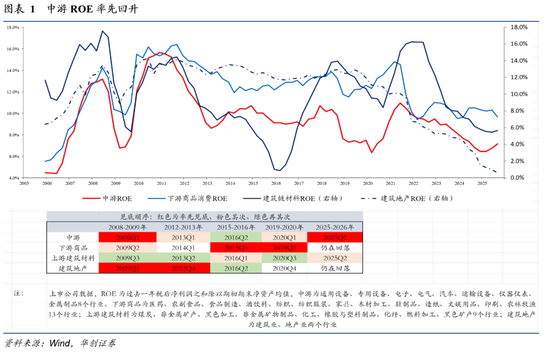
Group 1 - The article discusses the current economic environment characterized by a policy-intensive period and an upcoming data vacuum period, which is expected to lead to increased market activity [1][10] - The policy-intensive phase will begin in December with key meetings, including the Political Bureau meeting and the Central Economic Work Conference, followed by various ministerial meetings [1][10] - The data vacuum period in January and February will lack significant economic data, which historically leads to market volatility and increased activity [1][10] Group 2 - The analysis identifies three macroeconomic divergences: the divergence between export price index and domestic PPI, the contrasting performance of exports and real estate, and the stock market's reliance on valuation rather than earnings growth [2][11] - The core judgment is that the most certain economic growth is likely to be found in the midstream manufacturing sector over the next 3-6 months, supported by four new changes in this sector [3][12] - Midstream manufacturing has seen a reversal in profit dynamics, with overseas gross margins now significantly higher than domestic margins, indicating a shift in profit cycles [3][12] Group 3 - The stability of export demand is a key support for midstream manufacturing, with expectations of a continued rise in global industrial production over the next six months [6][15] - Key categories within high-tech and mechanical exports, such as information technology products, ships, and automobiles, are showing stable demand, further supporting the outlook for midstream manufacturing [6][15] - The current cycle is unique, as midstream manufacturing can rely on overseas markets for profit recovery, with expectations that prices in this sector may rebound sooner than the overall PPI [7][16]
张瑜:最确定的景气在哪? ——张瑜旬度会议纪要No.127
一瑜中的· 2025-12-04 16:04
Group 1 - The article discusses the current economic landscape, highlighting a "policy intensive period" followed by a "data vacuum period" in the upcoming months [2][3] - The first phase involves a series of important policy meetings starting in December, including the Political Bureau meeting and the Central Economic Work Conference, which will accelerate policy implementation [2] - The second phase will see a lack of key economic data, leading to increased market activity but uncertainty about the economic outlook [3] Group 2 - The article identifies three major macroeconomic divergences: the divergence between export price index and domestic PPI, the contrasting performance of exports and real estate, and the stock market's reliance on valuation rather than earnings growth [4] - The core judgment is that the most certain economic recovery is likely to occur in the midstream manufacturing sector over the next 3-6 months, supported by four key changes in this sector [5] Group 3 - The four changes in midstream manufacturing include: a recovery in ROE for midstream manufacturers, overseas gross margins surpassing domestic margins, a significant proportion of overseas gross margins in midstream manufacturing, and the ongoing technological wave benefiting certain sectors [5][11] - The stability of midstream manufacturing is supported by two main factors: the stability of export demand and the robust performance of key product categories such as high-tech machinery and electronics [11][12] - The article concludes that the current cycle is unique, with midstream manufacturing potentially benefiting from overseas markets, leading to an independent recovery in profits and prices [12]

美国进一步信用宽松,中国市场大盘价值占优——产业经济周观点-20251130
Huafu Securities· 2025-11-30 12:30
Group 1 - The report indicates that the US is experiencing further short-term credit easing, but long-term resistance is expected to increase [2][3] - The driving force behind China's price recovery is strengthening, with greater momentum for RMB appreciation as US credit easing continues [3][8] - If the US maintains its credit easing, it may lead to increased inflationary pressures overseas, favoring large-cap value stocks in the Chinese market [3][8] Group 2 - The report highlights a significant decline in the Hong Kong stock market, with the Hang Seng Technology Index dropping by 5.23% in November [11] - The industrial profits in China showed a year-on-year decline of 5.5% in October, down 27.1 percentage points from September, indicating a challenging economic environment [8] - The report notes that while most sectors declined, consumer sectors showed resilience, with specific industries like fisheries and steel raw materials outperforming [28][32]
牛市还在吗,如何应对市场下跌?
雪球· 2025-11-21 13:01
Core Viewpoint - The article discusses the current phase of the A-share market, analyzing it through the lens of the classic bull market three-stage theory, and emphasizes the importance of balancing offensive and defensive strategies in investment as the market transitions from valuation recovery to performance-driven growth [4][6][25]. Group 1: Bull Market Phases - The bull market is divided into three stages: valuation recovery, performance-driven growth, and emotional-driven bubble [6][7]. - The first stage, characterized by policy shifts and risk appetite recovery, has been completed as of October 2024, with the market returning to historical valuation levels [7][9]. - The second stage, currently in progress, focuses on performance verification, with A-share companies' profits growing by 5.4% year-on-year in the first three quarters of 2025, and significant growth in sectors like TMT and manufacturing [9][10]. Group 2: Sector Performance - The TMT sector showed strong performance, with electronic profits up 45.3% year-on-year, and AI-related indices seeing profits increase by 83.3% [10]. - The midstream manufacturing sector also performed well, with profits in the power equipment and new energy sectors growing by 52.5% [10]. - The energy and materials sector benefited from policy changes, with industrial metals and precious metals seeing profit increases of 45.2% and 58.7%, respectively [10]. Group 3: Market Dynamics and Strategy - The current market dynamics suggest a need for a balanced strategy, moving from an aggressive "only attack" approach to a more defensive "balance attack and defense" strategy [18][25]. - A suggested allocation strategy includes maintaining a 50% equity position, diversifying across growth, stable, high-dividend, and cyclical sectors to mitigate risks [19][20]. - The article warns that if the market enters the third phase characterized by bubble-like valuations and extreme market sentiment, a shift to a defensive strategy will be necessary [22][23]. Group 4: Long-term Considerations - The article highlights the importance of sustainable performance growth, questioning whether the current high growth in tech stocks can be maintained amid macroeconomic challenges [13][14]. - It draws parallels with the U.S. market's slow bull experience, emphasizing the need for solid earnings support for a sustainable bull market [14]. - The article concludes that for the A-share market to transition into a long-term bull market, several factors, including macroeconomic stability and improved corporate governance, must be addressed [16][25].
