
通信

Search documents
孟晚舟华为年报致辞:坚持开源开放,繁荣产业生态
凤凰网财经· 2026-03-31 15:37
Core Viewpoint - Huawei's 2025 annual report indicates a stable business performance with a global sales revenue of 880.9 billion RMB and a net profit of 68 billion RMB, marking the second-highest revenue in the company's history [2][4]. Group 1: Revenue and Business Performance - Huawei's overall revenue for 2025 reached 880.9 billion RMB, showing a year-on-year growth of 2.2% [2][4]. - The revenue breakdown by business segments includes: - ICT Infrastructure: 375.014 billion RMB, up 2.6% - Terminal Business: 344.473 billion RMB, up 1.6% - Digital Energy: 77.312 billion RMB, up 12.7% - Intelligent Automotive Solutions: 45.018 billion RMB, up 72.1% [5][6]. - The intelligent automotive solutions business achieved significant growth and profitability, with a revenue increase of over 70% [7]. Group 2: Strategic Focus and R&D Investment - Huawei emphasizes strategic focus on four main pillars: strategic focus, battlefield transformation, open-source collaboration, and quality-driven success [2][6]. - The company invested 192.3 billion RMB in R&D in 2025, accounting for 21.8% of total sales revenue, with cumulative R&D investment exceeding 1.382 trillion RMB over the past decade [8][9]. Group 3: Ecosystem Development - The Harmony ecosystem has crossed a critical threshold, with over 10 million developers and more than 36 million devices running Harmony 5.0 by the end of 2025 [9][10]. - The Ascend ecosystem has developed over 3,000 partners and 4 million developers, while the Kunpeng ecosystem has over 6,800 partners and 3.8 million developers [10][26]. Group 4: Future Outlook - Huawei plans to strengthen its core ecosystem in 2026, focusing on enhancing developer tools and services to improve the Harmony ecosystem experience [28]. - The company aims to maintain strategic focus and high-quality development, ensuring that quality remains the foundation of its survival and growth [29][30].


华为2025年年报出炉!汪涛将当值轮值董事长
证券时报· 2026-03-31 13:55
Core Viewpoint - Huawei has announced its 2025 annual report, showcasing significant growth in sales revenue and net profit, alongside a leadership transition with Wang Tao serving as the rotating chairman for the first time [6][2]. Financial Performance - In 2025, Huawei achieved global sales revenue of 880.9 billion RMB (approximately 126 billion USD), a 2.2% increase from 862.1 billion RMB in 2024 [6][7]. - The net profit for 2025 was reported at 68 billion RMB, up from 62.6 billion RMB in 2024 [6][7]. - Operating profit reached 96.9 billion RMB, with an operating profit margin of 11.0% [7]. Business Segments - The ICT infrastructure business generated sales of 375 billion RMB, a 2.6% increase year-on-year [8]. - The terminal business saw sales of 344.5 billion RMB, reflecting a 1.6% growth [8]. - The digital energy business reported a 12.7% increase in sales to 77.3 billion RMB [8]. - The intelligent automotive solutions business experienced a remarkable 72.1% growth, reaching 45.0 billion RMB [8]. - Conversely, the cloud computing business declined by 3.5% to 32.2 billion RMB, and other business segments saw a significant drop of 76.4% [8]. Research and Development - Huawei's R&D investment for 2025 was 192.3 billion RMB, accounting for 21.8% of total revenue, with cumulative R&D spending exceeding 1.38 trillion RMB over the past decade [8]. - As of December 31, 2025, the company employed approximately 114,000 R&D staff, making up 53.7% of its total workforce [8].
股指二季度观点:地缘定价从混沌到清晰-20260331
Dong Zheng Qi Huo· 2026-03-31 08:44
1. Report Industry Investment Rating - Not provided in the given content 2. Core Viewpoints of the Report - The geopolitical pricing in the second quarter of the stock index has changed from chaos to clarity. The Middle - East situation is becoming more complex, and the war situation will affect the fundamentals of equity assets. It is expected that the US and Iran will go through a process of "war expansion - negotiation and compromise" in the second quarter. A - shares may experience a V - shaped trend in the second quarter. In the short term, the A - share bull market is tested, but in the medium term, the technology industry represented by artificial intelligence is still the main line of the A - share bull market. It is recommended to go long on the IM futures with higher technology content on dips [92] - High oil prices will lead to an increase in global energy and trade costs, and have an impact on China's imports and exports, inflation, and economic growth. The PPI and CPI are expected to rise, and the global economic growth is predicted to decline [21][53][67] - The Chinese government is taking measures to expand domestic demand and promote economic structural adjustment, such as increasing investment in infrastructure and adjusting policies on consumption and investment [79] 3. Summary by Related Catalogs 3.1 China - Iran and China - Persian Gulf Seven - Country Trade - Iran's direct trade volume with China is small, with a trade surplus of less than $4 billion. After the US sanctions in 2018, the direct trade between China and Iran decreased [5] - China's exports to the eight countries including Iran and the seven Persian - Gulf countries have been increasing in the past five years. In 2025, the total export amount to the eight countries was $169.27 billion, accounting for 4.3%. China's imports from the seven Persian - Gulf countries accounted for 6.1% of the total imports, and the trade deficit turned positive in 2025, reaching $5.7 billion [6][16] - If trade with the seven Persian - Gulf countries is interrupted, China's exports will decrease by 4.3% and imports by 6.1%. China's import dependence on these countries is mainly concentrated in crude oil, natural gas, chemical raw materials, and plastic products, and some products have a share of over 20%. The export of carpets, textiles, motor vehicles, steel products, and electromechanical products may be damaged [25][29] 3.2 Energy and Market Impact - The Strait of Hormuz is crucial for China. About 200 - 210 million barrels of crude oil pass through it every day, accounting for about 20% of the world's seaborne oil. The liquefied natural gas transportation accounts for about 20% of the world, and the methanol transportation accounts for about 35% of the world. The closure of the strait will lead to an increase in global energy and trade costs [21] - Crude oil accounts for 18.2% of China's total energy consumption, and the external dependence is about 72%. The crude oil imported from the seven Persian - Gulf countries accounts for about 40% of the total imported crude oil. China's oil reserves can support about 100 days. If the war persists and the strait is blocked, it will impact the economic growth [34] - Before the US - Iran war, the global equity assets were in a bull market. After the war, the global risk assets were under pressure, and the stock markets generally declined. In March, only the energy and mineral sectors rose, while the technology stocks and HALO assets fell significantly [38][46] 3.3 A - share Market Performance - In March, A - shares fell in line with the global stock markets. The rising sectors include energy (coal, power utilities, and new energy), defense (banks, public utilities), and AI infrastructure (communications). The falling sectors are mainly HALO heavy - hitters such as non - ferrous metals, steel, and building materials, concept stocks such as military industry, and technology stocks such as media and computer [49] - At the tertiary industry level, coal chemical industry, lithium batteries, new energy power generation, and optical communications performed well [50] 3.4 Inflation and Economic Growth - The increase in oil prices has led to an unexpected rise in PPI and CPI. In March, the PPI is expected to approach 0 year - on - year, turn positive in the second quarter, and the annual central level will rise to about 0.5%, 1.5% higher than the initial forecast. The CPI is expected to rise to about 1%, 1% higher than the initial forecast [60] - China's exports increased significantly in the first two months, but the impact of the US - Israel - Iran conflict on the global economy will be apparent from the second quarter. The OECD estimated in March that the GDP growth rate in the four quarters of this year will decline by 0.12, 0.23, 0.31, and 0.33 percentage points respectively compared with the February forecast [67] - China's economic growth is more dependent on foreign trade, and domestic demand is weak. The fiscal stimulus in 2026 is limited, and the incremental content is mainly in policy - based financial instruments and special funds for expanding domestic demand [72] 3.5 Policy and Industry Development - The government's work report in 2026 emphasizes building a strong domestic market, with a re - balance between consumption and investment, and an increase in support for fixed - asset investment. The positions of rural revitalization, new urbanization, and improving people's livelihood are advanced [79][80] - The National Development and Reform Commission will invest more than 7 trillion yuan in "six networks" and key areas this year, and the scale of artificial - intelligence - related industries will exceed 10 trillion yuan by the end of the 15th Five - Year Plan. The Ministry of Commerce focuses on service consumption, the central bank focuses on supporting domestic demand, innovation, and small and medium - sized enterprises, and the Ministry of Finance provides loan interest subsidies for individuals and enterprises [84] - Although the valuation of technology stocks is still high, their structure is relatively healthy after the profit upward revision and valuation downward revision in the fourth quarter of last year. The non - technology stocks have relatively mild changes in valuation and profit. The policy support for the technology industry is obvious [91]
每日报告精选-20260331
GUOTAI HAITONG SECURITIES· 2026-03-31 08:01
Group 1: Aerospace Industry Insights - The successful launch of the "Li Jian No. 2" rocket enhances China's payload capacity, with a 12-ton capacity for low Earth orbit and 8 tons for sun-synchronous orbit[6] - The rocket features a core diameter of 3.35 meters, a total length of 53 meters, and a launch weight of 625 tons, with a thrust of 753 tons[6] - The commercial aerospace industry is expected to accelerate during the 14th Five-Year Plan, focusing on technologies like reusable rockets and satellite internet[7] Group 2: Insurance Sector Performance - The insurance industry reported a total premium income of CNY 16,422 billion in January-February 2026, reflecting an 8.4% year-on-year growth[14] - Life insurance premiums reached CNY 13,108 billion, up 9.7% year-on-year, driven by strong demand during the "opening red" period[14] - Non-auto insurance premiums increased by 7.0%, while auto insurance premiums decreased by 0.9%[15] Group 3: Market Trends and Recommendations - The insurance sector is expected to see valuation recovery due to strong demand for savings products and stable long-term interest rates[17] - Recommended stocks include China Ping An, China Taiping, and New China Life, reflecting a positive outlook for the insurance sector[17] - The aerospace industry is advised to focus on companies involved in satellite internet and commercial space launches, with recommended stocks including Aerospace Electronics and Xi'an Huada[7]
流动性、交易拥挤度、投资者温度计周报:自媒体A股搜索热度创今年以来新高-20260331
Huachuang Securities· 2026-03-31 06:09
Group 1: Liquidity and Capital Flow - The supply side of equity public offerings remains at a historically high level, with new fund issuance at 110 billion yuan, maintaining an 81% percentile over the past three years[6] - Margin financing net inflow decreased to -247.2 billion yuan, placing it in the 7% percentile over the past three years[11] - Southbound capital net inflow increased to 223.2 billion yuan, reaching the 72% percentile historically[38] Group 2: Trading Activity and Market Sentiment - Trading heat in the light industry sector rose by 13 percentage points to 38%, while the construction materials sector fell by 16 percentage points to 53%[44] - The search interest for A-shares on social media reached a new high for the year, driven by a 3.6% drop in the Shanghai Composite Index on March 23[2] - Retail investor net inflow decreased to 1200.5 billion yuan, down 610.2 billion yuan from the previous value, representing the 67.8% percentile over the past five years[2] Group 3: Stock Buybacks and Financing - The total amount of stock buybacks last week was 20.9 billion yuan, up from 9.8 billion yuan, placing it in the 59% percentile historically[23] - Equity financing amounted to 121.3 billion yuan, with IPOs contributing 45.8 billion yuan and refinancing 75.5 billion yuan, at the 58% percentile historically[26] Group 4: Investor Behavior - The number of individual investors participating in margin trading reached 8.071 million, with daily active participants decreasing by 45,000 from the previous value[14] - The overall margin trading turnover rate last week was 36.2%, down from 38.7%, placing it in the 68% percentile historically[14]
2026年4月A股及港股月度金股组合:把握布局机遇-20260331
EBSCN· 2026-03-31 05:46
Overall Research - In March, both A-shares and Hong Kong stocks experienced a general pullback, with significant differentiation across sectors. The A-share market saw the ChiNext index decline by 0.4%, while the Sci-Tech 50 index fell by 12.6%. In Hong Kong, the Hang Seng China Enterprises Index dropped by 4.6%, and the Hang Seng Index fell by 6.3% [1][2]. A-share Insights - Chinese assets are expected to show internal stability and potential for mid-term upward movement. Despite facing short-term risks from oil price fluctuations and declining risk appetite, the domestic market's high energy self-sufficiency provides some resistance to rising external energy prices. Historically, domestic exports tend to benefit from increased external uncertainties, indicating a stable supply chain [1]. Sector Recommendations - Focus on sectors that have previously experienced significant declines, those benefiting from rising commodity prices, and industries with potential for exceeding performance expectations. The report highlights resource products, essential consumption, hard technology, and government investment-related sectors as key areas of interest [2]. Hong Kong Market Insights - The Hong Kong market is positioned for resilience, with the OpenClaw framework redefining the AI industry narrative. The performance of leading AI companies in the US, such as Nvidia and Google, supports a robust fundamental backdrop for a rebound in Hong Kong stocks. The market is experiencing a convergence of three favorable factors: clear industry prosperity, improving sentiment as geopolitical concerns ease, and strong capital support, with net inflows of 63.2 billion HKD as of March 27 [3]. Investment Focus - The report recommends prioritizing investments in the technology sector, particularly through Hong Kong technology ETFs, to capitalize on the overall rebound. Specific focus should be on companies that are rapidly commercializing AI and have stable cash flows and low valuations [3]. A-share Stock Recommendations - The recommended A-share stocks for April 2026 include: - Zhongji Xuchuang (中际旭创) - Communication - Teruid (特锐德) - Power Equipment - Jereh (杰瑞股份) - Machinery - Nanjing Bank (南京银行) - Banking - Zijin Mining (紫金矿业) - Non-ferrous Metals - China Petroleum (中国石油) - Oil and Petrochemicals - China National Offshore Oil Corporation (中国海油) - Oil and Petrochemicals - Jinjiang Hotels (锦江酒店) - Social Services - Huaneng International (华能国际) - Utilities - Haier Smart Home (海尔智家) - Home Appliances [4][6]. Hong Kong Stock Recommendations - The recommended Hong Kong stocks for April 2026 include: - Hon Teng Precision (鸿腾精密) - Communication - Huiju Technology (汇聚科技) - Power Equipment - Alibaba (阿里巴巴-W) - Retail [4][7].





银泰证券鑫新闻:研究所日报-20260331
Yintai Securities· 2026-03-31 03:05
Regulatory Environment - The Market Regulation Administration has issued a notice to combat "involution" competition in key industries such as platform economy, photovoltaic, lithium batteries, and new energy vehicles[2] - The Ministry of Finance has announced plans to accelerate the development of local additional tax laws for 2026, marking the first official mention of such legislation[2] Market Performance - On Monday, A-shares experienced a slight decline, with the CSI 300 index down 0.24%, while small-cap indices like the CSI 2000 and CSI 1000 rose by 0.37% and 0.28% respectively[3] - The total market turnover was approximately 1.93 trillion yuan, an increase of 637 billion yuan from the previous trading day[3] Sector Analysis - The leading sectors included non-ferrous metals (+1.84%), building materials (+1.67%), and telecommunications (+1.31%), while utilities (-2.97%) and household appliances also saw significant declines[3] - The A-share market's total market capitalization reached 109.73 trillion yuan, with a year-to-date increase of 0.98 trillion yuan[15] Global Market Context - Major global indices showed mixed results, with European markets rising and the UK FTSE 100 gaining 1.61%, while the US markets, including the Nasdaq and S&P 500, experienced declines of 0.36% and 0.39% respectively[3] - The US dollar index rose by 0.33% to 100.51, and the offshore RMB appreciated slightly to 6.9164 against the dollar[12] Economic Outlook - Goldman Sachs has slightly downgraded the fair value of Chinese stocks by approximately 5% due to the impact of high energy prices and geopolitical risks, while maintaining an overweight view on the market[7] - The forecast for China's GDP growth in 2026 has been adjusted down by 20 basis points, reflecting a more resilient position compared to the US and other emerging markets[7] Investment Trends - There is a growing interest in sectors with high cash/dividend returns and earnings realization during uncertain market conditions, with expectations for A/H share profit growth to reach low double digits in 2026[9] - Signs indicate that international capital may be flowing into Hong Kong, as evidenced by a drop in interbank rates and increased trading volumes post-conflict[8]
万联晨会-20260331
Wanlian Securities· 2026-03-31 01:54
Market Overview - The A-share market showed signs of recovery with the Shanghai Composite Index rising by 0.24% to 3923.29 points, while the Shenzhen Component Index fell by 0.25% and the ChiNext Index dropped by 0.68% [1][7] - The total trading volume in the Shanghai and Shenzhen markets reached 1.92 trillion yuan [1][7] - In the Shenwan industry sectors, non-ferrous metals, building materials, and communications led the gains, while utilities, home appliances, and power equipment lagged [1][7] - The Hong Kong Hang Seng Index fell by 0.81% to 24750.79 points, marking a new low since April of the previous year [1][7] Important News - The Ministry of Transport and other departments released the "Smart Shipping 2030 Action Plan," aiming for deep integration of AI in the shipping industry by 2027, including the establishment of over three smart shipping pilot areas and the operation of more than 100 smart vessels [2][8] - The World Data Organization was established in Beijing with over 200 member institutions, focusing on promoting data development and governance practices [2][8] Investment Insights - The A-share market sentiment weakened due to geopolitical risks, but there was a recovery in sentiment towards the end of March, driven by fluctuations in commodity prices and strong performance in energy and green electricity sectors [9][10] - The industrial profit data for February showed a significant recovery, with profits rising by 15.2% year-on-year, indicating a strong start to the year for industrial enterprises [12] - The communication industry is focusing on the upgrade of optical modules and advanced cooling technologies, with policies supporting the development of AI server supply chains [15][16] - The concept of "Token" was introduced as a key element in the AI economy, with a significant increase in its usage projected over the next few years [19][20] Industry Dynamics - The lithium battery industry is experiencing a recovery in demand, with rising prices for lithium carbonate and other materials, indicating a positive outlook for the sector [26][29] - The humanoid robot sector is gaining traction, with Amazon's acquisition of Fauna Robotics marking a significant entry into the market, highlighting the potential for growth driven by aging populations and rising labor costs [22][25] - The semiconductor industry is seeing price increases for CPUs due to high demand for AI computing power, suggesting a robust growth trajectory for related sectors [31][32]
价量一致性和RSI信号本周同步转空,市场情绪指标进一步回落——量化择时周报20260329
申万宏源金工· 2026-03-31 01:02
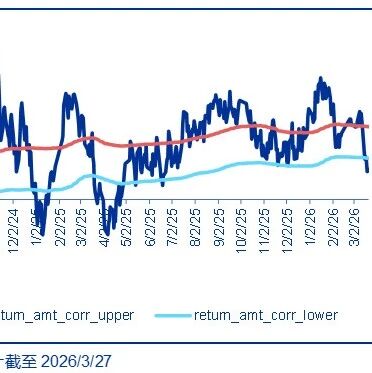
Market Sentiment - The market sentiment indicator as of March 27 is 1.2, down from 1.7 the previous week, indicating a bearish outlook as sentiment continues to decline throughout the week [1][6]. - The price-volume consistency indicator and RSI have both turned negative this week, reflecting a shift from previous oscillation to a sustained bearish view, indicating a weakening market [1][8]. Trading Volume - The total trading volume for the A-share market decreased by 0.65% week-on-week, with an average daily trading volume of 1,394.17 billion yuan, suggesting a slight decline in market activity compared to the previous week [1][10]. Industry Performance - As of March 27, the short-term score rankings for industries show that utilities, coal, power equipment, telecommunications, and oil and petrochemicals are leading, with utilities scoring 91.53, the highest among industries, and coal scoring 84.75, second [1][34]. - The industry crowding indicator shows a low correlation of 0.17 with the weekly price changes, indicating that the crowding level is not significantly impacting price movements [1][37]. Risk Appetite - The relative trading volume of the Sci-Tech 50 index remains low, indicating that market risk appetite is also low, with a slight fluctuation observed [1][13]. - The financing balance ratio has slightly increased this week, suggesting a minor rise in market sentiment and trading activity in the financing market [1][21]. Technical Indicators - The RSI indicator has penetrated the lower boundary and continues to decline rapidly, indicating a weakening short-term momentum [1][25]. - The main buying power indicator has shown a downward trend, reflecting reduced willingness from institutional investors to actively allocate capital in the market [1][28].
中原证券晨会聚焦-20260331
Zhongyuan Securities· 2026-03-31 00:19
Core Insights - The report highlights the performance of various sectors in the A-share market, with the battery and non-ferrous metals industries leading the gains, while sectors like insurance and banking showed weaker performance [4][12][15] - The macroeconomic environment is characterized by a recovery in industrial output and consumer spending, with national industrial value-added increasing by 6.3% year-on-year in January-February 2026 [9][11] - The report emphasizes the importance of policy support for economic recovery, with the government planning to implement measures to enhance consumer spending and optimize tax refund processes for foreign tourists [6][8] Domestic Market Performance - The Shanghai Composite Index closed at 3,923.29, with a slight increase of 0.24%, while the Shenzhen Component Index fell by 0.25% [3] - The average price-to-earnings ratios for the Shanghai Composite and ChiNext indices are 16.08 and 46.21, respectively, indicating a favorable environment for medium to long-term investments [13][15] Industry Analysis - The report discusses the brokerage sector's performance, noting a decline in the brokerage index by 2.08% in February 2026, underperforming the CSI 300 index [18] - The gaming industry is highlighted as a growth area, with major companies like Google and Apple reducing revenue share percentages, benefiting game developers [21][23] - The smart home appliance market is projected to grow significantly, with a forecasted market size of approximately $180 billion by 2026, driven by advancements in technology and consumer demand [30][31] Economic Data Insights - In January-February 2026, Henan Province's industrial value-added increased by 7.8%, with retail sales growing by 3.6%, indicating a stable economic performance [9][10] - The report notes that the automotive industry faced challenges in February 2026, with production and sales declining due to seasonal factors and policy changes [33][34] Investment Recommendations - The report suggests focusing on sectors such as batteries, non-ferrous metals, and energy equipment for short-term investment opportunities [13][16] - In the brokerage sector, it is recommended to monitor leading firms with strong wealth management capabilities and those with valuations below the sector average [20] - For the smart home appliance sector, companies like Haier, Midea, and Gree are recommended for their high dividend yields and low valuations [31][32]
