
通信

Search documents
【6日资金路线图】两市主力资金净流出超46亿元 基础化工等行业实现净流入
证券时报· 2026-03-06 12:59
Market Overview - On March 6, the A-share market saw an overall increase, with the Shanghai Composite Index closing at 4124.19 points, up 0.38%, the Shenzhen Component Index at 14172.63 points, up 0.59%, and the ChiNext Index at 3229.3 points, up 0.38% [1] - The total trading volume for both markets was 22001.49 billion, a decrease of 1898.89 billion compared to the previous trading day [1] Capital Flow - The net outflow of main funds from the Shanghai and Shenzhen markets exceeded 46 billion, with an opening net outflow of 112.88 billion and a closing net inflow of 12.02 billion [2] - The net outflow for the CSI 300 was 6.54 billion, while the ChiNext experienced a net outflow of 38.8 billion [4] Sector Performance - The basic chemical industry saw a net inflow of 103.76 billion, with a growth of 2.80%, while the biopharmaceutical sector had a net inflow of 96.28 billion, increasing by 2.56% [7] - Other sectors with significant net inflows included electrical equipment (61.69 billion, up 1.45%) and non-bank financials (57.42 billion, up 1.58%) [7] - Conversely, the non-ferrous metals sector experienced a net outflow of 60.70 billion, down 0.86%, and the telecommunications sector saw a net outflow of 45.41 billion, up 0.54% [7] Institutional Activity - The top stocks with net inflows from institutions included Fenghuo Communication (26,380.95 million), Lian Te Technology (13,446.31 million), and Jicheng Electronics (8,438.09 million) [11] - Notable stocks with significant institutional interest included Zhongmu Co. (target price 10, current price 8.01, potential upside 24.84%) and Hailianxun (target price 27, current price 24.93, potential upside 8.30%) [13]


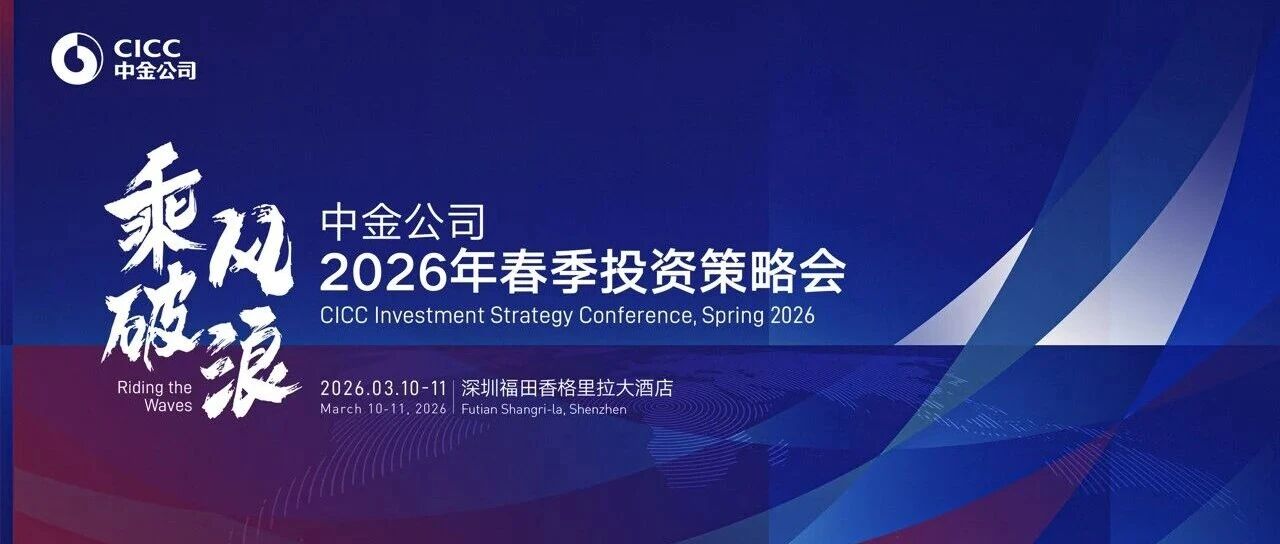
乘风破浪 | 中金公司2026年春季投资策略会
中金点睛· 2026-03-06 11:03
Core Insights - The article discusses the upcoming CICC Investment Strategy Conference scheduled for March 10-11, 2026, in Shenzhen, focusing on macroeconomic outlooks and investment opportunities across various sectors [2][3]. Group 1: Keynote Speakers and Topics - Notable speakers include Wei Lun Professor of Economics at The Chinese University of Hong Kong, the Chief Economist of CICC, and the Senior Managing Director & Chief Strategist of CICC [5][8][11]. - The conference will feature a keynote speech on the macroeconomic outlook for China and the United States, highlighting the global economic landscape [16]. Group 2: Market Outlook Sessions - Sessions will cover A-share market outlook, Hong Kong and overseas market perspectives, and major asset class forecasts [18]. - Specific discussions will address the real estate market trends, fixed income market developments, and the growth of multinational enterprises in a globalized context [19]. Group 3: Sector-Specific Discussions - The conference will include breakout sessions focusing on various sectors such as AI, telecommunications, consumer goods, and renewable energy [20][21][22]. - Topics will explore investment opportunities in the automotive industry, logistics, and the impact of AI on different sectors [21][22][31]. Group 4: Participating Companies - A range of companies from different sectors will participate, including banks, non-bank financial institutions, and technology firms [23][24][26]. - Notable participants include major banks like CITIC Bank and Minsheng Bank, as well as companies in the energy and materials sectors [23][24].
2026年政府工作报告信号及A股策略应对
Huaxin Securities· 2026-03-06 08:45
Core Conclusions - The report emphasizes the need to focus on geopolitical uncertainties, tariffs, and liquidity disturbances while awaiting volatility to stabilize. Domestically, attention is directed towards the government work report and the 14th Five-Year Plan, with a continuous verification of economic recovery, particularly in social financing and prices. The A-share market is expected to experience oscillating rotations, with a balanced style, focusing on defensive, cyclical price increases, and structural opportunities in technology themes [4][31]. A-share Strategy - March is identified as a critical verification period for policies and the economy, with a focus on new insights from the Two Sessions and ongoing verification of economic recovery. Key signals from the Two Sessions include: 1) a growth target range of 4.5%-5% with an emphasis on quality and price; 2) the launch of major projects and new policy financial tools to support the year; 3) initiatives for increasing residents' income and enhancing social security to promote consumption and domestic demand; 4) optimizing existing resources and fostering new growth drivers [5][7]. - The report outlines a calendar effect for the Two Sessions, indicating a pattern of pre-meeting increases, mid-meeting adjustments, and post-meeting recoveries, with styles shifting from stability to financial, growth, and consumer sectors [5][25]. Industry Selection - Three main structural opportunities are highlighted: 1) Defensive sectors (high dividend stocks, oil and petrochemicals, public utilities, agriculture, forestry, animal husbandry, and fishery); 2) Cyclical price increases (coal, steel, chemicals, non-ferrous metals); 3) Technology themes (AI, commercial aerospace, future energy, quantum technology, and embodied intelligence) [5][29][43]. - The report notes that the performance of the A-share market is influenced by external geopolitical uncertainties and domestic policy support, leading to a balanced growth and value style, with opportunities remaining in small and mid-cap stocks after adjustments [42][37]. Economic Window - March marks the beginning of a verification period for economic recovery, with a focus on financial data, exports, retail sales, real estate, infrastructure, and price data. Key attention is on whether financial data from February can continue to improve and the extent of demand recovery in exports, retail sales, and real estate [9][10]. Valuation Insights - The report indicates that the overall valuation of the A-share market has reached a new high in the current bull market, with a PE-TTM of 23.74 as of March 1, 2026, still having a 3% upside potential compared to the previous bull market peak of 24.47 [15][16]. Liquidity Trends - Public and wealth management products have shown significant growth at the beginning of the year, with a notable increase in new issuances and net subscriptions, indicating a strong influx of funds into the market. The report anticipates that the trend of residents moving deposits into wealth management products will continue [20][23].
湘财证券晨会纪要-20260306
Xiangcai Securities· 2026-03-06 02:51
Financial Engineering - As of February 28, 2026, there are 13,817 existing funds in the market, an increase of 95 funds compared to the previous month. The total net asset value of funds is 37.23 trillion yuan, which is an increase of 9.7 billion yuan, indicating a slight growth in the fund market size [2] - In February 2026, the returns of value, balanced, and growth fund indices were 1.00%, 1.40%, and 0.72% respectively, with balanced funds outperforming growth funds, showing a certain degree of performance divergence among different styles of funds [2] ETF Market Tracking - As of February 28, 2026, there are 1,446 ETFs in the Shanghai and Shenzhen markets, an increase of 16 from the previous period. The total asset management scale is 5.39 trillion yuan, a decrease of 73.79 billion yuan, while the total shares amount to 33.4 trillion, an increase of 60.17 billion shares [3] - In February, the median return of stock ETFs was 0.70%, while cross-border ETFs had the lowest median return of -3.30%. Bond ETFs had a median return of 0.21%, outperforming commodity ETFs [3] - Cross-border ETFs exhibited the highest internal deviation in February, while stock and commodity ETFs had internal deviations of 3.18% and 0.89% respectively. Bond ETFs had the lowest internal deviation at 0.11% [3] ETF Strategy Tracking - The industry ETF rotation strategy focused on steel, coal, and non-ferrous metals in February 2026, achieving a cumulative return of 6.17%, significantly outperforming the cumulative return of the CSI 300 index at 0.09%, resulting in an excess return of 6.08%. Year-to-date, the strategy's cumulative return is 71.82%, compared to the CSI 300's 21.67%, yielding an excess return of 50.15% [4] - The PB-ROE framework's industry ETF rotation strategy focused on non-ferrous metals, transportation, and utilities in February 2026, with a cumulative return of 4.25%, again outperforming the CSI 300 index's 0.09% return, leading to an excess return of 4.16%. Year-to-date, this strategy's cumulative return is 34.51%, compared to the CSI 300's 21.67%, resulting in an excess return of 12.84% [4] Investment Recommendations - For March 2026, there is a positive outlook on the non-ferrous metals, steel, and coal industries, with corresponding ETFs recommended for these sectors. Additionally, based on the PB-ROE situation and supplementary indicators, the ETF rotation strategy suggests focusing on the communication, agriculture, forestry, animal husbandry, and coal industries, with corresponding ETFs recommended for these sectors as well [5]
山西证券研究早观点-20260306
Shanxi Securities· 2026-03-06 02:27
Market Overview - The domestic market indices showed positive performance with the Shanghai Composite Index closing at 4,108.57, up by 0.64%, and the Shenzhen Component Index at 14,088.84, up by 1.23% [4]. Industry Commentary: Communication Sector - Nvidia reported FY2026 Q4 earnings that exceeded market expectations, with revenue reaching $68.1 billion, a year-on-year increase of 73% and a quarter-on-quarter increase of 20%. Net profit was $43 billion, up 94% year-on-year and 35% quarter-on-quarter [7]. - The data center revenue for Nvidia in Q4 was $62.3 billion, showing a year-on-year growth of 75% and a quarter-on-quarter growth of 22%. The hyperscale cloud service providers remain the largest customer segment [7]. - Nvidia's guidance for Q1 FY2027 is approximately $78 billion in revenue, surpassing previous market expectations. The growth is driven by the demand for AI programming workflows and the introduction of new products [7]. Industry Trends: Satellite Internet and AI - The upcoming MWC 2026 will focus on smart infrastructure, AI empowerment, and satellite communication, highlighting the increasing importance of satellite technology in modern warfare and communication [8]. - The DeepSeek v4 model is expected to launch soon, featuring significant improvements in multimodal capabilities and optimization for domestic chip manufacturers, indicating a strong position in the inference market [8]. Investment Recommendations - Suggested companies to watch include those involved in CPO/NPO optical engines such as Zhongji Xuchuang and NewEase, as well as domestic computing firms like Huafeng Technology and Cambricon [11]. - The overall market saw an increase, with the Shenwan Communication Index rising by 4.76% during the week, indicating a positive trend in the sector [11]. International Sportswear Brands Revenue Outlook - For the fiscal year 2026, various international sportswear brands are projected to see revenue growth, with Amer Sports expecting a 16%-18% increase, and Asics forecasting a 17.2% growth [12][13]. - Adidas anticipates high single-digit growth, while Columbia expects a modest increase of 1%-3% [13].

未知机构:20260305复盘宏观13月6日下午3时发改委-20260306
未知机构· 2026-03-06 02:15
Summary of Conference Call Notes Industry and Company Involvement - The conference call discusses various macroeconomic factors and government policies impacting multiple industries, including energy, technology, and agriculture. Key Points and Arguments 1. **Government Work Report Highlights**: - The report emphasizes "future industries" in a specific order: future energy, quantum technology, embodied intelligence, brain-computer interfaces, and 6G [3][4] - Hydrogen energy is recognized as a "new growth point" for the first time in the government work report [3] - Green fuels are also mentioned for the first time in the report [4] - Satellite internet is introduced as an emerging pillar industry [4] - The report outlines a GDP growth target of 4.5% to 5% for 2026, with a budget deficit rate planned at around 4% [4] 2. **Energy Sector Developments**: - There are reports of China verbally requesting a halt to refined oil exports, which could impact global oil prices [1][2] - The geopolitical situation in the Middle East is causing fluctuations in oil prices and stock values [6][8] 3. **Technological Innovations**: - MicroLED technology is highlighted for its energy efficiency, consuming only 5% of the energy compared to copper cables, with a market penetration expected to reach 10% by 2026 [8] - The MOSAIC solution from Microsoft's research team is noted for its reliability and distance capabilities [8] 4. **Market Reactions**: - There was a significant net sell-off of over 277 billion HKD (approximately 35 billion USD) by southbound funds in the Hong Kong stock market, marking a historical record [11] - The trading volume reached 23.9 trillion, indicating a moderate rebound, but the market conditions do not support a full recovery [12] 5. **Agricultural Sector Insights**: - There are expectations of rising pesticide prices due to production limits in northern regions, geopolitical tensions, and the onset of the spring farming season [10] Other Important but Overlooked Content - The potential establishment of a national computing power network is mentioned, with an investment projection of several trillion over five years [9] - The concept of "accompanying economy" is gaining traction, showcasing strong market potential [10] - The discussion on the geopolitical crisis in the Middle East suggests it may last for weeks or months, influencing market sentiment and investment strategies [8]
投资于人-2026年政府工作报告精神学习
2026-03-06 02:02
Summary of Key Points from Conference Call Records Industry or Company Involved - The conference call primarily discusses the **Chinese economy** and various **industries** including **healthcare**, **retail**, **telecommunications**, **defense**, and **technology** sectors. Core Points and Arguments Economic Growth and Policy Adjustments - The GDP growth target for 2026 is adjusted to **4.5%-5%**, emphasizing high-quality development and risk prevention [2] - The CPI target is set at **2%**, indicating a shift from preventing overheating to guiding price recovery [4] - Fiscal policy remains strong with a broad deficit ratio of **8.1%** and government debt at **11.89 trillion yuan** [5] - The introduction of **8,000 billion yuan** in policy financial tools is expected to stimulate approximately **10 trillion yuan** in investments [6] Sector-Specific Insights - The **healthcare sector** is elevated to a new pillar industry, with a focus on improving payment mechanisms and shifting procurement strategies [3] - The **retail sector** is expected to benefit from policies promoting consumption, particularly through **2,500 billion yuan** in special bonds for upgrading old appliances [10][15] - The **telecommunications sector** is focused on carbon neutrality and the development of clean energy systems [19] Investment Strategies and Market Outlook - The A-share market is anticipated to maintain a **slow bull** trend with profit growth of **5%-10%** and valuation expansion of **10%-20%** [8] - Investment strategies are shifting towards technology and consumption sectors post the two sessions, with a focus on **digital economy** and **green energy** [9] - The **defense sector** is projected to see a **7%** increase in the national defense budget, indicating sustained investment in military capabilities [21] Consumer and Retail Dynamics - The retail sector is expected to see significant upgrades in offline shopping experiences, with a focus on enhancing consumer engagement through various subsidies [10] - The **social services sector** is supported by new policies such as the implementation of spring and autumn holidays, which are likely to boost travel and tourism [12] Healthcare and Pharmaceutical Developments - The government report highlights the healthcare sector's importance, with policies aimed at improving payment systems for innovative drugs and medical devices [16][17] - The shift in procurement strategies from a focus on low prices to quality and clinical value is expected to stabilize pricing in the pharmaceutical sector [17] Technology and Innovation - The **integrated circuit** industry is recognized as a new pillar, with a focus on achieving self-sufficiency and overcoming critical technology bottlenecks [22][23] - **Embodied intelligence** is identified as a future industry, with policies encouraging long-term investments in high-risk technologies [22] Environmental and Regulatory Considerations - The government emphasizes supply-side reforms in industries like steel, focusing on carbon emissions and energy consumption controls [18] - The **solar energy** and **lithium battery** sectors are expected to face stricter regulations aimed at phasing out outdated capacities [20] Other Important but Possibly Overlooked Content - The **retail sector** is highlighted for its potential to drive economic recovery through enhanced consumer spending and government support [11] - The **military intelligence** sector is poised for significant advancements, particularly in developing "smart brains" for military applications [26] - The **6G telecommunications** framework is still in the early stages, with significant developments expected around **2027** [31] This summary encapsulates the key insights and strategic directions discussed in the conference call, providing a comprehensive overview of the economic landscape and sector-specific developments.
Mobile Al
GSMA· 2026-03-06 01:15
1. Report Industry Investment Rating No relevant content provided. 2. Core Viewpoints of the Report - The digital economy has become the main engine of global economic growth, driven by the rapid evolution of mobile communication technology and the accelerated development of AI. The deep integration of these two forces is giving rise to the era of Mobile AI, which has become a disruptive paradigm and a key driver of global digital and intelligent development [4][5]. - Mobile AI is based on the principle of two - way empowerment between the network and AI, with the core values of responsible AI, security, and trustworthiness. It forms an intelligent service system that provides wide - coverage, real - time response, and precise adaptation, aiming to achieve the goal of "AI everywhere, trustworthy, and easy to use" [3]. - From a global industrial perspective, Mobile AI will evolve from integrated applications to native symbiosis as 5G - A becomes more popular and 6G moves towards commercialization. This transformation will release continuous innovation power, empower large - scale industries, and become the cornerstone of high - quality development of the global digital economy [7]. 3. Summary According to Relevant Catalogs 3.1 Mobile AI's Value 3.1.1 Economic Value: Releasing Large - Scale Potential through Integration - The large - scale deployment of 5G/5G - A networks and the rapid spread of AI are pushing mobile communication and AI into a new stage of deep integration. Mobile AI is based on the core logic of "two - way empowerment between the network and AI", creating a new service system and reshaping industrial and social operations [10]. - The global mobile communication industry has entered the critical stage of 5G scale development. By the end of 2025, there were 384 commercial 5G networks globally, with over 3 billion 5G users. It is predicted that by 2030, global 5G connections will reach 8.8 billion, accounting for over 60% of the total global mobile connections [12][15]. - The global AI market is expanding. In the consumer sector, the adoption of GenAI is accelerating, with about 75% of respondents using GenAI applications. In the enterprise sector, by 2030, over 70% of the workload in global data centers will be for AI - related computing needs, and the GenAI software market is expected to reach $122.8 billion [19][24]. - Global mobile operators' revenue reached $10.8 trillion in 2024 and is expected to increase to $12.5 trillion by 2030. The total capital expenditure from 2024 to 2030 is expected to be $13 trillion to support Mobile AI development [27]. 3.1.2 Social Value: Responsible, Inclusive, and Safe AI Progress - Mobile AI can promote the intelligent upgrade of social governance, such as in urban governance, public services, and emergency response, by building a governance system with comprehensive perception, rapid response, and precise intervention [36]. - It can popularize AI technology, breaking down hardware barriers, technical complexity, and scenario limitations, and making AI a universal resource accessible to all [37]. - Mobile AI can ensure AI compliance, security, and controllability by providing remote monitoring and security takeover capabilities for intelligent devices and establishing a governance network [38]. 3.2 Connotation of Mobile AI 3.2.1 Three - layer and Four - dimension Architecture - The three - layer architecture includes the basic layer (providing core support for connection, computing, and collaboration), the execution layer (encapsulating functions and providing standardized interfaces), and the application layer (creating economic and social benefits in specific scenarios) [42][43][44]. - The four - dimension includes AI for Network (automating and intelligentizing network operations), Network for AI (providing intelligent connection support), Mobile AI Agents/Terminals (achieving intelligent service delivery through device - edge - cloud collaboration), and Mobile AI Applications (transforming technology into solutions for various industries) [45][48][51]. 3.2.2 Key Applications in Different Fields - In the field of network operation and management, Mobile AI can solve problems in network planning, maintenance, optimization, and security, such as promoting dynamic network planning, autonomous network maintenance, and collaborative network operation [47][52][54]. - For new intelligent terminals, Mobile AI can meet the high - demand network connection requirements of intelligent robots, AI phones, and AI glasses, and promote the development of new intelligent services [59]. - In the field of intelligent applications, Mobile AI can enhance the user experience in consumer scenarios, such as in digital consumption, immersive experience, and personalized services. In enterprise scenarios, it can promote the digital and intelligent transformation of industries such as intelligent manufacturing, transportation, and healthcare [90][91]. 3.3 Towards Mobile AI 3.3.1 Infrastructure Improvement - It aims to build a bottom - layer support system with "adaptive connection, sufficient computing capacity, and efficient collaboration" by improving basic communication network capabilities and optimizing computing resource allocation [113]. - Communication networks need to be upgraded in terms of high bandwidth, low latency, massive connections, and high reliability, and a dynamic adaptation mechanism should be established [115]. - A hierarchical and collaborative "device - edge - cloud" computing capacity supply system should be constructed to meet the different computing needs of Mobile AI [117]. 3.3.2 Spectrum Assurance - A dual - track evolution path should be adopted for spectrum strategy, including "new frequency band planning" and "existing spectrum optimization" [114]. - Technologies such as AI - driven dynamic spectrum management and intelligent spectrum aggregation can be introduced to improve spectrum utilization efficiency [116]. - Promote the use of mid - frequency bands (such as 6GHz) and explore the deployment of high - frequency bands (such as millimeter - wave) in hotspots [118]. 3.3.3 Technological Innovation - Mobile AI technology innovation is based on the native AI network architecture, developing two - way technology systems of AI to the network and the network to AI [119]. - Key technologies include AI for Network (integrating AI into the end - to - end network system), enhanced uplink technologies (breaking the uplink bottleneck), and terminal - edge - cloud collaboration (optimizing the balance between business needs and resources) [127][129][145]. 3.3.4 Terminal Evolution - Terminal hardware needs to evolve towards multi - modal perception, full - band reliable connection, and efficient local intelligent processing to meet the diverse requirements of Mobile AI applications [158]. - Terminal forms should be diverse, collaborative, and popularized to create an all - scenario adaptive terminal system [158]. 3.3.5 Standard Formulation - Industry - specific application standards should be formulated for key industries to guide the standardized development of Mobile AI applications [158]. - A global unified standardization technology system should be established to eliminate collaboration barriers and reduce R & D and adaptation costs [162]. - A quantifiable experience evaluation standard should be improved to ensure that the evaluation results are consistent with the real user perception [163]. 3.4 Recommendations and Calls to Action - Establish a unified global standardization system, including standardizing AI model calling methods, agent protocols, and data formats [181]. - Reserve and optimize spectrum resources, and accelerate the deployment of 6GHz and millimeter - wave bands [181]. - Activate data as a core production factor, promoting safe data flow and the development of data asset markets [181]. - Strengthen infrastructure construction, building a next - generation connectivity system suitable for Mobile AI [181]. - Promote industry innovation through measures such as encouraging the application of open APIs and starting pilot projects [182].
科技行业快评报告:“部长通道”聚焦科技创新和现代化产业体系建设
Wanlian Securities· 2026-03-05 14:24
Investment Rating - The industry investment rating is "outperforming the market," indicating that the industry index is expected to rise more than 10% relative to the market in the next six months [10]. Core Insights - China's innovation index has risen to 10th globally, with R&D investment expected to exceed 3.92 trillion yuan by 2025, representing 2.8% of GDP. Basic research investment has reached nearly 280 billion yuan, marking a historic high of 7.08% [2]. - The advanced manufacturing sector is characterized by four trends: innovation, optimization, intelligence, and green transformation. By 2025, industrial added value is projected to reach 41.7 trillion yuan, contributing 35% to economic growth [3]. - The report emphasizes the importance of the Guangdong-Hong Kong-Macao Greater Bay Area in leveraging its innovation cluster status to enhance technology development and application [2]. Summary by Sections Technology Development - The report highlights significant advancements in technology, including humanoid robots, leading global open-source models, and breakthroughs in chip technology. The "new economy" has contributed over 18% to GDP, with 525 Chinese companies in the global top 2000 for industrial R&D investment [2]. Advanced Manufacturing - The advanced manufacturing sector is experiencing robust growth, with new energy vehicles leading global sales for 11 consecutive years. The structural optimization of industries is evident, with high-tech manufacturing accounting for 17.1% of industrial added value [3]. AI and Digital Transformation - By the end of 2025, over 30% of large manufacturing enterprises are expected to adopt AI technologies. The report stresses the need for a balanced approach to AI development, focusing on safety and international cooperation [7]. Role of State-Owned Enterprises - State-owned enterprises are expected to play a leading role in developing strategic emerging industries, particularly in new energy and aerospace. The report notes significant growth in the production and market share of new energy vehicles [8]. Investment Recommendations - The report suggests focusing on core segments of the AI industry, including computing power, green electricity, smart terminals, and data governance, while also considering the role of state-owned enterprises in technological breakthroughs [9].
科技行业快评报告:政府工作报告首提“智能经济”,加快实现高水平科技自立自强
Wanlian Securities· 2026-03-05 14:24
Investment Rating - The industry investment rating is "stronger than the market," indicating an expected increase of over 10% in the industry index relative to the market in the next six months [11]. Core Insights - The government work report acknowledges the steady development of new productive forces and significant achievements in technological innovation over the past year, highlighting advancements in AI, biomedicine, robotics, and quantum technology [2]. - The report emphasizes the importance of fostering a new economic form centered around "smart economy," which integrates AI technologies and promotes the commercialization of AI applications across key industries [8]. - The focus on enhancing independent innovation capabilities is crucial for high-quality development, with a strong emphasis on original innovation and breakthroughs in key core technologies [9]. Summary by Sections Government Work Report Highlights - The report outlines major strategic tasks, including the promotion of high-quality development and the establishment of a modern industrial system centered on advanced manufacturing [3][7]. - It sets ambitious goals for R&D investment, aiming for an annual growth rate of over 7% in total R&D expenditure, aligning with the "14th Five-Year Plan" objectives [3]. AI Industry - The report notes that domestic AI models, such as DeepSeek and MiniMax, are continuously innovating, reshaping the global AI model ecosystem [2]. - The "Artificial Intelligence +" initiative is accelerating the application of AI in various sectors, enhancing the deployment of AI technologies in terminal and vertical scenarios [2][9]. Aerospace Industry - The satellite internet network construction is accelerating, with significant advancements in low-altitude communication and navigation systems [2]. - The report highlights the importance of developing new pillar industries, including integrated circuits and aerospace, to foster future growth [7]. Digital Economy - The core industries of the digital economy are increasingly contributing to high-quality development, with the added value of these industries expected to exceed 10.5% of GDP by 2025 [3]. - The report emphasizes the need for a robust data infrastructure and the development of high-quality data sets to unlock the potential of data elements [10].