
PCB

Search documents
A股PCB概念拉升,生益科技逼近涨停创历史新高
Ge Long Hui· 2025-12-24 05:20
Core Viewpoint - The A-share market's PCB concept stocks experienced a significant rally, with Shengyi Technology nearing a trading limit and reaching a historical high, alongside gains in other companies such as Nanya New Material, Jingwang Electronics, Huazheng New Material, and Shengyi Electronics [1] Group 1: Market Performance - Shengyi Technology approached the trading limit and achieved a historical high [1] - Other companies in the PCB sector, including Nanya New Material, Jingwang Electronics, Huazheng New Material, and Shengyi Electronics, also saw price increases [1] Group 2: Product Launch and Projections - NVIDIA's GB300 series servers began small-scale shipments by the end of this year, with expectations for large-scale production in the first half of next year [1] - Analysts predict that the total shipment of GB300 cabinets for the next year could reach 55,000 units, representing a 129% year-on-year growth [1] - The next-generation Vera Rubin 200 platform is expected to start shipping in the fourth quarter of next year [1]

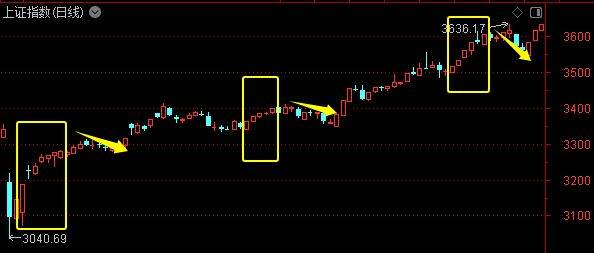
大盘五连涨!今年3次五连涨后发生了什么?
Mei Ri Jing Ji Xin Wen· 2025-12-24 00:11
Market Overview - The A-share market saw all three major indices close in the green, with the Shanghai Composite Index rising by 0.07%, the Shenzhen Component Index by 0.27%, and the ChiNext Index by 0.41% [1] - The total trading volume in the Shanghai and Shenzhen markets reached 1.8998 trillion yuan, an increase of 37.9 billion yuan compared to the previous day [1] - Despite the index gains, the number of declining stocks (3,856) outnumbered advancing stocks (1,512), with a median decline of 0.80% for individual stocks [1] Technical Analysis - The Shanghai Composite Index faced resistance near the high point of 3,936 on December 8, which is considered a significant pressure level [1] - The current rebound has lasted for six trading days since December 16, which is shorter than the seven trading days observed in the previous rebound from November 14 to 24, indicating that the rebound cycle is not yet exhausted [1] - Historical patterns suggest that even if a short-term correction occurs, it is unlikely to be severe, with the mid-point of the current rebound serving as an important support level [1] Sector Performance - Core stocks in the optical module sector showed weakness today, experiencing a pullback after an initial rise [5] - The AI power sector, including lithium batteries, solid-state batteries, energy storage, and grid equipment, performed strongly, indicating a rotation among sectors [5] - The liquid cooling sector saw significant gains, with several stocks hitting the daily limit or rising over 10%, and the market capitalization of core stocks surpassing 100 billion yuan [11] PCB Industry Insights - The PCB upstream sector, including PCB equipment, fiberglass cloth, copper foil, and resin, showed notable price increases, with companies like Dongcai Technology and Dingtai High-Tech reaching historical highs [11] - The demand for PCBs is expected to grow due to the anticipated mass production of the Rubin architecture, which will enhance the value of PCB units [13] - The PCB industry is experiencing a continuous upward trend in demand, driven by AI-related infrastructure growth and the electrification/intelligentization of vehicles [13] Commercial Aerospace Sector - The commercial aerospace sector faced adjustments due to the unsuccessful recovery of the Long March 12 rocket's first stage, leading to significant declines in multiple stocks [15] - Historical context suggests that a major drop following a substantial rise can signal a sector retreat, as seen in previous instances [16] - Despite the current downturn, upcoming launches of reusable rockets may provide future catalysts for the sector [16] Summary - The market encountered resistance but the rebound cycle remains intact, suggesting a short-term consolidation phase [16] - Investors are advised to avoid chasing high prices and maintain a position of 30-50% in their portfolios, with a focus on core sectors like AI hardware [16]

年终排名进入倒计时 基金冠军提前落定 硬科技成夺冠关键
Xin Lang Cai Jing· 2025-12-23 23:14
Core Viewpoint - The A-share market is experiencing a slow upward trend, driven primarily by the technology growth sector, benefiting from advancements in AI technology and the recovery of the new energy industry [1][6] Group 1: Fund Performance - Over 90% of active equity funds achieved positive returns this year, with more than 50 funds doubling their net value [1][2] - The top-performing fund, Yongying Technology Smart Mixed Fund, has a return of 231.72%, leading the second-place fund by nearly 50 percentage points [2][3] - The average return for active equity funds exceeds 20%, with a median return of 9.54% across all funds [2][5] Group 2: Investment Focus - Most high-performing active equity funds are heavily invested in the technology sector, with top holdings in companies like Xinyisheng and Zhongji Xuchuang [3] - The investment outlook for 2026 suggests a continuation of the technology trend, with a more balanced market style expected [6][7] - AI applications are anticipated to be a significant investment theme in 2026, alongside opportunities in cyclical and consumer sectors [6][7] Group 3: Regulatory Changes - New guidelines for fund performance assessment emphasize long-term performance, requiring that at least 80% of performance indicators focus on returns over three years [4][5] - This regulatory shift aims to address the industry's tendency to prioritize scale over returns, promoting a focus on long-term profitability [4]
【公告全知道】芯片+6G+商业航天+英伟达+PCB+光刻胶!公司产品可应用于低轨卫星通信基板、航空发动机等领域
财联社· 2025-12-23 15:11
Group 1 - The article highlights significant announcements in the stock market, including "suspensions and resumption of trading, share buybacks, investment wins, acquisitions, earnings reports, unlocks, and high transfers" to help investors identify potential investment hotspots and mitigate risks [1] - A company is involved in the fields of chip technology, 6G, commercial aerospace, and has products applicable to low-orbit satellite communication substrates and aircraft engines [1] - Another company has signed an agreement with a Chinese rocket company to implement an expansion plan for the Hainan commercial aerospace launch site [1] - A company plans to establish a production capacity of 1.2 million units for humanoid robots and solid-state batteries by 2026 [1]

天赢居:不破3888就还是第三次冲顶
Jin Rong Jie· 2025-12-23 14:10
Group 1 - The core viewpoint emphasizes that after reaching the monthly target of 4018, the market is not expected to accelerate quickly but rather enter a consolidation phase to digest overheating and rebuild order through time and turnover [1] - The monthly strategy focuses on avoiding emotional trading and prioritizing discipline, with the goal of managing overheating rather than seeking continuous upward movement [1] Group 2 - The weekly analysis indicates that different indices are in varying stages of consolidation, with the Shenzhen Composite and ChiNext leading the recovery after completing their respective digestion phases, while the Shanghai Composite is in a typical topping structure [2] - The strategy for the week highlights that effective risk control is based on following structural trends rather than making predictions, allowing for fluctuations as long as key support levels are maintained [2] Group 3 - The daily analysis identifies 3918 as a critical resistance level and 3888 as a significant support level, with the market transitioning from a repair phase to a topping phase after stabilizing above 3888 [3][4] - The analysis suggests that the optimal strategy is to monitor the market's behavior around these key levels rather than chasing breakouts, focusing on maintaining strength above 3888 [4] Group 4 - The hourly analysis describes a typical healthy pullback pattern during the upward trend, confirming support levels while digesting short-term profit-taking [5] - It is noted that during strong market conditions, the focus should be on confirmation points rather than emotional trading [5] Group 5 - The rotation of market hotspots is centered around two main lines of attack, particularly in technology hardware and metals, indicating a clear trend in sector performance [6] - The strategy emphasizes understanding the rhythm of sector rotation and selectively investing in strong directions while being patient with underperforming sectors [6] Group 6 - The operational strategy advises focusing on sector trends before individual stock trends, with specific guidelines for managing positions based on moving averages [6] - The mindset should prioritize discipline and adherence to rules, emphasizing that the essence of a slow bull market is not daily gains but consistent adherence to a repeatable strategy [6]
【豪投】两家PCB上市公司宣布新投资
Sou Hu Cai Jing· 2025-12-23 12:43
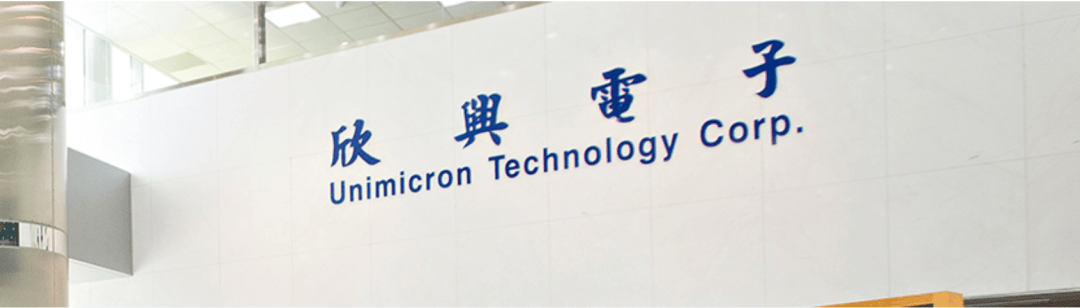
来源:综合整理 与您一路同行,做您最忠实的拥护者--PCB行业融合新媒体-2025年最有价值的电路板产业服务平台!欢迎您的关注与点赞!祝您事业有成!平安喜乐! 欣兴加码资本支出逾60亿新台币,联电大股东低价参与增资 为应对大型云端服务提供商(CSP)客户订单持续增长,台湾载板大厂欣兴(3037.TW)于12月16日宣布调整资本支出规划。公司董事会决议将2026年度 资本预算由原先194亿新台币,追加60亿新台币,提升至约254亿新台币(约合56.7亿人民币),增幅达30.93%,规模已高于今年水准。同时,董事会核准 2027年长交期设备预下订单金额约25亿新台币(约合5.6亿人民币)。 图片来源:企业官网 欣兴表示,此次资本支出调整主要为配合营运需求,新建厂房并提升制程能力,资金来源包括自有资金及银行融资。未来资本预算及长交期设备采购执行 进度,将视客户需求及市场状况弹性调整,实际支付金额则依执行进度与付款条件而定。 在产能布局方面,欣兴目前已成为全球四大CSP的载板主要供应商,并已完成AI ASIC与GPU两大客户线的产能布局与认证卡位。现阶段产能几乎被客户 全数锁定,今年第四季度稼动率已升至高档。公司预期 ...
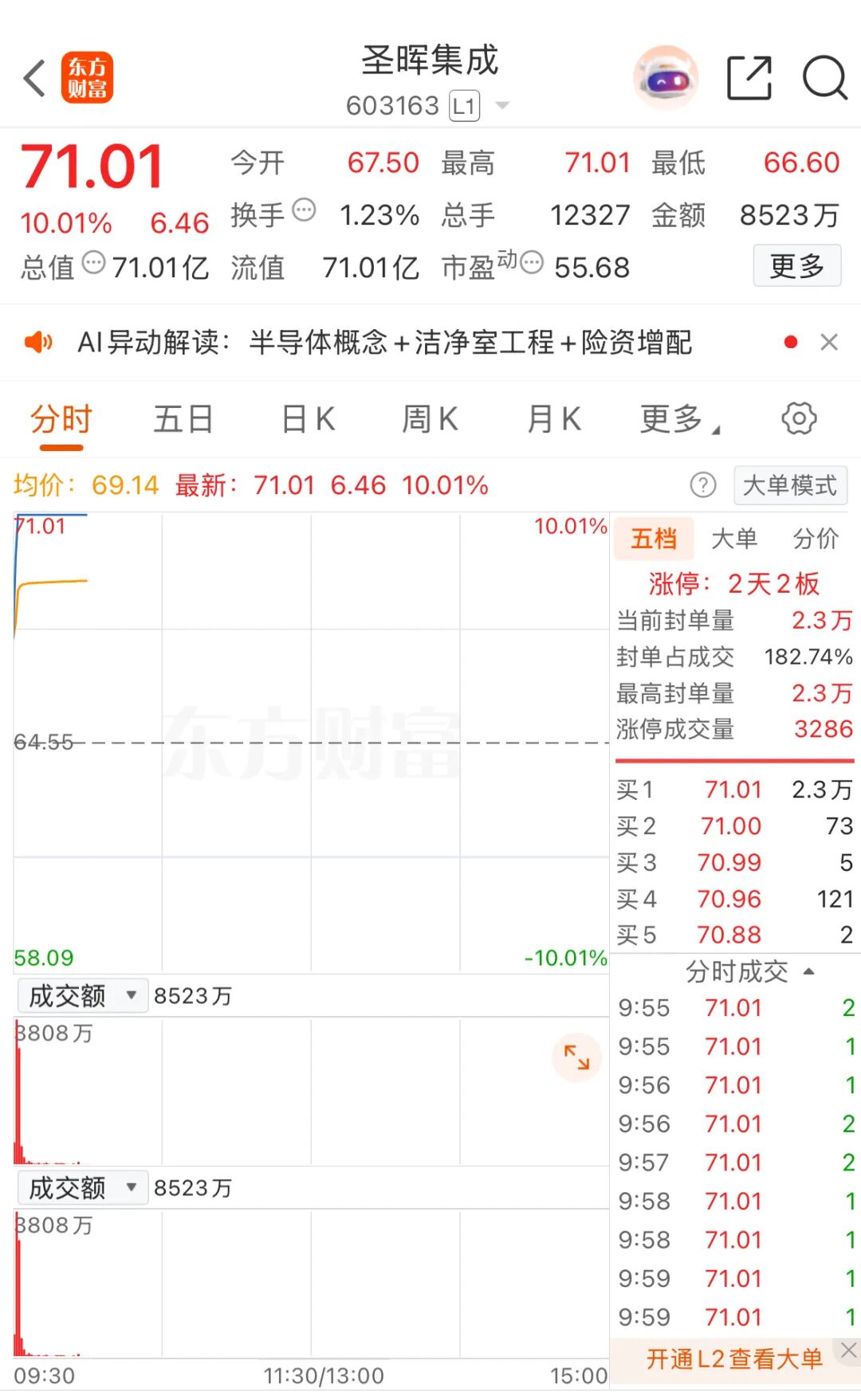
603163,2分钟涨停
Shang Hai Zheng Quan Bao· 2025-12-23 02:29
Core Viewpoint - The semiconductor equipment sector is experiencing a strong performance, with several companies showing significant stock price increases, particularly Shenghui Integrated and Yaxiang Integrated, which are nearing their price limits [1][4]. Semiconductor Equipment Sector - Shenghui Integrated (603163) achieved a two-day consecutive limit-up, reaching a peak price of 71.01, reflecting a 10.01% increase [2]. - The trading volume for Shenghui Integrated was 12,327 shares, with a total transaction amount of 85.23 million [2]. - Yaxiang Integrated (603929) also showed strong performance, with a peak price of 108.31 and a trading volume of 34,774 shares, resulting in a transaction amount of 371 million [3]. PCB Sector - The PCB concept stocks are on the rise, with Dongcai Technology hitting the limit-up, and other companies like Aisen Co., Tongguan Copper Foil, and Dingtai High-Tech also showing significant gains [4][5]. - Aisen Co. (688720) increased by 10.08%, while Dongcai Technology (601208) reached a 10% increase, indicating strong market interest in PCB-related stocks [5][6]. - Other notable performers in the PCB sector include Tongguan Copper Foil, which rose by 9.42%, and Kuaike Intelligent, which increased by 7.76% [6].
光模块、PCB--真真假假的消息
傅里叶的猫· 2025-12-22 16:02
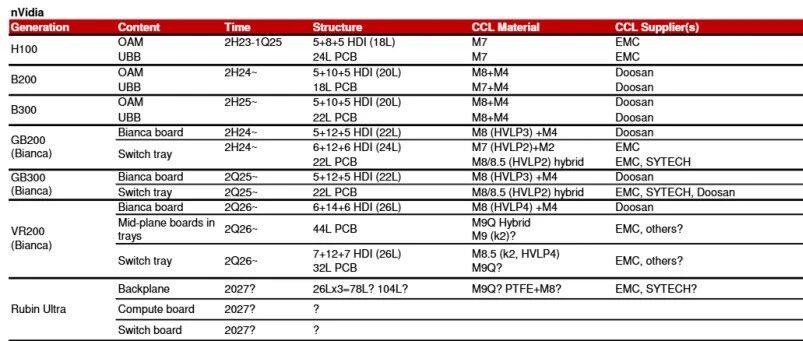
PCB - There are two rumors regarding PCB: the first is that the Rubin switch tray's PCB material system is confirmed to be upgraded from the original M9 resin + second-generation fiberglass cloth to a higher-performance M9 resin + Q cloth solution, which could increase the demand for Q cloth by 6 million to 15 million meters, with stockpiling potentially reaching over 20 million meters [2] - The second rumor involves Google considering upgrading its TPU V8 to EM896K3 (Q-glass M9), but confirmation from industry sources regarding the Rubin switch tray's upgrade to M9 + Q cloth has not been established yet [2][3] Optical Modules - Tianfu's optimistic profit forecast for next year is at 80 million, but the current estimate remains at 60 million or slightly above, with a projected 60% quarter-on-quarter growth in 200G EML supply, equating to 1.6T shipments [6] - There are concerns regarding the compatibility of Tianfu's production line with Lumentum's chips, indicating a need for further adjustments to meet the 200G EML demand [6] Power Industry - A significant power outage occurred in San Francisco, affecting approximately 130,000 households and businesses, which is about one-third of the Pacific Gas and Electric Company's customers in the city [7] - The outage was attributed to overloaded core substation equipment, highlighting the strain on California's power grid due to the rapid increase in data center construction, with over 320 data centers expected by November 2025 [8] - The average age of key power equipment in California is around 40 years, with a significant portion nearing or exceeding their service life, contributing to the vulnerability of the power grid [8]
重申看好AIPCB产业链
2025-12-22 15:47
Summary of Conference Call Records Industry Overview - The conference call discusses the **AIPCB (Artificial Intelligence Printed Circuit Board)** industry and the **storage industry** in China, highlighting the competitive landscape and investment opportunities within these sectors [1][2]. Key Points on AIPCB Industry - The development of **AI chips** is driving a comprehensive upgrade in **PCB materials**, with a shift from traditional fiberglass to third-generation fabrics (Q fabric), although current production capacity is tight [1][2]. - **Hydrocarbon resins** are seeing increased usage due to their excellent dielectric properties and low loss during the upgrades from Ma7 to Ma9, with companies like **Dongcai Technology** receiving certifications from core copper-clad board manufacturers [1][3]. - The transition to **HVLP2** copper foil solutions is aimed at reducing skin effect losses, with expectations to introduce **HVLP4** next year [1][3]. - The increase in material hardness is leading to higher consumption of consumables like drill bits, with **Dazhu CNC** adopting ultra-fast laser equipment for high-end PCB manufacturing [1][3][5]. - The industry is moving towards advanced manufacturing processes, with a focus on cold processing methods to enhance precision without generating excess heat [5]. Investment Opportunities in Storage Industry - The storage industry is experiencing non-linear growth in demand driven by AI applications, particularly during training and inference phases [2][8]. - The listing of domestic storage companies is expected to boost procurement of equipment and components, enhancing China's competitiveness in the global storage market [2]. - Recommended companies include **Jinghe Integration**, **Huicheng**, **Tuojing Technology**, **Micro-Guide Nano**, and **Huahai Qingke**, which are expected to benefit from storage technology upgrades [2][8]. - Companies like **Zhaoyi Innovation** and **Junzheng** are also highlighted as beneficiaries of rising storage prices [2]. Trends in PCB Industry - The PCB industry is undergoing significant upgrades in materials and manufacturing processes, with **Dazhu Laser** having a first-mover advantage in high-end equipment like **LDI (Laser Direct Imaging)** [6]. - The demand for high-end materials and equipment is increasing as drilling becomes finer and denser, driven by technological advancements [6]. - The domestic upgrade efforts are synchronizing with semiconductor packaging upgrades, creating substantial market opportunities [6]. - Despite short-term market fluctuations, the long-term fundamentals of the PCB industry remain clear and upward-trending, driven by material and processing upgrades [6][7]. Notable Companies in Semiconductor Sector - In the semiconductor sector, focus is on storage-related companies such as **Jinghe Technology**, **Huicheng**, **Huarong Microelectronics**, and **Tuo Jing Technology**, which are expected to benefit from storage upgrades [8]. - For the AI PC segment, **Shengyi Technology** is highlighted as a top choice in the CCL (Copper Clad Laminate) segment, with other companies like **Shenzhen Circuit**, **Hudian Co.**, and **Dongshan Precision** also noted for their potential [8]. - The ongoing technological iterations in the upstream supply chain, including companies like **Feili Hua**, **Zhongcai International**, and **Dongcai Technology**, are also key focus areas [8]. Conclusion - The AIPCB and storage industries present significant investment opportunities driven by technological advancements and market demand. The focus on material upgrades and manufacturing process enhancements is expected to propel growth in these sectors, making them attractive for investors looking to capitalize on emerging trends.
重申看好存储及AIPCB投资机遇
2025-12-22 01:45
Summary of Conference Call Records Industry Overview - The global DRAM industry is expected to see a capital expenditure growth of 14% to $61.3 billion by 2026, while NAND is projected to grow by 5% to $22 billion. Different manufacturers are focusing on various segments, with Samsung and SK Hynix emphasizing HBM DRAM, and Micron pursuing a dual approach. SanDisk and Kioxia are more aggressively investing in NAND [1][2][3]. Key Insights and Arguments - Storage demand is increasing due to training and inference in AI applications, with HBM becoming a core revenue driver. KV Cache and RAG (Retrieval-Augmented Generation) are generating significant demand in the inference segment. Gartner predicts a 26% growth in DRAM demand and 21% in NAND by 2026, with actual demand likely to exceed expectations, particularly in inference [1][2][3]. - Price forecasts for 2026 indicate a 60% increase in NAND prices and a 30-35% increase in DRAM prices, reflecting the rising demand from the inference side. Investors are advised to focus on technology upgrades benefiting HBM, 3D NAND, and related equipment suppliers [1][3]. PCB Sector Insights - In the PCB sector, the Google supply chain is viewed as stronger than the NV chain, with companies like Shenzhen South Circuit, Huitian Technology, and Zhongfu Circuit being highlighted. In the 4C2 segment, Shengyi Technology is favored, along with raw materials and consumables that follow downstream upgrades, such as Feilihua, Zhongcai Technology, Dongcai Technology, and Dingtai New Materials [1][4]. - A preliminary plan for the epoxy backplane solution was reportedly finalized in October or November, but further testing is required. The final results are expected to be released in early 2026, which will drive PCB industry development and create new investment opportunities [1][4]. Semiconductor Market Expectations - By early 2026, significant market share concentration and transactions among manufacturers are anticipated. Upgrades from GB series to Ruby series, including products like MatePad CPX, are expected, with increased usage of Q fabric. Material formulations are evolving, with a shift from PPO to dual-matrix and hydrocarbon compounds, indicating substantial upgrades in raw materials [5]. Material Trends - Demand for fiberglass cloth in AI applications is rising, leading to supply shortages and potential price increases. Low CTE cloth for storage substrates is also expected to remain tight, with price hikes anticipated. The use of Q fabric is beneficial for companies like Feilihua and Zhongcai [6]. - Copper foil prices are expected to rise in 2026, along with improved processing fees, enhancing overall performance. The upgrade from materials in the manufacturing process is also noted, with increased hardness and usage of consumables [7]. PCB Industry Outlook - The PCB industry is experiencing fluctuations, but with material system upgrades and enhanced processing capabilities, profit margins are on the rise. Full production lines are expanding, indicating significant growth. Following the finalization of plans in 2026, a favorable market is expected, particularly for the Google supply chain and companies like Shenzhen South Circuit, Jingwang, and others [8]. - The storage market remains promising, being a crucial component for AI, with increasing influence from inference. It is expected that NAND price increases will outpace DRAM. Key investment targets include companies like Zhongwei, Weidao Huahai, and Huicheng Jinghe, along with upstream suppliers like Shengyi and Nanya [9].