
能源

Search documents
海通国际2026年2月金股
Haitong Securities International· 2026-02-01 23:30
Group 1: Technology and AI - Alphabet (GOOGL US) is expected to maintain good visibility in its advertising business due to the gradual release of its valuation under pressure from AI search, with a projected cloud business growth rate of over 30% for the year [1] - Alibaba (BABA US) is anticipated to see a cloud business growth rate of 28%-30%, driven by strong demand in China, with significant contributions from its instant retail segment [1] - NVIDIA (NVDA US) is projected to achieve revenue exceeding 500 billion, with strong growth expected from its GB300 product line, which constitutes two-thirds of the Blackwell series [1] Group 2: E-commerce and Internet Services - Tencent (700 HK) is recommended as a top pick due to its strong investment in AI and steady growth in its core gaming and advertising businesses, with a target price of 700 [1] - Tencent Music (TME US) is expected to maintain a stable growth trajectory with a focus on subscription and non-subscription revenue streams, despite some margin pressure from new business initiatives [1] - Kuaishou (1024 HK) is projected to see significant revenue growth driven by its AI-enhanced content ecosystem, with a target price of 93 [2] Group 3: Healthcare and Pharmaceuticals - New Oxygen (SY US) is positioned well in the light medical beauty sector, with plans to expand its self-operated stores significantly by 2025, supported by a strong marketing capability and low customer acquisition costs [2] - Hansoh Pharmaceutical (3692 HK) is focusing on expanding its pipeline in oncology and other major indications, with a strong emphasis on innovative drug development [3] - BeiGene (6160 HK) is expected to exceed management's revenue guidance for 2025, driven by strong sales of its BTK inhibitor, with a projected peak sales potential of over 8 billion [4] Group 4: Energy and Materials - Saudi Aramco (ARAMCO AB) is positioned as a central player in global energy supply, with ongoing investments in hydrogen and carbon capture technologies, enhancing its long-term growth prospects [6] - MP Materials (MP US) is the only company in the U.S. with a fully scaled rare earth supply chain, benefiting from strong demand in the defense and renewable energy sectors [6] - Howmet Aerospace (HWM US) is expected to maintain a strong market position in gas turbine components, with a long order backlog supporting stable revenue growth [5]
瞄准市场机遇 借力产业优势 加大研发投入 在华外企持续看好中国经济发展前景
Ren Min Ri Bao· 2026-02-01 22:13
"对跨国企业而言,中国市场的地位依旧无可替代。"日前,德国管理咨询公司罗兰贝格全球管委会联席 总裁戴璞在发布《预见2026:中国行业趋势报告》时表示。这一判断反映出中国市场对外资的巨大"磁 吸力"。 "十五五"开局之年,中国坚定不移扩大高水平对外开放、与世界各国共享机遇,是外资企业青睐的投资 热土。接受本报记者采访的在华外企代表表示,他们持续看好中国经济发展前景,将瞄准中国市场新机 遇,用好中国经济独特优势,开展互利共赢的合作。 "中国市场的超大规模和多样性无可比拟" 不久前,迪卡侬在北京延庆国家高山滑雪中心举办2025—2026雪季开板节,设置专业教练公开课、趣味 赛事等环节,打造了一场兼具专业与趣味的冰雪盛宴。 迪卡侬中国公关及媒体沟通总监赵洁告诉记者,中国是迪卡侬最重要的市场之一。2025年,迪卡侬在成 都落地亚洲首家户外概念店,并在多个核心区域完成新店开业与既有门店焕新。"中国广阔的市场空间 与持续释放的内需潜力,为迪卡侬在华发展提供了坚实基础。"赵洁说,迪卡侬前瞻布局"大户外"战 略,紧抓后冬奥时期的冰雪运动热潮,大力推动相关装备普及,培育新的消费增长极。 2025年,中国内需总体保持稳健,前三季度 ...
国内高频指标跟踪(2026年第5期):节前效应主导
国泰海通· 2026-02-01 09:33
——国内高频指标跟踪(2026 年第 5 期) 本报告导读: 节前赶工托底经济活跃度,内生动能待提升,新兴产业与原油有色涨价成亮点。 投资要点: | 节前效应主导 | [Table_Authors] | 李林芷(分析师) | | --- | --- | --- | | ——国内高频指标跟踪(2026 年第 5 期) | | 021-23185646 | | | | lilinzhi2@gtht.com | | 本报告导读: | 登记编号 | S0880525040087 | | 节前赶工托底经济活跃度,内生动能待提升,新兴产业与原油有色涨价成亮点。 | | 邵睿思(研究助理) | | | | 010-83939827 | | 投资要点: | | shaoruisi@gtht.com | | [Table_Summary] 上周政策围绕民生福祉提质与发展秩序优化展开,民生端聚焦养老、 | 登记编号 | S0880125070011 | | 殡葬、支付等场景强化普惠适老保障,市场端规范经营乱象、激活 | | | | 服务消费,同步优化城际铁路与能源电价机制,筑牢民生底线并激 | | 梁中华(分析师) | | 活发 ...
贵金属巨震之下,会造成哪些金融市场品种的连锁反应,有哪些历史经验教训,有何关键企稳信号指标?
Sou Hu Cai Jing· 2026-02-01 09:31
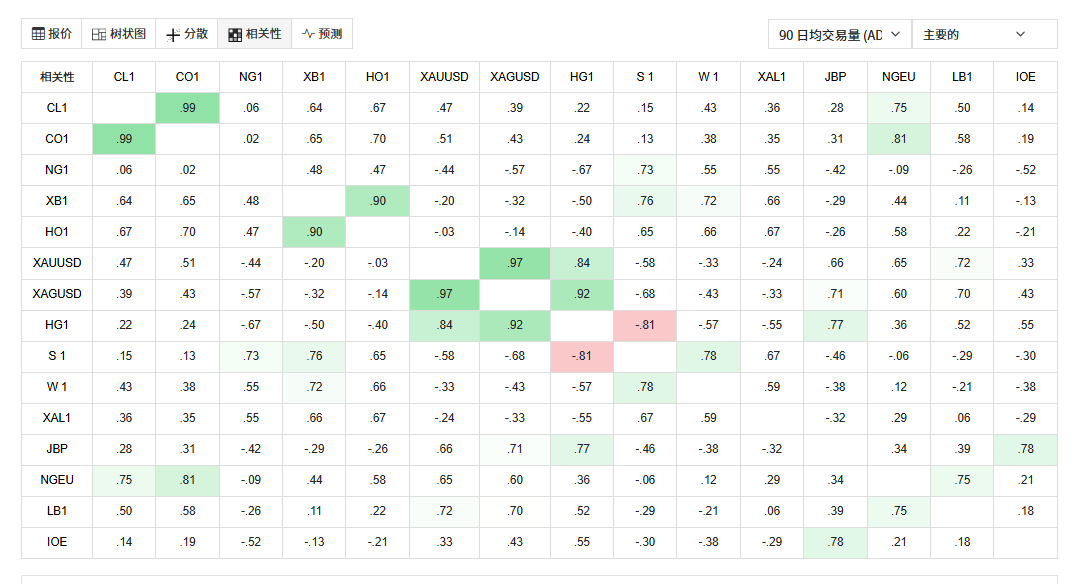
Group 1 - The core trigger for the recent significant drop in precious metals is the nomination of Kevin Warsh as the next Federal Reserve Chairman, which shattered market expectations for monetary easing and led to a surge in real interest rates and a rebound in the dollar [1][17] - Historical experiences indicate that after significant declines in precious metals, markets typically exhibit a pattern of reaction within one month, with the current decline expected to exceed past events in intensity [8][10][14] - The correlation between precious metals and industrial metals is notably high, with gold (XAUUSD) and silver (XAGUSD) showing a correlation of 0.97, indicating that they tend to move together in price [3][6] Group 2 - The relationship between precious metals and the dollar is characterized by a long-term negative correlation, which was particularly evident during the recent drop when the dollar index rose by 1.8%, diminishing the attractiveness of precious metals [6][17] - The market's expectation of continued high interest rates under Warsh's leadership is likely to support the dollar and further pressure precious metals, reinforcing the cycle of "dollar up - precious metals down" [6][17] - The recent decline in precious metals has also affected related sectors, with precious metal stocks experiencing significant drops, while financial sectors benefiting from a stronger dollar saw slight increases [6][17]

美股市场速览:盘带头回撤,资金加速流出
Guoxin Securities· 2026-02-01 09:13
Market Performance - S&P 500 increased by 0.3% while Nasdaq decreased by 0.2% this week[1] - Small-cap stocks led the decline with Russell 2000 value down by 1.0% and Russell 2000 growth down by 3.1%[1] - 13 sectors saw gains, while 10 sectors experienced losses, with telecommunications leading at +9.0%[1] Fund Flows - Estimated fund flow for S&P 500 components was -$84.1 million this week, down from +$5.6 million last week[2] - Major inflows were seen in technology hardware (+$40.3 million) and media & entertainment (+$39.5 million)[2] - Significant outflows occurred in software & services (-$106.0 million) and healthcare equipment & services (-$57.7 million)[2] Earnings Forecast - S&P 500's forward 12-month EPS expectation increased by 0.8% this week, up from 0.2% last week[3] - 21 sectors had upward revisions, with technology hardware & equipment seeing the largest increase at +5.6%[3] - Energy sector saw a downward revision of -2.7%[3] Risks - Economic fundamentals, international political situations, U.S. fiscal policies, and Federal Reserve monetary policies present uncertainties[3]




国联民生:百年浮沉,商品距离“大牛市”还缺什么?
Xin Lang Cai Jing· 2026-02-01 08:46
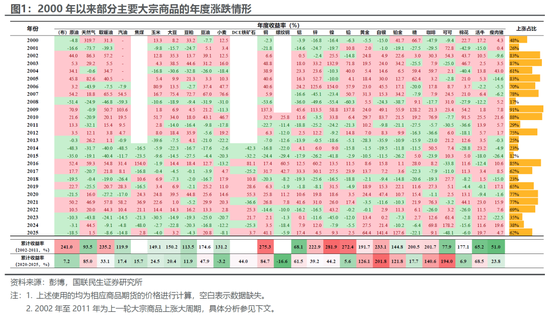
炒股就看金麒麟分析师研报,权威,专业,及时,全面,助您挖掘潜力主题机会! 来源:川阅全球宏观 本轮商品上涨的"旗手"金银遭遇了"滑铁卢",贵金属乃至背后的商品上涨周期的叙事和逻辑还能继续 吗?我们回顾百年以来的历史,从三大结构性角度去看,当前我们可能还处在比较初期的阶段。 我们不妨先从最近25年的主要大宗商品的涨跌来入手。2002年至2011年是当前最近的一次商品上涨大周 期(具体的划分参考下文),与其相比,本轮商品的上涨至少目前看来存在比较明显的差异(图1): 上涨"广度"不太够。2002年至2011年大部分时间内商品价格共振上涨更明显(主要大宗商品中上涨比例 超过60%),而最近3年,除了2025年外商品上涨的范围是比较有限的。 从上涨品种数量和涨幅角度看,本轮贵金属价格的上涨过于"突出",而大部分能源、农产品和非有色的 金属却是"滞涨"的。 当然,退一步而言,本轮商品上涨周期持续的时间还不够,假以时日是否会有更大的上涨空间?本篇报 告,我们从中长期视角分析一轮商品上涨大周期究竟需要什么条件。 | and the control of the control control control of the ...

暴跌超40%!财经大V充当“吹鼓手”,切勿轻信暴富神话!这是股市的“不为”清单
证券时报· 2026-02-01 04:20
Core Viewpoint - The article emphasizes the importance of avoiding risky investment behaviors and highlights the principle of missing out on opportunities rather than making wrong investment decisions [2]. Group 1: Investment Risks - Recent declines in commercial aerospace, AI applications, and robotics stocks have exceeded 40% from their peaks, indicating potential financial disasters for investors who used leverage or bought into unfamiliar assets [2]. - Prominent financial influencers have faced penalties for promoting speculative investments, leading to significant losses for investors who followed their advice [2]. - Investors are advised to create a negative checklist to avoid known risks, focusing on what not to do rather than what to do [2]. Group 2: Wealth Accumulation - The pursuit of quick wealth is discouraged, as it often leads to gambling-like behavior rather than sound investment practices [3]. - Wealth accumulation requires time, patience, knowledge, discipline, and hard work, and those promoting easy riches should be approached with caution [3]. - The article references Charlie Munger's view that seeking quick wealth can lead to negative traits like jealousy and arrogance, resulting in poor investment decisions [4]. Group 3: Common Investment Mistakes - Avoid trying to discover the next big company like Microsoft; instead, focus on reliable companies whose stock prices are undervalued [5]. - The belief that "this time is different" in the market is a costly lesson, as historical patterns tend to repeat themselves [6]. - Investors should not let personal preferences for a company's products cloud their judgment regarding its profitability [6]. - Panic selling during market downturns is discouraged, as stocks are often most attractive when no one wants to buy them [6]. - Timing the market is deemed an investment myth, with no strategy consistently predicting the best times to buy or sell [7]. - Valuation should not be overlooked; investments should be based on current value rather than speculation on future buyers [7]. - Cash flow analysis is crucial for assessing a company's financial health, as it provides a clearer picture than earnings figures alone [7].
基金研究周报:权益风格切换,白银暴跌(1.26-1.30)
Wind万得· 2026-01-31 22:26
Market Overview - The A-share market exhibited a structurally differentiated pattern last week, with major broad indices generally under pressure. The Shanghai Composite Index closed at 4117.95 points, down 0.44% for the week [2] - The ChiNext Index and the North Star 50 both fell over 3.5%, indicating a significant pullback in growth sectors. In contrast, value styles performed relatively strongly, with the Shanghai 50 rising 1.13% and the CSI Dividend Index increasing by 1.58%, reflecting a trend of capital flowing towards undervalued, high-dividend assets [2] - Overall, the market continued to experience style switching amid high-level fluctuations, with value sectors showing relative resilience while growth sectors faced adjustment pressures [2] Industry Performance - Last week, most of the Wind first-level industries declined, with the energy sector leading the gains at 6.4%, benefiting from rising oil prices and geopolitical risk premiums. Defensive sectors such as daily consumption and finance also performed relatively well [10] - In contrast, sectors like discretionary consumption, industrials, and healthcare experienced notable declines, each falling over 3% due to weak demand and pre-holiday risk aversion [10] Fund Issuance - A total of 47 funds were issued last week, including 19 equity funds, 21 mixed funds, 4 bond funds, 2 QDII funds, and 1 FOF fund, with a total fundraising amount of 48.272 billion units [14] Fund Performance - The Wind All-Fund Index fell by 0.49% last week, with ordinary equity funds down 1.07% and equity-mixed funds down 0.76%. Bond funds experienced a slight decline of 0.09%, indicating overall pressure on fund performance, particularly in equity categories [6] Global Market Overview - Global markets showed significant differentiation last week. Among the three major U.S. indices, the S&P 500 rose slightly by 0.34%, while the Dow Jones fell by 0.42% and the Nasdaq dipped by 0.17%. European markets saw declines in France's CAC40 and Germany's DAX by 0.20% and 1.45%, respectively, while the UK's FTSE 100 rose by 0.79% [4] - In Asia, the Nikkei 225 fell by 0.97%, while the Hang Seng Index rose by 2.38%, and the Korean Composite Index surged by 4.70%, becoming the best-performing index globally [4] Bond Market Overview - The convertible bond index fell by 2.61% last week, while the 10-year government bond futures rose slightly by 0.10%. The 30-year main contract dropped by 0.33%, reflecting a defensive positioning by investors amid unclear policy expectations and rising credit risk concerns [12]

护城河也会干涸,如果没有“再投资能力”
雪球· 2026-01-31 04:21
Core Concept - The article discusses the concept of "economic moats" as defined by Morningstar, emphasizing the importance of a company's ability to generate excess returns over a long period [6][7][8]. Group 1: Economic Moat Definition and Characteristics - Economic moats are defined as a company's ability to maintain excess returns, with a wider moat indicating a slower decline into mediocrity [8]. - Morningstar categorizes economic moats into three types: Wide Moat, Narrow Moat, and No Moat, with specific quantitative definitions and characteristics for each [10]. - A company with a Wide Moat is expected to sustain excess returns for at least 20 years, while a Narrow Moat can maintain excess returns for at least 10 years [9][10]. Group 2: Importance of Valuation - Valuation is crucial in assessing moat companies, with Morningstar advocating for a dynamic valuation standard based on the certainty of a company's business model [17][18]. - Different levels of uncertainty in a company's valuation require varying degrees of discount for buying and premium for selling [20]. - The article highlights that a more nuanced approach to valuation, based on business models, is more aligned with market realities than a blanket tolerance for good companies [21]. Group 3: ETF and Performance Comparison - Morningstar's moat investment philosophy is encapsulated in the VanEck Morningstar Wide Moat ETF (MOAT), which has been in existence since 2012 [22]. - As of the end of 2025, the MOAT ETF underperformed the S&P 500 index, primarily due to the recent market dynamics dominated by a few large-cap stocks [23][25]. - Despite underperforming the S&P 500, the MOAT ETF still showed better performance compared to an equal-weighted S&P 500 index [25]. Group 4: Evolution of Moat Concept - The article references Pat Dorsey, who expanded on the moat concept after leaving Morningstar, introducing categories like Legacy Moat and Reinvestment Moat [27][28]. - Legacy Moat companies have strong competitive advantages but limited growth opportunities, while Reinvestment Moat companies can reinvest profits into high-return opportunities [28]. - The article also discusses the emergence of Capital Light Compounders, which leverage network effects for growth with minimal capital investment [29].

关于巩固拓展经济回升向好势头实现一季度“开门红”的若干政策措施
Xin Lang Cai Jing· 2026-01-30 22:49
(来源:黑龙江日报) 转自:黑龙江日报 中共黑龙江省委办公厅 黑龙江省人民政府办公厅印发 中共黑龙江省委办公厅 黑龙江省人民政府办公厅 2026年1月29日 为深入贯彻中央经济工作会议精神,全面落实省委十三届九次全会暨省委经济工作会议部署,发挥存量 政策和增量政策集成效应,全力巩固拓展经济回升向好势头,确保实现一季度"开门红",确保"十五 五"开好局、起好步,制定本政策措施。 一、大力提振消费 (一)优化消费品以旧换新政策实施。抓紧审核兑付2025年度消费品补贴,1月底前全部兑付到位,实 现跨年度顺畅衔接和平稳有序过渡。一季度安排各类资金12亿元左右,实施好汽车报废更新、汽车置换 更新、6类家电以旧换新、4类数码和智能产品购新等领域国家补贴政策。汽车更新补贴由定额补贴调整 为按车价比例补贴。家电以旧换新调整为补贴1级能效或水效产品,按照产品售价的15%给予补贴。 (二)开展促消费系列活动。打造"购在龙江"、"龙江味道"、"龙江好物"等品牌,抓住春节、元宵节等 重要消费节点,统筹开展"新春年货节"等冬季促消费活动500场以上。鼓励各市(地)精准发放消费 券,因地制宜设计简便灵活的领用规则,合理确定消费券有效期, ...