
TMT

Search documents
渤海证券研究所晨会纪要(2025.11.07)-20251107
BOHAI SECURITIES· 2025-11-07 10:35
Macro and Strategy Research - The GDP growth rate for the first three quarters reached 5.2%, but the fourth quarter may face pressures due to high base effects and diminishing policy impacts, necessitating attention to the implementation of incremental policies under the "counter-cyclical adjustment" framework [2] - The Federal Reserve's October meeting resulted in a 25 basis point rate cut due to a rapid deterioration in the U.S. job market, with expectations for further easing in liquidity both domestically and internationally [3] - The capital market's policy environment is becoming clearer, with ongoing reforms in public funds expected to facilitate the flow of household wealth into the stock market, creating a virtuous cycle [3] - A-shares are expected to enter a phase characterized by more pronounced fluctuations and a slower upward trend, suggesting a strategy of patience and seizing structural opportunities during market volatility [4] Industry Research - The steel industry may see weakened demand as the heating season begins in northern regions, leading to supply contraction due to environmental restrictions, resulting in fluctuating steel prices [6] - Copper prices may lack upward momentum after reaching highs in October, influenced by macroeconomic conditions and supply pressures from overseas mines [6] - The aluminum sector is expected to perform well due to low alumina prices and strict domestic production limits, with demand driven by sectors like new energy vehicles [8] - Gold prices are anticipated to fluctuate due to geopolitical factors and changes in U.S. monetary policy, while long-term trends suggest increasing attractiveness for gold as a hedge [8] - The lithium market is expected to remain strong due to inventory depletion and unexpected demand from energy storage [6] - The cobalt market is projected to maintain high demand driven by the electric vehicle and energy storage sectors, despite potential price increases affecting demand growth [9] - The rare earth sector is poised for support due to improved U.S.-China trade relations and expectations of relaxed export controls, which may enhance overseas demand [7]
同类最活跃A500ETF基金(512050)近5日吸金超7亿元,A股企业三季度业绩回暖
Mei Ri Jing Ji Xin Wen· 2025-11-07 01:45
Group 1 - The A-share market showed strong performance, with the Shanghai Composite Index surpassing 4000 points, and the A500 ETF (512050) closing up 1.55% with a trading volume of 5.252 billion yuan, attracting over 700 million yuan in the past five trading days [1] - The third-quarter reports of A-shares indicate a recovery trend in performance, with cumulative revenue growth of 1.21% year-on-year and cumulative net profit growth of 5.34% year-on-year for the first three quarters of 2025, reflecting improved overall profitability and stable operating cash flow [1] - Guangfa Securities highlighted that the earnings recovery trend is clear, with structural highlights in technology, finance, and certain manufacturing and resource sectors, suggesting a balanced investment strategy in the fourth quarter [1] Group 2 - The A500 ETF (512050) tracks the CSI A500 Index, employing a dual strategy of industry balanced allocation and leading stock selection, covering all 35 sub-sectors and integrating value and growth attributes [2] - Compared to the CSI 300, the A500 ETF is overweight in new productivity sectors such as AI, pharmaceuticals, and renewable energy, providing a natural "barbell" investment approach [2]
11月5日大盘简评
Mei Ri Jing Ji Xin Wen· 2025-11-06 01:16
Group 1 - A-shares experienced a slight upward trend on November 5, with the Shanghai Composite Index rising by 0.23% to 3969.25 points, and the Shenzhen Component Index increasing by 0.37% [1] - The trading volume in the Shanghai and Shenzhen markets was approximately 18723.41 billion yuan, a decrease of about 434.17 billion yuan compared to the previous trading day [1] - Sectors such as photovoltaic, carbon neutrality, and new energy vehicles showed strong performance, while TMT sectors faced a pullback, particularly in integrated circuits and computers [1] Group 2 - The A-share market continued to fluctuate below 4000 points, with TMT sectors still in a correction phase [2] - In the absence of policy support in the fourth quarter, sectors with growth potential are expected to focus on AI and anti-involution, with limited expansion into consumer sectors [2] - Public funds' allocation to TMT sectors reached a historical high of 40% in Q3, indicating a potential slowdown in future price increases [2] Group 3 - The bond market may show some performance in the fourth quarter, with limited upward space for government bond yields following the resumption of government bond trading by the central bank [3] - The macroeconomic pressure in China is evident, with insufficient domestic demand being a major structural issue, complicating the transmission of anti-involution policies [3] - Investors are advised to pay attention to the ten-year government bond ETF and government bond ETF due to the potential for a decline in bond yields [3]
ETF日报:债市在基本面、政策面与技术层面均有做多理由,关注十年国债ETF、国债ETF
Xin Lang Ji Jin· 2025-11-05 12:30
Market Overview - A-shares experienced a volatile upward trend today, with the Shanghai Composite Index rising by 0.23% to 3969.25 points, the Shenzhen Component Index increasing by 0.37%, and the ChiNext Index up by 1.03% [1] - The total trading volume in the Shanghai and Shenzhen markets was approximately 1.872 trillion yuan, a decrease of about 43.42 billion yuan compared to the previous trading day [1] Sector Performance - The anti-involution theme maintained strong performance, with solar energy, carbon neutrality, and new energy vehicles leading the gains [1] - The TMT sector faced a pullback, with integrated circuits and computers showing the largest declines [1][2] Investment Sentiment - The risk appetite today was neutral, with nearly 3,400 stocks rising [1] - Growth stocks outperformed value stocks, and there was a divergence within the innovation-driven sectors [1] TMT Sector Analysis - The TMT sector's slowdown may limit the upward trend to other sectors, with focus expected to remain on AI and anti-involution sectors [2] - Public funds' allocation to the TMT sector reached a historical high of 40% in Q3, suggesting potential for a slowdown in future gains [2][4] Economic Indicators - The October PMI was reported at 49.0, slightly above the seasonal decline, with production and new orders being the main drag [10] - Domestic demand remains weak, impacting companies' pricing power and the effectiveness of anti-involution policies [10] Bond Market Outlook - The bond market may perform well in Q4, with limited upward space for government bond yields following the resumption of government bond trading [7][12] - Investors are advised to focus on ten-year government bond ETFs as the macroeconomic environment shows signs of pressure [7][13]

北交所25年三季报总结:科技制造景气延续,重视反内卷行业盈利修复
Shenwan Hongyuan Securities· 2025-11-05 12:08
Investment Rating - The report indicates a focus on the recovery of profitability in industries affected by the "anti-involution" policy, particularly in the technology manufacturing sector [1][3]. Core Insights - The overall revenue and profit of the North Exchange have rebounded, but the profit growth rate remains in negative territory. As of Q3 2025, the single-quarter revenue growth rate is +5.3%, while the net profit growth rate is -5.0% [3][30]. - The report emphasizes the importance of structural highlights within the industry, particularly in technology manufacturing, which continues to show signs of recovery [4][3]. - The report suggests a focus on companies that exhibit both "growth in prosperity" and "cyclical reversal" [3]. Summary by Sections Overall Performance - As of Q3 2025, the North Exchange has 280 companies with a total market capitalization of 9,210 billion, and an average market value of 32.9 billion [7]. - The revenue growth rate for the North Exchange has shown an upward trend, with a single-quarter growth of +5.3% [11][30]. Industry Highlights - The technology manufacturing sector is highlighted for its continued prosperity, with significant recovery in profitability observed in upstream cyclical products such as basic chemicals and non-ferrous metals [3][4]. - The report identifies key companies in various sectors, including military and mechanical equipment, traditional robotics, and power equipment, which are expected to benefit from the "anti-involution" policies [3][4]. Individual Stock Opportunities - The report suggests screening for stocks that show sustained growth in profitability, such as Guoxing Technology and Kaitai Co., as well as those with upward revisions in profit forecasts [3][4]. - Companies with high growth in contract liabilities and advance payments, such as Kangnong Agriculture and Zhongcheng Technology, are also recommended for attention [3][4]. Financial Metrics - The return on equity (ROE) for the North Exchange reached 6.1%, with a slight improvement of +0.1 percentage points [3][63]. - The report notes that the gross profit margin remains under pressure, with the PPI showing a narrowing decline [15][26]. Cash Flow and Turnover - The operating cash flow for the North Exchange showed a growth rate of +11.6%, indicating a recovery in operations [51]. - The asset turnover ratio has slightly deteriorated, primarily due to pressures from fixed assets [58][62].
市场风格切换了?要调仓吗?券商最新观点出炉
券商中国· 2025-11-05 04:12
Core Viewpoint - The A-share market is experiencing a significant style switch in November, with the banking sector leading the market gains while previously strong sectors like metals and new energy are declining [1][2]. Group 1: Market Trends - On November 4, the banking sector rose by 2.03%, leading the market, while the metals sector fell by 3.04% [1]. - Historical data shows that in bull markets, style switches are common at year-end, primarily driven by policy, industry trends, and fund reallocation [2][3]. Group 2: Institutional Behavior - In the fourth quarter, there is often pressure to realize gains in leading sectors, as these sectors have accumulated significant increases [4]. - As of Q3 2025, the electronic sector's holding ratio reached 25%, and TMT sector holdings exceeded 40%, both at historical highs [4]. Group 3: Investment Strategy - Investors are advised to adopt a balanced allocation strategy to navigate market volatility during the style switch period, while still recognizing the ongoing value in technology growth stocks [5]. - The macroeconomic environment is expected to favor growth stocks due to the anticipated easing of monetary policy in the U.S., which could enhance liquidity [5]. Group 4: Sector Recommendations - Current recommendations include focusing on traditional industries that show improved capital returns, such as non-bank financials, steel, basic chemicals, and machinery, despite their lack of investor interest [5][6]. - The recovery of global manufacturing is uneven but moving towards alignment, with the U.S. benefiting from AI spillover and emerging markets seeing a return of capital and capacity rebuilding [6].

公募基金三季报披露完毕 科技成长主导基金市场 持股集中度回升
Sou Hu Cai Jing· 2025-11-05 00:13
Core Viewpoint - The public fund's third-quarter report indicates a continuous growth in asset scale and an increase in stock positions for actively managed equity funds, driven by a steady rise in the A-share market and a focus on technology growth sectors [1] Group 1: Market Trends - The TMT (Technology, Media, and Telecommunications) sector has seen significant increases in holdings, while sectors such as large finance and large consumption have experienced reductions in holdings [1] - The concentration of holdings in leading companies has increased during the third quarter [1] Group 2: Future Outlook - Several institutions suggest that while individual stock prices have risen significantly, short-term market volatility may increase; however, the long-term trend for the equity market remains upward and certain [1] - There is an expectation for a potential return to dividend value styles in the fourth quarter [1]
这家地产链公司是否可以困境反转?| 1104 张博划重点
Hu Xiu· 2025-11-04 13:17
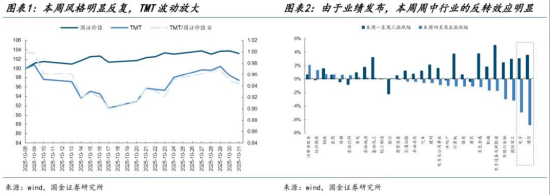
Market Overview - The market is experiencing a pullback with trading volume dropping below 2 trillion, led by declines in the ChiNext and Shenzhen indices, while the Shanghai Composite Index is supported by dividend sectors [1] - The ChiNext index has broken below the 30-day moving average, indicating a bearish trend, while the Shanghai Composite Index is currently supported by the 20-day moving average, suggesting a potential range-bound structure in the short term [1] Investment Insights - Goldman Sachs and Morgan Stanley have warned investors of a potential market pullback over the next two years after a strong rally earlier this year [4] - Both firms highlight that Asia is expected to become a focal point in global markets, with continued interest in China from global capital allocators [6] - Infrastructure construction is identified as a key investment theme for the coming years [6] Sector Analysis - There is a significant concentration of institutional funds in the TMT (Technology, Media, and Telecommunications) sector, creating a "historic level of consensus" among investors [7] - The high concentration of holdings in the TMT sector increases vulnerability to negative news, as stock prices have already factored in optimistic expectations [7] - Public funds are currently at high stock positions, and the TMT sector's performance relies on additional capital inflows from other sources, as the capacity for public funds to increase their positions is limited [9]
金融市场流动性与监管动态周报:公募基金TMT持仓比例新高后怎么看?-20251104
CMS· 2025-11-04 11:33
证券研究报告 | 策略研究 2025 年 11 月 4 日 公募基金 TMT 持仓比例新高后怎么看? 1. 《招商 A 股流动性研究体系与 流动性指数——A 股市流动性研 究之四》,2016 年 8 月 2. 《A 股机构投资者全景图—股 票市场 SCP 范式研究之一》, 2017 年 10 月 3. 《近期货币政策的边际变化及 其影响如何?——金融市场流动 性与监管动态周报(1029)》 | 招商 A 股流动性指数 | | | --- | --- | | 流动性指标 | 数值/金额(亿元) | | 资金供给 | | | 公募基金发行 | 184.95↑ | | ETF 净申购 | 187.90↑ | | 融资净买入 | 291.55↑ | | 资金需求 | | | 限售解禁 | 556.70↓ | | IPO 融资 | 27.46↑ | | 净减持金额 | 71.69↓ | | 计划减持金额 | 125.05↑ | | 活跃度 | | | A 股周度日均成交额 | 20466.72↑ | | 二级市场可跟踪资金供需净流入 | | 张夏 S1090513080006 zhangxia1@cmschina.co ...
资本市场月报25年11月-20251103
Ping An Securities· 2025-11-03 09:25
Market Performance - In October 2025, global stock markets experienced a general uptrend, with the Dow Jones, S&P 500, and Nasdaq rising approximately 2% to 5%[4] - The Hang Seng Index and Hang Seng Tech Index saw declines of 3.5% and 8.6%, respectively, indicating a low point for Hong Kong stocks[4] Sector Performance - The Hang Seng industry indices showed a structural divergence, with defensive sectors like Energy (up 6.6%) and Utilities (up 3.6%) performing well, while Information Technology and Healthcare sectors fell significantly by 8.7% and 11.0%[8] - The financial sector also showed slight strength, contributing to the overall mixed performance of the market[8] IPO and Financing Activity - In October 2025, the Hong Kong IPO market saw 12 new listings, raising approximately HKD 27.71 billion, primarily driven by two large tech companies[12] - The first-day performance of new stocks was strong, with a first-day loss rate of only 8.3% and one stock, Jinye International Group, surging 330% on its debut[12] Macroeconomic Indicators - In the U.S., the manufacturing PMI for October was reported at 52.2, and the services PMI at 55.2, both showing improvement from September[14] - The consumer confidence index in the U.S. fell to a five-month low of 53.6, indicating a decline in consumer sentiment[14] Chinese Economic Outlook - China's GDP growth slowed to 4.8% year-on-year in Q3 2025, down from 5.4% in Q1 and 5.2% in Q2, with industrial output growth improving to 6.5%[16] - The "14th Five-Year Plan" emphasizes technological self-reliance and high-level opening-up, aiming to boost emerging industries and innovation[16] Investment Strategy - Hong Kong stocks are viewed as having relative valuation advantages globally, with a favorable liquidity environment expected to support valuation recovery[18] - Investors are advised to focus on sectors with high growth potential, such as technology, and those likely to benefit from policy support, including new energy and consumer sectors[18]