
铜

Search documents
《有色》日报-20251225
Guang Fa Qi Huo· 2025-12-25 01:45
1. Report Industry Investment Ratings No information about industry investment ratings is provided in the reports. 2. Core Views of the Reports Copper - The current high copper price is mainly driven by the structural imbalance of supply and inventory. The COMEX - LME premium leads to the continuous siphoning of non - US copper resources by the US, intensifying the supply shortage in non - US regions. The Fed's interest rate cuts and balance - sheet expansion boost market risk appetite and support copper prices. - The long - term TC in 2026 is $0/ dry ton. As long as the by - product profit can be higher than the smelting cost, the cash - flow profit of smelters can be maintained. The key to the tightness in the smelting end transferred from the tightness in the mine end lies in the price trend of by - products such as sulfuric acid. - SMM expects that China's electrolytic copper production may continue to rise in December, with sufficient spot supply. High copper prices suppress terminal demand, resulting in a large discount in the spot market this week, an increase in social inventory, and a weakening of downstream operating rates and order releases. - In the future, the upward drivers are the further deterioration of the overseas inventory structure and the further improvement of interest - rate cut expectations; the downward driver is the negative feedback from weakening demand, but the downside space is limited in non - recession scenarios. In the long run, the bottom center of copper prices may continue to rise [1]. Aluminum - Alumina futures maintained a low - level shock yesterday. The fundamental pattern of oversupply in the spot market has not improved. The root cause is the structural surplus between stable supply growth and peak demand, which has triggered a comprehensive negative feedback cycle from inventory to cost. The supply is rigid, and the weekly output increased by 0.5 million tons to 1.689 million tons, leading to a weekly increase in the entire industrial chain inventory to a new high. After the price breaks through the industry's cash - cost line, enterprises pressure the price of upstream bauxite, and the cost - support level moves down dynamically. Alumina prices are expected to fluctuate at a low level around the cash - cost line, with a reference range of 2450 - 2650 yuan/ton for the main contract. - Electrolytic aluminum futures maintained a high - level shock yesterday. The spot discount widened to - 170 yuan/ton, indicating poor market acceptance at high prices and sluggish spot trading. Macroscopically, the overseas easing expectation is strengthened, and the Fed cut interest rates by 25 basis points in December. The employment data from October to November shows a significant cooling of the labor market, consolidating the logic of interest - rate cuts, and the weakening US dollar is beneficial to aluminum prices. Domestically, policies remain positive. On the supply side, the new production capacities in China and Indonesia are steadily released, and the operating output increases slightly; on the demand side, it enters the traditional off - season, the operating rates of downstream aluminum - processing sectors generally decline, and the proportion of molten aluminum decreases to 76.3%, reflecting weakening terminal consumption. The inventory structure is differentiated, and the on - the - way inventory in Xinjiang has increased due to improved transportation. Aluminum prices are expected to fluctuate widely in the short term, with a reference operating range of 21800 - 22600 yuan/ton for the main contract of Shanghai aluminum [3]. Aluminum Alloy - The cast - aluminum - alloy market maintained a slightly stronger shock yesterday. The core contradiction in the current market is the game between strong cost support and the reality of weakening marginal demand. On the cost side, the supply of scrap aluminum, especially primary aluminum, is continuously and comprehensively tight, and holders generally hold back supplies and support prices, causing recycled - aluminum plants to face high procurement costs. In addition, the stricter implementation of reverse invoicing in some regions recently is expected to increase the cost by about 100 yuan/ton, and some enterprises have raised prices urgently. On the demand side, high aluminum prices suppress the purchasing willingness of downstream die - casting enterprises, and enterprises mainly purchase on demand and wait and see cautiously. Although there is a phased impulse demand at the end of the year, the overall slowdown is obvious. The social inventory has decreased slightly for several consecutive weeks to 5.34 million tons, indicating a tight - balance state in the market. The price of ADC12 is expected to continue to fluctuate in a high - level range in the short term, with a reference range of 20800 - 21600 yuan/ton for the main contract [5]. Zinc - The TC of zinc has stopped falling and stabilized, and zinc prices are fluctuating. Domestic zinc - concentrate production has entered the production - reduction season, and the domestic zinc - mine output decreased month - on - month in November. As the risk of short - squeezing overseas eases and the Shanghai - London ratio is repaired, the window for zinc - mine imports is opened, and the TC shows signs of stopping falling and stabilizing. On the smelting side, due to profit pressure, more enterprises are actively reducing production and controlling output, and the increase in refined - zinc output is limited. On the demand side, the operating rates of downstream processing industries are basically stable. After the center of zinc prices moves down, enterprises replenish stocks at low prices, the domestic spot zinc ingots maintain a premium, and the social inventory continues to decline. In terms of inventory, the LME inventory has increased significantly, and the 0 - 3 structure has changed to a discount, easing the short - squeezing risk. Macroscopically, the inflation and employment data in the US in November improve the expectation of interest - rate cuts, which supports zinc prices, and the main contract should focus on the support level of 22850 - 22950 [9]. Tin - On the supply side, the resumption of tin - mine production in Myanmar is expected to accelerate, and the import volume has steadily recovered in November. Attention should be paid to the subsequent increase in supply. On the demand side, tin - solder enterprises in South China show certain resilience. Against the background of the traditional peak season, some downstream electronic - consumption and new - energy - related orders support the operating rate, making the overall trading atmosphere in this region better than that in East China, especially in the sub - fields related to new - energy vehicles and photovoltaic solder strips, where the demand remains stable. In East China, the operating rates of tin - solder enterprises are more obviously suppressed as they are more oriented towards traditional consumer electronics and white - goods fields. Recently, there are signs of improvement in the supply from Myanmar and Indonesia, and previous long positions should be gradually closed for profit. Subsequently, attention should be paid to the macro situation and the recovery of the supply side [11]. Nickel - The Shanghai nickel futures fluctuated widely yesterday, showing a relatively strong trend during the day and a slight decline at night. Recently, the market has mainly traded around the expectation of tightened nickel - ore supply. The increase in domestic nickel prices has widened, but the spot trading of refined nickel remains cold. The spot premium of Jinchuan nickel resources has risen, and traders are cautious about purchasing at high premiums. In terms of nickel ore, the FOB price of 1.4% nickel ore from the Eramen mine in northern Philippines was settled at $40, and the shipping efficiency is acceptable; the domestic - trade benchmark price in Indonesia in December (Phase II) is expected to fall by $0.11 - 0.18/ wet ton, with a mainstream domestic - trade premium of + 25. The domestic - trade price of nickel ore is expected to continue to decline. In terms of nickel iron, the support from the ore end is increasing, and the pressure on prices from steel mills has eased due to improved profits, and the recent transaction price has risen slightly. The demand for stainless steel remains weak, and steel mills are cautious about raw - material procurement, with weak terminal demand. At the end of the year, the production schedule of downstream ternary materials has declined slightly, and the medium - term new production capacity will also have a restrictive effect, and the price of nickel sulfate has fallen slightly. Overseas inventory is accumulating at a high level but at a slower pace, while the pressure on domestic social inventory is increasing. Overall, the expectation of Indonesia's increased control over nickel ore has boosted recent sentiment, but the actual implementation remains to be observed. The short - term reality is still weak, and the medium - term fundamental looseness restricts the upside space of prices. The futures are expected to continue to fluctuate and repair in the short term, but the upside space after the rapid breakthrough of the support level remains to be observed. Attention should be paid to the possibility of a callback after the digestion of news impacts, with a reference range of 123000 - 130000 for the main contract [12]. Stainless Steel - The stainless - steel futures maintained a relatively strong shock yesterday, with a slight decline at night. The price - increase atmosphere in the现货 market has become stronger, steel - mill agents led the price increase, and some traders and downstream enterprises replenished stocks at low prices, resulting in an overall increase in trading volume. Macroscopically, the Fed cut interest rates as expected this year, and the domestic central bank injected liquidity, and the policy window has shown a certain attitude in stabilizing growth and promoting consumption. In the nickel - ore market, the news from Indonesia has been fluctuating, strengthening the market's expectation of tightened ore supply. The FOB price of 1.4% nickel ore from the Eramen mine in northern Philippines was settled at $40; the domestic - trade benchmark price in Indonesia in December (Phase II) is expected to fall by $0.11 - 0.18/ wet ton, with a mainstream domestic - trade premium of + 25. The bargaining range for nickel iron has been raised, and the profit losses of iron plants have been somewhat repaired; the price of ferrochrome has been running steadily, and factories are mainly fulfilling orders. The supply is relatively high, but some enterprises may conduct annual maintenance at the end of the year, and the loss pressure may also force more steel mills to actively reduce production, slightly easing the supply pressure. In the off - season of demand, the order releases in downstream fields such as home appliances and architectural decoration are limited, and market transactions are mainly based on rigid demand, with a low willingness for large - scale procurement. The social inventory is decreasing overall, but the reality of high inventory is still prominent. Overall, the futures are greatly affected by overall sentiment, the supply pressure in the fundamentals has slightly eased, and the cost support from the ore end and nickel iron has been strengthened, but the demand boost in the off - season is insufficient. The short - term sentiment in the stainless - steel market has improved, but the supply - demand game in the fundamentals continues. It is expected to adjust through shocks in the short term, with a reference range of 12500 - 13200 for the main contract. Subsequently, attention should be paid to the news from the nickel - ore end and the implementation of steel - mill production cuts [15]. Lithium Carbonate - The lithium - carbonate futures remained strong yesterday. The main contract LC2605 continued to rise by 5.89% to 124720 at the close after approaching the daily limit at the end of the session and then reducing positions and falling back, with high capital sentiment. There is a lot of incremental news. The Guangzhou Futures Exchange announced that starting from the trading time on December 26, the daily opening - position limits for non - futures - company members or clients in contracts LC2601, LC2602, LC2603, LC2604, and LC2605 shall not exceed 400 lots respectively, and those in contracts LC2606, LC2607, LC2608, LC2610, LC2610, LC2611, and LC2612 shall not exceed 800 lots respectively. The minimum order quantity for trading instructions has been adjusted from 1 lot to 5 lots, and the minimum closing - order quantity remains 1 lot. In addition, Jiemian News reported that according to a person close to CATL, the lithium - ore mining project in the lower reaches is expected to resume production around the Spring Festival. Fundamentally, the supply and demand are both strong. The production data last week maintained a slight increase. Recently, the increment of new salt - lake lithium - extraction projects has been partially released. After the completion of maintenance of some projects, the lithium - extraction production from spodumene is expected to increase in December, while the production from mica remains stable with a slight decrease. Subsequently, attention should be paid to the resumption progress of large enterprises. The recycling end has shown a slight upward trend recently. The downstream demand maintains a certain resilience. In the off - season, the market's production - schedule expectations for downstream industries in January are mostly a slight month - on - month decrease, mainly driven by the reduction in ternary materials for power batteries. The inventory reduction slowed down last week. The inventories of upstream smelters and downstream sectors continued to decrease, while the inventories of battery - cell factories and traders increased. The high off - balance - sheet hidden inventory may also pose a certain pressure. The short - term balance fundamentals support the price to some extent, but there is limited new driving force in the future. Recently, the futures performance has deviated from the spot market in the capital - driven market. Negative news may suppress sentiment, intensifying the long - short game. The futures may retreat and then fluctuate widely, with a reference range of 118,000 - 122,000 for the main contract [17]. Industrial Silicon - The spot price of industrial silicon has stabilized. The futures price has oscillated and rebounded by 145 yuan/ton to 8780 yuan/ton. Both supply and demand are stable with a downward trend, and the expectation of industrial - silicon production reduction is further increasing. Attention should be paid to the subsequent implementation. The expectation of joint production cuts by multiple leading enterprises to support prices is rising. Currently, the weekly production has decreased slightly without obvious changes, and attention should be paid to the follow - up progress. The expectation of rising coal prices also provides support at the bottom. It is expected that the weak supply - demand situation will continue in December. Attention should be paid to the implementation of the decrease in industrial - silicon production. It is still expected that the industrial - silicon price will oscillate at a low level, with the main price - fluctuation range likely to be between 8000 - 9000 yuan/ton. If the production does decrease significantly, it is expected to break through 10,000 yuan/ton upwards. However, if polysilicon production is significantly reduced, the price will fall [19]. Polysilicon - The spot price of polysilicon has slightly declined, and the futures price has oscillated, declined, and then recovered, rising by 380 yuan/ton to 59225 yuan/ton. The exchange announced that non - futures - company members or clients shall not open more than 200 lots in each contract on a single day. Against the background of weak demand, upstream enterprises hope to drive up the prices of the entire industrial chain by supporting prices. Recently, downstream enterprises have raised their quotes under the pressure of rising raw - material prices. The prices of silicon wafers have increased by 2 - 4%, the prices of battery cells have increased by 5%, and the prices of components have increased slightly by 0.15%, but the profits are still under pressure. From the perspective of terminal installation, after the new policy, due to the relatively concentrated power - generation time of photovoltaic installations, the advantage of more dispersed power - generation time of new - energy wind power has emerged, so the integrated development of wind, solar, and energy storage may be a more profitable development direction. For the photovoltaic industrial chain to increase the overall price level, the demand side needs to find more application scenarios to absorb the gradually rising costs. The polysilicon price will still oscillate at a high level, and the futures price is still at a significant premium to the spot market. Attention should be paid to the production - reduction amplitude or the pressure of price decline. In terms of trading strategies, it is advisable to wait and see for the time being, and pay attention to the subsequent production - reduction situation and the acceptance of price adjustments. The open interest of the near - month contract has decreased to 12,700 lots, and the open interest of the 2602 contract is 28,900 lots. Investors are still reminded to pay attention to position management [20]. 3. Summaries by Relevant Catalogs Copper Price and Basis - SMM 1 electrolytic copper: The current price is 94,690 yuan/ton, up 1,220 yuan/ton (1.31%) from the previous day. - SMM 1 electrolytic copper premium/discount: - 310 yuan/ton, down 95 yuan/ton from the previous day. - The refined - scrap spread is 3,544 yuan/ton, up 409.97 yuan/ton (13.08%) [1]. Monthly Fundamental Data (November) - Electrolytic copper production: 1.1031 million tons, up 1.15 million tons (1.05%) month - on - month. - Electrolytic copper imports: 0.2711 million tons, down 0.011 million tons (- 3.90%) month - on - month [1]. Weekly Fundamental Data - Imported copper - concentrate index: - 43.65 dollars/ton, down 0.57 dollars/ton (1.32%) week - on - week. - Domestic mainstream port copper - concentrate inventory: 0.7314 million tons, down 0.0325 million tons (- 4.25%) week - on - week [1]. Inventory Data - Domestic social inventory: 0.1684 million tons, up 0.0039 million tons (2.37%) week - on - week. - Bonded - area inventory: 0.0766 million tons, up 0.0011 million tons (1.46%) week - on - week. - SHFE inventory: 0.0958 million tons, up 0.0064 million tons (7.18%) week - on - week [1]. Aluminum Price and Spread
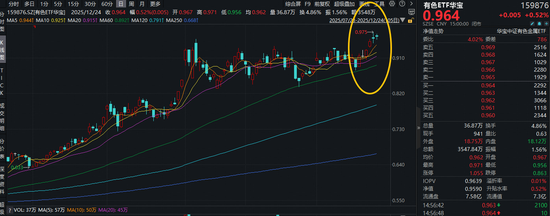
新高又新高!金、铜携手狂飙,资金积极抢筹!有色ETF华宝(159876)单日吸金981万元
Xin Lang Cai Jing· 2025-12-25 01:38
Group 1: Gold Market - London spot gold has reached an all-time high of $4500 per ounce, with a cumulative increase of over 70% this year [1][6] - Domestic gold prices in China have also surged, with Shanghai Gold Exchange's Au99.99 price surpassing 1000 yuan per gram [1][6] - Factors driving gold prices include geopolitical tensions, a weakening dollar, and expectations of interest rate cuts by the Federal Reserve [1][6] Group 2: Copper Market - LME copper futures have broken through $12,000 per ton for the first time, reaching a historical high of $12,133 per ton on December 24, with a year-to-date increase of over 38% [1][7] - Citigroup predicts that copper prices could reach $15,000 in a bullish scenario due to a weaker dollar and further interest rate cuts [7] - The copper market is influenced by supply disruptions, industrial demand, and concerns over potential copper tariffs [1][7] Group 3: Broader Non-Ferrous Metals Market - The non-ferrous metals sector is seen as a diversified investment opportunity, encompassing precious metals like gold, strategic metals like lithium and rare earths, and industrial metals like copper and aluminum [7] - Institutions believe that the non-ferrous metals sector will continue its bullish trend, with various firms expressing optimism about the ongoing market conditions [7][8] - The Huabao non-ferrous ETF (159876) has shown positive performance, reflecting investor confidence in the sector, with a daily inflow of 9.81 million yuan [8][10] Group 4: Investment Strategies - A comprehensive investment approach through ETFs covering various non-ferrous metals can help mitigate risks associated with investing in single metals [10] - The Huabao ETF and its linked funds provide exposure to a wide range of metals, making them suitable for portfolio diversification [10]

绿肥红瘦,涨势暂歇:申万期货早间评论-20251225
申银万国期货研究· 2025-12-25 00:25
Core Viewpoint - The article discusses the current economic environment, highlighting the Chinese central bank's continued implementation of a moderately loose monetary policy and the recent adjustments in the Beijing housing market to support home purchases by non-local families and families with multiple children [1][8]. Group 1: Financial Markets - The U.S. stock indices rose, with the defense and military sector leading gains, while the agriculture sector lagged behind. The market turnover reached 1.90 trillion yuan, and the financing balance increased by 14.859 billion yuan to 25,145.96 billion yuan [2][12]. - The A-share market is expected to maintain a long-term bullish trend supported by policy backing, capital influx, and industrial empowerment, with the upcoming Federal Reserve rate cut likely to enhance global capital flow and risk appetite [2][12]. Group 2: Oil Market - Saudi Arabia's average daily crude oil exports reached 7.1 million barrels in October, the highest level in two and a half years, up from 6.46 million barrels in September [3][15]. - The overall trend in the oil market remains downward, influenced by geopolitical tensions and potential sanctions on Russia's energy sector [3][15]. Group 3: Agricultural Products - Palm oil prices are expected to improve due to better export data from Malaysia, while soybean oil faces downward pressure from high production expectations [4][30]. - The domestic soybean market is experiencing a supply surplus, with auction prices declining, leading to a bearish outlook for soybean meal prices [29][30]. Group 4: Metals - Gold and silver prices are stabilizing, supported by lower-than-expected U.S. inflation data, which may provide room for further interest rate cuts [20]. - Copper prices are under pressure due to tight supply conditions and fluctuating demand from various sectors, including automotive and construction [21]. Group 5: Shipping Index - The European shipping index has shown a slight decline, with expectations for price stabilization as shipping companies adjust their pricing strategies ahead of the upcoming Chinese New Year [33].

国际现货黄金年内涨超70%
Sou Hu Cai Jing· 2025-12-24 16:57
Group 1 - The core viewpoint of the articles is that gold prices have surged significantly, reaching historical highs, with predictions for further increases in the coming years [2][3][10] - As of December 24, spot gold prices exceeded $4500 per ounce, marking a year-to-date increase of over $1870, with 50 instances of new historical highs in 2023 [2][3] - Morgan Stanley and JPMorgan have optimistic forecasts for gold prices, predicting $4800 and $5055 per ounce by the end of 2026, respectively, driven by strong demand and macroeconomic factors [10][9] Group 2 - The rise in gold prices has led to an increase in domestic gold jewelry prices, with brands like Chow Tai Fook and Lao Piao Gold raising prices multiple times throughout the year [4][3] - The international gold market has seen a 70% increase in prices this year, with COMEX gold reaching $4524.9 per ounce by December 23 [3][4] - Factors contributing to the gold price surge include a high U.S. unemployment rate, lower-than-expected core CPI data, and a weakening dollar, which have bolstered market expectations for looser monetary policy [5][6] Group 3 - The precious metals market is experiencing a strong upward trend, with silver and copper prices also reaching historical highs, and palladium and platinum futures showing significant gains [6][7] - The supply shortage due to global mine shutdowns and the potential impact of U.S. tariffs are driving prices higher in the metals market [8] - Analysts predict that the favorable macroeconomic environment and supply constraints will continue to support the upward trend in precious metals, including silver and platinum [8][6] Group 4 - There are concerns regarding central banks selling gold reserves, with Russia and Uzbekistan reported to have sold significant amounts of gold recently, which could impact long-term gold prices [11][12] - The historical context of central bank gold sales suggests that such actions can lead to prolonged bear markets for gold, highlighting the importance of monitoring central bank activities [11][12] - The geopolitical landscape, including U.S.-China trade tensions and the ongoing Russia-Ukraine conflict, has been a significant driver of gold's price increase this year [13][12]

有色金属专场-2026年度策略会
2025-12-24 12:57
Summary of Key Points from Conference Call Industry Overview - The conference call primarily discusses the precious metals market, focusing on gold, silver, platinum, and palladium, in the context of geopolitical risks and economic policies, particularly under the Trump 2.0 administration [1][4][3]. Core Insights and Arguments Gold Market - Gold prices are expected to rise due to inflation expectations and economic stagnation driven by the Trump 2.0 policy, which includes reciprocal tariffs [1][4]. - The demand for gold jewelry is declining due to high prices, while central bank purchases are slowing down. However, ETF investments are becoming a significant support factor for gold demand [5][6]. - The new gold tax policy differentiates between investment and non-investment uses, increasing the tax burden on jewelry, which is likely to reduce domestic jewelry consumption in the upcoming quarters [6]. Silver Market - The silver market has been in a supply deficit for five consecutive years, with expectations for a seventh year of supply shortfall in 2025. This is supported by increased ETF investments and insufficient inventory liquidity, which is driving up silver prices [7]. - The fundamental strength of silver contrasts with gold, which is more influenced by macroeconomic factors [7]. Platinum and Palladium - Both platinum and palladium are experiencing supply deficits, with platinum facing a more severe situation. Platinum's demand is diversified, particularly in the new energy vehicle sector, giving it more upward price elasticity compared to palladium [8][10]. Economic Policies and Predictions - The U.S. government may implement loose monetary and fiscal policies ahead of the midterm elections in 2026, which could further boost gold prices [11]. - The Federal Reserve's monetary policy impact on gold prices is diminishing, with geopolitical risks and U.S. debt issues becoming more significant factors in gold pricing logic [2][15]. Future Price Predictions - Gold prices are projected to range between $3,900 and $4,800 per ounce in 2026, with an average price expected to reach around $4,500 per ounce [15]. - Silver prices could reach between $56 and $64 per ounce, depending on the gold price trajectory [16]. Additional Important Insights - The geopolitical landscape, particularly the Russia-Ukraine conflict, will significantly influence future gold prices. A resolution to this conflict could lower geopolitical risk but may not prevent inflation expectations from rising [13]. - The long-term target for gold could reach $6,000 per ounce, although achieving this in the short term remains uncertain [18]. - The copper market is also discussed, highlighting supply constraints and the impact of U.S. tariffs on copper prices, with expectations of a supply gap in 2026 [19][24]. This summary encapsulates the key points discussed in the conference call, providing insights into the precious metals market and the broader economic context influencing these trends.
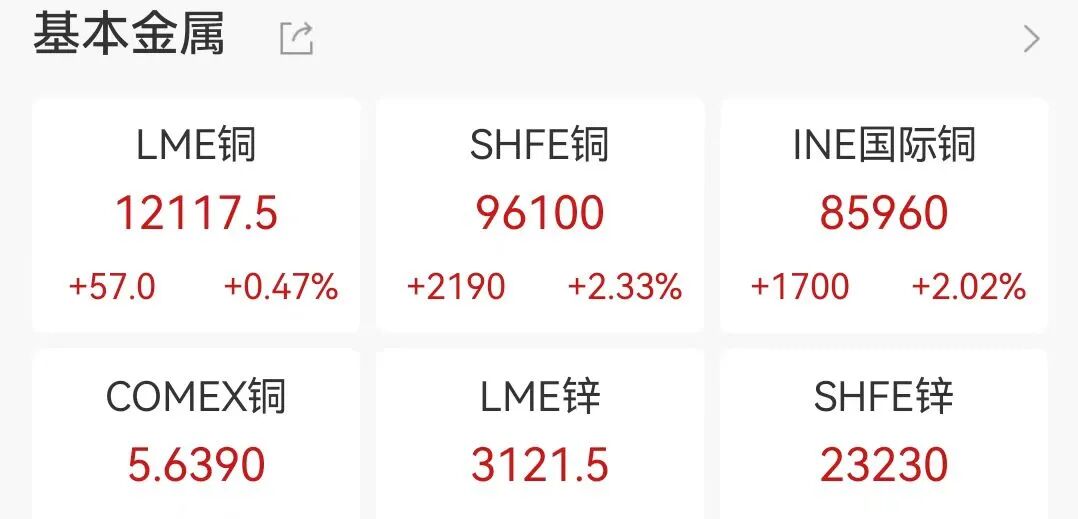
铜价突破1.2万美元创15年新高!大量铜被运往美国
2 1 Shi Ji Jing Ji Bao Dao· 2025-12-24 08:28
12月24日午后,LME三个月期铜创下每吨12159美元的历史新高,年内累计上涨超37%,这一关键工业金属有望创下自2009年超15年来最大年度涨幅。 铜概念股业绩集体增长 据证券时报统计,A股中属于铜板块的上市公司共有16家,12月以来普遍上涨,截至12月23日,平均涨幅达到8.58%,金诚信(603979)、白银有色 (601212)、洛阳钼业(603993)等7股累计涨幅超过10%。 从业绩来看,铜板块个股前三季度合计实现归母净利润690.05亿元,同比增长46.18%,其中鹏欣资源(600490)扭亏为盈,白银有色同比减亏,楚江新材 (002171)、金田股份(601609)、洛阳钼业等12股归母净利润实现同比增长。 英大期货指出,地缘政治风险对铜价或有所提振。美联储威廉姆斯讲话进一步强化了市场对美联储短期暂停降息的预期。日前,中国铜冶炼厂代表与智 利矿业巨头安托法加斯塔(Antofagasta)敲定2026年铜精矿长单加工费为零,凸显矿端供应紧张格局,叠加美国持续虹吸全球电解铜,增加非美地区铜供应 紧张担忧,持续利好铜价。 AI浪潮下的铜需求刚性增长 在全球AI算力基建狂飙突进的浪潮下,数据中心正成 ...
金田股份涨2.09%,成交额2.54亿元,主力资金净流入709.89万元
Xin Lang Cai Jing· 2025-12-24 06:25
Group 1 - The core viewpoint of the news is that Jintian Copper Industry (Group) Co., Ltd. has shown significant stock performance, with a year-to-date increase of 85.77% and a recent trading volume indicating strong market interest [1][2] - As of December 19, 2025, Jintian's main business revenue composition includes copper wire (48.35%), copper and copper alloy products (41.61%), and other products (9.00%), with rare earth permanent magnet products contributing 1.04% [2] - The company has been actively involved in share buybacks and is associated with various concept sectors, including new energy vehicles and Xiaomi automotive concepts [2] Group 2 - Jintian Copper has a total market capitalization of 18.6 billion yuan and a trading volume of 254 million yuan on December 24, 2025 [1] - The company has distributed a total of 930 million yuan in dividends since its A-share listing, with 465 million yuan distributed over the past three years [3] - As of September 30, 2025, the number of shareholders decreased by 2.55% to 146,700, while the average circulating shares per person increased by 2.62% to 11,781 shares [2][3]

楚江新材涨2.04%,成交额3.69亿元,主力资金净流出1176.12万元
Xin Lang Cai Jing· 2025-12-24 02:39
Group 1 - The core viewpoint of the news is that Chujiang New Materials has shown significant stock performance and financial growth in 2023, with a notable increase in both stock price and revenue [1][2]. - As of December 24, the stock price of Chujiang New Materials rose by 2.04% to 12.53 CNY per share, with a total market capitalization of 20.335 billion CNY [1]. - The company has experienced a year-to-date stock price increase of 52.80%, with a 4.68% rise in the last five trading days and a 10.01% increase over the past 20 days [1]. Group 2 - Chujiang New Materials, established on December 21, 2005, and listed on September 21, 2007, primarily engages in the research, processing, and sales of non-ferrous metal materials, particularly copper [2]. - The company's revenue composition shows that copper-based materials account for 96.79%, while high-end equipment and carbon fiber composite materials contribute 2.09% and 1.12%, respectively [2]. - For the period from January to September 2025, Chujiang New Materials achieved a revenue of 44.191 billion CNY, reflecting a year-on-year growth of 13.29%, and a net profit attributable to shareholders of 355 million CNY, marking a substantial increase of 2089.49% [2]. Group 3 - The company has distributed a total of 1.36 billion CNY in dividends since its A-share listing, with 479 million CNY distributed over the past three years [3]. - As of September 30, 2025, the number of shareholders increased to 72,300, representing a 67.75% rise, while the average circulating shares per person decreased by 35.84% to 22,327 shares [2][3]. - Notable changes in institutional holdings include Hong Kong Central Clearing Limited entering as the fifth-largest shareholder with 20.3385 million shares, while other funds like E Fund Defense Industry Mixed A and Guotai CSI Military Industry ETF have reduced their holdings [3].

刷新十年新高,这个指数有点厉害...
Xin Lang Cai Jing· 2025-12-24 01:32
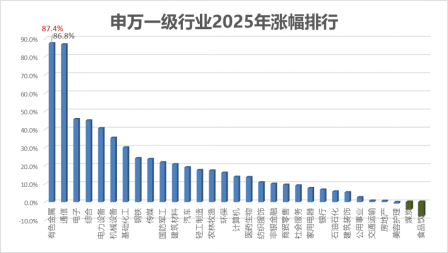
Core Viewpoint - The recent surge in non-ferrous metals has led to multiple commodities reaching historical or near-historical highs, with the non-ferrous metals sector showing an increase of over 87% this year, outperforming other industries significantly [1][17]. Group 1: Price Trends and Historical Highs - Precious metals such as gold and silver have reached historical highs, while platinum has hit its highest level since 2008. Industrial metals like LME copper and Shanghai tin have also reached historical highs, and lithium carbonate has seen a significant increase of over 200% this year [1][20]. - The China Nonferrous Metals Index has recently surpassed 3000 points, achieving a new ten-year high, with the ETF showing an 85.31% increase this year [24][26]. Group 2: Supply and Demand Dynamics - Copper is experiencing a "super cycle" due to supply disruptions from mining accidents in key regions like Chile and Indonesia, coupled with reduced production from Chinese smelters, creating a "hard shortage" of copper concentrate. Demand is driven by investments in global power grids and the increased use of copper in electric vehicles [19][22]. - Aluminum supply is constrained by production caps and insufficient recovery of hydropower in Yunnan, while demand remains strong due to automotive lightweighting and solar energy applications [19]. - Gold prices are supported by geopolitical risks and central bank purchases, with expectations of continued strength due to anticipated interest rate cuts by the Federal Reserve [19][20]. Group 3: Sector Performance and Future Outlook - The non-ferrous metals sector is expected to continue its super cycle into 2026, influenced by factors such as the recovery of dollar credit, strategic stockpiling, and the effects of "anti-involution" policies. Analysts predict that both non-ferrous and precious metals will lead the upward trend in 2026 [15][32]. - Major financial institutions forecast that gold prices could challenge $5000 per ounce by 2026, with central bank purchases being a key support factor [32][33].
建信期货铜期货日报-20251223
Jian Xin Qi Huo· 2025-12-23 07:23
Report Overview - Report Title: Copper Futures Daily Report [1] - Date: December 23, 2025 [2] - Researcher: Zhang Ping, Yu Feifei, Peng Jinglin [3] 1. Report Industry Investment Rating - No relevant content provided 2. Core View of the Report - The current rise in copper prices lacks demand support and is mainly driven by macro and supply factors. It is expected that copper prices will continue to rise due to sentiment factors [10] 3. Summary by Directory 3.1 Market Review and Operation Suggestions - Shanghai copper broke through the recent trading range, with the main contract reaching a maximum of 94,730. The 01 - 02 spread widened to 210. After the Bank of Japan's interest rate hike, the yen depreciated significantly, and the market's previous concerns about the impact of the interest rate hike did not materialize. The US stock AI sector rebounded sharply, and the market's bullish sentiment recovered. The sharp rise in the precious metals sector also drove copper prices higher [10] - Spot copper rose 1,325 to 93,675 yuan/ton, and the spot discount widened 35 to 195. At the end of the year, downstream demand was weak. China's social inventory increased 0.26 to 16.84 million tons compared to last Thursday. Short - term copper prices were driven up by macro factors, while downstream demand was suppressed by high copper prices [10] - The LME 0 - 3 structure turned to back at 4.73 dollars/ton, and the Shanghai - London ratio dropped to 7.85. The spot import loss widened to around 1,600, indicating limited subsequent imports of copper [10] - Chinese smelters and Antofagasta set the 2026 copper concentrate long - term processing fee benchmark at 0 dollars/ton and 0 cents/pound, suggesting a tight copper ore market in 2026 [10] 3.2 Industry News - Goldman Sachs significantly lowered the probability of the US imposing a refined copper tariff in the first half of 2026 from 80% to 25%. The new base scenario (55% probability) is that a 15% tariff will be announced in the first half of 2026 but postponed until 2027 to take effect, and may be raised to 30% in 2028. This adjustment is based on the US government's policy tendency to reduce interference with enterprises [11] - The International Energy Forum (IEF) reported that over 60% of global key mineral demand is met through international trade. The copper and nickel markets may face substantial shortages in the mid - 2030s, and lithium supply remains concentrated in a few countries. Governments are accelerating their responses by implementing strategic planning, export controls, and domestic processing authorizations [12]