
新能源

Search documents
【光大研究每日速递】20260304
光大证券研究· 2026-03-03 23:03
Group 1: Basic Chemicals - The escalation of the US-Iran conflict has created investment opportunities in the chemical sector, with significant military actions impacting regional stability [5] - The situation has shifted from high tension to open warfare, affecting market dynamics and potential supply chains [5] Group 2: Energy Sector - European natural gas prices surged by 39%, which is expected to drive demand for household storage solutions [5] - The geopolitical tensions have led to rising international oil and gas prices, with a focus on green hydrogen and ammonia as key areas for investment [7] Group 3: Automotive Industry - The Chinese New Year holiday disrupted February sales of new energy vehicles, but several major car manufacturers are set to launch new models in March and April [5] - Tesla is expected to release its third-generation Optimus humanoid robot in Q1 2026, which may create investment opportunities in related components [5] Group 4: Company Performance - Aolide (688378.SH) reported a slight decline in net profit for 2025, despite an 8.27% increase in revenue to 577 million yuan [8] - Dayun Technology (688531.SH) saw a significant increase in new orders and revenue, benefiting from synergies post-acquisition, particularly in high-demand sectors like semiconductors and new energy batteries [8]


分论坛:电新|国泰海通“远望又新峰”2026春季策略会
国泰海通证券研究· 2026-03-03 22:26
Group 1 - The core viewpoint of the article emphasizes the focus on new energy sectors, particularly in energy storage, power batteries, and electric equipment, highlighting the integration of innovative technologies and collaborative development in the energy industry [3][4]. - The 2026 Spring Strategy Conference organized by Guotai Junan will feature discussions on the outlook for energy storage, power batteries, and lithium carbonate, as well as insights into domestic and overseas electric equipment markets [4]. - The agenda includes sessions on nuclear fusion and updates on AIDC liquid cooling technologies, indicating a comprehensive approach to exploring future energy innovations [4].


中金:港股资金面透视
中金点睛· 2026-03-03 09:33
Core Viewpoint - The Hong Kong stock market, particularly the Hang Seng Technology Index, has underperformed since February, with the Hang Seng Index down 2.8% and the Hang Seng Technology Index down 10.1% as of February 28, 2026, indicating a significant decline compared to other indices [2][6]. Group 1: Market Performance - The Hang Seng Technology Index has seen a 20% decline since its peak in October, breaking through multiple technical support levels [2]. - The underperformance is attributed to a negative sentiment in the equity risk premium, which has dragged down the index by 14.7 percentage points [2][6]. - The top five weighted stocks in the index contributed to a 6.0 percentage point decline [3]. Group 2: Credit Cycle and Market Sentiment - The overall credit cycle is expected to experience fluctuations, with a potential recovery from the bottom in 2025 leading to a slowdown in 2026 [6]. - The market's focus on specific sectors, particularly in the context of AI narratives, has led to a divergence between "leaders and laggards" [6]. - The liquidity environment has amplified market volatility, influenced by macroeconomic factors such as the appointment of a hawkish Federal Reserve chair [7]. Group 3: Future Outlook for 2026 - The liquidity environment in Hong Kong is unlikely to surpass that of 2025, with projected net inflows of 1.4 trillion HKD in 2025 compared to 807.9 billion HKD in 2024 [8]. - The anticipated IPO and refinancing activities in 2026 could reach 1.1 trillion HKD, significantly exceeding the 600 billion HKD expected in 2025 [38][41]. - The potential inflow from foreign capital, particularly long-term foreign investments, could amount to 500-550 billion HKD if active foreign capital returns to benchmark levels [9][23]. Group 4: Sector Analysis - The sectors likely to benefit from foreign capital inflows include banking, e-commerce, and technology hardware, as these areas are currently underrepresented in foreign investment portfolios [23]. - The unique characteristics of Hong Kong's market, such as high dividend yields and specific tech and consumer sectors, continue to attract southbound capital despite overall market weakness [37]. Group 5: Investment Strategy - The investment strategy should focus on sectors aligned with credit expansion, particularly AI technology, cyclical stocks, and consumer goods [46]. - Short-term recommendations include prioritizing investments in internet, technology hardware, and new consumption sectors, while maintaining a watchful eye on financial and biotech sectors for potential long-term opportunities [49].

上海迎来一支百亿数智文化基金 | 科促会母基金分会参会机构一周资讯(2.25-3.3)
母基金研究中心· 2026-03-03 08:57
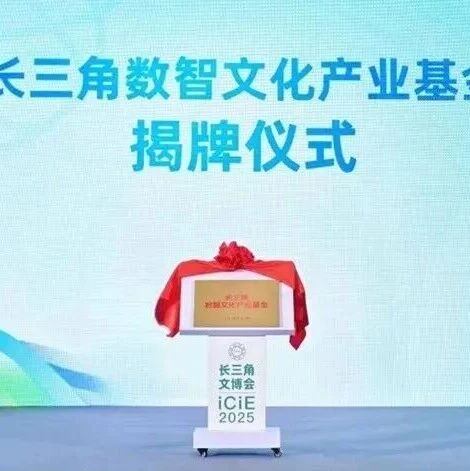
Group 1 - The establishment of the "China International Science and Technology Promotion Association Mother Fund Branch" aims to enhance the role of mother funds in China's capital market and promote the healthy development of the investment industry, particularly the mother fund sector [1][21]. - The Long Triangle Digital Cultural Industry Fund has been established with a total scale of 10 billion yuan, focusing on investments in core digital cultural technology industries, particularly those integrating AI [4]. - The Dongguan Science and Technology Innovation Group has signed agreements for 10 funds totaling 2.7 billion yuan to support the high-quality development of Dongguan's manufacturing industry [5][6]. Group 2 - The National Investment Group's subsidiary conducted a research visit to Qiniu Zhisheng to explore cooperation opportunities in the AI industry, highlighting the company's strengths in dialogue-based AI products [9][10]. - The Central Enterprise Strategic Emerging Industry Development Fund is publicly selecting sub-fund management institutions to support the development of strategic emerging industries and future industries [11]. - Taikang Asset is developing an AI-driven competitive information tracking system to enhance market insight and decision-making efficiency [14]. Group 3 - Guoyuan led a 50 million yuan angel round financing for Anhui Xiandai Jixing Technology Co., focusing on the development of third-generation semiconductor devices [16]. - Haitong Kaiyuan facilitated the merger and restructuring of Jinyi New Energy with Foshan Plastic Technology Group, marking a significant milestone in the integration of the new energy sector [19][20].

策略跟踪报告:地方两会着力促进经济高质量发展
Wanlian Securities· 2026-03-03 06:27
Group 1 - The report highlights that local governments have set economic and social development targets for 2026, emphasizing high-quality development and the expansion of domestic demand [3][8][10] - A total of 31 provinces have held local meetings, with many emphasizing the need to enhance consumer spending and optimize consumption policies, including subsidies for replacing old goods [3][13][14] - The report notes a downward adjustment in investment growth targets across various regions, with a focus on optimizing major project construction and increasing the proportion of investments in livelihood and technology projects [3][21][26] Group 2 - The report indicates that local governments are committed to fostering new productive forces and building a modern industrial system, with a focus on technological innovation and upgrading traditional industries [3][28][30] - It emphasizes the importance of digital economy development and the implementation of "Artificial Intelligence+" initiatives to enhance productivity across various sectors [3][31][32] - The report suggests that investment strategies should focus on traditional manufacturing upgrades and sectors with strong policy support and demand expansion in emerging industries [3][36][37] Group 3 - The report outlines that the average GDP growth target for 2026 across various regions is approximately 5%, slightly lower than in 2025, with a strong emphasis on improving economic quality [3][10][36] - It highlights the significant focus on service consumption, particularly in areas such as sports economy and health consumption, in response to the aging population [3][36][37] - The report also details the planned major investment projects across several provinces, with significant funding allocated to infrastructure and new-type projects [3][23][24]
“风光”高质量发展,不可忽视用地需求
中国能源报· 2026-03-03 04:23
Core Viewpoint - The article emphasizes the significant growth of China's wind and solar energy sectors, highlighting that by 2025, new installed capacity will exceed 430 million kilowatts, accounting for over 80% of total new installations, and cumulative installed capacity will surpass 1.8 billion kilowatts, establishing itself as the largest power source in the system [1] Group 1: Development and Impact of Renewable Energy - The development of wind and solar energy is crucial for addressing climate change, fostering new economic growth, and reshaping the global development landscape, while also contributing to sustainable development [1] - China's achievements in the renewable energy sector enhance domestic energy security and play a vital role in the global transition to low-carbon energy [1] Group 2: Land Resource Challenges - Land is a critical factor for the development of wind and solar energy, with wind energy requiring significantly more land compared to traditional fossil fuels [2] - The average direct land use requirement for wind energy is approximately 7,539.64 square meters per megawatt, with the spatial land use demand being even greater [2] - The projected land use demand for new wind and solar projects during the 14th Five-Year Plan period is about 157,730 hectares, affecting an area of approximately 4.47 million hectares [2] Group 3: Land Availability and Distribution - Suitable land for wind and solar development is limited and unevenly distributed, often overlapping with ecologically sensitive areas and farmland [3] - Regions rich in wind and solar resources face restrictions due to ecological protection lines and urban development boundaries, leading to a scarcity of available land for development [3] Group 4: Policy and Future Directions - The National Development and Reform Commission and the National Energy Administration have previously set goals for renewable energy capacity, aiming for over 1.2 billion kilowatts by 2030, while the current capacity has already reached 1.206 billion kilowatts as of July 2024, six years ahead of schedule [4] - The rapid growth of the wind and solar sectors necessitates a reevaluation of land use requirements and proactive land resource management to ensure sustainable development [4] Group 5: Recommendations for Development - Conducting a comprehensive survey of land for wind and solar projects is essential for understanding the current development landscape and facilitating large-scale, sustainable growth [5] - A coordinated national approach is necessary to optimize project layouts and ensure compliance with land use regulations, preventing inefficient land use and project mismanagement [5] Group 6: Technological and Management Innovations - Enhancing technological innovation is vital for improving land use efficiency in the wind and solar sectors, including increasing the efficiency of solar cells and the capacity of wind turbines [6] - Establishing a cross-departmental coordination mechanism is crucial for streamlining land use standards and approval processes, addressing the complexities of land management in renewable energy projects [6]

任泽平带你看前沿科技:2026研学计划
泽平宏观· 2026-03-02 16:07
Core Viewpoint - The article emphasizes the importance of practical learning experiences in cutting-edge technology sectors, highlighting the value of direct engagement with leading companies and experts to enhance investment insights and opportunities [12][24]. Schedule Overview - The schedule for 2025 includes visits to major technology companies such as Huawei, BYD, Tencent, and others, focusing on sectors like artificial intelligence, new energy, and biotechnology [23][24]. - Specific events are planned, including closed-door investment research meetings and thematic explorations in various cities, showcasing advancements in robotics, autonomous driving, and digital ecosystems [8][9][10]. Learning Experience - Participants will engage in deep explorations of technology companies, gaining insights into the full chain of technology development from laboratory to industrialization [12]. - The program aims to provide practical empowerment through discussions on cutting-edge technology trends, emerging industry ecosystems, and innovative business strategies [12]. Participant Feedback - Feedback from participants highlights the transformative impact of the program on their understanding of macroeconomic trends and investment strategies, emphasizing the importance of learning from industry leaders [46][47]. - Participants express appreciation for the opportunity to connect with top entrepreneurs and gain insights into successful business practices and innovative management models [46][47].

零碳系列报告一:双碳引领绿色转型,零碳园区试点先行
Shenwan Hongyuan Securities· 2026-03-02 14:43
Investment Rating - The report suggests a focus on green fuel, green electricity, natural gas, CCUS, renewable resources, carbon monitoring, and zero-carbon parks as key investment opportunities [4][7][43]. Core Insights - The transition to a dual carbon control system is urgent, with the need to achieve carbon peak by 2030 and a 65% reduction in carbon intensity compared to 2005 levels by 2030 [4][11]. - The establishment of a comprehensive carbon management system is underway, integrating carbon evaluation and market mechanisms [4][21]. - The path to implementation emphasizes energy transition and efficiency improvements, with pilot projects for zero-carbon factories and parks leading the way [4][44]. Summary by Sections Policy Transition - The shift from energy consumption control to carbon emission control is highlighted, with a focus on dual carbon control [6][8]. - The government has outlined a comprehensive policy framework for carbon peak and neutrality, emphasizing the need for a robust carbon management system [12][14]. System Construction - A dual approach combining administrative measures and market mechanisms is being developed, including carbon evaluation and a national carbon market [21][24]. - The national carbon market has expanded to include key industries such as power generation, steel, cement, and aluminum smelting [24][30]. Implementation Path - The report outlines a clear path for energy transition, focusing on green energy supply, energy efficiency improvements, and the establishment of zero-carbon factories and parks [4][44]. - Key tasks include developing renewable energy sources, enhancing energy efficiency, and implementing carbon management systems [46][50].




国泰海通|建筑:新增专项债发行加速,地产政策持续优化
国泰海通证券研究· 2026-03-02 14:02
Group 1: Special Bonds and Infrastructure Investment - The issuance of new special bonds reached 824.2 billion yuan before February 2026, representing a year-on-year increase of 38.1% [1] - The net financing amount of urban investment bonds was -17.65 billion yuan, with a year-on-year decrease in net repayment of 1.57 billion yuan [1] - Fixed asset investment in 2025 declined by 3.8%, with significant regional variations: Eastern China down 8.4%, Central down 2.7%, Western down 1.3%, and Northeast down 15.5% [1] Group 2: Construction and Labor Market - As of February 25, 2026, the resumption rate of construction sites nationwide was 8.9%, an increase of 1.5 percentage points year-on-year [1] - The labor employment rate was 15.5%, up by 3.7 percentage points year-on-year, while the funding availability rate was 29%, increasing by 9.4 percentage points year-on-year [1] Group 3: Real Estate Policy Adjustments - On February 25, 2026, Shanghai announced further adjustments to its real estate policies, including a reduction in housing purchase restrictions for non-local residents [3] - The maximum loan amount for first-time homebuyers using housing provident fund was raised from 1.6 million yuan to 2.4 million yuan, with potential increases for families with multiple children and those purchasing green buildings [3] - These policy optimizations are expected to benefit construction companies involved in real estate development and enhance project progress and cash flow [3] Group 4: Energy Sector Developments - The National Energy Administration emphasized the need to advance strategic major engineering projects, including the construction of renewable energy bases and electric vehicle charging networks [2] - By 2035, the total installed capacity of wind and solar power is targeted to reach 3.6 billion kilowatts, with renewable energy accounting for over 50% of total installed capacity during the 14th Five-Year Plan [2] - The goal is to increase the share of renewable energy in total power generation to around 30% by 2030 [2]

3零碳园区白皮书系列——哈尔滨经济技术开发区
荣续智库· 2026-03-02 09:30
Investment Rating - The report does not explicitly state an investment rating for the industry Core Insights - The Harbin Economic and Technological Development Zone is positioned as a leader in the transformation and upgrading of Northeast China's old industrial base, focusing on high-quality development through the integration of zero-carbon transformation and industrial upgrading [5][27] - The zone aims to become a national advanced manufacturing base and a demonstration area for technological innovation, contributing to the green transformation of the Northeast industrial base [5][27] - The development strategy emphasizes the establishment of a multi-dimensional energy supply system, with a focus on renewable energy sources and energy efficiency improvements [23][43] Overview - The Harbin Economic and Technological Development Zone covers an area of 60 square kilometers, featuring five core functional areas that support collaborative development and a complementary industrial structure [15][37] - The zone has developed four leading industries, including equipment manufacturing, which encompasses automotive, aerospace, robotics, and intelligent manufacturing [15][28] Energy Supply and Consumption - The energy supply structure is transitioning towards clean and low-carbon sources, with coal accounting for 75%, natural gas for 20%, and renewable energy for 4% [43] - The zone plans to increase the share of non-fossil energy consumption to 4% by 2025 and to 8% by 2030 [50] Carbon Emission Situation - The total carbon emissions in the zone for 2024 are projected to be 1.253 million tons of CO2, with direct emissions accounting for 54.8% and indirect emissions for 39.5% [44] Policy Framework - The zone benefits from multiple policy incentives, including national pilot programs for carbon peak and green industry support policies from the Harbin municipal government [27][48] Key Tasks and Implementation Paths - The report outlines eight major implementation paths to promote green and low-carbon transformation, including energy efficiency improvements, green industrial development, and resource recycling [51][54] - Specific actions include promoting renewable energy, enhancing industrial energy efficiency, and establishing a circular economy model [51][63] Future Development Suggestions - The report suggests focusing on the integration of advanced manufacturing and modern services, promoting green manufacturing systems, and enhancing infrastructure for low-carbon development [59][61]