
银行业

Search documents
OpenClaw多平台部署与投研应用
GF SECURITIES· 2026-02-28 14:45
- OpenClaw is a modular AI agent architecture designed to integrate large language models (LLMs) with local execution engines, enabling complex task automation across digital and physical environments [48][50] - The system's core components include the Agent Core (central scheduler), Workspace (local memory and domain knowledge), Channels (multi-modal interaction), and Skills (execution tools) [48][50] - OpenClaw employs a standardized function-calling mechanism, allowing LLMs to safely and autonomously interact with external databases, APIs, and local operating systems for end-to-end task execution [48][50] - The Stock Watcher skill on ClawHub uses Tonghuashun (10jqka.com.cn) as its primary data source, providing real-time market data, technical analysis, and fund flow information [58][59] - Users can install the Stock Watcher skill by issuing a natural language command to OpenClaw, enabling functionalities like adding/removing stocks, viewing lists, and summarizing market data [58][59] - When data retrieval issues occur, OpenClaw can automatically switch to alternative data sources, such as Sina, to complete the task [62][63] - OpenClaw supports conditional stock screening by integrating financial data and applying user-defined criteria, such as market cap and P/E ratio thresholds [65][66] - It can also backtest selected stocks' equal-weighted portfolio performance over a specified period, with the precision of results depending on the quality of the chosen LLM [65][66] - OpenClaw enables advanced file management tasks, including creating directories, writing text files, and moving files, through natural language commands [68][69] - It supports comprehensive file operations like creation, search, modification, and reading, making it a versatile tool for local file system management [68][69] - OpenClaw can autonomously select appropriate tools to read and summarize local files, such as company financial reports, without prior configuration [71][72] - By leveraging OpenClaw's local execution capabilities, users can construct complex code projects, such as implementing Barra CNE6 factor models, with structured directories and detailed comments [74][75] - The Technical Analyst skill on ClawHub enables systematic technical analysis of K-line charts, generating detailed reports with insights on trends, key levels, and scenario probabilities [75][77][78]
月初,资金面或回归宽松
HUAXI Securities· 2026-02-28 14:21
Liquidity Overview - The liquidity environment remained stable across the month despite three pressures: tax periods, month-end demand, and large reverse repos maturing, with R001 and R007 rates peaking at 1.47% and 1.61% respectively on February 24-25[1] - The central bank conducted significant reverse repos, averaging 380 billion CNY daily from February 24-27, alongside a net injection of 300 billion CNY via MLF, effectively alleviating liquidity pressure[1] March Outlook - In March, liquidity is expected to maintain a balanced and loose state, with R001 projected to fluctuate within the range of [OMO-10bp, OMO] and R007 likely to be 5-10bp above OMO[2] - The anticipated net financing scale for government bonds in March is estimated to be between 1.15 trillion and 1.39 trillion CNY, a decrease from February's 1.42 trillion CNY[2] Market Dynamics - From March 2-6, a total of 25,250 billion CNY will mature, with 15,250 billion CNY in 7-day reverse repos, indicating higher maturity pressure than historical averages[3] - Government bond payment pressure is expected to increase slightly, with an estimated net payment of 2,820 billion CNY for the first week of March, up from 1,904 billion CNY the previous week[4] Bill Market Trends - By February 27, the 1M bill rate rose by 50bp to 1.40%, while the 3M and 6M rates increased by 30bp and 14bp to 1.50% and 1.29% respectively, indicating a rising trend in bill rates[5] - Major banks turned net sellers of bills, selling 49.7 billion CNY from February 24-26, contrasting with a net purchase of 11.3 billion CNY the previous week[5] Interbank Certificates of Deposit - The upcoming week (March 2-6) will see 5,830 billion CNY in certificates of deposit maturing, a decrease from the previous week's 7,480 billion CNY, but the total for March is projected to reach 36,000 billion CNY, higher than the 27,000-30,000 billion CNY range of the past three years[6]
存单走势或制约长债空间
Shenwan Hongyuan Securities· 2026-02-28 14:06
Group 1 - The supply and demand for certificates of deposit (CDs) are relatively friendly, supporting stable CD interest rates. Despite some disturbances in the funding environment since 2026, the overall trend of CD interest rates has remained stable, supported by both supply and demand factors [7][16]. - On the supply side, the central bank has injected a significant amount of medium to long-term liquidity, resulting in a noticeable decline in net financing of bank CDs compared to previous years. Since Q4 2025, the central bank has increased liquidity injections through tools like MLF and reverse repos, while also resuming normalized bond purchases [7][16]. - On the demand side, non-bank institutions have shown strong interest in allocating CDs, particularly insurance and wealth management products. The relative advantage of CDs over repos in a liquidity-rich environment has supported this demand [7][16]. Group 2 - Looking ahead, the downward space for CD interest rates may be limited. The central bank's use of quantity-based monetary policy tools is relatively restrained, making further declines in CD interest rates challenging. The main liquidity tools currently in use have shorter maturities, and the central bank has not employed rate cuts since May 2025 [16][30]. - There is a structural differentiation in CDs, with smaller banks facing greater challenges in reducing CD interest rates. Smaller banks typically have higher funding costs and may face demand constraints due to rating limitations. Regulatory changes may also lead to a contraction in CD demand from smaller banks [16][30]. Group 3 - The difficulty in lowering CD interest rates may significantly restrict the motivation for institutions to purchase bonds, especially as expectations for credit easing policies rise after the March Two Sessions. This could narrow the downward space for long-term bond rates, suggesting a cautious approach towards long-duration assets [30]. - In the medium term, the anticipated introduction of credit easing policies may elevate the central tendency of long-term bond rates, while government debt supply remains under pressure. This indicates potential risks for long-duration assets, while mid to short-term credit bonds may still offer attractive value [30].
宏观经济周报:如何理解灵活高效-20260228
Guoxin Securities· 2026-02-28 13:52
Monetary Policy Insights - The central economic work conference emphasizes "flexible and efficient" monetary policy to promote stable economic growth and reasonable price recovery in 2026[1] - "Flexible" indicates a responsive approach to monetary tools like reserve requirement ratio (RRR) cuts and interest rate reductions based on economic conditions, rather than a fixed schedule[1] - The current weighted average RRR is at 6.2%, close to the 5% lower limit, indicating limited room for further cuts[2] Expected Policy Actions - A RRR cut of 50 basis points (BP) is anticipated in Q2 2026 to support bond issuance, followed by a potential interest rate cut of 10 BP in the second half of the year depending on economic conditions[2] - The actual lower limit for policy rates may be around 1%, significantly above the theoretical "zero lower bound"[2] Economic Indicators - Fixed asset investment has decreased by 3.80% year-on-year, while retail sales have increased by 0.90% and exports have risen by 6.60%[5] - M2 money supply growth stands at 9.00%, indicating liquidity in the market[5] External Environment - The external environment remains uncertain, particularly with the upcoming change in the U.S. Federal Reserve leadership, which may influence the timing of domestic interest rate cuts[2] - Recent rulings have reduced unilateral trade pressure, suggesting a more stable external trade environment[27] Structural Support - The monetary policy will focus on liquidity support while structural tools will be used to enhance domestic demand, technological innovation, and support for small and medium enterprises[14]
所有人都在聊黄金涨了多少,没人聊该放多少
雪球· 2026-02-28 13:01
Group 1 - The article discusses the recent surge in gold prices, highlighting a 57.6% increase from approximately $2,600 to nearly $5,200 over a 12-month period, marking a significant historical performance [4][5]. - The article emphasizes the importance of determining the appropriate allocation of gold within an investment portfolio, distinguishing between "allocation" and "speculation" [4]. - It notes that global funds are increasingly flowing into gold, with a record net inflow of $19 billion into physical gold ETFs in January 2026, indicating a shift in investor sentiment towards gold as a strategic asset [7][8]. Group 2 - Major banks have raised the minimum investment thresholds for gold, reflecting a perception that gold is transitioning from a low-risk savings alternative to a more volatile risk asset [9][12]. - The article presents data showing that banks have increased the entry requirements for gold investments, indicating a change in the risk environment surrounding gold [12][13]. - It suggests that the current market conditions for gold are markedly different from those of a year ago, necessitating a reassessment of investment strategies [13]. Group 3 - The article argues that gold should be viewed as a form of insurance in an investment portfolio rather than a speculative asset, with historical data showing a low correlation between gold and the S&P 500 [14][16]. - It provides examples of past market downturns where gold performed positively, reinforcing its role as a protective asset during periods of market stress [16]. - The recommended allocation for gold in a portfolio ranges from 5% to 10%, based on various institutional guidelines, emphasizing its function as a buffer against extreme market conditions [20][22]. Group 4 - The article outlines specific strategies for gold investment, suggesting that investors should consider gradually adding gold to their portfolios, especially if they currently have no exposure [24]. - It advises those with existing gold investments to reassess their allocations if gold's proportion exceeds 15%, encouraging a balanced approach to investment [24]. - The article concludes by stressing the importance of having assets that perform independently of other investments, highlighting gold's unique role in achieving true diversification [25].


AI冲击之下,新一轮“次贷危机”来了?
华尔街见闻· 2026-02-28 04:47
Group 1 - Concerns about the disruption caused by artificial intelligence (AI) are rapidly spreading to the global credit bond market, leading to asset sell-offs across various segments, including leveraged loans and collateralized loan obligations (CLOs) [1] - The yield premium on comparable global debt has recently widened by nearly 4 basis points, marking the largest increase since early November last year, indicating pressure on the investment-grade bond market [2] - High-yield bond funds in the U.S. have experienced continuous outflows in recent weeks, reflecting investor anxiety over default risks in the software industry [3][12] Group 2 - The private credit market is highly interconnected with the public market, suggesting that any shock to core industries like technology could quickly spread default risks throughout the broader credit bond sector [4] - The Bloomberg U.S. Leveraged Loan Index saw an average price drop of 1.34% in February, the largest monthly decline since September 2022, primarily due to loans in the software and services sector [6] - Morgan Stanley has warned that CLO asset pools, ranging from $40 billion to $150 billion, are facing disruption risks related to AI [7][28] Group 3 - The investment-grade bond market, once considered a safe haven, is showing signs of strain, with technology-related companies now accounting for 14% of the investment-grade index, and their debt ballooning to $1.2 trillion [8] - The recent failures of companies like Market Financial Solutions and First Brands Group have heightened concerns about loose underwriting standards in the credit bond market [15] - UBS has raised alarms about systemic contagion risks from private credit markets, as borrowers often finance through both private and syndicated loan markets, leading to significant overlap in issuer and industry exposure [17] Group 4 - The leveraged loan market is experiencing significant pressure due to concerns over traditional business models being disrupted by AI, resulting in a sharp decline in new loan issuance to the lowest level since May of last year [25] - Approximately $51 billion of software debt rated B- or below is set to mature by 2028, with another $50 billion maturing in 2029, posing serious refinancing challenges [26] - The interconnectedness of private credit and leveraged loans means that rising default rates in software and related sectors could quickly impact public markets, leading to wider spreads and liquidity issues [20][30]

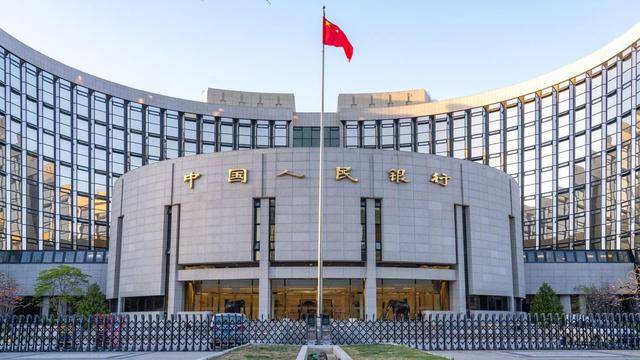
下调到0?央妈严防人民币升值过快,广场协议的陷阱,中国不能踩
Sou Hu Cai Jing· 2026-02-28 04:29
Core Viewpoint - The Chinese central bank has implemented urgent policies to stabilize the yuan amid significant fluctuations in the foreign exchange market, aiming to counteract the rapid appreciation of the currency and prevent a potential financial crisis [2][11][30]. Group 1: Central Bank Policy Actions - On February 27, the People's Bank of China announced targeted foreign exchange market control policies, effective March 2, which included reducing the foreign exchange risk reserve ratio for forward sales from 20% to 0% [6][11]. - The previous 20% reserve requirement increased costs for banks and ultimately for enterprises, making it more difficult for them to engage in forward foreign exchange transactions [8][11]. - The central bank's decision to eliminate this reserve requirement aims to lower the costs for enterprises hedging against exchange rate risks and to stabilize the foreign exchange market [11][23]. Group 2: Market Dynamics and Impacts - As of early 2026, Chinese enterprises held foreign exchange deposits totaling $932.2 billion, nearly equivalent to Germany's annual GDP, reflecting a significant accumulation of foreign exchange positions [16]. - The rapid appreciation of the yuan has led to substantial exchange rate losses for companies holding foreign exchange, negating the benefits of interest rate differentials they previously enjoyed [18][21]. - In response to these losses, many enterprises began to sell dollars and buy yuan to lock in losses, which further exacerbated the yuan's appreciation and created a feedback loop of market pressure [21][23]. Group 3: Historical Context and Global Considerations - The central bank's policy adjustment is informed by historical precedents, particularly the 1985 Plaza Accord, which serves as a cautionary tale against allowing external forces to manipulate domestic economic conditions through currency interventions [26][28][30]. - The central bank has emphasized that it will not permit excessive unilateral appreciation of the yuan or abnormal capital flows, aiming to maintain stability in the foreign exchange market [30]. - The recent policy changes are part of a broader strategy to respond to global monetary dynamics and to safeguard the yuan's pricing power in the international market [24][30].
“信贷蟑螂”突袭华尔街,纳指创一年来最大月度跌幅
2 1 Shi Ji Jing Ji Bao Dao· 2026-02-28 04:25
Market Performance - The U.S. stock market faced significant declines, with the S&P 500 down 0.43% to 6878.88 points, the Nasdaq Composite down 0.92% to 22668.21 points, and the Dow Jones Industrial Average down 1.05% to 48977.92 points on February 27 [1] - In February, the Nasdaq fell 3.38%, marking the largest monthly decline since March 2025, while the S&P 500 dropped 0.87% [1] Economic Indicators - The U.S. Producer Price Index (PPI) for January increased by 2.9% year-on-year, exceeding the expected 2.6%, indicating potential inflationary pressures [2] - Core PPI, excluding food and energy, rose 3.6% year-on-year, significantly above the anticipated 3% [2] Employment Impact - The impact of AI on the job market is notable, with Jack Dorsey announcing that his company Block is cutting nearly half of its workforce due to AI's transformative effects on business operations [2] Stock Market Outlook - UBS downgraded U.S. stocks to "benchmark" in global portfolios, citing diminishing factors that previously supported U.S. stock outperformance [2] - Concerns about the dollar's risk are prevalent, with predictions of the euro rising to 1.22 against the dollar by the end of Q1 [2] Valuation Concerns - U.S. stocks are trading at a 35% premium compared to international peers, with 60% of industries having valuations above both global benchmarks and their historical levels [3] Credit Market Issues - The collapse of Market Financial Solutions (MFS) has shaken confidence in the private credit market, with significant losses reported by creditors including Apollo Global Management and Jefferies [4] - The KBW Bank Index fell 4.85%, marking its largest single-day drop since April of the previous year, influenced by the MFS situation [4] Systemic Risk Warnings - Concerns about a potential "contagion effect" in the credit market are rising, with investors wary of losses in financial companies due to ongoing credit market issues [5] - Jamie Dimon of JPMorgan has noted similarities between the current market conditions and those preceding the 2008 financial crisis [5]
当金价达到8000美元时,美联储资产欠款表才能重新平衡,这是拯救美国金融的唯一出路
Sou Hu Cai Jing· 2026-02-28 04:16
Core Viewpoint - A hedge fund manager, Daniel Oliver, argues that gold prices must rise to $8,000 per ounce for the U.S. financial system to stabilize, based on historical data and the current state of the Federal Reserve's balance sheet [1][3] Group 1: Federal Reserve and National Debt - The Federal Reserve's balance sheet peaked at nearly $9 trillion due to multiple rounds of quantitative easing in response to the 2008 financial crisis and the 2020 pandemic [3] - The U.S. national debt has surpassed $38.5 trillion, with projections indicating that by 2036, the federal government will spend $2.1 trillion annually just to pay interest on this debt, more than double the current amount [3] - Oliver suggests that the actual debt burden is significantly higher when considering future liabilities like Medicare and Social Security, indicating that conventional repayment methods are no longer viable [3][5] Group 2: Private Credit Market Risks - Oliver highlights that the current financial system's risks have shifted to the private credit market, particularly in over-leveraged private equity, differing from the 2008 crisis which was primarily housing-related [5] - UBS analysts warn that rapid advancements in artificial intelligence could disrupt traditional business models, potentially leading to a 15% default rate in the private credit market, equating to hundreds of billions in unrecoverable loans [6] Group 3: Gold Market Dynamics - The physical precious metals market is undergoing structural changes, with manufacturers hoarding silver due to supply chain concerns, reducing the available supply in the market [6][8] - Banks are tightening credit conditions for gold refineries, requiring more collateral, which limits the processing of physical gold and creates bottlenecks in the supply chain [8] - Oliver calculates that to maintain the historical "gold ratio" of one-third of central bank reserves to total assets, gold would need to reach approximately $8,000 per ounce, and $12,000 per ounce to achieve a one-half ratio [8][9] Group 4: Current Gold Price Trends - Recent spot gold prices have been rising, reaching around $5,187 per ounce as of February 27, 2026, with market participants closely monitoring Federal Reserve monetary policy and signs of stress in the private credit market [11] - Gold is evolving from a mere investment hedge to a "pressure gauge" reflecting the scale of debt and credit in the financial system, with Oliver's $8,000 price point serving as a significant indicator of underlying pressures [11]

“信贷蟑螂”突袭华尔街,纳指创一年来最大月度跌幅|美股一线
2 1 Shi Ji Jing Ji Bao Dao· 2026-02-28 03:45
Market Performance - The U.S. stock market faced significant declines, with the S&P 500 down 0.43% to 6878.88 points, the Nasdaq Composite down 0.92% to 22668.21 points, and the Dow Jones Industrial Average down 1.05% to 48977.92 points on February 27 [1] - In February, the Nasdaq fell 3.38%, marking the largest monthly decline since March 2025, while the S&P 500 dropped 0.87% [1] Economic Indicators - The Producer Price Index (PPI) for January increased by 2.9% year-over-year, exceeding the expected 2.6%, and rose 0.5% month-over-month, also above the anticipated 0.3% [2] - Core PPI, excluding volatile food and energy prices, rose 3.6% year-over-year and 0.8% month-over-month, both higher than market expectations [2] Employment Impact - The impact of AI on the job market is evident, with Jack Dorsey announcing that his company Block is cutting nearly half of its workforce due to structural changes driven by AI [2] Investment Strategy Adjustments - UBS downgraded U.S. stocks to "benchmark" in global equity portfolios, citing diminishing factors that previously supported U.S. stock outperformance [2] - Concerns about the dollar's risk are prominent, with predictions of the euro rising to 1.22 against the dollar by the end of Q1 [2] Valuation Concerns - U.S. stocks are trading at a 35% premium compared to international peers, with 60% of industries having valuations above both global benchmarks and their historical levels [3] Credit Market Issues - The collapse of Market Financial Solutions (MFS) has shaken confidence in the private credit market, with notable creditors including Apollo Global Management and Jefferies [3][4] - The KBW Bank Index fell 4.85%, marking its largest single-day drop since April of the previous year, with significant declines in stocks like Goldman Sachs and Jefferies [4] Systemic Risk Warnings - Concerns about potential contagion effects in the credit market are rising, with warnings from industry leaders about similarities to pre-2008 financial crisis conditions [5]