家电

Search documents
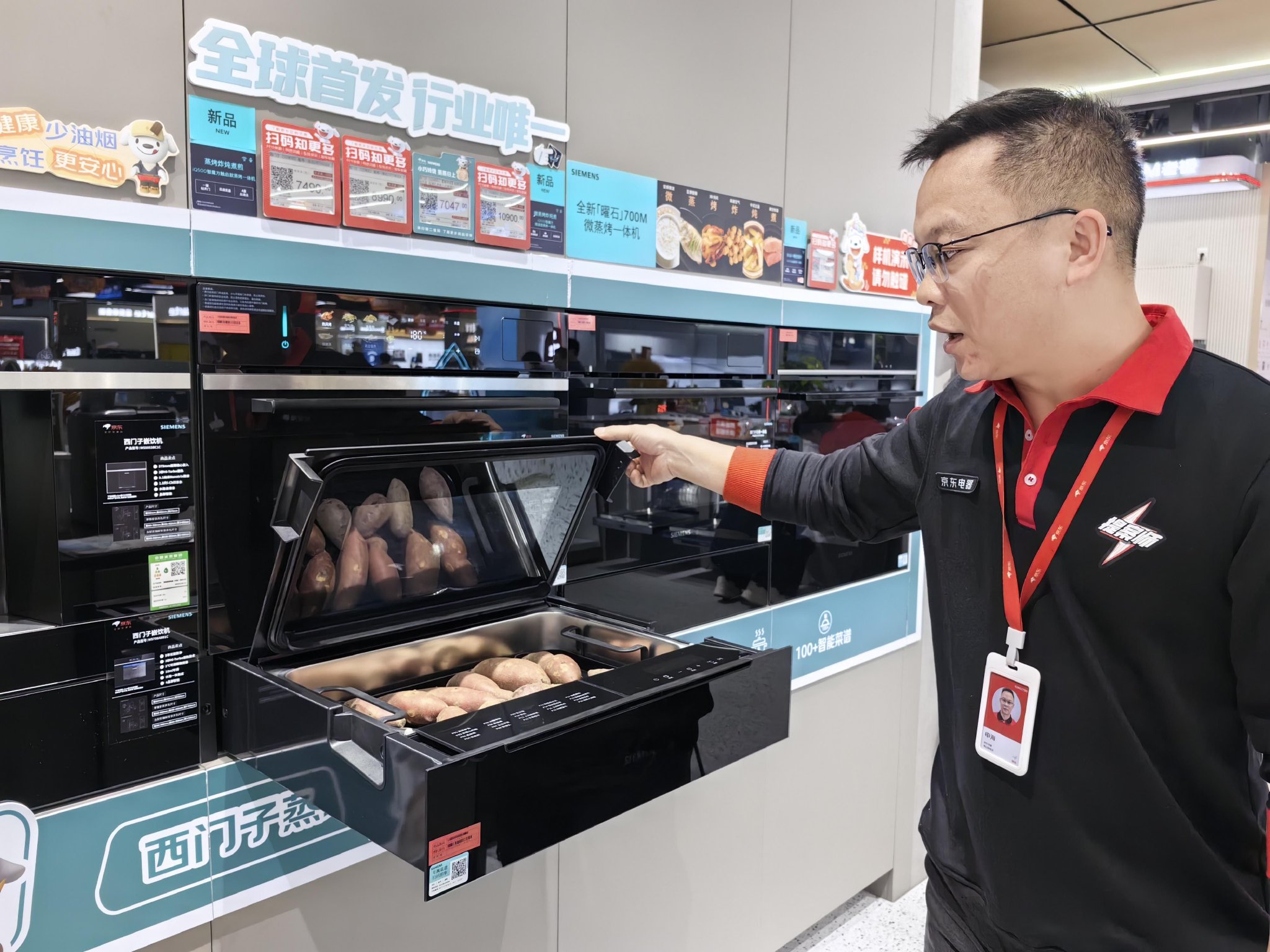
春节假期家电消费走俏,顺德产销两旺迎开门红
Xin Lang Cai Jing· 2026-02-20 01:07
Group 1 - The current home appliance market is experiencing a surge in demand due to the Spring Festival and favorable national subsidy policies, with companies in Shunde ramping up production to meet both domestic and international market needs [2][3][4] - Sales at JD's self-operated flagship store in Shunde have exceeded 10 million yuan since the New Year, with expectations of reaching 6 to 7 million yuan during the Spring Festival period, driven by consumer interest in practical home appliances [2][4] - The production lines at Wanhe's headquarters are operating at full capacity, with a focus on gas water heaters, and the company has secured significant overseas orders, indicating a strong start to the year in international markets [3][4] Group 2 - The "Guangdong Goods Go Global" initiative is enhancing the development of the home appliance industry and boosting consumer confidence, with government and enterprise collaboration providing dual subsidies to consumers [4] - The market is seeing a notable increase in sales of energy-efficient and high-end products, reflecting strong market resilience and consumer preference for quality [3][4] - The synergy between production and sales, along with the precise release of policy benefits, is revitalizing local consumption and supporting the high-quality development of the home appliance industry [4]


今年首批625亿国补改变发放方式
Nan Fang Du Shi Bao· 2026-02-19 23:10
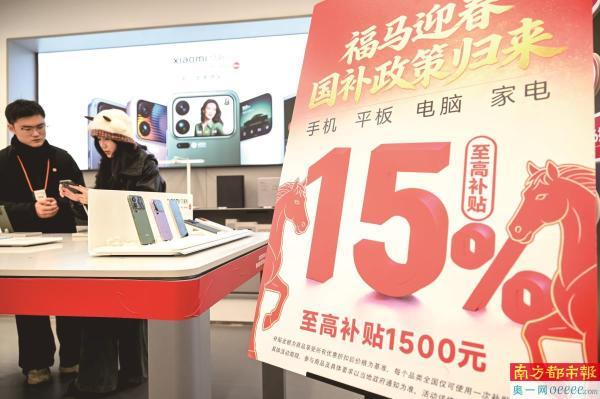
Group 1 - The core point of the article highlights the successful implementation of the first batch of national subsidies, amounting to 62.5 billion yuan, which has positively impacted consumer spending during the Spring Festival holiday [2][3] - In January, the old-for-new consumption policy benefited 16.13 million people, generating sales of 92.56 billion yuan in automobiles, home appliances, and digital products, with significant sales in six categories of home appliances and four categories of digital products [2][3] - The new subsidy policy has shifted from a "universal distribution" approach to a "targeted, timed, and quantified" distribution method, focusing on offline consumption [2][3][4] Group 2 - The national subsidy policy has been refined to ensure balanced and orderly use of funds, with a focus on timely distribution and monitoring of local implementation [3][4] - The subsidy categories have been narrowed down to six types of home appliances, emphasizing green and intelligent consumption, while new categories such as smart glasses have been added [5][6] - Local subsidies are increasingly directed towards offline retail, with measures taken to enhance the accessibility of subsidies for rural residents [7][8]
春节假期前三天云南消费市场全面升温
Xin Lang Cai Jing· 2026-02-19 13:46
Core Insights - The consumption market in Yunnan has shown a significant increase during the first three days of the Spring Festival holiday, with retail sales rising by 14.5% compared to the same period last year [1] Group 1: Consumer Activities and Promotions - The "I Celebrate the New Year in Yunnan" campaign launched on February 11, offering consumers a chance to win up to 800 yuan by submitting invoices for purchases over 100 yuan in various sectors [2] - A total of 89.7 million applications for subsidies for replacing old automobiles, home appliances, and digital products were recorded, driving consumption by 5.47 billion yuan [2] Group 2: Sales Performance by Product Category - Sales of home appliances and audio-visual equipment, furniture, communication devices, and automobiles increased by 25.6%, 17.3%, 17.3%, and 12.1% respectively during the first three days of the holiday compared to last year [2] - The online retail sales surged by 49.6% year-on-year, with significant sales in flowers and blueberries, averaging 1 million and 250,000 units shipped daily [3] Group 3: Local Events and Consumer Engagement - Various local events, such as the "Colorful Cloud Market" series, were organized to enhance consumer engagement, featuring local delicacies and cultural performances [4] - The average daily foot traffic in monitored shopping streets reached 1.771 million, with Kunming's South Ping Street attracting 364,000 visitors [4] - Retail sales in Kunming, Lincang, and Yuxi increased by 39.6%, 14.6%, and 13.3% respectively, while restaurant revenues in Yuxi, Pu'er, and Lincang grew by 103.9%, 25.2%, and 22% [4]
US steel rebounds under Trump’s tariffs, climbing 3% in 2025. But as prices rise, are the steel barons the real winners?
Yahoo Finance· 2026-02-19 12:45
Group 1 - U.S. steel production reached 82 million tons in 2025, marking a 3% increase and positioning the U.S. as the third-largest steel producer globally, surpassing Japan for the first time in 26 years [1] - The increase in production is largely attributed to President Trump's 50% tariffs on imported steel, which made foreign steel more expensive and encouraged buyers to opt for domestic steel [1][3] - Domestic steel mills have reported significantly higher profits due to the tariffs, with industry groups claiming that the policy protects American jobs and enhances national security [3] Group 2 - While U.S. steel production has increased, manufacturers reliant on steel, such as automakers and construction firms, are facing rising costs, which may lead to higher consumer prices [4][7] - Research indicates that previous steel tariffs imposed in 2018 resulted in increased industry profits but also led to significant economic losses, estimated at $650,000 for every steel job saved [5] - Economists express uncertainty regarding the long-term competitiveness of U.S. steel under higher tariffs, suggesting that it may simply lead to increased prices without enhancing competitiveness [6]
春晚广告位争夺战:四十年国民记忆与商业暗流
凤凰网财经· 2026-02-19 10:54
Core Viewpoint - The evolution of the Spring Festival Gala sponsorship reflects the transformation of China's economy and consumer behavior over the past 40 years, showcasing the shift from material scarcity to technological innovation and brand storytelling [4][5]. Group 1: 1980s to Early 1990s - The Era of Material Scarcity - The transition from a planned economy to a market economy in the 1980s led to a scarcity of goods, making items like watches and bicycles symbols of wealth and status [6][7]. - The first brand to sponsor the Spring Festival Gala was Kambas watches in 1984, which used 3,000 quartz watches as payment, marking the beginning of brand sponsorship in the event [7][9]. - Kambas became a household name, with production reaching 1.26 million units by 1987 and over 2 million by 1991, highlighting the impact of the Gala on brand visibility and market demand [9][10]. Group 2: Mid-1990s to Early 2000s - The Rise of Consumerism - The late 1990s saw a surge in consumer spending, with households moving from basic necessities to larger purchases like televisions and refrigerators [12][14]. - In 1995, Shandong Kongfu Banquet Wine became the first "advertising king" of the Spring Festival Gala, paying 30.79 million yuan, initiating a trend among liquor companies [12][14]. - The sales of Qin Pool Wine skyrocketed from 180 million yuan in 1995 to 950 million yuan in 1996 after winning the sponsorship, demonstrating the immediate impact of Gala advertising [17]. Group 3: 2000s to 2010s - The Era of Brand Awareness - The early 2000s marked a shift towards household appliances as the main consumer focus, with Midea becoming a prominent sponsor, securing 16 sponsorships from 2003 to 2019 [18][20]. - The cost of advertising during the Gala increased significantly, with Midea's sponsorship rising from 6.8 million yuan in 2005 to 57.2 million yuan in 2011, reflecting the growing value of the event [20]. - Brands began to focus on storytelling and emotional connections with consumers, as seen with Haier and Gree, indicating a maturation of brand marketing strategies [21]. Group 4: Mid-2010s to Present - The Digital Economy and Technological Innovation - The rise of internet companies has transformed the Spring Festival Gala into a platform for digital engagement, with WeChat's "red envelope war" in 2015 significantly increasing viewer interaction [24][26]. - The Gala has become a battleground for tech giants, with platforms like Douyin and Kuaishou participating in interactive sponsorships, showcasing the shift towards a two-way communication model [29]. - The introduction of robots and AI technologies in recent Galas reflects China's transition from manufacturing to intelligent manufacturing, highlighting the importance of innovation in the economy [31].


春晚广告位争夺战:四十年国民记忆与商业洪流
Xin Lang Cai Jing· 2026-02-19 07:21
Core Insights - The evolution of the CCTV Spring Festival Gala sponsorship reflects the transformation of Chinese society and economy over the past 40 years, showcasing the changing consumer demands and emerging industries [20][21]. Group 1: 1980s to Early 1990s - The Era of Scarcity - In the 1980s, as China transitioned from a planned economy to a market economy, consumer goods were scarce, leading to a high demand for basic commodities [22]. - The first brand to sponsor the Spring Festival Gala was Kambas watches in 1984, which used 3,000 quartz watches as payment, marking the beginning of brand sponsorship in the gala [22][23]. - Kambas became a household name, with production reaching 1.26 million units in 1987 and over 2 million by 1991, despite the high price of its watches relative to average incomes [23][24]. Group 2: Mid-1990s to Early 2000s - The Rise of Consumerism - The mid-1990s saw a shift in consumer spending from basic goods to electronics, with Shandong Kongfu Banquet Wine becoming the first "advertising king" by paying 30.79 million yuan for sponsorship in 1995 [26]. - The competition among liquor brands for sponsorship reflected the rise of "social consumption," where premium liquor became a status symbol for social gatherings [28]. - After winning the Spring Festival sponsorship, Qin Pool Wine's sales skyrocketed from 180 million yuan in 1995 to 950 million yuan in 1996, demonstrating the immediate impact of gala sponsorship [29]. Group 3: 2000s to Early 2010s - The Home Appliance Boom - The early 2000s marked a shift towards home appliances as the primary consumer focus, with Midea becoming the most frequent sponsor, securing 16 sponsorships from 2003 to 2019 [30]. - The cost of advertising during the gala increased significantly, with Midea's sponsorship fee rising from 6.8 million yuan in 2005 to 57.2 million yuan in 2011, an increase of 840% [30]. - Midea's revenue grew from 17.5 billion yuan in 2003 to over 140 billion yuan in 2014, reflecting the effectiveness of its gala sponsorship strategy [12][30]. Group 4: Mid-2010s to Present - The Digital Economy and Technological Innovation - The rise of internet companies has transformed the Spring Festival Gala into a platform for digital engagement, with WeChat's "red envelope war" in 2015 significantly boosting viewer interaction [15][35]. - The gala's advertising has evolved from one-way promotion to interactive engagement, with platforms like Douyin and Kuaishou participating in sponsorships [16][35]. - The presence of technology companies has increased, with innovations such as AI and robotics showcased during the gala, indicating a shift from traditional advertising to technology-driven marketing [19][37].


2026年春节假期前三天广西消费市场暖意融融 体验式消费受热捧
Xin Lang Cai Jing· 2026-02-19 05:36
Core Viewpoint - The consumption market in Guangxi is experiencing significant vitality during the Spring Festival, driven by various promotional activities and consumer engagement initiatives, leading to a notable increase in sales across multiple sectors [1][3][5]. Group 1: Sales Performance - During the first three days of the Spring Festival (February 15-17), 169 retail and catering enterprises in Guangxi reported a cumulative sales revenue growth of 15.2% year-on-year [1]. - In Nanning, the issuance of consumer vouchers directly stimulated consumption by 27.83 million yuan, while a prize invoice activity attracted 46,000 participants, generating a consumption amount of 48.919 million yuan [3]. - The demand for major consumer goods remained strong, with 779,000 participants in the trade-in subsidy program, enjoying a total subsidy of 490 million yuan, which directly boosted sales by 4.38 billion yuan [3]. Group 2: Consumer Trends - The sales of automotive and home appliance products in Guangxi saw year-on-year increases of 8.6% and 2.0%, respectively, reflecting a trend towards green and smart products, including new energy vehicles and smart devices [3]. - The integration of cultural and tourism experiences has enhanced the appeal of dining and accommodation, with significant increases in foot traffic and sales in key commercial areas, with a 35% increase in foot traffic and a 19% increase in sales in monitored pedestrian streets [5][8]. Group 3: Culinary and Cultural Events - The culinary sector is witnessing a surge in demand, with themed activities such as "Taste of the New Year" and "Culinary Market" attracting consumers during the festive period [6]. - The combination of intangible cultural heritage cuisine and folk experiences in tourist cities has led to a substantial increase in customer traffic at dining establishments near scenic spots and in specialty commercial areas [8]. Group 4: Consumer Protection Measures - Guangxi has implemented a comprehensive consumer protection strategy to ensure the stability of essential goods supply and pricing during the Spring Festival, preventing shortages and price fluctuations [8].
寻见魔都消费密码:买车省下两万多?家电直降30%! 上海大宗消费市场迎来“开门红”︱一探·新春走基层
Di Yi Cai Jing· 2026-02-19 02:57
Core Viewpoint - The Shanghai mass consumption market is experiencing a strong start to the new year, driven by policies and consumer demand for smarter and better products [1] Group 1: Market Dynamics - The "trade-in" model is reshaping consumer behavior, with multiple subsidies enhancing the attractiveness of new purchases [1] - The shift from national subsidies to store-specific incentives is creating a more dynamic market environment [1] Group 2: Consumer Trends - Consumers are increasingly pursuing better quality-to-price ratios, influenced by the introduction of new products such as smart cabins and intelligent home systems [1] - The enthusiasm for purchasing new vehicles and upgrading to smart home products reflects a broader aspiration among Shanghai residents for a more advanced and intelligent future [1]
【2026新春走基层】春节消费热,焕新正当时!顺德家电产销同频发力
Xin Lang Cai Jing· 2026-02-19 02:30
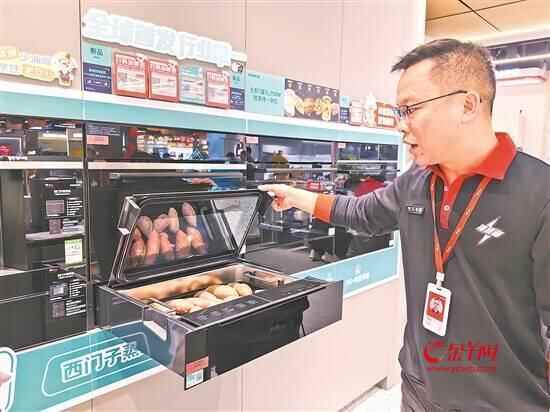
Group 1 - The core viewpoint of the article highlights the surge in home appliance consumption during the New Year, driven by government subsidies, corporate discounts, and consumer demand for innovative products [1][4][12] - The home appliance market is experiencing a significant increase in sales, with reports indicating that sales revenue has exceeded ten million yuan since the beginning of the year, with 85% of transactions occurring after in-store experiences [1][4] - The combination of national and local subsidies, along with additional discounts from retailers and brands, has resulted in overall price reductions of 30% to 40% on certain appliances, making them more attractive to consumers [4][12] Group 2 - The production side of the home appliance industry is also thriving, with companies in Shunde ramping up production to meet both domestic and international demand, indicating a robust supply chain [9][12] - Companies like Wanhe are reporting successful overseas orders, including a significant order in Egypt, and are maintaining production schedules to ensure continuous supply during the Chinese New Year [12][13] - The "Guangdong Goods Go Global" initiative is further supporting the home appliance industry by promoting high-quality products and enhancing brand visibility in international markets [12][13]
26年春节长假前三日上海消费投诉9184 件
Xin Lang Cai Jing· 2026-02-18 11:06
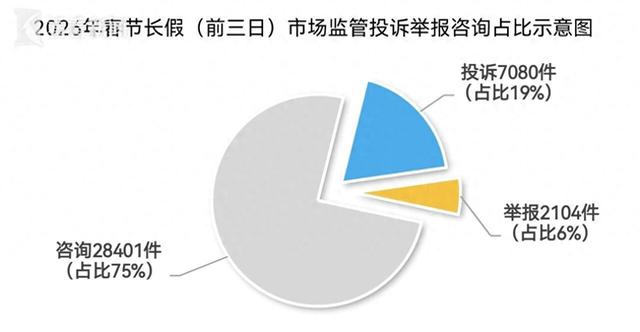
Group 1 - The core viewpoint of the article highlights the smooth operation of consumer rights protection during the holiday period, with a total of 9,184 complaints and 28,401 consultations received in the first three days of the holiday [1][3] - The market regulatory department has intensified enforcement and consumer rights services to ensure a safe and harmonious holiday for citizens [3] Group 2 - Online consumption complaints accounted for 89.5% of the total complaints, with issues primarily related to quality defects, discrepancies with promotions, order cancellations, and delivery delays [4] - Specific complaints included a case where a consumer received a product that did not match the advertised material [4] Group 3 - Complaints related to traditional holiday dining, such as New Year's Eve dinner orders, remained stable with 27 complaints reported, mainly concerning order disputes and delivery delays [5] - An example included a consumer who faced delays in receiving their ordered New Year's Eve meal from a chain supermarket [5] Group 4 - There was an increase in complaints related to green consumption, with 198 cases reported, reflecting a growing awareness of low-carbon and environmentally friendly practices [6] - Issues included shared consumption and violations of plastic restrictions, with a notable case involving a consumer unable to rent a camera for holiday photography [6] Group 5 - All reported complaints have been forwarded to the respective district market regulatory departments for investigation and resolution [7]