服务业

Search documents
内需主导、创新驱动,中央部署明年八大重点任务
Di Yi Cai Jing· 2025-12-11 11:29
据新华社消息,中央经济工作会议12月10日至11日在北京举行。会议指出,明年经济工作在政策取向 上,要坚持稳中求进、提质增效,发挥存量政策和增量政策集成效应,加大逆周期和跨周期调节力度, 提升宏观经济治理效能。 会议部署了八大重点任务,包括坚持内需主导,建设强大国内市场;坚持创新驱动,加紧培育壮大新动 能;坚持改革攻坚,增强高质量发展动力活力;坚持对外开放,推动多领域合作共赢;坚持协调发展, 促进城乡融合和区域联动;坚持"双碳"引领,推动全面绿色转型;坚持民生为大,努力为人民群众多办 实事;坚持守牢底线,积极稳妥化解重点领域风险。 加大逆周期和跨周期调节力度 2026年是"十五五"规划开局之年。中央经济工作会议在此关键节点召开,肩负着为"十五五"开篇定调、 绘制蓝图的历史使命,其政策取向将直接影响未来五年经济发展的节奏与质量。 今年中国经济在内外部风险挑战中表现出强劲的韧性。前三季度GDP同比增长5.2%,全年增速呈"前高 后低"走势。 发挥存量政策和增量政策集成效应,提升宏观经济治理效能。 一年一度的中央经济工作会议召开,为实现"十五五"良好开局指明了施政方向。 清华大学中国发展规划研究院常务副院长董煜表示 ...
美股小幅上涨,关注本周FOMC会议
Xin Lang Cai Jing· 2025-12-11 09:09
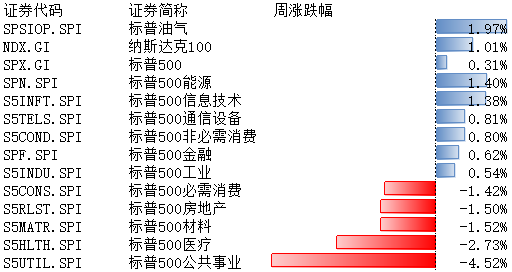
Macroeconomic Overview - The US PCE price index for September remained high, with a year-on-year increase of 2.8%, matching expectations and higher than the previous value of 2.7% [1] - The month-on-month PCE price index for September increased by 0.3%, consistent with expectations and the previous value [1] - The core PCE price index for September rose by 2.8% year-on-year, in line with expectations but lower than the previous value of 2.9% [1] - The month-on-month core PCE price index for September increased by 0.2%, matching expectations and the previous value [1] - Personal consumption expenditures in September rose by 0.3% month-on-month, in line with expectations but lower than the previous value of 0.5% [1] - Actual personal consumption expenditures for September showed no growth, falling short of the expected 0.1% and the previous value of 0.2% [1] Employment and Consumer Confidence - The US manufacturing sector continued to contract in November, while the service sector accelerated its expansion [1] - The ISM manufacturing index for November recorded 48.2, below the expected 49 and the previous value of 48.7 [1] - The ISM services index for November recorded 52.6, exceeding the expected 52 and the previous value of 52.4 [1] - The ADP employment report for November showed a decrease of 32,000 jobs, significantly below the expected decrease of 10,000 and the previous decrease of 42,000 [1] - Consumer confidence improved significantly in December, with the Michigan University consumer confidence index initial value at 52.3, better than the expected 52 and the previous value of 51 [2][1] - The one-year inflation expectation from Michigan University for December was 4.1%, lower than both the expected and previous value of 4.5% [2] - The five-year inflation expectation from Michigan University for December was 3.2%, lower than both the expected and previous value of 3.4% [2] Market Performance - The S&P Oil & Gas index rose by 1.97% over the week from December 1 to 5, while the Nasdaq 100 index increased by 1.01% and the S&P 500 index rose by 0.31% [3][16] - Among the 11 sectors covered by the S&P 500, 6 sectors saw gains, with the S&P 500 Energy sector leading at 1.40%, while the S&P 500 Utilities sector lagged with a decline of 4.52% [3][16] - The market is observing stable expectations for interest rate cuts in December, following disappointing employment data [16]

明年需关注的两条宏观物价线索:11月通胀数据点评
Huachuang Securities· 2025-12-11 08:28
Inflation Data Summary - November CPI increased year-on-year from 0.2% to 0.7%, meeting expectations of 0.7%[2] - Core CPI remained stable at 1.2%, maintaining a high level since 2022[2] - PPI decreased year-on-year from -2.1% to -2.2%, with expectations of -2%[2] Key Influences on CPI - Food prices significantly impacted CPI, with a month-on-month increase of 0.5% compared to -2.7% in November last year[2] - Fresh vegetable prices rose by 7.2% due to adverse weather affecting production and transportation[2] - Medical service prices increased by 0.3%, marking the eighth consecutive month of price rises[2] PPI Trends - PPI rose by 0.1% month-on-month, marking the second consecutive month of increase[3] - Seasonal demand in coal and gas industries contributed to price increases[3] - The computer and electronics sector saw a price increase of 0.1%, while the automotive sector's price decline narrowed from -0.2% to -0.1%[3] Future Inflation Outlook - CPI is expected to maintain a positive year-on-year trend, with projections of around 0.7% for next year[4] - PPI is anticipated to show a recovery trend, but the timing for a positive year-on-year change remains uncertain, with estimates around -1.4% for next year[4] - The supply-demand dynamics in the midstream manufacturing sector are crucial for PPI stabilization[4] Risks and Considerations - Potential upward risks for CPI include improvements in service sector pricing, particularly if consumer subsidy policies expand[5] - The midstream manufacturing sector's price stabilization is critical for PPI recovery, as it has been a significant drag on overall PPI performance[5]
核心CPI同比涨幅连续3个月保持在1%以上——扩内需政策措施继续显效
Jing Ji Ri Bao· 2025-12-10 22:23
Group 1: Consumer Price Index (CPI) Insights - In November, the CPI increased by 0.7% year-on-year, marking the highest growth since March 2024, with a month-on-month decrease of 0.1% [2][3] - The rise in CPI was primarily driven by a shift in food prices from decline to increase, with fresh vegetable prices rising by 14.5% after a nine-month decline [2][3] - Core CPI, excluding food and energy, rose by 1.2% year-on-year, maintaining above 1% for three consecutive months, indicating stable inflationary pressures [2][3] Group 2: Producer Price Index (PPI) Insights - The PPI increased by 0.1% month-on-month in November, marking the second consecutive month of growth, influenced by seasonal demand increases in certain industries [4] - Year-on-year, the PPI decreased by 2.2%, with the decline slightly widening compared to the previous month, primarily due to high comparison bases from the previous year [4] - Input factors such as international commodity prices have led to a mixed impact on domestic prices, with some sectors experiencing price increases while others faced declines [4] Group 3: Market Trends and Future Outlook - The ongoing "anti-involution" measures are showing results, with price declines in certain industries narrowing, indicating improved market competition [5] - Emerging industries are driving price increases in related sectors, with significant year-on-year price rises in new materials and technology sectors [6] - Future inflation is expected to remain low, providing room for growth-stimulating policies, with a gradual recovery in consumer prices anticipated [7][8]
月度前瞻 | 经济“量价”回升?
赵伟宏观探索· 2025-12-10 16:03
Group 1 - In November, economic activity showed signs of weak improvement, with inventory levels decreasing, which may lead to a more orderly recovery in production [1][7] - The manufacturing PMI rose slightly by 0.2 percentage points to 49.2% in November, indicating that production constraints from high inventory levels are still present [1][7] - Industrial added value growth is expected to remain stable at 4.9% in November, with a faster pace of inventory reduction potentially easing the impact of high inventory on future production [1][7] Group 2 - Demand recovery appears to be stronger, supported by the easing of short-term supply disruptions, which positively impacted exports, rising to 5.9% in November after a decline in October [1][13] - The increase in working days in November contributed to the export rebound, as the "production rush" effect from previous months diminished [1][13] Group 3 - Domestic demand highlights include improvements in investment and service consumption, with the easing of debt repayment pressures potentially benefiting investment [2][22] - Service consumption is expected to remain high due to the promotion of autumn holidays, despite some pressure from the decline in "trade-in" programs [2][22] Group 4 - Challenges remain, particularly in the manufacturing sector, where companies are accelerating debt repayments, which may further constrain investment [3][28] - The real estate sector continues to drag on the economy, with expectations of further declines in real estate investment and sales in November [3][42] Group 5 - Inflation indicators showed improvement, with the CPI expected to rise to 0.7% in November, supported by price increases in fresh vegetables and gold [4][57] - The PPI is projected to slightly decline to -2.2% in November, reflecting the lagging effects of the "anti-involution" policies on price recovery in the downstream sectors [4][69] Group 6 - Overall, November's economic indicators suggest improvements in both quantity and price, with actual GDP growth estimated at 4.4%, indicating resilience in growth [4][78] - The demand-side improvements are more pronounced, with short-term factors positively impacting exports and easing investment pressures from debt repayment [4][78]
月度前瞻 | 经济“量价”回升?
申万宏源宏观· 2025-12-10 11:51
Group 1 - In November, economic activity showed signs of weak improvement, with inventory levels decreasing, which may lead to a more orderly recovery in production [1][7] - The manufacturing PMI rose slightly by 0.2 percentage points to 49.2% in November, indicating that production constraints from high inventory levels are still present [1][7] - Industrial added value growth is expected to remain stable at 4.9% in November, with a faster pace of inventory reduction potentially easing the impact of high inventory on future production [1][7] Group 2 - Domestic demand highlights are seen in investment and service consumption, with the negative impact of debt reduction on investment potentially easing [2][22] - Investment indicators showed a general performance in November, despite a year-on-year decline of approximately 16% in construction and installation investment in October [2][22] - Service consumption is expected to improve due to the promotion of autumn holidays, despite pressures from the decline in trade-in programs [2][22] Group 3 - Economic growth pressure remains focused on the manufacturing sector, primarily due to companies accelerating debt repayments, which further constrains investment [3][28] - The real estate sector continues to drag on the economy, with November seeing further declines in real estate investment and commodity housing sales [3][42] - The sales area of commodity housing in November fell by 33.1% year-on-year, indicating a significant downturn in the real estate market [3][42] Group 4 - Inflation indicators showed improvement in November, with CPI rising to 0.7% year-on-year, supported by price increases in fresh vegetables and gold [4][57] - The PPI is expected to remain stable, with upstream commodity prices continuing to support it, although the recovery in mid- and downstream prices is slower [4][51] - The overall economic growth in November is projected to be around 4.4%, indicating resilience in growth despite challenges [4][78]
——宏观专题报告:月度前瞻:经济量价回升?-20251210
Shenwan Hongyuan Securities· 2025-12-10 03:27
Economic Highlights - In November, manufacturing PMI increased by 0.2 percentage points to 49.2%, indicating a slight recovery in production despite high inventory constraints[1] - Industrial added value growth is expected to remain stable at 4.9% for November, supported by accelerated inventory destocking[1] - Exports rebounded to 5.9% in November after a decline to -1.1% in October, driven by an increase in working days and reduced production overhang effects[1] Investment and Consumption Insights - Investment pressures are alleviating as the impact of debt reduction on investment is improving, with construction investment remaining at -16% in October[2] - Service consumption is expected to maintain high levels due to the promotion of autumn holidays, despite a decline in "trade-in" programs[2] - The proportion of special refinancing bonds has decreased to around 20%, indicating a potential improvement in investment dynamics[2] Challenges and Risks - Manufacturing investment remains under pressure due to companies prioritizing debt repayment over new investments, with accounts receivable growth dropping to 5.2% in October[2] - Real estate investment and sales are projected to decline further, with November seeing a 33.1% year-on-year drop in commodity housing sales[2] - The "anti-involution" policy's slow progress in the manufacturing sector is keeping cost rates at historically high levels, impacting profitability[2] Inflation and Price Trends - November's CPI is expected to rise to 0.7% year-on-year, supported by price increases in fresh vegetables (10.1%) and gold[3] - PPI is anticipated to recover slightly to around -2% due to ongoing price pressures from upstream commodities like coal and copper, despite weak downstream price recovery[3] - Core CPI is likely to show limited improvement, reflecting the ongoing challenges in the downstream sector[3]
12月政治局会议传递的信号
2025-12-10 01:57
12 月政治局会议传递的信号 20251209 中国政策重心转向高质量发展,不再片面追求经济增速,更强调结构调 整和增长质量,预计"十五"期间经济增长中枢在 4.5%左右,2026 年 增长目标或设在 5%左右。 财政政策将维持积极态势,赤字率或小幅提升至 4%-4.2%,专项债规 模预计与预算持平或略增,但特别国债和超长期特别国债的使用将适度 收缩。 货币政策延续适度宽松基调,但除非外部环境剧变,否则宽松力度有限, 结构性政策工具将继续发力,重点支持科技、绿色等领域,以促进物价 合理回升和金融稳定。 国际经贸方面,中国将灵活应对外部环境变化,若外需承压,将加大逆 周期调节力度。尽管中美关系波动可控,但需警惕欧洲和日本可能出现 的贸易摩擦对中国出口的影响。 消费刺激策略将从耐用品消费扩展到养老消费等新领域,以维持当前消 费水平并开辟新的增长点。政府侧重通过提升服务业供给来挖掘消费潜 力,而非直接刺激需求。 Q&A 摘要 如何解读 2026 年中央政治局会议传递的经济信号? 2026 年中央政治局会议传递的主要经济信号可以从逆周期与跨周期相结合的 视角进行解读。在中美博弈、社会稳定、结构转型和经济增长四个层次中 ...
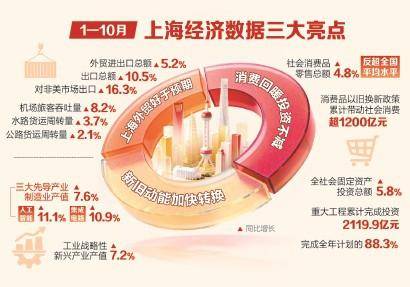
上海前10月经济指标呈现韧性定力
Sou Hu Cai Jing· 2025-12-10 01:52
Core Viewpoint - Shanghai's economy demonstrates strong resilience amid complex external conditions, achieving a notable GDP growth of 5.5% in the first three quarters of the year [2]. Group 1: Trade and Transportation - Shanghai's foreign trade performance has exceeded expectations, with total import and export volume increasing by 5.2% year-on-year from January to October, and exports rising by 10.5%, particularly with a 16.3% increase in exports to non-US markets, showcasing the competitive edge of Chinese and Shanghai enterprises [3]. - Passenger throughput at airports has seen a significant increase of 8.2% during the same period, while waterway and road freight turnover grew by 3.7% and 2.1%, respectively [3]. - The financial sector also showed positive trends, with major financial markets in Shanghai recording a total transaction volume of 29.678 trillion yuan, a year-on-year increase of 12.7% [3]. Group 2: Economic Structure and Growth Drivers - The structural transformation of Shanghai's economy is accelerating, with the output of the three leading industries in manufacturing growing by 7.6% from January to October, including integrated circuits and artificial intelligence, which grew by 10.9% and 11.1%, respectively [5]. - The output of strategic emerging industries in the industrial sector increased by 7.2%, indicating the continuous strengthening of new productive forces [5][6]. Group 3: Consumer and Investment Trends - The total retail sales of consumer goods in Shanghai increased by 4.8% year-on-year, surpassing the national average for the first time, with the "old for new" consumption policy driving over 120 billion yuan in social consumption [8]. - Fixed asset investment in Shanghai grew by 5.8% year-on-year, with significant projects completing investments of 211.99 billion yuan, achieving 88.3% of the annual target [8]. - Urban renewal projects are accelerating, with the completion of various housing renovations and the initiation of 25 "urban village" transformation projects [8].
数览中国脉动|稳扎稳打!我国实体经济底盘更稳固
Xin Hua Wang· 2025-12-10 01:30
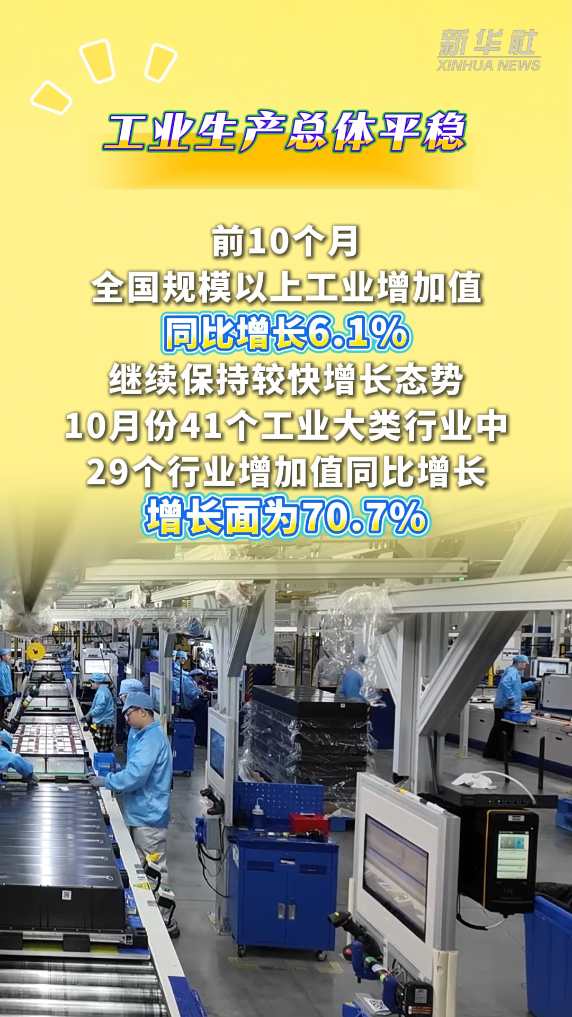
实体经济是大国的根基,是构筑未来发展战略优势的重要支撑。 面对复杂多变的国内外环境、产业链供应链波动等多重挑战,我国精准施策、靶向发力,推动工 业、农业、服务业和基础设施发展迈上新台阶,实体经济底盘更稳固。 ■工业生产总体平稳。 ■发展韧性持续增强。 稳中有进,实体经济行稳致远的底气更足。 ■产业结构持续优化。 编导:胡心懿 记者:潘志伟、尹恒、李倩薇 新华社音视频部制作 【纠错】 【责任编辑:谷玥】 ...