新能源车

Search documents
平安证券(香港)港股晨报-20251124
Ping An Securities Hongkong· 2025-11-24 02:26
Market Overview - The Hong Kong stock market experienced significant fluctuations, with the Hang Seng Index closing at 23,831 points, down 145 points or 0.61% [1][5] - The market turnover decreased to 82.799 billion, with net inflows of 484 million from the Stock Connect [1][5] - The US stock market saw all three major indices rise, with the Dow Jones up 1.08% and the S&P 500 up 0.98% [2] Investment Opportunities - The report emphasizes the importance of selecting undervalued sectors and companies in the current market environment, particularly in technology and state-owned enterprises [3] - Key sectors to focus on include artificial intelligence, semiconductors, and industrial software, which are expected to benefit from long-term growth opportunities [3] - The report suggests that companies in the upstream non-ferrous metals sector may benefit from expectations of interest rate cuts by the Federal Reserve [3] Company Highlights - JD Health saw a significant drop of 8.6% due to concerns over semiconductor demand and tech stock sell-offs [1] - Xiaomi Group's stock increased by 1.01% after the company repurchased 13.5 million shares for 508 million HKD [1] - Tencent Holdings and Alibaba are highlighted as key players in the technology sector, with Tencent recently repurchasing shares and Alibaba launching new AI products [12][9] Sector Performance - The report notes that local real estate, software, and 5G concept sectors experienced the largest declines, while gold stocks performed well [1] - The semiconductor industry is projected to see explosive growth, with China's AI chip market expected to grow from 142.537 billion to 1,336.792 billion by 2029, reflecting a compound annual growth rate of 53.7% [9] - The report recommends focusing on leading companies in the domestic semiconductor foundry industry, such as Hua Hong Semiconductor and SMIC [9]
港股开盘 | 恒指高开0.92% 科网股多数上涨
智通财经网· 2025-11-24 01:40
恒生指数高开0.92%,恒生科技指数涨1.13%。科网股多数上涨,网易涨超3%,百度集团涨超2%,小米 集团涨超1%。零跑汽车涨超3%,公司被纳入恒生科技指数成份股,于2025年12月8日起生效。 广发证券表示,港股可能再次迎来布局良机。如果后续美国政府停摆结束、美联储12月降息表态重新转 鸽、美联储停止缩表甚至重启扩表,美元流动性得到缓解,港股可能会出现新一轮上涨。配置上,11月 基本面驱动效应强,仍然采用杠铃策略,以红利为底仓,科技成长博弹性。广发证券称,港股牛市的基 础并未破坏,但演进方式更可能呈现"震荡上行、重心缓升"的特征,而非单边快速上涨,港股的11月基 本面驱动效应强,仍然要重视高景气板块的价值。在配置上,仍然采用杠铃策略,港股稳定价值类资产 (尤其是AH溢价相对较高H股)作为底仓长期配置,港股景气成长类资产的产业逻辑依然坚实,震荡中孕 育机会。一旦上述Trigger出现,资金可能会流入中国最具备全球竞争优势的核心资产,例如恒生科技 (互联网、新能源车)等。 关于港股后市 华鑫证券表示,近期港股调整幅度相对较大,估值也相对更合理,进一步回调的空间有限。虽然年末风 险偏好不会过高,意味着没有全面行 ...
市场下跌不要慌!本周资金抄底ETF的方向呈现出这个显著特征!丨ETF风云周评(八十八)
Sou Hu Cai Jing· 2025-11-23 11:12
Core Insights - The article highlights the trend of bond ETFs becoming a safe haven for investors amid a significant decline in equity markets, with various sectors experiencing substantial losses [3][6]. Index Valuation Ladder - The report indicates that major indices have seen a notable decrease in valuation metrics such as PE and PB ratios, suggesting potential buying opportunities if the market continues to decline [3][4]. - The ChiNext Index dropped over 6%, leading the decline among broad indices, while sectors like photovoltaic and new energy vehicles fell by 11.3% and 8.3%, respectively [3][4]. ETF Performance - The top-performing ETFs this week were predominantly bond ETFs, with the S&P Biotechnology ETF being the only equity ETF to show a slight increase of 1.3% [6]. - The report lists the largest ETFs by scale and their respective performance, with the 10-Year Local Government Bond ETF and various credit bond ETFs showing resilience [5][6]. Fund Flow Trends - The article notes that funds are increasingly flowing into ETFs that have previously experienced significant declines, particularly in the technology and innovation sectors [10]. - The report emphasizes that the Shanghai Composite Index remains a key indicator of market sentiment, with related ETFs seeing accelerated inflows [10].

大金重工签署海风订单,英联股份签订固态电池复合铝箔采购合同
GOLDEN SUN SECURITIES· 2025-11-23 10:34
Investment Rating - Maintain "Buy" rating for the industry [5] Core Insights - The report emphasizes the robust development of the photovoltaic industry, with a focus on the "10 million kilowatt photovoltaic" project over the next five years, which is expected to enhance confidence in high-quality growth [17][19] - The wind power sector is highlighted by significant contracts, such as the 1.34 billion yuan order for the European offshore wind project by Daikin Heavy Industries, indicating strong market demand [2][20] - The hydrogen energy sector is witnessing advancements with the launch of a 1000 kg commercial ammonia hydrogen production and refueling station, showcasing innovative technology [3][24] - The energy storage market is projected to grow, with recent bidding data indicating a competitive landscape and price ranges for storage systems [30][33] Summary by Sections 1. New Energy Generation - **Photovoltaics**: The government aims to advance the "10 million kilowatt photovoltaic" project, which is expected to boost the industry's confidence. Key companies to watch include Longi Green Energy, JA Solar, JinkoSolar, and Trina Solar [17][19] - **Wind Power & Grid**: Daikin Heavy Industries signed a 1.34 billion yuan contract for the Gennaker offshore wind project in Germany, with a planned capacity of 976.5 MW. The report suggests focusing on companies like Goldwind Technology and Mingyang Smart Energy [2][20][22] - **Hydrogen & Energy Storage**: The first commercial ammonia hydrogen production station was launched, utilizing advanced low-temperature ammonia decomposition technology. The energy storage sector is also highlighted with competitive bidding data showing significant project sizes [3][24][30] 2. New Energy Vehicles - **Solid-State Batteries**: Yinglian Co. signed a strategic procurement contract worth 300-400 million yuan for composite aluminum foil for solid-state batteries, indicating strong demand in the electric vehicle sector. Companies like Ningde Times and Yiwei Lithium Energy are recommended for investment [4][34][36]




市场波动中,重点关注风电、锂电、储能等确定性高景气方向
SINOLINK SECURITIES· 2025-11-23 08:02
Investment Rating - The report suggests a focus on wind power and lithium battery/storage sectors due to their attractive valuation and growth potential, while also indicating a watchful eye on AIDC power, liquid cooling, distribution, and SOFC as they may show significant elasticity when AI sentiment improves [1][6]. Core Insights - The global capital market is experiencing significant volatility influenced by AI, but long-term trends such as global energy supply-demand shifts, domestic planning, and carbon reduction goals remain unchanged, making certain sub-industries attractive for investment [1][6]. - Wind power is highlighted as having a clear upward trend in demand, with low valuations and immunity to AI-related fluctuations, particularly following the initiation of a 2.8GW offshore wind project in Denmark [1][7]. - The lithium battery sector is seeing price increases, with the price of lithium hexafluorophosphate reaching 165,000 RMB/ton, a 27% year-on-year increase, indicating a strong outlook for the lithium battery supply chain [1][10]. Summary by Sections Wind Power - The Danish government has initiated a 2.8GW offshore wind project tender, marking a significant policy shift in Europe that is expected to stabilize industry growth [7]. - Daikin Heavy Industries has signed a major contract for offshore wind projects in Europe, with a contract value significantly exceeding expectations, indicating strong growth potential in service business expansion [8]. Lithium Battery/Storage - The lithium battery supply chain is experiencing price increases, with the average cost of lithium iron phosphate materials ranging from 15,714.8 RMB/ton to 16,439.3 RMB/ton, providing a benchmark for cost control [10][15]. - Guoxuan High-Tech has commenced mass production of standard battery cells for Volkswagen, marking a significant milestone in their strategic partnership [10]. Photovoltaics & Energy Storage - In October, battery component exports increased by 21% year-on-year, although terminal demand is expected to slow down towards the end of the year, suggesting a potential recovery in demand-side pessimism [18]. - The report recommends bottom-fishing in the photovoltaic sector, focusing on leading companies in solar storage, glass, low-cost silicon materials, and high-efficiency batteries/components [20]. Hydrogen and Fuel Cells - The green methanol industry is transitioning from policy-driven growth to commercial realization, with significant progress in project implementation and infrastructure [20]. - The establishment of a green methanol project in Inner Mongolia is expected to enhance production capacity and reduce costs, indicating a robust future for the green methanol market [21]. AIDC - NVIDIA's recent financial report shows a significant revenue increase, indicating strong market demand for liquid cooling solutions, which presents investment opportunities in this sector [23][24]. - The shift in NVIDIA's strategy to supply Level-10 systems directly to partners is expected to enhance the competitive advantage of companies providing comprehensive liquid cooling solutions [24][25]. Electric Grid - In October, major power equipment exports reached 6.3 billion USD, with a year-on-year increase of 8%, indicating a long-term high demand for overseas power equipment [26][27]. - The approval of several high-voltage direct current projects is expected to accelerate bidding and enhance order growth for related companies [28][29].

电新行业周报:工信部发文避免风电“唯价格论”,OpenAI营收预期上调-20251123
Western Securities· 2025-11-23 07:37
Investment Rating - The report recommends investment in the wind power sector, specifically highlighting companies such as 大金重工, 金风科技, 中天科技, and 东方电缆, while suggesting to pay attention to 德力佳, 运达股份, 海力风电, and 金雷股份 [1] Core Insights - The Ministry of Industry and Information Technology has issued documents to avoid a "price-only" approach in the wind power equipment sector, promoting healthy industry development [1] - In October, the national electricity consumption reached 857.2 billion kWh, showing a year-on-year increase of 10.4%, with the tertiary industry experiencing the most significant growth [1] - The report highlights a significant increase in nuclear fusion project tenders, amounting to 2.17 billion yuan this week [1] - The report recommends investment in the power equipment sector, specifically mentioning 东方电气, 思源电气, 神马电力, and 国能日新, while suggesting to pay attention to 特变电工 [1] Summary by Sections Wind Power Equipment - The Ministry of Industry and Information Technology has encouraged user enterprises to optimize bidding rules and introduce various evaluation systems to avoid a "price-only" approach [1][45] - The report recommends several companies in the wind power sector, including 大金重工, 金风科技, and 东方电缆 [1] Electricity Consumption - In October, the total electricity consumption in China reached 857.2 billion kWh, marking a 10.4% year-on-year increase [1][9] Nuclear Fusion - This week, nuclear fusion project tenders reached 2.17 billion yuan, indicating a growing interest and investment in this area [1][48] Power Equipment - The report recommends investment in companies such as 东方电气, 思源电气, and 神马电力, while suggesting to pay attention to 特变电工 [1]
A股:迹象非常明示,牛市没有结束,A股很可能重演2014年行情
Sou Hu Cai Jing· 2025-11-22 16:54
Group 1 - The current A-share market is in a phase of transition, characterized by a lack of significant index movement but a critical structural change [3][4] - The market is likely to experience a similar pattern to late 2014, with a potential emotional peak around the Chinese New Year [4][49] - The sentiment is currently cold, which is often a sign of a brewing main upward trend rather than the end of a bull market [6][13] Group 2 - The participation of retail investors is low, with new account openings not showing a significant surge like in 2015 [7][8] - There are no signs of a typical "end-stage frenzy," such as widespread IPOs or a rush for hot stocks [10][11] - The market has not yet reached a stage of universal excitement, indicating that the bull market is still in its mid-phase [13][14] Group 3 - The funding structure is undergoing a transformation, with traditional active funds becoming more selective and focused on familiar sectors [18][20] - Quantitative trading has increased short-term volatility but does not determine long-term trends [19][20] - There is a gradual return of northbound capital, signaling positive market sentiment [21][22] Group 4 - The macroeconomic environment remains supportive, with a moderately loose monetary and fiscal policy [29][34] - Policies are focused on high-end manufacturing, digital economy, and green energy, which are expected to drive future market performance [36][39] - The stock market is not merely a game of ups and downs but reflects a collective bet on future industrial landscapes [40] Group 5 - The current bull market is more evident in small-cap indices like the CSI 2000 and CSI 500, which have shown significant gains [42][44] - Many stocks have rebounded sharply from their lows, indicating a structural bull market despite the index's lack of movement [44][46] - The real sustained momentum is found in policy-supported sectors and growth-oriented small-cap stocks [46][47] Group 6 - The upcoming months are expected to follow a specific rhythm: confirming a mid-term bottom in November, consolidating in December, and potentially experiencing a significant rally in January [50][53] - The market may undergo a final emotional purge and technical correction before a substantial upward movement [50][51] - January could see a surge in trading volume and a rise in indices, particularly in small-cap stocks with strong performance and policy backing [54][55]

央视:日本担心稀土断供
Bei Jing Ri Bao Ke Hu Duan· 2025-11-22 03:53
Core Viewpoint - Japan is increasingly concerned about potential restrictions on rare earth exports from China, which could significantly impact its economy and industries reliant on these materials [1] Group 1: Economic Impact - Japan's economy is facing growing pressure due to China's stance, with estimates indicating that approximately 60% of Japan's rare earth imports come from China [1] - The Japanese Trade Promotion Organization's representative expressed concerns that Chinese measures could expand into trade management, further affecting Japan's economic landscape [1] Group 2: Industry Dependency - Rare earth elements are deemed essential in various sectors, including semiconductors, AI, and electric vehicles, highlighting Japan's dependency on these materials [1] - The term "industrial rice" has been used by Japanese media to describe rare earths, underscoring their critical role in Japan's industrial supply chain [1] Group 3: Historical Context - A precedent exists for China imposing rare earth export controls, as seen during the 2010 East China Sea incident, which severely disrupted Japan's supply chain [1] - The potential for China to implement stricter rare earth controls again is a significant concern if Japan continues to provoke on issues related to Taiwan [1]
“把车造大,才能活命”
3 6 Ke· 2025-11-22 01:34
Core Insights - The Guangzhou Auto Show in November is characterized by a cold atmosphere, reflecting the intense competition in the Chinese automotive market, particularly in the electric vehicle (EV) sector [1][3] - The shift towards electrification is irreversible, with new energy vehicles (NEVs) becoming the focal point of the industry, dominating exhibition spaces and sales strategies [4][8] - Traditional rules of the automotive market are being overturned, especially regarding vehicle classification and pricing, as the demand for larger vehicles, particularly SUVs, increases [5][11] Industry Trends - The trend of producing larger vehicles is driven by consumer preferences, with a notable shift towards larger SUVs that exceed 5.2 meters in length and 3.1 meters in wheelbase [5][11] - The Chinese automotive market is increasingly resembling the North American market in terms of vehicle size preferences, influenced by rising income levels and changing family structures [7][11] - The production of larger vehicles is facilitated by advancements in EV technology, allowing manufacturers to overcome previous limitations associated with traditional fuel vehicles [8][12] Competitive Landscape - The competition among manufacturers is intensifying, with many brands launching large SUVs to remain relevant in the market [12][23] - Companies like NIO and Li Auto are focusing on larger models to capture market share, with the expectation that the demand for large vehicles will continue to grow [20][23] - The upcoming years are expected to see an influx of large SUVs in the Chinese market, leading to increased competition and potential market consolidation [18][24] Consumer Behavior - Chinese consumers are increasingly seeking larger vehicles for family and lifestyle needs, paralleling the desire for larger homes, which reflects a broader trend of consumption upgrading [11][24] - The perception of larger vehicles as a status symbol is becoming more pronounced, with manufacturers needing to adapt their strategies to meet these evolving consumer expectations [24][25]


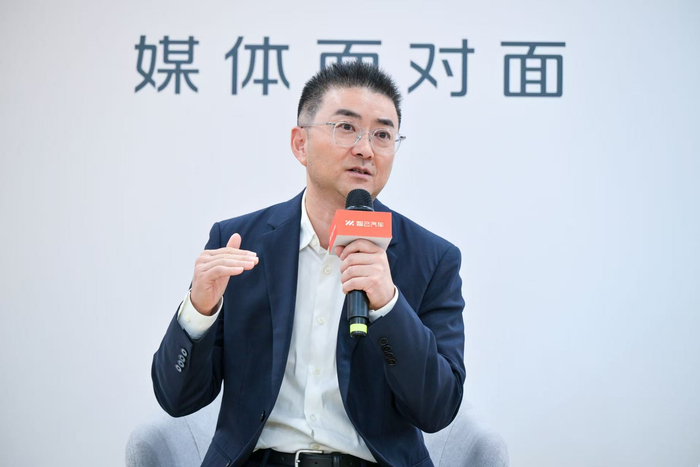
智己汽车联席CEO刘涛:智能新能源车安全出行的价值要回归
Zhong Guo Jing Ying Bao· 2025-11-21 20:51
Core Insights - The launch of the Zhiji LS9, a new large 6-seat SUV positioned as SAIC's flagship model, has seen over 5,000 pre-orders within 25 minutes of its release, indicating strong market interest [2] - The LS9 aims to address traditional challenges associated with large SUVs, such as maneuverability and driving experience, by introducing the Lingxi Digital Chassis 3.0, which enhances driving dynamics and control [2][4] Market Positioning - The year 2025 is anticipated to be a pivotal year for large 6-seat SUVs, with multiple automakers entering the market, leading to intense competition in the high-end segment priced above 300,000 yuan [2] - The LS9's unique selling proposition includes innovative space utilization and advanced features, positioning it against competitors like Geely M9 and AITO M9 [2] Target Audience - The LS9 is designed with middle-aged male drivers in mind, addressing their desire for a large vehicle that is easy to drive, thereby expanding the potential market for high-end SUVs [3] Technological Innovations - The Lingxi Digital Chassis 3.0 features several technological advancements, including a unique bidirectional 24° smart four-wheel steering system, achieving a turning radius of just 4.95 meters, making it more agile than smaller vehicles [4] - The LS9 incorporates a dual-chamber closed air suspension and CDC system, allowing for rapid stiffness adjustments and improved ride comfort [4] Safety and Comfort Features - The LS9 emphasizes safety and comfort, introducing features such as a smart underfloor heating system, a fresh air system exceeding medical standards, and 4D mechanical massage seats [5] - The vehicle's design includes a "big flat" concept, promoting high space efficiency and versatile seating arrangements, catering to the needs of specific age demographics [5] Pricing Strategy - The LS9 is priced between 322,800 and 352,800 yuan, which is significantly lower than competitors like Li Auto L9 and AITO M9, providing a competitive edge in the market [5] - The company leverages SAIC's robust supply chain to offer advanced technology at reasonable price points, addressing the balance between high specifications and cost [5] Network Expansion - Zhiji is rapidly expanding its network, aiming to cover 150 cities with over 500 outlets by the end of the year, ensuring comprehensive market presence in first to fourth-tier cities [5] User-Centric Approach - The LS9's development reflects a user-centric approach, focusing on enhancing the driving experience and addressing common pain points associated with traditional large SUVs [4][5]