原油

Search documents
石化行业周报:PX利润维持强势,关注春节前补库逻辑-20260116
China Post Securities· 2026-01-16 05:37
Investment Rating - Industry investment rating: Stronger than the market, maintained [1] Core Views - Focus on the polyester restocking logic and the marginal improvement expectations for PX and PTA supply and demand this year. The price spread between PX (China main port) and naphtha (Japan) has recovered to $345.92 per ton. Attention is drawn to the restocking logic before the Spring Festival [2] - The oil and petrochemical index performed poorly this week, rising by 0.29% compared to last week. Among the sub-indices, engineering services performed best within the oil and petrochemical sector, with a rise of 7.21% [5] - Crude oil prices increased; US crude oil inventories rose while gasoline inventories fell [6][10] Summary by Sections Crude Oil - Crude oil prices increased, with Brent crude futures closing at $63.45 per barrel, up 2.3% from last week [7] - US crude oil inventories increased by 8,106 thousand barrels, while gasoline inventories decreased by 235 thousand barrels [13] Polyester - The price of polyester filament remained stable, but the price spread decreased. The latest prices for polyester filament POY, DTY, and FDY are 6,550, 7,750, and 6,800 yuan per ton, respectively, with price spreads decreasing by 91 yuan per ton [16] - The inventory days for polyester filament in Jiangsu and Zhejiang increased, with FDY, DTY, and POY inventory days at 19.5, 24.6, and 11.7 days, respectively. The operating rate for polyester filament and downstream weaving machines decreased by 2.8% [20] Olefins - Sample PE spot prices increased to 6,900 yuan per ton, up 0.73% from last week. The petrochemical inventory of polyolefins decreased by 60,000 tons, totaling 570,000 tons [27]
加元高位震荡 政策与原油主导博弈格局
Jin Tou Wang· 2026-01-16 02:47
Core Viewpoint - The Canadian dollar (CAD) is experiencing high volatility influenced by divergent US-Canada policies, oil price fluctuations, and trade uncertainties, with the USD/CAD exchange rate at 1.3892 as of January 16, 2026, reflecting a slight increase of 0.0944% [1] Group 1: Economic and Monetary Policy - In 2025, the CAD's performance was affected by policy adjustments and trade tensions, with the Bank of Canada cutting interest rates by a total of 100 basis points to 2.25%, the lowest since July 2022 [1] - The Bank of Canada signaled a pause in rate cuts during the December meeting, leading to market expectations of no further rate cuts before March, which, along with a rebound in oil prices, helped stabilize the CAD [1] - The Canadian economy showed resilience in Q4 2025, with a surprising annualized GDP growth of 2.6% in Q3, reversing a contraction trend [1] Group 2: Employment and Trade Dynamics - The Canadian job market showed mixed signals, with 53,000 new jobs added in November 2025, but the unemployment rate rose to 6.8% in December, indicating a weak labor market that limits the CAD's attractiveness [2] - In trade, Canada experienced a shift from a surplus to a deficit in October 2025, with a trade deficit of 583 million CAD, driven by an 8.4% decline in energy product exports, while metal and non-metal mineral exports surged by 27.3% to a record high [2] - The trade surplus with the US narrowed from 8.4 billion CAD in September to 4.8 billion CAD, while exports to non-US countries increased by 15.6%, indicating a diversification in trade partners [2] Group 3: Oil Prices and Market Outlook - The CAD's performance is closely tied to oil prices, with WTI crude oil recently rising to around 60.70 USD per barrel due to OPEC+ production cuts and tensions in Iran, providing support for the CAD [3] - However, concerns over potential oversupply from the US resuming Venezuelan oil imports, estimated to add 30 to 50 million barrels, could pressure Canadian oil exports [3] - Short-term resistance for USD/CAD is noted between 1.3920-1.3950, with support at 1.3820-1.3850, while long-term factors to monitor include the pace of Fed rate cuts, oil supply dynamics, and the review progress of the US-Mexico-Canada Agreement [3]
《能源化工》日报-20260116
Guang Fa Qi Huo· 2026-01-16 01:51
Group 1: Report Industry Investment Rating - No information provided in the content Group 2: Report Core Views Polyolefin Industry - Market short - covering sentiment cooled, spot trading worsened. For PE, HD - LLDPE spread narrowed, with increased marginal supply of LLDPE and weakening downstream demand in the off - season. For PP, supply and demand were both weak, with more maintenance, expected destocking in January, and improved balance. Pay attention to the implementation of future maintenance [2]. Methanol Industry - Methanol futures opened lower and then fluctuated narrowly, with light spot trading. Inland prices are expected to fluctuate, while port prices are under pressure due to factors such as low MTO profits and potential device maintenance [5]. Pure Benzene and Styrene Industry - Pure benzene has a weak short - term supply - demand pattern but is supported by the strong performance of downstream styrene. Styrene has short - term supply shortages but may accumulate inventory around the Spring Festival [8]. Natural Rubber Industry - Supply: Domestic production is ending, and raw material prices are rising. Demand: Some semi - steel tire export orders are increasing, and inventory is accumulating. The price is expected to fluctuate in the range of 15,500 - 16,500 [9][10]. Glass and Soda Ash Industry - Soda ash futures are expected to fluctuate weakly in the short term, with high inventory and weak downstream demand. Glass futures are also expected to decline, with weakening supply and demand in the off - season [11]. Urea Industry - Urea supply is high, but short - term regional agricultural demand boosts market confidence. Prices are expected to be strong in the short term, and attention should be paid to downstream agricultural demand and plant restart schedules [12]. PVC and Caustic Soda Industry - Caustic soda prices are expected to be weak, with increased supply and lack of demand improvement. PVC fundamentals are under pressure, with high supply, low demand, and inventory accumulation [13]. LPG Industry - No specific view provided in the content Crude Oil Industry - Oil prices fell on Thursday. Geopolitical risks have eased, and the supply - demand outlook is weak. Attention should be paid to geopolitical conflicts in the Middle East [17]. Polyester Industry Chain - PX is expected to fluctuate at a high level before the Spring Festival and may be tight in the second quarter. PTA and MEG are expected to have weak supply - demand in January and February. Short - fiber and bottle - chip prices are mainly driven by raw materials [19]. Group 3: Summary by Related Catalogs Polyolefin Industry - **Price Changes**: L2605 and L2609 closed down, PP2605 slightly up, PP2609 down. Some spreads and basis had significant changes [2]. - **Inventory and开工率**: PE and PP enterprise and social inventories decreased, while PE device and downstream weighted开工率 decreased, and PP device开工率 slightly increased [2]. Methanol Industry - **Price Changes**: MA2605 and MA2609 closed down, with significant changes in some spreads and basis [5]. - **Inventory and开工率**: Methanol enterprise inventory increased slightly, while port and social inventories decreased. Upstream and downstream开工率 had different changes [5]. Pure Benzene and Styrene Industry - **Price Changes**: Many prices such as crude oil, pure benzene, and styrene decreased, with some spreads and basis changing [8]. - **开工率 and Inventory**: Some开工率 increased, while some decreased. Pure benzene port inventory reached a record high, and styrene port inventory decreased [8]. Natural Rubber Industry - **Price Changes**: Spot prices of natural rubber decreased, and some spreads changed significantly [9]. - **Production,开工率, and Inventory**: Production in some regions changed, tire开工率 increased, and inventory in China continued to accumulate [9]. Glass and Soda Ash Industry - **Price Changes**: Glass and soda ash prices were mostly stable, with some futures prices down [11]. - **Supply, Demand, and Inventory**: Soda ash production increased, demand was weak, and inventory was high. Glass supply and demand were weak, and inventory was still relatively high year - on - year [11]. Urea Industry - **Price Changes**: Futures prices fluctuated down, and spot prices were stable with a slight upward trend [12]. - **Supply and Demand**: Supply was high, industrial demand was stable, and agricultural demand in some regions increased [12]. - **Inventory**: Factory and port inventories decreased [12]. PVC and Caustic Soda Industry - **Price Changes**: Caustic soda and PVC prices decreased slightly, with some spreads and basis changing [13]. - **Supply, Demand, and Inventory**: Caustic soda supply increased, demand was weak, and inventory increased in some regions. PVC supply was stable, demand was low, and inventory accumulated [13]. LPG Industry - **Price Changes**: Some futures prices changed slightly, and spot prices were stable [15]. - **Inventory and开工率**: LPG refinery and port inventories decreased slightly, and some开工率 increased while some decreased [15]. Crude Oil Industry - **Price Changes**: Brent and WTI prices decreased, while SC increased slightly. Many refined oil product prices decreased [17]. - **Spread Changes**: Some spreads such as Brent - WTI changed [17]. Polyester Industry Chain - **Price Changes**: Upstream and downstream product prices in the polyester industry chain mostly decreased, with changes in some spreads and basis [19]. - **开工率 and Inventory**: Some开工率 increased slightly while some decreased. MEG port inventory increased, and the arrival forecast decreased [19].
能源化工日报-20260116
Wu Kuang Qi Huo· 2026-01-16 01:18
Report Industry Investment Rating - Not provided in the content Core Viewpoints of the Report - For crude oil, although the geopolitical premium has disappeared and OPEC's production increase is minimal, and its supply has not yet increased significantly, the short - term outlook for oil prices is not overly bearish. A range - trading strategy of buying low and selling high is maintained, but it is recommended to wait and see for now to observe OPEC's export price - support willingness [3] - For methanol, the current valuation is low, the outlook for the coming year is improving, and there is limited downside. Due to potential geopolitical factors in Iran, there is a feasibility of buying on dips [6] - For urea, the current situation of the internal - external price difference has opened the import window, and with the expected increase in production at the end of January, there is a bearish fundamental outlook. It is recommended to take profits on rallies [9] - For rubber, it has a weak seasonal pattern. Adopt a neutral approach currently. If RU2605 falls below 16,000, switch to a short - term short - selling strategy. Partially build a position for the strategy of buying the NR main contract and short - selling RU2609 [15] - For PVC, the domestic supply - demand situation is characterized by strong supply and weak demand. In the short term, electricity price expectations and export rush support the price. In the medium term, the strategy is to short on rallies before significant industry production cuts [17] - For pure benzene and styrene, the non - integrated profit of styrene is currently neutral to low, with a large upward valuation repair space. It is advisable to go long on the non - integrated profit of styrene before the end of the first quarter [20] - For polyethylene, OPEC+ plans to suspend production growth in Q1 2026, and the crude oil price may have bottomed. It is recommended to go long on the LL5 - 9 spread on dips [23] - For polypropylene, in a situation of weak supply and demand, the overall inventory pressure is high. The futures price may bottom out when the supply - surplus pattern changes in Q1 next year [26] - For PX, it is expected to maintain a slight inventory build - up before the maintenance season. In the medium term, pay attention to the opportunity of going long on dips following the crude oil price [28] - For PTA, it is expected to enter the Spring Festival inventory build - up period after a short - term inventory draw. In the medium term, pay attention to the opportunity of going long on dips [30] - For ethylene glycol, the industry's overall load is still high, the inventory build - up period will continue, and the valuation needs to be compressed in the medium term if there are no further domestic production cuts [33] Summary by Related Catalogs Crude Oil - **Market Information**: INE's main crude oil futures contract closed down 4.00 yuan/barrel, a decline of 0.89%, at 444.90 yuan/barrel. High - sulfur fuel oil rose 34.00 yuan/ton, a gain of 1.33%, to 2586.00 yuan/ton, while low - sulfur fuel oil fell 15.00 yuan/ton, a decline of 0.48%, to 3087.00 yuan/ton. The U.S. EIA weekly data showed that commercial crude oil inventories increased by 3.39 million barrels to 422.45 million barrels, a 0.81% increase; SPR increased by 0.21 million barrels to 413.68 million barrels, a 0.05% increase; gasoline inventories increased by 8.98 million barrels to 251.01 million barrels, a 3.71% increase; diesel inventories decreased by 0.03 million barrels to 129.24 million barrels, a 0.02% decrease; fuel oil inventories increased by 1.74 million barrels to 24.72 million barrels, a 7.55% increase; and aviation kerosene inventories decreased by 0.89 million barrels to 43.14 million barrels, a 2.03% decrease [2] - **Strategy Viewpoint**: Although the geopolitical premium has disappeared and OPEC's production increase is minimal, and its supply has not yet increased significantly, the short - term outlook for oil prices is not overly bearish. A range - trading strategy of buying low and selling high is maintained, but it is recommended to wait and see for now to observe OPEC's export price - support willingness [3] Methanol - **Market Information**: The spot prices in different regions changed as follows: Jiangsu changed by 10 yuan/ton, Lunan by 0 yuan/ton, Henan by - 10 yuan/ton, Hebei by 0 yuan/ton, and Inner Mongolia by - 5 yuan/ton. The main futures contract changed by 12.00 yuan/ton, closing at 2273 yuan/ton, and MTO profit changed by 17 yuan [5][10] - **Strategy Viewpoint**: The current valuation is low, the outlook for the coming year is improving, and there is limited downside. Due to potential geopolitical factors in Iran, there is a feasibility of buying on dips [6] Urea - **Market Information**: Spot prices in different regions changed as follows: Shandong by 0 yuan/ton, Henan by 10 yuan/ton, Hebei by 0 yuan/ton, Hubei by 0 yuan/ton, Jiangsu by 10 yuan/ton, Shanxi by 10 yuan/ton, and Northeast by 0 yuan/ton. The overall basis was reported at - 61 yuan/ton. The main futures contract changed by - 13 yuan/ton, closing at 1801 yuan/ton [8] - **Strategy Viewpoint**: The current situation of the internal - external price difference has opened the import window, and with the expected increase in production at the end of January, there is a bearish fundamental outlook. It is recommended to take profits on rallies [9] Rubber - **Market Information**: Rubber prices fluctuated weakly, following macro trends. Bulls were optimistic due to seasonal and demand expectations, while bears were pessimistic due to weak demand. As of January 15, 2026, the operating rate of all - steel tires in Shandong tire enterprises was 62.84%, 2.30 percentage points higher than the previous week and 2.78 percentage points higher than the same period last year. The operating rate of semi - steel tires in domestic tire enterprises was 74.35%, 6.35 percentage points higher than the previous week and 4.09 percentage points lower than the same period last year. As of January 4, 2026, China's natural rubber social inventory was 123.2 tons, a 3.1 - ton increase from the previous week, a 2.5% increase. The spot prices of some rubber products also changed [12][13] - **Strategy Viewpoint**: It has a weak seasonal pattern. Adopt a neutral approach currently. If RU2605 falls below 16,000, switch to a short - term short - selling strategy. Partially build a position for the strategy of buying the NR main contract and short - selling RU2609 [15] PVC - **Market Information**: The PVC05 contract fell 10 yuan to 4868 yuan. The spot price of Changzhou SG - 5 was 4650 (- 10) yuan/ton, the basis was - 218 (0) yuan/ton, and the 5 - 9 spread was - 124 (+2) yuan/ton. The overall operating rate of PVC was 79.7%, a 1% increase from the previous period. The demand - side downstream operating rate was 44%, a 0.1% increase. Factory and social inventories increased [16] - **Strategy Viewpoint**: The domestic supply - demand situation is characterized by strong supply and weak demand. In the short term, electricity price expectations and export rush support the price. In the medium term, the strategy is to short on rallies before significant industry production cuts [17] Pure Benzene and Styrene - **Market Information**: The spot price of pure benzene in East China was 5585 yuan/ton, unchanged. The closing price of the active pure benzene contract was 5648 yuan/ton, unchanged. The basis of pure benzene widened by 59 yuan/ton to - 63 yuan/ton. The spot price of styrene rose 100 yuan/ton to 7250 yuan/ton, while the closing price of the active styrene contract fell 13 yuan/ton to 7103 yuan/ton. The basis of styrene strengthened by 113 yuan/ton to 147 yuan/ton. The upstream operating rate was 70.92%, a 0.22% increase. The inventory at Jiangsu ports decreased by 3.17 tons to 10.06 tons. The weighted operating rate of the "Three S" products on the demand side was 40.90%, a 0.11% increase [19] - **Strategy Viewpoint**: The non - integrated profit of styrene is currently neutral to low, with a large upward valuation repair space. It is advisable to go long on the non - integrated profit of styrene before the end of the first quarter [20] Polyethylene - **Market Information**: The closing price of the main contract was 6785 yuan/ton, a 35 - yuan decrease. The spot price was 6840 yuan/ton, a 10 - yuan decrease. The basis strengthened by 25 yuan/ton to 55 yuan/ton. The upstream operating rate was 81.56%, a 1.23% increase. The production enterprise inventory decreased by 4.51 tons to 35.03 tons, and the trader inventory remained unchanged at 2.92 tons. The downstream average operating rate was 41.1%, a 0.11% decrease. The LL5 - 9 spread widened by 6 yuan/ton to - 29 yuan/ton [22] - **Strategy Viewpoint**: OPEC+ plans to suspend production growth in Q1 2026, and the crude oil price may have bottomed. It is recommended to go long on the LL5 - 9 spread on dips [23] Polypropylene - **Market Information**: The closing price of the main contract was 6592 yuan/ton, a 2 - yuan increase. The spot price was 6575 yuan/ton, a 50 - yuan increase. The basis strengthened by 48 yuan/ton to - 17 yuan/ton. The upstream operating rate was 76.61%, a 0.01% decrease. The production enterprise inventory decreased by 3.67 tons to 43.1 tons, the trader inventory decreased by 1.08 tons to 19.39 tons, and the port inventory decreased by 0.05 tons to 7.06 tons. The downstream average operating rate was 52.58%, a 0.02% decrease. The LL - PP spread narrowed by 37 yuan/ton [24][25] - **Strategy Viewpoint**: In a situation of weak supply and demand, the overall inventory pressure is high. The futures price may bottom out when the supply - surplus pattern changes in Q1 next year [26] PX - **Market Information**: The PX03 contract fell 132 yuan to 7130 yuan, and PX CFR fell 16 dollars to 881 dollars. The basis was - 15 yuan (- 3). The 3 - 5 spread was - 58 yuan (- 26). The Chinese PX operating rate was 89.4%, a 1.5% decrease, and the Asian operating rate was 80.6%, a 0.6% decrease. Some domestic and overseas plants had load adjustments. PTA operating rate was 76.9%, a 1.3% decrease. In early January, South Korea's PX exports to China were 14.6 tons, a 0.7 - ton increase year - on - year. The inventory at the end of November was 402 tons, a 5 - ton decrease from the previous month [27] - **Strategy Viewpoint**: It is expected to maintain a slight inventory build - up before the maintenance season. In the medium term, pay attention to the opportunity of going long on dips following the crude oil price [28] PTA - **Market Information**: The PTA05 contract fell 68 yuan to 5048 yuan, and the East China spot price fell 25 yuan to 5050 yuan. The basis was - 64 yuan (+6), and the 5 - 9 spread was 38 yuan (- 8). The PTA operating rate was 76.9%, a 1.3% decrease. The downstream operating rate was 90.1%, a 0.7% decrease. The terminal draw - texturing and weaving machine operating rates decreased. The social inventory (excluding credit warehouse receipts) on January 9 was 200.5 tons, a 2.5 - ton decrease from the previous period. The spot and futures processing fees increased [29] - **Strategy Viewpoint**: It is expected to enter the Spring Festival inventory build - up period after a short - term inventory draw. In the medium term, pay attention to the opportunity of going long on dips [30] Ethylene Glycol - **Market Information**: The EG05 contract fell 50 yuan to 3817 yuan, and the East China spot price fell 15 yuan to 3696 yuan. The basis was - 140 yuan (+4), and the 5 - 9 spread was - 111 yuan (+1). The overall supply - side operating rate was 74.4%, a 0.3% increase. Some domestic and overseas plants had load adjustments. The downstream operating rate was 90.1%, a 0.7% decrease. The terminal draw - texturing and weaving machine operating rates decreased. The import arrival forecast was 14.8 tons, and the East China departure was 0.79 tons on January 14. The port inventory was 80.2 tons, a 7.7 - ton increase from the previous period. The profits of different production methods varied, and the cost of some raw materials changed [32] - **Strategy Viewpoint**: The industry's overall load is still high, the inventory build - up period will continue, and the valuation needs to be compressed in the medium term if there are no further domestic production cuts [33]
光大期货:1月16日能源化工日报
Xin Lang Cai Jing· 2026-01-16 01:13
Oil Market - Oil prices saw a significant decline, with WTI February contract closing down by $2.83 to $59.19 per barrel, a drop of 4.56% [2][17] - Brent March contract closed down by $2.76 to $63.76 per barrel, a decrease of 4.15% [2][17] - The easing of tensions in Iran led to a reduction in geopolitical risk premium, contributing to the largest single-day drop in oil prices since October [2][17] - The U.S. announced new sanctions against Iran, which are expected to have a lasting impact, although the likelihood of escalating conflict in the short term has decreased [2][17] Fuel Oil - The main contract for fuel oil (FU2603) rose by 1.33% to 2586 yuan/ton, while low-sulfur fuel oil (LU2603) fell by 0.48% to 3087 yuan/ton [3][18] - Singapore's onshore fuel oil inventory increased by 65,000 barrels (0.26%) to 25.473 million barrels, while Fujairah's inventory rose by 114,200 barrels (12.83%) to 10.041 million barrels [3][18] - The low-sulfur fuel oil market remains stable, while the high-sulfur market shows some support due to recovering demand [3][18] Asphalt - The main asphalt contract (BU2602) increased by 1.38% to 3168 yuan/ton [5][19] - Domestic asphalt shipments rose by 1.0% to 317,000 tons, and the capacity utilization rate for modified asphalt increased by 0.1% to 6.8% [5][19] - The asphalt market is expected to experience a balance between weak demand and strong cost expectations, with prices likely to stabilize [5][19] Rubber - The main rubber contract (RU2605) fell by 165 yuan/ton to 15,995 yuan/ton, with similar declines in other rubber products [6][20] - Despite a rebound in prices due to macroeconomic expectations, the low production season is expected to limit price elasticity [6][20] PX, PTA, and MEG - TA605 closed at 5048 yuan/ton, down 1.33%, while EG2605 closed at 3817 yuan/ton, down 1.29% [7][21] - The PX futures contract closed at 7130 yuan/ton, down 1.82%, with spot prices at $881/ton [7][21] - Polyester demand is expected to decline due to maintenance shutdowns and the upcoming Chinese New Year holiday [7][21] Methanol - Methanol prices in Taicang were at 2240 yuan/ton, with CFR China prices ranging from $265 to $269/ton [8][22] - The market is expected to maintain a bottom range due to declining port inventory pressures, although geopolitical tensions may increase volatility [8][22] Polyolefins - Mainstream prices for polypropylene (PP) in East China ranged from 6430 to 6550 yuan/ton, with various production margins reported [9][24] - HDPE film prices increased by 136 yuan/ton to 7550 yuan/ton, while LDPE film prices rose by 457 yuan/ton to 9024 yuan/ton [9][24] - Supply is expected to decrease slightly due to temporary maintenance, while demand is anticipated to recover before the Chinese New Year [9][24] PVC - PVC prices showed mixed trends across regions, with prices for different grades ranging from 4630 to 4900 yuan/ton [10][25] - Overall supply remains high, but domestic demand is slowing, leading to a bearish outlook for prices [10][25] Urea - Urea futures prices remained stable, with the main contract closing at 1801 yuan/ton, a rise of 0.28% [11][26] - Market prices in Shandong and Henan increased to 1760 yuan/ton, with a slight rise in daily production [11][26] - Demand is expected to be supported by winter storage and pre-spring planting needs, although high prices may suppress purchasing sentiment [11][26] Soda Ash - Soda ash futures prices fell by 2.05% to 1193 yuan/ton, with stable manufacturer quotes [12][27] - The industry’s operating rate increased by 2.43%, indicating a recovery in supply levels [12][27] Glass - Glass futures prices experienced a slight decline, closing at 1086 yuan/ton, down 0.55% [13][28] - The market remains cautious with limited demand support, and inventory levels are decreasing [13][28]


格林大华期货早盘提示:全球经济-20260116
Ge Lin Qi Huo· 2026-01-16 01:04
Report Industry Investment Rating - The macro and financial sector of the global economy is rated as "downward" [1] Core Viewpoints - The global political order has entered a dark period of the law of the jungle, causing huge uncertainties to the global economy. The global economy has passed the peak and started to decline [2][4] - The Fed's uncertainty is expected to peak from July to November 2026, and the market may see a trend of "fleeing US assets" [2] - The construction boom of AI data centers in the next five years will require at least $5 trillion [2] Summary by Relevant Catalogs Global Economic Logic - The US has taken actions such as attempting to control Venezuelan oil and purchasing Greenland, which has disrupted the global political order [2] - The US prosecutor has launched a criminal investigation into Fed Chairman Powell, and the Fed has restarted the expansion of its balance - sheet [2] - Goldman Sachs warns that the decline in Las Vegas gambling revenue is similar to the early warning signal before the 2008 financial crisis [2] - The US is adjusting its economic relationship with China and aiming to revive its economic autonomy [2] - The K - shaped differentiation of consumers in the US is intensifying [2] - The Bank of Japan has raised interest rates, and the yield of Japanese 10 - year treasury bonds has risen [2] - Google plans to double its AI computing power every six months and increase it by 1000 times in the next 4 - 5 years [2] - NVIDIA's CEO believes that China will win the AI competition [2] Morning Session Notice - Trump has launched fiscal, monetary, and credit stimulus, but it may lead to future debt crises and market crashes [1] - Citigroup's report indicates that the commodity market is at a turning point, with different price outlooks for various commodities [1] - US retail sales in November exceeded expectations, and the PPI rebounded [1] - The cost gap between building space data centers and ground data centers is narrowing [1] - The demand for global AI chips is constrained by TSMC's production capacity [1] - NVIDIA's new architecture is expected to increase the demand for NAND flash memory [1] - OpenAI has signed a deal with Cerebras worth over $1 billion [1] Other - The US's return to the Monroe Doctrine will have a profound impact on major asset classes [3]
21专访丨浙商宏观首席林成炜:黄金上涨仍有支撑 长期看好A股
2 1 Shi Ji Jing Ji Bao Dao· 2026-01-15 23:32
Group 1 - The core view is that the trend of residents moving savings from deposits to diversified assets like equities, gold, and insurance will continue into 2026, supported by improving fundamentals and declining deposit rates [1][18] - The A-share market is expected to experience a main upward trend driven by liquidity and risk appetite recovery, with a focus on indices like the CSI 2000, STAR 50, and ChiNext [4][21] - The bond market is anticipated to see a downward trend in interest rates, with the 10-year government bond yield expected to reach around 1.5% [5][22] Group 2 - The RMB/USD exchange rate is projected to peak at around 6.8 in the first half of 2026, with an average around 7 for the year [7][23] - The outlook for commodities includes a bullish stance on precious and non-ferrous metals, while maintaining a bearish view on crude oil, targeting $50 per barrel for WTI [8][24] - The GDP growth target for 2026 is set at approximately 4.8%, with quarterly expectations of 5.1%, 4.8%, 4.6%, and 4.7% [10][26] Group 3 - The fiscal policy for 2026 is expected to be more proactive, with a deficit rate projected between 4.0% and 4.2%, corresponding to a deficit scale of approximately 5.89 trillion to 6.19 trillion yuan [11][27] - The monetary policy is anticipated to be moderately loose, with potential for 50 basis points of reserve requirement ratio cuts and 10 basis points of interest rate cuts throughout the year [12][28] - The demand for financing in 2026 is expected to improve, with new credit estimated at 17.6 trillion yuan, reflecting a year-end growth rate of 6.5% [15][30] Group 4 - Key investment opportunities in 2026 are expected to focus on core technology breakthroughs, integration of technology and industry, and the transformation of manufacturing towards high-end, intelligent, and green practices [16][31] - The investment landscape will likely benefit from policies supporting infrastructure and high-end manufacturing, with a focus on projects that enhance economic stability [11][30]

橡胶甲醇原油:多空分歧出现能化震荡整理
Bao Cheng Qi Huo· 2026-01-15 11:21
Report Industry Investment Rating - No information provided in the report Core Views of the Report - On Thursday, the domestic Shanghai rubber futures 2605 contract showed a trend of shrinking volume, reducing positions, fluctuating downward, and slightly closing lower. The price center of the contract during the session slightly moved down to below the 16,000 yuan/ton line, closing down 1.33% at 15,995 yuan/ton. The premium of the May - September spread widened to 30 yuan/ton. Currently, the domestic rubber market is dominated by supply - demand fundamentals, and rubber prices may maintain a moderately strong oscillation pattern [6]. - On Thursday, the domestic methanol futures 2605 contract showed a trend of shrinking volume, increasing positions, fluctuating weakly, and slightly closing lower. The contract price rose to a maximum of 2,318 yuan/ton and fell to a minimum of 2,254 yuan/ton, closing down 0.53% at 2,273 yuan/ton. The premium of the May - September spread converged to 1 yuan/ton. With differences between bulls and bears emerging, methanol futures maintained a stable oscillation pattern [6]. - On Thursday, the domestic crude oil futures 2603 contract showed a trend of increasing volume, increasing positions, fluctuating weakly, and slightly closing lower. The contract price rose to a maximum of 460.5 yuan/barrel and fell to a minimum of 443.4 yuan/barrel, closing down 0.69% at 446.6 yuan/barrel. As the geopolitical risk in the Middle East cooled down, the crude oil market gave back its premium, and the weak supply - demand fundamentals took the lead. In the short term, oil prices maintained an oscillation pattern [6]. Summary by Relevant Catalogs 1. Industry Dynamics Rubber - As of January 4, 2026, the total inventory of natural rubber in bonded and general trade in Qingdao was 548,300 tons, a week - on - week increase of 23,500 tons or 4.48%. Among them, the general trade inventory increased by 16,900 tons to 460,300 tons, a week - on - week increase of 3.80%. The bonded area inventory was 88,100 tons, an increase of 8.16% [8]. - As of January 9, 2026, the capacity utilization rate of China's semi - steel tire sample enterprises was 63.78%, a week - on - week decrease of 2.75 percentage points and a year - on - year decrease of 13.97 percentage points. The capacity utilization rate of all - steel tire sample enterprises was 55.50%, a week - on - week decrease of 2.43 percentage points and a year - on - year decrease of 3.37 percentage points. It is expected that the capacity utilization rate of tire sample enterprises will recover in the next cycle [8]. - In 2025, China's automobile production and sales reached 34.531 million and 34.4 million vehicles respectively, a year - on - year increase of 10.4% and 9.4%. The annual automobile export exceeded 7 million vehicles, reaching 7.098 million vehicles, a year - on - year increase of 21.1%. In December 2025, the sales volume of China's heavy - truck market was about 95,000 vehicles, a month - on - month decrease of about 16% and a year - on - year increase of about 13%. The total sales volume of the heavy - truck market in 2025 reached 1.137 million vehicles, a year - on - year increase of about 26% [9]. Methanol - As of the week of January 9, 2026, the average domestic methanol operating rate was 86.38%, a week - on - week slight decrease of 0.20%, a month - on - month slight increase of 2.64%, and a significant year - on - year increase of 6.72%. The average weekly methanol output was 2.0424 million tons, a week - on - week slight decrease of 8,700 tons, a month - on - month slight increase of 18,900 tons, and a significant year - on - year increase of 139,200 tons [10]. - As of the week of January 9, 2026, the domestic formaldehyde operating rate was 31.05%, a week - on - week slight decrease of 0.65%. The dimethyl ether operating rate was 7.30%, a week - on - week slight increase of 1.51%. The acetic acid operating rate was 81.89%, a week - on - week slight increase of 4.28%. The MTBE operating rate was 58.12%, a week - on - week slight increase of 0.01%. The average operating load of domestic coal (methanol) to olefin plants was 81.65%, a week - on - week slight increase of 0.33 percentage points and a month - on - month slight decrease of 1.17%. The futures profit of domestic methanol to olefin was - 270 yuan/ton, a week - on - week slight recovery of 30 yuan/ton and a month - on - month significant decline of 264 yuan/ton [10]. - As of the week of January 9, 2026, the methanol inventory in ports in East and South China was 1.1593 million tons, a week - on - week slight decrease of 9,300 tons, a month - on - month slight increase of 40,800 tons, and a significant year - on - year increase of 402,300 tons. As of the week of December 31, 2025, the total inland methanol inventory was 422,700 tons, a week - on - week slight increase of 18,600 tons, a month - on - month slight increase of 49,000 tons, and a slight year - on - year increase of 80,500 tons [11]. Crude Oil - As of the week of January 9, 2026, the number of active oil drilling rigs in the United States was 409, a week - on - week slight decrease of 3 and a year - on - year decrease of 70. The average daily crude oil production in the United States was 13.753 million barrels, a week - on - week slight decrease of 58,000 barrels per day and a significant year - on - year increase of 272,000 barrels per day [11]. - As of the week of January 9, 2026, the commercial crude oil inventory in the United States (excluding strategic petroleum reserves) was 422.4 million barrels, a week - on - week significant increase of 3.391 million barrels and a significant year - on - year increase of 9.767 million barrels. The crude oil inventory in Cushing, Oklahoma was 23.585 million barrels, a week - on - week slight increase of 745,000 barrels. The strategic petroleum reserve (SPR) inventory was 413.7 million barrels, a week - on - week slight increase of 214,000 barrels. The refinery operating rate in the United States was 95.3%, a week - on - week slight increase of 0.6 percentage points, a month - on - month slight increase of 0.5 percentage points, and a year - on - year slight increase of 3.6 percentage points [12]. - As of January 6, 2026, the average non - commercial net long positions in WTI crude oil were 57,352 contracts, a week - on - week significant decrease of 7,239 contracts and a slight decrease of 1,419 contracts or 2.41% compared with the December average. The average net long positions of Brent crude oil futures funds were 120,686 contracts, a week - on - week significant decrease of 6,220 contracts and a significant increase of 15,227 contracts or 14.44% compared with the December average [12]. 2. Spot Price Table | Variety | Spot Price | Change from Previous Day | Futures Main Contract | Change from Previous Day | Basis | Change | | --- | --- | --- | --- | --- | --- | --- | | Shanghai Rubber | 15,850 yuan/ton | +0 yuan/ton | 15,995 yuan/ton | - 165 yuan/ton | - 145 yuan/ton | +165 yuan/ton | | Methanol | 2,280 yuan/ton | +0 yuan/ton | 2,273 yuan/ton | - 15 yuan/ton | +7 yuan/ton | +15 yuan/ton | | Crude Oil | 425.4 yuan/barrel | - 0.3 yuan/barrel | 446.6 yuan/barrel | - 1.4 yuan/barrel | - 21.2 yuan/barrel | +1.1 yuan/barrel | [13] 3. Related Charts - The report provides various charts for rubber, methanol, and crude oil, including basis, inventory, and operating rate trends, with data sources from Wind and Baocheng Futures Financial Research Institute [14][16][18]
化工日报:聚酯减产拖累需求,关注伊朗局势-20260115
Hua Tai Qi Huo· 2026-01-15 05:07
Report Industry Investment Rating No relevant content provided. Core Viewpoints - The overnight crude oil price increase has widened, and it has been in a strong and volatile stalemate during the Asian session. The escalation of geopolitical risks in Iran continues to support the upward movement of oil prices. The US will impose a 25% tariff on goods from countries doing business with Iran, and Trump may authorize new military strikes against Iran [2]. - The PXN was at $338/ton (a month-on-month change of -$1.25/ton). After the recent significant improvement in PX profitability, domestic and foreign PX plants have increased their operations. The PXN has retreated due to weakening fundamentals, but the medium - term outlook remains positive, and the short - term decline in polyester operation rate is limited [2]. - The spot basis of the TA main contract was -70 yuan/ton (a month - on - month change of -1 yuan/ton), the PTA spot processing fee was 350 yuan/ton (a month - on - month change of +23 yuan/ton), and the processing fee on the main contract's futures price was 331 yuan/ton (a month - on - month change of -7 yuan/ton). The short - term decline in polyester is limited, and the inventory accumulation pressure in January is not significant. In the long - term, PTA processing fees are expected to improve further [2]. - The polyester operation rate was 90.8% (a month - on - month increase of 0.9%). The weaving load continued to decline, domestic orders weakened after the end of November, and坯布 inventory began to accumulate. The polyester load will decline to around 88% in January [3]. - The spot production profit of PF was -25 yuan/ton (a month - on - month change of -35 yuan/ton). The demand is weak, and the processing difference is maintained in the range of 900 - 1000 yuan/ton. The Spring Festival maintenance plan has been announced, but the maintenance intensity is limited [3]. - The spot processing fee of PR was 563 yuan/ton (a month - on - month change of +26 yuan/ton). The processing fee is expected to maintain range - bound fluctuations [3]. Summary by Directory Price and Basis - Figures include the TA main contract, basis, and inter - period spread trends; PX main contract trends, basis, and inter - period spread; PTA East China spot basis; and short - fiber 1.56D*38mm semi - bright natural white basis [9][12][14] Upstream Profits and Spreads - Figures cover PX processing fee PXN, PTA spot processing fee, South Korean xylene isomerization profit, and South Korean STDP selective disproportionation profit [17][21] International Spreads and Import - Export Profits - Figures include the toluene US - Asia spread, toluene South Korean FOB - Japanese naphtha CFR, and PTA export profit [23][25] Upstream PX and PTA Operation - Figures show the operation rates of Chinese, South Korean, and Taiwanese PTA plants, as well as Chinese and Asian PX plants [26][29][31] Social Inventory and Warehouse Receipts - Figures include PTA weekly social inventory, PX monthly social inventory, PTA total warehouse receipts + forecast volume, PTA warehouse receipt inventory, PX warehouse receipt inventory, and PF warehouse receipt inventory [36][39][40] Downstream Polyester Load - Figures cover filament sales, short - fiber sales, polyester load, direct - spun filament load, polyester staple fiber load, polyester bottle - chip load, filament factory inventory days, Jiangsu and Zhejiang loom operation rate, Jiangsu and Zhejiang texturing machine operation rate, Jiangsu and Zhejiang dyeing operation rate, and filament profit [48][50][58] PF Detailed Data - Figures include polyester staple fiber load, polyester staple fiber factory equity inventory days, recycled cotton - type staple fiber load, difference between original and recycled fibers, pure polyester yarn operation rate, pure polyester yarn production profit, polyester - cotton yarn operation rate, polyester - cotton yarn processing fee, pure polyester yarn factory inventory available days, and polyester - cotton yarn factory inventory available days [72][78][80] PR Fundamental Detailed Data - Figures cover polyester bottle - chip load, bottle - chip factory inventory days, bottle - chip spot processing fee, bottle - chip export processing fee, bottle - chip export profit, difference between East China water bottle chips and recycled 3A - grade white bottle chips, bottle - chip next - month spread, and bottle - chip next - next - month spread [87][91][93] Strategy - Unilateral: Cautiously go long on PX/PTA/PF/PR for hedging, and pay attention to the impact of the Iran situation on crude oil prices. Although there are expectations of increased supply and demand - side maintenance plans, the decline in polyester load is limited, and the medium - term outlook for PX remains positive [4]. - Cross - variety: No relevant strategy provided. - Cross - period: No relevant strategy provided.
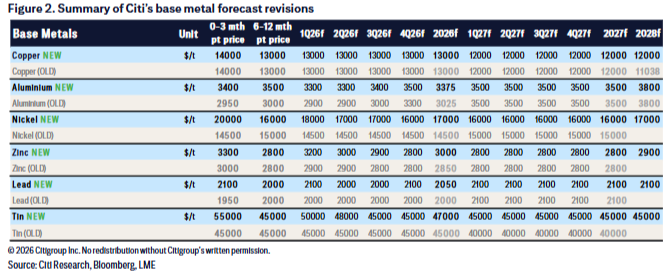
“战术性看涨”原油和贵金属,“结构性看涨”铝,铜价“或一个月内见顶”--这家投行的“最新商品判断”
Hua Er Jie Jian Wen· 2026-01-15 04:48
Core Viewpoint - The commodity market is at a critical turning point influenced by geopolitical tensions and supply shortages, with specific forecasts for various commodities through 2026 [1][20]. Oil Market - The short-term oil market is driven by geopolitical premiums, with a price target of $70 per barrel for Brent crude, influenced by tensions in Iran and the Russia-Ukraine conflict, as well as export disruptions in Kazakhstan and Libya [3][6]. - However, the long-term outlook is bearish due to expected supply surplus and policy pressures, particularly from the U.S. government aiming for lower oil prices [6][20]. Precious Metals - In the precious metals sector, silver is expected to outperform gold, with target prices set at $100 per ounce for silver and $5,000 for gold, driven by current market momentum and capital flows [7][20]. - The report suggests that these high price levels may trigger hedging actions from producers and central banks [7]. Base Metals - Aluminum is identified as having the most structural opportunity, facing a significant supply deficit, with short-term price targets of $3,400 per ton and mid-term targets of $3,500 [8][20]. - In contrast, copper is forecasted to reach $14,000 per ton, but the confidence in this projection has weakened significantly since December, with a warning that January may be the peak for the year [11][20]. Lithium Market - The lithium market has seen a rebound of over 50%, primarily due to supply constraints from delays in mining operations and tightening policies [12][14]. - Citigroup has raised the three-month price target for lithium carbonate to $25,000 per ton, reflecting strong demand from battery manufacturers [13][20]. - Despite the short-term strength, there is a cautious long-term outlook for lithium prices, anticipating downward pressure as supply increases [14]. Natural Gas and Agriculture - The natural gas market is expected to face long-term supply surplus challenges, with bearish views on LNG and European TTF gas prices starting from 2027 [15][20]. - In agriculture, a bullish outlook is maintained for most commodities, with sugar prices expected to rebound in 2026 due to increased demand from China and changes in Brazilian production [19][20].