
智能家电

Search documents
2025年安徽省滁州市新质生产力发展研判:以县域经济为支点,驱动滁州“8+3”产业体系加速崛起[图]
Chan Ye Xin Xi Wang· 2025-07-23 01:22
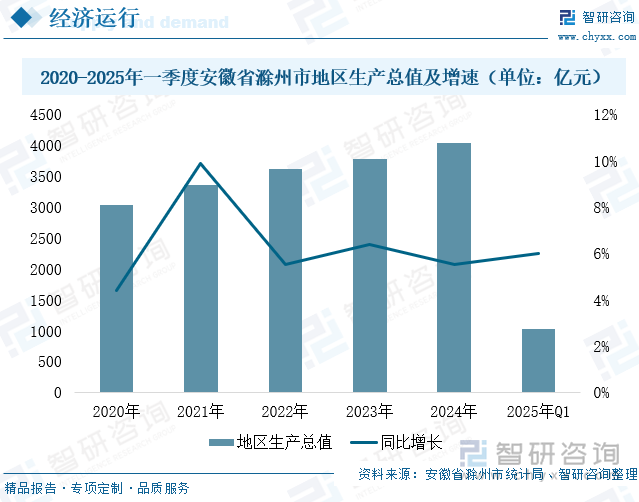
Core Insights - Chuzhou City is positioned as a strategic gateway for eastern development in Anhui Province, benefiting from its advantageous location between two major national urban agglomerations [1][4] - The city has established a modern industrial system focusing on "emerging leadership, chain aggregation, and open collaboration," creating a multi-layered industrial ecosystem [1][14] - Chuzhou's economic indicators have shown strong growth, with a projected GDP of 403.44 billion yuan in 2024, reflecting a 5.5% year-on-year increase [4][6] Industry Overview - The concept of "New Quality Productive Forces" emphasizes innovation as the main driving force, characterized by high technology, efficiency, and quality, aligning with advanced production paradigms [3][10] - Chuzhou is focusing on strategic emerging industries such as photovoltaics, semiconductors, and new energy batteries, while also nurturing traditional sectors like advanced manufacturing and modern services [1][14] Economic Performance - Chuzhou's GDP reached 403.44 billion yuan in 2024, with a 5.5% increase from the previous year, showcasing a robust industrial structure with a significant contribution from the secondary sector [4][6] - In the first quarter of 2025, the GDP grew by 6% year-on-year, indicating strong resilience and growth potential [4][6] Emerging Industries - The city has implemented a "chain leader system" to enhance industrial clusters, focusing on the "8+3" emerging industry chain, which includes eight strategic emerging industries and three advantageous sectors [1][6][14] - Significant projects have been signed, including 442 new contracts worth over 100 million yuan, indicating a strong influx of investment [6][10] Innovation and R&D - Chuzhou's R&D investment reached 9.28 billion yuan in 2023, ranking third in Anhui Province, with over 1,500 high-tech enterprises established [8][10] - The city has built 376 provincial-level innovation platforms, enhancing its capacity for technological innovation and collaboration [8][17] Policy Framework - The local government has introduced a series of policies to support the development of new quality productive forces, focusing on innovation, industrial upgrading, and market activation [10][12] - Policies include measures to accelerate the transformation of scientific and technological achievements and promote the development of specialized small and medium-sized enterprises [10][12] Future Trends - Chuzhou is expected to deepen the integration of intelligence and green development in its leading industries, focusing on smart upgrades and sustainable practices [23][24] - The city aims to enhance collaboration between technology and industry, particularly in semiconductor and biomedicine sectors, to drive innovation and economic growth [25][26]

青岛自贸片区:先进制造业强链聚群
Ke Ji Ri Bao· 2025-07-22 23:08
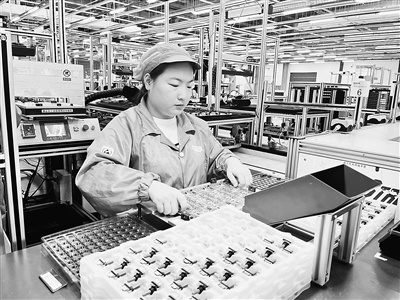
Core Insights - Qingdao Free Trade Zone is experiencing a surge in foreign investment and overseas orders, indicating a robust growth in the manufacturing sector [1][2] - The focus on high-end, intelligent, and green development is driving the transformation of the manufacturing industry in the Qingdao Free Trade Zone [1][2] Group 1: Investment and Development - Levo Heavy Industry Group is actively engaging with international clients and ramping up production to fulfill overseas orders [1] - The German company Amway Aluminum Group is upgrading its production lines and expanding its market presence in the Qingdao Free Trade Zone [1] - The smart home appliance sector in the Qingdao Free Trade Zone has attracted 25 companies, with an expected output value of 19.1 billion yuan in 2024 [2] Group 2: Technological Innovation - Levo Heavy Industry showcased its products at the Bauma exhibition in Germany, highlighting its commitment to product innovation in the engineering machinery sector [6] - The Qingdao Free Trade Zone has established 92 innovation centers and technology platforms, with a 10% annual growth rate in high-tech enterprises [6] - Hai Zhi Chen Industrial Equipment Co., a high-tech enterprise, has developed a machine vision device to enhance quality inspection efficiency for refrigerators [6][7] Group 3: Industry Ecosystem - The establishment of a $28 million Japanese high-end intelligent variable frequency control system project in the Qingdao Free Trade Zone aims to localize production and reduce costs for smart appliance manufacturers [5] - The collaboration between leading companies and component manufacturers is fostering a robust ecosystem for the smart appliance industry [4][8] - SAIC-GM-Wuling's Qingdao branch has successfully produced its 8.5 millionth vehicle, leveraging digital technologies for smart manufacturing [9]

机器人“掌勺”请客 智能餐饮借力赛事经济升级
Ren Min Wang· 2025-07-21 09:46
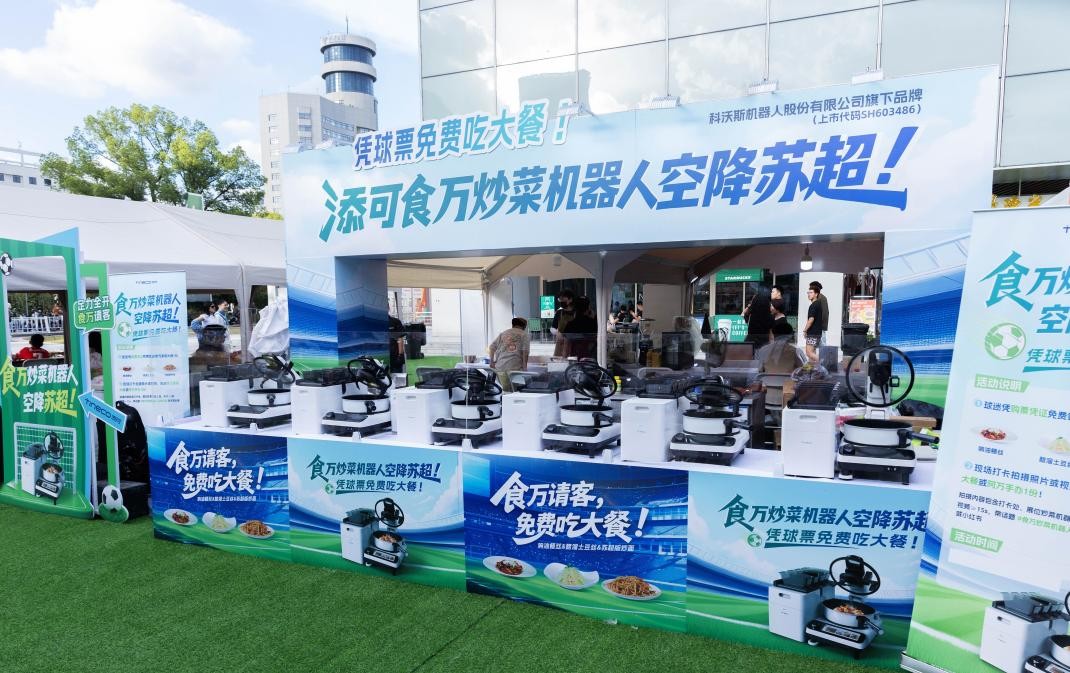
Core Insights - The "Su Super" (Jiangsu Province Urban Football League) is gaining popularity, with 13 teams competing, leading to significant "event economy" effects as the number of sponsors increased from 6 to nearly 30 since the league's start on May 10 [1] Group 1: Event and Economic Impact - The Su Super has become a crucial driver of market vitality, showcasing the intersection of sports and local economic development [1] - The presence of sponsors and the rapid growth in their numbers indicate a strong interest in leveraging the event for brand visibility and engagement [1] Group 2: Technological Innovation in Food Service - The "Shiwan" cooking robot from the company Tianke made a special appearance at the Su Super match, providing free meals to ticket-holding fans, which included local specialties and custom dishes [1] - The cooking robot demonstrates high efficiency, producing meals every 2 minutes, and is designed to address labor cost issues and ensure consistent food quality in the restaurant industry [1] - Tianke's CEO highlighted that the robot can be operated by one person managing five machines, reducing kitchen space by 50% and supporting over 100 restaurant brands in achieving smart kitchen upgrades [1] Group 3: Consumer Experience and Feedback - Fans expressed surprise at the quick meal preparation and the taste, indicating a positive reception of the technology's integration into the food service experience [1] - The event serves as a platform to showcase technological innovations and the potential for smart living, aiming to transform the dining industry towards greater efficiency and standardization [5]

破局餐饮业多重困局,添可炒菜机器人成小商家效率革命新引擎
Jiang Nan Shi Bao· 2025-07-21 06:32
Core Insights - The article highlights the challenges faced by small and medium-sized restaurants due to rising costs and inefficiencies in the food delivery sector, prompting a search for a win-win ecosystem among consumers, merchants, platforms, and delivery personnel [1] - The introduction of the intelligent cooking device, the "Tian Ke Stir-fry Robot," is presented as a revolutionary solution to enhance efficiency in the restaurant industry, showcasing its capabilities during a live cooking demonstration at a sports event [1][2] Group 1: Industry Challenges - Small and medium-sized restaurants are struggling with high costs, low efficiency, and difficulties in expansion due to increased competition among food delivery platforms [1] - Issues such as order surges and delivery delays are prompting stakeholders to rethink the dynamics of the food delivery ecosystem [1] Group 2: Technological Innovation - The "Tian Ke Stir-fry Robot" addresses key industry pain points such as high labor costs and inconsistent food quality through automation and intelligence, aiming to reconstruct the commercial efficiency of small B-end restaurants [2] - The robot specializes in essential Chinese cooking techniques, achieving stable, hotel-quality dishes with a significant reduction in labor costs and kitchen space [2] Group 3: Implementation and Impact - The "Tian Ke Stir-fry Robot" has successfully assisted over 200 restaurant locations, including brands like "Guizhou Small Stir-fry Plate," in upgrading their kitchens to intelligent systems [3] - The establishment of the first direct experience store, "Awan Stir-fry," in Suzhou demonstrates the commercial viability of a "zero-chef restaurant" model, achieving an average of over 500 meals per day [3] Group 4: Future Outlook - The article suggests that the food delivery subsidy wars will eventually stabilize, and that technological innovations that enhance efficiency and reduce costs will be the most valuable factors in the restaurant revolution [3] - By 2025, the widespread adoption of "robot chefs" is anticipated, positioning the company at the forefront of this transformative wave in the industry [3]
合肥全域八区县在列!安徽制造强省“核心战场”强势崛起
Xin Lang Cai Jing· 2025-07-19 06:52
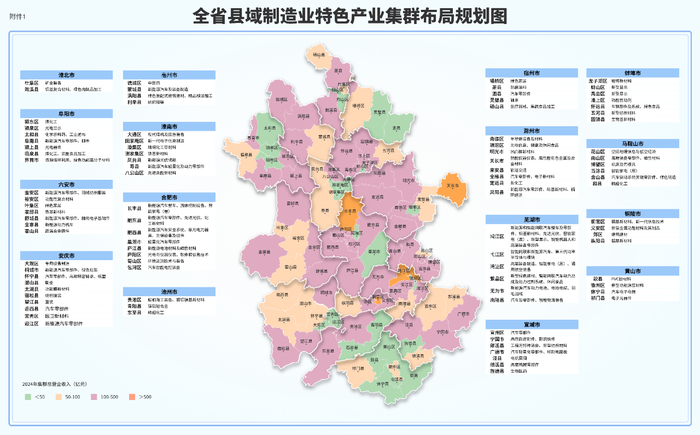
Core Viewpoint - Anhui Province has officially issued the "Action Plan for Cultivating and Strengthening County-Level Manufacturing Industry Characteristic Clusters," aiming to establish a "4433" trillion-yuan manufacturing industry system, with goals to cultivate 60 hundred-billion-yuan county-level manufacturing clusters by 2027 and expand to around 100 by 2030 [1] Group 1: Strategic Layout - Hefei City has been included in the key cultivation list, focusing on sectors such as new energy vehicles, new-generation information technology, and new materials, positioning it as a "core battlefield" for Anhui's manufacturing strength [1] - The cluster construction in Hefei emphasizes differentiation and collaboration, enhancing existing industrial chain cooperation while planning for future industries, promoting technological innovation and scale expansion [1] Group 2: Key Projects and Economic Impact - Hefei has several key projects supporting cluster development, including the New Bridge Intelligent Electric Vehicle Parts Industrial Park, which is expected to achieve an annual output value of 500 billion yuan [3] - The NIO company has established two smart manufacturing plants in Hefei, with over 120 local industry chain partners, having delivered more than 760,000 vehicles by May 2025 [3] - The Shushan Economic and Technological Development Zone has been recognized as a digital transformation demonstration park for manufacturing, gathering over 430 key enterprises and achieving annual revenue exceeding 50 billion yuan [3] Group 3: Innovation and Future Development - Hefei is advancing innovation through collaborations, such as the partnership between JAC Motors and multiple universities to establish a platform for the research and industrialization of next-generation autonomous controllable new energy vehicles [7] - The city has adopted an innovative "scene-based investment attraction" model, forming the first "Scene Innovation City Alliance" with 19 cities, shifting from traditional investment approaches to providing opportunities and attracting technology [7] - The development of industrial clusters in Hefei is not only a growth engine for the regional economy but also a core support for the upgrading of Anhui's manufacturing industry, optimizing resource allocation and enhancing urban competitiveness [9]

马斯克推出二次元“AI女友”,30美元/月|首席资讯日报
首席商业评论· 2025-07-17 04:10
Group 1 - Pop Mart expects a revenue growth of no less than 200% and a profit increase of no less than 350% for the first half of 2025 compared to the same period in 2024 [1] - Roma's operational team remains intact, and the company assures that product recall and after-sales service will continue effectively despite recent challenges [2] - Elon Musk has launched an AI chatbot service called Grok, which features a virtual girlfriend for a subscription fee of $30 per month, indicating a shift towards monetizing virtual emotional experiences [3][4] Group 2 - Sichuan Changhong anticipates a decrease in net profit for the first half of 2025, with estimates ranging from 138 million to 182 million yuan, marking the first negative growth since 2021, partly due to competition from Xiaomi's new factory [5] - The Trump administration has ended investigations into the cryptocurrency betting platform Polymarket, signaling a potential shift in regulatory stance towards the crypto gambling industry [6][7] - Nvidia's CEO Jensen Huang noted rapid advancements in China's chip industry, expressing strong demand for the H20 chip in the Chinese market [8][9] Group 3 - The China National Automotive Research Institute's executive stated that Level 4 and below driving systems should be classified as assisted driving, highlighting challenges faced by traditional automakers in integrating AI [9] - Zhiyuan Robotics has secured strategic investment from Charoen Pokphand Group, marking a new phase in its global expansion efforts in various sectors [10] - JPMorgan reported Q2 2025 revenue of $44.912 billion, which fell short of expectations, with non-interest income at $22.4 billion and total assets under management at $4.3 trillion [11] - Geely has signed a merger agreement with Zeekr, allowing shareholders to choose between cash or shares of Geely as compensation [12][13] - JD Health has opened its first self-operated medical beauty clinic in Beijing, indicating its expansion into the medical beauty sector [14][15] - Yingfang Microelectronics denied rumors regarding the establishment of a new base in Jiangyin and collaboration with Changxin Storage on LPDDR5 products [16]

(经济观察)中国经济“半年报”凸显四大亮点
Zhong Guo Xin Wen Wang· 2025-07-15 04:57
Economic Performance Highlights - China's GDP grew by 5.3% year-on-year in the first half of the year, with a quarterly growth of 5.4% in Q1 and 5.2% in Q2, indicating a steady increase compared to the same period last year [2] - The urban survey unemployment rate averaged 5.2%, showing a slight decrease of 0.1 percentage points from Q1, reflecting a stable employment situation [2] - Consumer Price Index (CPI) showed fluctuations, with a year-on-year decrease of 0.1% in several months, but turned positive in June with a 0.1% increase [2] New Growth Drivers - High-tech manufacturing saw significant growth, with production of 3D printing equipment, new energy vehicles, and industrial robots increasing by 43.1%, 36.2%, and 35.6% respectively [3] - Investment in high-tech industries outpaced other sectors, with information services, aerospace, and computer equipment manufacturing investments growing by 37.4%, 26.3%, and 21.5% respectively [3] - The added value of high-tech industries increased by 9.5% year-on-year, with new industries, new business formats, and new models expected to contribute approximately 18% to GDP by 2024 [3] Green Development - The green industry is advancing, with new energy vehicles and lithium batteries experiencing growth rates exceeding 30% and 53.3% respectively [4] - Green consumption is becoming a trend, with significant growth in the consumption of new energy vehicles, energy-saving appliances, and smart home devices [4] Domestic Circulation Improvement - Domestic circulation has been prioritized, with policies aimed at expanding domestic demand and promoting production [5] - The contribution of domestic demand to GDP growth was 68.8%, with final consumption expenditure contributing 52%, marking it as the main driver of growth [5] - Freight turnover increased by 5.1% year-on-year, and passenger turnover grew by 4.9% [5]
科沃斯(603486):国补、新品拉动营收高增,布局优化盈利改善
Changjiang Securities· 2025-07-14 23:30
Investment Rating - The investment rating for the company is "Buy" and is maintained [8] Core Views - The company is expected to achieve a net profit attributable to shareholders of 9.6-9.9 billion yuan in the first half of 2025, representing a year-on-year growth of 57.64%-62.57%. The net profit after deducting non-recurring items is projected to be 8.4-8.7 billion yuan, with a year-on-year increase of 50.71%-56.09% [5][11] - For the second quarter of 2025, the company anticipates a net profit attributable to shareholders of 4.9-5.2 billion yuan, reflecting a year-on-year growth of 55.93%-65.57%, and a net profit after deducting non-recurring items of 4.8-5.1 billion yuan, with a year-on-year increase of 78.79%-89.87% [5][11] Summary by Sections Revenue Growth - The company expects a nearly 25% year-on-year revenue growth in the first half of 2025, with the second quarter projected to see a nearly 40% increase. The sweeping robot segment is benefiting from national subsidies, with the overall industry sales increasing by 45.48% year-on-year [11] - The company's sweeping robot online sales market share reached 26.3%, a year-on-year increase of 1.2 percentage points, with online sales growing by 52.31% year-on-year in the first half of 2025 [11] - The washing machine segment also saw significant growth, with the company maintaining a leading market share of 33.7% in online sales, while the overall industry grew by 40.98% year-on-year [11] Profitability Improvement - The company anticipates a net profit margin of 11.01%-11.35% in the first half of 2025, an increase of 2.28-2.62 percentage points year-on-year. The net profit margin after deducting non-recurring items is expected to be 9.63%-9.98%, up by 1.64-1.99 percentage points [11] - The pricing strategy across various product segments has become more balanced, contributing to improved profitability [11] Investment Outlook - The company is expected to continue benefiting from product matrix enhancements and cost reduction efforts, with projected net profits for 2025-2027 being 19.40 billion, 21.96 billion, and 24.89 billion yuan, respectively. The corresponding price-to-earnings ratios are estimated to be 18.97, 16.76, and 14.79 times [11]

周度策略行业配置观点:苦于“弱现实”久矣,正视我们在改善-20250714
Great Wall Securities· 2025-07-14 08:33
Core Insights - The report highlights a significant shift in macro policy focus from traditional investment-driven strategies to a deeper "expanding domestic demand" approach, addressing core issues of consumption stimulation and resident income expectations [2][18] - A new round of supply-side reform, characterized by "anti-involution," aims to create a more resilient and efficient industrial ecosystem, guiding resources towards high value-added and innovative sectors [2][18] Weekly Event Review - The A-share market continued its upward trend, with the Shanghai Composite Index stabilizing above 3500 points, showing a weekly increase of 1.09%, while the Shenzhen Component and ChiNext Index rose by 1.78% and 2.35% respectively [1][8] - The semiconductor sector benefited from the U.S. lifting restrictions on chip design software exports, while the consumer electronics chain faced pressure from U.S. tariffs on Brazil and five other countries [1][8] - The financial sector showed strong performance driven by market expectations of policy changes, with increased attention on the banking sector [1][8] Sector Recommendations - **White Goods & Smart Home Appliances**: The report recommends focusing on this sector due to the expansion of the "trade-in" policy and increased green energy subsidies, which are expected to activate terminal demand. The alleviation of raw material cost pressures and the ongoing industry upgrade towards smart and AI-enabled products are also highlighted [3][19] - **Optical Modules**: The strategic value of optical modules is emphasized, particularly in light of TSMC's strong Q2 results confirming robust AI computing demand. The sector is positioned for growth with the acceleration of 800G product deployment and advancements in 1.6T technology [5][20]

针对B端用户,三翼鸟建博会发布一站式工程方案
Jin Tou Wang· 2025-07-11 10:21
Core Viewpoint - The company, San Yi Niao, has launched a comprehensive engineering solution aimed at addressing various challenges faced by the engineering sector, particularly in smart home integration, apartment management, and energy efficiency [1][2]. Group 1: Engineering Challenges - The engineering sector is currently facing multiple challenges, including poor smart network performance affecting smart appliance experiences, high labor costs in apartment maintenance and management, excessive energy consumption from public area lighting, and lengthy delivery timelines [1]. Group 2: One-Stop Engineering Solutions - San Yi Niao's one-stop engineering solution includes three main offerings: 1. A PLC solution that enhances network reliability through existing electrical wiring, and a wireless MESH option for easy installation and scalability [2]. 2. A smart apartment solution that features smart locks, automated utility meter readings, and a management platform to significantly reduce labor costs and management burdens [2]. 3. A smart building solution that integrates intelligent lighting and management platforms, achieving a remarkable energy savings rate of 76.99% through simple implementations like replacing light tubes [2]. Group 3: Supporting Capabilities - San Yi Niao's extensive capabilities underpin the success of its solutions: 1. Engineering capability demonstrated through partnerships with top real estate companies, resulting in over 1,000 completed projects and plans to serve nearly 30,000 engineering users by 2025 [3]. 2. Customization capability offering 98 smart scenarios covering seven categories of smart appliances and 17 categories of smart home products, with flexibility for tailored project needs [3]. 3. Efficient delivery capability utilizing professional tools for batch debugging and delivery, supported by Haier Smart Home's nationwide after-sales network providing 24-hour service [3].