
钢铁

Search documents
宏观情绪转向,市场趋于谨慎
Wu Kuang Qi Huo· 2026-03-06 12:46
1. Report Industry Investment Rating - No information provided in the report 2. Core Viewpoint of the Report - In February, affected by multiple factors such as the shift in macro - sentiment and the departure of funds for risk - aversion, the price of stainless steel fluctuated sharply. After a panic sell - off in the pre - holiday market, with the release of low - price bottom - fishing demand and the stabilization of macro - sentiment, the price gradually rebounded and recovered. After the holiday, the concentrated arrival of steel mill resources led to a phased high in social inventory, while the downstream demand started slowly, and the market sentiment became cautious. The spot trading activity in February was generally low, the shipment rhythm of Qingshan agents was affected by the price - limit policy, and the downstream entered the traditional off - season, with low purchasing willingness. The actual transactions were mainly resource transfers among traders. However, the cost support of the industrial chain remained solid, and the significant production cuts by steel mills in February provided some support for the price bottom. It is expected that the stainless steel price will maintain a volatile and slightly stronger trend, with the reference range of the main contract being 13,500 - 15,000 yuan/ton [11][12] 3. Summary According to the Directory 3.1 Monthly Assessment and Strategy Recommendation - **Monthly Key Points Summary** - **Periodic and Spot Market**: On March 6, the average price of cold - rolled stainless steel coils in Wuxi was reported at 14,400 yuan/ton, a month - on - month decrease of 0.69%; the ex - factory price of 7% - 10% ferronickel in Shandong was 1,085 yuan/nickel, a month - on - month increase of 2.84%; the average price of scrap stainless steel was 9,800 yuan/ton, a month - on - month increase of 2.67%. The closing price of the stainless steel main contract on Friday afternoon was 14,205 yuan/ton, with a month - on - month change of 0.00% [11] - **Supply**: In February, the domestic cold - rolled stainless steel production schedule was 923,500 tons. In January, the crude steel output was 3.5364 million tons, a month - on - month increase of 275,900 tons and a year - on - year increase of 23.59%. According to MYSTEEL sample statistics, the estimated crude steel output of 300 - series stainless steel in January reached 1.8581 million tons, a month - on - month increase of 6.35%; the cold - rolled output of 300 - series in January was 785,100 tons, a month - on - month increase of 6.67% [11] - **Demand**: From January to December 2025 in China, the cumulative sales area of commercial housing was 881.0137 million square meters, a year - on - year decrease of 8.70%; in December, the single - month sales area of commercial housing was 93.9963 million square meters, a year - on - year decrease of 16.57%. In December, the year - on - year changes of refrigerator, household freezer, washing machine, and air - conditioner were 7%, 5.7%, - 9.6%, and - 4.4% respectively; the cumulative year - on - year increase of the fuel processing industry in December was 18.2% [11] - **Inventory**: On March 6, the total social inventory of stainless steel was 1.0948 million tons, a month - on - month increase of 20.71%; on February 27, the futures warehouse receipt inventory was 52,100 tons, a month - on - month increase of 13,177 tons. On March 6, the social inventories of 200/300/400 - series stainless steel were 184,300 tons, 716,300 tons, and 249,400 tons respectively, among which the inventory of 300 - series increased by 16.16% month - on - month; the floating quantity of stainless steel was 53,400 tons, a month - on - month decrease of 46.91%, and the unloading quantity was 69,300 tons, a month - on - month decrease of 23.10% [11] - **Cost**: On March 6, the ex - factory price of 7% - 10% ferronickel in Shandong was 1,090 yuan/nickel, a month - on - month increase of 50 yuan/nickel, and the iron mills in Fujian were currently at a loss of 15 yuan/nickel [11] - **Fundamental Assessment** - **Data**: The basis was - 5 yuan/ton, the production profit was 353.64 million tons, the supply was 3.0857 million tons, and the inventory was 1.0948 million tons. The long - short scores were 0, - 1, 0, 0, and 0 respectively, and the evaluations were all neutral [12] 3.2 Periodic and Spot Market - On March 6, the average price of cold - rolled stainless steel coils in Wuxi was reported at 14,400 yuan/ton, a month - on - month decrease of 0.69%; the ex - factory price of 7% - 10% ferronickel in Shandong was 1,085 yuan/nickel, a month - on - month increase of 2.84%; the average price of scrap stainless steel was 9,800 yuan/ton, a month - on - month increase of 2.67%. The closing price of the stainless steel main contract on Friday afternoon was 14,205 yuan/ton, a month - on - month decrease of 3.00% [16] - The market quotation of Foshan Delong was about - 155 yuan (+240) higher than the main contract; the market quotation of Wuxi Hongwang was about - 5 yuan (+340) higher than the main contract. The disk position was 173,851 lots, a month - on - month decrease of 45.54% [20] - In terms of month - to - month spreads, the spread between consecutive contracts 1 and 2 was reported at - 5 (+25), and the spread between consecutive contracts 1 and 3 was reported at 15 (+20) [23] 3.3 Supply End - In February, the domestic cold - rolled stainless steel production schedule was 923,500 tons. In January, the crude steel output was 3.5364 million tons, a month - on - month increase of 275,900 tons and a year - on - year increase of 23.59% [27] - According to MYSTEEL sample statistics, the estimated crude steel output of 300 - series stainless steel in January reached 1.8581 million tons, a month - on - month increase of 6.35%; the cold - rolled output of 300 - series in January was 785,100 tons, a month - on - month increase of 6.67% [30] - It is estimated by SMM that the monthly output of stainless steel in Indonesia in January was 440,000 tons, a month - on - month increase of 4.76%. According to MYSTEEL data, China's imports of stainless steel from Indonesia reached 121,400 tons in December, a month - on - month increase of 39.16% [33] - In December, the net export volume of stainless steel was 340,000 tons, a month - on - month increase of 15.96% and a year - on - year increase of 5.13%; from January to December, the cumulative net export was 3.1937 million tons, a year - on - year increase of 8.06% [36] 3.4 Demand End - From January to December 2025 in China, the cumulative sales area of commercial housing was 881.0137 million square meters, a year - on - year decrease of 8.70%; in December, the single - month sales area of commercial housing was 93.9963 million square meters, a year - on - year decrease of 16.57% [40] - In December, the year - on - year changes of refrigerator, household freezer, washing machine, and air - conditioner were 7%, 5.7%, - 9.6%, and - 4.4% respectively; the cumulative year - on - year increase of the fuel processing industry in December was 18.2% [43] - In December, the output of elevators, escalators, and lifts was 133,000 units, a month - on - month increase of 0.76% and a year - on - year decrease of 4.32%; in December, the automobile sales volume was 3.2722 million units, a month - on - month decrease of 4.57% and a year - on - year decrease of 6.20% [46] 3.5 Inventory - On March 6, the total social inventory of stainless steel was 1.0948 million tons, a month - on - month increase of 20.71%; on February 27, the futures warehouse receipt inventory was 52,100 tons, a month - on - month increase of 13,177 tons [50] - On March 6, the social inventories of 200/300/400 - series stainless steel were 184,300 tons, 716,300 tons, and 249,400 tons respectively, among which the inventory of 300 - series increased by 16.16% month - on - month; the floating quantity of stainless steel was 53,400 tons, a month - on - month decrease of 46.91%, and the unloading quantity was 69,300 tons, a month - on - month decrease of 23.10% [53] 3.6 Cost End - In December, the nickel ore import volume was 1.9928 million wet tons, a month - on - month decrease of 40.27% and a year - on - year increase of 31.13%. Currently, the quotation of nickel ore with Ni:1.5% is 67.0 US dollars/wet ton, and the port inventory is 10.0274 million wet tons, a month - on - month decrease of 18.38% [57] - On March 6, the ex - factory price of 7% - 10% ferronickel in Shandong was 1,090 yuan/nickel, a month - on - month increase of 50 yuan/nickel, and the iron mills in Fujian were currently at a loss of 15 yuan/nickel [60] - On March 5, the chromium ore quotation was 60 yuan/dry ton, a month - on - month increase of 2.5 yuan/dry ton; the high - carbon ferrochrome quotation was 8,600 yuan/50 base tons, a month - on - month increase of 50 yuan/50 base tons. In terms of output, the high - carbon ferrochrome output in February was 851,600 tons, a month - on - month decrease of 3.49% [63] - The current gross profit of the self - produced high - nickel ferronickel production line is - 132 yuan/ton, and the profit margin reaches - 0.91% [66]
两会政策落地,需求修复仍待验证
Wu Kuang Qi Huo· 2026-03-06 12:46
1. Report Industry Investment Rating No relevant content provided. 2. Core View of the Report - In February 2026, the steel mill profitability rate was around 38%, still in a moderately low range. The cost of raw materials remained resilient, and the immediate profit improvement space for steel mills was limited. Steel mills' production enthusiasm was generally cautious [11]. - In February 2026, the production of rebar and hot - rolled coil decreased compared to the same period last year and last month. The decline was mainly due to the Spring Festival holiday, reduced actual production time, partial steel mill maintenance, and stagnant demand [11]. - In February 2026, the apparent consumption of rebar and hot - rolled coil also decreased significantly compared to the same period last year and last month. The demand was significantly affected by the Spring Festival. The rebar demand decline was more obvious, mainly reflecting the seasonal shutdown of the construction industry [11]. - As of February 2026, rebar inventory showed seasonal accumulation but was still relatively low year - on - year, while hot - rolled coil inventory increased year - on - year, and the inventory pressure of plates began to appear [11]. - Overseas, geopolitical conflicts led to concerns about crude oil supply and an increase in global inflation expectations. Domestically, the government's policy combination supported infrastructure and manufacturing investment, providing medium - term support for steel demand. However, real - estate policies mainly focused on risk resolution and stock optimization, with limited incremental pull on steel demand [11]. - Currently, the recovery speed of hot - rolled coil demand is slow, and inventory accumulation is obvious. The core contradiction in the black - series market lies in the verification of the intensity of peak - season demand recovery. Before the real recovery of demand, prices are likely to fluctuate. High - frequency indicators such as construction site resumption rate, building materials trading volume, and cement and building materials daily consumption should be focused on to judge the demand recovery rhythm [11]. 3. Summary by Directory 3.1 Monthly Assessment and Strategy Recommendation - **Valuation**: In February 2026, the steel mill profitability rate was about 38%, in a moderately low range. The cost of raw materials was resilient, and the immediate profit improvement space for steel mills was limited. Steel mills' production enthusiasm was cautious [11]. - **Supply**: In February 2026, rebar production was 6.9632 million tons, a year - on - year decrease of 690,000 tons (- 9.02%) and a month - on - month decrease of 28.14%. Hot - rolled coil production was 12.3634 million tons, a year - on - year decrease of 676,800 tons (- 5.19%) and a month - on - month decrease of 19.35%. The decrease was due to the Spring Festival, reduced production time, partial maintenance, and stagnant demand [11]. - **Demand**: In February 2026, rebar apparent consumption was 3.7125 million tons, a year - on - year decrease of 1.13 million tons (- 23.34%) and a month - on - month decrease of 59.98%. Hot - rolled coil apparent consumption was 11.3977 million tons, a year - on - year decrease of 1.17 million tons (- 9.34%) and a month - on - month decrease of 26.69%. The demand was significantly affected by the Spring Festival [11]. - **Inventory**: As of February 2026, rebar inventory was 8.006 million tons, a year - on - year decrease of 628,400 tons. Hot - rolled coil inventory was 4.5215 million tons, a year - on - year increase of 170,000 tons (+ 3.85%) [11]. - **Conclusion**: Overseas geopolitical conflicts affected the market, and domestically, policies supported steel demand to some extent. The current core contradiction is the verification of peak - season demand recovery. Before demand recovers, prices are likely to fluctuate. High - frequency indicators should be monitored [11]. 3.2 Spot and Futures Market - Multiple charts show the price trends and trading volumes of rebar and hot - rolled coil in different regions, as well as the basis, price differences between contracts, and price differences between different products [23][25][28]. - The price trends of cold - rolled coil, color - coated coil, and galvanized sheet are also presented, along with the price differences between them and hot - rolled coil [64][70][73]. 3.3 Profit and Inventory - Charts display the disk profits of rebar and hot - rolled coil, as well as the gross profits per ton of hot - rolled coil, cold - rolled coil, and rebar in different production processes [78][81][83]. - The inventory data of rebar and hot - rolled coil, including total inventory, factory inventory, and social inventory, are presented [91][94][103]. 3.4 Cost End - Charts show the ratios of rebar to iron ore and coke futures, daily molten iron production, crude steel daily production, billet prices, rebar - billet price differences, scrap steel prices, and scrap steel consumption [109][112][128]. 3.5 Supply End - The production, production capacity utilization rate, and cumulative year - on - year changes of rebar and hot - rolled coil are presented [131][134][136]. 3.6 Demand and Import - Export - The apparent consumption and cumulative year - on - year changes of rebar and hot - rolled coil are shown [143][146]. - The export and production data of household appliances such as refrigerators, washing machines, and air conditioners are presented [149][151][153]. - The import and export data of steel, rebar, and plates are presented [156][158][161].
3月钢矿料震荡偏多,关注需求成色
Ge Lin Qi Huo· 2026-03-06 12:01
1. Report Industry Investment Rating - Not provided in the document 2. Core Viewpoints of the Report - The steel and ore markets are expected to fluctuate with a bullish bias in March, and attention should be paid to the strength of demand. If demand recovery falls short of expectations, prices may decline again. Additionally, potential impacts from the Iran situation should be monitored [6]. - The strategy of going long on rebar and short on hot-rolled coils can be considered, with a stop-profit target of over 200 points [5]. - For single-sided trading, a bullish approach can be attempted with appropriate stop-loss settings [6]. 3. Summary by Relevant Catalogs Part 1: Review 1.2 Market Review - In February 2026, rebar prices fluctuated downward with a small range, reaching a maximum of 3139 and a minimum of 3005 [10]. - In February, iron ore prices trended downward. The main iron ore contract reached a maximum of 797.0 and a minimum of 736.0 [12][13]. Part 2: Current Analysis 2.1 Macro Logic - In 2025, China's GDP growth rate was 5.0%. The recent government work report set the economic growth target for 2026 at 4.5% - 5% [17]. - In the first quarter of 2026, advance issuance of special bonds and implementation of "two new" subsidies (equipment renewal and consumer goods trade-in) took place. Structural monetary tools were used to cut interest rates and increase new re-lending quotas to support private and innovative enterprises. Domestic demand was restored, with consumption moderately recovering and infrastructure investment accelerating, but the real estate sector was still in a bottoming - out phase. External demand remained resilient, with exports maintaining positive growth on a high base, but the Iran situation might affect exports and drag down the first - quarter economic growth [17]. 2.2 Supply - Demand Logic - **Real Estate**: Real estate is the core demand source for construction steel, accounting for over 60% of construction steel demand and 25% - 30% of the country's total steel demand, and its proportion in total steel demand is decreasing. Since 2021, real estate investment and other indicators have turned negative, and steel prices have entered a downward cycle. In 2025, the cumulative year - on - year growth rate of new construction area was - 20.4%, the year - on - year growth rate of construction area was - 10.0%, and the year - on - year growth rate of completion area was - 18.1%. The leading indicator, land transaction area, decreased by 10.4% year - on - year, indicating a continued decline in steel demand for real estate new construction and main construction in 2026 - 2027 [21][24]. - **Special Bonds**: In 2025, the total issuance of special bonds reached a record high of about 7.68 trillion yuan, including about 4.59 trillion yuan in new special bonds and about 3.09 trillion yuan in refinancing special bonds. Special bonds were mainly invested in infrastructure, which directly drove the demand for construction steel. In 2026, about 4.6 trillion yuan in new special bonds are expected, and the advance issuance and disbursement of special bonds in the first quarter will provide funds for demand recovery in March [27][31]. - **Infrastructure Investment**: In 2025, infrastructure investment decreased by 2.2% year - on - year, the first negative growth in recent years, showing a quarterly slowdown. In 2026, with the support of fiscal policies, the disbursement of special bond funds in March will drive the start of steel - using projects and may be the core driving force for a rebound [31]. - **Manufacturing**: In 2025, national manufacturing investment increased by 0.6% year - on - year, a significant decline from 2024, leading to a slowdown in the growth rate of steel demand in machinery, equipment, and home appliances. In 2026, the automotive industry showed structural differentiation, with production expected to rebound in March. The shipbuilding industry maintained high - level prosperity, and the output of excavators and home appliances showed seasonal fluctuations [35][36][37]. - **Steel Exports**: In January 2026, China's steel exports decreased significantly. In February, exports continued to decline, and in March, exports are expected to recover but with limited strength. The Iran situation has a significant indirect impact on steel exports [40]. - **Steel Production**: In 2025, China's crude steel production was 961 million tons, a year - on - year decrease of 4.4%. In February 2026, steel production decreased significantly, and in March, it is expected to rebound significantly but may be restricted by various factors [41]. - **Iron Ore Supply**: In 2025, China's iron ore imports were 1.259 billion tons, a year - on - year increase of 1.8%. In March 2026, iron ore supply is expected to remain at a high level, and port inventories reached a two - year high in February [46]. - **Domestic Iron Ore Production**: In 2025, China's domestic iron ore production decreased by 2.8% year - on - year. In February, the operating rate of northern mines declined, and in March, it is expected to gradually recover, but the production increase is limited [50].
短期驱动偏强,但盈亏比降低
Yin He Qi Huo· 2026-03-06 11:10
Report Industry Investment Rating - Not provided in the content Core Viewpoints - The short - term driving forces for both ferrosilicon and ferromanganese are strong, but the risk - reward ratio has decreased. It is recommended to partially take profits on previously suggested long positions [1][5][6] Summary by Directory Chapter 1: Comprehensive Analysis and Trading Strategies Comprehensive Analysis - Ferrosilicon: Supply side shows a slight decline in sample enterprise operating rate and output, with short - term absolute values at a low level compared to the same period. However, price increases have led to profit recovery and some production resumption. Demand side sees a short - term decline in hot metal output due to environmental restrictions in Hebei before the Two Sessions, but steel output is increasing steadily. Cost side is supported by the issuance of differential electricity price documents in Shaanxi and stable - to - rising electricity prices. The market is in a positive feedback loop between cost and demand, but the risk - reward ratio has declined [5] - Ferromanganese: Supply side shows a slight decrease in sample output, and overall supply is expected to be stable after new capacity was put into production. Demand side has increasing steel output, but rising steel inventories are suppressing the demand recovery speed. Cost side has strong support from the firm spot price of port manganese ore and a slight increase in the April manganese ore US dollar quotation from overseas mines. The supply - demand side has marginal improvement drivers, and the cost side has strong support, but the risk - reward ratio has declined after price increases [5] Strategies - Unilateral: The short - term driving force is still strong, but the risk - reward ratio has decreased after the price increase. Partially take profits on previously suggested long positions [6] - Arbitrage: Wait and see [6] - Options: Sell out - of - the - money put options [6] Chapter 2: Core Logic Analysis - Not provided in the content Chapter 3: Weekly Data Tracking Supply - Demand Data Tracking - **Demand**: The daily average pig iron output of 247 sample steel mills is 2.2759 million tons, a week - on - week decrease of 56900 tons. The weekly demand for ferrosilicon in five major steel types (about 70% of the total demand) is 17800 tons, a week - on - week increase of 300 tons. The weekly demand for ferromanganese in five major steel types (70%) is 111200 tons, a week - on - week increase of 900 tons [11] - **Supply**: The operating rate of 136 independent ferrosilicon enterprises in the country is 26.55%, a week - on - week decrease of 1.77%. The national ferrosilicon output (weekly supply) is 96500 tons, a week - on - week decrease of 2100 tons. The operating rate of 187 independent ferromanganese enterprises in the country is 35.7%, a week - on - week increase of 0.08%. The national ferromanganese output (99% of weekly supply) is 195900 tons, a week - on - week decrease of 1600 tons [12] - **Inventory**: In the week of March 6th, the national inventory of 60 independent ferrosilicon enterprises is 66300 tons, a week - on - week decrease of 4100 tons. The national inventory of 63 independent ferromanganese enterprises (accounting for 79.77% of national capacity) is 387300 tons, a week - on - week decrease of 11000 tons [13] Other Data Tracking - The content also provides data and charts on spot prices - basis, ferroalloy enterprise production, steel mill production, ferromanganese and ferrosilicon cost - profit, manganese ore price, carbon and electricity price, steel procurement price, monthly output of ferromanganese and ferrosilicon, manganese ore and ferrosilicon import - export, magnesium metal demand, and inventory of alloy plants, steel mills, and ports [17 - 89]
黑色产业链日报-20260306
Dong Ya Qi Huo· 2026-03-06 10:49
Report Industry Investment Rating - Not provided in the document Core Viewpoints - The policy stimulus for the real estate industry during the Two Sessions has limited impact on the steel demand for new construction. The steel products market is under pressure, and the overall trend is oscillating weakly [3]. - The iron ore market is currently in a situation of weak supply and demand. High supply and low demand limit the upside potential of prices, but there is short - term support from inventory replenishment by steel mills [23]. - In the coal - coke market, from March to April, it enters the verification period of terminal demand. If there is a combination of "exceeding - expected resumption of domestic mines" and "weakening of macro - sentiment", coal - coke prices may face significant downward pressure [34]. - For ferroalloys, the price of ferromanganese is supported by news about manganese ore in the short term, but may be restricted by high inventory later. The fundamentals of ferrosilicon are good, but its upside potential is limited due to the weak downstream of the black industry [49]. - In the soda ash market, supply - side maintenance may increase, which will affect production. The inventory situation is better than expected. The upside price space is limited, and the downside space depends on inventory accumulation [66]. - The glass market is in the recovery period, with weak production and sales. High intermediate inventory and supply return expectations limit the upside potential, and demand needs to be verified [89]. Summary by Directory Steel - **Price Data**: On March 6, 2026, the closing prices of rebar and hot - rolled coil contracts showed different degrees of change compared to the previous day. For example, the closing price of the rebar 01 contract was 3141 yuan/ton, up from 3132 yuan/ton on March 5 [4]. - **Market Situation**: The policy on real estate during the Two Sessions focuses on the revitalization of existing commercial housing and the construction of affordable housing, with limited impact on the steel demand for new construction. The inventory of hot - rolled coils is at a high level, and the fundamentals of steel products are under pressure, lacking the core driving force for price increase [3]. Iron Ore - **Price Data**: On March 6, 2026, the closing price of the iron ore 01 contract was 729 yuan/ton, up 7.5 yuan from the previous day. The 05 contract was 772 yuan/ton, up 13 yuan [24]. - **Market Situation**: The current core pattern is weak supply and demand. Rain in the Southern Hemisphere has slowed down the shipping rhythm, and steel mills have increased maintenance. High supply and low demand limit the upside potential of prices, but there is short - term support from inventory replenishment by steel mills [23]. Coal - Coke - **Price Data**: On March 6, 2026, the price difference between coking coal 09 - 01 was - 209.5, and the disk coking profit was - 18 yuan/ton [35][38]. - **Market Situation**: From March to April, it enters the verification period of terminal demand. The late Spring Festival this year may lead to a slow post - holiday resumption of work. Uncertain factors in the Middle East route may suppress short - term steel exports. If there is a combination of "exceeding - expected resumption of domestic mines" and "weakening of macro - sentiment", coal - coke prices may face significant downward pressure [34]. Ferroalloys - **Price Data**: On March 6, 2026, the silicon - iron basis in Ningxia was - 138 yuan/ton, and the silicon - manganese basis in Inner Mongolia was 70 yuan/ton [50][51]. - **Market Situation**: The price of ferromanganese is supported by news about manganese ore in the short term, but may be restricted by high inventory later. The fundamentals of ferrosilicon are good, but its upside potential is limited due to the weak downstream of the black industry [49]. Soda Ash - **Price Data**: On March 6, 2026, the closing price of the soda ash 05 contract was 1242 yuan/ton, up 17 yuan from the previous day, with a daily increase of 1.39% [67]. - **Market Situation**: Supply - side maintenance may increase, which will affect production. The inventory situation is better than expected. The upside price space is limited, and the downside space depends on inventory accumulation [66]. Glass - **Price Data**: On March 6, 2026, the closing price of the glass 05 contract was 1087 yuan/ton, up 32 yuan from the previous day, with a daily increase of 3.03% [90]. - **Market Situation**: The glass market is in the recovery period, with weak production and sales. High intermediate inventory and supply return expectations limit the upside potential, and demand needs to be verified [89].
钢材铁矿周度报告-20260306
Zhong Hang Qi Huo· 2026-03-06 10:49
钢材铁矿周度报告 衡飞池 从业资格号:F03122956 投资咨询号:Z0022861 中航期货 2026-03-06 目录 01 报告摘要 02 多空焦点 03 数据分析 04 后市研判 2. 卫星数据显示,2026年2月23日-3月1日期间,澳大利亚、巴西七个主要港口铁矿石库存总量1278.3万吨,环比下降139.3万 吨,库存规模小幅回落。当前库存量仍高于年初以来的平均水平。 3. 2026年春节后企业生产经营情况调研:(1)钢铁及相关行业:一季度行业企业订单总量将呈现相对稳定或者小幅回升状态; 2026年国内钢铁行业企业对出口的热度依旧较高、投入也将继续扩大,总量仍有望保持上升态势,但出口增长预期或有所减 弱。(2)制造业:企业的复产进度与去年同期基本相当,但主动增产囤货和原料备货的意愿小幅下降;多数企业手中订单 稳定,但实现订单增长的企业比例略低于去年,现金流的总宽裕程度较去年同期有所下降。(3)房地产、基建:结合2025 年同期样本对比来看,当前房地产、基建行业整体仍处于偏弱运行区间,行业景气度较去年略有企稳,订单端下滑比例有所 收窄,但现金流紧张占比仍处高位,企业对后续扩张仍保持谨慎。 4. 据 ...
钢材:地缘搅动频繁,钢价延续震荡
Yin He Qi Huo· 2026-03-06 10:05
1. Report Industry Investment Rating No relevant information provided. 2. Core Viewpoints of the Report - The steel market is affected by frequent geopolitical disturbances, and steel prices continue to fluctuate. The five major steel products have a slight increase in production, with an increase in rebar production and a shift in hot-rolled coil production. After the Spring Festival, downstream demand has a seasonal rebound, but inventories are still accumulating rapidly, especially for rebar. The capital availability of downstream construction sites across the country has improved, and the capital availability of housing construction projects is better than that of non - real estate projects. The "Two Sessions" have released this year's economic growth target, with the GDP growth rate lower than last year. The demand recovery situation remains to be seen, and the pessimistic expectations of steel mills may limit the iron - water production this year, putting pressure on raw materials. Recent overseas geopolitical frictions have increased, which may drive up the cost of steel raw materials. During the "Two Sessions", steel prices generally maintain a volatile trend, but may return to the fundamentals after the "Two Sessions", and there is still pressure on steel prices. [7] 3. Summary by Directory Chapter 1: Steel Market Summary and Outlook Summary - **Supply**: This week, the small - sample production of rebar is 173.31 tons (+8.21), and that of hot - rolled coil is 301.11 tons (-8.50). The daily average iron - water output of 247 steel mills' blast furnaces is 227.59 tons (-5.69), and the capacity utilization rate of 49 independent electric - arc furnace steel mills is 19.3% (+17.9). The electric - arc furnace is in a loss state, but after the festival, the electric - arc furnace has a rapid resumption of production, and the daily consumption of scrap steel is 39.34 tons, with expected further production increase next week. Long - process steel is generally in a loss state, and steel mills have insufficient enthusiasm for production increase. [4] - **Demand**: The small - sample apparent demand for rebar this week is 98.23 tons (+64.68), and that for hot - rolled coil is 281.57 tons (+13.20). Downstream demand has a certain recovery this week but is still lower than the same period last year. The restocking demand of the manufacturing industry has declined, and overseas has entered the off - season. The capital availability of downstream construction sites is still weak. The growth rate of China's fixed - asset investment from January to December has continued to decline month - on - month, and there is a lack of incremental domestic project investment. In December, the decline in housing sales, land acquisition, completion, and new construction has narrowed, but still maintains a negative growth of about 20 - 30%. In February, the commercial housing sales in 30 large - and medium - sized cities across the country have a month - on - month decline of 26%, and residents' willingness to buy houses is insufficient, and the real estate market is still in a downward trend. The official manufacturing PMI in February is 49%, and the S&P Global manufacturing PMI is 52.1%. The manufacturing PMI in February has continued to decline, and new orders, exports, and production data have decreased due to the off - season of manufacturing demand and the decline in overseas demand. In January, China's automobile production has a year - on - year decrease of 2.09%, and exports have a year - on - year increase of 73.2%, with domestic demand declining and overseas demand increasing significantly. The production schedule of the three major white goods in March has a year - on - year decrease of 4%, and the decline has narrowed. Currently, it is the off - season for home appliance demand, but home appliance production may improve in April. The US Markit manufacturing PMI in February is 51.6, down from the previous value of 52.4, indicating a decline in the US manufacturing industry. The number of initial jobless claims in the US last week is 213,000, the highest since the week of February 7, worse than the expected 215,000, but the US manufacturing industry is still in the expansion stage. The initial value of the euro - zone manufacturing PMI in February is 50.8, up from the previous value of 49.5, indicating an expansion, and the data of Germany and France have both risen above the break - even line, indicating that the euro - zone manufacturing industry is recovering. [4] - **Inventory**: For rebar, the factory inventory has an increase of 5.09 tons, the social inventory has an increase of 69.99 tons, and the total inventory has an increase of 75.08 tons. For hot - rolled coil, the factory inventory has a decrease of 4.70 tons, the social inventory has an increase of 24.24 tons, and the total inventory has an increase of 19.54 tons. For the five major steel products, the factory inventory has a month - on - month decrease of 1.49 tons, the social inventory has an increase of 105.38 tons, and the total inventory has an increase of 103.89 tons. [4] - **Outlook**: The five major steel products have a slight increase in production, with rebar increasing production and hot - rolled coil shifting to production increase. Steel mills are still in the mode of shutdown and maintenance. After the Spring Festival, downstream demand has a seasonal rebound, but inventories are still accumulating rapidly, with rebar having a faster inventory accumulation rate, and the inventory is shifting from factory inventory to social inventory. The capital availability of downstream construction sites across the country has improved this week, and the capital availability of housing construction projects is better than that of non - real estate projects. The "Two Sessions" have released this year's economic growth target, with the GDP growth rate lower than last year. Due to the possible lower - than - expected capital expenditure in the first quarter, the demand recovery situation remains to be seen, and the pessimistic expectations of steel mills may limit the iron - water production this year, putting pressure on raw materials. Recent overseas geopolitical frictions have increased, and the resonance of oil and precious metals has an impact on black prices. If the frictions intensify in the future, it may drive up the cost of steel raw materials. During the "Two Sessions", steel prices generally maintain a volatile trend, but may return to the fundamentals after the "Two Sessions", and there is still pressure on steel prices. [7] - **Trading Strategies**: - **Unilateral**: Maintain a volatile trend. - **Arbitrage**: It is recommended to short the hot - rolled coil - rebar spread at high levels, and continue to hold the short position of the hot - rolled coil - coking coal ratio. - **Options**: It is recommended to wait and see. [9] Chapter 2: Price and Profit Review Summary - **Spot Prices**: On Friday, the rebar summary price in Shanghai is 3,190 yuan (-10), and that in Beijing is 3,100 yuan (+10). The hot - rolled coil price in Shanghai is 3,230 yuan (-10), and the Hebei Steel hot - rolled coil price in Tianjin is 3,140 yuan (-). [13] - **Profit**: The cash profit of long - process steel mills in East China and Tangshan for rebar, and in Tianjin and East China for hot - rolled coil is presented in the corresponding charts. The flat - rate electricity profit of the electric - arc furnace in East China is - 235.43 yuan (-5.9), and the off - peak electricity profit is - 70 yuan (-6). [24][31] Chapter 3: Important Domestic and International Macroeconomic Data Summary - **China**: The official manufacturing PMI in February is 49, lower than the expected 49.7 and the previous value of 49.3. China plans to set the deficit ratio at about 4% in 2026, with the target for the rise in consumer prices at about 2%. In 2026, 1.3 trillion yuan of ultra - long - term special treasury bonds will be issued (the same as in 2025), with 300 billion yuan of special treasury bonds and 4.4 trillion yuan of local special bonds. The expected economic growth target for 2026 is 4.5 - 5%. The National Development and Reform Commission of China will intensify the rectification of "involution - style" competition, orderly reduce the production capacity of industries such as steel and refining, strengthen the exploration, development, and reserve of strategic mineral resources, and build a reserve system. The government work report will strengthen anti - monopoly and anti - unfair competition, strengthen the rigid constraints of fair competition review, and use means such as production capacity control, standard guidance, price law enforcement, and quality supervision to rectify "involution - style" competition and create a good market environment. [33] - **US**: The number of initial jobless claims in the US for the week ending February 28 is 213,000, the highest since the week of February 7, worse than the expected 215,000. [33] - **EU**: The European Commission announced the "Industrial Accelerator Act" on the 4th, proposing requirements such as "Made in the EU" in public procurement and public support programs to enhance the internal value - creation ability of the EU and consolidate the EU's industrial foundation. [33] - **Social Financing and Investment**: In January, the new social financing is 722.08 billion yuan, up from the previous value of 220.75 billion yuan, with a year - on - year increase of 2.36%. The new RMB loans are 471 billion yuan, up from the previous value of 91 billion yuan. Resident loans are 45.65 billion yuan, and enterprise loans are 445 billion yuan. The growth of social financing in January is generally stable. The issuance of government bonds, the year - on - year increase in short - term enterprise loans and short - term resident loans support the new social financing, while medium - and long - term enterprise and resident loans drag down the new social financing, and the willingness for production, operation, and housing purchase is still insufficient. From January to December 2025, the cumulative year - on - year growth rate of China's fixed - asset investment is - 3.80%, down from the previous value of - 2.6%, and the growth rate has continued to decline rapidly month - on - month. Among them, the cumulative year - on - year investment in real estate development is - 17.2%, the cumulative investment in manufacturing is + 0.6%, the cumulative year - on - year completion of infrastructure investment is - 1.48%, and the cumulative year - on - year completion of infrastructure investment (excluding electricity) is - 2.2%. The growth rates of the three types of investment have continued to shrink significantly month - on - month. The real estate market lacks fiscal support and remains a drag on domestic demand. The issuance of government bonds has slowed down compared with the same period last year, which has affected infrastructure investment to a certain extent. Enterprise loans are low, and the investment growth rate in the manufacturing industry has continued to shrink due to the lack of industrial prosperity. [42] Chapter 4: Steel Supply, Demand, and Inventory Situation Summary - **Supply**: The daily average iron - water output of 247 steel mills' blast furnaces is 227.59 tons (-5.69), and the capacity utilization rate of 49 independent electric - arc furnace steel mills is 19.3% (+17.9). The small - sample production of rebar is 173.31 tons, with a month - on - month increase of 8.21 tons, and that of hot - rolled coil is 301.11 tons, with a month - on - month decrease of 8.50 tons. [60][65] - **Demand**: The small - sample apparent demand for rebar is 98.23 tons (a lunar year - on - year decrease of 57.9%), with a month - on - month increase of 64.68 tons. The small - sample apparent demand for hot - rolled coil is 281.57 tons (a lunar year - on - year decrease of 10.21%), with a month - on - month increase of 13.20 tons. The real - estate project resumption rate this week is 22.4%, with a month - on - month increase of 14.2 percentage points and a lunar year - on - year increase of 1.5 percentage points; the labor employment rate is 29.5%, with a month - on - month increase of 10.3 percentage points and a lunar year - on - year increase of 7.8 percentage points; the capital availability rate is 35.3%, with a month - on - month increase of 6.9 percentage points and a lunar year - on - year increase of 7 percentage points. The non - real - estate project resumption rate is 23.9%, with a month - on - month increase of 14.7 percentage points and a lunar year - on - year decrease of 0.3 percentage points; the labor employment rate is 29.8%, with a month - on - month increase of 15.8 percentage points and a lunar year - on - year increase of 0.8 percentage points; the capital availability rate is 35.6%, with a month - on - month increase of 6.4 percentage points and a lunar year - on - year decrease of 1.1 percentage points. The overall resumption rate across the country has a slightly narrower year - on - year increase, showing the characteristics of "faster in the south than in the north, priority for key projects, and differentiated capital". The issuance of special bonds in East China remains stable, and there are improvements in the northwest and south this period, ensuring project resumption. Projects in North and Central China are affected by regulations, and the project resumption rhythm is affected. The resumption progress of urban renewal and "two - major" construction projects has accelerated, and special bonds and debt - resolution funds are accelerating the shift towards people's livelihood and strategic projects. The capital of resettlement housing and affordable housing projects in housing construction projects has continued to improve, and the capital of high - speed rail and water conservancy projects in non - housing construction projects is guaranteed. In 2025, China's cumulative steel exports from January to December are 119.02 million tons, with a year - on - year increase of 7.5%. In December, steel exports are 1.13 million tons, an increase of 132,000 tons from the previous month, with a month - on - month increase of 13.23%. According to high - frequency data in February, recent exports have declined due to export licenses. Due to the rapid appreciation of the RMB and the outbreak of the US - Iran war, orders from March to April have been affected, and there is a risk of a decline in steel exports in the future. [68][77][80] - **Inventory**: For rebar, the factory inventory has an increase of 5.09 tons, the social inventory has an increase of 69.99 tons, and the total inventory has an increase of 75.08 tons. For hot - rolled coil, the factory inventory has a decrease of 4.70 tons, the social inventory has an increase of 24.24 tons, and the total inventory has an increase of 19.54 tons. For the five major steel products, the factory inventory has a month - on - month decrease of 1.49 tons, the social inventory has an increase of 105.38 tons, and the total inventory has an increase of 103.89 tons. [4]
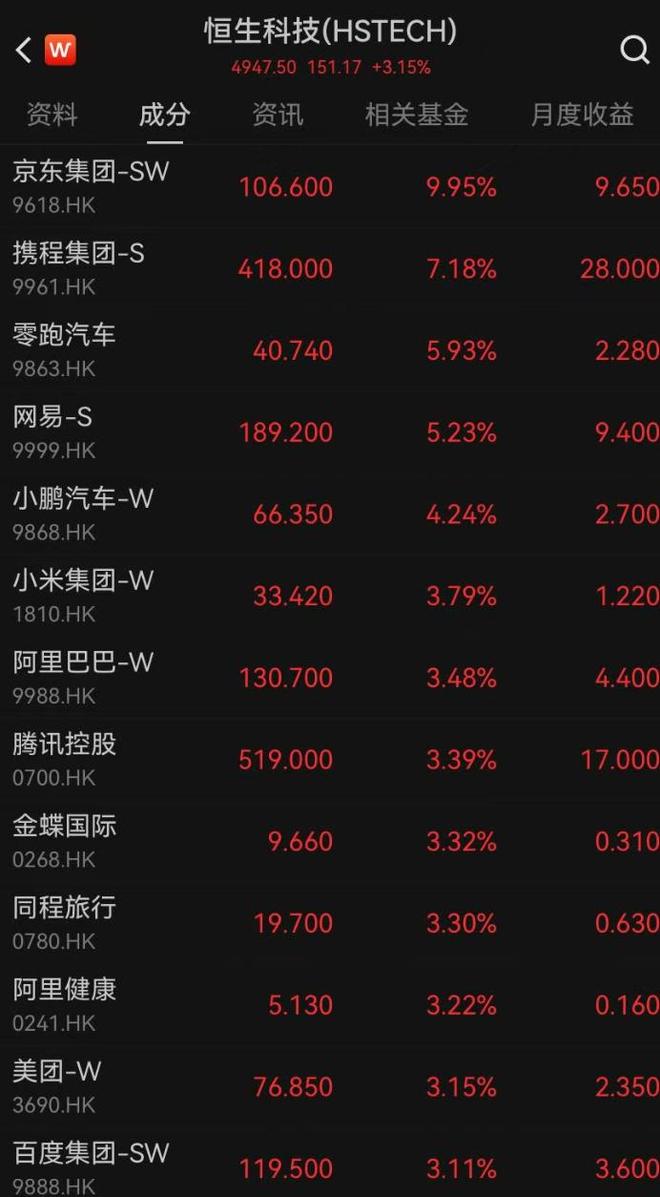
港股大涨!互联网龙头股价飙升,京东大涨10%,携程涨超7%,腾讯、阿里涨超3%,京东物流暴涨23%|港股收盘
Mei Ri Jing Ji Xin Wen· 2026-03-06 09:12
Market Performance - The Hong Kong stock market experienced a significant increase, with the Hang Seng Index rising by 1.72% and the Hang Seng Tech Index increasing by 3.15% [1] - Major internet companies saw substantial gains, including JD.com up by 10%, Trip.com up by 7%, and NetEase up by 5% [1] Individual Stock Movements - JD Logistics surged by 23%, indicating strong market interest [3] - Other notable performers included Tencent Holdings and Alibaba, both rising over 3% [1][2] Sector Performance - The healthcare, software, and food and beverage sectors experienced notable increases, while the metals and steel sectors saw declines [5][6] - Specific sector indices showed significant growth, with the Hong Kong healthcare index up by 3.34% and the software services index up by 2.85% [6]


2026年政府工作报告信号及A股策略应对
Huaxin Securities· 2026-03-06 08:45
Core Conclusions - The report emphasizes the need to focus on geopolitical uncertainties, tariffs, and liquidity disturbances while awaiting volatility to stabilize. Domestically, attention is directed towards the government work report and the 14th Five-Year Plan, with a continuous verification of economic recovery, particularly in social financing and prices. The A-share market is expected to experience oscillating rotations, with a balanced style, focusing on defensive, cyclical price increases, and structural opportunities in technology themes [4][31]. A-share Strategy - March is identified as a critical verification period for policies and the economy, with a focus on new insights from the Two Sessions and ongoing verification of economic recovery. Key signals from the Two Sessions include: 1) a growth target range of 4.5%-5% with an emphasis on quality and price; 2) the launch of major projects and new policy financial tools to support the year; 3) initiatives for increasing residents' income and enhancing social security to promote consumption and domestic demand; 4) optimizing existing resources and fostering new growth drivers [5][7]. - The report outlines a calendar effect for the Two Sessions, indicating a pattern of pre-meeting increases, mid-meeting adjustments, and post-meeting recoveries, with styles shifting from stability to financial, growth, and consumer sectors [5][25]. Industry Selection - Three main structural opportunities are highlighted: 1) Defensive sectors (high dividend stocks, oil and petrochemicals, public utilities, agriculture, forestry, animal husbandry, and fishery); 2) Cyclical price increases (coal, steel, chemicals, non-ferrous metals); 3) Technology themes (AI, commercial aerospace, future energy, quantum technology, and embodied intelligence) [5][29][43]. - The report notes that the performance of the A-share market is influenced by external geopolitical uncertainties and domestic policy support, leading to a balanced growth and value style, with opportunities remaining in small and mid-cap stocks after adjustments [42][37]. Economic Window - March marks the beginning of a verification period for economic recovery, with a focus on financial data, exports, retail sales, real estate, infrastructure, and price data. Key attention is on whether financial data from February can continue to improve and the extent of demand recovery in exports, retail sales, and real estate [9][10]. Valuation Insights - The report indicates that the overall valuation of the A-share market has reached a new high in the current bull market, with a PE-TTM of 23.74 as of March 1, 2026, still having a 3% upside potential compared to the previous bull market peak of 24.47 [15][16]. Liquidity Trends - Public and wealth management products have shown significant growth at the beginning of the year, with a notable increase in new issuances and net subscriptions, indicating a strong influx of funds into the market. The report anticipates that the trend of residents moving deposits into wealth management products will continue [20][23].
2026年钢矿期货期权白皮书:沉舟侧畔,千帆过病树前头万木春
Ge Lin Qi Huo· 2026-03-06 07:13
1. Report Industry Investment Rating No information provided in the content. 2. Core Viewpoints of the Report - In 2026, the terminal market will experience significant structural differentiation. Real - estate steel demand is expected to continue its negative growth. Fiscal policy may increase investment in general infrastructure, but the growth rate of traditional high - steel - consuming infrastructure may slow down. Manufacturing steel demand is also differentiated, and the impact on steel demand in 2026 may be relatively neutral. Steel exports will remain at a high level, but the growth rate will slow down [3]. - In the steel market, the supply side is relatively certain. Under the background of carbon peaking and carbon neutrality, the crude steel output will decline slightly year - on - year in 2026. The short - process steelmaking ratio is expected to increase slowly, and the decline of pig iron output will be smaller than that of crude steel [3]. - In the iron ore market, the domestic iron ore supply will be released slowly in 2026, while the global iron ore market has entered a supply - release period. However, China's iron ore demand faces pressure from economic structure transformation and a decline in steel consumption intensity. The global iron ore demand lacks growth points in 2026 [3]. - In 2026, rebar and hot - rolled coil prices are expected to be in a wide - range fluctuation. The rebar price is expected to be in the range of 2,900 - 3,500 yuan, with a slightly higher price center than in 2025, and the price may be slightly higher in the first half of the year. The hot - rolled coil price is expected to be in the range of 3,100 - 3,700 yuan. The iron ore price is expected to fluctuate widely in the range of 650 - 900 yuan, with a price center similar to that in 2025 [3]. 3. Summary by Relevant Catalogs 3.1 Steel and Iron Ore Industry Chain Analysis - **Steel - making Process**: There are two steel - making processes in China's steel industry: long - process and short - process. Long - process steel - making has a long production process, a wide range of raw materials, high production efficiency, and stable product quality. Short - process steel - making has less pollution and lower energy consumption, but lower production efficiency [14][15]. - **Industry Chain Structure**: The upstream of the steel industry mainly includes raw materials such as iron ore and fuel. The mid - stream is mainly the production of crude steel and various steel products. The downstream is the application fields of steel, including infrastructure, construction, machinery, automotive, and home appliance industries [17][18]. - **Iron Ore Mining and Processing**: The iron ore mining and processing process includes exploration, mining, crushing, screening, grinding, beneficiation, and transportation [22]. 3.2 Introduction to Steel and Iron Ore Futures and Options Contracts - **Rebar Futures and Options Contracts**: Rebar futures are traded on the Shanghai Futures Exchange. The trading unit is 10 tons per lot, and the minimum price change is 1 yuan/ton. The contract months are from January to December. The delivery system includes physical delivery [26][29]. - **Hot - rolled Coil Futures Contracts**: Hot - rolled coil futures are also traded on the Shanghai Futures Exchange. The trading unit is 10 tons per lot, and the minimum price change is 1 yuan/ton. The contract months are from January to December. The delivery system includes physical delivery [36][38]. - **Iron Ore Futures and Options Contracts**: Iron ore futures are traded on the Dalian Commodity Exchange. The trading unit is 100 tons per lot, and the minimum price change is 0.5 yuan/ton. The contract months are from January to December. The delivery system includes physical delivery [49][51]. 3.3 Long - term Trends and 2025 Market Summary - **Spot Market**: Since 2011, the prices of steel and iron ore in the spot market have generally gone through four stages: decline (2011 - 2015), rise (2016 - 2018), sharp fluctuation (2019 - 2022), and decline again (2023 - present). In 2025, the steel spot price continued to decline, and the iron ore spot price fluctuated within a range [66][73]. - **Futures Market**: The long - term trends of rebar and iron ore futures are similar to those of the spot market. In 2025, the rebar futures price continued to decline, and the iron ore futures price fluctuated within a range [81][86]. - **Trading Volume and Open Interest**: In 2025, the trading volume and open interest of rebar and hot - rolled coil futures were generally average, with a significant increase in July [92]. 3.4 Terminal Market Demand Analysis - **Real - estate Steel Demand**: Since 2016, real - estate policies have gone through four stages: strict regulation, stable transformation, risk resolution, and full - force market stabilization. In 2025, the decline in real - estate sales narrowed, but investment continued to decline, and steel demand for real - estate is expected to be negative in 2026 [101][102][111]. - **Infrastructure Steel Demand**: Since 2021, the growth rate of infrastructure investment (excluding electricity) has continued to decline. In 2025, it decreased by 2.2% year - on - year. The growth of infrastructure investment depends on the issuance of special bonds [112]. - **Manufacturing Steel Demand**: Since 2021, the prosperity of the manufacturing industry has declined. In 2025, the investment growth rate slowed down, but it was still better than that of real - estate and infrastructure. The steel demand in the automotive, construction machinery, and home appliance industries showed different trends [115]. - **Steel Exports**: In 2025, China's steel exports maintained strong resilience. The export volume reached a record high, but the growth rate slowed down in the later stage. In 2026, steel exports are expected to remain at a high level [127][129]. 3.5 Steel Market Supply Analysis - **Crude Steel Supply**: Since 2021, China's crude steel output has declined. In 2025, the crude steel output was 961 million tons, a year - on - year decrease of 4.4%. In 2026, it is expected to continue to be below 1 billion tons, with a slight year - on - year decline [134][137]. - **Pig Iron Supply**: In recent years, the growth rate of pig iron output has been lower than that of crude steel, mainly due to the development of short - process steel - making. In 2026, pig iron output is expected to continue to decline, but the decline may be smaller than that of crude steel [138][144]. 3.6 Iron Ore Market Supply Analysis - **New Iron Ore Production Capacity**: In the next five years, the four major iron ore mines are expected to add a total of 200 million tons of new production capacity. In 2025, Vale is expected to add 40 million tons of new production capacity, and FMG is expected to add 22 million tons [147][150]. - **Shipping Targets of the Four Major Mines**: The shipping/target output of the four major mines has generally been increasing in recent years. In 2026, the guidance targets of the mines are expected to move up further [151]. - **China's Iron Ore Imports**: China's iron ore import dependence remains above 80%. In 2025, the import volume was 1.259 billion tons, a year - on - year increase of 1.8%. In 2026, the import volume is expected to remain at a high level, but with low growth [160][162]. - **Domestic Iron Ore Supply**: In 2025, China's domestic iron ore output decreased to less than 1 billion tons, a year - on - year decrease of 2.8%. In 2026, the domestic iron ore supply is expected to be released slowly [166]. 3.7 Steel and Iron Ore Market Inventory Analysis - **Steel Market Inventory**: In 2025, the inventory of rebar was relatively low, and it started to accumulate in the National Day period. The inventory of hot - rolled coil was relatively high, and it showed a significant accumulation trend after the National Day [168][170]. - **Iron Ore Market Inventory**: In 2025, the steel - mill inventory of imported iron ore was continuously low. The port iron ore inventory decreased in the first half of the year and increased in the second half, but it was still lower than that in 2024. High port inventory will suppress the market trend in 2026, especially in the first half [175]. 3.8 Forecast of Steel and Iron Ore Supply - Demand Balance Sheets - **Steel Supply - Demand Balance**: In the future, the output of crude steel, pig iron, and steel products will have low growth or negative growth. In 2026, domestic steel demand is expected to improve slightly, and exports will remain at a high level but with a low growth rate [177][180]. - **Iron Ore Supply - Demand Balance**: In 2025, the global iron ore market was in oversupply, and the price was in a downward trend. In 2026, the global iron ore supply will continue to increase, and demand lacks growth points [181]. 3.9 Futures Hedging Cases of Steel and Iron Ore Enterprises - **Rebar Futures Hedging**: A medium - sized construction company successfully hedged the price increase risk of rebar procurement through futures hedging in 2025, achieving the goal of locking in procurement costs [187][190]. - **Iron Ore Futures Hedging**: A steel - processing enterprise successfully hedged the price increase risk of iron ore procurement through futures hedging in 2025, achieving the goal of locking in raw material costs [191]. 3.10 Technical Analysis and Outlook of Futures Prices - **Seasonal Analysis**: Historically, rebar futures perform well in January and December, and are likely to decline in August. Hot - rolled coil futures perform well in January, June, and December, and are likely to decline in August and September. Iron ore futures perform well in January, November, and December, and are likely to decline in August [192][193][197]. - **Technical Analysis**: From the monthly chart of the main rebar contract, the rebar is in a downward channel. The main hot - rolled coil contract is also in a downward trend. The main iron ore contract fluctuates in a wide range [199][201][206]. 3.11 Option Analysis and Strategy Recommendations - For steel products in 2026, considering the seasonal characteristics, it is recommended to buy call options at low prices before the peak season, and buy put options at high crude - steel output and low - demand seasons. When the supply - demand contradiction is not prominent, the double - buying strategy is recommended [207]. - For iron ore, when the hot - metal output is above 2.4 million tons, it is advisable to buy put options. In a volatile market, the double - buying strategy can be considered [211]. 3.12 Industry Enterprise Research and 2026 Outlook - Different industry experts have different views on the 2026 steel and iron ore market. Some believe that the steel price will fluctuate around the average cost line, and the iron ore supply will be relatively loose; others believe that the steel price center may stop moving down, but the steel - mill profit may shrink [212]. 3.13 Summary of the Full Text and 2026 Operation Suggestions - **Summary**: In 2026, the macro - economy is expected to stabilize. The domestic demand for steel lacks long - term growth points, and the export growth rate will slow down. The crude steel output will decline slightly. The rebar and hot - rolled coil prices are expected to fluctuate widely, and the iron ore price will also fluctuate in a wide range [215][216]. - **Operation Suggestions**: For rebar and hot - rolled coil, it is recommended to conduct band trading in 2026. Pay attention to the phased trading opportunities of the hot - rolled coil - to - rebar spread. For options, buy call options at low prices before the peak season and buy put options at high - output and low - demand seasons. For iron ore, suppliers can consider selling for hedging, and steel mills can maintain a low - inventory strategy. Pay attention to the opportunity of selling the rebar - to - iron - ore ratio [217].