医疗保健

Search documents
医药板块再迎政策利好,恒生医疗指数ETF(159557)涨超1%,心泰医疗涨超6%
Sou Hu Cai Jing· 2025-04-25 02:51
Group 1 - The Hong Kong stock market showed strength on April 25, with the Hang Seng Healthcare Index initially rising before retreating, and the Hang Seng Healthcare Index ETF (159557) increasing by over 1%, leading in gains among similar ETFs, with a premium trading rate of 0.61% [1] - Key stocks in the healthcare sector included Xintai Medical, which rose over 6%, Jingtai Holdings, which increased over 5%, and iFlytek Medical Technology, which gained over 4% [1] - A new policy from the Ministry of Industry and Information Technology and six other departments was announced on April 24, outlining the "Implementation Plan for the Digital Transformation of the Pharmaceutical Industry (2025-2030)", with significant goals set for 2027 and 2030 regarding technological advancements and digital transformation in the pharmaceutical sector [1] Group 2 - Guolian Minsheng Securities identified two core investment themes for the pharmaceutical sector in 2025: 1) High-quality innovative drugs going overseas, as domestic IND products are well-positioned for international markets; 2) Valuation recovery of left-side assets, focusing on sectors like CXO, consumer healthcare, and pharmacies that have seen significant pullbacks [2] - Huaxin Securities noted that the market is entering a period of consolidation, with potential challenges from simultaneous withdrawals of southbound and foreign capital, but maintains a bullish outlook for the medium term, emphasizing opportunities in the core technology sector and the long-term potential of the innovative drug industry post-policy adjustments [2]
关税冲击下首份美联储《褐皮书》:107次提及关税,淡化通胀影响
Sou Hu Cai Jing· 2025-04-24 12:11
Group 1: Trade Policy Impact - The tariff policies have significantly affected key industries such as steel, aluminum, and automotive parts, forcing companies to shorten pricing cycles and implement daily price adjustments to transfer cost pressures [2] - Consumer behavior has shifted, with a surge in demand for durable goods before tariffs took effect, while non-durable goods consumption has declined, indicating concerns over future price increases [2] - Companies in regions like Atlanta and St. Louis have paused capital expenditures due to policy uncertainty, with some manufacturers stating that the environment is too chaotic for investment [2] Group 2: Inflation and Wage Dynamics - The Beige Book reveals signs of stagflation, with most regions reporting accelerated wage growth, contradicting signs of layoffs in manufacturing [3] - The healthcare sector continues to expand, driving up labor costs, while low-skilled jobs are shrinking due to industry shifts [3] - Input cost pressures are expected to rise further, with companies anticipating increased costs over the next six months, leading to a situation where consumers will ultimately bear these costs [3] Group 3: Federal Reserve Policy Dilemma - The Federal Reserve faces a dilemma between slowing economic growth and persistent inflation, with expectations of a rate cut in June despite inflation remaining above target [4][5] - Core PCE inflation expectations have been raised to 2.8%, while GDP growth forecasts have been downgraded from 2.1% to 1.7% [5] - The Fed's attempt to slow down balance sheet reduction has been interpreted as a dovish signal, reinforcing expectations for rate cuts [5] Group 4: Global Supply Chain Restructuring - The tariff situation is accelerating the restructuring of global supply chains, with companies facing challenges such as skyrocketing costs and order uncertainties [6][7] - For instance, U.S. agricultural exporters have been severely impacted, with the cost of soybeans rising from 4,000 yuan/ton to 7,000 yuan/ton, leading buyers to shift to South American markets [7] - Companies are adopting varied strategies to mitigate risks, including short-term measures to expedite shipments and long-term strategies like localizing supply chains [7] Group 5: Political and Market Pressures - The Trump administration's pressure on the Federal Reserve has reached new heights, with public calls for immediate rate cuts impacting market dynamics [8] - Despite the Fed's emphasis on policy independence, the acknowledgment of deteriorating economic prospects suggests that monetary policy is influenced by political factors [8] - Market reactions have been mixed, with Bitcoin rebounding and tech stocks performing well, while concerns over economic recession are reflected in deepening yield curve inversions [8]

美股太疯狂,华尔街怯场了,散户却押上全部身家豪赌
Hua Er Jie Jian Wen· 2025-04-23 05:54
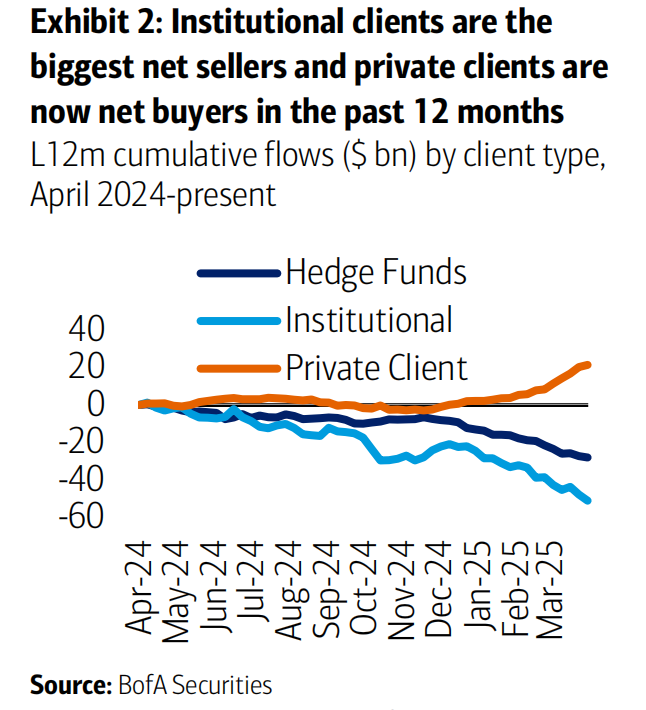
在基金经理普遍看空美股之际,个人投资者正涌入市场,押注单一股票和高杠杆工具,希望从剧烈波动 中获取巨额回报。 4月22日美银发布报告,在上周标普500指数下跌1.5%的背景下,客户首次在三周内净抛售美国股票, 总额达16亿美元。ETF市场也出现五周以来首次抛售,虽然单个股票仍有小幅净买入。 值得注意的是,机构客户和对冲基金延续了之前的卖出趋势,而零售投资者连续第19周净买入,创下自 2008年有数据以来年初最长买入纪录。 据媒体报道,摩根大通数据也表明,从特朗普宣布所谓对等关税到4月16日,个人投资者净买入价值210 亿美元的股票和ETF,与基金经理对美国股票的普遍看空形成鲜明对比。 当今年4月初市场暴跌、投资者抛售数万亿美元股票的那一天,37岁的营销总监Dan Oksnevad并没有随 波逐流。相反,他将自己90%的七位数投资组合(包括退休基金)全部押注在比特币及相关股票上。尽 管比特币当天下跌了近6%,但Oksnevad表示: 这简直是一个大声呼喊的买入机会,我就是在追求几周或几个月内获得数十年的回报。我真 心相信,市场波动是创造财富的地方。 华尔街基金谨慎看空美股 美银报告指出,在近期的市场波动中,华尔 ...
金工ETF点评:宽基ETF单日净流入99.09亿元,黄金产业、黄金股ETF可关注
Tai Ping Yang Zheng Quan· 2025-04-21 11:43
Quantitative Models and Construction Methods - **Model Name**: Industry Crowding Monitoring Model **Model Construction Idea**: This model is designed to monitor the crowding levels of Shenwan First-Level Industry Indices on a daily basis, identifying industries with high or low crowding levels to guide investment focus[4] **Model Construction Process**: The model calculates crowding levels for each industry index based on specific metrics (not detailed in the report). It then ranks industries by their crowding levels and highlights those with significant changes in crowding levels or notable fund inflows/outflows[4] **Model Evaluation**: Provides a useful tool for identifying industry trends and potential investment opportunities based on crowding dynamics[4] - **Model Name**: Premium Rate Z-Score Model **Model Construction Idea**: This model identifies potential arbitrage opportunities in ETF products by calculating the Z-score of their premium rates over a rolling window[5] **Model Construction Process**: 1. Calculate the premium rate of an ETF as the difference between its market price and its net asset value (NAV), divided by the NAV 2. Compute the Z-score of the premium rate over a rolling window to standardize the deviation from the mean 3. Use the Z-score to signal potential arbitrage opportunities or risks of price corrections[5] **Model Evaluation**: Effective for short-term trading strategies and arbitrage identification in ETF markets[5] Model Backtesting Results - **Industry Crowding Monitoring Model**: No specific numerical backtesting results provided in the report[4] - **Premium Rate Z-Score Model**: No specific numerical backtesting results provided in the report[5] Quantitative Factors and Construction Methods - No specific quantitative factors were explicitly mentioned or constructed in the report Factor Backtesting Results - No specific factor backtesting results were provided in the report
涨声中的防御战!美股交易员在“假反弹”中悄然筑起防波堤
智通财经网· 2025-04-21 11:22
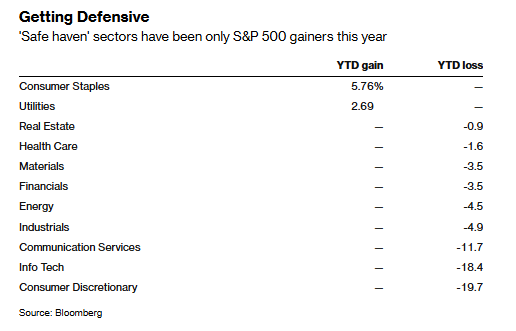
Group 1 - The U.S. stock market has rebounded from recent lows, but traders are significantly increasing their allocation to defensive assets [1] - Despite President Trump's announcement to pause tariffs on most goods for 90 days, investors focusing on safe sectors have achieved better returns than those in riskier areas [1][2] - Barclays data shows that defensive stock portfolios generally outperform cyclical stocks during market upswings, and continue to lead when market sentiment worsens [1][3] Group 2 - Financially weaker companies have seen a 3.3% decline in stock prices after the tariff pause announcement, underperforming healthier companies [1] - Keith Lerner from Truist Advisory Services indicates a shift towards traditional defensive strategies, suggesting that investors are waiting for clearer market signals [1][2] - Defensive sectors like utilities, consumer staples, and healthcare tend to be more resilient during economic downturns, providing stable earnings and relatively smooth returns [2] Group 3 - The shift towards defensive companies reflects changes in market behavior and risk-return dynamics, particularly evident in the AI sector, which has recently faced significant declines [3] - High-growth companies are struggling due to factors beyond their control, prompting investors to pivot towards defensive sectors in preparation for further market volatility [3]
基金研究周报:蓝筹与地产领涨,结构性分化加剧(4.14-4.18)
Wind万得· 2025-04-19 22:18
Market Overview - The A-share market exhibited significant structural differentiation from April 14 to April 18, with major indices showing mixed performance. The Shanghai Composite Index rose by 1.19%, while the Shenzhen Index and the ChiNext Index fell by 0.54% and 0.64%, respectively [1] - The market sentiment was influenced by a shift in investment style, with funds moving from high-volatility technology sectors to traditional industries with stable cash flows. Blue-chip and high-dividend strategies performed well, while growth sectors continued to decline [1] Industry Performance - Concerns over supply chain disruptions led to a slowdown in economic recovery, affecting sectors such as industrials, consumer discretionary, healthcare, and information technology, with the latter experiencing the largest decline, though not exceeding 0.8% [1] - Real estate, telecommunications services, and utilities showed relatively strong performance, with real estate rising by 3.47% [1] Fund Issuance and Performance - A total of 25 funds were issued last week, including 17 equity funds, 7 bond funds, and 1 fund of funds (FOF), with a total issuance of 20.476 billion units [2][18] - The total index for Chinese funds increased by 0.02%, while the ordinary equity fund index decreased by 0.08%, and the mixed equity fund index fell by 0.04% [2] Global Asset Review - Global asset prices showed mixed performance, with U.S. indices under pressure, while European markets strengthened. The Dow Jones and Nasdaq indices fell by over 2%, while major Asian indices rose by over 2% [4] - In commodities, the energy sector led gains, while industrial metals showed mixed results. Gold prices rose nearly 3% due to increased risk aversion, reaching over $3,300 per ounce [4] Domestic Bond Market - The bond market remained stable, with the 10-year government bond futures rising by 0.04% and the 30-year futures increasing by 0.03%. Domestic long-term interest rates remained at historical lows [16]

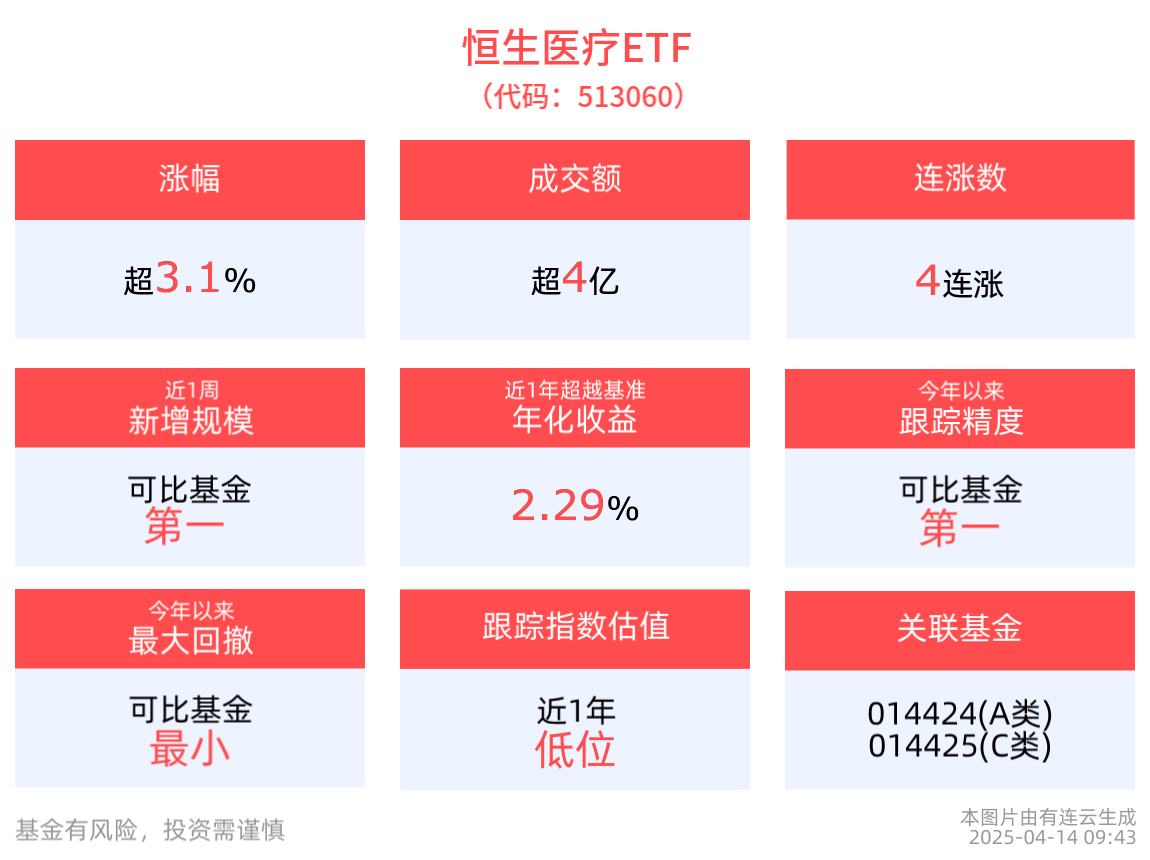
机构:医疗消费板块值得重点布局,恒生医疗ETF(513060)上涨3.15%,再鼎医药涨超12%
Sou Hu Cai Jing· 2025-04-14 01:57
Group 1 - The Hang Seng Healthcare Index (HSHCI) has seen a strong increase of 2.95%, with notable gains from companies such as Zai Lab (09688) up 12.39% and Dongyangguang Changjiang Pharmaceutical (01558) up 9.04% [3] - The Hang Seng Healthcare ETF (513060) has risen by 3.15%, marking its fourth consecutive increase, with a recent price of 0.46 yuan [3] - Over the past three months, the Hang Seng Healthcare ETF has accumulated a total increase of 21.98% [3] Group 2 - The Hang Seng Healthcare ETF has experienced a net value increase of 26.66% over the past year, with the highest single-month return reaching 28.34% since its inception [4] - The ETF's Sharpe ratio stands at 1.27, indicating strong risk-adjusted returns [4] - The ETF's management fee is 0.50%, and the custody fee is 0.15% [4] Group 3 - The top ten weighted stocks in the Hang Seng Healthcare Index account for 56.37% of the index, with companies like BeiGene (06160) and WuXi Biologics (02269) leading the list [5] - The performance of these stocks varies, with BeiGene showing a gain of 5.34% and WuXi Biologics up by 2.81% [7] Group 4 - The current market environment emphasizes the importance of domestic consumption growth due to pressures from U.S.-China tariffs, highlighting healthcare consumption as a key investment area [8] - The market sentiment is recovering, with a focus on undervalued blue-chip stocks and companies with solid fundamentals, particularly in the healthcare sector [8]



每日投资策略-20250411
Zhao Yin Guo Ji· 2025-04-11 05:44
2025 年 4 月 11 日 招银国际环球市场 | 市场策略 | 招财日报 每日投资策略 宏观及公司点评 全球市场观察 招银国际研究部 邮件:research@cmbi.com.hk | 环球主要股市上日表现 | | | | | --- | --- | --- | --- | | | 收市价 | | 升跌(%) | | | | 单日 | 年内 | | 恒生指数 | 20,682 | 2.06 | 21.32 | | 恒生国企 | 7,668 | 1.76 | 32.94 | | 恒生科技 | 4,814 | 2.66 | 27.88 | | 上证综指 | 3,224 | 1.16 | 8.36 | | 深证综指 | 1,868 | 2.46 | 1.66 | | 深圳创业板 | 1,901 | 2.27 | 0.48 | | 美国道琼斯 | 39,594 | -2.50 | 5.05 | | 美国标普 500 | 5,268 | -3.46 | 10.45 | | 美国纳斯达克 | 16,387 | -4.31 | 9.17 | | 德国 DAX | 20,563 | 4.53 | 22.75 | | 法国 ...


特朗普在豪赌美国国运!我们该如何应对?
格隆汇APP· 2025-04-06 09:43
Core Viewpoint - The article discusses the implications of Trump's recent "reciprocal tariff" executive order, which imposes a 10% minimum tariff on global trade partners and a 34% tariff specifically on China, highlighting the potential economic risks and market reactions associated with this policy [1][2][3]. Group 1: Objectives of the Tariff Policy - The primary goal of the tariff policy is to alleviate the U.S. debt burden by increasing revenue through higher tariffs [5]. - Another objective is to stimulate the return of manufacturing jobs to the U.S. by making domestic production more financially attractive [6]. - The policy aims to reshape the geopolitical landscape and re-establish U.S. dominance in international trade [7]. Group 2: Market Reactions - Following the announcement, U.S. stock markets experienced significant declines, with the Dow Jones dropping 2.72%, S&P 500 down 3.16%, and Nasdaq falling 4.24% within two days [12]. - Global markets also reacted negatively, with Japan's Nikkei 225 index down 2.6% and Vietnam's stock market plummeting 7% [13]. - The volatility in the markets reflects concerns over the uncertainty of the tariff policy and its long-term implications [14]. Group 3: Investment Strategies - In the U.S. market, a cautious approach is recommended, avoiding high-valuation tech stocks and focusing on defensive sectors such as utilities and healthcare [24]. - For Hong Kong stocks, it is advised to reduce exposure to export-oriented companies and increase holdings in domestic consumption and financial sectors [34]. - In the A-share market, investors are encouraged to consider undervalued blue-chip stocks and sectors benefiting from domestic demand and technological advancements [34]. Group 4: China's Response and Market Risks - China is likely to implement reciprocal tariffs on U.S. goods, particularly in agriculture and energy, while also diversifying its export markets [37]. - Long-term strategies may include tax reductions and infrastructure investments to boost domestic demand, alongside enhancing regional trade cooperation [38]. - Potential risks include increased import costs leading to domestic inflation and the impact of reduced U.S. demand on export-oriented companies [38].

2025边缘AI报告:实时自主智能,从范式创新到AI硬件的技术基础
3 6 Ke· 2025-03-28 11:29
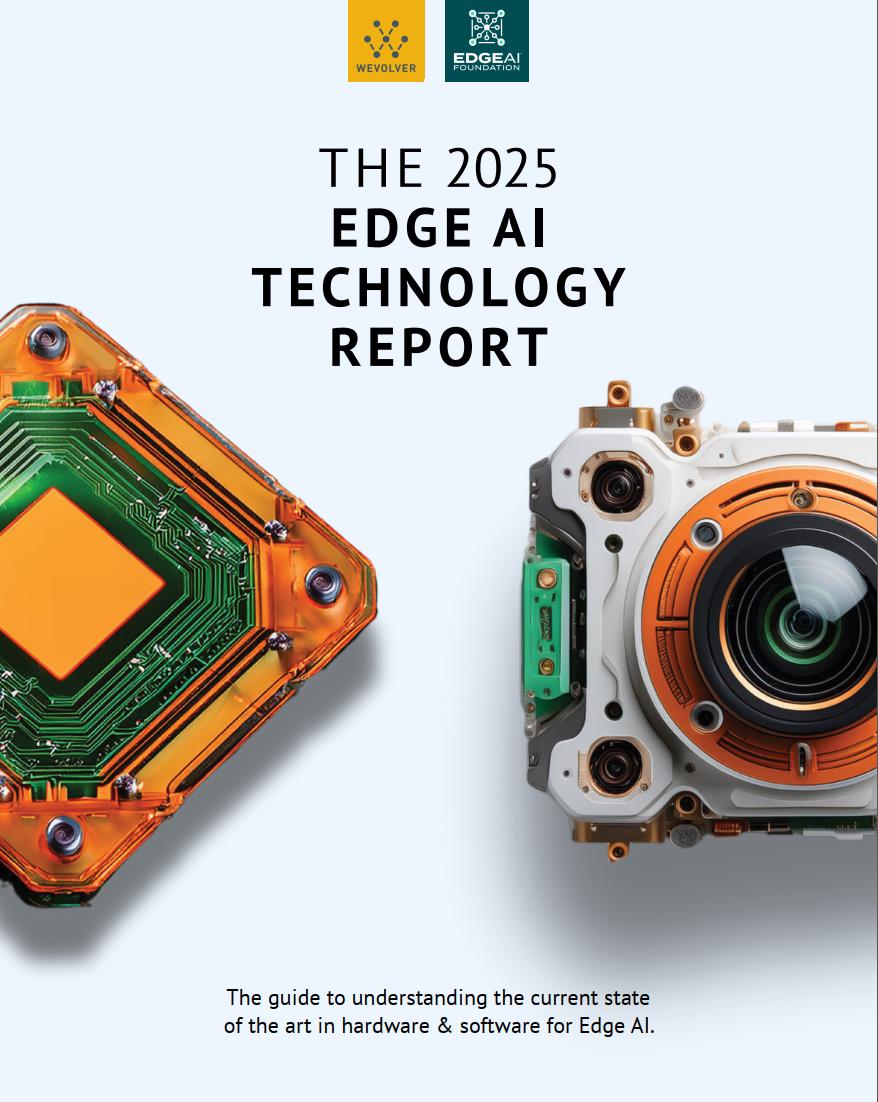
Core Insights - The Edge AI Foundation has rebranded from the TinyML Foundation and released the "2025 Edge AI Technology Report," highlighting the maturity and real-world applications of TinyML [1][3]. Group 1: Edge AI Technology Drivers - The report discusses advancements in hardware and software that support Edge AI deployment, focusing on innovations in dedicated processors and ultra-low power devices [3]. - Edge AI is transforming operational models across various industries by enabling real-time analysis and decision-making capabilities [3]. Group 2: Industry Applications of Edge AI - In the automotive sector, Edge AI enhances safety and response times, with examples like Waymo and NIO utilizing real-time data processing for improved performance [7][8]. - Manufacturing benefits from Edge AI through predictive maintenance, quality control, and process optimization, with reported reductions in maintenance costs by 30% and downtime by 45% [9][12]. - In healthcare, localized AI accelerates diagnostics and improves patient outcomes by analyzing medical data directly on devices [14]. - Retail operations are optimized through real-time behavior analysis and AI-driven systems, reducing checkout times by 30% [16]. - Logistics is enhanced by integrating Edge AI with IoT sensors, allowing for immediate analysis of data and optimization of supply chain operations [18]. - Smart agriculture utilizes Edge AI for precision farming, reducing water usage by 25% and pesticide use by 30% [21]. Group 3: Edge AI Ecosystem and Collaboration - The Edge AI ecosystem relies on collaboration among hardware vendors, software developers, cloud providers, and industry stakeholders to avoid fragmentation [24]. - A three-layer architecture is recognized for Edge AI, distributing workloads across edge devices, edge servers, and cloud platforms [24][25]. - Cross-industry partnerships are increasing, with companies like Intel and Qualcomm collaborating to enhance Edge AI deployment [26][27]. Group 4: Emerging Trends in Edge AI - Five emerging trends are reshaping Edge AI, including federated learning, quantum neural networks, and neuromorphic computing [30]. - Federated learning is expected to enhance model adaptability and collaboration across industries, with a projected market value of nearly $300 million by 2030 [31]. - Quantum computing is set to redefine Edge AI capabilities, enabling faster decision-making and real-time processing [34][36]. - AI-driven AR/VR applications are evolving with Edge AI, allowing for real-time responses and improved energy efficiency [39]. - Neuromorphic computing is gaining traction for its energy efficiency and ability to handle complex tasks without cloud connectivity [41].