有色金属

Search documents
大涨10%,全球光纤巨头再创新高
Zhong Guo Ji Jin Bao· 2026-02-27 10:24
【导读】港股2月收官,三大指数集体收涨! 值得注意的是,长飞光纤光缆2月涨幅接近80%。 | 06869 长飞光纤光缆 · | | | | | | --- | --- | --- | --- | --- | | 日收费 02/27 16:08:18 | | | ls 3 42 X | | | 148.800 + | 最 高 | | 149.700 今 开 | 129.000 | | +13.600 +10.06% | 最低 | | 123.400 昨 收 | 135.200 | | 成交额 | 91.01亿 市盈率TTM | | 196.31 总市值 → | 1231.92亿 | | A股 231.31 -4.89 -2.07% 溢价(H/A) -43.62% | | | | | | E MSCI中国指数调整今日盘后生效!新纳入长飞光纤光缆、小马智 ... | | | | | | 图层 | 轮证 评论 资讯 | | 分析 公司 | | | 1D ▼ 5日 日K 月K | | | 室K 年K 1分钟 ▼ | 음 | | 153.2 | | 13.28% 15:59 146.400 | | 1K ▲ | | | ...

源达调研策略周报
Xin Lang Cai Jing· 2026-02-27 10:07
Industry Research Highlights - The most researched industries this week (2026/2/23-2026/2/27) include electronics, machinery, automotive, and light manufacturing, with electronics and light manufacturing seeing increased attention compared to the week before the Spring Festival, likely benefiting from export recovery or domestic demand policy expectations [5][20] - Over the past 30 days (2026/1/28-2026/2/27), the most researched industries were machinery, electronics, pharmaceutical biology, and basic chemicals, with a notable increase in the number of research institutions focusing on electronics and machinery [5][21] Company Research Highlights - The companies with the highest number of institutional research visits in the past week include Jerry Holdings, Tin Industry Co., and BOE Technology Group, with Jerry Holdings receiving 14 visits and 22 ratings from institutions [6][24] - Over the past 30 days, the most researched companies include Dazhu Laser, Jerry Holdings, and Hangzhou Bank, with Ninebot, JinkoSolar, and Zhongji Xuchuang also receiving significant attention [2][25] Key Company Insights 1. **Jerry Holdings** - Jerry Holdings is transitioning into a diversified technology-driven industrial group, expanding its core growth areas from traditional oil and gas equipment to gas turbine power generation, focusing on data centers, industrial energy, and new power systems, with over 3.4 billion yuan in gas turbine generator orders from North America [3][18] - The company has established long-term partnerships with Siemens, Baker Hughes, and Kawasaki Heavy Industries, and is enhancing its capabilities in power generation, storage, and distribution [10][29] - Jerry Holdings has completed capacity construction for electric drive/turbine fracturing equipment and gas turbine power generation equipment in North America, with ongoing expansion in Dubai [30][29] 2. **Tin Industry Co.** - Tin Industry Co. is the only A-share listed company with a complete tin industry chain, holding the largest global reserves of tin and indium, with a production capacity of 80,000 tons/year for tin smelting and 12,500 tons/year for cathode copper [11][31] - The company achieved significant revenue and net profit growth in the first three quarters of 2025, with revenues of 34.42 billion yuan and a net profit of 1.745 billion yuan, marking a year-on-year increase of 17.81% and 35.99%, respectively [14][32] - The global tin market is currently characterized by a tight supply-demand balance, with strong demand from emerging sectors such as renewable energy and semiconductor packaging, providing long-term opportunities for the company [18][32]


“HALO交易”火爆出圈!电力ETF(159146)再涨2.64%连创上市新高!涨价题材大放异彩!有色ETF最高上探3.82%
Sou Hu Cai Jing· 2026-02-27 09:44
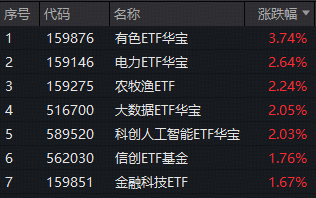
Market Overview - A-shares ended February with the Shanghai Composite Index achieving three consecutive monthly gains, with active trading continuing post-Spring Festival, where daily trading volumes exceeding 1 trillion yuan have become the norm [1] - On February 27, the three major A-share indices showed mixed results, with over 3,200 stocks rising and a total trading volume of 2.51 trillion yuan, a slight decrease of 504 billion yuan from the previous day [1] Sector Performance - The focus on price increase themes has intensified, with notable performances in the chemical and non-ferrous metal sectors [1] - The rare earth sector continues to see price increases, with stocks like Hunan Gold hitting the daily limit, and the non-ferrous ETF (159876) reaching a peak increase of 3.82% [1][4] - The chemical ETF (516020) has achieved four consecutive daily gains, reaching its highest point since January 2022, driven by the phosphoric chemical sector and TDI market trends [1] AI and Computing Power - The computing power sector remains active, with China's AI token usage surpassing that of the US for the first time, indicating potential benefits for domestic AI industry chains [1] - The domestic AI industry is expected to benefit from increased demand for computing power, with the AI-focused ETF (589520) rising by 2.03% [1] - The cloud computing sector is entering a price increase cycle, with the big data ETF (516700) seeing a significant rise of 2.05% [1] Electricity Sector - The electricity sector is experiencing a surge, with the electricity ETF (159146) rising by 2.64%, reaching a new high since its listing [2][10] - The demand for electricity is expected to increase alongside AI development, making it a defensive investment in the current market environment [2][12] - The "HALO trading" phenomenon is driving the electricity sector, as physical assets like energy and electricity are deemed indispensable in the face of AI advancements [12] Healthcare Sector - The healthcare sector is showing signs of recovery, with the largest healthcare ETF (512170) rising by 1.14% and successfully reclaiming its annual line [14] - The healthcare ETF has seen significant net subscriptions, totaling over 1.9 billion yuan in the past three days [14] - The performance of leading healthcare stocks, such as WuXi AppTec, is contributing to the sector's positive momentum, with expected revenue growth exceeding 20% [16] Investment Recommendations - Companies are advised to focus on three main areas: globally priced cyclical goods like chemicals and non-ferrous metals, manufacturing sectors related to technology and national strength, and technology sectors entering performance realization periods [3] - The healthcare sector is recommended for investment due to its recovery potential and growth opportunities in areas like AI healthcare and brain-computer interfaces [18]
涉及A股、港股!重要指数,调整在即!
Xin Lang Cai Jing· 2026-02-27 09:37
炒股就看金麒麟分析师研报,权威,专业,及时,全面,助您挖掘潜力主题机会! 随着近期A股和港股市场相关板块的波动,富时罗素公布了全球股票指数系列2026年3月的半年度审议 初步结果,相关调整将于3月20日收盘后正式生效。 富时罗素公司是全球第二大指数编制机构,其指数产品覆盖全球70多个国家和地区市场,是投资者观察 市场的重要工具,对于制定投资策略和风险管理至关重要。本次指数调整中,有77只股票纳入了大盘股 名单,同时也有38只股票从大盘股名单中剔除。 资源股、科技股晋升大盘股阵营 本次调整中,资源股与科技股成为最大赢家,多只个股从中盘股、小盘股晋升至大盘股行列。 具体来看,资源股中的白银有色(维权)、盛屯矿业(维权)、云南铜业、中钨高新等多只股票,在股 价和市值不断攀升的情况下,晋升成为大盘股。 对于近年来资源股强势表现,中金公司认为,近年来,受世界经贸格局重塑及俄乌冲突等地缘事件冲 击,商品市场不确定性频繁加剧。随着金融化程度不断加深,商品期货与股票收益率之间的相关性及跨 市场风险传染机制也显著提升。此时,定价逻辑不再局限于供需基本面,地缘风险、供应链安全以及政 策等非基本面因素影响显著上升,导致商品价格在特 ...

长江有色:27日铜价小涨 现货消费提升空间有限
Xin Lang Cai Jing· 2026-02-27 09:07
Group 1: Copper Market Dynamics - The Shanghai copper futures market experienced narrow fluctuations with a strong surge near the close, with the main contract 2604 opening at 102,670 CNY/ton, reaching a high of 104,170 CNY/ton, and closing at 103,920 CNY/ton, up 1.19% [1] - The trading volume for the main contract was 157,481 lots, an increase of 51,782 lots, while the open interest rose by 19,104 lots to 203,798 lots [1] - In the London market, copper prices also rose, with the latest quote at 13,440 USD/ton, up 1.37% [1] Group 2: Domestic Market Sentiment - The domestic market sentiment is optimistic, supported by the "Shanghai Seven Measures" which have led to a slight recovery in the real estate market, providing confidence for metal consumption [2] - The upcoming National People's Congress is expected to release the 2026-2030 five-year plan, which could guide market policies and related trends [2] Group 3: Supply and Demand Fundamentals - The global refined copper surplus is projected to increase significantly in 2025, with an initial surplus of 380,000 tons, compared to 69,000 tons in 2024 [2] - High inventory levels are exerting downward pressure on copper prices, with LME registered warehouse copper stocks rising to 253,600 tons, the highest level since March 2025 [2] - Domestic downstream enterprises are slowly resuming operations, leading to a significant increase in refined copper social inventory, which, combined with profit-taking and weak demand, is causing the market to experience downward pressure [2] Group 4: Market Outlook - The market is expected to face continued pressure from high copper prices and high inventory levels, with short-term price adjustments anticipated [3] - Despite short-term pressures, the medium-term outlook for copper remains optimistic due to its strategic attributes and expected demand growth [3] - Overall, short-term copper prices are likely to remain volatile [3]

章源钨业:控股股东章源控股累计质押约3.61亿股
Mei Ri Jing Ji Xin Wen· 2026-02-27 09:01
每经AI快讯,章源钨业2月27日晚间发布公告称,公司接到控股股东崇义章源投资控股有限公司(以下 简称"章源控股")函告,获悉章源控股所持本公司的部分股份解除质押及部分股份被质押。截至本公告 日,章源控股累计质押股数约为3.61亿股,占其所持股份比例为53.02%。 (记者 王晓波) 每经头条(nbdtoutiao)——2月井喷!中国AI调用量首超美国,四款大模型霸榜全球前五,国产算力需 求正经历指数级增长 ...

安徽国企改革板块2月27日涨0.34%,铜陵有色领涨,主力资金净流出1.58亿元
Sou Hu Cai Jing· 2026-02-27 08:59
Core Viewpoint - The Anhui state-owned enterprise reform sector experienced a slight increase of 0.34% on February 27, with Tongling Nonferrous Metals leading the gains [1] Market Performance - The Shanghai Composite Index closed at 4162.88, up by 0.39% - The Shenzhen Component Index closed at 14495.09, down by 0.06% [1] Capital Flow - The Anhui state-owned enterprise reform sector saw a net outflow of 158 million yuan from main funds - Retail investors contributed a net inflow of 99.8 million yuan - Speculative funds recorded a net inflow of 5.8 million yuan [1]


港股收评:止跌回暖!恒指涨0.95%,周期股走强
Ge Long Hui· 2026-02-27 08:54
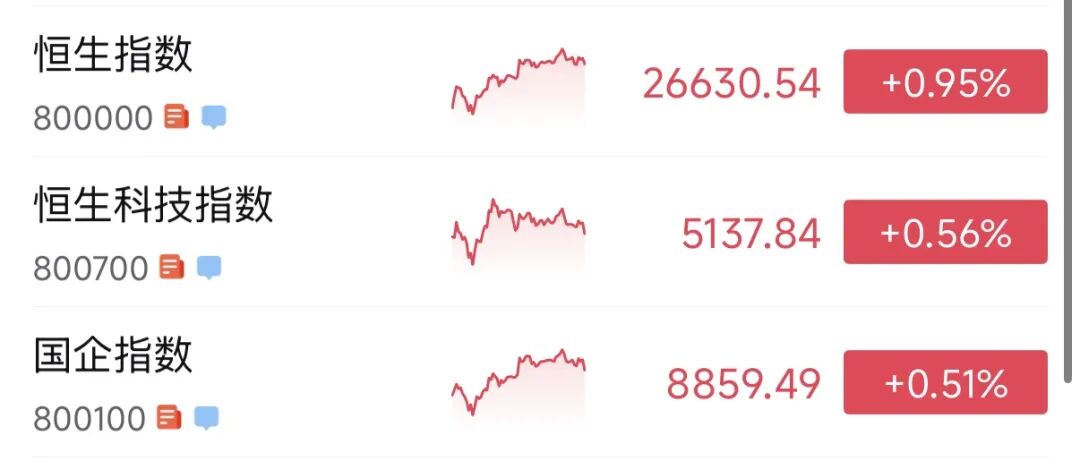
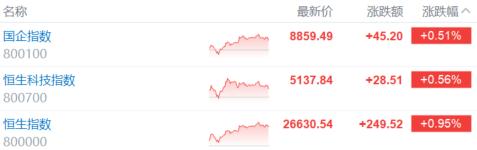
2月27日,港股三大指数止跌回暖,恒指涨0.95%报26630点,国指、恒科指数分别上涨0.51%及0.56%。 | 名称 | | 最新价 | 涨跌额 涨跌幅 ^ | | --- | --- | --- | --- | | 国企指数 | a profit | 8859.49 | +45.20 +0.51% | | 800100 | | | | | 恒生科技指数 | monutin | 5137.84 | +28.51 +0.56% | | 800700 | | | | | 恒生指数 | | 26630.54 | +249.52 +0.95% | | 800000 | ਲ | | | 具体盘面上,昨日领衔大市下跌的权重科技股、大金融股多数反弹上涨,煤炭股午后涨幅进一步加大,生物医药股、钢铁股、电力股、石油股、电信股、影 视股多数表现活跃。航空股全天低迷,三大航空股领跌;半导体存储概念股部分表现弱势,电力设备股下跌,军工股、苹果概念股、建材水泥股普跌。 | 行业热力图 × | 领涨板块 | | | | | | | | | | --- | --- | --- | --- | --- | --- | --- | -- ...


价值投资迷思:你以为市场是条温顺的狗?它疯起来能把你掀翻
Sou Hu Cai Jing· 2026-02-27 08:47
Market Performance - The Shanghai Composite Index rose by 0.39%, while the Shenzhen Component Index slightly declined by 0.06%, and the ChiNext Index fell by 1.04% [1] - The total trading volume in the two markets was 2.51 trillion, showing a slight decrease compared to the previous day [1] - The Hong Kong market performed well, with the Hang Seng Index increasing by 0.95% and the Hang Seng Tech Index rising by 0.56% [1] Sector Performance - There was significant divergence among sectors, with cyclical stocks experiencing a strong rally: steel rose by 3.37%, coal by 3.2%, and non-ferrous metals by 3.1% [1] - Small metals and rare earth permanent magnets saw a surge, with multiple stocks hitting the daily limit [1] - The power sector was also active, with several stocks reaching the daily limit [1] - Conversely, computing hardware stocks faced pressure, with CPO and PCB sectors showing notable declines [1] Investment Trends - Funds are shifting from high-growth sectors to undervalued cyclical sectors, indicating a clear style switch in the market [1]
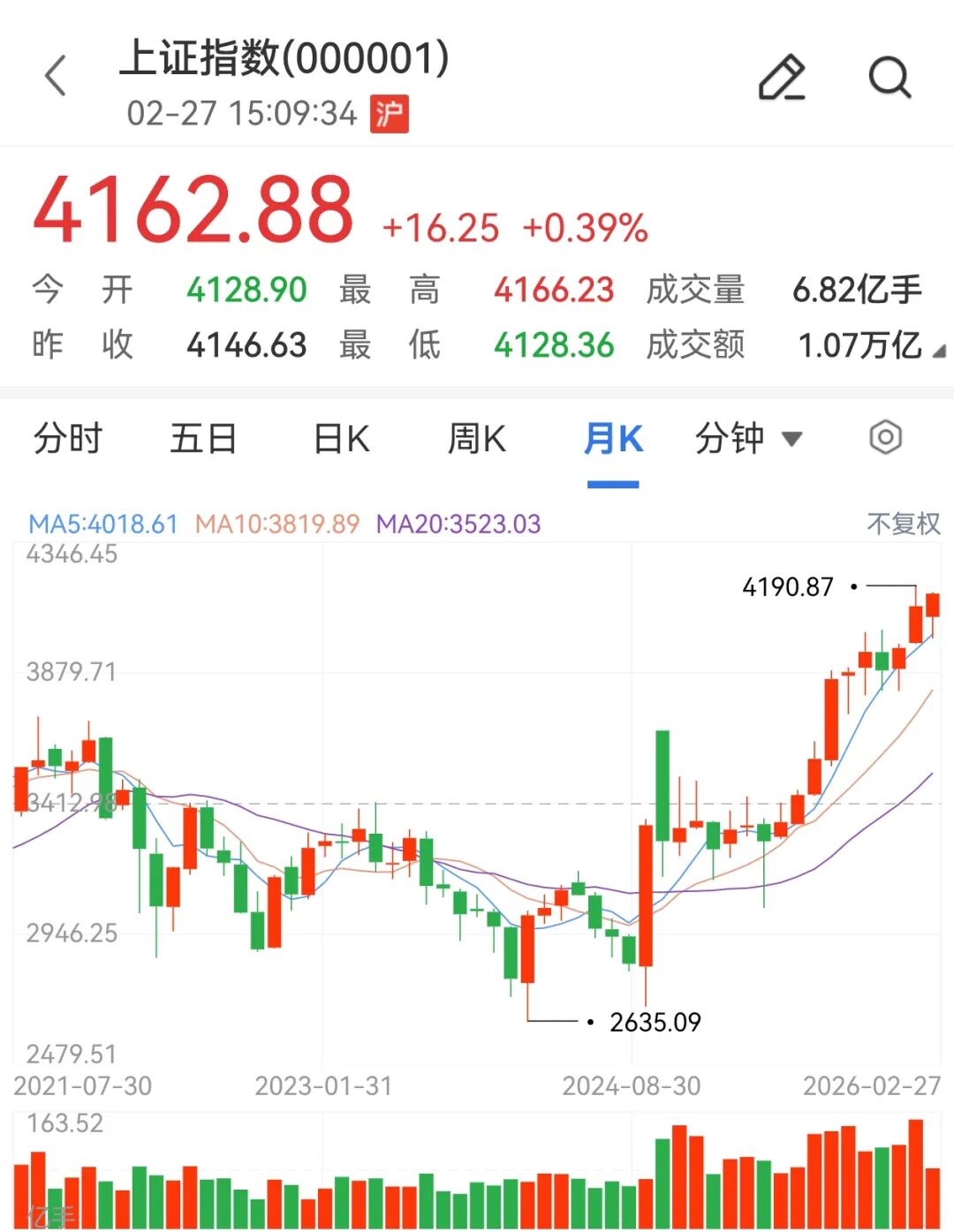
沪指月线3连阳
2 1 Shi Ji Jing Ji Bao Dao· 2026-02-27 08:37
Group 1 - The Shanghai Composite Index has increased by 1.09% this month, showing a "high after low fluctuation" trend, achieving three consecutive monthly gains [1] - The Shenzhen Component Index has risen by 2.04%, while the ChiNext Index has decreased by 1.08% [1] - Daily trading volume exceeding 1 trillion yuan has become a norm, with the market remaining active post-Spring Festival, as both Shanghai and Shenzhen stock exchanges recorded over 2 trillion yuan in trading volume for four consecutive trading days [1] Group 2 - The chemical and non-ferrous metal sectors have shown significant performance due to price increase catalysts, with notable stocks like Vine Chemical rising over 32% and Jinzhengda increasing by over 58% [1] - The glass fiber sector has been active, with International Composite Materials rising over 60% this month [1] - The tungsten concept stocks have seen substantial gains, with Zhangyuan Tungsten increasing by 78% this month, while rare earth stocks like Shenghe Resources have reached historical highs [1] - The dual concept stocks of computing power and electricity, such as YN Holdings, have surged by 115%, ranking first in monthly gains [1]