
房地产

Search documents
港股收评:恒指涨1.76%重回二万七关口,科技逾金融普涨,AI应用概念股大幅拉升
Ge Long Hui· 2026-02-09 08:25
Core Viewpoint - The Hong Kong stock market experienced a collective rise, with the Hang Seng Index increasing by 1.76% to surpass the 27,000-point mark, driven by positive market sentiment following a significant rise in US stocks and a rebound in commodities like gold and silver [1] Group 1: Market Performance - The Hang Seng Index rose by 1.76%, while the Hang Seng China Enterprises Index and the Hang Seng Tech Index increased by 1.52% and 1.34%, respectively [1] - Major technology and financial stocks were active, contributing to the market's upward movement, with Baidu rising approximately 4% and China Ping An leading insurance stocks with a nearly 5% increase [1] Group 2: Sector Highlights - AI application stocks surged, with Zhizhu Technology soaring over 40% to reach a new high following Elon Musk's statement about AI deployment in space [1] - Gold stocks led a rally in the metals sector, with a focus on opportunities in non-ferrous metals as indicated by Guotai Junan [1] - Other sectors such as semiconductors, wind power, heavy machinery, gambling, coal, dining, and domestic real estate stocks also saw gains [1] Group 3: Underperforming Stocks - The three major telecom operators faced pressure, with China Telecom declining nearly 3% [1] - Several beverage stocks that had risen previously experienced declines, and the oil prices showed volatility amid renewed US-Iran negotiations, affecting the three major oil companies [1] - Lanke Technology saw a significant increase of nearly 64% on its first trading day [1]

每日报告精选(2026-02-06 09:00——2026-02-09 15:00)-20260209
GUOTAI HAITONG SECURITIES· 2026-02-09 08:23
Group 1: Macro Overview - The macroeconomic environment shows a continuation of the "Spring Festival effect," with consumer demand recovering but still needing stabilization [5][6] - Investment indicators are showing a marginal decline due to the approaching holiday, but real estate sales and land premiums are improving, likely influenced by seasonal factors and policy support [6] - External demand is mixed, with manufacturing sentiment in the US and Europe improving, while export freight rates are declining [6][8] Group 2: Strategy Insights - The report emphasizes maintaining stock positions during the holiday, despite recent market volatility and pessimism [10][11] - The Chinese government is shifting focus towards domestic demand, which is expected to enhance economic prospects and asset returns [11][12] - The report suggests that the current market conditions present a good opportunity for increasing holdings, particularly in sectors benefiting from domestic consumption [11][12] Group 3: Industry Analysis - The restaurant industry is experiencing a slowdown in price wars, with new subsidies expected to boost sales during the Spring Festival [25][26] - The steel industry is facing a seasonal inventory increase, but overall stock levels remain historically low, indicating potential for recovery [28][29] - The non-ferrous metals sector is advised to focus on stabilization opportunities, with copper prices showing resilience despite macroeconomic pressures [32][34] Group 4: Investment Recommendations - In the restaurant sector, companies like Gu Ming and Mi Xue Group are recommended due to ongoing subsidies and improved competitive dynamics [25][26] - For the steel industry, companies with strong product structures and cost advantages, such as Baosteel and Hualing Steel, are highlighted as key investment opportunities [30] - In the non-ferrous metals sector, firms like Zijin Mining and Huayou Cobalt are suggested due to their strategic positioning and market conditions [34][35]
视频|中信建投:穿越之姿,平衡之道——再论房地产新发展模式
Xin Lang Cai Jing· 2026-02-09 07:26
Group 1 - The article emphasizes the authority, professionalism, timeliness, and comprehensiveness of the Jin Qilin analyst reports, which assist in uncovering potential thematic investment opportunities [1][2]. Group 2 - The source of the information is from CITIC Securities Research, indicating a focus on providing valuable insights for investors [1][2].

专访摩根大通刘鸣镝:反内卷催生上行行情,流动性追随可持续业绩
2 1 Shi Ji Jing Ji Bao Dao· 2026-02-09 07:08
Core Viewpoint - The A-share market is at a critical turning point entering 2026, transitioning from a valuation recovery phase to a profit-driven new cycle, supported by policy efforts, improved corporate earnings expectations, and increased household savings entering the market [1] Market Outlook - If the "anti-involution" measures yield substantial results, a "slow bull" market is expected in 2026, driven by continuous improvement in corporate profitability, which will support sustainable asset returns and valuations [1] - The target for the CSI 300 index in 2026 is set at 5200 points, with a core logic based on expected earnings growth of 15% year-on-year [3] Sector Focus - Key sectors of interest include real estate, materials, and information technology (IT). A stronger stabilization signal in real estate, particularly in first-tier cities, could surprise the market positively [2][3] - The materials sector is closely tied to global macroeconomic trends, with a focus on precious metals outside the dollar and important metals related to new energy [4] - The IT sector is viewed with caution due to high current valuations and elevated expectations for Q4 2025, suggesting a need for a correction before new investment opportunities arise [5] Profitability and Investment Strategy - The "anti-involution" theme is expected to create long-term opportunities, particularly in the solar and battery sectors, as companies focus on core business quality and stable pricing [6] - The current profit margins in the Chinese market are the lowest in the Asia-Pacific region, with potential for significant returns if industry concentration improves [7] Consumer Sector Insights - The upcoming Chinese New Year is seen as an important window for observing consumer trends, with a focus on the Consumer Price Index (CPI) and the food and beverage sector, which is expected to benefit from a shift towards healthier food options [7][8] Foreign Capital Flow - The return of foreign capital is expected to be gradual and structurally differentiated, with passive funds actively participating while active funds remain underweight in China [9] - The low allocation of international funds, particularly those excluding the U.S., is expected to correct as they gain a better understanding of Chinese assets through their experience with similar sectors in the U.S. [9] Hong Kong Market Outlook - The Hong Kong market is anticipated to perform well in 2026, with a target for the MSCI China index set at 100, indicating significant upside potential [10][11] - The average earnings revision for Hong Kong stocks since May 2025 has approached 40%, marking the best performance since 2020 [11]
韩央行行长候选人称支持提高房地产税以遏制通胀
Xin Lang Cai Jing· 2026-02-09 06:42
Group 1 - The next potential governor of the Bank of Korea, Lee Seung-hun, advocates for increasing property holding taxes to curb soaring housing prices that could trigger inflation, but he believes it is too early to shift towards a more aggressive monetary tightening policy [1][5] - Lee Seung-hun, previously the senior deputy governor, is seen as a candidate to succeed the current governor, Lee Chang-yong, whose four-year term ends on April 20 [1][5] - He emphasizes the need for stricter government measures on the real estate market to prevent rising housing prices from exacerbating inflation and hindering middle-class families from purchasing homes [1][5] Group 2 - Lee Seung-hun's support for increasing property taxes aligns with President Yoon Suk-yeol's stance, who has urged owners of multiple properties to sell before the government raises property taxes [2][6] - He believes the current exchange rate of the Korean won is reasonable, with the rate against the US dollar at approximately 1465.30, suggesting a fair range between 1400 and 1470 [3][7] - He notes that while the exchange rate may briefly exceed 1500, such a level is unlikely to be sustainable [4][8]
大宗商品波动明显上升,节前注意风险防控
Guo Mao Qi Huo· 2026-02-09 06:29
Report Industry Investment Rating - Not provided in the report Core Viewpoints - Commodity price volatility has significantly increased, and risk prevention and control should be emphasized before the Spring Festival. The sharp decline in precious metals has triggered market panic and dragged down the overall commodity trend. The short - term event is a catalyst for the adjustment of over - bought or over - sold assets, but long - term de - leveraging or interest rate cuts have not been priced in. In the long run, the macro - environment is still favorable for physical assets, and the fundamental situation of precious metals and some metal varieties remains unchanged. However, due to the complex geopolitical environment and approaching Spring Festival, investors are advised to pay attention to risk prevention [3]. Summary by Directory Part One: Main Views - **Macro - situation**: This week, domestic commodities weakened significantly, with industrial products and agricultural products falling. Precious metals tumbled under the impact of the expectation of a hawkish Fed chairman, dragging down non - ferrous metals and overall commodity sentiment. The US manufacturing PMI rebounded sharply, but the sustainability of demand improvement needs to be observed. The eurozone's CPI continued to decline, and the ECB is expected to keep interest rates unchanged. Geopolitical risks between the US and Iran have increased, driving up international oil prices. In China, policies to promote consumption during the Spring Festival have been introduced, and the central bank's credit policy has shifted to support high - quality development [3]. - **Commodity views**: Commodity price volatility has increased significantly. The sharp decline in precious metals was mainly due to profit - taking after over - heating in the early stage, and the increase in margin requirements exacerbated the decline. In the short term, the market needs to digest policy uncertainties and de - leveraging pressure, and volatility may continue. In the long term, the macro - environment is still favorable for physical assets [3]. Part Two: Overseas Situation Analysis - **US**: The January ISM manufacturing PMI far exceeded expectations, indicating that the manufacturing industry is emerging from the contraction. However, the ADP employment data was disappointing, and the employment situation remains sluggish, increasing the urgency of further interest rate cuts [5][8]. - **Eurozone**: The January CPI dropped to 1.7%, the lowest since September 2024. The ECB is expected to keep the key interest rate unchanged at 2%. Inflation shows significant regional and industry differentiation, and there are still potential price pressures [11]. - **Geopolitical**: Tensions between the US and Iran have escalated, with military confrontations in the Gulf region. The location and form of the nuclear talks have changed, and the risk of misjudgment has increased. Geopolitical risks have driven up oil prices, and the outcome of the talks will affect the energy market and financial markets [14]. - **Precious metals**: International gold and silver prices continued to plummet. The main reasons were the change in macro - policy expectations and the imbalance in the market trading structure. The increase in margin requirements exacerbated the decline. In the short term, volatility may continue, but in the long term, the fundamentals of precious metals remain supported [17]. Part Three: Domestic Situation Analysis - **"Happy Shopping for Spring Festival"**: The "2026 'Happy Shopping for Spring Festival' Special Activity Plan" focuses on creating a consumption ecosystem, with measures such as rewarding invoices, promoting trade - in, and providing financial support. 62.5 billion yuan in trade - in super - debt has been allocated to support holiday consumption [21]. - **2026 Credit Work Conference**: The central bank's credit policy has shifted to support long - term high - quality development, emphasizing stable growth in total volume, structural optimization, risk prevention, and coordinated efficiency. The policy aims to promote the stable and effective release of credit [22]. - **Policy - end**: The 2026 Central No. 1 Document focuses on agricultural and rural modernization, with changes in strategic positioning, poverty - alleviation mechanisms, and policy goals. The "Long - term Asset Input Tax Deduction Interim Measures" refines the VAT system, promoting economic high - quality development [24][25]. Part Four: High - Frequency Data Tracking - **Production end**: Chemical production load decreased slightly, with most product prices rising. Steel production increased slightly, but demand declined, and inventory continued to accumulate [32]. - **Demand end**: Real estate sales decreased week - on - week, and passenger car retail sales decreased year - on - year [39]. - **Price trends**: Most food prices fell this week, including vegetables, pork, and fruits [40].
地产板块活跃,房地产ETF华夏(515060)涨近3%
Mei Ri Jing Ji Xin Wen· 2026-02-09 06:14
Core Viewpoint - The A-share market shows a positive trend with all three major indices rising, indicating a potential recovery in the real estate sector as the most challenging period may be coming to an end [1] Market Performance - The Shanghai Composite Index increased by 1.02%, the Shenzhen Component Index rose by 1.56%, and the ChiNext Index gained 2.04% [1] - The real estate ETF, Huaxia (515060), saw a rise of 2.98%, with the latest price at 0.761 yuan and an intraday turnover rate of 3.17% [1] Leading Stocks - Key stocks in the real estate sector performed strongly, with Shahe Co. leading at a 9.99% increase, followed by Jindi Group at 9.94%, Huafa Co. at 5.86%, Vanke A at 5.41%, and Yingxin Development at 5.30% [1] Industry Outlook - According to Shenwan Hongyuan Securities, the real estate sector's performance remains under pressure, but the most difficult times may be gradually passing, maintaining a "positive" rating [1] - After a deep adjustment in China's real estate market, the industry fundamentals are expected to approach a bottom, supported by recent central government efforts to stabilize the market [1] - The central media's emphasis on the financial attributes of real estate and the need for comprehensive policy support indicates a more positive policy tone [1] Supply-Side Dynamics - The deep clearing of supply-side issues in the real estate sector has significantly optimized the industry landscape, suggesting that the profitability of quality real estate companies will recover earlier and be more resilient [1] - The current allocation in the sector has reached historical lows, with some quality companies' price-to-book (PB) ratios or absolute market values at historical low levels, making the sector attractive for investment [1]
2026年展望:宏观经济、股票、基金、住房抵押贷款支持证券、商业抵押贷款支持证券及循环贷款工具的洞察分析
Refinitiv路孚特· 2026-02-09 06:03
Macro Perspective - Despite global risks such as geopolitical tensions and potential economic recession, the severity of these risks is expected to be relatively low by 2026. Traditional valuation metrics show no strong evidence of bubbles in credit and equity markets [3][4] - Global financial conditions have steadily improved since the tariff increases in April 2025, with central banks indicating they do not intend to reduce balance sheets to pre-crisis levels, which helps mitigate financial stability risks [3] - Inflation remains above some central banks' targets, but there is little evidence suggesting a return to high inflation. If unemployment rises quickly in 2026, the Federal Reserve has room for further easing [3][4] Equity Market Outlook - The fundamentals for equities remain strong, supported by robust earnings performance, near-historical profit margins, and strong consumer demand. The "Magnificent-7" companies are expected to expand their earnings further [4][6] - The key risk in the equity market is investor patience regarding returns from artificial intelligence investments, as current valuations are close to levels seen during the internet bubble [6][7] Retail Consumer Sector - The LSEG retail/restaurant index predicts moderate growth in 2025, with revenue expected to increase by 5.9% and earnings by 4.6%, driven by strong consumer demand. Growth momentum is expected to accelerate in 2026, with earnings projected to grow by 10.9% and revenue by 5.8% [9] Fund Flows - In 2025, U.S. dollar money market funds dominated fund flows, driven by high interest rates from the Federal Reserve, maintaining yields above 4% to 5%. This attracted both U.S. and non-U.S. investors [12] - Exchange-traded funds (ETFs) led stock market inflows, totaling $502 billion, while U.S. equity funds saw a significant drop in inflows compared to the previous year [12] Agency Mortgage-Backed Securities (MBS) - The agency MBS market is expected to remain stable in 2026 due to steady issuance, moderate home price growth, and potential declines in mortgage rates. Recent policy measures may impact affordability and liquidity, but their effects remain uncertain [15] - The non-agency MBS market had a strong year in 2025, with issuance up 42% from 2024, driven by increased demand in the non-qualified mortgage sector [17][18] Commercial Mortgage-Backed Securities (CMBS) - The institutional CMBS market performed strongly in 2025, with issuance up over 34%, supported by lower interest rates and a favorable financing environment. However, the multifamily sector showed signs of weakness with rising vacancy rates [20] - The non-institutional CMBS market achieved record issuance levels despite complex macroeconomic conditions, indicating a recovery in commercial real estate fundamentals [21]


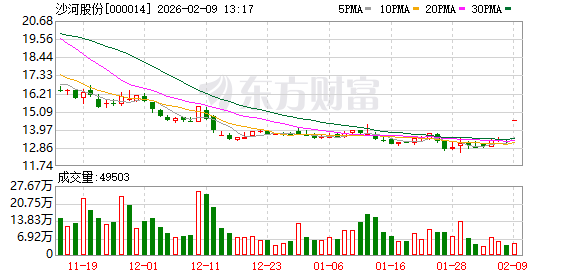
老牌房企沙河股份“一字”涨停,拟跨界进军科技赛道
Nan Fang Du Shi Bao· 2026-02-09 05:16
Core Viewpoint - The strategic transformation of Shahe Co., Ltd. has taken a significant step with the announcement of a major asset acquisition, aiming to diversify its business beyond real estate into advanced manufacturing [2][3]. Group 1: Transaction Details - Shahe Co., Ltd. plans to acquire 70% of Shenzhen Jinghua Display Electronics Co., Ltd. for 274 million yuan in cash, marking a major asset restructuring and related party transaction [2][3]. - The acquisition will introduce smart display controllers and LCD display devices to Shahe's business portfolio, shifting from a solely real estate focus [3][6]. - Jinghua Electronics is recognized as a national-level "little giant" enterprise, with an assessed value increase of 40.58% for the acquisition [3][8]. Group 2: Financial Impact - The transaction is expected to enhance Shahe's profitability, with projected increases in total assets, net profit, and earnings per share post-acquisition [6]. - Financial data indicates that Shahe's earnings per share will rise from 0.07 yuan to 0.14 yuan after the acquisition [6][7]. - As of September 30, 2025, Shahe's cash reserves stood at 510 million yuan, with a debt-to-asset ratio of 29.14%, providing a solid financial foundation for the acquisition [5]. Group 3: Strategic Context - The acquisition reflects Shahe's urgent need for new growth avenues amid declining performance in its core real estate business, with a projected net profit loss of 13.6 million to 15.6 million yuan for 2025 [5][6]. - The transaction is part of a broader trend of resource optimization and transformation within the Shenzhen state-owned enterprise system, aiming to revitalize traditional industries [10][11]. - This move aligns with national policies promoting mergers and acquisitions to enhance the quality of listed companies and support strategic emerging industries [11].
每日投资策略-20260209
Zhao Yin Guo Ji· 2026-02-09 04:41
Macro Commentary - The report indicates a slowdown in China's economic growth in Q1, but improvements in deflation are noted, with policymakers signaling a focus on stabilizing real estate, promoting consumption, and countering "involution" [2] - The US economy is expected to rebound, with rental inflation declining, offsetting a rise in commodity inflation, leading to a stable dollar liquidity environment [2] - The report anticipates only one interest rate cut by the Federal Reserve in June this year, with a potential for a spring rebound in the stock market [2] Internet Sector - In January, high beta stocks benefitting from event-driven catalysts significantly outperformed the industry, aided by improved market risk appetite and liquidity [2] - Major Chinese internet companies are increasing market spending on AI applications targeting end-users, with 2026 identified as a critical year for capturing user engagement in the AI era [2] Stock Market Performance - The Hang Seng Index closed at 26,560, down 1.21% for the day but up 3.63% year-to-date, while the US markets showed a rebound with the Dow Jones up 2.47% [2] - The report highlights the performance of various indices, with the Hang Seng Financial Index down 1.89% and the Hang Seng Property Index up 17.49% year-to-date [3] Investment Strategy - A "barbell" investment strategy is recommended, focusing on companies with certain profit growth and those benefiting from AI [5] - Specific stocks to watch include Tencent, Alibaba, and Kuaishou for their AI-driven growth potential, and NetEase and Trip.com for their stable earnings visibility [5] Software and IT Services - The report expresses optimism for the software sector, expecting revenue growth to support valuations, while cautioning about the competitive pressures from AI model vendors [6] - Recommended stocks include Palo Alto Networks in the US and Kingdee in China, which are expected to benefit from AI-related revenue growth [6] Semiconductor Industry - The semiconductor sector is viewed positively, driven by AI demand, with structural shortages in memory products like HBM and server DRAM [7] - Recommended stocks include Zhongji Xuchuang and Northern Huachuang, which are expected to benefit from the ongoing demand for computing power [7] Technology Sector - The report anticipates a continued high demand for AI computing infrastructure and innovations in consumer electronics, with specific recommendations for companies like Luxshare Precision and BYD Electronics [8] Consumer Sector - The Hang Seng Consumer Index has risen 8% year-to-date, driven by high elasticity in discretionary consumption sectors [9] - The report highlights the potential for increased consumer spending during the Spring Festival, supported by government policies aimed at boosting consumption [10] Automotive Sector - January saw a slowdown in automotive sales, particularly in the new energy vehicle segment, but a recovery is expected post-Spring Festival [11] - Recommended stocks include Geely for its expanding new energy vehicle matrix and Xpeng for its potential to turn profitable [11] Pharmaceutical Sector - The report emphasizes the long-term trend of innovative drugs going global, with a focus on clinical progress and data validation for drugs already in international markets [12] - Recommended stocks include Innovent Biologics and CanSino Biologics, which are expected to benefit from the ongoing trend of drug commercialization [12] Capital Goods Sector - The report notes a positive outlook for the capital goods sector, particularly in construction machinery, driven by rising metal prices and increased mining capital expenditures [21] - Recommended stocks include SANY Heavy Industry and Zoomlion, which are expected to benefit from the ongoing demand for construction equipment [21] Real Estate and Property Management - The real estate sector is optimistic due to favorable policies, with the Hang Seng Property Index rising 15% year-to-date [19] - Recommended stocks include China Jinmao and Greentown China, which have shown significant price increases [19]