
宠物

Search documents
“它经济”成消费增长新引擎
Zheng Quan Shi Bao Wang· 2025-06-27 04:23
Group 1 - The core viewpoint of the report is that the Chinese pet industry is experiencing significant growth, with a market size projected to reach 811.4 billion yuan by 2025, reflecting a compound annual growth rate of 25.4% from 2015 to 2023 [1] - The increase in market size is driven by the rising number of pets, which is expected to reach 430 million by 2024 and 570 million by 2029, indicating a growing demand for pet-related products and services [1] - The development of the pet economy is closely linked to the improvement in residents' consumption levels, as emotional needs for companionship and comfort drive spending in this sector [1] Group 2 - The younger generation, particularly those born in the 1990s and 2000s, constitutes over 60% of pet owners, focusing on quality and personalized pet products, which is leading to an upgrade in pet consumption concepts [2] - Social media is reshaping the decision-making process for pet owners, who are increasingly valuing brand image and values over technical details, with word-of-mouth and professional recommendations playing a crucial role [2] - The restructuring of supply chains and the acceleration of domestic product substitution are becoming the dual engines driving the development of the pet industry, with Chinese companies expanding globally and domestic high-end products improving in quality [2]
精准服务 宝龙三张表单破解“邻企不相识”
Nan Fang Du Shi Bao· 2025-06-26 23:12
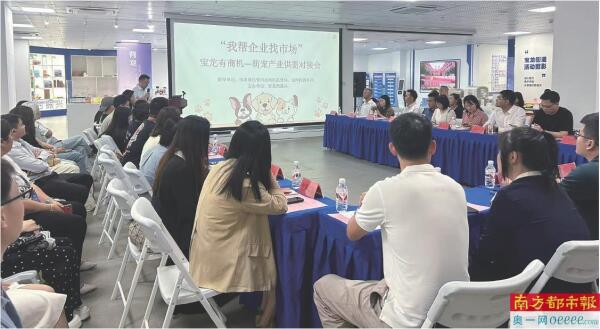
Group 1 - Shenzhen Yuhe Sen Technology Co., Ltd. is a high-tech enterprise known for its modular general mobile robot platform products, and it secured a cooperation agreement worth over 10 million yuan in 2024, aided by local government support [2] - The Bao Long Street has over 28,000 registered businesses, with more than 3,500 industrial enterprises, prompting the need for a more precise enterprise service model [2] - Bao Long Street has established an industrial ecosystem by creating a comprehensive industrial image based on the city's "20+8" industrial directory, enhancing the accuracy of enterprise services [2] Group 2 - Bao Long Street has developed three forms to deeply understand enterprises, mapping out their industrial chains and product advantages, resulting in a clearer picture of the business landscape [3] - The street has categorized and documented over 490 enterprises within thirteen industrial chains, including smart connected vehicles and biomedicine, creating a "family tree" of industries [3] - A "thinking map" for enterprises has been created, detailing everything from product advantages to market positioning, with 85 key enterprises already mapped [3] Group 3 - A product catalog has been developed, showcasing 340 high-quality products from various enterprises, serving as a platform for product display and potential collaboration [4] - Bao Long Street's enterprise services have become more effective through targeted activities, policy support, and the creation of application scenarios [5] - Recent events, such as a pet industry supply-demand matchmaking meeting, have been organized based on industry relevance, leading to fruitful collaborations among participating enterprises [6] Group 4 - "Scene innovation" has become a key focus in enterprise services, with Bao Long Street successfully supporting companies like Shenzhen Yuguang New Materials Co., Ltd. in showcasing innovative products [7] - The collaboration between government and enterprises has been strengthened, with Bao Long Street being recognized as a valuable resource for businesses [7]

智享消费,潮启未来!2025价值消费新势力盛典27日举行
Nan Fang Du Shi Bao· 2025-06-26 08:39
当一只LABUBU 3.0玩偶成为全球年轻人疯抢的"社交货币",背后正是情绪经济的强势崛起。从潮玩盲 盒到电子宠物,从疗愈经济到户外运动,为情绪买单已成为年轻一代的核心消费逻辑——而这股浪潮正 打开消费新空间。 今年政府工作报告将"提振消费"列为核心任务,情绪经济正在成为经济新引擎。淘宝天猫618战报显 示:453个品牌成交破亿,潮玩、宠物、运动三大情绪消费赛道集体爆发,超2400家潮玩店铺增速超 100%,印证情绪价值的巨大商业势能。 好物风向标:现场将揭晓2025"消费大赏好物"榜单及价值消费创新品牌。 "情不知所起,一往而深"!读懂年轻人的情绪,就是抓住消费的未来。6月27日,一起破解情绪经济高 质量发展的密码! 直播链接戳下方: https://m.mp.oeeee.com/live/8068_fccfe222078cfa98.html 统筹:陈养凯 采写:南都·湾财社记者 黄驰波 制图/海报设计:张博 为深度解析情绪消费的群体画像、行为逻辑与产业影响,5月24日至6月6日,南方都市报湾财社发起超4 万人次参与的《情绪经济消费认知度调查》,同期南都还发起"寻找价值消费新势力"专题调研,揭示Z 世代"为 ...

深圳:举办汽车展、家居展、宠物展、动漫展等 鼓励参展企业首发产品或服务
news flash· 2025-06-25 11:21
Core Viewpoint - Shenzhen is promoting a new consumption model by hosting various exhibitions to encourage companies to launch new products or services [1] Group 1: Policy Initiatives - The Shenzhen government has issued measures to enhance high-quality service consumption [1] - The initiative aims to create a new pattern of "exhibition-driven consumption" [1] - Support will be provided for professional exhibition organizations and related upstream and downstream enterprises [1] Group 2: Types of Exhibitions - Various exhibitions such as automotive, home furnishings, pet shows, and anime conventions will be organized [1] - Companies are encouraged to debut their products or services at these exhibitions [1] Group 3: Economic Impact - The initiative aims to leverage existing exhibitions like the Cultural Expo, Gift Fair, and Furniture Fair to stimulate consumption in dining, accommodation, travel, entertainment, and shopping [1] - The exploration of a "ticket+" model is intended to enhance the economic impact of these events [1] Group 4: International Engagement - Active participation in international events like the China International Import Expo and the China International Fair for Trade in Services is encouraged [1] - The goal is to attract more international renowned enterprises for investment and service industry establishment in Shenzhen [1]
财通资管林伟:新消费的“新”,藏在单品爆发逻辑里
中国基金报· 2025-06-25 11:14
Core Viewpoint - The article discusses the resurgence of new consumption trends in the market, highlighting investment opportunities in sectors such as electric two-wheelers, pet economy, and personal care products, driven by changing consumer preferences and product innovation [2][4]. Group 1: Definition and Characteristics of New Consumption - New consumption is defined as investment opportunities driven by product or channel innovation, moving away from traditional reliance on cyclical factors like real estate and liquor sales [5]. - The focus of new consumption is on personalized consumer needs, such as emotional and self-satisfying consumption, which have gained traction among younger demographics [5][10]. - The resurgence of new consumption is attributed to a shift in market perception, where previously overlooked sectors are now receiving attention due to their potential for growth [6][7]. Group 2: Market Dynamics and Investment Strategies - The current consumption market is characterized by a recovery from previous underperformance, with funds reallocating towards consumer stocks that are product-driven [7][8]. - Investment strategies have shifted from top-down cyclical analysis to a more granular bottom-up approach, focusing on individual product performance and innovation [9][17]. - The article emphasizes the importance of product iteration and consumer engagement as key factors for maintaining competitive advantage in the new consumption landscape [11][15]. Group 3: Emerging Trends and Opportunities - Key emerging trends include the rise of niche markets such as health supplements, beauty products, and innovative consumer goods, which are expected to continue growing [15][18]. - The article notes that traditional sectors like food and beverage still hold potential, particularly through structural changes and new product introductions [16]. - The investment landscape is evolving, with a focus on identifying high-growth single products that can deliver substantial returns, reflecting a shift in consumer behavior towards quality and innovation [18][19].

家电&可选消费 本轮618数据与趋势探讨
2025-06-24 15:30
Summary of Key Points from the Conference Call Industry Overview - The conference call discusses the performance of the home appliance and consumer discretionary sectors during the 2025 618 shopping festival, highlighting a strong overall performance with a sales increase of 18.5% year-on-year, reaching 587.5 billion yuan, the best in three years, driven by national subsidy policies and improved macro consumption environment [1][2][3]. Key Insights and Arguments - **Sales Performance**: The sales amount concentrated in the 2,000 to 5,000 yuan range, up from 1,000 to 2,000 yuan last year, indicating an increase in consumer willingness to purchase higher-priced items due to national subsidies [1][4]. - **Consumer Behavior**: Consumers are increasingly purchasing high-priced items, with a slight decline in average transaction value but an overall increase in total consumption [1][4]. - **Brand Strategies**: Home appliance brands are demanding higher profit margins, with a focus on product experience and a rigorous selection strategy that includes high-traffic and high-rated products [1][6]. - **Pet Industry Growth**: The pet industry saw a 32% year-on-year growth, with Royal brand leading in sales and growth rate at 35%, capturing approximately 25%-27% market share [1][7][8][10]. Detailed Performance by Category - **Home Appliances**: - Overall sales reached 1,509 billion yuan, with a year-on-year growth of 17.2% [12]. - Major categories like air conditioners, washing machines, and televisions showed strong growth rates of 23%, 19%, and 24% respectively [14]. - The refrigerator category lagged with only a 12% growth [15]. - Small appliances underperformed, with a 5% decline in average transaction value and slowed sales growth [16][17]. - **Specific Brand Performance**: - Midea, Haier, and Xiaomi performed well in major appliance categories, while Casarte brand achieved a 28% growth, particularly strong on the JD platform [20]. - The vacuum cleaner category saw a 32% growth, with brands like Xiaomi and Stone showing significant increases [14][22]. Competitive Landscape - **E-commerce Dynamics**: JD.com outperformed competitors like Pinduoduo and Taobao, with a notable increase in user engagement and shopping frequency due to simplified promotional strategies and enhanced shopping experiences [3][4][5]. - **Market Trends**: The competition among e-commerce platforms intensified, with a decrease in the number of platforms used by consumers, leading to a decline in Pinduoduo's user base [3][4]. Additional Insights - **Profit Margins**: Small appliance brands saw a profit margin increase of approximately 1-1.5 percentage points, attributed to reduced competitive pressure and adjusted marketing strategies [21]. - **Future Outlook**: The home appliance market is expected to slow down in growth in the second half of 2025, but there is confidence in integrating more brands and expanding into lower-tier markets [23][24]. Conclusion - The 2025 618 shopping festival demonstrated robust growth across various sectors, particularly in home appliances and the pet industry, driven by favorable consumer sentiment and strategic brand initiatives. The competitive landscape is evolving, with JD.com maintaining a strong position against its rivals. Future growth strategies will focus on brand integration and market expansion.




消费与医药分论坛 - 新格局 新供给 2025年中期策略报告会
2025-06-24 15:30
Summary of Key Points from Conference Call Records Industry Overview - The conference call primarily discusses the **pharmaceutical industry** and its recovery driven by **policy support**, **funding inflow**, **AI technology**, and **innovation in drug development**. [1][2][4] Core Insights and Arguments 1. **Pharmaceutical Sector Recovery**: The pharmaceutical sector has shown signs of recovery, with the biopharmaceutical index outperforming the CSI 300 index, and the pharmaceutical sector increasing by **28%**. This recovery is attributed to supportive policies, funding inflow, AI technology advancements, and the international expansion of innovative drugs. [2][4] 2. **Innovative Drug Development**: In the first four months, the total amount of business development (BD) events in innovative drugs reached **$55 billion**, with upfront payments exceeding **$5 billion**, indicating strong market recognition of China's innovative drug development capabilities. [1][3][5] 3. **Investment Focus for H2 2025**: The main investment themes for the second half of 2025 include innovative drugs, AI medical technology, the silver economy, and emerging medical technologies empowered by AI, such as protein prediction. [1][4] 4. **Demographic Changes Impacting Consumption**: The decline in newborn population is weakening traditional consumption demand, while the pet economy is rapidly growing. The increasing proportion of elderly people is driving the development potential of the silver economy and health industry. [1][6] 5. **AI Technology in Pharmaceuticals**: AI technology is enhancing the pharmaceutical industry by improving research efficiency and reducing costs, particularly in protein prediction and innovative therapy development. [2][7] Additional Important Insights 1. **Clinical Data Driving Market Confidence**: The performance of innovative drug companies is expected to remain strong, with significant BD activities and impressive financial reports anticipated for the second half of 2025. [9][10] 2. **Challenges in the Pharmaceutical Supply Chain**: Hospitals face challenges in drug supply, emphasizing the need for innovative drugs to demonstrate significant clinical value and effectiveness. [18] 3. **Insurance and Policy Developments**: The introduction of commercial insurance policies is expected to stimulate the innovative drug sector positively, with ongoing adjustments to the medical insurance directory providing negotiation opportunities for companies. [11][21] 4. **Emerging Consumer Trends**: The rise of new consumer demographics, particularly among younger generations, is reshaping consumption patterns, with a notable increase in spending on pet-related products and services. [30][31] 5. **Pet Industry Growth**: The pet industry is experiencing rapid growth, with the market size reaching **300.2 billion yuan** by 2024, driven by an increase in pet ownership and spending on pet care. [53][54] This summary encapsulates the key points discussed in the conference call, highlighting the pharmaceutical industry's recovery, the impact of AI technology, demographic changes, and emerging consumer trends in the pet industry.
各大平台618宠物行业战况数据
Haitong Securities International· 2025-06-24 14:26
Investment Rating - The report does not explicitly provide an investment rating for the packaged food industry, particularly in the pet sector. Core Insights - The pet industry showed strong growth during the 618 shopping festival in 2025, with Tmall dominating the market with a share of 67%, significantly higher than its competitors [1][4][18]. - Domestic brands like Rosy Fresh, Myfoodie, and Legendsandy have emerged strongly, disrupting the traditional dominance of imported brands in the pet food market [20][22][26]. - The competition among brands is intense, with significant shifts in rankings year over year, indicating a dynamic market environment [23]. Summary by Sections Market Performance - During the 618 shopping festival, Tmall's pet live turnover increased by nearly 180% year-on-year, while JD Supermarket reported a 32% increase in pet user transactions [1][18]. - Over 1,000 new brands participated in the 618 event, showcasing the growing interest and competition in the pet food sector [1][18]. Brand Analysis - Tmall's rankings featured a balanced mix of traditional high-end foreign brands and emerging domestic brands, with Rosy Fresh securing the top position [2][19]. - JD's cat food rankings indicated a trend towards premiumization, while its dog food rankings reflected a blend of cost-effectiveness and premium options [2][19]. - The report highlighted the impressive growth of new domestic brands, with 371 brands on Tmall achieving triple-digit growth, including MEATYWAY and Toptrees [21][22]. Competitive Landscape - The competitive landscape is characterized by a shift from a single-brand dominance to a multi-brand ecosystem, with domestic brands innovating and adapting to new marketing channels [26]. - Royal Canin maintained a strong presence in the market, particularly in JD's rankings, but faced increasing competition from domestic brands [25][26]. - The report emphasizes the need for traditional brands to adapt to changing consumer preferences and digital marketing trends to maintain their market positions [26].
周期不休,成长不止
HTSC· 2025-06-24 09:58
Group 1: Pig Farming Industry - The pig prices are expected to rebound unexpectedly in the second half of 2025 due to easing supply pressure and seasonal consumption peaks, with recommendations to focus on leading companies like Muyuan and Wens [1][2] - The average price of live pigs from the beginning of 2025 to June 16 is approximately 14.81 yuan/kg, showing a year-on-year decrease of about 4% [12][14] - Major pig farming companies have seen a reduction in breeding costs, with Muyuan's cost dropping to around 12.2 yuan/kg, indicating improved profitability potential [12][14] Group 2: Aquaculture and Feed Industry - The aquaculture feed industry is expected to benefit from rising fish prices, with a notable increase in grass carp prices by approximately 10% since March 2024 [37][39] - Haida Group is highlighted for its strong competitive advantages and potential for growth in both domestic and overseas feed markets, with a projected compound annual growth rate (CAGR) of about 20% for overseas feed sales from 2025 to 2030 [38][39] - The domestic feed industry is anticipated to recover due to improved profitability in the pig farming sector and a rebound in aquaculture [37][38] Group 3: Pet Industry - The pet industry is experiencing significant growth driven by a younger demographic of pet owners, with 90s and 00s generation pet owners accounting for over 66.8% of the market by 2024 [45][47] - The average annual spending on pets in China is currently at 2419 yuan, indicating room for growth compared to international standards [46][47] - The market share of domestic pet brands is increasing, with the top five domestic brands reaching a combined market share of 13.9% in 2024, while foreign brands are declining [54][55] Group 4: Snack Retail Industry - The snack retail industry is transitioning towards a dual oligopoly structure, with leading brands like Mingming and Wancheng expected to capture significant market shares of 34% and 30% respectively by May 2025 [4][39] - The industry has substantial room for expansion, with an estimated ceiling of 67,000 stores, indicating a potential for 1.4 times current capacity [4][39] - The profitability of leading snack retail companies is projected to improve due to economies of scale and enhanced bargaining power with suppliers [4][39]


高品质消费企业出海三大方向:品牌出海、文化出海、服务出海
Nan Fang Du Shi Bao· 2025-06-24 07:24
Group 1: Industry Trends and Observations - The "2025 High-Quality Consumption Brand TOP 100" initiative aims to boost economic development and consumer confidence by focusing on nine key sectors including beauty economy, sports and outdoor, food and health, smart consumer electronics, pet economy, experience economy, interest consumption, cross-border expansion, and consumption technology [2] - The report highlights the evolution of Chinese enterprises from OEM (Original Equipment Manufacturer) to ODM (Original Design Manufacturer) and finally to OBM (Own Brand Manufacturer), indicating a shift towards self-owned brands that can command higher profit margins [5][6] - By 2025, the brandization rate for China's B2C and B2B outbound sectors is projected to reach 20%-30% and 13%-20%, respectively, reflecting a significant increase from 2022 [5] Group 2: Market Expansion Strategies - Chinese brands are increasingly focusing on global market opportunities, with a notable shift from merely pursuing sales to emphasizing long-term brand building and value transmission [6][9] - Successful case studies, such as the cleaning robot company Ecovacs, illustrate the importance of localizing products to meet diverse consumer needs across different regions [9][10] - The pet industry is highlighted as a growing sector, with exports to the EU, ASEAN, and the US showing significant growth, particularly in emerging markets where competition is less saturated [12][13] Group 3: Cultural and Service Exports - The report identifies three main directions for Chinese enterprises going abroad: brand export, cultural export, and service export, with a focus on building self-owned brands to enhance product value [15] - The cultural export of Chinese toys, particularly in the US and Southeast Asia, is gaining traction, with a growing consumer base that resonates with local culture [18][19] - Chinese food and beverage brands, such as Haidilao, are leveraging their cultural identity and operational efficiency to expand into international markets [22]

