钢铁

Search documents
钢铁行业报告:新质生产力驱动下的钢铁行业变革
Shanxi Securities· 2026-02-27 11:23
Investment Rating - The report assigns a rating of "B" to the steel industry, indicating a cautious outlook in line with market trends [1]. Core Insights - The steel industry is facing a structural mismatch between supply and demand, characterized by high production, high costs, and low profitability. The average sales profit margin for key enterprises in the industry has dropped to a historical low of 0.71% in 2024, with a slight recovery to 1.9% in 2025 [3][13]. - The demand focus is shifting from traditional construction steel to industrial steel, driven by "new quality productivity" in high-end manufacturing sectors such as new energy vehicles and advanced equipment [4][35]. - The supply side is undergoing optimization and concentration due to strict capacity control policies, with crude steel production remaining stable at 960 million to 1.07 billion tons [4][58]. Summary by Sections 1. Industry Challenges - The steel industry is experiencing a "three highs and three lows" scenario: high production, high costs, high exports, and low demand, low prices, low efficiency [3][13]. - Effective demand is insufficient while supply remains rigid due to high fixed costs and local government support for production maintenance [17][18]. 2. Demand Side Changes - Traditional demand from real estate and infrastructure is declining, with real estate value dropping from 90,397.5 billion yuan in 2021 to 83,024.3 billion yuan in 2025 [21]. - Manufacturing steel demand is increasing, with a shift in focus towards high-performance and high-value-added products [35][38]. 3. Supply Side Transformations - The industry is undergoing a structural reform driven by policies aimed at reducing capacity and optimizing production [57][58]. - The concentration of the industry is increasing, with the CR10 concentration ratio rising to approximately 43% [4][58]. 4. Future Development Directions - Companies are encouraged to adopt five differentiated paths for survival and growth: technology-driven, service extension, green leadership, overseas expansion, and resource security [5][58]. - The transition towards high-end and differentiated products is essential for companies to enhance profitability and adapt to new market demands [57][58].
策略点评:低开高走,震荡上行
Tebon Securities· 2026-02-27 11:09
Market Analysis - The A-share market opened lower but closed higher, continuing the upward trend after the Spring Festival, with the Shanghai Composite Index fluctuating between 4130 and 4170 points, ultimately closing at 4162.88, a gain of 0.39% [2] - The Shenzhen Component Index showed relative weakness, closing at 14495.09, down 0.06%, while the ChiNext Index fell 1.04% to 3310.30 [2] - Overall market sentiment was positive, with 3267 stocks rising and 2066 falling, and trading volume remained high at 2.51 trillion yuan [2] Sector Performance - Cyclical stocks led the market, with indices for non-ferrous metals, steel, and coal rising by 3.24%, 3.18%, and 3.03% respectively, while rare metals and rare earth sectors surged by 7.81% and 7.45% [5] - The technology sector faced adjustments, particularly in hardware, with indices for copper-clad laminates, semiconductor silicon wafers, and circuit boards declining by 2.51%, 2.17%, and 2.01% respectively [5] Bond Market - The government bond futures market exhibited a mixed trend, with short-term contracts generally rising and the long-term 30-year contract slightly declining [10] - The People's Bank of China conducted a 269 billion yuan reverse repurchase operation, maintaining a net injection of liquidity, which supported short-term interest rates [10] Commodity Market - The commodity index rose by 0.46%, with the Shanghai tin contract leading the market with an 8.38% increase, reaching 453,240 yuan per ton, marking the largest single-day gain in 2026 [10][12] - Platinum futures rose by 5.34% to 623.75 yuan per gram, driven by potential supply constraints from new EU sanctions on Russia [12] Investment Opportunities - Key sectors to watch include AI applications, commercial aerospace, nuclear fusion, quantum technology, brain-machine interfaces, robotics, and consumer goods, all supported by government policies and market trends [13] - The bond market is expected to react to upcoming policy announcements during the National People's Congress, particularly regarding fiscal deficit rates and real estate support policies [16]
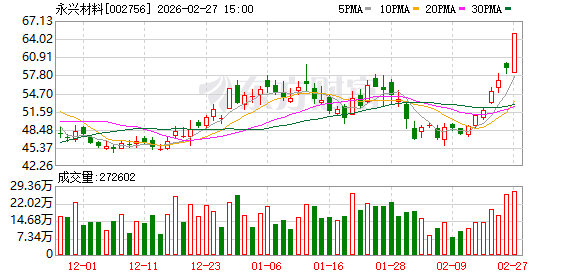
永兴材料:子公司永兴特钢的“高铝钛沉淀强化型铁镍基高温紧固件材料”在航空航天领域实现初步销售
Mei Ri Jing Ji Xin Wen· 2026-02-27 11:08
每经AI快讯,有投资者在投资者互动平台提问:高铝钛高温合金紧固件材料,目标应用于航空航天飞 行器、深海设施等极端环境。是否属实? 永兴材料(002756.SZ)2月27日在投资者互动平台表示,公司子公司永兴特钢自主研发的"高铝钛沉淀 强化型铁镍基高温紧固件材料"可应用于航空航天、汽车工业、深海设施等高端制造领域,目前在汽车 工业领域已实现批量销售,在航空航天领域实现初步销售,深海设施暂无应用实例。 (文章来源:每日经济新闻) ...


After A Tough 2025, What's Next For CLF Stock?
Forbes· 2026-02-27 11:00
Financial Performance - Cleveland-Cliffs reported fourth-quarter revenue of approximately $4.3 billion, unchanged from the same period last year, with a GAAP net loss of $235 million for the quarter and a full-year net loss of about $1.4 billion on revenues of $18.6 billion [2] - Adjusted EBITDA was only slightly positive for the year, indicating ongoing challenges in the sector despite efforts in cost discipline and efficiency [2] Market Reaction - Following the financial results, CLF shares experienced a significant sell-off in early February 2026, with stock prices dropping by as much as 15–19% after revenue fell short of analysts' expectations [3] Future Outlook - Management has projected steel shipment volumes of approximately 16.5–17.0 million net tons in 2026, suggesting potential stabilization in demand and improved pricing capture [5] - The termination of a low-margin slab supply contract is expected to positively impact earnings in 2026 [5] Strategic Developments - A prospective partnership with POSCO could enhance Cleveland-Cliffs' access to advanced coating technologies and global customers, potentially altering investor perceptions [6] - U.S. trade protections continue to support domestic producers, but fluctuations in tariffs and demand patterns indicate that this support may not be guaranteed indefinitely [6] Operational Challenges - The company faces high debt levels and stretched leverage, indicating that the balance sheet remains a work in progress despite ongoing debt reduction efforts [7] - Rising costs for utilities and raw materials could pressure profit margins if selling prices do not keep pace [7] Internal Optimism - There are early signs of internal optimism, including modest insider purchases and efforts to optimize the manufacturing footprint, suggesting alignment with a long-term turnaround strategy [8] - Anticipated improvements in automotive production and infrastructure-driven steel demand may signal a potential inflection point for CLF stock in 2026 [8] Conclusion - Cleveland-Cliffs is navigating a challenging earnings environment while actively transforming its cost structure and strategic alliances to move towards sustainable profitability [9] - The fluctuations in stock prices reflect the tension between market optimism and the reality of operational challenges, with investors closely monitoring developments in 2026 for signs of earnings growth [9]

包钢股份:不存在应披露而未披露的重大信息
Jin Rong Jie· 2026-02-27 10:59
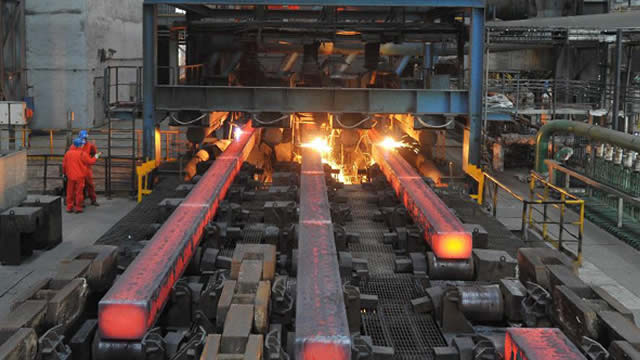
包钢股份发布异动公告,截至2026年2月27日,内蒙古包钢钢联股份有限公司股票连续三个交易日收盘 价格涨幅偏离值累计超过20%,属于《上海 证券交易所交易规则》规定的股票交易异常波动情形。公 司内部经营秩序稳定,市场环境、行业政策没有发生重大调整。截至本公告披露日,公司、控股股东均 不存在影响公司股票交易异常波动的重大事项,不存在应披露而未披露的重大信息。 ...

包钢股份:股票交易异常波动
2 1 Shi Ji Jing Ji Bao Dao· 2026-02-27 10:57
南财智讯2月27日电,包钢股份公告,公司股票于2026年2月25日、2月26日和2月27日连续三个交易日收 盘价格涨幅偏离值累计超过20%,属于《上海证券交易所交易规则》规定的股票交易异常波动情形。经 核查,公司及控股股东包头钢铁(集团)有限责任公司均不存在应披露而未披露的重大信息;公司内部 经营秩序稳定,市场环境及行业政策未发生重大调整;不存在包括重大资产重组、股份发行、上市公司 收购、债务重组、业务重组、资产剥离、资产注入等在内的重大事项;未发现对公司股价产生影响的媒 体报道、市场传闻或热点概念;公司控股股东及公司董事、高级管理人员在本次异常波动期间不存在买 卖公司股票的情形,亦未发现其他可能对公司股价产生较大影响的重大事项。 ...
300万吨钢铁项目,热试成功!
Xin Lang Cai Jing· 2026-02-27 10:38
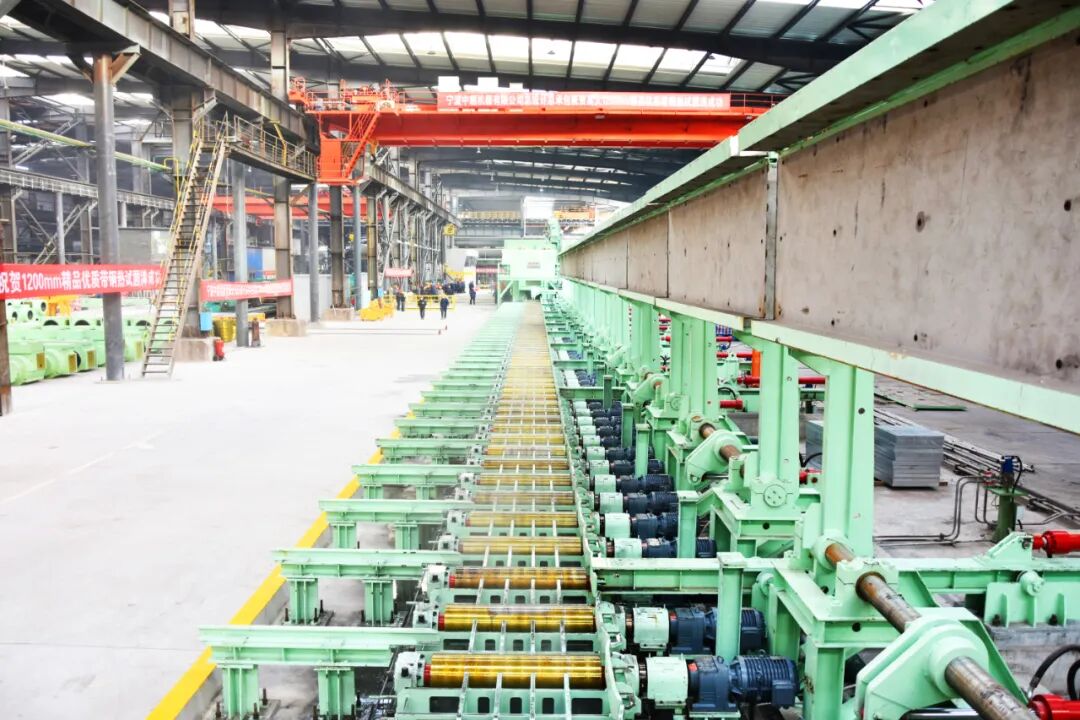
2026年2月13日,从生产一线传来振奋人心的喜讯:高义钢铁"1200mm全连轧宽带钢生产线项目"热负荷过钢一次成功!这条历经15个月匠心打造的产线取 得关键节点胜利,是公司迈向高质量发展、锻造新质生产力的坚实一步。 该项目的核心使命在于完善带钢产品规格,为客户提供高附加值的产品,从而更精准、更适配的服务下游市场。自启动以来,全体员工攻坚克难,战酷 暑、斗寒冬,以精益求精的态度确保了项目高质量按期推进。这一关键节点的顺利达成,离不开所有合作伙伴的精诚协作,更凝聚着每一位高义人的汗水 与坚守。 (董事长致辞) 据了解,山西高义钢铁有限公司年产300万吨1200mm全连轧带钢生产线项目是高义公司实现产品高端化与多样化的关键一步。它将高义公司带钢产品的 断面宽度从785mm提升至1050mm,覆盖中宽带市场,从而满足客户日益增长的差异化、高附加值需求。 来源:高义钢铁等,泰科钢铁整理编辑 2026年2月13日,从生产一线传来振奋人心的喜讯:高义钢铁"1200mm全连轧宽带钢生产线项目"热负荷过钢一次成功!这条历经15个月匠心打造的产线取 得关键节点胜利,是公司迈向高质量发展、锻造新质生产力的坚实一步。 该项目的核心 ...
【最美奋斗者】精研技术解难题——记2025年度方大劳模、技术中心喻志辉
Xin Lang Cai Jing· 2026-02-27 10:36
精研技术解难题 ——记2025年度方大劳模 方大九钢技术中心产品部主管工程师 喻志辉 在方大九钢,有一位常年与钢铁工艺、产品质量相伴的工程师,他少言笃行,以专业论文为墨,以技术攻关为笔,在钢铁生产的一线阵地默默书写着新时 代产业工人的匠心情怀与责任担当。他,就是2025年度方大劳模、技术中心产品部主管工程师喻志辉。 (来源:江西方大钢铁) (来源:江西方大钢铁) 精研技术解难题 ——记2025年度方大劳模 方大九钢技术中心产品部主管工程师 喻志辉 在方大九钢,有一位常年与钢铁工艺、产品质量相伴的工程师,他少言笃行,以专业论文为墨,以技术攻关为笔,在钢铁生产的一线阵地默默书写着新时 代产业工人的匠心情怀与责任担当。他,就是2025年度方大劳模、技术中心产品部主管工程师喻志辉。 科班出身的喻志辉,毕业于中南大学材料专业,扎实的理论功底是他的底气,而知行合一的实践能力,则让他成为公司技术突破的标杆人物。自2020年接 手板材工艺管理及品种钢生产开发工作,他长期深入生产一线,通过大量的对比试验和现场跟踪,把问题点作为攻坚点。面对板材品种开发中的诸多技术 瓶颈,他带领团队迎难而上、合力攻坚,深入研究Q345qD等桥梁钢 ...
钢材&铁矿石日报:现实格局偏弱,钢矿延续震荡-20260227
Bao Cheng Qi Huo· 2026-02-27 10:31
Report Industry Investment Rating - Not provided in the content Core Views of the Report - **Rebar**: The main contract futures price oscillated with a daily increase of 0.03%, and both trading volume and open interest decreased. In the current situation of weak supply and demand, the fundamentals of rebar are weakly stable, with continuous inventory growth and prices remaining under pressure. However, policy expectations are strengthening, and the operating logic of the steel market switches between reality and expectations. It is expected to maintain an oscillatory trend, and attention should be paid to domestic policies [5]. - **Hot-rolled Coil**: The main contract futures price trended weakly with a daily decline of 0.25%, and both trading volume and open interest decreased. Currently, the demand for hot-rolled coils has begun to recover, but its resilience needs to be monitored, and supply pressure persists. The fundamentals are weakly stable, and prices will still be under pressure. The relatively positive factor is policy expectations. It is expected to maintain an oscillatory bottom-finding trend under the game between expectations and reality, and attention should be paid to demand performance [5]. - **Iron Ore**: The main contract futures price oscillated with a daily increase of 0.27%, trading volume decreased, and open interest increased. Currently, the improvement of iron ore demand is limited, while supply has returned to a high level. The fundamentals of iron ore are relatively weak, and concerns about medium-term oversupply remain. Ore prices will still be under pressure. The relatively positive factor is the strengthening of policy expectations. It is expected to continue the low-level oscillatory trend, and attention should be paid to steel mill resumptions [5]. Summary by Relevant Catalogs Industry Dynamics - **Macro Policy**: The Political Bureau of the CPC Central Committee emphasized the implementation of more proactive fiscal policies and moderately loose monetary policies, aiming to expand domestic demand, optimize supply, and promote various aspects of economic development [7]. - **Air-conditioning Market**: In early 2026, the air-conditioning market showed a complex picture. In January, stimulated by the continuation of national subsidy policies, the retail market had a "good start" with a 12.7% year-on-year increase in retail volume and a 6.3% increase in retail sales. However, the short-term recovery was not transmitted to the production side, and the domestic sales production schedule for March only increased by 3.6% year-on-year [8]. - **Iron Ore Project**: Australian mining company Alien Metals announced significant progress in the exploration of its Pilbara iron ore projects in Western Australia. Multiple projects have great potential for iron ore formation and good exploration prospects [9]. Spot Market - **Steel Products**: The spot prices of rebar and hot-rolled coils in Shanghai, Tianjin, and the national average showed some fluctuations. The price of Tangshan steel billet was 2,910, and the price of Zhangjiagang heavy scrap was 2,160. The volume spread between hot-rolled coils and rebar was 50, and the spread between rebar and scrap was 1,020 [10]. - **Iron Ore**: The price of PB fines at Shandong ports was 747, and the price of Tangshan iron concentrate was 752. The sea freight from Australia was 9.85, and from Brazil was 23.74. The SGX swap (current month) was 99.05, and the iron ore price index (61% FE, CFR) was 99.30 [10]. Futures Market - **Rebar**: The closing price of the main contract was 3,067, with a daily increase of 0.03%. The trading volume was 595,003, a decrease of 97,921, and the open interest was 1,948,194, a decrease of 4,226 [12]. - **Hot-rolled Coil**: The closing price of the main contract was 3,215, with a daily decline of 0.25%. The trading volume was 277,047, a decrease of 43,993, and the open interest was 1,492,009, a decrease of 791 [12]. - **Iron Ore**: The closing price of the main contract was 750.5, with a daily increase of 0.27%. The trading volume was 175,649, a decrease of 14,745, and the open interest was 546,682, an increase of 6,109 [12]. Relevant Charts - **Steel Inventory**: Included charts of weekly changes and total inventory (steel mills + social inventory) for rebar and hot-rolled coils, showing inventory trends over time [14][15][20]. - **Iron Ore Inventory**: Included charts of 45-port iron ore inventory, 247 steel mill iron ore inventory, and domestic mine iron concentrate inventory, reflecting inventory levels and changes [22][23][26]. - **Steel Mill Production**: Included charts of the blast furnace operating rate, capacity utilization rate, and profitability of 247 sample steel mills, as well as the operating rate and profitability of 94 independent electric furnace steel mills, showing the production and profit status of steel mills [30][32][33]. 后市研判 - **Rebar**: Supply and demand have changed. The weekly output of rebar decreased by 5.28 tons, and inventory is at a high level. Demand is weak and the recovery has a time lag. Policy expectations are strengthening. It is expected to maintain an oscillatory trend, and attention should be paid to domestic policies [38]. - **Hot-rolled Coil**: The supply-demand pattern has changed little. The weekly output decreased slightly by 0.20 tons, and inventory is accumulating at a high level. Demand has recovered, but its resilience needs to be monitored. Policy expectations are positive. It is expected to maintain an oscillatory bottom-finding trend, and attention should be paid to demand performance [38]. - **Iron Ore**: Supply and demand have changed. Ore demand has improved but with limited growth space, and supply will return to a high level. Policy expectations are strengthening. It is expected to continue the low-level oscillatory trend, and attention should be paid to steel mill resumptions [39].
恒科连跌三日后反弹0.56%,南向净买入近150亿
2 1 Shi Ji Jing Ji Bao Dao· 2026-02-27 10:29
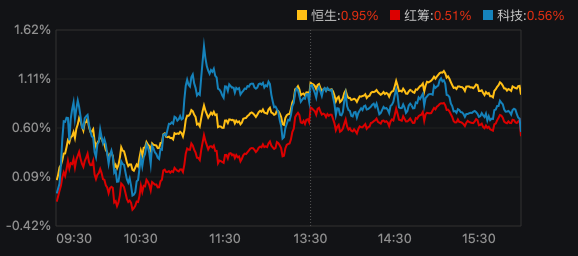
Market Overview - The Hong Kong stock market experienced a rebound on February 27, with the Hang Seng Index rising by 0.95% to close at 26,630.54 points, and the trading volume increased to 288.42 billion HKD from 259.28 billion HKD on the previous trading day [3] - The Hang Seng Tech Index also saw a slight increase of 0.56%, closing at 5,137.84 points, although it had previously declined for three consecutive trading days, with a cumulative drop of 10.27% over the past month [3][4] Sector Performance - The market displayed a "strong cyclical, differentiated technology, and weak consumer" characteristic, with coal (+4.37%), steel (+3.91%), and agricultural chemicals (+2.90%) leading the gains, driven by rising commodity prices and expectations of domestic growth policies [4] - Conversely, the airline sector (-3.00%), semiconductor materials and equipment (-2.81%), and paper and forestry products (-2.38%) faced declines, influenced by falling ticket prices post-Spring Festival and a significant drop in Nvidia's stock [4] Stock Highlights - Small-cap stocks performed exceptionally well, with notable gains from Changcheng Weiguang (+154.84%), Xingtai Chain Group (+63.52%), and Yuanli Holdings (+56.64%) [4][6] - On the other hand, Semai Holdings (-32.00%), Bairong Cloud-W (-18.78%), and Ying Yuzhou (-17.05%) experienced the largest declines, with Bairong Cloud-W possibly affected by adjustments in earnings expectations [4][6] Trading Volume Insights - The top three stocks by trading volume were Tencent Holdings (16.776 billion HKD), Alibaba-W (12.742 billion HKD), and Changfei Optical Fiber (9.101 billion HKD), with Changfei benefiting from its inclusion in the MSCI China Index [5][6] Corporate Developments - Baidu Group reported that AI business revenue accounted for 43% of its total, exceeding market expectations, while Alibaba announced the launch of the world's first "Qianwen" AI glasses, set for pre-order on March 2 [6] - BeiGene (6160.HK) achieved a net profit of 1.422 billion HKD for 2025, marking its first year of profitability [6] Market Sentiment and Future Outlook - The State Council issued opinions on improving the national unified electricity market system, raising profit improvement expectations for the electricity sector [7] - The MSCI China Index quarterly adjustment took effect, adding 33 A-share stocks focused on technology and semiconductors [7] - The Hong Kong Stock Exchange reported record high performance for 2025, with revenue of 29.161 billion HKD (up 30.3% year-on-year) and net profit of 17.754 billion HKD (up 36.0% year-on-year) [7] - The Hang Seng AH premium index fell to 118.81, indicating continued buying pressure from public funds in Hong Kong stocks [7] - Huashan Fund noted that the Hang Seng Tech Index has corrected 18% since its peak in October last year, with the risk-reward ratio gradually improving as the index remains sensitive to global liquidity and risk sentiment [7][8]