纺织

Search documents
出口角度看产业升级 - 宏观陈述
2025-08-05 15:42
Summary of Conference Call Records Industry Overview - The records focus on the **high-end industry in China**, particularly its development, challenges, and the impact of internal competition (involution) on industrial upgrading [1][5][15]. Key Points and Arguments 1. **Structural Policies**: China has implemented structural easing policies to guide funds towards high-end industries, resulting in significant growth in industrial loans for high-tech sectors, while support for the real estate sector remains weak [3][2]. 2. **Economic Challenges**: The Chinese economy faces weak overall demand, leading to low capacity utilization rates, particularly in high-end industries, which are even lower than traditional industries [5][6]. 3. **Involution Impact**: Involution has led to price reductions as companies compete for orders, which can suppress further development of high-end industries if driven by insufficient demand rather than economies of scale [6][7]. 4. **Export Trends**: Over the past decade, the export share of high-end industries such as computers, pharmaceuticals, and electrical equipment has significantly increased, while traditional industries like rubber and textiles have seen a decline [8][10]. 5. **High vs. Low Growth Groups**: High-growth groups (emerging industries) have shown strong performance in fixed asset investment and industrial value added, but their export growth has lagged behind low-growth groups (traditional industries) in recent years due to involution [10][9]. 6. **Quality Indicators**: Total Factor Productivity (TFP) is used as a quality measure, indicating that a decline in the export delivery value as a proportion of revenue correlates with stronger TFP [11][4]. 7. **Future Directions**: High-end manufacturing is not the endpoint of industrial upgrading; the next level involves research and development, branding, and high-value-added services [12][13]. 8. **Need for Anti-Involution Policies**: To counteract the negative effects of involution, policies promoting demand and improving capacity utilization are essential for healthy economic development [15][16]. Additional Important Content - **Price Dynamics**: Price decreases should be analyzed to determine their causes; if due to demand insufficiency, they may hinder industrial upgrading [7]. - **Labor Market Effects**: Anti-involution policies should also address labor market issues, as stagnant wage growth can lead to reduced consumer spending on higher-quality goods, further impacting industrial upgrading [16]. - **Evaluation of Policies**: The effectiveness of anti-involution policies can be assessed through macroeconomic indicators such as profit changes, inflation levels, and the speed of industrial upgrading [17].
宏观深度报告20250805:跨越百年的产能调整经验:如何从失衡到再平衡
Soochow Securities· 2025-08-05 11:53
Group 1: Historical Capacity Adjustment Cases - The report analyzes three historical cases of capacity adjustment: the Long Depression (1873-1896), the Great Depression (1929), and Japan's capacity reductions in the 1970s and 1990s, highlighting lessons for supply-demand rebalancing[6] - During the Long Depression, nominal wage growth was only 5.4% in the U.S., while industrial output increased over 300%, leading to a significant supply-demand imbalance[10] - The Great Depression saw a shift from non-intervention to government intervention, with policies like the Agricultural Adjustment Act (AAA) and the National Industrial Recovery Act (NIRA) implemented to stabilize production and demand[30][34] Group 2: Mechanisms of Supply-Demand Rebalancing - Capacity imbalances can create a negative feedback loop, potentially lasting 20-30 years if not controlled, as seen in the Long Depression and Japan's lost decades[1] - Government intervention is more effective than non-intervention in addressing capacity imbalances, as demonstrated by the U.S. response to the Great Depression compared to Japan's approach in the 1990s[2] - Successful rebalancing requires simultaneous efforts in controlling capacity, restoring credit, and stabilizing employment, rather than relying solely on supply or demand policies[3] Group 3: Economic and Social Implications - Large-scale supply-demand imbalances can present opportunities for improving labor wages and boosting domestic demand, facilitating a shift from production-oriented to consumption-oriented economies[4] - In the U.S., labor movements during the Long Depression led to wage increases, with wage growth eventually reaching 49% of nominal GDP growth by the late 19th century[26] - Japan's capacity adjustments in the 1970s relied on government-led initiatives, while the 1990s saw a shift towards market-driven solutions, resulting in slower recovery from imbalances[5]
齐鲁银行以精准服务助力区域产业过坎扬帆
Xin Lang Cai Jing· 2025-08-05 08:12
Group 1: Agricultural Financing Solutions - Qilu Bank has introduced innovative financial products like "Ginger and Garlic Loan" to address the financing difficulties faced by farmers in Laiwu, which has a significant ginger production area of 200,000 acres and an annual output of 500,000 tons [2] - The "Ginger and Garlic Loan" integrates various professional state-owned guarantee institutions, effectively solving the collateral issues for farmers and reducing the overall funding cost to below 3% [2] - By March 2025, Qilu Bank's Laiwu branch had issued nearly 100 million yuan in "Ginger and Garlic Loans," significantly boosting farmers' enthusiasm for ginger and garlic cultivation [2][3] Group 2: Support for Technological Innovation - Qilu Bank has actively supported technological innovation by providing critical credit funding to companies like Weifang Ocean Equipment Manufacturing Co., which developed a domestic underwater tree system, enhancing national energy security [4] - The bank has explored a "technology research + industrial application" approach, assisting in the transformation of major technological achievements since 2023 [4] - The growth of Jinan Xinghui CNC Machinery Technology Co., which received a tailored loan of 3 million yuan in 2008, exemplifies the bank's long-term support for innovative enterprises, leading to a revenue exceeding 300 million yuan [4] Group 3: Digital Financial Services for Trade - Qilu Bank's "Qilu Spring e-Da" online cross-border financial services have streamlined trade processes, reducing transaction times from 24 hours to 2 hours, thus saving nearly 90% of time costs for companies like Hongye Textile [5][6] - The bank has implemented a "local currency settlement first" service to help companies manage risks associated with exchange rate fluctuations, resulting in a 43% increase in RMB settlement for Shandong International Trade by Q4 2024 [6] - As of now, Qilu Bank has facilitated nearly 30 billion yuan in online cross-border transactions, significantly enhancing the efficiency and convenience of foreign trade for Shandong enterprises [6]

钱塘:她连续7年赠凉茶
Hang Zhou Ri Bao· 2025-08-05 03:00
Core Points - The article highlights the story of Qi Aiying, a 62-year-old woman who has been running a free tea stall for seven years in Shengling Bay, Qiantang District, providing refreshment to passersby during the summer [1][2] - The tea stall has become a cultural landmark in the area, symbolizing community spirit and urban civilization [2] Group 1: Community Impact - The tea stall serves as a popular stop for truck drivers, workers, and sanitation workers, particularly due to the presence of traditional industrial enterprises in the vicinity, such as textile and machinery factories [2] - The initiative started in 2018, coinciding with the ecological improvement projects in Shengling Bay, which transformed the area into a more attractive environment [2] Group 2: Urban Development - Shengling Bay has undergone significant ecological and aesthetic upgrades, including the construction of waterfront platforms and pavilions, contributing to its recognition as a popular public park in Hangzhou [2] - The tea stall, consisting of a simple table and two tea barrels, has become a symbol of the area's transformation and community warmth, reflecting the "New Bay Temperature" [2]
宁波加快打造全球先进制造业基地(奋勇争先,决战决胜“十四五”)
Ren Min Ri Bao· 2025-08-04 22:39
Group 1 - Ningbo has established a strong foothold in the global supply chain, with significant contributions in various sectors such as optical lenses for Android phones, sewing machines, and precision cutting wires [1] - The Chinese government emphasizes the importance of the real economy and technological innovation to enhance the manufacturing sector's high-end, intelligent, and green development [1] - Ningbo is accelerating the creation of a global advanced manufacturing base, continuously improving its industrial capabilities [1] Group 2 - Ningbo Zhongke Xianglong Lightweight Technology Co., Ltd. reported a 100% year-on-year revenue growth in the first half of the year, with an expected annual growth of 220% [2] - The company has secured 27 commercial aerospace projects in 2024, positioning itself among the top in market share [2] - Ningbo has developed a gradient cultivation system for enterprises, promoting collaboration among large, medium, and small enterprises, with 104 national-level manufacturing champions currently [2] Group 3 - Ningbo's port has seen a significant increase in electric vehicle exports, with 107,000 units exported in the first half of the year, marking a 275% year-on-year growth [3] - Approximately 5,000 automotive parts companies in Ningbo have formed an efficient supply chain within a 50-kilometer radius, enhancing local supply rates [3] - The number of high-tech enterprises in Ningbo has exceeded 8,800, with high-tech industries accounting for over 60% of the industrial added value [3] Group 4 - Ningbo is exploring new transformation paths through the deep integration of digitalization and greening in advanced manufacturing [4] - The implementation of over 2,700 digital transformation projects for industrial enterprises is set for 2024, aiming for comprehensive coverage [4] - Ningbo has added 11 national-level 5G factories and 6 provincial-level future factory pilots, reinforcing its commitment to innovation and economic strength [4]


国内高频 | 港口货运量出现较大幅度回落(申万宏观·赵伟团队)
申万宏源宏观· 2025-08-04 16:03
Group 1: Industrial Production Trends - The industrial production shows signs of seasonal weakness, but infrastructure construction is experiencing a slight recovery. The blast furnace operating rate and apparent consumption have both increased year-on-year, with a rise of +1.1 and +0.5 percentage points to 2.2% and -0.3% respectively [2][6] - The social inventory of steel has seen a rebound [2] - In the textile sector, operating rates are higher than the same period last year, while the polyester filament and automotive sectors have seen a decline in operating rates [14][20] Group 2: Cement and Construction Industry - Cement production and demand are recovering, with grinding operating rates increasing significantly by +6.0 percentage points to -0.2% year-on-year. Cement shipment rates have also improved by +0.8 percentage points to -2.2% [25][29] - The cement inventory ratio has slightly decreased by -0.5 percentage points to -0.2% [32] Group 3: Glass and Asphalt Production - Glass consumption has decreased, with production slightly rebounding but still down by -7.7% year-on-year. Apparent consumption has also fallen by -5.0 percentage points to 8.7% [37][41] - Asphalt operating rates have increased year-on-year, up by +2.5 percentage points to 8.0% [37] Group 4: Real Estate and Demand Trends - The transaction volume of commercial housing has declined, with a year-on-year decrease of -13.6 percentage points to -19.6% in 30 major cities. The largest drop is observed in third-tier cities, with a decline of -44.0 percentage points to -31.5% [49][50] - National railway and highway freight volumes have also decreased, with year-on-year declines of -0.5 percentage points to 6.5% and -0.8 percentage points to 2.8% respectively [60][64] Group 5: Export and Shipping Trends - The shipping prices continue to decline, with the CCFI composite index dropping by -2.3% week-on-week. The Southeast Asia route has seen a significant price drop of -3.9% [89][90] - The BDI average price has also decreased by -3.1% [89] Group 6: Price Trends in Agriculture and Industry - Agricultural product prices are showing divergence, with pork and fruit prices falling by -0.3% and -0.2% respectively, while vegetable and egg prices have increased by +0.6% and +3.6% [101][105] - The industrial product prices have generally declined, with the Nanhua Industrial Price Index dropping by -1.4% [113][114]

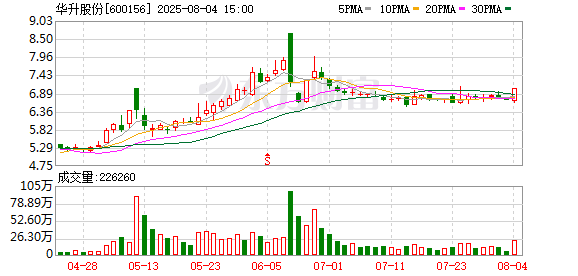
华升股份:8月4日召开董事会会议
Mei Ri Jing Ji Xin Wen· 2025-08-04 09:51
Group 1 - The company Huasheng Co., Ltd. (SH 600156) announced the convening of its 21st meeting of the 9th Board of Directors on August 4, 2025, to discuss the adjustment of the members of the specialized committees of the board [2] - For the fiscal year 2024, the revenue composition of Huasheng Co., Ltd. is as follows: trade business accounts for 80.97%, textile production accounts for 16.6%, other businesses account for 2.16%, and pharmaceutical machinery accounts for 0.27% [2]

创新工艺 开拓“新中式”服装面料市场
Ren Min Ri Bao· 2025-08-04 07:23
Core Insights - The popularity of "New Chinese" clothing is rising, with sales exceeding 1 million yuan per month at some locations [1] - Fabric production companies are innovating continuously to meet the demand for "New Chinese" styles [1][2] Group 1: Market Trends - "New Chinese" clothing is characterized by elegance and reflects Eastern beauty, attracting consumers from various regions [1] - The sales volume of "New Chinese" clothing is significantly increasing, indicating a growing consumer interest [1] Group 2: Fabric Innovation - Wujiang Dingsheng Silk Co., a supplier for "Longquan Xili," has developed a popular fabric called "Han Palace Autumn Moon," which has become a market hit [1] - Six Fortune Textile focuses on innovative fibers such as acetate, rayon, and cupro, offering more affordable options compared to silk while providing features like anti-static and breathability [2] - Collaboration with textile colleges and research institutions is essential for the development of new fabrics that incorporate traditional cultural elements [2]
中国宏观周报(2025年7月第5周)-20250804
Ping An Securities· 2025-08-04 07:14
Group 1: Industrial Production - Industrial production in China shows divergence, with raw material production demonstrating relative resilience[1] - Daily pig iron output is higher than the same period last year, while steel and construction material production and apparent demand have marginally declined[1] - The operating rates for petroleum asphalt and some chemical products have recovered, while cement clinker capacity utilization remains stable compared to last week[1] Group 2: Real Estate - New home sales in 30 major cities decreased by 18.4% year-on-year as of August 1, 2025, with a 19.3% decline in July compared to the previous month[1] - The second-hand housing listing price index decreased by 0.48% month-on-month as of July 21, 2025[1] Group 3: Domestic Demand - National retail sales of passenger cars from July 1-27, 2025, reached 1.445 million units, a 9% increase year-on-year, while the total market for July is estimated at around 1.85 million units, up 7.6% year-on-year[1] - Major home appliance retail sales increased by 18.5% year-on-year as of July 25, 2025[1] - Daily movie box office revenue averaged 230 million yuan, a 27.9% increase year-on-year, with a government subsidy program in Beijing to encourage attendance[1] Group 4: External Demand - Port cargo throughput increased by 10.9% year-on-year as of July 27, 2025, with container throughput up by 5.6%[1] - South Korea's export value grew by 5.9% year-on-year in July, an increase of 1.6 percentage points from June[1] Group 5: Price Trends - The South China industrial product index fell by 3.8%, with the black raw materials index down by 5.6%[1] - Rebar futures prices dropped by 4.6%, while spot prices decreased by 2.3%; coking coal futures fell by 13.2%, but spot prices rose by 1.2%[1]
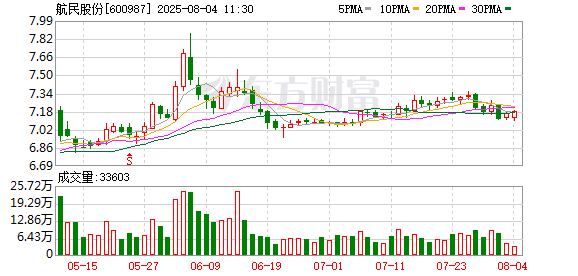
航民股份:沈松仁辞去公司董事职务
Mei Ri Jing Ji Xin Wen· 2025-08-04 04:32
Group 1 - The core point of the article is that Hangmin Co., Ltd. announced the resignation of Mr. Shen Songren from the board to facilitate the optimization of the company's governance structure [2] - The company's revenue composition for the year 2024 is as follows: Jewelry and gold business accounts for 61.33%, textile industry accounts for 36.06%, power generation accounts for 7.57%, wholesale business accounts for 4.42%, and water management accounts for 0.89% [2]