科技硬件

Search documents
超大规模数据中心取胜 星展:上调联想目标价至20港元
Ge Long Hui· 2025-11-18 07:41
Group 1 - The core viewpoint is that Lenovo, as a leading global PC and server manufacturer, is expected to benefit significantly from the upcoming upgrade cycle in 2025, leading to an increased buy rating and a target price adjustment to HKD 20 from HKD 15 [1][2] - Lenovo is transitioning from a technology hardware giant to a service-oriented company, leveraging its 25% market share in active PC users and strong reputation in the PC and server sectors to drive growth in services and solutions [1] - The company is well-positioned in the AI wave, with its AI assistant "Xiao Tian" integrated with DeepSeek, enhancing capabilities such as summarization, translation, and transcription, which is expected to boost AI PC shipment volumes significantly [1] Group 2 - Lenovo's server business is poised to benefit from the super cycle of AI infrastructure in China, with the server market projected to exceed USD 140 billion by 2029, directly impacting Lenovo's order volume [2] - In the period from April to June 2025, Lenovo's AI server revenue saw a remarkable year-on-year growth of 155%, supported by strong partnerships and innovative cooling technologies that reduce data center power consumption [2] - Lenovo currently holds approximately 35% of the AI cloud server revenue in China, with expectations to exceed 20% market share by 2028 as large-scale deployments and water cooling technology become standard in new AI data centers [2]

受益PC换机周期 星展再度上调联想目标价至20港元
Zhi Tong Cai Jing· 2025-11-18 07:37
Core Viewpoint - DBS Bank maintains a "buy" rating for Lenovo (00992) and raises the target price to HKD 20 from HKD 15, citing benefits from the 2025 upgrade cycle [1] Group 1: Transition to Service-Oriented Company - Lenovo is transitioning from a technology hardware giant to a service-oriented company, leveraging its 25% market share in active PC users and strong reputation in PCs and servers to drive growth in services and solutions [2] - The company is well-positioned in the AI wave due to its extensive production expertise and product innovation [2] Group 2: 2025 Upgrade Cycle - The upgrade cycle in 2025 is expected to be driven by the migration to Windows 11 and a strong AI PC product line, with Lenovo's AI assistant "Xiao Tian" integrated with DeepSeek for enhanced functionalities [2] - AI PC shipments are projected to grow by 93% in FY3/26 and by 52% in FY3/27, increasing their share of total PC shipments to 37% and 57% respectively [2] Group 3: Server Business Growth - The Chinese server market is expected to exceed USD 140 billion by 2029, benefiting Lenovo's orders significantly [3] - Lenovo's AI server revenue grew by 155% year-on-year from April to June 2025, supported by strong IDM partnerships and the Neptune water-cooling system that reduces data center power consumption by approximately 40% [3] - Lenovo holds about 35% of the AI cloud server revenue in China as of early 2025, with expectations to exceed 20% market share by 2028 as large-scale deployments and water-cooling technology become standard [3] - The company updates its earnings forecasts for FY2027 and FY2028 by 10.1% and 17.1% respectively, reflecting higher AI server shipment assumptions [3]
受益PC换机周期 星展再度上调联想(00992)目标价至20港元
智通财经网· 2025-11-18 07:36
Core Viewpoint - DBS Bank maintains a "buy" rating for Lenovo (00992) and raises the target price to HKD 20 from HKD 15, citing benefits from the 2025 upgrade cycle [1] Group 1: Transition to Service-Oriented Company - Lenovo is transitioning from a technology hardware giant to a service-oriented company, leveraging its 25% market share in active PC users and strong reputation in PCs and servers to drive growth in services and solutions [2] - The company is well-positioned in the AI wave due to its extensive production expertise and product innovation [2] Group 2: 2025 Upgrade Cycle - The upgrade cycle in 2025 is expected to be driven by the migration to Windows 11 and a strong AI PC product line, with Lenovo's AI assistant "Xiao Tian" integrated with DeepSeek for enhanced functionalities [2] - AI PC shipments are projected to grow by 93% in FY3/26 and by 52% in FY3/27, increasing their share of total PC shipments to 37% and 57% respectively [2] Group 3: Server Business Growth - The Chinese server market is expected to exceed USD 140 billion by 2029, benefiting Lenovo's orders significantly [3] - Lenovo's AI server revenue grew by 155% year-on-year from April to June 2025, supported by strong IDM partnerships and the Neptune water cooling system that reduces data center power consumption by approximately 40% [3] - Lenovo holds about 35% of the AI cloud server revenue in China as of early 2025, with expectations to exceed 20% market share by 2028 as large-scale deployments and water cooling technology become standard [3] Group 4: Financial Projections - The valuation benchmark for Lenovo has been updated to the fiscal year 2027, with earnings forecasts for FY27 and FY28 raised by 10.1% and 17.1% respectively, reflecting higher assumptions for AI server shipments [3]
瑞银:予恒指明年目标三万点 偏好互联网、科技硬件及券商板块
Zhi Tong Cai Jing· 2025-11-18 07:24
Group 1 - UBS expects the Chinese stock market to perform positively in 2026, driven by several favorable factors from 2025, including advancements in innovation, particularly in artificial intelligence, a relaxed policy environment for private enterprises and capital markets, continued fiscal expansion and ample liquidity under loose monetary policy, and potential capital inflows from domestic and foreign institutional investors [1] - The bank predicts that the performance of the stock market in 2026 will be more driven by earnings growth, with an estimated 10% increase in earnings per share for MSCI China, primarily due to the impact of anti-involution policies and reduced depreciation and amortization expenses [1] - UBS sets a target of 30,000 points for the Hang Seng Index next year, corresponding to a forecasted price-to-earnings ratio of 13.5 times, with an expected 8% growth in earnings per share for the index [1] Group 2 - UBS notes that high-dividend stocks have performed well over the past five years, but their attractiveness has decreased, with almost no financial stocks offering a dividend yield above 6% [2] - The bank has shifted to allocate some investments in "outbound" concept stocks, which have shown resilient profits and earnings amid tariff uncertainties [2] - UBS does not have a clear preference between A-shares and H-shares, as both have supportive factors: A-shares benefit from inflows of domestic and foreign capital and earnings improvements from anti-involution policies, while H-shares benefit from AI themes and continued inflows from foreign and southbound funds [2]
瑞银发布《中国股票策略2026年展望》:盈利成核心驱动力 科技与“出海”方向受青睐 股市有望延续积极表现
Zhi Tong Cai Jing· 2025-11-18 05:14
Core Viewpoint - UBS's report on the outlook for the Chinese stock market in 2026 indicates a shift from valuation-driven growth in 2025 to earnings improvement as the main driver for market performance in 2026, with a target for the MSCI China Index set at 100 points, representing a potential increase of approximately 14% from the closing level on November 14, 2025 [1][2]. Earnings Improvement as Key to Market Performance - The main upward momentum for the Chinese stock market in 2025 was driven by valuation recovery, but in 2026, the focus will shift to earnings growth, with an expected 10% increase in overall EPS for MSCI China Index constituents [2]. - The "anti-involution" effect driven by policy changes is expected to contribute approximately 3 percentage points to EPS growth in 2026, as regulatory measures promote orderly competition and improve resource allocation [2][3]. - A decline in depreciation and amortization is anticipated to support profit margins, as capital expenditure shifts from expansion to efficiency [3]. - Continuous optimization of cost structures in technology, internet, and advanced manufacturing sectors will enhance earnings sustainability and certainty [4]. Industry Allocation Recommendations - UBS recommends focusing on five key sectors for investment based on earnings certainty, policy support, and global market share enhancement: - **Technology Hardware**: Demand for servers, storage, and optical modules remains strong, with Chinese supply chains gaining competitiveness [5]. - **Internet Sector**: Recovery in advertising, e-commerce, and local services, combined with improved cost structures and cash flow among industry leaders, makes this sector attractive [6]. - **Brokerage Sector**: With capital market reforms and increased trading activity, brokerage firms are expected to see improvements across various business lines [7]. - **Photovoltaic Supply Chain**: Following a supply clearing in 2025, profitability in this sector is expected to improve significantly due to rising global demand for renewable energy [8]. - **"Going Global" Enterprises**: High-quality leading companies in appliances, automotive, consumer electronics, and machinery are expected to enhance their global market share [9]. External Risks and Valuation Advantage - UBS identifies two potential risks for the global market in 2026: potential valuation corrections in AI-related stocks and possible fluctuations in US-China relations affecting market sentiment [10]. - However, the sensitivity of Chinese stocks to these risks is considered limited, with lower correlation to global AI giants and a more favorable valuation position compared to other major markets [11][12]. Market Outlook - The Chinese stock market in 2026 is expected to exhibit structural opportunities rather than rapid unilateral trends, driven by improving fundamentals, stable policies, and deepening capital market reforms [13].

策略周观点:三季报看点和行业配置启示
2025-11-18 01:15
Summary of Conference Call Notes Industry or Company Involved - The discussion primarily revolves around the Hong Kong stock market (港股) and the A-share market (A 股), focusing on their recent performance and outlook. Core Points and Arguments 1. **Market Weakness Factors** The recent weakness in the Hong Kong stock market is attributed to multiple factors, including concerns over the overseas AI bubble, performance divergence in global growth stocks, tightening global liquidity, and seasonal weakness in southbound capital. These factors collectively exert pressure on the market [1][2][4]. 2. **Sentiment Indicators** Current sentiment indicators suggest that the market has entered a pessimistic zone, with indicators around 40, but have not reached panic levels below 30. This indicates a potential for further adjustments before a recovery [5]. 3. **Future Liquidity Expectations** It is anticipated that liquidity in the U.S. may improve in December, with the potential release of approximately $100 billion from the TGA account and a halt in balance sheet reduction, which could alleviate pressure on reserves [5]. 4. **Sector Performance in Q3 Reports** The Q3 reports for Hong Kong stocks show that around 40% of Hang Seng Index constituent companies have reported earnings, with a year-on-year growth rate of 2.4%, exceeding expectations by 3%. However, excluding the financial sector, earnings expectations have been revised down by 0.7% [8]. 5. **Sectoral Earnings Adjustments** Earnings expectations have been revised upwards for sectors such as non-bank financials, pharmaceuticals, financial dividends, and new consumption, while downward revisions were noted for real estate, automotive, technology hardware, and internet sectors [8]. 6. **A-Share Market Trends** The A-share market has shown a lackluster performance, with defensive value stocks outperforming growth stocks. The market is expected to experience wide fluctuations due to declining interest rate expectations and concerns over the overseas AI bubble [9]. 7. **Investment Strategy Recommendations** A balanced allocation strategy is recommended, focusing on sectors with potential for recovery, such as service consumption, construction, housing services, and home appliances. This approach is suggested due to the lack of strong fundamental support for current market styles [6][7]. 8. **Capacity Cycle Insights** The capacity cycle is expected to stabilize in the first half of next year, with a focus on industries that significantly expanded capacity between 2021 and 2023 but currently have low utilization rates. Industries are categorized based on their proximity to capacity cycle inflection points [13]. Other Important but Possibly Overlooked Content 1. **Market Behavior Influences** The current market behavior is driven more by capital flows and future expectations rather than fundamental data, indicating a speculative trading environment [6]. 2. **Potential for Small-cap Stocks** There are signs of relaxation in private equity securities registration, which may support small-cap stocks, suggesting a potential area of focus for investors [9][10]. 3. **Trends in Q3 Financial Reports** The Q3 financial reports indicate a positive trend with revenue and profit growth showing upward inflection points, suggesting a recovery trajectory that may continue into the future [12]. 4. **Investment Style Adaptation** Historical data suggests that October is typically a period where performance factors are less effective, indicating that a "barbell" strategy, which includes both dividend and small-cap stocks, may be more suitable during such times [11].
2025年第四季度市场展望报告:从贸易战到降息与刺激政策-瀚亚投资
Sou Hu Cai Jing· 2025-11-15 02:09
Core Insights - The report by Hanya Investment focuses on the evolution of global trade patterns, central bank interest rate cuts, and policy stimulus, reviewing market performance in Q3 2025 and predicting trends for Q4 2025 and 2026 [1] Market Performance Overview - Global markets experienced a broad rally in Q3 2025, driven by the extension of the US-China trade truce, optimism surrounding AI, and expectations of Federal Reserve interest rate cuts [7] - The S&P 500 index rose by 7.8%, while the Nasdaq index increased by 11.2%. Emerging markets outperformed developed markets with a 10.9% rise, led by China's A-shares (+20.8%) and Taiwan (+14.7%), while India saw a decline of 6.6% [7][8] - Fixed income markets showed volatility, with US Treasury yields declining across the board, and the 10-year Treasury yield falling to 4.16%. Emerging market dollar bonds led with a 4.8% increase [10] - In the foreign exchange market, the US dollar index rose by 0.9% but was down 9.9% year-to-date. The Chinese yuan and Hong Kong dollar performed well, while the New Taiwan dollar and South Korean won depreciated significantly [11] Macroeconomic Outlook - The macroeconomic outlook indicates differentiated growth, with the US and East Asian economies expected to slow down in Q4 2025 and into H1 2026. The Federal Reserve is anticipated to cut rates by 25 basis points in October and December [2][16] - China's economic growth may decline due to a slowdown in credit growth, with GDP growth targets for 2026 set between 4.5% and 5%. New stimulus policies will focus on consumer subsidies and technology investments [17] - India's economy is showing signs of recovery, supported by fiscal and monetary stimulus, while ASEAN economies are relying on domestic demand and policy easing to counteract growth slowdowns [2][16] Monetary Policy and Currency Outlook - The monetary policy environment is entering a loosening phase, with the Federal Reserve expected to continue rate cuts and end quantitative tightening. Other Asian central banks, including those in China and India, are also expected to lower rates [21] - The US dollar is projected to depreciate by 3%-5% in 2026, while the Chinese yuan may appreciate moderately. Other Asian currencies are expected to remain weak until a clear trend of dollar depreciation emerges [2][21] Asset Allocation Strategy - The report suggests a short-term optimistic stance on risk assets, particularly in emerging and Asian markets, while maintaining a neutral long-term outlook. In fixed income, US Treasuries are favored, along with emerging market dollar bonds and Asian credit bonds [3][29] - The report highlights ongoing policy stimulus in Asia, with countries like China, India, and Indonesia implementing measures such as fiscal transfers, tax cuts, and credit support to boost economic recovery [3][17]


三大股指期货齐涨,市场热盼美政府重启
Zhi Tong Cai Jing· 2025-11-12 11:47
Market Overview - US stock index futures are all up, with Dow futures rising by 0.15%, S&P 500 futures up by 0.32%, and Nasdaq futures increasing by 0.58% [1] - European indices show mixed results, with Germany's DAX up by 1.08%, UK's FTSE 100 down by 0.11%, France's CAC 40 up by 1.03%, and the Euro Stoxx 50 up by 1.06% [2] - WTI crude oil is up by 0.62% at $60.66 per barrel, while Brent crude oil is up by 0.57% at $64.79 per barrel [2] Government and Economic Policies - Optimism is growing regarding the potential end of the US government shutdown, with a vote expected in the House of Representatives on a bill to keep most government departments operational until January 30, 2026 [3] - President Trump is hosting a private dinner with Wall Street leaders to discuss government-led investment initiatives aimed at strengthening US capital markets and key domestic supply chains [3] Debt and Financial Stability - Goldman Sachs CEO David Solomon warns of potential "reckoning" due to rising US government debt, which has increased from approximately $10 trillion in 2008 to over $30 trillion now, emphasizing the need for a change in fiscal policy [4] - The Federal Reserve and other regulatory bodies have reached an agreement to relax capital requirements for major banks, which is expected to positively impact institutions like JPMorgan Chase, Bank of America, and Goldman Sachs [5] Consumer Goods and Inflation - Market commentator Jim Cramer suggests that inflation may be nearing its peak, presenting a buying opportunity for undervalued consumer goods companies like Procter & Gamble and Kimberly-Clark [6] Technology Sector Insights - Charles Clough, a veteran strategist, dismisses concerns about a tech bubble, asserting that current tech giants have robust business models that can withstand economic downturns [7] Company Updates - AMD reaffirms its commitment to AI spending, projecting significant revenue growth in the data center sector, with an expected overall revenue of $35 billion this year and a compound annual growth rate of 35% over the next three to five years [8] - Huya reports a total revenue of 1.69 billion yuan for Q3 2025, marking a 10% year-over-year increase, with live streaming revenue stabilizing at 1.16 billion yuan [9] - Tencent Music's Q3 2025 net profit attributable to equity holders is 2.15 billion yuan, a 36% increase year-over-year, with total revenue reaching 8.46 billion yuan [10] - Google and Total sign a 15-year renewable power supply agreement for Google's AI data center in Ohio, highlighting the growing demand for clean energy in the AI sector [11] Industry Developments - CVS Health shifts its support from Eli Lilly's weight loss drug to Novo Nordisk's, prompting Eli Lilly to change its employee benefits provider [12]


A股震荡整理,关注关键点位
Sou Hu Cai Jing· 2025-11-12 07:44
Group 1 - The market is currently in a phase of low-volume fluctuations and slow bullish consolidation, with the Shanghai index performing stronger than the Shenzhen index [1] - The Sci-Tech Innovation Board's adjustment is nearing its end, with expectations for a high-low switch [1] - The early trading session saw a divergence in the three major indices, with over 3,000 stocks rising, particularly in sectors like cultivated diamonds and photovoltaic equipment [1] Group 2 - Gold has a target level of 4018, which has been tested multiple times but has not yet been successfully breached; the key levels to watch are 4025 for a breakout and 3986 for a potential breakdown [1] - Market volume showed no significant change in the afternoon, and the sustainability of various sectors remains low [1] - The active investment direction is focused on new energy and resource chains, while defensive sectors are rising against the trend, complicating style switching [1] Group 3 - The market failed to break through the previous high of 4025, forming a potential double top on the hourly chart, indicating a need for caution regarding a pullback to the 144-hour moving average at 3911 [1] - Investment decisions should be centered around the critical levels of 3980 and 4025, emphasizing a cautious approach [1] - The overall market trend is mixed, with positive indicators such as intact weekly and monthly trends, but negative factors like insufficient volume and difficulty in breaking key levels [3]

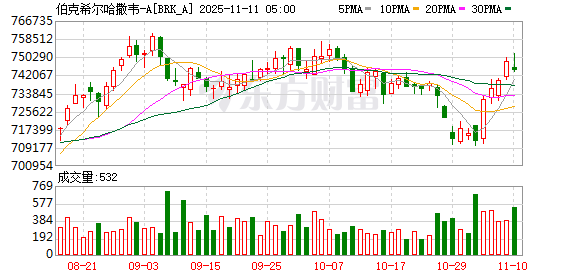
巴菲特“隐退”
2 1 Shi Ji Jing Ji Bao Dao· 2025-11-11 13:20
Core Viewpoint - Warren Buffett, at 95 years old, announced his retirement from writing Berkshire Hathaway's annual reports and speaking at shareholder meetings, marking the end of an era for the company and value investing [2][3]. Group 1: Company Performance - From 1964 to 2024, Berkshire Hathaway achieved an astonishing total return of 5,502,284%, compared to the S&P 500's return of 39,054% during the same period [2]. - The annualized compound return for Berkshire from 1965 to 2024 is 19.9%, significantly higher than the S&P 500's 10.4% [2]. - In Q3, Berkshire's operating profit surged to $13.49 billion, a 34% increase year-over-year, while net profit reached $30.8 billion, up 17% [7]. Group 2: Leadership Transition - Buffett will continue as chairman but will step down as CEO, paving the way for Greg Abel to take over the role at the end of the year [8]. - Buffett praised Abel as an outstanding manager and communicator, indicating that his management style will be more effective for Berkshire's subsidiaries [8]. Group 3: Investment Strategy - Buffett's investment philosophy has evolved over the decades, moving from "cigar butt" investing to focusing on high-quality companies, influenced significantly by Charlie Munger [5][11]. - Berkshire's top five holdings accounted for 66% and 71% of its total equity investments as of September 30, 2025, and December 31, 2024, respectively, with major stakes in American Express, Apple, Bank of America, Coca-Cola, and Chevron [8]. Group 4: Market Conditions - Berkshire has not repurchased any stock since the announcement of Buffett's retirement, and its cash reserves reached a record $381.7 billion by the end of Q3 [7]. - The company has been net selling stocks for 12 consecutive quarters, raising over $6 billion in cash through stock sales in Q3 alone [7]. - The valuation of U.S. stocks has reached historical highs, prompting Buffett to sell stocks as he perceives them to be overvalued [7].