稀土

Search documents
中美关税大战最大成果:并非中国赢了, 而是美国再无手段控制中国
Sou Hu Cai Jing· 2025-11-25 14:14
Core Points - The article discusses the escalating trade tensions between the US and China, particularly focusing on tariffs and countermeasures related to the fentanyl crisis and rare earth elements [1][11][20]. Tariff Actions - On February 1, the US imposed a 10% tariff on Chinese goods, citing a national emergency due to fentanyl smuggling, which later increased to 20% on March 3 and reached a total of 54% by April 2 [1][11]. - By October 10, President Trump threatened to raise tariffs to nearly 245% in response to China's rare earth export controls [1][7]. China's Countermeasures - China responded with its own tariffs, including a 15% tariff on US coal and various agricultural products, and implemented export controls on seven rare earth elements [3][11]. - By June 9, China established stricter regulations on rare earth exports, which included a traceability system and increased technical standards [3][9]. Rare Earth Elements - China dominates the rare earth processing market, accounting for over 90% of global production, making it crucial for US military and technology sectors [4][9]. - The US military's reliance on Chinese rare earths highlights the strategic importance of these materials in defense applications [9][20]. Supply Chain Dynamics - The US is attempting to restructure its supply chains by encouraging companies to relocate production to countries like Mexico and Vietnam [5][11]. - Despite US efforts, China's industrial strength remains resilient, with significant growth in exports of solar and electric vehicle technologies [4][18]. Global Trade Relations - China's trade with other countries has been increasing, with a notable 30.3% rise in trade with Italy, indicating a diversification of trade relationships [13][18]. - The article suggests that the trade war has not significantly hindered China's economic integration with other markets, as evidenced by increased foreign direct investment and mergers [16][18]. Strategic Implications - The ongoing trade conflict reflects a broader struggle for influence and control over emerging technologies and standards, with both nations vying for dominance in global supply chains [22][26]. - China's approach to trade and investment is characterized by a focus on cooperation and mutual benefit, contrasting with the US's more protectionist stance [18][26].

广晟有色更名
Xin Lang Cai Jing· 2025-11-25 10:59
Core Viewpoint - Guangsheng Nonferrous Metals Co., Ltd. officially changes its name to China Rare Earth Nonferrous Metals Co., Ltd. to better integrate with China Rare Earth Group and leverage its upstream rare earth resource advantages and regional benefits in the Guangdong-Hong Kong-Macao Greater Bay Area [1] Company Overview - Guangsheng Nonferrous's main business focuses on the upstream and downstream of the rare earth industry while also expanding into the development and application of strategic rare metals such as tungsten and copper [2] - The company has a complete rare earth industry chain, including mining, smelting separation, deep processing, and trade [9] Industry Context - The rare earth industry has undergone multiple consolidations, making "post-integration renaming" a common practice [3] - The strategic value of rare earths has become increasingly prominent with the rapid development of strategic emerging industries [4] - The industry has seen improvements in concentration and standardization, but issues such as overcapacity in primary rare earth products remain unresolved [5] - A new round of integration in the rare earth industry began around 2020, leading to the establishment of major groups like China Rare Earth Group [6][7] Financial Performance - In the first three quarters of this year, Guangsheng Nonferrous reported revenue of 4.634 billion yuan, a year-on-year decrease of 46.97%, while achieving a net profit of 128 million yuan, reversing a loss of 276 million yuan from the previous year [10] - The company’s cash flow from operating activities increased by 570.73% to 231 million yuan, attributed to increased sales receipts and reduced procurement expenses [10] - Short-term payables rose by 97% to 1.187 billion yuan, mainly due to increased operational financing during the reporting period [10] Market Trends - Prices of various rare earth products in China have significantly increased this year, with praseodymium-neodymium oxide prices rising approximately 40% since the beginning of the year [11] - The price of terbium oxide is currently 6.95 million yuan per ton, reflecting a 24% increase since the start of the year [12] Regulatory Environment - Recent years have seen a surge in regulatory policies governing the rare earth industry, including the implementation of the Rare Earth Management Regulations and the introduction of total control management measures for rare earth mining and smelting separation [13][14][15]

稀土 大消息!
Zhong Guo Ji Jin Bao· 2025-11-25 09:44
Core Insights - A groundbreaking research collaboration between Heilongjiang University, Tsinghua University, and the National University of Singapore has successfully addressed the challenge of efficient electroluminescence in insulating rare earth nanocrystals, as published in *Nature* [1][3][5] - This research supports China's strategic shift from "raw material export" to "high value-added technology output" in the rare earth sector [1][5] Industry Overview - Rare earth elements are considered irreplaceable strategic resources, often referred to as "industrial vitamins" [3] - China holds advantages in rare earth resource reserves and smelting but faces bottlenecks in high-end functional materials and devices [3] Technological Breakthrough - The research team introduced an organic semiconductor sensitization strategy, using functionalized organic ligands as a "photoelectric bridge" to efficiently transfer energy to insulating rare earth nanocrystals, enabling current-driven efficient light emission [3][5] - The new technology demonstrates significant application potential, with electroluminescent device efficiency improved by 76 times and the ability to achieve full-spectrum light emission through rare earth ion modulation in a single device [5] Implications for the Rare Earth Industry - This breakthrough paves the way for transforming the properties of rare earth materials into high-end device functionalities, contributing to the enhancement of China's independent innovation capabilities and the added value of end products in the rare earth industry [5]

稀土,大消息!
中国基金报· 2025-11-25 09:14
Core Insights - A groundbreaking research achievement by Heilongjiang University, Tsinghua University, and the National University of Singapore has successfully addressed the challenge of efficient electroluminescence in insulating rare earth nanocrystals, providing crucial technological support for China's strategic shift from "raw material export" to "high value-added technology output" [2][3]. Group 1: Research Significance - Rare earth elements are irreplaceable strategic resources, often referred to as "industrial vitamins" [3]. - China holds advantages in rare earth resource reserves and smelting but faces industrial bottlenecks in high-end functional materials and devices [3]. - The research team introduced an innovative organic semiconductor sensitization strategy, using functionalized organic ligands as a "photoelectric bridge" to efficiently transfer energy to insulating rare earth nanocrystals, enabling high-efficiency electroluminescence driven by electric current [3][4]. Group 2: Technological Breakthrough - The new technology demonstrates significant application potential, with electroluminescent device efficiency improved by 76 times, and the ability to achieve full-spectrum emission through rare earth ion modulation in a single device [4]. - This breakthrough marks a key advancement for China in the high-end optoelectronic application of rare earth materials, providing a new material system for the development of autonomous ultra-high-definition displays, near-infrared communication, and biomedical applications [4]. - The achievement successfully establishes a technical pathway for converting the properties of rare earth materials into high-end device functionalities, contributing substantively to enhancing China's independent innovation capabilities and the added value of end products in the rare earth industry [4].
BMO:MP Materials(MP.US)为“美国稀土业冠军”,上调评级至“跑赢大盘”
智通财经网· 2025-11-25 07:01
Core Viewpoint - BMO upgraded MP Materials (MP.US) rating from "Market Perform" to "Outperform" with a target price of $75, highlighting a significant agreement with the U.S. Department of Defense that solidifies MP Materials' leadership in the U.S. rare earth sector [1] Group 1: Company Developments - The agreement with the U.S. Department of Defense includes price floors, financing, guaranteed EBITDA, and purchase volumes, reinforcing MP Materials' position in the rare earth market [1] - MP Materials is seen as an attractive entry point for investors due to the current valuation amidst the evident fragility of the U.S. rare earth supply chain [1] - A joint venture with Saudi Arabia's Maaden aims to establish a high-standard rare earth refining facility, increasing production of neodymium-praseodymium oxides, with funding support from the U.S. Department of Defense for capital expenditures [1] Group 2: Growth Potential - The focus for MP Materials is on executing its ambitious yet feasible growth plans, with potential for further expansion of its price-to-earnings ratio if independent project capacity enhancements are successful [2] - Collaboration with Apple for recycling efforts is expected to yield additional output, alongside a new 10x purchase contract that offers more favorable pricing compared to the agreement with the U.S. Department of Defense [2]

美联储“鸽声”再起,金铜强势反弹!有色全线飘红,洛阳钼业涨超3%,有色50ETF(159652)放量涨超2%,或终结三连阴!瑞银2026最新铜价预测
Sou Hu Cai Jing· 2025-11-25 06:19
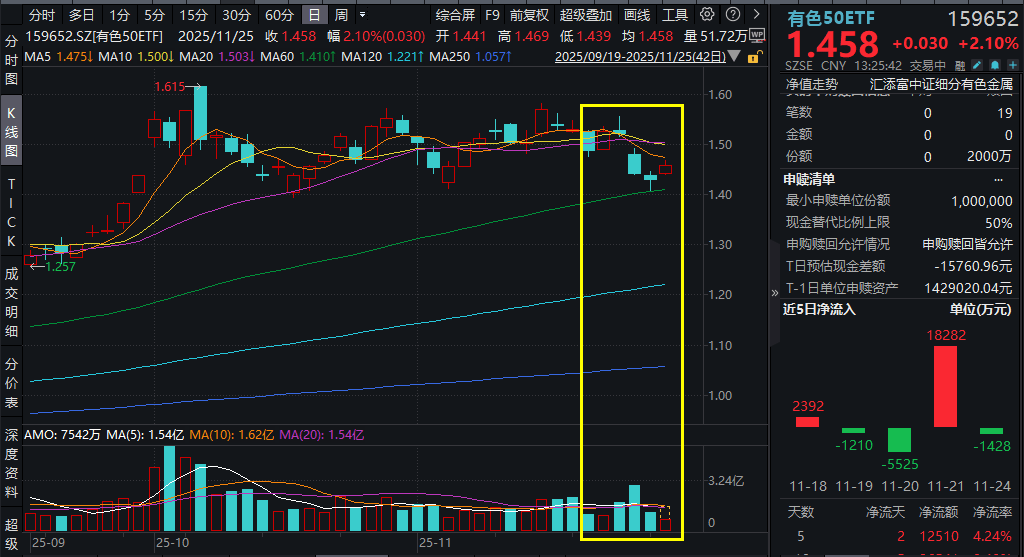
Core Viewpoint - The expectation of a Federal Reserve interest rate cut has increased, leading to a collective rise in gold and copper prices, with the non-ferrous metal sector showing signs of recovery [1][4]. Group 1: Federal Reserve and Economic Outlook - Federal Reserve Governor Christopher Waller reiterated support for a rate cut in December, citing stable inflation and concerns about the labor market [3]. - Goldman Sachs predicts that the Fed will likely initiate a rate cut in December, with potential further cuts in 2025, bringing the benchmark rate down to the 3%-3.25% range [3]. - The current economic conditions suggest a tilt towards accelerated rate cuts if the economic downturn exceeds expectations [3]. Group 2: Market Reactions and Commodity Prices - The market's anticipation of the Fed's rate cut has provided upward momentum for physical asset prices, with COMEX gold and LME copper both rising over 1% [4]. - The copper production target for Freeport-McMoRan in Indonesia has been lowered to 478,000 tons for 2026 due to operational disruptions, which may lead to short-term supply concerns and support higher copper prices [4]. Group 3: Copper Price Projections - UBS has raised its copper price targets for 2026, with the new target set at $13,000 per ton, reflecting a bullish outlook on copper prices [5]. - The copper market is expected to maintain an upward price trend due to supply constraints and increasing demand from sectors like electric power, new energy vehicles, and data centers [8]. Group 4: Non-Ferrous Metal Sector Performance - The Non-Ferrous 50 ETF (159652) saw significant gains, with leading stocks like Huaxi Nonferrous rising over 8% and several others increasing by more than 3% [6]. - The non-ferrous metal sector is characterized by tight supply and strong demand, with aluminum prices expected to remain high due to limited new capacity and robust demand [9]. Group 5: Investment Opportunities - The Non-Ferrous 50 ETF (159652) is highlighted for its high "gold and copper content," with 33% copper and 13% gold, making it a leading choice in the sector [10]. - The ETF has demonstrated superior performance with a cumulative return leading its peers since 2022, driven by earnings rather than valuation expansion [12].




重要成果!稀土,大消息!
证券时报· 2025-11-25 03:49
Core Viewpoint - A groundbreaking research achievement by Heilongjiang University, Tsinghua University, and the National University of Singapore has successfully addressed the challenge of efficient electroluminescence in insulating rare earth nanocrystals, providing key technological support for China's strategic shift from "raw material export" to "high value-added technology output" in rare earth resources [2][6]. Group 1: Research Significance - Rare earth elements are considered irreplaceable strategic resources, often referred to as "industrial vitamins" [5]. - China holds advantages in rare earth resource reserves and smelting but faces industrial bottlenecks in high-end functional materials and devices [5]. - The research team introduced an innovative organic semiconductor sensitization strategy, using functionalized organic ligands as "photoelectric bridges" to efficiently transfer energy to insulating rare earth nanocrystals, enabling high-efficiency electroluminescence driven by electric current [5][6]. Group 2: Technological Breakthrough - The new technology demonstrates significant application potential, with electroluminescent device efficiency improved by 76 times, and the ability to achieve full-spectrum emission through rare earth ion modulation within a single device [6]. - This breakthrough marks a critical advancement for China in the high-end optoelectronic application of rare earth materials, providing a new material system for the development of autonomous and controllable ultra-high-definition displays, near-infrared communication, and biomedical applications [6][9]. Group 3: Industry Impact - The breakthrough successfully establishes a technical pathway for converting the properties of rare earth materials into high-end device functionalities, contributing substantively to enhancing China's independent innovation capabilities and the added value of end products in the rare earth industry [9].
洪灏最新观点,展望2026:持而盈之
Xin Lang Cai Jing· 2025-11-25 01:44
Group 1: US Economy and Market - The Federal Reserve's monetary policy is losing independence, caught in a "trilemma" due to high government debt, requiring bond purchases to finance fiscal deficits, which complicates decision-making regarding economic growth, high inflation, and financial stability [1] - The US economic cycle is entering a late stage, with a divergence between the semiconductor cycle and the broader economy, as private credit defaults rise and consumer confidence hits historical lows, indicating risks of economic slowdown [2][3] - The global trade war initiated by Trump has not improved the US trade deficit, and the increasing fiscal deficit, projected to exceed $40 trillion, is expected to benefit precious metals and commodities [3] Group 2: Chinese Economy and Market - Positive signals in the Chinese macro economy include industrial profits growing over 20% for two consecutive months, with high-tech and advanced manufacturing sectors emerging as new growth engines, offsetting real estate sector declines [4] - Policy shifts are evident, with liquidity and exchange rate support emerging as the government aims to reverse negative economic expectations, leading to a potential capital inflow and RMB appreciation [5] - The Chinese market is entering a strong phase, with listed company profit growth recovering and valuations remaining at historical lows, suggesting that the market performance in 2026 may exceed expectations [6][7] Group 3: Global Asset Allocation - Precious metals like gold and silver remain important long-term hedges against dollar depreciation, while oil prices are expected to strengthen in the next three to six months, reflecting the late stage of the economic cycle [8] - The US stock market is at a 35-year cyclical peak, increasing the risk of bubbles, while the Chinese market, due to economic transformation, improved liquidity, and valuation advantages, is becoming a key focus for global asset allocation [8]
重要稀土氧化钇,价格飙升
财联社· 2025-11-25 01:34
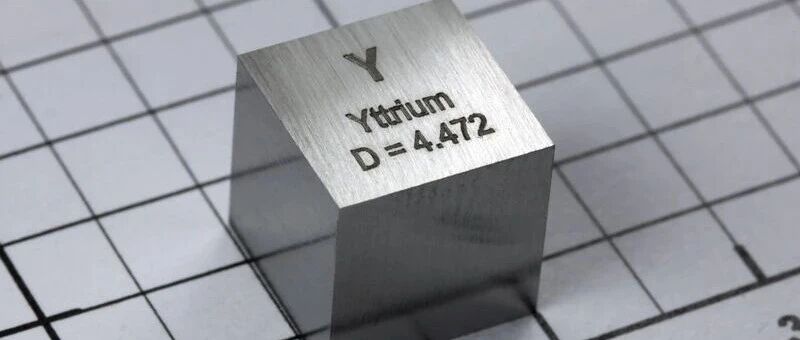
Core Insights - The price of yttrium, a rare earth element widely used in military, aerospace, and semiconductor industries, has surged due to supply constraints, with prices rising from approximately $6 per kilogram to between $220 and $320 per kilogram, representing an increase of 3600% to 5300% [1] - Yttrium is essential for high-performance applications such as special alloys in jet engines and dielectric layers in semiconductor manufacturing [1] - The supply chain for yttrium is heavily reliant on imports from China, with over 90% of yttrium oxide imports to the U.S. coming from China in the past four years [1] Supply Chain and Market Dynamics - The U.S. aerospace industry is significantly affected by the yttrium supply shortage, leading to increased costs due to reliance on Chinese imports [1] - The semiconductor industry is also facing severe concerns regarding yttrium shortages, with one industry insider indicating the shortage's severity at "nine out of ten" [2] - Inventory levels in the yttrium market are highly variable, with reports of one trader's stock dropping from 200 tons to just 5 tons [2] Future Outlook - Analysts suggest that unless there is a significant increase in supply, yttrium prices are unlikely to decrease substantially [3] - Companies like MP Materials and Lynas Rare Earths are working to increase yttrium production, with MP Materials extracting yttrium from its Mountain Pass project and Lynas expanding capacity at its Mount Weld mine and processing plant in Malaysia [3] - ReElement Technologies plans to boost yttrium oxide production to 200 tons annually by December, with ambitions to double that output in the following year [3]
做陶瓷的景德镇,怎么就变成“中国直升机摇篮”了?
吴晓波频道· 2025-11-25 00:29
Core Viewpoint - Resource-dependent cities in southern China, such as Ganzhou and Jingdezhen, are successfully transforming their economies by moving from raw material extraction to high-value manufacturing and innovative industries, showcasing a model for overcoming resource dependency [2][3][11]. Group 1: Transformation of Resource Cities - Ganzhou has shifted from chaotic mining practices to a structured approach in rare earth processing, establishing a complete industrial chain that significantly increases product value [14][15]. - Jingdezhen, known for its ceramics, has evolved into a hub for the aviation industry, leveraging its historical expertise in precision manufacturing to support helicopter and drone production [17][18]. - The transformation of these cities reflects a broader trend in southern China, where resource-rich areas are diversifying their economies and reducing reliance on traditional resource extraction [12][13]. Group 2: Economic Contributions and Projections - By 2026, Jingdezhen's aviation industry is projected to exceed 250 billion yuan in revenue, indicating a substantial economic shift from traditional industries [3]. - In 2024, Ganzhou's rare earth industry is expected to generate nearly 100 billion yuan, with over half of this coming from deep processing, a significant increase from just 10% in 2010 [16]. Group 3: Advantages of Southern Resource Cities - Southern resource cities benefit from abundant water resources, proximity to major economic zones, and a high proportion of private enterprises, which facilitate flexible and innovative economic strategies [12][13]. - The collaboration between national and local entities has been crucial in driving these transformations, ensuring strategic support while maintaining the agility of private sectors [25][28]. Group 4: Policy and Strategic Insights - Effective local policies that focus on precise industry needs rather than broad subsidies have been essential for successful transitions, as seen in Jingdezhen's alignment with aviation industry requirements [26][27]. - The concept of comparative advantage is emphasized, suggesting that cities should focus on their strengths and integrate into larger economic ecosystems to maximize their potential [30][32].