
冬装

Search documents
各位家长还是买便宜点的衣服吧!
洞见· 2026-03-16 12:35
Core Insights - The article discusses the concept of "private domain" sales, where products are sold through trusted social circles rather than traditional advertising methods, leading to significant cost savings for consumers [4][5]. Group 1 - The term "private domain" refers to communities built on word-of-mouth and repeat customers, avoiding one-time sales and focusing on customer loyalty [4]. - A specific example is provided where a seller, referred to as "希妈," offers products at significantly lower prices by sourcing directly from manufacturers, eliminating middlemen and platform fees [5][6]. - The seller emphasizes transparency and customer care, advising customers on product quality and quantity, which contrasts with typical aggressive sales tactics [6]. Group 2 - Customers report satisfaction with the quality of products purchased through this private domain, noting that they received items that exceeded their expectations compared to more expensive alternatives [6]. - The article highlights the shift in consumer perception regarding value, illustrating that lower prices do not necessarily equate to lower quality when middlemen are removed [6].


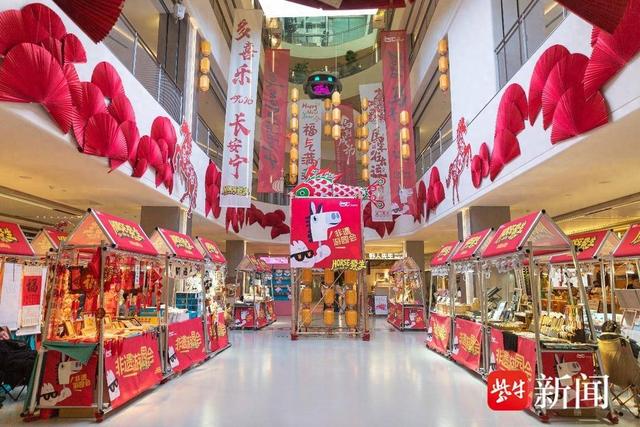
马年新春,在南京玄武遇见N种“年味”
Xin Lang Cai Jing· 2026-02-23 14:34
Core Viewpoint - The article highlights the successful integration of traditional customs, cultural heritage, and modern consumer trends during the Spring Festival in Nanjing's Xuanwu District, resulting in significant increases in sales and visitor numbers. Group 1: Consumer Spending and Economic Impact - During the Spring Festival, nearly 30 monitored commercial enterprises in Xuanwu District achieved a total sales revenue of approximately 8.5 billion, reflecting a year-on-year growth of over 15% [1] - The total foot traffic reached nearly 3.5 million, marking a year-on-year increase of over 14% [1] - Six A-level scenic spots in the district received 3.7822 million visitors, a year-on-year increase of 29.3%, generating revenue of 57.5526 million, which is a 29.7% increase compared to the previous year [1] Group 2: Cultural and Entertainment Activities - The Red Mountain Forest Zoo attracted many visitors with themed activities, blending the auspicious meanings of the Year of the Horse with animal protection education [3] - Various promotional activities were organized by major supermarkets and commercial enterprises to capitalize on the Spring Festival shopping window, enhancing market activity [5] - Dining experiences in trendy areas like Jinling STYLE and Aishang Tiandi were vibrant, with young people enjoying meals together, contributing to the festive atmosphere [7] Group 3: Cultural Heritage and Non-material Experiences - The "Jumama Welcomes Spring" cultural performance showcased the charm of intangible cultural heritage, closely linking it with the festive atmosphere [11] - Visitors engaged in hands-on experiences with intangible cultural heritage, such as writing auspicious characters and making traditional crafts, enhancing their connection to local culture [14] - The integration of cultural exhibitions and performances into commercial areas created immersive experiences that attracted visitors and stimulated consumption [14] Group 4: Technological Innovations and New Retail Experiences - The introduction of new retail stores, including the first stores of several high-end brands in the district, provided fresh options for consumers during the Spring Festival [19] - Digital technology transformed the Spring Festival experience, with exhibitions like the "Exploring the Silk Road: Dunhuang Art Exhibition" offering immersive experiences through XR technology [21] - Interactive installations and augmented reality experiences in public spaces engaged visitors, blending traditional culture with modern technology [21]
申万宏源:25Q4我国纺服终端需求增速放缓 关税谈判结果陆续落定提振出口景气度
智通财经网· 2026-01-22 07:50
Core Viewpoint - The retail sales of clothing, shoes, and textiles in China for the year 2025 reached 1.52 trillion yuan, reflecting a year-on-year increase of 3.2%, with a slowdown in demand observed in Q4 2025 due to warmer winter temperatures affecting winter clothing sales [1][2] Domestic Demand - In 2025, the retail sales of clothing, shoes, and textiles amounted to 1.52 trillion yuan, with monthly growth rates of 6.3%, 3.5%, and 0.6% for October, November, and December respectively, indicating a slowdown in Q4 due to higher winter temperatures [1] - The performance of women's clothing brands is expected to show signs of recovery, with companies like Xinhe and Ge Li Si projected to achieve revenue growth in Q4 2025 [4] External Demand - China's textile and apparel exports totaled $293.8 billion in 2025, down 2.6% year-on-year, with textile exports at $142.6 billion (up 0.4%) and apparel at $151.2 billion (down 5.2%) [2] - Vietnam's textile exports grew by 7.0% to $39.6 billion, indicating a shift in the textile supply chain and highlighting the competitive pressures faced by Chinese exporters [2] Industry Performance - The overall sales in Q4 2025 were impacted by weak winter clothing consumption, but high-end outdoor and niche sports brands are expected to maintain strong growth, with brands like FILA and 361 Degrees projected to see significant revenue increases [3] - The home textile sector is experiencing a mixed performance, with companies like Luolai and Water Mercury showing stable growth, while Fuanna is still in a destocking phase [5] Non-woven Fabric Industry - The non-woven fabric sector is benefiting from quality upgrades and expanding demand, with companies like Wanjia and Nuo Bang expected to see revenue growth of 10% to 20% in Q4 2025 [6] Textile Manufacturing - The performance of the textile manufacturing chain is under pressure due to fluctuations in brand orders, particularly from Nike and Converse, while the Australian wool industry is expected to benefit from rising demand and price increases [7] Investment Insights - Looking ahead to 2026, domestic demand is anticipated to gradually recover, with potential investment opportunities in high-performance outdoor brands and discount retail sectors [9] - The global tariff negotiations are stabilizing, which may not affect the core manufacturing competitiveness of the industry [9]

纺织服装行业2025年报业绩前瞻:品牌服饰表现分化,澳毛周期、无纺布制造可期
Shenwan Hongyuan Securities· 2026-01-21 09:11
Investment Rating - The textile and apparel industry is rated as "Overweight" indicating an expectation for the industry to outperform the overall market [4][10]. Core Insights - The report highlights a divergence in performance within the brand apparel sector, with expectations for growth in the non-woven fabric manufacturing segment and opportunities in the Australian wool cycle [4]. - Domestic demand for apparel has shown a modest increase, with retail sales of clothing, shoes, and textiles reaching 1.52 trillion yuan in 2025, reflecting a year-on-year growth of 3.2% [4]. - Export figures indicate a decline, with textile and apparel exports totaling $293.8 billion in 2025, down 2.6% year-on-year, while Vietnam's textile exports grew by 7% [4]. Summary by Sections Domestic Demand - Retail sales for clothing, shoes, and textiles in China reached 1.52 trillion yuan in 2025, with monthly growth rates of 6.3%, 3.5%, and 0.6% in October, November, and December respectively [4]. - The warm winter weather has negatively impacted winter apparel sales [4]. Export Demand - Textile and apparel exports amounted to $293.8 billion in 2025, with textiles at $142.6 billion (up 0.4%) and clothing at $151.2 billion (down 5.2%) [4]. - Vietnam's textile exports were $39.6 billion (up 7%) and footwear exports were $24.2 billion (up 5.8%), indicating a shift in the textile supply chain [4]. Brand Performance - High-end outdoor and niche sports brands are expected to maintain strong growth despite overall industry slowdowns [4]. - Anta, FILA, and outdoor brands are projected to see sales declines in Q4 2025, while brands like 361 Degrees are expected to grow by 10% [4]. Children and Women's Apparel - Women's apparel is facing challenges, but companies like Xinha and Ge Li Si are expected to show improvements in revenue and profitability [4]. - Men's apparel, particularly Haian, is projected to grow by 5% in revenue [4]. Home Textiles - Fuanna is still in a destocking phase, while companies like Luolai and Water Mercury are expected to perform steadily [4]. Non-Woven Fabric Industry - The non-woven fabric sector is benefiting from quality upgrades and expanding demand, with companies like Wanjian and Nuo Bang expected to see revenue growth of 10% to 20% [4]. Textile Manufacturing - The report notes that brands like Nike are experiencing performance fluctuations, impacting the manufacturing chain, while the Australian wool industry is expected to see price increases due to reduced supply and rising demand [4]. Investment Recommendations - The report suggests focusing on high-performance outdoor brands, discount retail, personal care, and sleep economy sectors for potential investment opportunities [4]. - Companies like Anta, Li Ning, and Tebu are highlighted as key players to watch [4].



民生一件事 | 换冬装、防寒险……冬日“暖”举措守护新就业群体温暖过冬
Yang Shi Wang· 2026-01-08 04:01
Group 1 - The article highlights the challenges faced by new employment groups, such as delivery workers, during the cold winter months, and the various measures taken by governments and companies to ensure their safety and well-being [1] - Companies like Meituan are providing winter clothing and subsidies for meals to delivery workers, enhancing their working conditions and support [3] - Meituan has distributed over 3 million "cold protection insurance" policies to riders, covering medical expenses related to cold weather [5] Group 2 - JD.com has implemented emergency measures in areas affected by extreme weather, including safety guidelines to prevent frostbite and slips, and has equipped delivery vehicles with anti-skid chains [7] - Various local initiatives, such as the establishment of 24-hour service stations, are providing essential services like rest areas, charging stations, and hot meals for outdoor workers [9] - In Wenzhou, Zhejiang, labor union stations are integrating local resources to offer discounts on meals, convenient repairs, and health services for delivery workers [11]


元旦期间长沙五一商圈客流达287.92万人次
Xin Lang Cai Jing· 2026-01-04 06:34
Core Insights - The core point of the article highlights the significant increase in consumer traffic and sales in Changsha's retail sector during the New Year holiday period, driven by various promotional activities and consumer incentives [1] Group 1: Consumer Traffic and Sales - From December 31, 2025, to January 2, 2026, the core area of the Wuyi business district recorded a total foot traffic of 2.8792 million, with over 1 million visitors on New Year's Day alone [1] - The Sands of Changsha Outlets experienced a 55% year-on-year increase in foot traffic and an 80% increase in sales from January 1 to 2, with winter clothing sales doubling [1] Group 2: Promotional Activities - The launch of the home appliance trade-in subsidy program saw a peak in sales at Hunan Suning Tesco stores, with a 15% discount on six categories of first-level energy-efficient appliances, and a maximum subsidy of 1,500 yuan per item [1] - Digital products like mobile phones also benefited from a maximum subsidy of 500 yuan [1] Group 3: Dining and Cultural Events - The "Jili Tour" folk market at Yuefang IDMALL boosted cultural and tourism consumption [1] - The new store of Fei Dazhu's Spicy Fried Pork at Changsha IFS opened on New Year's Day, with over 200 tables waiting for service, indicating strong demand in the dining sector [1] - Many restaurants in the Wuyi business district operated from 11 AM to 11 PM, attracting long queues of out-of-town visitors, contributing to the vibrant holiday consumption atmosphere [1]
11月外贸及物价数据点评:出口超预期,PPI同比仍偏弱
Hua Yuan Zheng Quan· 2025-12-12 06:18
Group 1: Report Industry Investment Rating - No relevant information provided Group 2: Core Viewpoints of the Report - In November, the year-on-year increase in CPI was mainly driven by a sharp rebound in fresh vegetable prices, while PPI remained weak year-on-year. The unexpected rebound in exports may be due to factors such as the suppression of the base effect in October, Christmas stocking in Europe and the United States, and improvements in Sino-US tariffs. The structure of foreign trade exports continued to improve, with diversification results becoming prominent, and high-end manufacturing becoming the core driving force for exports [2]. - The economy still faces certain pressures. Although there is growth in durable goods and service consumption supported by policies on the consumer side, the structural differentiation of CPI and the mild rebound of core CPI reflect that the overall consumer willingness of residents still needs to be boosted. Exports rebounded unexpectedly in November, and the trade structure continued to improve. Affected by the high base of pre - emptive exports in the first half of this year, the resilience of foreign trade growth next year needs to be continuously observed. The 75BP interest rate cuts by the Federal Reserve in the second half of the year have brought changes in global liquidity, and overseas trade frictions may still continuously disrupt export expectations. Against the backdrop of the intertwining of internal and external factors, the probability of the introduction of growth - stabilizing policies such as reserve requirement ratio cuts and interest rate cuts has increased, and attention should be paid to the implementation effects of policies and the improvement signals of prices and foreign trade [3]. - The performance of the bond market in 2026 is expected to be better than expected. Since the second half of the year, the bond market has often deviated from the fundamentals and is mainly dominated by institutional behavior. From the perspective of the domestic fundamentals, the domestic economic data is under pressure, and the necessity of lowering the policy interest rate has significantly increased. From the external environment, the Federal Reserve has cut interest rates by 75BP, and the inversion of the Sino - US interest rate spread has been significantly relieved. Currently, the yield of long - term bonds has reached a high point this year. Under the dual effects of internal and external factors, the probability of a successful long - position strategy is relatively high [3]. Group 3: Summary by Relevant Catalogs CPI Situation - In November, CPI increased by 0.7% year - on - year, the highest level since March 2024. Food prices turned from a decline of 2.9% last month to an increase of 0.2%, while non - food prices rose by 0.8% year - on - year. Core CPI increased by 1.2% year - on - year, maintaining above 1% for three consecutive months [2]. - Food prices "turning from negative to positive" were the core driving force. Fresh vegetable prices rose by 14.5% year - on - year, with the impact on the year - on - year increase of CPI increasing by about 0.49 percentage points. The year - on - year decline in pork prices narrowed to - 15.0%, and the prices of beef and mutton increased. Energy prices had a greater drag, with energy prices falling by 3.4% year - on - year [2]. - There was a structural differentiation in core CPI. On the industrial consumer goods side, the year - on - year increase in gold jewelry prices expanded to 58.4%, and clothing prices rose by 2.0%, but household appliance prices decreased. On the service side, although the demand for post - holiday travel declined, the prices of domestic services and dining out still maintained positive growth [2]. PPI Situation - In November, PPI decreased by 2.2% year - on - year, with the decline expanding by 0.1 percentage points. Production materials decreased by 2.4% year - on - year, and living materials decreased by 1.5% year - on - year. PPI increased by 0.1% month - on - month, maintaining positive growth for two consecutive months [2]. - Domestic policies and seasonal demand supported upstream prices. The start of "peak - winter power consumption" in November led to a surge in coal demand, and the prices of coal mining and washing and coal processing increased significantly month - on - month. The effects of comprehensive rectification of "involution - style" competition were evident, and the year - on - year decline in prices of some industries continued to narrow [2]. - Input factors showed a differentiated pattern. The increase in international non - ferrous metal prices drove up the prices of domestic non - ferrous metal mining and smelting industries, while the decline in international oil prices led to a decline in the prices of the oil and gas extraction and refined petroleum product industries [2]. - The seasonal decline in downstream demand for infrastructure restricted the overall ex - factory prices. The prices of the ferrous metal smelting and rolling processing industry decreased both month - on - month and year - on - year, reflecting the weakening of infrastructure demand. Most industries' ex - factory prices were still under significant pressure year - on - year, but non - ferrous metal industries performed well [2][3]. Foreign Trade Situation - In November, the total value of imports and exports was 3.9 trillion yuan, a year - on - year increase of 4.1%. Exports were 2.3 trillion yuan, a year - on - year increase of 5.7%, turning from negative to positive compared with October. Imports were 1.6 trillion yuan, a year - on - year increase of 1.7%, continuing the six - month growth trend. The trade structure continued to have the characteristics of "strong exports and stable imports" [3]. - Trade with the EU and Africa rebounded significantly, while the decline in exports to the US continued to expand. Exports to ASEAN maintained double - digit growth. Exports to the EU rebounded strongly, and exports to Africa had a high growth rate. Although the decline in exports to the US expanded, the drag on overall exports was offset by the growth of the EU and African markets [3]. - This month's unexpected export growth was mainly affected by the rebound in export growth to the EU and Africa. High - end manufacturing became the core driving force for the rebound. Exports of mechanical and electrical products and high - tech products increased significantly year - on - year, while the growth rates of labor - intensive products were still in the decline range [3].
日本消费行业10月跟踪报告:内需分化,免税回暖
Haitong Securities International· 2025-11-28 14:56
Investment Rating - The report does not explicitly state an investment rating for the industry, but it suggests a focus on companies with optimistic profit improvement prospects. Core Insights - Domestic demand in Japan is diverging, with a rebound in duty-free sales driven by the National Day holiday and a weaker yen, marking the first positive growth in duty-free sales in eight months [3][15]. - Consumers are highly sensitive to prices for daily necessities, leading to increased average transaction values at discount and convenience stores, despite a decline in foot traffic [3][15]. - There is a trend of "downgrading" in dining and clothing consumption, with value brands like Saizeriya and Uniqlo seeing significant increases in customer traffic and same-store sales [3][15]. - Actual household entertainment spending has increased significantly, with travel and savings becoming preferred uses of disposable income, reflecting a mindset of enjoying life while prioritizing financial security amid economic uncertainty [3][15]. - The hotel industry continues to thrive due to a record number of inbound tourists and the depreciation of the yen, with strong demand for luxury goods and cosmetics from visitors [3][15]. Summary by Sections Macro Overview - The Japanese yen has depreciated, and inflationary pressures are rising, with the consumer confidence index slightly increasing to 35.8 in October from 35.3 in September [2][9]. - Real wages contracted by 1.4% year-on-year in September, continuing a nine-month trend of negative growth, while nominal wage growth was only 1.9%, significantly lagging behind inflation [2][9]. - The Producer Price Index (PPI) rose by 2.7% year-on-year in October, maintaining above 2% for four consecutive months, indicating persistent price pressures [2][13]. Essential Consumption - Retail sales in essential goods are showing steady growth despite high prices, with same-store sales for major retailers like Aeon and 7-Eleven increasing by 4.7% and 1.3% respectively in October [4][18]. - The demand for basic food and beverage items remains under pressure, with a year-on-year decline in retail sales for food and beverages recorded at approximately 35.56 billion yen in September [4][18]. Optional Consumption - There is a significant increase in demand for winter clothing, with same-store sales for Uniqlo rising by 25.1% in October, driven by strong sales of winter collections [5][32]. - The restaurant sector has seen same-store sales growth for major chains like Saizeriya and McDonald's, with increases of 16.9% and 8.1% respectively in October [5][28]. - Duty-free sales have turned positive for the first time in eight months, with a year-on-year growth of 7.5% in October, driven by increased tourist spending [5][36]. Stock Market Performance - The consumer sector saw most stocks rise from October 27 to November 27, with retail and food and beverage sectors gaining 5.6% and 4.7% respectively [6]. - Investment recommendations focus on companies like Mercari, which is expected to improve profitability, and Kirin Holdings, which has shown strong operational profit growth [6].
冬装市场里的消费启示(大家谈)
Ren Min Ri Bao· 2025-11-24 22:32
Core Insights - The winter clothing market is experiencing a surge in sales as temperatures drop, with diverse consumer preferences driving demand for various styles and functionalities [1] Group 1: Consumer Preferences - Different consumers have varying preferences for winter clothing, with some prioritizing practicality and others focusing on style and comfort [2] - The evolution of winter clothing reflects a shift from basic functionality to a more nuanced understanding of consumer needs, emphasizing quality and innovation [2] Group 2: Market Trends - The winter clothing market has expanded beyond mere warmth to include self-expression and aesthetic appeal, indicating a trend of continuous consumption upgrades [3] - The segmentation of the market has led to a richer variety of options, driven by trends such as outdoor activities, national style, and technological advancements [3] Group 3: Value Proposition - Young consumers are increasingly focused on the "quality-price ratio," seeking products that offer practical benefits and align with their personal style rather than just brand prestige [4] - Companies are encouraged to innovate in product development and design to meet the evolving demands of consumers, which can lead to enhanced market opportunities [5]
纺织服装行业周报 20251123:本周重磅发布策略报告,挖掘新消费、看好全球制造-20251123
Shenwan Hongyuan Securities· 2025-11-23 09:38
Investment Rating - The report maintains a positive outlook on the textile and apparel industry, highlighting investment opportunities in new consumption and global manufacturing [4]. Core Insights - The textile and apparel sector has shown resilience, with the SW textile and apparel index outperforming the SW All A index by 0.3 percentage points during the week of November 17 to November 21, 2025 [5]. - The report emphasizes the potential for growth in the outdoor sports segment, driven by rising demand and favorable market conditions, particularly for brands like Nike and Adidas as they recover from previous challenges [11]. - The report identifies key investment opportunities in various segments, including high-performance outdoor apparel, discount retail, personal care, and sleep economy products [16]. Summary by Sections Industry Performance - The SW textile and apparel index decreased by 4.8%, while the SW apparel and home textile index fell by 4.1%, both outperforming the SW All A index [5]. - Retail sales for clothing, shoes, and textiles reached 1,205.3 billion yuan from January to October, reflecting a year-on-year growth of 3.5% [4]. Export and Pricing Trends - In October, China's textile and apparel exports amounted to 22.26 billion USD, a year-on-year decline of 12.6%, with specific declines in textile and apparel categories [40]. - The report notes a slight decrease in cotton prices, with the national cotton price B index at 14,737 yuan per ton, down 0.1% [41]. Key Investment Opportunities - The report highlights the ongoing price increase in Australian wool, with the index at 983 cents per kilogram, showing a year-on-year increase of 32.3% [10]. - The outdoor sports segment is expected to accelerate growth, particularly for brands like Amer Sports, which reported a 30% increase in revenue for Q3 2025 [13]. - The report suggests focusing on companies like Bosideng in the winter apparel sector and identifies potential recovery opportunities in the women's clothing segment [14]. Future Outlook - The report anticipates a gradual recovery in domestic demand in 2026, driven by younger consumer trends and new consumption patterns [16]. - It emphasizes the importance of global tariff negotiations and their impact on the manufacturing sector's competitiveness [17].
