耐用消费品

Search documents
东吴芦哲:春节错月,物价“表冷里热”
Sou Hu Cai Jing· 2026-02-12 00:15
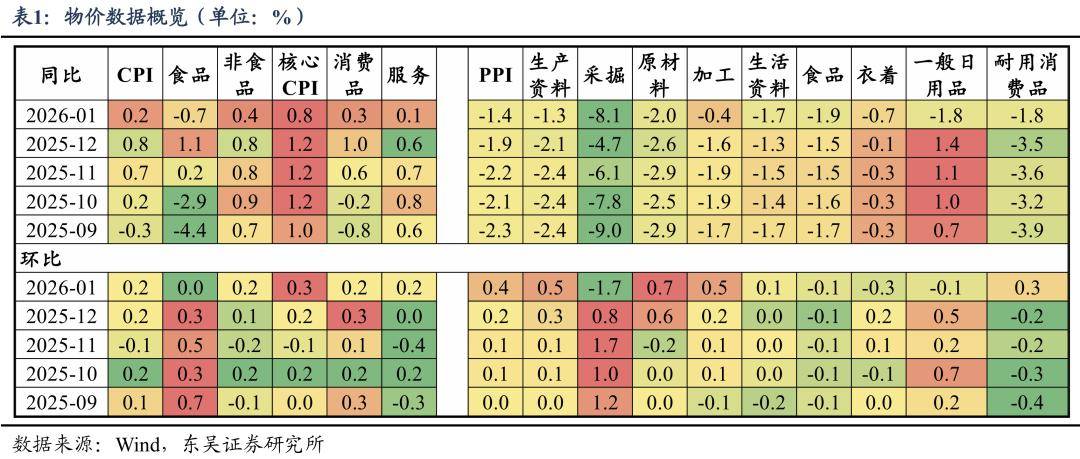
Core Insights - The January CPI increased by 0.2% month-on-month and year-on-year, which is below the Wind consensus expectation of 0.44%. The core CPI, excluding food and energy, rose by 0.8% year-on-year [1][2] - The PPI increased by 0.4% month-on-month but decreased by 1.4% year-on-year, aligning with Wind's expectations. The upward trend in both CPI and PPI remains intact despite the lower-than-expected CPI due to the timing of the Spring Festival [1][2] CPI Analysis - The lower-than-expected CPI is primarily influenced by the timing of the Spring Festival, which affects consumer behavior and price movements. Historical data shows that when the Spring Festival occurs later, January's CPI tends to be lower [2][5] - The CPI for food was flat at 0%, marking the lowest level for January since 2001, with vegetable prices significantly dragging down the overall food CPI [19][25] - Medical services have seen a consistent price increase, contributing positively to the core CPI. The medical services CPI rose by 0.4% month-on-month and 2.7% year-on-year [10][8] PPI Insights - The PPI's month-on-month increase of 0.4% is the largest in 28 months, driven by rising commodity prices and a reduction in price competition in certain sectors [26][31] - Factors contributing to the PPI increase include rising costs of raw materials and pre-holiday stockpiling by manufacturers, indicating a positive outlook for industrial prices [26][31] Future Price Outlook - The outlook for 2026 suggests a more optimistic view on price trends, with the CPI expected to rise above 1% year-on-year starting in February, and the PPI potentially turning positive around mid-year [31] - The sustainability of these price increases is contingent on supply-side factors, with less improvement expected from the demand side [31]

PPI“失去十五年”之谜
李迅雷金融与投资· 2026-01-18 09:39
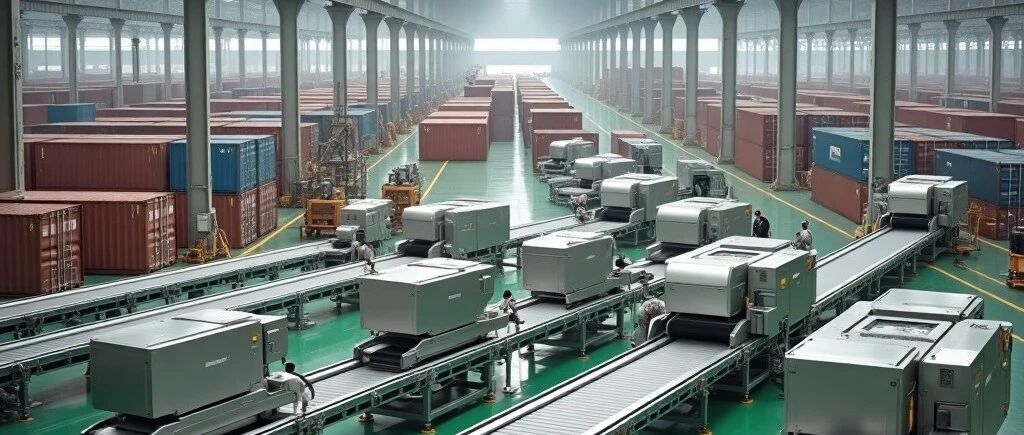
Core Viewpoint - The Producer Price Index (PPI) in China has shown a prolonged period of decline, with a year-on-year decrease of 1.9% reported for December 2025, marking 39 consecutive months of decline since October 2021. This trend raises questions about the underlying reasons for the stagnation in PPI despite significant GDP growth of 250% over the past 15 years [1][2][5]. Group 1: PPI Trends and Historical Context - The PPI has been in negative territory for 111 months from 2012 to 2025, indicating a long-term weakness in price levels despite substantial economic growth [1][2]. - The PPI index, set at 100 in December 2010, remained unchanged by December 2025, suggesting that the index has not increased over the past 15 years [1][5]. - Historical data shows that PPI experienced significant fluctuations, particularly influenced by production material prices, which have seen a cumulative increase of zero over the past 15 years [5][6]. Group 2: Economic Factors Influencing PPI - The 2008 financial crisis led to a surge in PPI due to government investment in infrastructure, but this effect was temporary, and PPI turned negative after March 2012 due to limited demand from final consumption [2][3]. - The divergence between Chinese and U.S. PPI post-2012 can be attributed to rapid capacity expansion in China, leading to a significant drop in export ratios relative to total industrial output [9][10]. - The prices of production materials, particularly in the upstream mining sector, have been volatile, heavily influenced by fluctuations in coal and oil prices [17][20]. Group 3: Demand and Supply Dynamics - The transmission of price changes from upstream to downstream sectors has been hindered by weak demand, particularly in the context of a competitive downstream market where prices are more sensitive to market conditions [23][24]. - Export dynamics play a crucial role in influencing midstream product prices, with a significant portion of revenue from industries like electronics and transportation being dependent on exports [27][28]. - The overall weak demand, especially in real estate, has contributed to a persistent decline in PPI, as seen in the correlation between real estate investment trends and PPI movements [38][39]. Group 4: Recommendations for Economic Adjustment - To address the long-term weakness in PPI, it is essential to adjust the supply-demand relationship, particularly by expanding effective demand through increased income for lower and middle-income groups [45][56]. - Stabilizing the real estate market is highlighted as a critical measure to boost consumption and alleviate overcapacity issues, with a focus on maintaining housing prices to prevent further declines [45][56]. - The government is encouraged to optimize fiscal spending to enhance residents' income, thereby supporting consumption and improving overall economic conditions [56].
巨星科技2025年预盈超24亿 股价九个月涨90%“国家队”加仓
Chang Jiang Shang Bao· 2026-01-06 23:57
Core Viewpoint - Company Giant Star Technology (002444.SZ) is expected to see a stable growth in its annual performance for 2025, with projected net profit growth of 5% to 20% year-on-year, despite a slowdown compared to previous years [1][2] Financial Performance - The projected net profit for 2025 is estimated to be between 2.419 billion and 2.764 billion yuan, with a year-on-year increase of 5% to 20% [1] - The expected non-net profit for 2025 is between 2.309 billion and 2.654 billion yuan, reflecting a year-on-year increase of 0.2% to 15.2% [1] - The fourth quarter of 2025 is projected to have a net profit between 259 million and 604 million yuan, with a year-on-year change of -29.7% to 64.2% [1][2] Market Performance - The stock price of Giant Star Technology has shown significant growth, with a maximum increase of over 90% in the past nine months, reaching a peak of 37.53 yuan per share on January 6, 2026 [1][5] - The company’s market capitalization reached 44.53 billion yuan as of January 6, 2026 [5] Investment and Shareholding - The company has seen increased investment from national social security funds, with notable share acquisitions in the third quarter of 2025 [1][5] - The company’s investment income from its stake in Zhongce Rubber has significantly increased, with 2025's first three quarters yielding 610 million yuan [3] Business Operations - Giant Star Technology focuses on durable consumer goods and industrial-grade products, primarily for home maintenance, construction, and vehicle repair [4] - The company has established a distributed global production layout with 23 production bases worldwide, enhancing its ability to respond to market demands [4] - The overseas market contributes over 90% of the company's revenue, with significant sales through major retailers in the US and Europe [4]

美股市场速览:大盘趋势淡化,资金持续流入半导体
Guoxin Securities· 2026-01-03 13:09
Investment Rating - The report maintains a "weaker than the market" rating for the U.S. stock market [4] Core Insights - The overall market trend is fading, with continued capital inflow into the semiconductor sector [2] - The S&P 500 index decreased by 1.0% this week, while the Nasdaq fell by 1.5% [1] - Energy sector showed the best performance with a gain of 3.3%, while the automotive sector saw the largest decline at -7.0% [1] Summary by Sections 2.1 Investment Returns - Energy sector recorded a weekly return of 3.3%, while the automotive sector experienced a decline of 7.0% [13] - The capital goods sector increased by 1.1%, and the semiconductor products and equipment sector had a slight gain of 0.2% [13] 2.2 Capital Flows - The estimated net capital inflow for the semiconductor products and equipment sector was $2.061 billion this week [15] - The automotive sector faced significant outflows, with a net capital outflow of $2.562 billion [15] - The capital goods sector saw a net inflow of $394 million [15] 2.3 Earnings Forecast - The earnings per share (EPS) forecast for the semiconductor products and equipment sector was adjusted upward by 0.5% this week [16] - The automotive sector's EPS forecast was increased by 0.7% [16] - Overall, the EPS expectations for all 24 sectors have risen [3] 2.4 Valuation Levels - The report does not provide specific valuation levels in the provided content [18]





21社论丨供需共同发力,持续扩大消费
21世纪经济报道· 2025-12-16 00:19
Group 1 - In November, the total retail sales of consumer goods reached 43,898 billion yuan, with a year-on-year growth of 1.3%. Excluding automobiles, the retail sales amounted to 39,444 billion yuan, growing by 2.5% [1] - From January to November, the total retail sales of consumer goods were 456,067 billion yuan, an increase of 4.0%. Excluding automobiles, the retail sales were 411,637 billion yuan, growing by 4.6% [1] - The recent decline in the year-on-year growth rate of retail sales is attributed to a high base from the previous year and the early release of some consumer demand due to ongoing policies promoting the replacement of old goods [1] Group 2 - The Chinese government has allocated 500 billion yuan in long-term special bonds for "two new" initiatives in 2025, with 200 billion yuan for large-scale equipment updates and 300 billion yuan for consumer goods replacement [1] - The Ministry of Commerce reported that from January to November, the replacement of consumer goods generated over 25,000 billion yuan in sales, benefiting over 360 million people and playing a significant role in boosting consumption [1] Group 3 - The expansion of consumption is a long-term strategy that requires joint efforts from both supply and demand sides, particularly focusing on the 400 million middle-income group with a demand for upgraded consumption [2] - There is a need to enhance the quality and innovation of service supply, as the middle and high-income groups are increasingly shifting towards service consumption [2] - The central economic work conference emphasized the importance of implementing special actions to boost consumption and developing plans to increase income for urban and rural residents [2] Group 4 - The real estate market has been adjusting, and the central economic work conference proposed high-quality urban renewal, focusing on renovation rather than large-scale demolition, which can create more jobs and establish a sustainable investment model [2] - Creating more service industry jobs is a long-term strategy, as the productive service industry is knowledge and talent-intensive, requiring further development [3] - To make domestic demand the main driver of economic growth, it is essential to address the imbalance between strong supply and weak demand, promoting internal growth through reforms [3]

以确定性政策托举信心 让百姓“有钱花、敢花钱”
Sou Hu Cai Jing· 2025-12-14 11:27
Group 1 - The core focus of the Central Economic Work Conference is to prioritize domestic demand and build a strong domestic market as the main goal for China's economy in the coming year [1] - China's total import and export value reached 41.21 trillion yuan in the first 11 months of 2025, with a year-on-year growth of 3.6%, marking a historic trade surplus of over 1 trillion USD [1][3] - Private enterprises have become the mainstay of foreign trade, with their import and export value reaching 23.52 trillion yuan, a year-on-year increase of 7.1%, accounting for 57.1% of China's total foreign trade [6] Group 2 - Imports showed a weaker performance, with a year-on-year growth of only 0.2%, indicating a lack of domestic demand [8][10] - The current economic challenge is characterized by a strong supply but weak demand, leading to a mismatch that affects both businesses and consumers [15][19] - The Central Economic Work Conference emphasized the need to shift from quantity to quality in production, addressing the structural contradictions in supply and demand [21][23] Group 3 - The conference proposed a comprehensive plan to increase income for urban and rural residents, aiming to enhance consumption capacity and stimulate demand [29][36] - Experts suggest that improving basic public services and investing in human capital are crucial for increasing residents' consumption ability, especially for low-income groups [39] - The government plans to stabilize the real estate market by encouraging the acquisition of existing properties for affordable housing, which is expected to boost consumer confidence [41]
以确定性政策托举信心 让百姓“有钱花、敢花钱” | 措施如何精准触达?解读↓
Yang Shi Wang· 2025-12-14 10:00
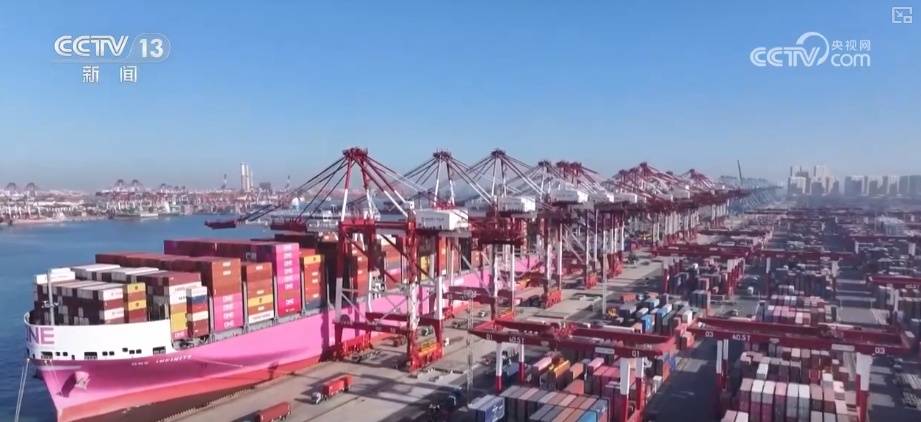
Group 1 - The core objective of China's economic work for 2026 is to prioritize domestic demand and build a strong domestic market, as highlighted in the recent Central Economic Work Conference [1] - China's total import and export value reached 41.21 trillion yuan in the first 11 months of 2025, marking a year-on-year increase of 3.6%, with a trade surplus exceeding 1 trillion USD for the first time [1][3] - The trade surplus of over 1 trillion USD is the highest in history, showcasing China's irreplaceable role in the global industrial chain and international economic landscape [3] Group 2 - Exports to the US decreased by 18.9% year-on-year, while exports to ASEAN and the EU increased significantly, compensating for the decline in US exports [3] - Private enterprises have become the mainstay of foreign trade, with their import and export value reaching 23.52 trillion yuan, a year-on-year increase of 7.1%, accounting for 57.1% of China's total foreign trade [4] - The import growth was only 0.2%, indicating weak domestic demand, which the Central Economic Work Conference emphasized needs to be addressed [4] Group 3 - The current economic challenge is characterized by strong supply but weak demand, leading to a mismatch that affects both businesses and consumers [7][9] - The final consumption rate is 56.6% of GDP, which is still significantly lower than the 80% rate in developed countries, indicating a large gap and potential for growth [7] Group 4 - The Central Economic Work Conference emphasized the need to shift from price competition to quality competition to address supply-demand mismatches [11][13] - A plan to enhance consumer spending and optimize the supply structure of consumer goods is set to be implemented by 2027, aiming to create significant consumption sectors [13][14] Group 5 - The new policy aims to implement a comprehensive income increase plan for urban and rural residents, moving beyond just supporting low-income groups [16][21] - Experts suggest that improving basic public services and investing in education, healthcare, and elderly care will enhance consumer capacity, particularly for low-income groups [23] Group 6 - The stability of the real estate market is crucial for consumer confidence, with measures proposed to stabilize the market and encourage the acquisition of existing properties for affordable housing [25]

2025年第四季度:中国经济观察
KPMG· 2025-12-05 06:18
Economic Performance - In the first three quarters of 2025, China's GDP grew by 5.2% year-on-year, exceeding last year's growth by 0.4 percentage points, indicating good progress towards the annual target of around 5%[8] - In Q3, GDP growth slowed to 4.8%, down 0.4 percentage points from Q2, reflecting a historical low in seasonally adjusted quarter-on-quarter growth[8] - Fixed asset investment decreased by 0.5% year-on-year in the first three quarters, with Q3 showing a significant decline to -6.2%, down 8.3 percentage points from Q2[12] Investment and Consumption - Real estate investment plummeted from -12.1% in Q2 to -19.2% in Q3, significantly dragging down overall fixed asset investment[12] - Social retail sales grew by 4.5% year-on-year in the first three quarters, but Q3 saw a slowdown to 3.5%, a drop of 1.9 percentage points from Q2, primarily due to reduced consumer income growth and insufficient internal demand[11] - Manufacturing investment fell to -1.2% in Q3, marking the first quarterly negative growth since Q3 2020, influenced by external trade uncertainties and the "anti-involution" policy[12] Trade and External Factors - Exports increased by 6.1% year-on-year in the first three quarters, with Q3 growth at 6.5%, supported by a 12.6% increase in exports to non-U.S. markets[13] - The average tariff imposed by the U.S. on China was reduced by 10% to 31%, positively impacting trade expectations for Q4[21] Fiscal and Monetary Policy - The government has implemented 500 billion yuan in policy financial tools and an additional 500 billion yuan in local government debt to support project construction and debt repayment[21] - Public fiscal revenue growth improved, with a cumulative year-on-year increase of 0.5% in the first three quarters, while public expenditure growth slowed to 2.4%[15] - The People's Bank of China emphasized a "moderately loose" monetary policy, with a focus on structural tools to support key sectors such as technology and green development[16]
【环球财经】10月欧元区PPI环比上涨0.1%
Xin Hua Cai Jing· 2025-12-03 12:36
Core Insights - The latest statistics from the EU Statistical Office indicate that the Producer Price Index (PPI) for the Eurozone and the EU has rebounded in October, with a month-on-month increase of 0.1% after a previous decline [1][2] - Year-on-year, industrial prices are on a downward trend, with the Eurozone PPI decreasing by 0.5% and the EU by 0.2% compared to the same month in the previous year [1] Group 1: Monthly Changes - In October, the prices of intermediate goods, energy, capital goods, and durable consumer goods in the Eurozone all increased by 0.1% month-on-month, while non-durable consumer goods saw a decrease of 0.2% [1] - The previous month, September, recorded a month-on-month decline of 0.1% for both the Eurozone and the EU [1] Group 2: Yearly Changes - Energy prices significantly contributed to the overall decline in industrial prices, with Eurozone energy prices dropping by 3.9% year-on-year and EU energy prices down by 2.5% [1] - Excluding energy, the year-on-year PPI for the Eurozone and the EU increased by 0.9% [1] - In the non-energy sector, capital goods prices rose by 1.7%, durable goods by 1.5%, non-durable goods by 1.4%, and intermediate goods by 0.1% year-on-year [1] Group 3: Country-Specific Variations - Among EU member states, Bulgaria recorded the highest month-on-month increase in industrial producer prices at 4.6%, followed by Ireland and Estonia with increases of 1.4% and 1.3%, respectively [2] - Conversely, Slovakia, Poland, and Italy experienced month-on-month declines of 1.0%, 0.5%, and 0.4% [2] - Year-on-year, Luxembourg saw the largest decline at 5.6%, followed by Ireland at 3.6% and Austria at 2.6% [2] - In contrast, Bulgaria's industrial producer prices surged by 17.6% year-on-year, with Romania and Sweden also experiencing significant increases of 9.4% and 4.9%, respectively [2]
【世界说】美国消费者信心指数跌至三年来新低 经济压力凸显政策与民生脱节
Sou Hu Cai Jing· 2025-11-17 14:14
Group 1 - The University of Michigan's Consumer Confidence Index for November dropped to 50.3 from 53.6 in October, marking a three-year low and reflecting multiple challenges facing the U.S. economy, including rising prices and increased corporate cost pressures [1] - Over 75% of Americans express concern about their personal financial situation, despite the government's claims of significant reductions in living costs [2] - The increase in prices is attributed to multiple factors, including tariffs imposed by the Trump administration on various goods, which have led to higher prices for items such as coffee, furniture, and children's toys [3] Group 2 - The furniture industry has been significantly impacted, with the U.S. government raising tariffs on certain furniture items to 30%, resulting in nearly a 10% year-over-year increase in living and kitchen furniture prices [5] - Coffee prices have surged by 41% due to a combination of climate anomalies and tariffs, leading businesses like "Krazy Coffee" in Southern California to raise prices twice due to increased costs [5] - The rising cost of living is directly affecting consumer behavior, with individuals like Chris Sohan, a resident of Queens, New York, expressing disappointment in government policies as they are forced to reduce purchasing frequency and adjust their consumption patterns [5]