鸡胸肉

Search documents
探访斗门坭湾市场:近场停车难,明码标价等消费细节待提升
Sou Hu Cai Jing· 2026-02-02 13:28
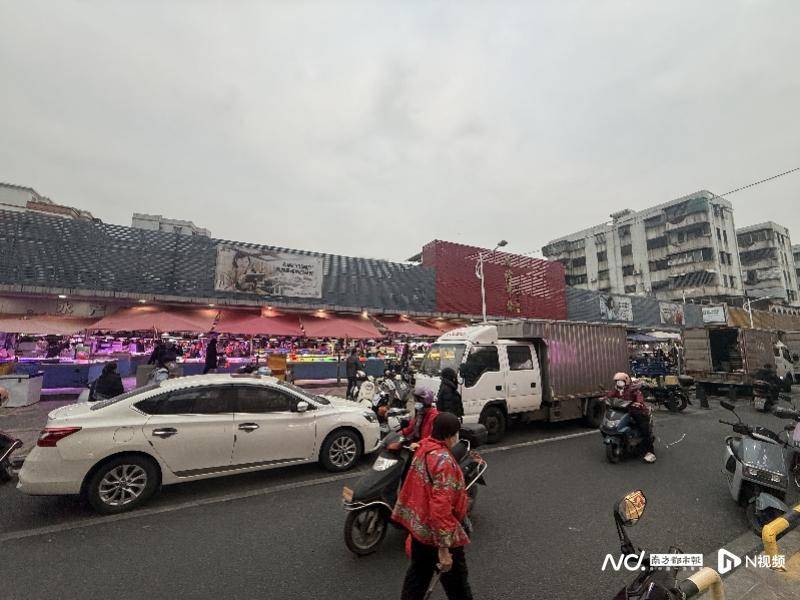
Core Viewpoint - The evaluation of the Doumen Niwan Market in Zhuhai highlights the need for improvements in parking convenience, pricing transparency, and measurement integrity, despite overall good management and hygiene standards [2][4][15]. Group 1: Parking Order - The market has limited parking spaces, with nearby areas being occupied by motorcycles and trucks, making it difficult for shoppers to find close parking [5]. - There are social parking lots and metered parking available about 100 meters away, which are less congested [5]. - No accessible parking spaces are provided, but all pathways remain unobstructed [5]. Group 2: Environmental Hygiene - The market environment is generally clean, with proper maintenance and mosquito control measures in place [6]. - Although some litter is present, each stall is equipped with garbage bins, and there is no significant odor or waste accumulation [6]. - Regular pest control measures are conducted, and records are available for verification [6]. Group 3: Business Management - The market operates without illegal vendors, and there is a structured management of mobile vendors [8]. - Promotional materials and business licenses are displayed, but there is a lack of price lists for products [8]. - Food safety inspections are conducted by a third-party agency, with results publicly available [10]. Group 4: Consumer Experience - The quality of vegetables and meat is generally good, although some seafood stalls have mixed quality [12]. - Instances of "reverse rounding" in pricing were noted, where customers were charged more than the displayed price [13]. - The absence of price tags and issues with weight measurement transparency were observed, indicating areas for improvement [13][15].

一只鸡的胜利
3 6 Ke· 2026-01-21 12:18
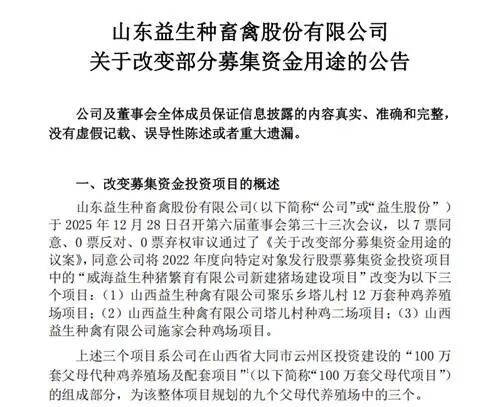
Core Insights - The white feather chicken industry is undergoing significant changes, characterized by cycles of price volatility, capacity reduction, and market restructuring [2][15][26] - The price of white feather chickens has experienced dramatic fluctuations, with a notable rebound in late 2023 after a period of decline, leading to increased prices across the supply chain [2][20][25] - The industry is shifting focus from traditional pig farming to chicken production due to the shorter growth cycle and higher feed conversion efficiency of white feather chickens [3][6][28] Price Dynamics - In the first three quarters of 2023, the price of white feather chickens declined significantly, causing financial strain for many farmers [2][15] - By late November, prices began to rise sharply, reaching new highs in December, with some markets experiencing a "chicken rush" due to supply constraints [2][20] - As of January 9, 2024, the price of live chickens in major production areas remained stable at 3.75 yuan per jin in Shandong and 4 yuan per jin in Liaoning, indicating a high-level consolidation [2][20] Industry Transition - Companies like Yisheng and Wen's have shifted their investment strategies, moving funds from pig farming to chicken breeding projects, reflecting a broader trend in the industry [3][7] - The white feather chicken has become a core component of the poultry industry, increasingly relied upon for its cost-effectiveness and adaptability in the food supply chain [12][28] - The domestic breeding system for white feather chickens is improving, reducing reliance on foreign breeds and enhancing supply chain stability [13][28] Supply Chain Characteristics - The white feather chicken industry is marked by its high degree of industrialization, with rapid feedback loops between supply and demand affecting price stability [25][26] - The supply side has inherent cyclical characteristics, with delays in response to price changes, leading to periods of oversupply and subsequent shortages [24][25] - The demand for white feather chickens remains robust, particularly in fast-food and prepared meal sectors, making it a critical raw material in the food industry [12][25] Long-term Outlook - The ongoing trend of capital moving from pig to chicken production suggests a reevaluation of the white feather chicken's role in the market [14][28] - The industry's future stability may improve as domestic breeding capabilities increase and smaller producers exit the market, leading to a more concentrated and resilient supply chain [28][29] - While price volatility will persist, the industry's operational logic is becoming clearer, emphasizing the importance of strategic responses to market fluctuations rather than reliance on single-direction trends [26][30]
休闲食品企业加速线下“抢滩” 全渠道融合或重塑行业格局
Zhong Guo Chan Ye Jing Ji Xin Xi Wang· 2026-01-07 01:10
Core Insights - The leisure food industry is witnessing a significant shift towards offline channel expansion, with companies like Three Squirrels and Qiaqia Foods enhancing their physical presence to meet evolving consumer demands for health, cost-effectiveness, and convenience [1][2][4] Group 1: Offline Channel Expansion - Three Squirrels is opening its first batch of seven standard stores across various cities, aiming to cover a wide range of consumer needs with a new product mix that includes fresh and prepared items, with a self-branding ratio of 90% [2] - Salted Fish's strategy focuses on returning to supermarkets to become a deeper partner in retail channels, enhancing consumer trust through flexible channel strategies [2] - Qiaqia Foods is actively expanding its snack wholesale channels by increasing SKU variety and store coverage to improve channel performance [2] Group 2: Hard Discount Retail Growth - Hard discount retailers, represented by internet and retail giants, are aggressively expanding their offline presence, with Meituan's "Happy Monkey" and Hema's "Super Box" planning to open numerous new stores in the coming years [3] - The trend of channel transformation is reshaping the industry landscape, with a notable rise in various offline formats such as convenience stores, membership warehouses, and discount stores, alongside innovations in online retail models [3] Group 3: Product Diversification and Health Trends - The leisure food sector is diversifying its product offerings, with companies like Three Squirrels introducing a range of new items to meet personalized consumer demands [4] - Good Products is also expanding its product categories to cover a wide array of consumer needs, including healthy and convenient food options [4] - Health attributes are becoming a core selling point, with consumers increasingly favoring products that are natural, simple in ingredients, and free from excessive additives, raising the bar for innovation and supply chain efficiency [4] Group 4: Market Trends and Challenges - The Chinese snack industry is maturing, with consumer demands shifting towards health, functionality, and cost-effectiveness [5] - The expansion of volume discount stores and instant retail is expected to reshape the market landscape, driven by penetration into niche scenarios and regional market expansion [5] - Key challenges facing the industry include raw material cost fluctuations, homogenization of products, and food safety risks [6]



中疾控:冬季减肥,这些变化要知道
Ren Min Wang· 2025-12-25 01:46
Core Viewpoint - Winter weight loss is particularly challenging due to physiological changes, seasonal activity reductions, dietary shifts, and psychological effects related to clothing [2][10]. Group 1: Physiological and Behavioral Challenges - Seasonal metabolic changes lead to a slight decrease in basal metabolic rate as the body enters "energy-saving mode" to cope with cold temperatures [2]. - Reduced outdoor activities during winter result in significant decreases in daily energy expenditure, compounded by lower exercise intensity due to heavy clothing [2]. - Increased availability of high-calorie foods during winter festivities and a natural increase in appetite for energy-dense foods contribute to weight gain [2]. Group 2: Nutritional Strategies - Optimizing the ratio of macronutrients is crucial for weight loss, with protein making up 15%-20%, carbohydrates 50%-60%, and fats 20%-30% of daily energy intake [3][4][5]. - Emphasis on high-fiber whole grains and healthy fats from sources like nuts and olive oil is recommended to enhance weight loss effectiveness [4][5]. Group 3: Hydration and Sleep - Adequate hydration is essential, with a recommendation of 1.5-1.7 liters of water daily to enhance satiety and metabolic function [6][7]. - Sufficient sleep, averaging around 7 hours per night, is necessary to regulate hunger hormones and reduce cravings for high-energy foods [7]. Group 4: Exercise Adjustments - Physical activity accounts for 15%-30% of total energy expenditure, making it vital to incorporate resistance training and high-intensity interval training to boost metabolism [8][9]. - Creating more opportunities for daily movement, such as household chores and taking stairs, can help counteract winter lethargy [9]. Group 5: Psychological Factors - Accepting minor fluctuations in weight during winter is normal, with a typical decrease of 0.1-0.2 kg per week being expected [10]. - Monitoring various indicators beyond weight, such as waist circumference and fitness levels, can provide motivation and a more comprehensive view of progress [10]. - Setting achievable process-oriented goals, like completing a certain number of workouts per week, can enhance motivation and success in weight management [10].
冬天一躺下就“烧心”?快自查你的睡姿和枕头
Bei Jing Qing Nian Bao· 2025-12-22 01:02
Core Viewpoint - The article discusses the seasonal increase in gastroesophageal reflux disease (GERD) during winter, highlighting the reasons behind this trend and providing dietary and lifestyle recommendations to manage symptoms effectively. Group 1: Seasonal Factors Contributing to GERD - Winter is identified as a peak season for GERD due to three main factors: cold weather causing bodily responses that increase stomach acid and relax the lower esophageal sphincter, dietary changes towards heavier and high-fat foods, and reduced physical activity leading to increased abdominal pressure [2][3]. Group 2: Dietary Recommendations - Dinner timing is crucial; it is advised to wait at least three hours after eating before lying down to allow for proper digestion [3]. - Portion control is emphasized, with a recommendation to eat until 70% full to reduce pressure on the stomach [4]. - Foods are categorized into "green light" (recommended), "yellow light" (moderate consumption), and "red light" (avoid), with specific examples provided for each category [4]. Group 3: Common Misconceptions - Drinking full-fat milk before bed is discouraged as it can increase stomach acid production, worsening symptoms [5]. - Alcohol consumption is also advised against, as it can irritate the esophagus and lead to inflammation [5]. Group 4: Sleep Position Recommendations - The best sleeping position for GERD patients is left-side sleeping, which minimizes acid reflux risk due to the anatomical position of the stomach [6]. - Other positions are ranked, with back sleeping being moderate and right-side sleeping being less favorable, while stomach sleeping is strongly discouraged [6][7]. Group 5: Proper Bed Adjustment - Elevating the head of the bed is recommended to create an incline that helps prevent acid reflux, with specific height guidelines provided [9][10]. - The focus should be on adjusting the bed rather than just the pillow height to ensure proper alignment and support [9][10]. Group 6: Winter Care Package for GERD - A summary of four key practices for managing GERD during winter includes eating a light dinner, engaging in post-meal activity, avoiding late-night snacks, and maintaining an elevated sleeping position [11][12][13][14].
白羽鸡价格逼近年内最高,还能愉快吃鸡吗?
Xin Lang Cai Jing· 2025-12-19 10:50
Core Viewpoint - The price of white feather chicken in Shandong has increased significantly, reaching a new high in the fourth quarter, which may lead to price adjustments in related products such as fast food and pre-packaged meals [1] Price Trends - The price of white feather chicken has risen by 5 cents to 3.65 yuan per jin, with actual transaction prices reaching 3.70 yuan per jin, just shy of the annual peak of 3.72 yuan per jin [1] - Chicken breast prices have cumulatively increased by over 500 yuan per ton recently, indicating a significant upward trend in poultry prices [1] Supply Issues - There is a reported decrease in chicken supply, with some chickens weighing 20% less than usual, leading to a scarcity of larger-sized chickens [1] - Some slaughterhouses are reportedly exhausting their future supply by 4 to 5 days due to the current demand and supply constraints [1] Market Impact - The rising prices of white feather chicken are expected to affect various sectors, including fast food chains like KFC and McDonald's, as well as barbecue restaurants and pre-packaged meal providers [1] - The increase in chicken prices may lead to subsequent price hikes in related products such as barbecue items and fast food offerings [1]
辽宁省铁岭市市场监督管理局关于食品安全抽检信息的通告2025年第40期
Zhong Guo Zhi Liang Xin Wen Wang· 2025-12-18 03:15
Summary of Key Points Core Viewpoint The Iron Ridge Market Supervision Administration conducted a food safety inspection, testing 189 batches of edible agricultural products, with 188 passing and 1 failing the national food safety standards. The administration has initiated verification and disposal procedures for the non-compliant sample [1][2]. Group 1: Inspection Results - A total of 189 batches of edible agricultural products were tested, with 188 deemed compliant and 1 non-compliant [1][2]. - The non-compliant sample was determined based on individual project failures according to national food safety standards [1][2]. Group 2: Follow-up Actions - The Iron Ridge Market Supervision Administration has commenced verification and disposal procedures for the reported non-compliant sample [1][2]. Group 3: Attachments and Details - Detailed information regarding the inspection projects, compliant products, and non-compliant products is available in the attached documents [2].

【独家专访】7年圈粉百万,HIITSUP全能博仕如何在健康烘焙赛道破局内卷?
东京烘焙职业人· 2025-12-12 08:31
Core Viewpoint - HIITSUP has successfully differentiated itself in the health baking sector by focusing on genuine ingredients and advanced technology, achieving a high repurchase rate of over 70% among its target demographic of health-conscious consumers aged 18-35 [2][4]. Group 1: Brand Origin and Transition - The brand was founded by an individual with a background in finance and environmental consulting, who identified significant pain points in the health food market, such as high-calorie options and questionable ingredient safety [6]. - Initially, HIITSUP offered high-protein products like low-fat beef and chicken, but later shifted focus to whole grain baking due to better market demand and higher repurchase rates associated with daily consumption [6][7]. Group 2: Brand Upgrade and Market Strategy - The rebranding from HIITSUP to HIITSUP All-Purpose was driven by a dual need for industry alignment with national health initiatives and consumer demand for a broader range of healthy food options [7]. - The brand aims to establish itself as a leader in the comprehensive light food category by enhancing R&D and collaborating with top research institutions to support product innovation and nutritional upgrades [7][15]. Group 3: Product Differentiation - HIITSUP prioritizes nutritional value over sensory pleasure, contrasting with traditional baking that often emphasizes taste through high sugar and fat content [11]. - The company employs innovative ingredient substitutions and precise cooking techniques to balance health and taste, such as using whole grains and alternative sweeteners [11][13]. Group 4: Competitive Advantages - The brand's competitive edge lies in its focus on long-term capabilities in product formulation, process innovation, and deep channel engagement, rather than relying on short-term marketing tactics [17]. - HIITSUP has established a robust trust framework through transparency in ingredient sourcing and nutritional information, which resonates well with its target audience [18][19]. Group 5: Customer Engagement and Marketing - The brand targets primarily female consumers aged 18-35, utilizing a strategy that emphasizes product quality, trust-building, and word-of-mouth marketing [17][20]. - HIITSUP encourages customer feedback and actively involves consumers in product testing, which helps refine offerings and enhance customer loyalty [22]. Group 6: Future Growth and Strategic Planning - The long-term growth of the health baking sector is expected to be driven by policy changes, evolving consumer preferences, and technological advancements [27]. - HIITSUP's strategic focus includes deepening its core product offerings while exploring new categories, enhancing sustainability practices, and tailoring products to specific consumer needs [29][30].

辽宁省抚顺市市场监督管理局关于中央转移支付食品抽检信息公告(2025年第8期)
Zhong Guo Zhi Liang Xin Wen Wang· 2025-12-10 08:59
Core Viewpoint - The announcement from Fushun Market Supervision Administration reveals the results of food safety inspections, indicating that out of 53 batches tested, 8 were found to be non-compliant while 45 met safety standards [3]. Group 1: Inspection Results - A total of 53 batches were inspected across various locations including restaurants, fresh supermarkets, convenience stores, and wholesalers [3]. - The inspection covered 7 categories of food products, including restaurant food, condiments, edible agricultural products, bean products, pastries, fruit products, and beverages [3]. - Out of the 53 batches, 8 were deemed non-compliant, resulting in a compliance rate of approximately 84.9% [3]. Group 2: Non-compliance Details - Specific non-compliance issues included pesticide residues such as: - Pepper with a residue of 0.059 mg/kg for dimethoate, exceeding the standard of 0.05 mg/kg [3]. - Green onions with a residue of 0.70 mg/kg for imidacloprid, exceeding the standard of 0.3 mg/kg [3]. - Other non-compliance cases involved the presence of anionic synthetic detergents in reusable dining utensils, with results indicating levels above the permissible limits [3]. Group 3: Compliance Details - The compliance list included various food items such as fresh mushrooms and grapes, all meeting safety standards [4]. - The inspection results reflect a focus on maintaining food safety and quality in the Fushun region, with a significant majority of products passing the safety checks [4].

怎样才能最大限度地减少纯脂肪,同时提升肌肉含量?
GLP1减重宝典· 2025-11-11 10:37
Core Viewpoint - The article emphasizes the importance of a balanced approach to fat loss and muscle gain, highlighting the significance of caloric deficit, protein intake, exercise types, and sleep quality in achieving sustainable results [6][7][18]. Summary by Sections Caloric Deficit - A daily caloric deficit of 300-500 kcal is deemed optimal for effective fat burning while preserving muscle mass, reducing the risk of rebound weight gain [7][9]. - It is recommended to calculate the basal metabolic rate and total daily energy expenditure to establish a suitable caloric deficit [8]. Protein Intake - The article suggests a protein intake of 1 gram per kilogram of body weight, with examples provided for a woman weighing 60 kg needing approximately 60 grams of high-quality protein daily [11]. - Each meal should contain 20-30 grams of protein to meet synthesis needs, as excessive protein may increase diabetes risk [11]. Exercise Recommendations - Strength training is crucial for muscle growth, with a recommendation of 2-3 sessions per week, lasting 30-60 minutes each [13]. - Aerobic exercise should be limited to 3-5 times a week for 20-30 minutes to prevent muscle loss [14]. Sleep Importance - Sleep plays a vital role in muscle synthesis and fat breakdown, with optimal sleep times suggested to be around 10:30 PM to 7 AM [16][17]. - The article posits that effective weight management is a combination of exercise, diet, and sleep, with sleep acting as a bridge to maximize the effects of the other two [18]. Muscle Preservation - It is noted that even with proper diet, exercise, and sleep, muscle gain during a month is limited to just over a pound, emphasizing the need to protect muscle during fat loss [19].