Zhong Guo Qi Che Bao Wang

Search documents
观车 · 论势 || 小鹏“自证”背后:车企竞争已驶入多维新赛道
Zhong Guo Qi Che Bao Wang· 2025-11-19 01:45
Core Insights - The event surrounding the unveiling of the IRON humanoid robot by XPeng Motors has transcended technical debates, evolving into a broader discussion about trust, technology, and the future of the automotive industry [1][5] - XPeng's efforts to validate the IRON robot reflect a significant shift in the automotive sector, moving from traditional competition focused on hardware to a comprehensive transformation towards building future transportation ecosystems [1][4] Industry Transformation - The automotive market has shifted from hardware-centric competition, exemplified by brands like Volkswagen and Toyota, to a landscape where electric and intelligent vehicles dominate, allowing new entrants to redefine competition [2][3] - XPeng's product matrix, including the X9 range-extended vehicle and the IRON robot, showcases a cross-disciplinary approach that integrates AI and sensor technologies, indicating a move towards a holistic mobility service provider model [2][3] Technological Integration - The underlying logic of automotive companies venturing into robotics is based on decades of technological accumulation in areas such as intelligent control and multi-sensor integration, which align with the core needs of humanoid robots [3] - XPeng's commitment to full-stack self-research, from AI chip design to material development for the IRON robot, exemplifies a high level of control and innovation, enabling precise coordination of the robot's movements [3] Competitive Landscape - The trend of multi-dimensional strategies in the automotive industry is not unique to XPeng; other companies like Hyundai and Chery are also integrating robotics into their operations, indicating a collective industry shift [4] - The future competitiveness of automotive companies will hinge on their ability to create a complete ecosystem that combines hardware, software, and service scenarios, moving beyond mere vehicle sales [4][5] Conclusion - The process of validating the IRON robot serves as a metaphor for the automotive industry's broader transformation, emphasizing the need for innovation and adaptability in the face of skepticism [5]

岚图泰山37.99万元起售!岚图以三旗舰矩阵夯实高端化路径
Zhong Guo Qi Che Bao Wang· 2025-11-19 01:16
Core Insights - The launch of the Lantu Taishan marks a significant entry into the luxury SUV market, with a price range of 379,900 to 509,900 yuan, positioning it as a competitor in the 500,000 yuan luxury SUV segment [2] Product Features - The Lantu Taishan is the first Chinese SUV equipped with the 800V Lanhai Intelligent Super Hybrid System, featuring a standard 65kWh lithium battery, 350 km pure electric range, and over 1400 km comprehensive range [4] - It introduces a three-chamber air suspension system and a rear-wheel steering parking system, enhancing maneuverability with a turning radius of just 5.4 meters despite its length exceeding 5.2 meters [6] - The vehicle is equipped with Huawei's latest ADS 4.0 with four laser radar systems, enabling advanced intelligent driving capabilities that surpass human driving [8] Interior and Comfort - The interior features high-end amenities comparable to luxury vehicles, including a dual-door intelligent climate control box, 32-speaker sound system, and a 21.4-inch 3K ceiling screen [10] - AI cloud comfort seats with 66 high-precision sensors provide 26-point massage functionality, enhancing passenger comfort [10] Safety Features - The Lantu Taishan includes a comprehensive collision avoidance system (CAS 4.0) and advanced passive safety features, such as a high-strength door ring and multiple airbags, aimed at minimizing injury risks [12] Market Position and Performance - The Lantu Taishan redefines the value benchmark for flagship large six-seat SUVs and signifies Lantu's complete product lineup from sedans to SUVs, showcasing its competitive stance against international luxury brands [13] - From January to October, Lantu's cumulative delivery volume increased by 82%, with a gross margin rising from 8.3% in 2022 to 21.0% in 2024, making it the second highest in the EV industry [15] - Lantu achieved a milestone with the rollout of its 300,000th vehicle, becoming the first high-end new energy brand from a central state-owned enterprise to reach this scale, further enhancing its market competitiveness [15]


万众一心,再启新篇!BJ40增程元境智行携手北京北汽男篮启幕新赛季
Zhong Guo Qi Che Bao Wang· 2025-11-19 00:59
Core Viewpoint - The Beijing Shougang Basketball Club, in partnership with BAIC Group, is gearing up for the 2025-2026 season, emphasizing a strong collaboration that merges the automotive and sports industries, showcasing the BJ40 range as a symbol of this partnership [1][3][14]. Group 1: Partnership and Collaboration - BAIC Group has been the title sponsor of the Beijing Shougang Basketball Club for three consecutive years, contributing to the development of Beijing's sports industry [1][3]. - The partnership is characterized by a shared spirit and commitment to excellence, with BAIC Group pledging to support the basketball team with quality products and services [3][14]. Group 2: Product Launch and Features - The BJ40 Extended Range Intelligent Driving SUV was highlighted at the event, featuring advanced capabilities such as the unique high-speed NOA function for automated parking and memory parking [5][7]. - The BJ40 Extended Range model boasts a low fuel consumption of 1.33L/100km, enhancing its appeal for urban commuting while maintaining off-road capabilities [7]. Group 3: Sales Performance and Market Impact - Since its launch, the BJ40 Extended Range has achieved over 30,000 units delivered, establishing itself as a leader in the hard-core extended range SUV segment in China [12]. - The BJ40 Extended Range Intelligent Driving model received 5,217 orders within 24 hours of its launch, indicating strong market demand and interest [12]. Group 4: Promotional Activities - BAIC Group announced various promotional activities for the new season, including cash bonuses and exclusive gifts for customers purchasing BJ40 models [8]. - The promotional campaign aims to enhance customer engagement and drive sales, aligning with the basketball team's spirit of perseverance and excellence [8][14].


全系四驱,“可城、可玩、可野”,福特智趣烈马正式开启预售,22.98万元起
Zhong Guo Qi Che Bao Wang· 2025-11-18 13:58
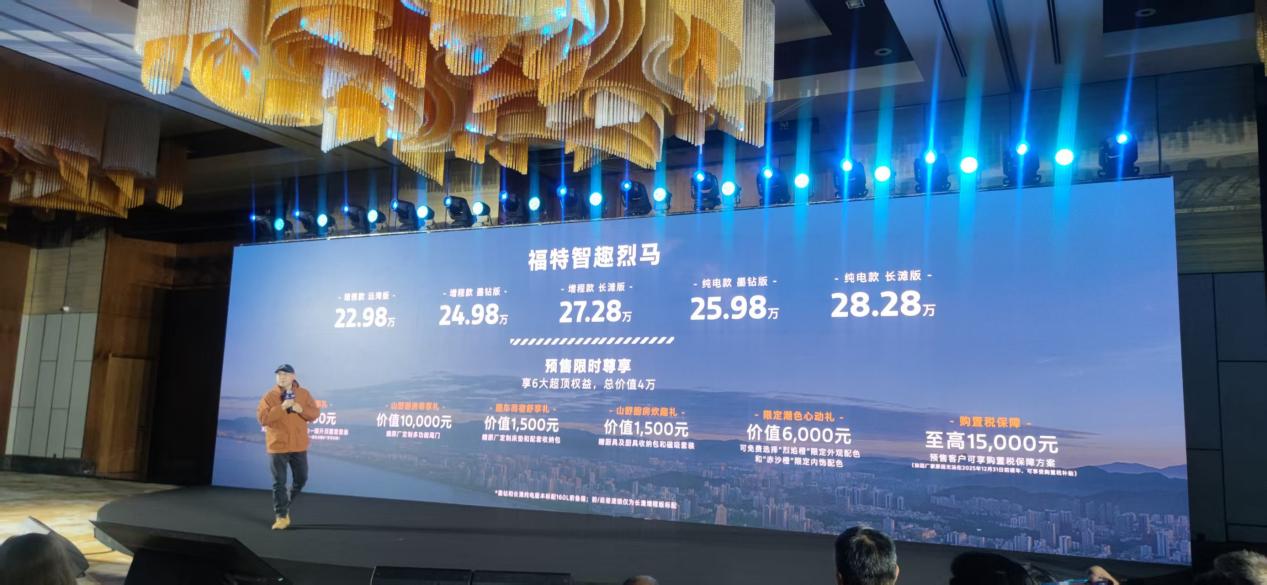
Core Viewpoint - Ford's new electric vehicle, the Ford Mustang Mach-E, has officially started pre-sales, offering both extended-range and pure electric versions with attractive pricing and extensive features [1][18]. Group 1: Vehicle Specifications - The Ford Mustang Mach-E features a length of 5025mm and a wheelbase of 2950mm, providing spacious interior comfort [5]. - The vehicle offers the largest trunk space in its class at 497L, along with a unique 160L front trunk in the pure electric version [5]. - The pure electric version is equipped with a 105.4kWh battery, achieving a CLTC range of 650km, while the extended-range version has a 43.7kWh battery with a total range of 1220km when fully fueled and charged [7]. Group 2: Intelligent Features - The vehicle's smart cockpit is built with top-tier hardware, including a 70-inch AR-HUD and a 15.6-inch Mini-LED central control screen, providing an immersive user experience [8]. - It features a dual AI voice system supported by a Qualcomm 8255 chip, enabling natural conversation interactions [8]. - The vehicle includes a "Travel Log" function that recommends routes and provides real-time navigation, enhancing the outdoor experience [11]. Group 3: Off-Road Capabilities - The Ford Mustang Mach-E boasts impressive off-road capabilities with a 30° approach angle, 32° departure angle, and a minimum ground clearance of 220mm [14]. - It is equipped with an intelligent four-wheel-drive system and offers eight driving modes tailored for various terrains [16]. - The vehicle's chassis is designed for durability and handling, featuring a robust aluminum double-wishbone front suspension [16]. Group 4: Safety Features - The vehicle incorporates advanced safety measures, including a high-strength body structure with a steel content of 25% and ten airbags for comprehensive passive safety [16]. - The battery pack is designed with multiple layers of physical protection and has passed rigorous safety tests, ensuring reliability under extreme conditions [17]. Group 5: Market Positioning - The Ford Mustang Mach-E is positioned as a versatile vehicle catering to urban commuting, weekend getaways, and long-distance exploration, aligning with modern consumer needs [18]. - The pre-sale event commenced on November 18, allowing users to reserve the vehicle through the "Ford Beyond" app [1][18].

70.8%对3.2%!合资品牌被甩出赛道?
Zhong Guo Qi Che Bao Wang· 2025-11-18 10:52
Core Insights - The Chinese electric vehicle (EV) market is experiencing a stark contrast between domestic brands and joint venture brands, with domestic brands achieving a penetration rate of 77.9% in October, while joint venture brands only reached 7% [2][3] - The market share for domestic brands stands at 70.8%, while joint venture brands hold a mere 3.2%, indicating a significant gap in the transition to electric vehicles [3] Group 1: Market Performance - In October, the total retail sales of passenger vehicles in China reached 2.242 million units, with domestic brands selling approximately 1.55 million units, of which 77.9% were EVs [2] - Joint venture brands sold around 510,000 units, with only 7% being electric vehicles, highlighting their continued reliance on traditional fuel vehicles [2] - The luxury vehicle segment also shows a shift, with 22.2% of luxury car sales being electric, indicating a growing acceptance of EVs among higher-end consumers [2] Group 2: Challenges for Joint Venture Brands - Joint venture brands face challenges due to a disconnect between product positioning, technological advancements, and the rapidly changing demands of the Chinese market [5] - Many joint venture brands are still relying on "oil-to-electric" conversion strategies, with limited dedicated electric vehicle platforms, which hampers their competitiveness [5] - The technological gap is evident, as domestic brands have made significant advancements in battery systems and smart features, while joint venture brands often depend on technology from their headquarters [5] Group 3: Strategic Shifts in Joint Venture Brands - In response to the challenges, joint venture brands are restructuring their management and product strategies to enhance their market responsiveness [7][8] - Notable changes include the appointment of local leaders in key positions, such as the first non-Japanese general manager for Toyota China, aimed at improving local decision-making [7] - Companies like Beijing Hyundai are also focusing on launching new products, with plans to introduce 20 new models by 2030, including 13 electric vehicles [8] Group 4: Future Outlook - Major automakers like General Motors, Volkswagen, and BMW are accelerating the launch of new electric models through dedicated platforms and partnerships with local companies [9] - While joint venture brands currently face slow product iterations and high costs, there is potential for improvement as local management teams become more effective and new products are introduced [9]
站稳3000万辆、增长超过20%,“十四五”中国汽车硕果盈枝
Zhong Guo Qi Che Bao Wang· 2025-11-18 09:50
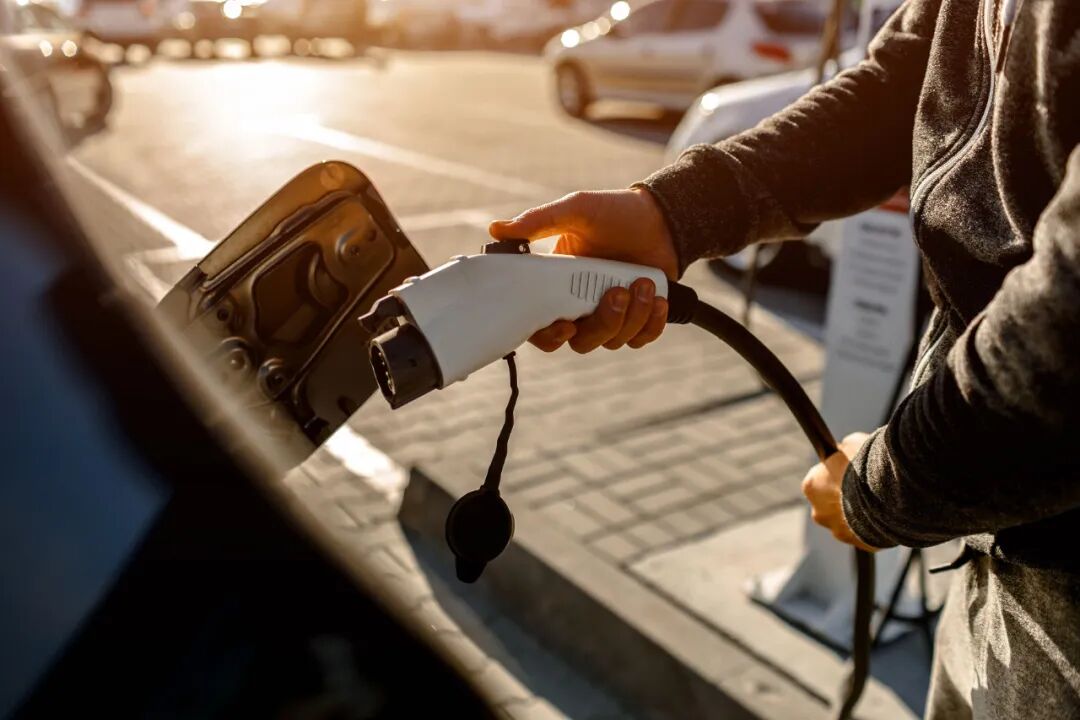
Core Insights - The article highlights the significant growth and transformation of China's automotive industry during the "14th Five-Year Plan" period, showcasing advancements in production, sales, and technology [2][10]. Production and Sales Growth - China's automotive production and sales increased by over 5 million units during the "14th Five-Year Plan," with a market size growth of 20% [2]. - In 2021, automotive production and sales reached 26.08 million and 26.27 million units, respectively, marking a year-on-year increase of 3.4% and 3.8% [3]. - By 2023, production and sales surpassed 30 million units for the first time, reaching 30.16 million and 30.09 million units, with year-on-year growth of 11.6% and 12% [3]. - In 2024, production and sales are projected to reach 31.28 million and 31.44 million units, reflecting year-on-year growth of 3.7% and 4.5% [3]. Market Dynamics - The market for Chinese brands has significantly expanded, with market share for domestic passenger cars rising from 44.4% in 2021 to 65.2% in 2024 [4]. - In the first ten months of 2023, sales of Chinese brand passenger cars reached 16.8 million units, a year-on-year increase of 21.3% [4]. Export Milestones - China's automotive exports reached a historic milestone, with exports surpassing 2 million units for the first time in 2021, and reaching 4.91 million units in 2023, a year-on-year increase of 57.9% [4]. - By 2024, exports are expected to exceed 6 million units, solidifying China's position as the world's largest automotive exporter [4]. New Energy Vehicles (NEVs) - NEV sales in China experienced over 4-fold growth during the "14th Five-Year Plan," leading the global market [5]. - In 2021, NEV production and sales reached 3.55 million and 3.52 million units, respectively, with a market share of 13.4% [6]. - By 2024, NEV production and sales are projected to exceed 12 million units, with a market share of 40.9% [6]. Infrastructure Development - The charging infrastructure for electric vehicles has expanded significantly, with over 18 million charging points established by September 2025, reflecting a year-on-year growth of 54.5% [7]. - The improvement in charging facilities has enhanced the convenience and efficiency of energy replenishment for NEV owners [7]. Technological Advancements - The automotive industry has made substantial technological breakthroughs, particularly in battery technology, with a 30% reduction in battery costs and a 40% increase in battery lifespan [9]. - The penetration rate of vehicles with L2-level driving assistance features reached 62% in the first half of 2023, indicating a strong push towards intelligent vehicle technology [9]. Conclusion - The "14th Five-Year Plan" period has marked a transformative era for China's automotive industry, characterized by significant growth in production, sales, and technological innovation, positioning the country as a leader in the global automotive market [10].

从国产替代到全球竞逐:平原滤清器的创新突围之路
Zhong Guo Qi Che Bao Wang· 2025-11-18 08:47
Core Insights - The company, Pinglu Filter Co., has obtained AS9100D aerospace quality management system certification, marking its official entry into the aerospace sector after years of focus on automotive filters [2] Strategic Positioning - Since 2016, the company has proactively pursued a "hydrogen-electric dual advancement" strategy, investing 5% of annual sales revenue into R&D, leading to significant innovations and a complete industrial layout in the new energy sector, including battery thermal management and hydrogen fuel cell systems [3] - The new energy business has seen over 40% revenue growth, demonstrating the successful transition from a parts supplier to a system solution provider [3] Talent Development - The company has established a systematic talent cultivation framework, with a research and development team of 118 members, creating a multi-level development pathway for employees [6] - Initiatives such as lean team leader training, English talent selection, and school-enterprise cooperation enhance the team's professional skills and international capabilities [6] Quality Management - The company integrates the MBSE system engineering approach with the 16949 quality management system to create a comprehensive quality control system from demand analysis to system design [7] - The "everyone is a quality inspector" policy extends quality management throughout the supply chain, fostering a shared quality ecosystem [7] - In 2024, the company is set to receive the "National Quality Benchmark" award for its advanced quality management model [7] International Expansion - As the Chinese automotive industry accelerates its global presence, the company is expanding its overseas market strategy from single product exports to technology collaboration and brand building [9] - The company has established a global distribution network, exporting products to 46 countries and regions, and has transitioned from "product output" to "technology output" [9] - With 410 patents, the company reflects the innovation journey of Chinese manufacturing, showcasing a new image of Chinese manufacturing on the international stage [9]

展望“十五五” 巩固车优势 第二十届中国经济论坛平行论坛广州举行
Zhong Guo Qi Che Bao Wang· 2025-11-18 08:47
Core Insights - The forum emphasized the significance of aligning thoughts and actions with the spirit of the 20th National Congress of the Communist Party, particularly in planning for the next five years under the "14th Five-Year Plan" [3] - The automotive industry is seen as a crucial pillar for macroeconomic development, with a focus on high-quality growth, technological self-reliance, and the establishment of a modern industrial system [3][4] Group 1 - The "14th Five-Year Plan" outlines key goals for the automotive industry, including significant advancements in high-quality development, increased levels of technological independence, and a balanced approach to development and security [3] - The next five years present a strategic opportunity for China's automotive industry to transition from a major automotive nation to a strong automotive power, driven by rising penetration of new energy vehicles and widespread application of intelligent technologies [3] - Innovation in the automotive sector should not only focus on electrification and intelligent networking but also explore advancements in materials, foundational technologies, and internet applications [3] Group 2 - The forum included various segments such as keynote speeches, thematic discussions, and roundtable forums, where participants shared insights on the automotive industry's role in economic development and the resilience of the automotive supply chain [4] - Attendees proposed strategies and suggestions for the automotive industry's development during the "14th Five-Year Plan" period, highlighting the need for strategic planning and practical implementation to achieve high-quality growth [4]

通用汽车、特斯拉真的能脱离中国零部件吗?
Zhong Guo Qi Che Bao Wang· 2025-11-18 07:43
Core Viewpoint - General Motors and Tesla are implementing a "de-China" strategy by instructing suppliers to eliminate Chinese-made materials and components from their supply chains by 2027, reflecting a significant geopolitical shift in the automotive industry [2][3][14]. Group 1: Company Actions - General Motors has directed thousands of suppliers globally to completely remove Chinese materials and components from their supply chains by 2027, emphasizing the need for stronger control and risk management in their supply chains [2][3]. - Tesla has followed suit, requesting its suppliers to exclude Chinese-made parts in the production of American vehicles and plans to replace all other components with those produced outside of China within the next couple of years [2][3]. Group 2: Economic Impact - General Motors has a substantial economic impact in the U.S., contributing $116.5 billion to GDP and supporting approximately 709,100 jobs, which exceeds the economic output of 13 states [6]. - In 2022, General Motors directly generated $39.2 billion in GDP, accounting for about 25% of the total GDP generated by U.S. automakers [6]. - The average total compensation provided by General Motors is approximately 39% higher than the average for transportation equipment manufacturing workers and 69% higher than the average for all U.S. workers [7]. Group 3: Industry Challenges - The complexity of automotive manufacturing, which involves around 30,000 components, makes it challenging for companies to completely sever ties with Chinese suppliers [16]. - The push for a "de-China" strategy may lead to increased manufacturing costs and operational challenges, as companies face the need to rebuild supply chains and ensure quality assurance within a limited timeframe [16][18]. - The automotive industry relies heavily on a global supply chain, and attempts to eliminate Chinese components may not be feasible without sacrificing competitive advantages [17][18]. Group 4: Geopolitical Context - The decisions by General Motors and Tesla are influenced by the current U.S.-China geopolitical tensions, particularly in light of trade restrictions and national security concerns [14][18]. - The automotive sector's reliance on Chinese materials, especially in critical areas like rare earth elements, poses a significant challenge to the feasibility of a complete supply chain overhaul [14][17]. Group 5: Market Dynamics - The market dynamics indicate that while companies may attempt to "de-China," the reality of global supply chains means that they will still depend on Chinese inputs, even if they are labeled as sourced from other countries [17][18]. - Analysts suggest that the long-term economic trend favors global cooperation over isolation, making the "de-China" strategy potentially unsustainable [17][18].


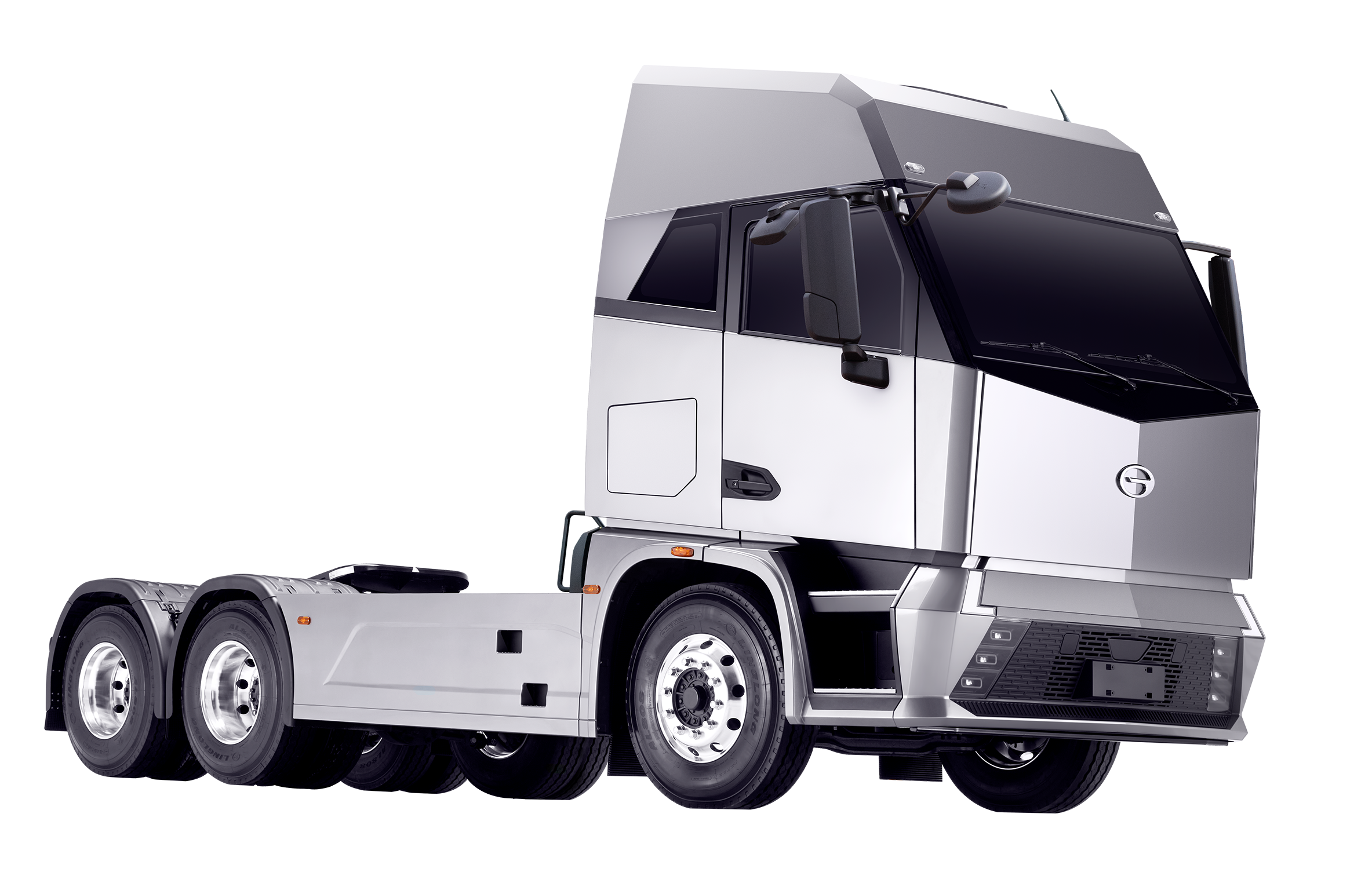
43.99万?领程T9这是‘杀疯了’!重卡界‘卷王’非他莫属!
Zhong Guo Qi Che Bao Wang· 2025-11-18 06:40
Core Insights - GAC's Lingcheng T9 electric heavy truck has disrupted the new energy heavy truck market with a pre-sale price of 459,900 yuan, effectively reducing the actual purchase cost to 439,900 yuan during the pre-sale period, challenging the perception that electric trucks are more expensive than traditional fuel trucks [1] Group 1: Product Features - The GAC Lingcheng T9 utilizes a fully forward-looking design, moving away from traditional "oil-to-electric" limitations, achieving significant technological advancements [2] - The truck's lightweight design incorporates 700L high-strength steel and steel-aluminum composite materials, resulting in a total weight of only 8.9 tons and an increased compliant payload capacity of approximately 1 ton, potentially increasing annual user income by over 30,000 yuan [2] - The T9 features a self-developed three-electric system with a low energy consumption of 1.1 kWh/km, and with a 92% efficiency in the electric drive bridge, it can save users over 100,000 yuan in electricity costs annually based on 120,000 km of driving at an electricity price of 0.7 yuan/kWh [2] - Safety is enhanced with a design that includes 30% high-strength steel in the body structure, validated through multi-directional collision safety tests, while also improving driver and passenger comfort with a 14.6-inch high-definition smart cockpit screen and low-floor integrated design [2] Group 2: Digital Transformation - GAC Lingcheng T9 leverages cutting-edge technology to reconstruct the new energy heavy truck ecosystem, utilizing a self-developed AI model for a comprehensive digital solution that optimizes scheduling paths based on real-time data [4] - The digital platform integrates production, transportation, and warehousing data, enabling logistics companies to visualize "ton-kilometer" cost management, promoting a shift from "scale expansion" to "lean operations" in the industry [4] - The T9 is positioned to redefine technical standards and business logic in the new energy heavy truck sector, injecting new momentum for high-quality industry development [4] Group 3: Sales Promotion - From now until November 20, customers purchasing the GAC Lingcheng T9 can pay a deposit of 10,000 yuan to enjoy a limited-time offer of "1,000 off 3,000," securing a purchase price of 439,900 yuan [4] - GAC Lingcheng will prioritize production based on the order of deposit payments, ensuring delivery within 90 days to enhance logistics efficiency [4] - Detailed configurations, personalized options, and exclusive service policies for the T9 will be officially announced at the Guangzhou Auto Show on November 21 [4]