Zhong Guo Qi Che Bao Wang

Search documents
中国首发!孔辉主动稳定杆赋能极氪9X,诠释新一代高性能底盘
Zhong Guo Qi Che Bao Wang· 2025-10-22 02:03
Core Insights - The launch of the Zeekr 9X marks a significant advancement in the performance and safety of domestic SUVs, featuring a dual-chamber air suspension and a 48V active stabilizer developed by Konghui Technology [1][3] Group 1: Product Features - The 48V active stabilizer developed by Konghui Technology offers instant body posture correction, significant roll suppression, improved ride comfort on rough terrain, and side impact protection [5] - During real vehicle tests, the Zeekr 9X demonstrated nearly zero roll when cornering at 80 km/h, and the active stabilizer can decouple the left and right wheels on uneven surfaces to enhance driving comfort [5] - The active stabilizer can achieve a maximum output torque of 1400 Nm, with 900 Nm torque established in just 0.16 seconds, and can raise the corresponding side of the vehicle by 80 mm within 0.7 seconds during a side impact [5] Group 2: Technological Innovation - Konghui Technology's 48V active stabilizer is the third product to debut in the Chinese supply chain, following the passenger car air suspension system and dual-chamber air springs [9] - The dual-chamber air springs and active stabilizer work together through intelligent algorithms to provide a smooth driving experience, with over 750,000 units of air springs delivered to various popular models [7] - Konghui Technology has focused on overcoming technical challenges in high-response precision control and system durability, achieving domestic replacement of the active stabilizer and contributing to the advancement of Chinese automotive technology [9]


汽车早餐 | 上汽宣布明年将在马来西亚组装整车;小鹏汽车广州新总部启用;东风构建自主可控固态电池供应链体系
Zhong Guo Qi Che Bao Wang· 2025-10-22 01:34
Group 1: Domestic News - In the first nine months of 2025, China's cumulative production of power and other batteries reached 1122 GWh, marking a 44% year-on-year increase, with September's production alone at 151 GWh, a 50% increase year-on-year, indicating a peak in power battery installation activity for the year [2] - Beijing is accelerating the development of its intelligent connected vehicle industry, with the city achieving integrated infrastructure coverage over 600 square kilometers and accumulating over 45 million kilometers of autonomous driving mileage [3] - Guangdong Province has launched an action plan to support the high-quality development of manufacturing powered by artificial intelligence, focusing on building edge data centers and promoting the intelligent upgrade of industrial equipment [4] Group 2: International News - Indonesia plans to achieve domestic automobile production within the next three years, with budget allocations already secured and factory land prepared [5] Group 3: Company News - Tesla is rapidly expanding its Cybercab project team at its Texas Gigafactory, aiming for an annual production capacity of 2 million vehicles using the "Unboxed" manufacturing process [6] - Volvo has introduced a free home charging plan for new electric vehicle buyers in Sweden, offering one year of free charging starting from February 2026 [7] - CATL plans to establish over 2,500 "chocolate" battery swap stations across more than 120 cities in China by 2026, having already set up over 700 stations in 39 cities [8] - Dongfeng Motor has developed a self-controlled solid-state battery supply chain, achieving core technology mastery and producing solid-state batteries with energy densities of 240 Wh/kg and 350 Wh/kg, with a maximum range exceeding 1,000 kilometers [9] - Xien Technology has completed several hundred million yuan in Pre-A and Pre-A+ financing rounds, which will be used for high-end product development and market expansion in the robotics industry [10] - SAIC Motor plans to start local vehicle assembly in Malaysia in the first half of 2026, further expanding its presence in the Southeast Asian market [11] - XPeng Motors has officially moved its headquarters to a new location in Guangzhou, marking a significant milestone in its growth [12] - Deep Blue Automotive announced that its model equipped with the Dimensity 3nm cockpit chip achieved a benchmark score of 1,637,481, leading the rankings by 33% over the second place, claiming to be "generationally leading" [13]

通用汽车第三季度调整后息税前利润达34亿美元,中国市场持续四个季度实现盈利
Zhong Guo Qi Che Bao Wang· 2025-10-21 11:57
Core Viewpoint - General Motors reported strong financial performance for Q3 2025, with significant increases in revenue and profitability, leading to an upward revision of annual performance expectations [2][3][5]. Financial Performance - Q3 2025 net revenue reached $48.6 billion, with a net profit of $1.3 billion [2][3]. - Adjusted EBIT was $3.4 billion, resulting in an adjusted EBIT margin of 6.9% [3]. - Adjusted diluted earnings per share were $2.80, with adjusted automotive cash flow at $4.2 billion [3]. Updated Annual Financial Expectations - Projected net profit for the year is between $7.7 billion and $8.3 billion [5]. - Adjusted EBIT is expected to be in the range of $12 billion to $13 billion [5]. - Automotive cash flow is forecasted to be between $19.2 billion and $21.2 billion, with adjusted automotive cash flow expected between $10 billion and $11 billion [5]. - Adjusted diluted earnings per share are anticipated to be between $8.30 and $9.05, with adjusted diluted earnings per share expected between $9.75 and $10.50 [5]. Market Performance - In the U.S. market, General Motors achieved a sales increase of 8% year-over-year, maintaining a market share of 17.4% in traditional fuel vehicles [7]. - The company leads the full-size SUV and full-size pickup segments with market shares of 60% and 41%, respectively [7]. - In the electric vehicle market, General Motors holds a 16.5% market share, ranking second in sales, with Chevrolet being the second-largest brand in the EV market [7]. Software and Services Growth - General Motors generated approximately $2 billion in confirmed revenue from software and services, with deferred revenue reaching about $5 billion, a year-over-year increase of over 90% [8]. - The active user base for the Super Cruise system is expected to exceed 600,000 by the end of the year [8]. Performance in China - General Motors has achieved profitability in China for four consecutive quarters, with year-over-year growth in both sales and market share [9]. - The company has seen continuous growth in sales of new energy vehicles and battery electric vehicles (BEVs) for ten consecutive quarters [9]. - The launch of the Buick Electra L7 and the upcoming flagship MPV Buick GL8, both based on local innovations, are part of the strategy to enhance product offerings in the new energy sector [9].


智驾渗透率超六成,创新护航智能网联汽车产业发展
Zhong Guo Qi Che Bao Wang· 2025-10-21 11:56
Core Insights - The penetration rate of intelligent connected vehicles in China has reached 62.58% for new passenger cars equipped with combined driving assistance systems from January to July 2025, indicating rapid growth in smart driving technology [1] - The collaboration between automakers, insurance companies, and reinsurance firms is accelerating, with multiple "smart driving insurance rights" schemes set to launch by the end of 2024 [1] - The insurance industry is focusing on product innovation to support the high-quality development of the intelligent connected vehicle sector, with expectations for a specialized insurance system for L3 and above autonomous vehicles to emerge [1] Group 1 - The intelligent driving insurance product innovation is being advanced by Taiping Reinsurance (China), which is one of the earliest institutions to engage in research on intelligent connected vehicle insurance [1] - The company has overcome industry challenges such as data scarcity, pricing difficulties, and complex liability issues through collaboration with major manufacturers and external research institutions [1] - The insurance industry is expected to enhance its foundational capabilities in product design, rate determination, underwriting, claims management, and risk management to address the risks associated with insurance technology [2] Group 2 - Continuous accumulation of relevant insurance data is necessary to improve risk assessment methods and models, ensuring stable and sustainable operations while promoting product innovation [2] - The future of intelligent driving insurance products is anticipated to feature diverse product innovations and varied collaboration models as technology matures and legal regulations are refined [1]
一汽解放与国轩高科寻求更加紧密的战略合作
Zhong Guo Qi Che Bao Wang· 2025-10-21 11:55
Core Viewpoint - The meeting between FAW Jiefang and Guoxuan High-Tech focuses on deepening strategic cooperation in the new energy commercial vehicle sector, battery technology upgrades, and supply chain collaboration to address market opportunities and challenges [2] Group 1: Strategic Cooperation - Both companies aim to enhance their partnership by integrating their strengths to jointly tackle new opportunities and challenges in the new energy commercial vehicle market [2] - The discussion emphasizes the importance of battery technology as a core element in the development of new energy commercial vehicles, with a focus on solving key technical challenges such as large capacity, fast charging, and applicability [2] Group 2: Future Plans - Guoxuan High-Tech plans to actively promote subsequent work based on the discussions, focusing on technological upgrades and forward-looking layouts in the commercial vehicle market [2] - The collaboration is expected to enhance both companies' market share and contribute to the development of the new energy industry [2] Group 3: Industry Impact - The exchange marks a new phase of closer cooperation between FAW Jiefang and Guoxuan High-Tech, aiming to drive high-quality development of new energy commercial vehicles [2] - The integration of FAW Jiefang's vehicle advantages with Guoxuan High-Tech's battery resources is intended to lead the green transformation of China's commercial vehicle industry [2]


阿尔特赋能GT世界挑战赛亦庄站:以AI创新书写中国汽车科技自信
Zhong Guo Qi Che Bao Wang· 2025-10-21 09:22
Core Insights - The article highlights the significant presence of Chinese automotive technology company Altec at the GT World Challenge in Beijing, showcasing its innovative capabilities and commitment to integrating advanced technology into traditional sports events [2][3][7]. Brand Representation - Altec's participation in the GT World Challenge serves as a platform to demonstrate China's automotive technology confidence and responsibility on an international stage [3][7]. - The brand's visibility along the racetrack and in the main venue, including a spherical screen displaying corporate videos, effectively communicates Altec's technological advancements in automotive design and research [5][7]. Technological Innovation - Altec's "Taiyi" AI creative tool allows spectators to engage interactively with the event, transforming them from passive viewers to active participants by generating personalized GT car images based on their descriptions [8][11]. - The "Taiyi" tool is not just a simple AI drawing application; it integrates years of automotive design experience and features five functionalities, making it accessible for both professionals and the general public [11]. Industry Development - The automotive industry is undergoing a critical period of intelligent transformation, and Altec is focusing on technological innovation to enhance automotive design and user experience [12][15]. - The development and application of the "Taiyi" AI tool reflect Altec's deep expertise in automotive design, merging generative AI with engineering knowledge to optimize design processes [15].

开创全球磁流变悬架元年,京西智行的全球引领与科技惠民之路
Zhong Guo Qi Che Bao Wang· 2025-10-21 06:09
Core Insights - The automotive industry's chassis suspension system performance has long been a benchmark for measuring a company's core technological strength. The emergence of China's Jingxi Zhixing is breaking the long-standing dominance of magnetic suspension technology, previously exclusive to ultra-luxury brands like Ferrari and Lamborghini, marking a new era in the global automotive market [1][2][3]. Group 1: Technological Breakthrough - Jingxi Zhixing's partnership with Deep Blue Automotive to equip the Deep Blue L06 model with a magnetic suspension system signifies a transformation from a "technology follower" to a "global leader" in this field [1][2]. - The magnetic suspension technology, discovered in 1948, allows for rapid and precise damping control, making it suitable for extreme applications in aerospace and military sectors before its adaptation in the automotive industry [2][3]. - The technology was first applied in the automotive sector in 2002, with Cadillac's Seville STS, and has since shown significant advantages over traditional suspension systems, including a response speed over five times faster than conventional systems [3][4]. Group 2: Market Position and Production Capacity - Jingxi Zhixing has established itself as the only company globally capable of large-scale production and delivery of magnetic suspension systems, with over 3 million vehicles equipped with this technology by the end of 2024 [4][5]. - The company has a robust portfolio of over 140 core patents and has developed a comprehensive technological barrier covering materials, structures, control algorithms, and manufacturing processes [5][6]. - The production capacity is set to reach 2 million units annually, with dual production bases in Shenzhen and Zhangjiakou, enhancing its international manufacturing capabilities [17][18]. Group 3: Quality Control and Manufacturing Standards - Jingxi Zhixing employs advanced manufacturing techniques, including AI industrial cameras and high-precision robots, to ensure consistent quality in its magnetic suspension systems [24][25]. - The company has implemented a rigorous six-tier quality control system, ensuring that every component meets high standards of reliability and durability, which has helped change perceptions of domestic automotive parts quality [25][26]. - The production process emphasizes smart manufacturing and lean management, achieving over 95% localization of core components, which reduces costs and enhances supply chain control [18][21]. Group 4: Strategic Collaborations and Market Expansion - The collaboration with Deep Blue Automotive represents a new model of cooperation in the automotive supply chain, focusing on shared risks and benefits, which reduces R&D costs and shortens production cycles by 30% [26][27]. - Jingxi Zhixing's technology is now being adopted by other brands, including Polestar, further solidifying its position in the global market and demonstrating the shift of Chinese automotive technology from niche luxury to mainstream applications [26][28]. - The company's approach to open collaboration reflects a strategic shift in the Chinese automotive industry towards collective growth and innovation, moving away from isolated competition [26][28].

观车 · 论势 || 减免购置税新政将为汽车业再“提纯”
Zhong Guo Qi Che Bao Wang· 2025-10-21 05:56
Core Viewpoint - The recent adjustments to the vehicle purchase tax exemption for new energy vehicles (NEVs) in China aim to enhance the technical standards for electric and hybrid vehicles, ensuring consumers receive higher quality products while promoting technological advancement in the industry [2][4][5] Summary by Sections Policy Changes - The Ministry of Industry and Information Technology, along with the Ministry of Finance and the State Taxation Administration, released an announcement adjusting the technical requirements for NEVs eligible for tax exemptions for 2026-2027 [2] - The adjustments include stricter energy consumption limits for pure electric passenger vehicles and new requirements for plug-in hybrid vehicles [3] Technical Requirements - For pure electric passenger vehicles, the energy consumption per 100 kilometers must not exceed the limits set in the new standards (GB 36980.1-2025) [2] - For plug-in hybrid vehicles, three new requirements were introduced: a minimum electric range of 100 kilometers, adjustments to fuel consumption limits, and changes to energy consumption testing standards [3] Industry Impact - The adjustments reflect the rapid advancements in China's NEV industry, with significant improvements in battery energy density and electric range [4] - The new standards are seen as a reasonable elevation of requirements, as many current plug-in hybrid models already meet the updated criteria [4] Competitive Landscape - The new tax exemption policy is expected to shift the focus from price competition to technological competition, potentially leading to the exit of less capable manufacturers from the market [5] - Companies with strong technological capabilities will likely reaffirm their market positions, while those relying on outdated platforms may face significant challenges [5] - The policy is anticipated to accelerate the "good money drives out bad money" phenomenon in the industry, reshaping competition towards technology, product quality, and user experience [5]

电动皮卡为啥在美国不吃香了?
Zhong Guo Qi Che Bao Wang· 2025-10-21 05:49
Core Insights - The electric pickup truck market in the U.S. is experiencing a significant downturn, leading major automakers like Stellantis and General Motors to cut back on electric pickup projects and shift focus to traditional fuel models [2][3][4] Group 1: Company Actions - Stellantis has officially terminated the development of its Ram 1500 electric pickup due to a slowdown in demand for full-size electric pickups in North America, opting instead to focus on a range-extended version set for production in 2026 [2][3] - General Motors plans to invest approximately $4 billion in three U.S. factories to expand production of popular fuel models while reducing electric vehicle production plans, including the conversion of a factory from electric to fuel pickup production [3][4] - Tesla has removed the rear-wheel drive version of the Cybertruck from its website, indicating poor sales performance despite initial high demand, with actual annual sales falling significantly short of expectations [3][6] Group 2: Market Trends - The overall demand for electric vehicles in the U.S. is declining, exacerbated by the expiration of federal electric vehicle tax credits, which has led to a drop in consumer interest in purchasing electric vehicles [8][10] - A survey indicated that only 16% of respondents are likely to purchase a pure electric vehicle, marking a new low since 2019, while 63% expressed they are unlikely to consider electric vehicles [8][10] - The end of federal subsidies has resulted in a record high of over 438,000 electric vehicle sales in Q3 2025, but a significant drop in sales is expected in subsequent quarters due to the lack of incentives [8][10] Group 3: Consumer Preferences - Traditional pickup truck users prioritize reliability, functionality, and cost-effectiveness, which electric pickups currently struggle to meet due to limitations in towing capacity and range [11][12] - The pricing of electric pickups is generally higher than traditional models, making them less appealing to cost-conscious consumers, with examples showing significant price differences between electric and gasoline models [12][13] - Electric pickups are perceived as less practical for traditional uses, with issues such as inadequate towing capabilities and range anxiety due to insufficient charging infrastructure in rural areas [12][13] Group 4: Future Outlook - Despite current challenges, the electric pickup market may have long-term growth potential as technology improves and infrastructure develops, alongside the introduction of more competitively priced models by automakers [13]


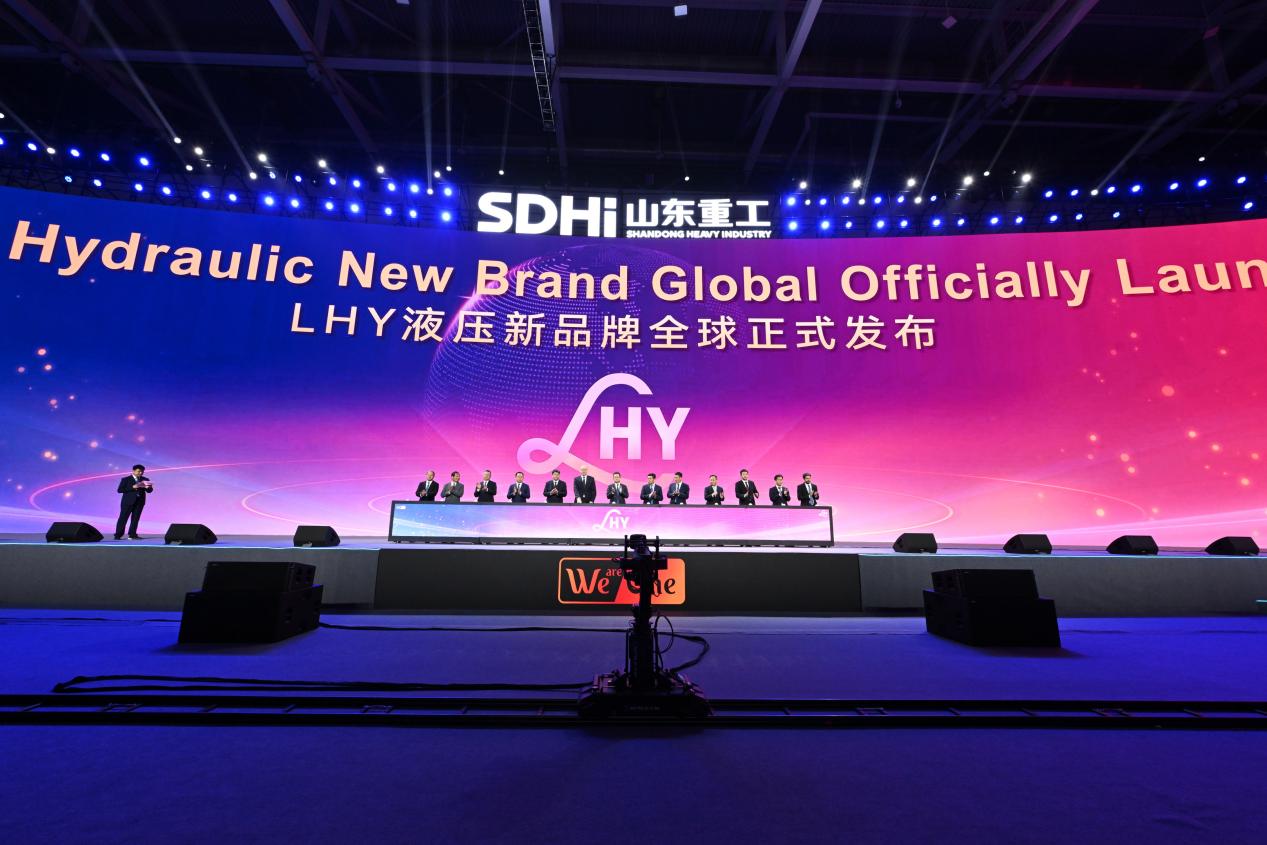
向全球液压系统领导者加速迈进 LHY液压新品牌全球发布
Zhong Guo Qi Che Bao Wang· 2025-10-21 04:33
Core Viewpoint - The LHY hydraulic brand, formerly known as "Linde Hydraulics," has been officially launched, marking a strategic transformation and a commitment to becoming a global leader in hydraulic systems, leveraging over a century of German technological heritage [1][5]. Brand Evolution - LHY has a history of 121 years, originating from Linde Hydraulics established in Munich, Germany, in 1904, and has consistently led the industry through technological innovation [3]. - Following its strategic restructuring by Weichai in 2012, LHY has focused on global development, establishing a new hydraulic intelligent manufacturing plant in Germany and investing 2 billion yuan in a hydraulic R&D and manufacturing base in China [3][5]. - The brand upgrade to LHY signifies both a legacy of Linde's technology and a forward-looking strategic shift towards becoming a system solution provider rather than just a component supplier [5][10]. Technological Innovation - LHY emphasizes continuous technological innovation as its core competitive advantage, supported by a "two countries, three locations" global R&D system [6][8]. - The company has developed unique hydraulic components that enhance efficiency and compactness, such as a hydraulic motor with a unique steel column structure that improves stability and reduces installation space [8][10]. - LHY has achieved significant milestones in product development, including electric distributed excavators and advanced main pump technologies, positioning itself to lead in the industry's technological evolution [11][13]. Global Operations - LHY has established a global production network with four manufacturing bases and eight subsidiaries across Europe, the U.S., and China, creating a comprehensive service network in over 50 countries [11]. - The company aims to integrate resources from both Germany and China to provide efficient and sustainable solutions, fostering a collaborative ecosystem in the hydraulic industry [13].