
Zhong Guo Qi Che Bao Wang

Search documents
“向前一步”、“向深一尺” 智能网联汽车驶向监管深水区
Zhong Guo Qi Che Bao Wang· 2025-10-10 03:19
Core Viewpoint - The release of the draft notice for strengthening the recall and supervision of intelligent connected new energy vehicles signifies a more precise and comprehensive regulatory approach in the industry, particularly in the context of the rapid promotion of advanced driver-assistance systems and innovations in smart cockpit applications [2][3][4]. Group 1: Regulatory Focus - The draft notice emphasizes a problem-oriented approach, identifying four priority safety issues that need to be addressed, including inadequate safety prompts, data security risks, misleading market promotions, and frequent safety incidents during the use of driver-assistance systems [3][4]. - It establishes a full lifecycle and process safety management framework, providing legal basis and implementation norms for the supervision of intelligent connected vehicles [3][4]. - The document clarifies corporate responsibilities regarding product consistency, recall management, and promotional activities, including prohibiting misleading advertising [3][4][5]. Group 2: Enforcement Mechanisms - The draft notice provides specific enforcement mechanisms for regulatory authorities, allowing for targeted checks on technical parameters, OTA records, and accident reports [4][5]. - It introduces a three-dimensional approach to supervision, including routine compliance checks, targeted investigations, and special audits to ensure comprehensive coverage of regulatory requirements [5][6]. - The emphasis on actionable, verifiable, and accountable measures indicates a shift from theoretical regulations to practical enforcement [4][5]. Group 3: Industry Adaptation - The new regulatory framework is expected to prompt a reevaluation of the development logic for driver-assistance functions, prioritizing safety, stability, reliability, and prudence in product development [7][11]. - Companies are encouraged to adopt a proactive approach to safety risk management throughout the entire lifecycle of intelligent connected vehicles, from research and development to production and post-market activities [6][7]. - The draft notice is likely to accelerate the development and application of driver monitoring systems and enhance the overall safety culture within the industry [10][11]. Group 4: Testing and Compliance - Testing institutions are expected to enhance their capabilities to support both corporate R&D and regulatory compliance, transitioning from surface-level compliance to in-depth code-level verification [9][10]. - The draft notice necessitates the establishment of a comprehensive testing framework that includes functional safety, cybersecurity, and data compliance assessments [9][10]. - There is a call for the creation of a national testing scenario database and evaluation standards to support the evolving regulatory landscape [11].


欧美日韩等发达经济体无不关注的这一领域,为何成为汽车业竞逐的新焦点?
Zhong Guo Qi Che Bao Wang· 2025-10-10 03:07
Core Insights - The application of artificial intelligence (AI) has become a focal point in the global automotive industry, with significant strategic initiatives being launched by various countries to leverage AI for automotive advancements [4][5][11] Group 1: Strategic Initiatives - The European Commission has introduced two strategies: "Applied AI" and "Scientific AI," aimed at accelerating AI applications in industries including automotive, with a focus on autonomous driving and innovative models [5] - In the U.S., tech giants like NVIDIA and Tesla are leading the charge in AI for automotive, with Tesla planning to invest over $10 billion in 2024 for the development of its Autopilot system [6] - South Korea and Japan are focusing on cross-industry collaboration to create smart ecosystems, with initiatives like AI-connected electric vehicles and alliances among automakers to develop autonomous driving technologies [7] Group 2: Market Trends and Data - According to EU statistics, only 13.5% of companies with 10 or more employees in the EU are currently using AI in their operations, indicating significant room for growth [5] - The global autonomous driving market is projected to exceed $200 billion by 2030, highlighting the potential for smart vehicles to become the mainstream mode of transportation [11] Group 3: Technological Challenges - Despite rapid advancements, the automotive industry faces technical challenges, particularly in the reliability of autonomous driving systems under complex conditions and extreme weather [9] - Data privacy and cybersecurity issues are becoming increasingly prominent, with concerns over user data collection and potential hacking threats to vehicle systems [9][10] Group 4: Regulatory Landscape - There are discrepancies in regulations regarding autonomous driving across different regions, with the U.S. having varying state laws and the EU imposing strict data flow regulations, complicating global deployment of smart vehicles [10] - Calls for unified international regulations and standards are growing, as current disparities hinder the global development of the smart automotive industry [10]


联邦检察官据悉对First Brands破产事件展开调查
Zhong Guo Qi Che Bao Wang· 2025-10-10 02:41
知情人士透露,联邦检察官正在调查汽车零部件供应商First Brands Group惊人破产事件的相关情 况。该人士称,司法部的调查仍处于初步阶段。《金融时报》早些时候报道称,此次司法部调查由曼哈 顿联邦检察官办公室负责。 在放贷方对该公司用于管理日常现金流的账外融资日益担忧之后,First Brands于9月底陷入破产, 并已经牵连多家大型金融机构。 ...
金旅全新一代高端客车亮相世界客车博览会
Zhong Guo Qi Che Bao Wang· 2025-10-10 02:27
Core Insights - The article highlights the launch of the new high-end bus model GC15 by King Long Bus at the Brussels Bus Expo, showcasing its advanced features and performance capabilities [1][3]. Group 1: Product Features - The GC15 model is designed with three key features: Super Power, Super Efficiency, and Super Safety [3]. - It is equipped with a 704 kWh high-performance battery from CATL, achieving a peak power output of 500 kW and a peak torque of 4800 N·m, with a range of 600 kilometers on a single charge [3]. - The aerodynamic design of the GC15 results in a drag coefficient of only 0.365, leading to enhanced energy efficiency [3]. Group 2: Safety and Reliability - The vehicle's structure utilizes Q700 high-strength steel, increasing overall strength by over 13% and reducing weight by 10% [5]. - The GC15 meets the latest EU regulatory requirements for vehicle information security through the implementation of a central safety gateway and domain controller design [5]. - The PIVOT series electric city buses have demonstrated reliability, with over 400 units operating in 25 cities across eight EU countries, averaging over 350,000 kilometers per vehicle [5]. Group 3: Market Strategy - King Long Bus aims to strengthen its presence in the European market, viewing the "14th Five-Year Plan" period as crucial for competing in high-end bus models [9]. - The company acknowledges the narrowing gap in manufacturing processes between Chinese bus manufacturers and leading European brands, emphasizing the need for continuous improvement in product quality [11]. - King Long Bus is focusing on systematic upgrades across product development, manufacturing processes, supplier selection, and after-sales service to enhance its competitiveness in the European market [11]. Group 4: Production Innovations - The company has sold 25,000 electric light commercial vehicles, with the newly launched GECKO model featuring a streamlined design and modular architecture [7]. - Innovations in production processes have significantly reduced the amount of sheet metal used in manufacturing, indicating a commitment to efficiency and quality [14]. - The emphasis on "four modernizations" (generalization, serialization, platformization, and standardization) aims to improve component compatibility and production efficiency [12]. Group 5: Future Outlook - King Long Bus is committed to enhancing its brand influence globally by focusing on high-value products and leveraging opportunities in the international market [16]. - The company is determined to maintain high product quality as the foundation for its overseas market development [16].


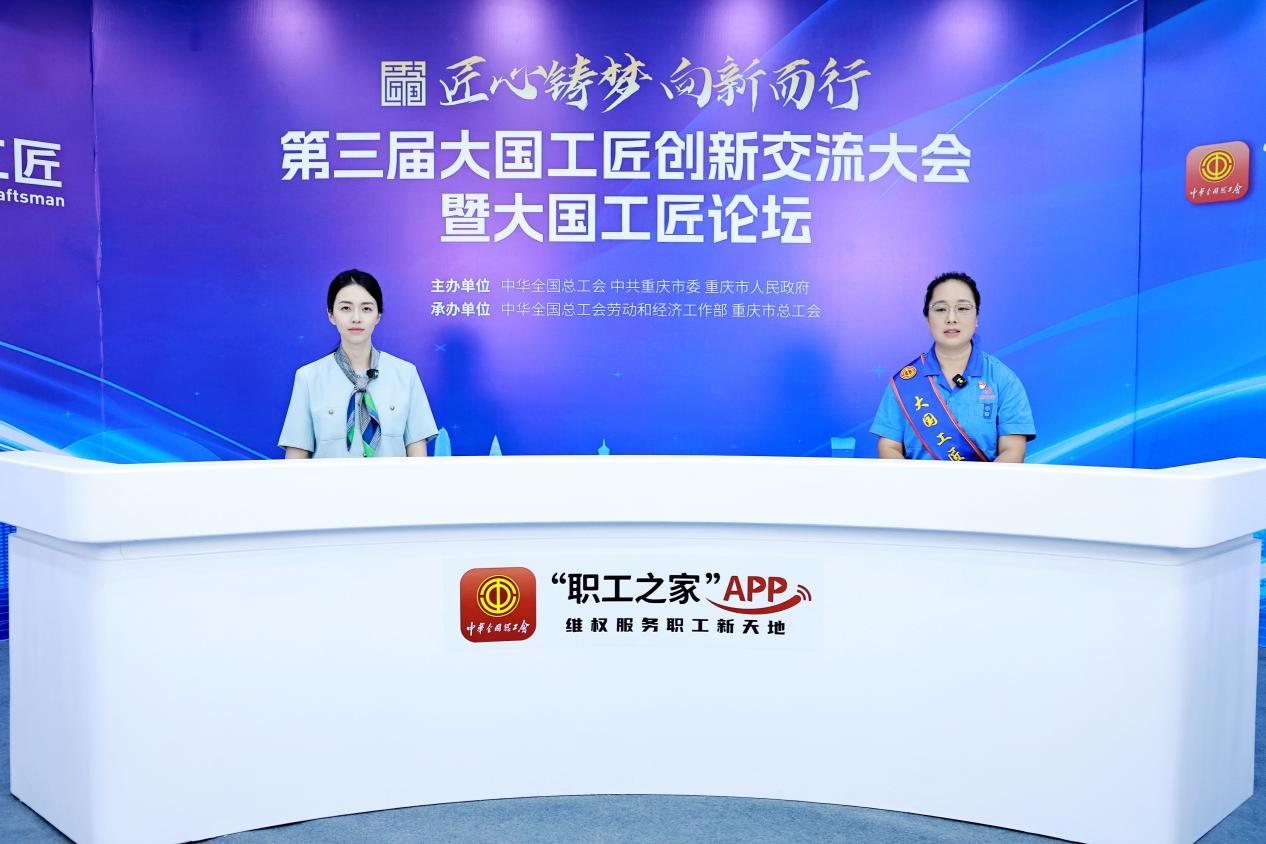
于时代浪潮中铸就匠心:法士特与大国工匠蔡嵘的共生共荣记
Zhong Guo Qi Che Bao Wang· 2025-10-10 02:12
Core Viewpoint - The article highlights the journey of Cai Rong, a representative of China's "Great Craftsman" spirit, showcasing her transformation from a high school dropout to a skilled technician at Fast Group, a leading company in the heavy-duty automotive transmission sector, reflecting the evolution of industrial workers in China from "worker" to "craftsman" and then to "master" [1][11]. Group 1: Personal Journey and Development - Cai Rong's story begins with her high school failure, which ignited her determination to pursue a skilled career, leading her to excel at Xi'an Technician College [3][5]. - Her entry into Fast Group coincided with a critical period of innovation and competition in China's automotive industry, emphasizing the importance of technical skills for survival and growth [3][5]. - Cai Rong's initial tasks involved basic maintenance, but her proactive approach and willingness to tackle challenging jobs laid the foundation for her technical mastery [5][6]. Group 2: Skill Development and Achievements - Cai Rong's growth paralleled Fast Group's technological upgrades, as she recognized the need to acquire CNC knowledge to keep pace with industry demands [6][7]. - Participation in skill competitions served as a platform for her to test and enhance her abilities, leading to significant learning experiences and practical applications in her daily work [7][9]. - The establishment of the "Cai Rong Skills Master Studio" marked a pivotal moment, contributing to the training of over 500 skilled workers annually and fostering a culture of innovation within the company [9][10]. Group 3: Innovations and Contributions - Cai Rong led key technological breakthroughs, including the CNC transformation of conventional machines and the development of specialized tools, demonstrating her role as a driver of innovation [10][13]. - Her work in creating a preventive maintenance system significantly reduced equipment failure rates, establishing her as a crucial figure in ensuring operational stability at Fast Group [13]. - The integration of data-driven approaches into traditional maintenance practices showcased the modern craftsman's ability to merge technology with hands-on skills [10][13]. Group 4: Future Aspirations and National Strategy - Cai Rong's admission to Tsinghua University symbolizes a significant milestone, aligning her personal aspirations with national goals of cultivating versatile leaders in the manufacturing sector [11][13]. - The initiative to send skilled workers to top educational institutions aims to bridge the gap between practical experience and theoretical knowledge, fostering a new generation of talent for China's intelligent manufacturing landscape [11][13].
全球架构大调整,这家车企巨头官宣
Zhong Guo Qi Che Bao Wang· 2025-10-10 01:40
Core Insights - Stellantis is undergoing significant leadership restructuring following the replacement of its global CEO, Antonio Filosa, who took over on June 23, 2023, amid poor performance, particularly in the North American market [3][4] - The company announced a series of management changes, including the appointment of Grégoire Olivier as head of Stellantis China and Asia-Pacific, while several other executives are leaving the company [4][5] - Stellantis is facing operational challenges, with a 13% decline in net revenue and an 8% drop in global sales in the first half of the year, resulting in a net loss of €2.3 billion compared to a net profit of €5.6 billion in the same period last year [7][8] Management Restructuring - Grégoire Olivier has been appointed as the head of Stellantis China and Asia-Pacific, replacing Philippe de Rovira, who has left the company [4] - Joao Laranjo has been named the new Chief Financial Officer, succeeding Doug Ostermann, who has also departed [3][4] - Other notable changes include the appointment of Samir Cherfan as the new head of the Middle East and Africa region, and the restructuring of Jean-Philippe Imparato's role, who will now only oversee the Maserati brand [4][5] Financial Performance - Stellantis reported a significant net loss of €2.3 billion in the first half of the year, contrasting sharply with a net profit of €5.6 billion in the same period last year [7] - The company plans to invest approximately $10 billion to revitalize the U.S. market, including restarting factories and developing new models to address challenges faced by the Jeep brand [7][8] - A report from the Italian union Fiom-Cgil indicated that Stellantis has laid off nearly 10,000 employees in Italy over the past four years, with projections showing a reduction in workforce from 37,288 at the end of 2020 to 27,632 by the end of 2024 [7] Strategic Adjustments - Stellantis is implementing a comprehensive global restructuring that encompasses all key business segments and core markets, aiming to enhance competitiveness amid intensifying market competition and accelerating energy transitions [8] - The company is focusing on optimizing management levels, concentrating on core markets, and integrating advantageous resources as part of its strategic overhaul [8]


全固态电池又有重大突破!研究团队回应
Zhong Guo Qi Che Bao Wang· 2025-10-10 01:40
Core Viewpoint - The research team led by Huang Xuejie has made significant progress in addressing the interface issues of all-solid-state lithium metal batteries, which is a critical step towards their commercialization [1][3]. Group 1: Research Findings - The interface problem between lithium metal anodes and solid electrolytes has been a longstanding challenge, leading to performance degradation and failure in all-solid-state batteries [4][5]. - The research introduces a dynamic adaptive interface (DAI) strategy that utilizes pre-set anions in the solid electrolyte to form a lithium iodide-rich interface layer, which adapts to the volume changes of the lithium anode [10][12]. - Experimental results show that the DAI approach maintains a high capacity retention rate of 90.7% after 2400 cycles at a current density of 1.25 mA cm², demonstrating its effectiveness in enhancing battery performance [10][12]. Group 2: Comparative Analysis - Traditional methods, such as applying mechanical pressure, have shown to reduce initial impedance significantly but often lead to increased battery size and weight, complicating commercialization [7][8]. - The DAI method offers a promising alternative by ensuring tight contact between the solid electrolyte and lithium anode even under low or zero external pressure, which is crucial for practical applications [12][13]. - The research indicates that the DAI interface remains stable and effective, with a capacity retention of 74.4% after 300 cycles under zero external pressure, showcasing its potential for scalable applications [12][13]. Group 3: Industry Implications - The advancements in all-solid-state battery technology are attracting attention from various research institutions globally, indicating a competitive landscape in the pursuit of commercial viability [13]. - The innovative findings from Huang's team could significantly contribute to the development of electric vehicles, positioning the industry to capture a leading role in the global market [13].

燃油车回春:短期效应还是逆风翻盘?
Zhong Guo Qi Che Bao Wang· 2025-10-10 01:24
Core Insights - The sales of traditional fuel vehicles in China have shown a significant increase, with August sales reaching 902,000 units, marking a year-on-year growth of 13.5% and indicating a third consecutive month of growth [2][3] - This resurgence in fuel vehicle sales reflects a broader trend among automakers to revitalize their fuel vehicle offerings, as evidenced by Porsche's decision to delay some electric vehicle launches in favor of more fuel models [2] - The current growth in fuel vehicle sales raises questions about whether this is a temporary market fluctuation or a sign of a more sustainable recovery [2] Fuel Vehicle Market Dynamics - The overall sales of traditional fuel vehicles in China for 2024 are projected to be 13.989 million units, a decline of 17.3% year-on-year, while the sales from January to August 2023 showed only a slight decrease of 0.3% [3] - The negative contribution of fuel vehicles to overall market growth has significantly decreased, indicating a potential recovery in the market [3] - The market is witnessing a clear division between joint ventures and independent brands, with the latter gaining ground in the fuel vehicle segment [4] Joint Venture Performance - Major joint ventures like SAIC Volkswagen and SAIC General Motors continue to lead in sales, with SAIC Volkswagen achieving a sales volume of 523,000 units in the first half of the year, a 2.3% increase [4] - Japanese brands are experiencing a split performance, with GAC Toyota showing growth while Dongfeng Nissan's market share continues to decline [4] Independent Brand Growth - Independent brands are increasingly investing in fuel vehicles, with executives from companies like Great Wall Motors and Geely emphasizing their commitment to this segment [4] - Geely's fuel vehicle sales reached 684,000 units in the first half of the year, with significant contributions from its China Star series [4] - Changan and Chery also reported strong sales figures, indicating a robust performance from independent brands in the fuel vehicle market [4] Technological Advancements and Market Trends - The fuel vehicle market is experiencing a technological upgrade, with improvements in smart features and safety, which are enhancing their appeal to consumers [8] - The average transaction price of joint venture fuel vehicles has decreased by 8.2% from January to July, suggesting that price competition is a significant factor in the current sales growth [11] - The market is witnessing a shift in consumer perception, with a growing skepticism towards the cost advantages of electric vehicles, particularly regarding their depreciation rates [7] Future Market Outlook - The automotive market is expected to see a coexistence of fuel vehicles and electric vehicles, with predictions indicating that by 2025, electric vehicle sales may surpass those of fuel vehicles [14] - Industry experts suggest that the market will evolve into a multi-power structure, with fuel vehicles, hybrids, and electric vehicles coexisting for the foreseeable future [15][17] - The transition towards electric vehicles is anticipated to accelerate, but fuel vehicles are expected to maintain a significant market share, particularly in specific segments [15][18]

观车 · 论势 || 商用车企业是时候丢掉“旧思维”了
Zhong Guo Qi Che Bao Wang· 2025-10-10 01:24
Core Viewpoint - The introduction of the dual-track management model for the National VII emission standards in China represents a significant shift from traditional single-point control to a system-wide approach, aiming to address the imbalance in product structure within the commercial vehicle industry [1][6]. Group 1: New Emission Standards - The new standards will implement "single vehicle emission limits" alongside "average enterprise emission intensity," creating a dual constraint for manufacturers [2][3]. - This shift requires companies to achieve breakthroughs in engine efficiency and exhaust treatment systems, moving beyond minor adjustments to traditional technologies [2][4]. Group 2: Industry Impact - The dual-track model will necessitate adjustments across the entire commercial vehicle supply chain, affecting component suppliers, manufacturers, and sales/service sectors [3][4]. - Companies that can quickly adapt and innovate will emerge as industry leaders, while those that fail to meet the new standards may face significant challenges [3][6]. Group 3: Strategic Shifts for Companies - Companies must transition from a passive compliance approach to an active innovation strategy, focusing on zero-emission technologies such as electric and hydrogen fuel cell vehicles [4][6]. - A comprehensive carbon emission management system covering the entire product lifecycle is essential for companies to align with the new standards [4][6]. Group 4: Market Dynamics - The increase in compliance costs may lead to higher prices for new vehicles, potentially pushing smaller transport operators towards the second-hand market [5]. - The influx of older, high-emission vehicles into the second-hand market could create regulatory challenges and encourage illegal modifications if not properly managed [5]. Group 5: Policy and Regulatory Considerations - The successful implementation of the new standards requires a supportive ecosystem, including cost-sharing mechanisms and enhanced regulatory frameworks [5][6]. - Collaboration across departments and the use of advanced monitoring technologies will be crucial to ensure effective enforcement of the new emission regulations [5][6].
专访 || 北京福田康明斯发动机有限公司总经理陈剑:刀刃向内的魄力
Zhong Guo Qi Che Bao Wang· 2025-10-10 01:17
Core Viewpoint - The automotive industry is focusing on achieving quality breakthroughs through higher standards and stricter requirements, driven by the "Quality Power" strategy promoted by the Chinese government [2] Group 1: Quality Strategy - Foton Cummins officially launched its Quality 2025 strategy, emphasizing a customer-centric approach and comprehensive quality excellence through systematic value chain management [2][3] - The strategy represents a management revolution, marking a new phase in quality control for Foton Cummins [3][4] Group 2: Quality Control Transformation - The shift from "conformance quality" to "excellence quality" aims to exceed customer expectations and build long-term trust in a competitive market [4] - The transformation involves a systemic change that requires active participation from all employees and collaboration with suppliers and partners to create a "quality ecosystem" [4][5] - Foton Cummins is focusing on process management to transition from "after-the-fact remediation" to "process-driven" quality control [4][8] Group 3: Zero Defect Culture - The pursuit of zero defects is a core belief at Foton Cummins, emphasizing that quality is the responsibility of every employee across the entire value chain [5][6] - The establishment of the "Zero Defect Club" aims to ensure that every input, from raw materials to components, meets zero defect standards [5][6] Group 4: Intelligent Manufacturing - Foton Cummins has implemented a "black light factory" model that utilizes intelligent and digital methods to enhance manufacturing efficiency, reliability, and consistency [7][8] - The factory employs automated processes and real-time data tracking to minimize human error and ensure quality control throughout the production process [8] - The company has been recognized as an exemplary intelligent factory, showcasing its commitment to high-quality product delivery through advanced manufacturing technologies [8]

